-
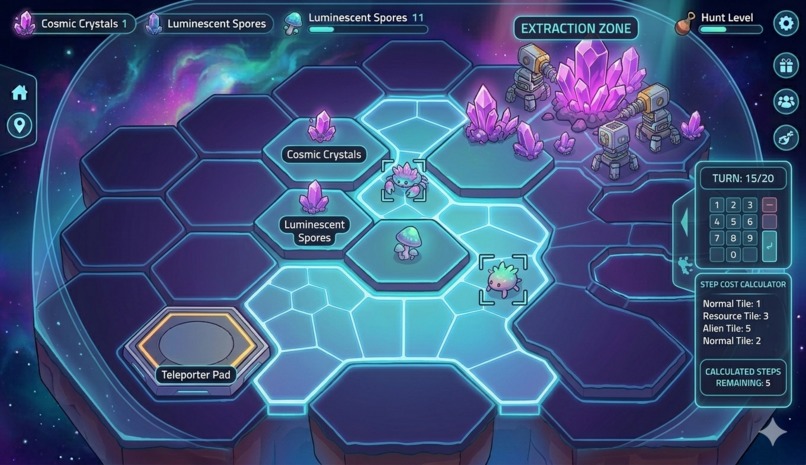
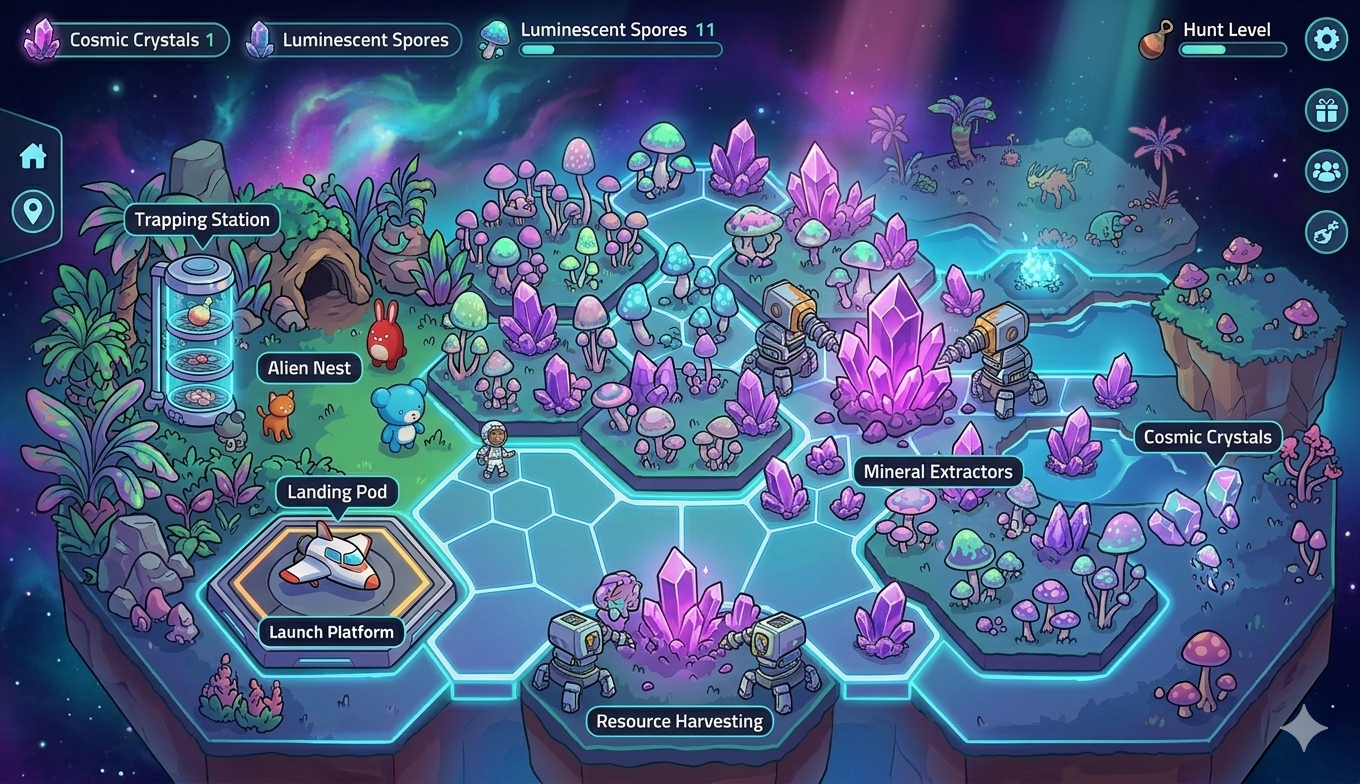
Hunting Zone
-
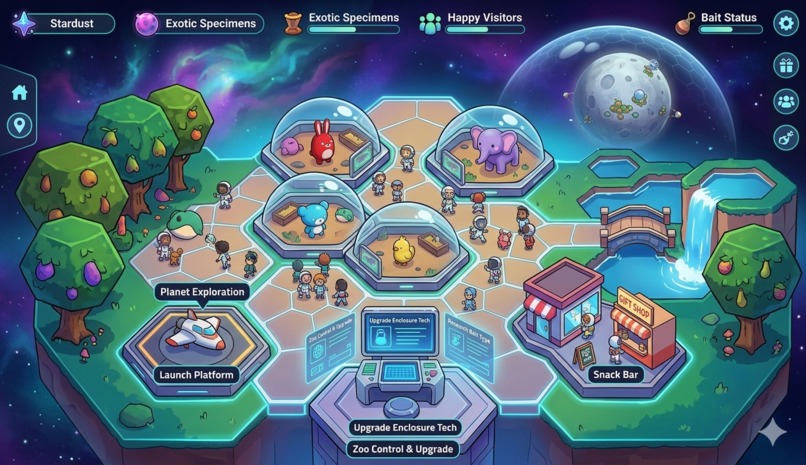
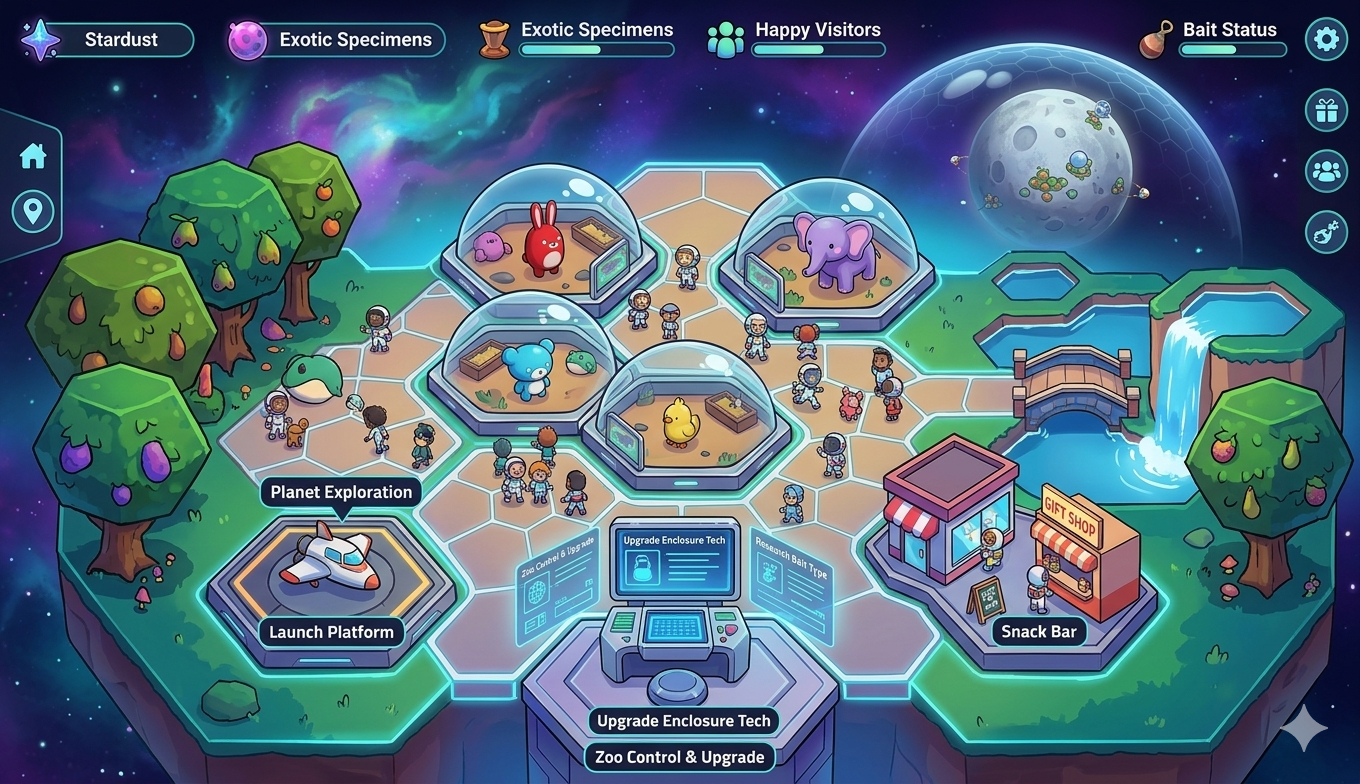
Main Screen
-
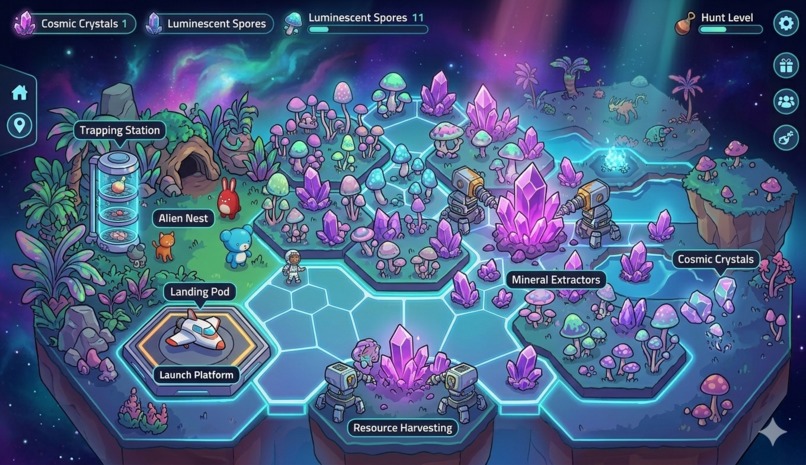
Resources Zone
Inspiration
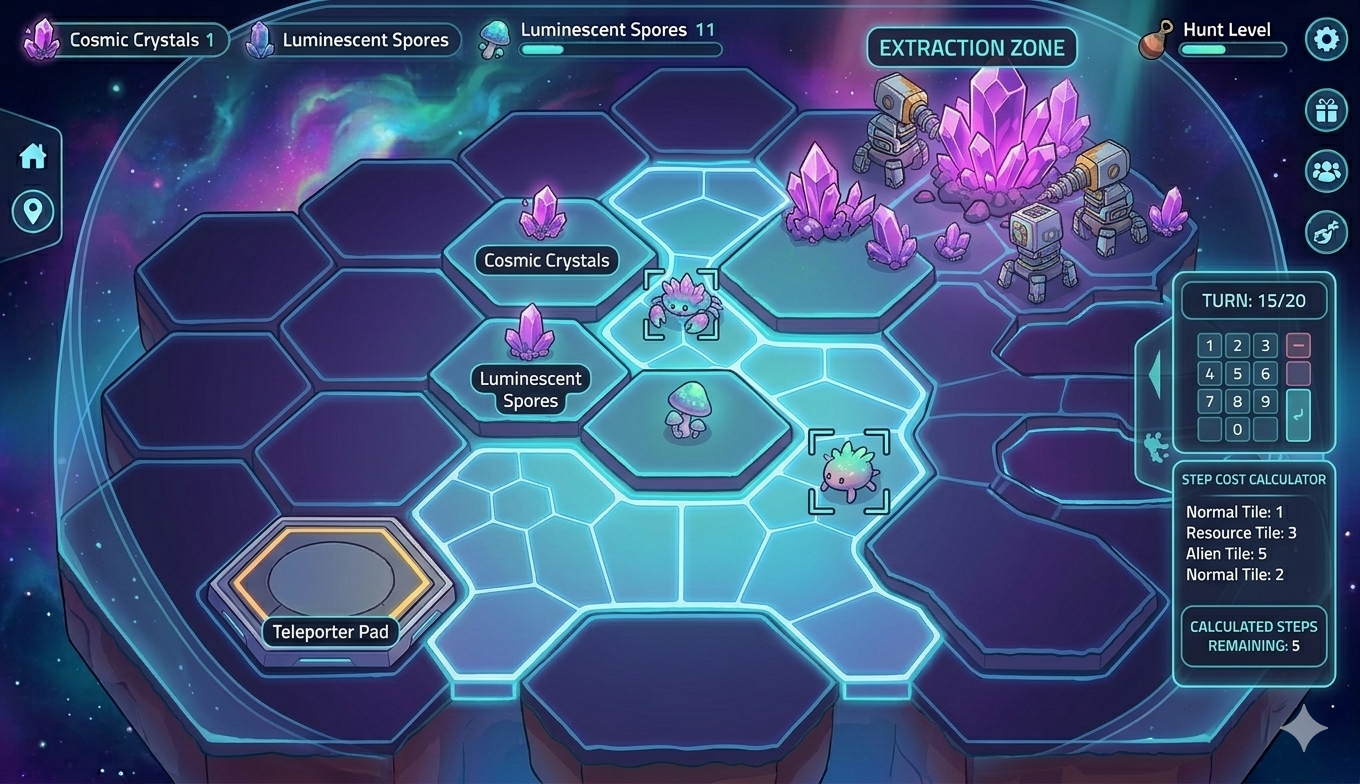
We wanted to combine two genres we love that rarely meet: the cozy management loop of games like Animal Crossing and Zoo Tycoon, and the tense, deliberate puzzle of resource-budgeted exploration. Most mobile zoo games stop at "build and collect." We asked: what if the collecting itself was a small strategic decision every time, not just a tap-to-win minigame? The hex-grid aesthetic came from a simple visual instinct — extruded, low-poly hex terrain feels both toy-like and spatial in a way that flat square tiles don't. Once we saw that look applied to a sci-fi zoo concept, the rest of the world (glass-dome enclosures, a shared central plaza, alien hunting planets) followed naturally.
How we built it
We started from a single feature list and shaped it into four connected documents:
Game Design Document — defined the five-stage core loop (Clear → Build → Hunt → Host → Earn), the target player archetypes, and the progression systems that carry a player from minute one to session twenty. Player Journey Map — mapped the first 15 minutes beat by beat, including an emotional-intensity curve, to pressure-test whether the GDD's promises actually show up early. Visual Concept Package — iterated through two early low-poly art directions before converging on a 2.5D painterly hex-tile style, with a dedicated UI wireframe for the step-budget hunting mechanic. Production Plan — scoped a buildable MVP (one enclosure, one species, one planet) and sequenced four phases around real dependencies, not just feature priority.
Challenges we ran into
Replacing a core mechanic mid-design. Switching from real-time bait-and-trap to step-budget movement wasn't a UI tweak — it touched the GDD's core loop, the journey map's pacing, and the production plan's testing criteria simultaneously. Keeping all three internally consistent took deliberate cross-checking. Balancing visual ambition with team size. With a 3-person team, every system needed to reuse the same small set of building blocks — hex tiles, dome enclosures, plush-style creatures — rather than bespoke art per feature. Scoping honestly. It was tempting to design breeding, co-op hunting, and prestige systems into the MVP. Cutting them into "If I Had More Time" — and making sure the Production Plan's cut list matched the GDD's deferred features exactly — kept the submission focused on proving the core loop first.
What we learned
Mechanics need to match the platform, not just the fantasy. Our first instinct for the hunting loop was a real-time bait-and-trap interaction — but for short mobile sessions, timing-sensitive input is friction, not fun. We replaced it with a turn-based, tap-driven step-budget system, which kept the tension of a press-your-luck loop without requiring reflexes. A shared world changes pacing decisions. Designing eight persistent neighbors around one central plaza meant every retention hook (daily bonuses, visible upgrades, trade) had to work whether a player logged in once a day or five times. Documentation is a design tool, not just a deliverable. Writing the GDD, Player Journey Map, and Production Plan in parallel surfaced inconsistencies early — for example, rewriting the core loop forced us to go back and update the emotional pacing in the journey map and the MVP scope in the production plan, which caught gaps we wouldn't have noticed building any one document in isolation.
Built With
- claude



Log in or sign up for Devpost to join the conversation.