-
-
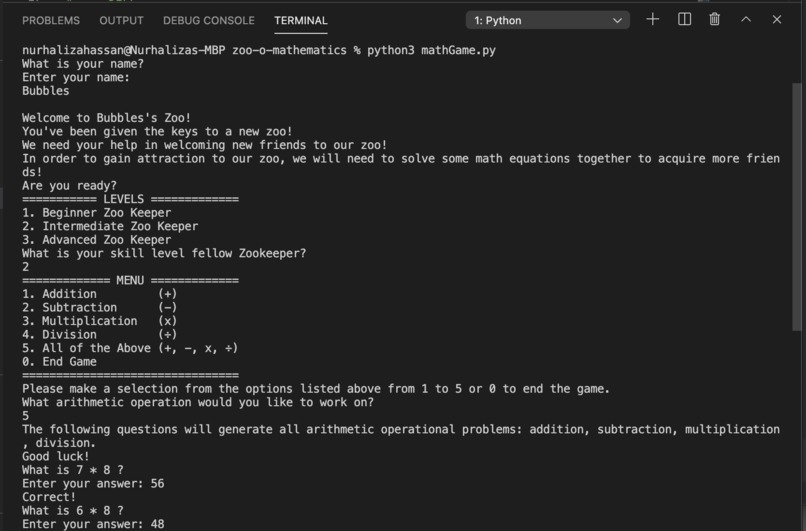
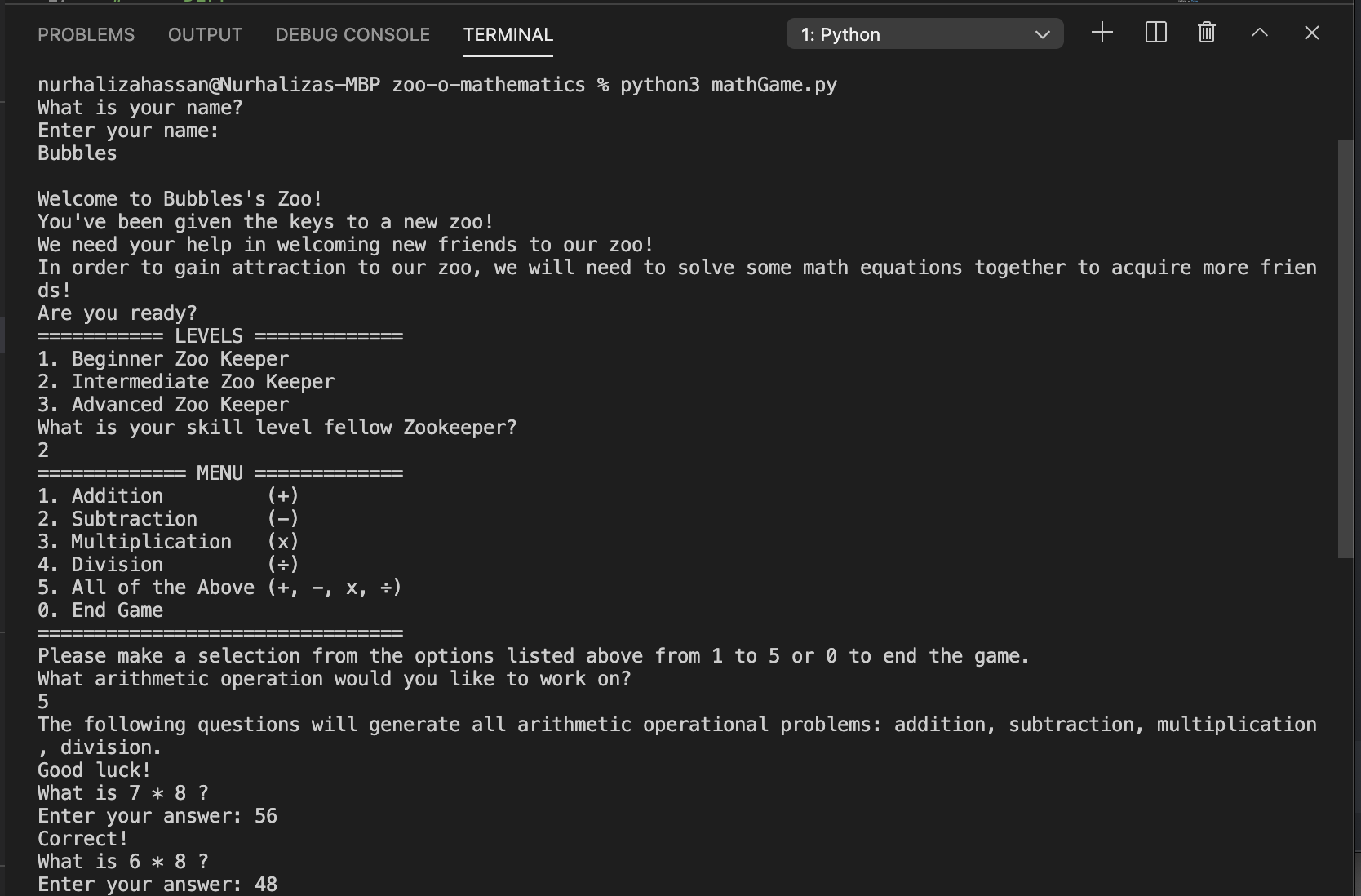
Intro. - Prompts Zookeeper's Name + Choice of Level of Difficulty + Problems
-
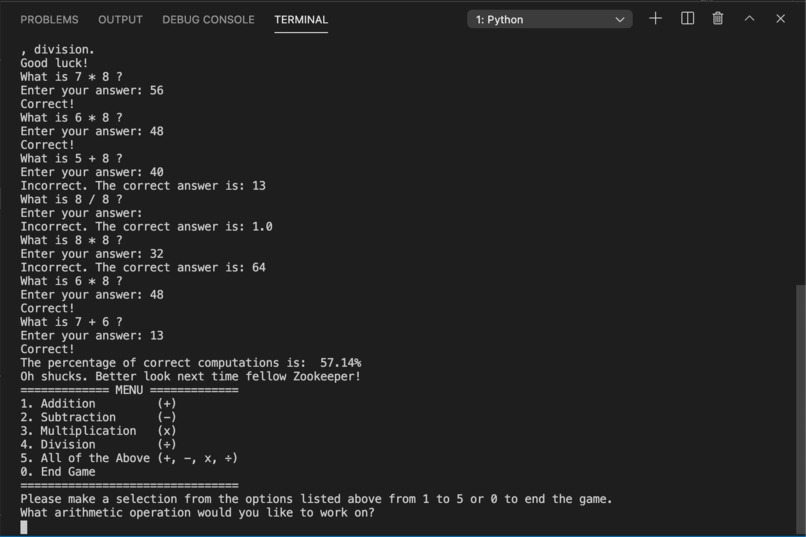
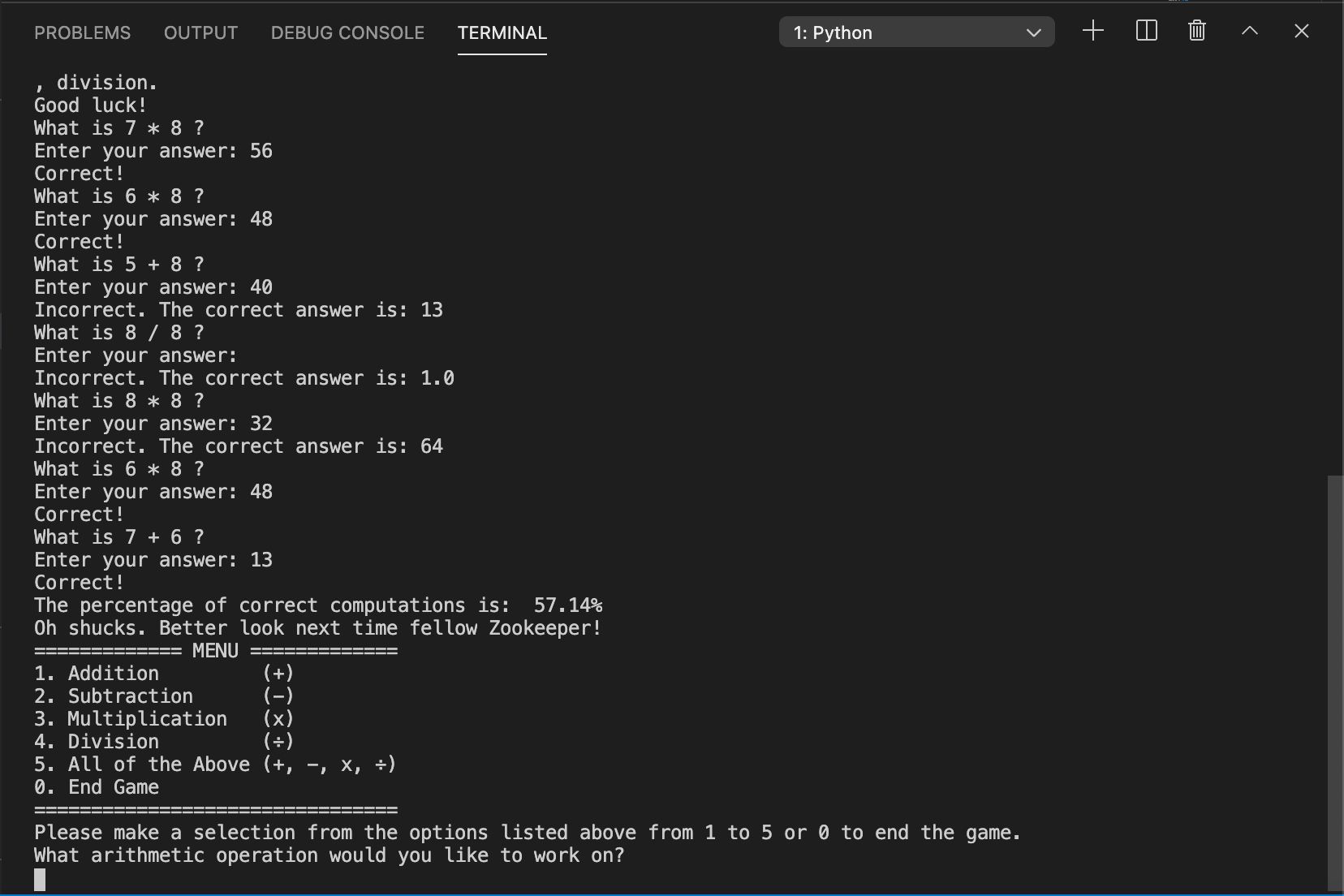
Simulation - Showing Different Outcomes + No Animal Friend Gained
-
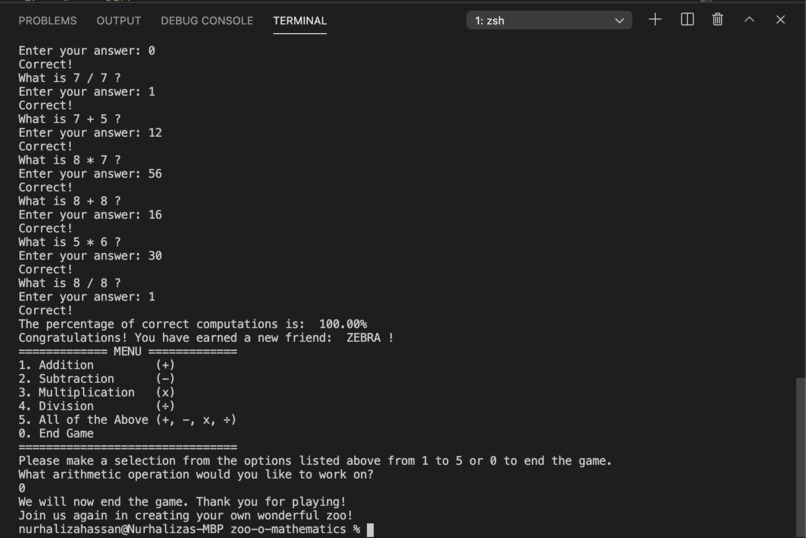
Simulation - Showing Different Outcomes + Animal Friend Gained
-
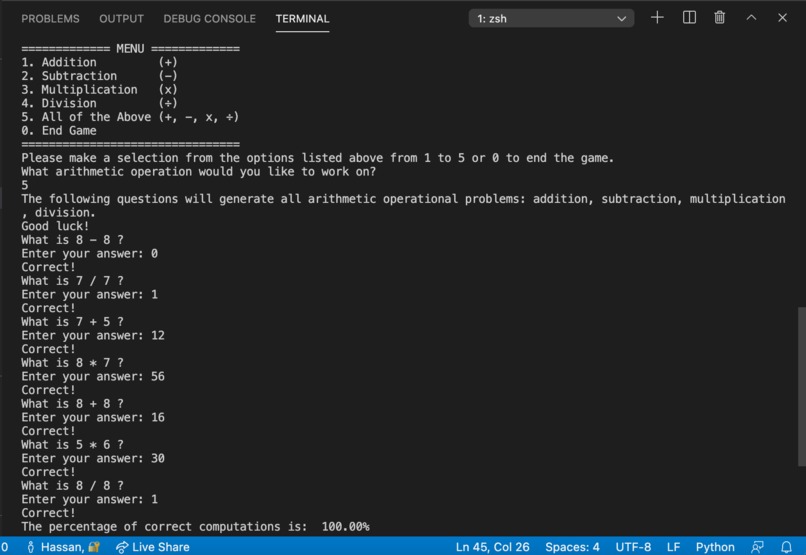
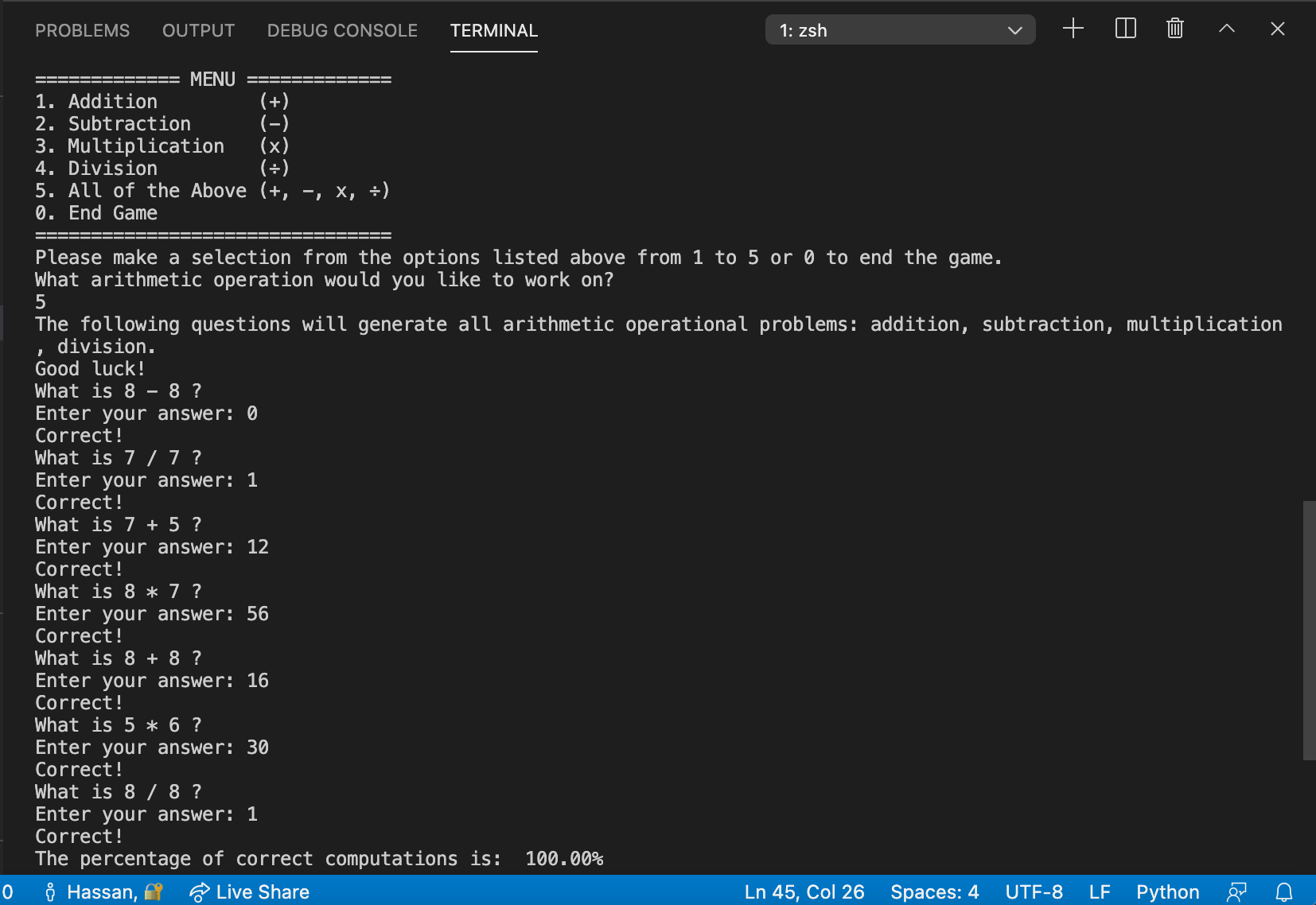
Simulation - Animal Friend Gained + End Game

Inspiration
Considering how we both have younger siblings who are not too fond of math, we decided to create an engaging educational gaming simulation that would help in exciting children ranging from first to third grade whose core curriculum is based on problem-solving with and through arithmetic computations. The setting of our game is based on the user whose position is a zookeeper who needs to attract new animal friends to the user's new zoo. The element of excitement was a major priority to us and we figured what better way to engage and appeal to a younger and curiously driven audience than animals?
What it does
The game centers around a zookeeper who is tasked with bringing new animals to their new zoo. In order to gain more attraction and animals, the zookeeper (the user) needs to complete a set of arithmetic computational problems ranging from addition, subtraction, multiplication, and division. In the game, the user is able to progress to different levels of difficulty that correspond to larger numbers used for lengthier computing challenges. After selecting a level of difficulty (such as beginner, intermediate, and advanced), the zookeeper is able to choose which area of arithmetic they would like to practice with. After each set of problems are completed with a high success rate of 90% or above, the zookeeper will receive an animal to add to their growing animal collection.
How we built it
Through a series of functions, loops, and other important concepts and tools we were able to make this game possible. We created several files that each were purposed with varying functions for our game to have the needed components be successful in the gaming simulation.
Challenges we ran into
Originally, we wanted to reward the zookeeper with one letter to in turn spell out the entire word of an animal that they could possibly win in completing the sets of problems. For example, if the zookeeper finished a set of problems through addition (or any other mathematical operation) they would then be awarded the letter 'o'. If the user completes four more sets of problems and is awarded with a letter each time, the user would then piece together 'otter' and the animal would then be added to the user's zoo. We considered many methods such as lists, dictionaries, and etc. to help in extracting the character of each letter and to award it to the user after each successful completion of problems. As a result of time and being novices to the Python programming language, we opted for a more concise approach to fulfill the desired outcome we intended from the start which was prioritizing functionality and user experience.
Accomplishments that we're proud of
We are proud to be able to make our very first Python project and to create a gaming environment that immerses young children, like our siblings to a place where they can test their limits through problem-solving.
What we learned
From formulating methods to creating an interactive environment, we have learned a lot in how to code with Python through the many strategies we had devised in the process of developing the game. Of course, there is still a lot to learn and debunk as we continue to work with the programming language in our future improvements with Zoo-o-mathematics and other programming projects down the line in our programming careers.
What's next for Zoo-o-mathematics!
In the nearby future, we intend to design and build an interface that would best appeal to children. We have decided to implement other ways to entice user experience by incorporating fun animal facts when an animal is added to the zoo and to be able to read educational content pertaining to the animal awarded. We also plan to work in expanding our focus from mathematical computations to other aspects of fundamental, educational concepts geared towards children within the grade range. Strengthening and expanding their spelling skills and honing their abilities to problem solve through other means that go beyond English and Mathematics.


Log in or sign up for Devpost to join the conversation.