-
-
Helping Captain Levi to
Expanded Project Overview: Human-Robot Synergy in a Zombie Apocalypse
Inspiration In the chaos of a hypothetical zombie apocalypse, human survival hinges on leveraging technology to amplify our strengths. While human warriors possess adaptability and creativity, their physical limitations—fatigue, susceptibility to infection, and vulnerability to injuries—pose significant risks. Our solution? Replica robots, designed to mirror the skills of elite warriors but enhanced with superhuman endurance, strength, and immunity. Inspired by the need to protect human lives while maintaining tactical superiority, this project explores how voice and physical collaboration between humans and robots can achieve mission-critical goals. The interface isn’t just functional; it’s a bridge fostering trust and camaraderie between humans and machines in life-or-death scenarios.
What It Does The interface acts as a real-time command center where humans guide robot warriors through voice directives and strategic inputs. Here’s how it works:
Voice Commands: Users issue verbal instructions (e.g., “Secure the perimeter” or “Retrieve supplies from the warehouse”), which the robots translate into precise physical actions.
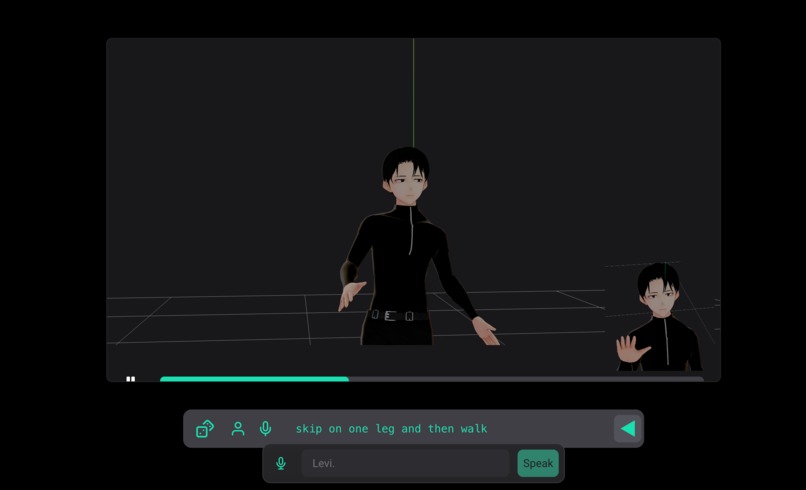
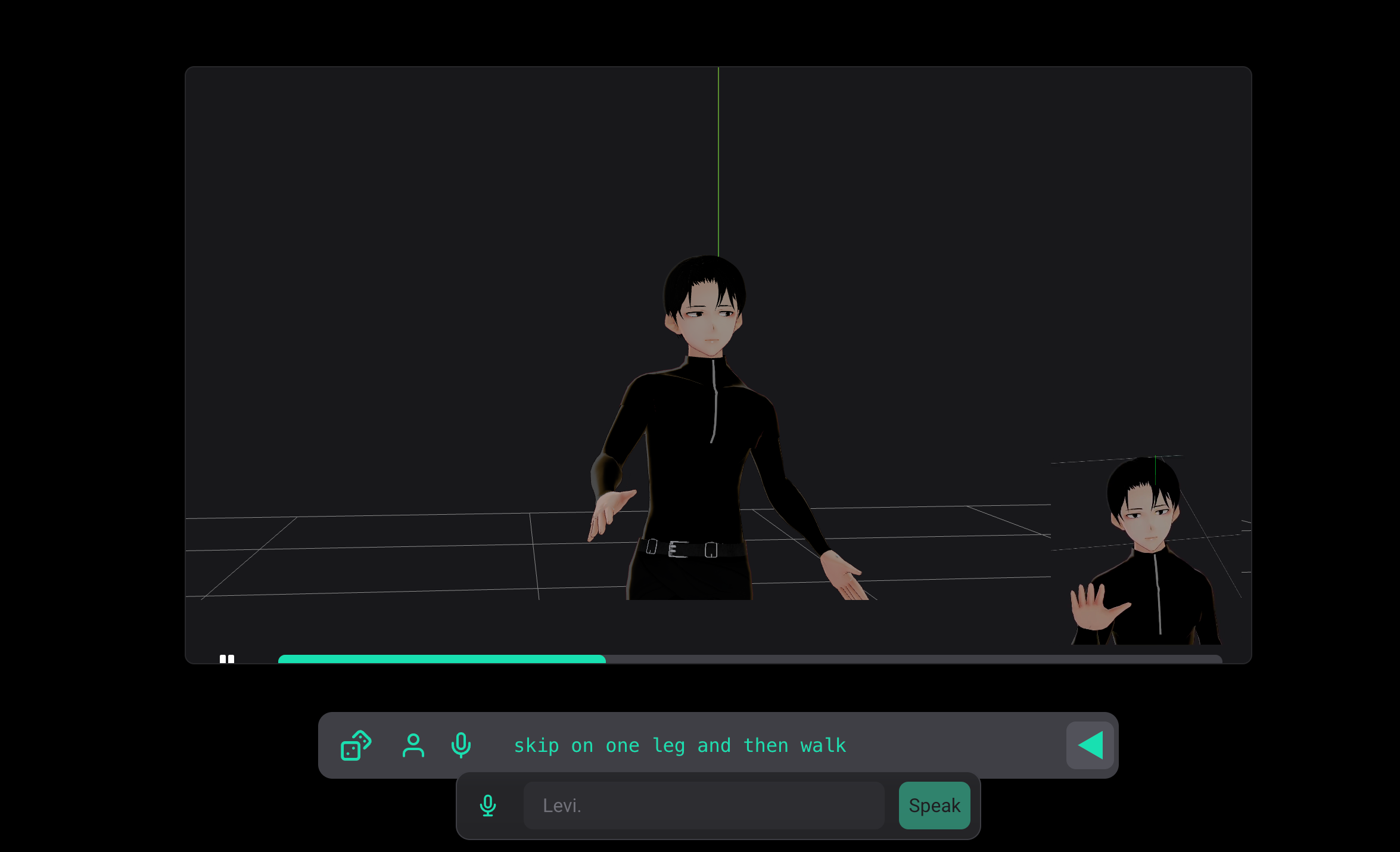
Movement Synchronization: Robots execute tasks like combat maneuvers, obstacle navigation, or rescue operations, with movements rendered in lifelike detail using VRM avatars.
Contextual Awareness: Sensors and environment-mapping tools allow robots to detect threats (e.g., zombie hordes) and adapt tactics dynamically.
Emotional Resonance: Robots display personality through gestures, facial expressions, and vocal tone, fostering teamwork. For example, a robot might nod determinedly before a mission or express urgency in its voice during combat.
In a demo scenario, a human operator directs a robot to clear a zombie-infested area. The robot acknowledges the command, navigates using real-time terrain data, and provides vocal updates (“Hostiles detected—engaging defense protocol”), all while its avatar’s expressions reflect focus and resolve.
How We Built It
Frontend Framework: Next.js powers the UI, chosen for its server-side rendering (SSR) and seamless deployment via Vercel, ensuring fast load times and scalability.
Voice Synthesis: Eleven Labs’ API generates lifelike speech from text inputs, with emotional modulation (e.g., urgency, calm) to match scenarios.
Avatar Animation: VRM characters (anime-style 3D models) are animated using Three.js. Lip-syncing is driven by phoneme analysis of audio streams, while body movements (e.g., running, combat stances) are triggered via tokenized commands.
Backend Infrastructure: Serverless APIs (AWS Lambda) handle voice processing and tokenization, converting commands into actionable tasks.
AI Integration: A custom GPT-4 pipeline enables context-aware decision-making, allowing robots to ask clarifying questions (“Should I prioritize civilians or combatants?”) or suggest alternative strategies.
Challenges
Seamless Voice-Action Sync: Latency between voice input and robot response was initially jarring. We optimized audio processing pipelines and introduced motion “anticipation” cues (e.g., avatars leaning forward slightly before sprinting).
Environmental Context: Teaching robots to distinguish between static obstacles, moving threats, and civilians required fusing LiDAR data with vision AI (YOLOv5 for object detection).
Personality Engineering: Balancing responsiveness with relatability was tricky. We implemented a sentiment analysis layer to adjust avatar expressions and dialogue tones based on mission urgency.
Accomplishments
Real-Time Demo: Successfully showcased a robot navigating a simulated urban battlefield, responding to voice commands with sub-second latency, and syncing lip movements to synthesized speech.
Emotional Depth: The robot’s ability to convey resolve (through clenched fists) or reassurance (a calming vocal tone) made interactions feel authentically collaborative.
Modular Design: The tokenization system allows new commands and animations to be added rapidly, enabling future scenarios like medical triage or infrastructure repair.
Future Vision
Haptic Feedback: Operators wearing VR gloves could “feel” obstacles robots encounter.
Swarm Intelligence: Coordinating multiple robots for large-scale missions.
Ethical AI: Implementing moral decision-making frameworks for life-and-death choices.
This project isn’t just about surviving the apocalypse—it’s a blueprint for the future of human-robot symbiosis in crisis response.
Built With
- api
- elevenlabs
- nextjs
- serverless
- typescript

Log in or sign up for Devpost to join the conversation.