-
Zolidarity
-
GPT-3 answer
Inspiration
Maria, 34, lives in Peru. She feels ill and when she goes to a hospital they schedule her an appointment to see her within 60 days. She had previously waited an average of 40 days to get an appointment, but with Covid-19 the deferral time increased by 50%. She decides to go to a pharmacy to buy drugs, but the diagnosis is often wrong. Like her, millions of people in Latin America and the world do not receive immediate attention, or even if they do, they may have a wrong diagnosis.
What it does
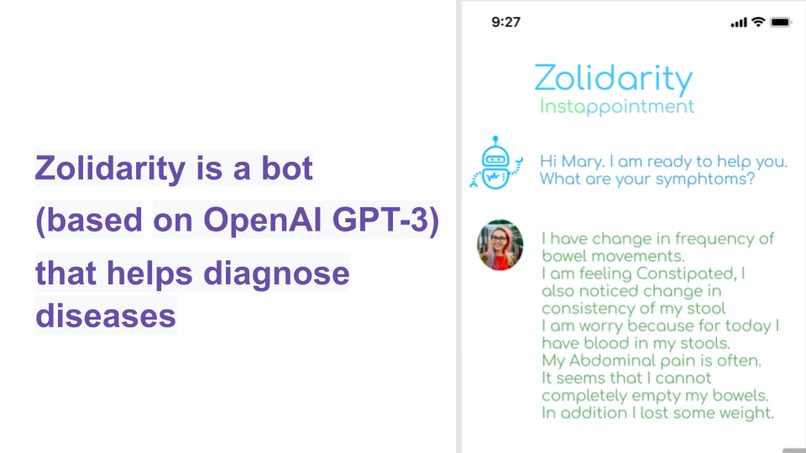
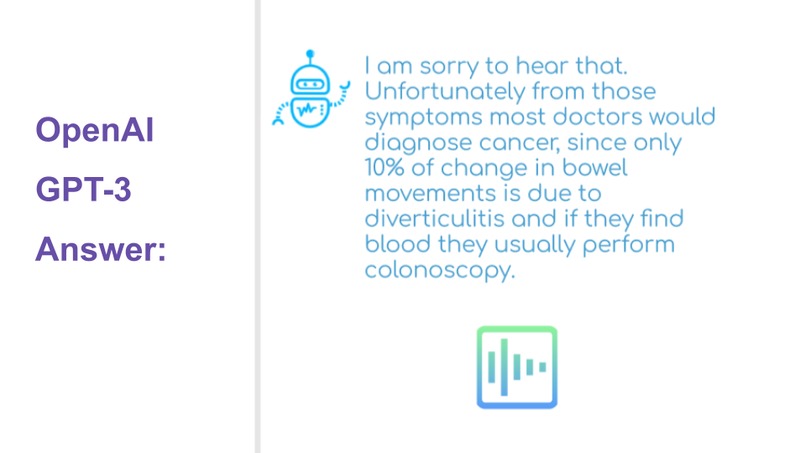
Zolidarity is a bot based on OpenAI GPT-3. The user provides information about their symptoms and the bot suggests a diagnosis and possible treatment that doctors could perform.
How we built it
It has been built using the Chat functionality of GPT-3, in which content about different cases is sent, with the patient's symptoms, and the bot responds to a possible diagnosis.
Challenges we ran into
Time restriction. My initial idea was related to the health sector but it was very different, however after the OpenAI workshop I saw the potential to help patients to have a more accurate diagnosis. As the only member of the team it was difficult to build all the functionality, but I focus more in the testing on OpenAI GPT-3
Accomplishments that we're proud of
Learn to handle the functionalities of GPT-3 and see the many possibilities of use. This is very exciting.
What we learned
I learned a lot about various tools (React, Firebase, etc) that can be used to build solutions quickly
What's next for Zolidarity
Deepen my learning of the tools and build the application.
Built With
- figma
- gpt-3
- openai


Log in or sign up for Devpost to join the conversation.