-
-
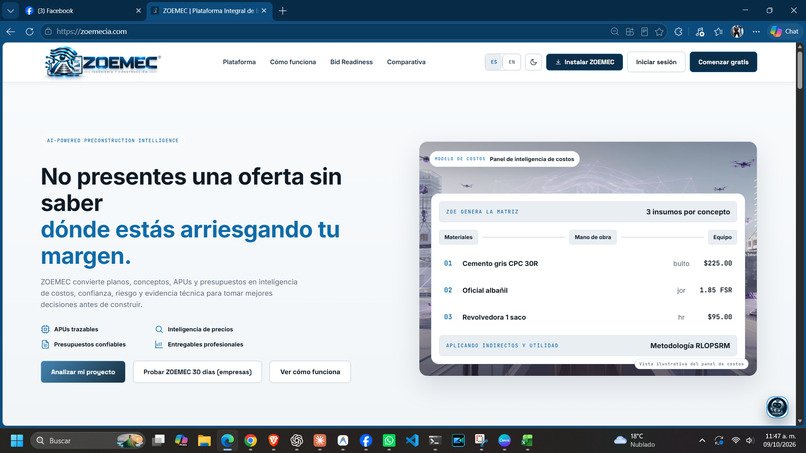
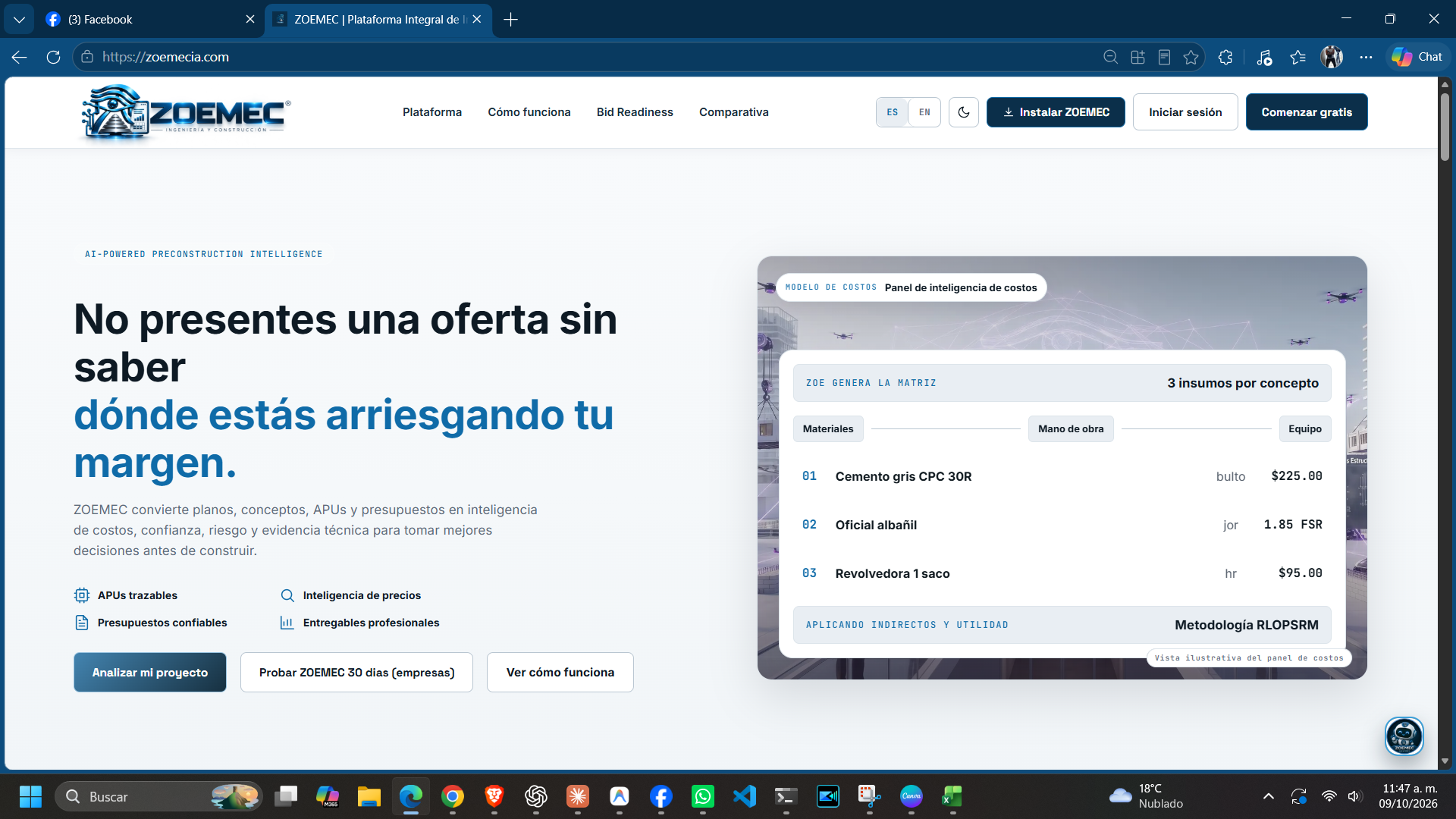
PORTADA ZOEMEC
-
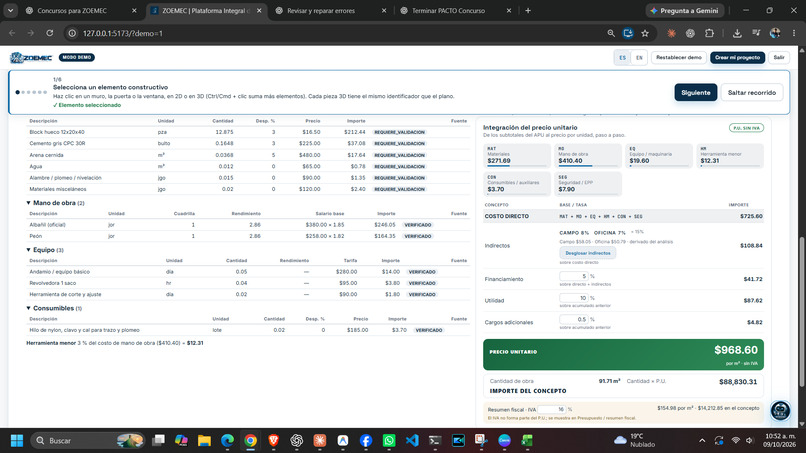
PRESUPUESTOS
-
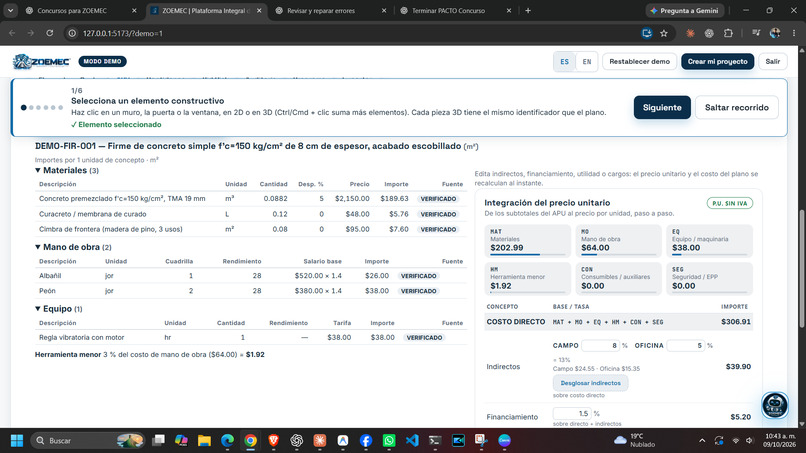
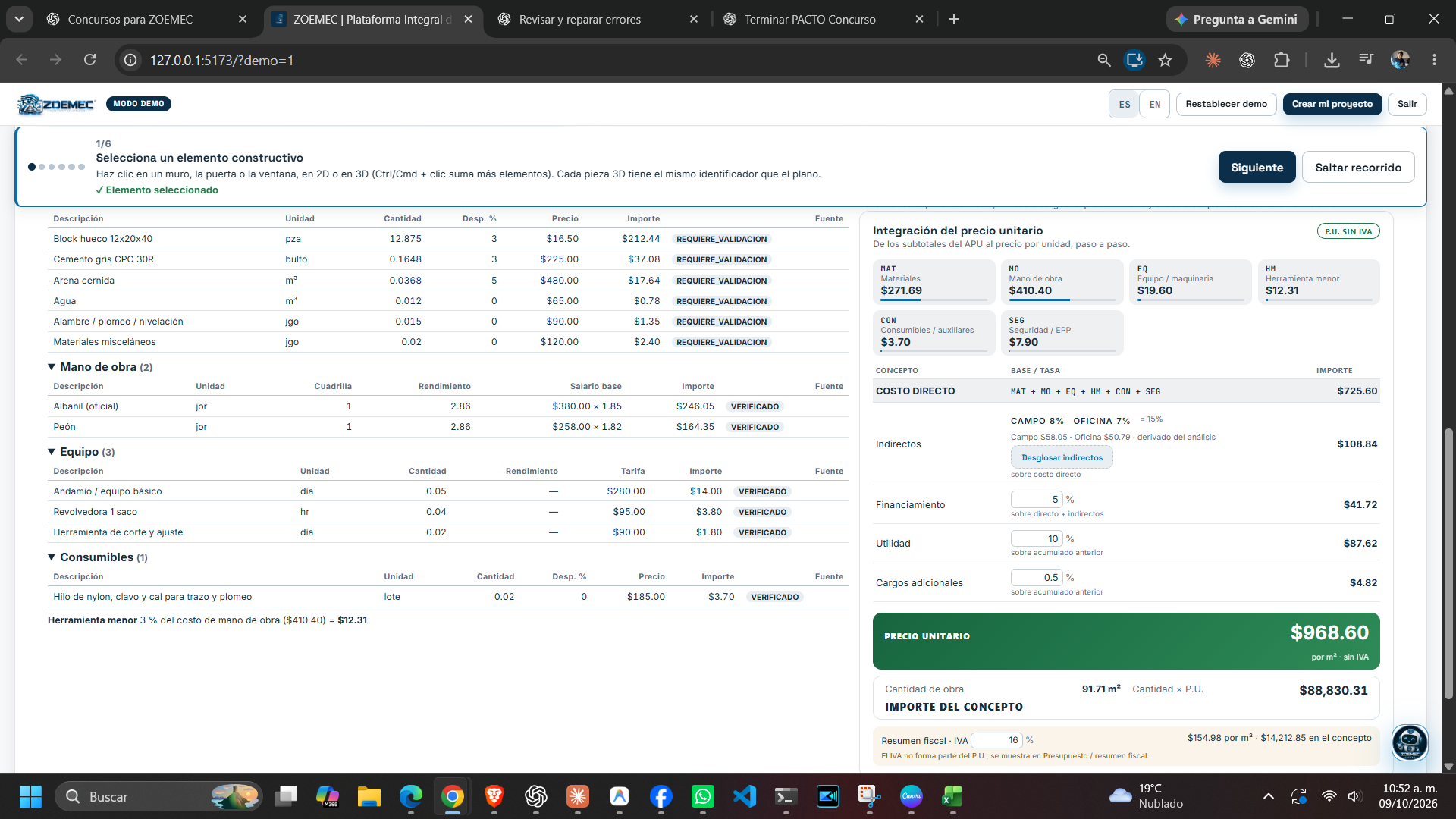
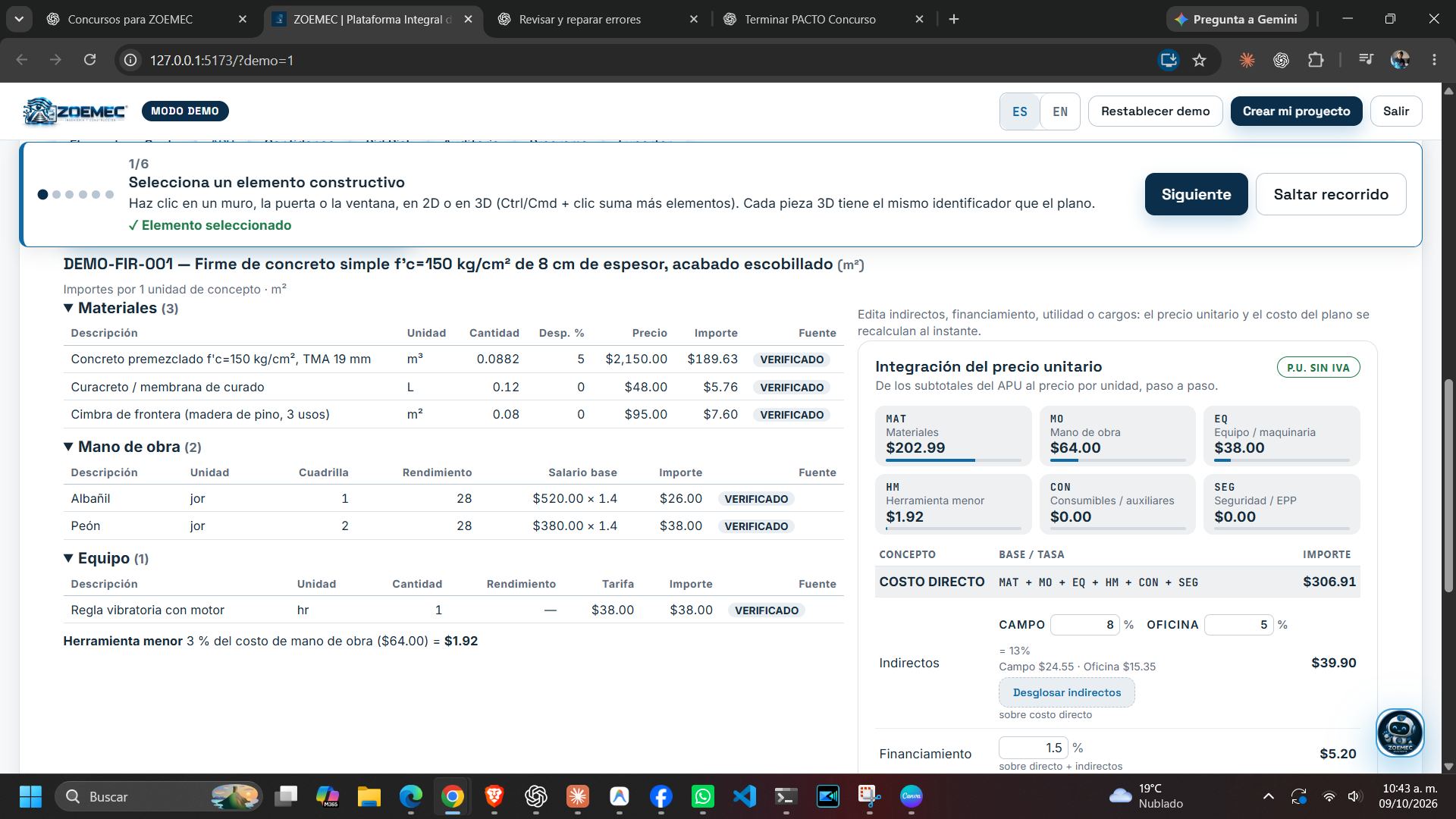
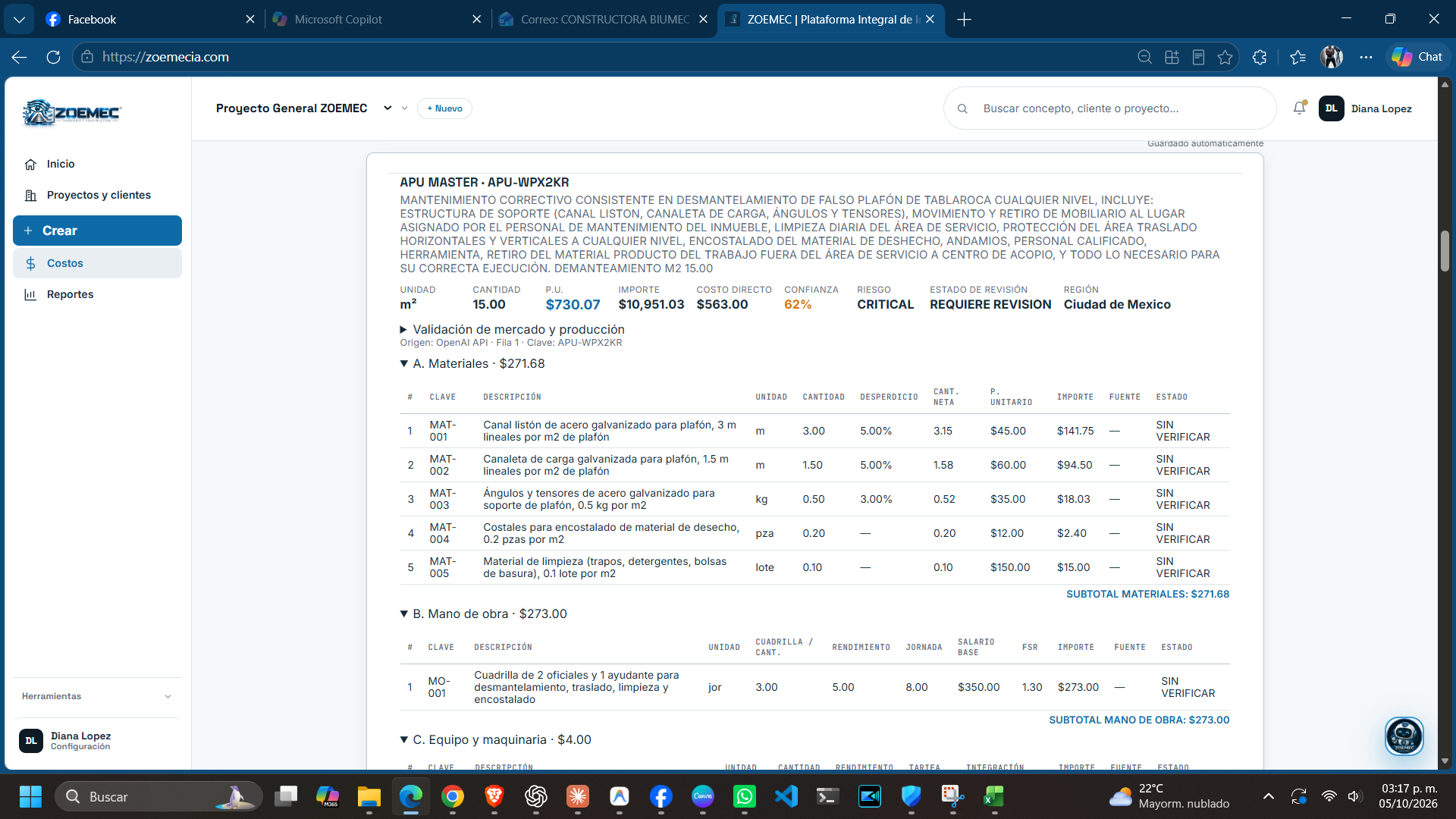
ANALISIS APU
-
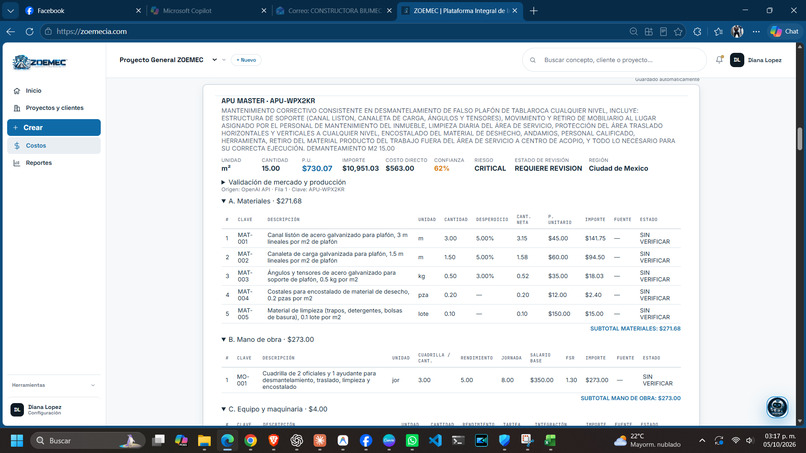
DESGLOSE DE COSTOS
-
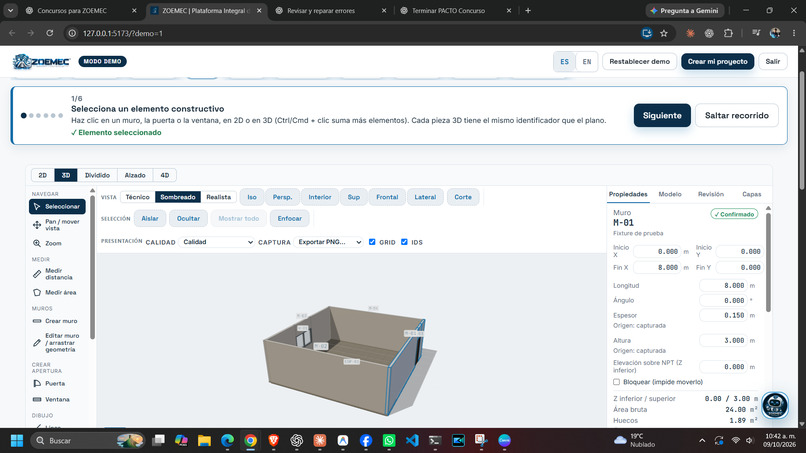
MODELADO 3D
-
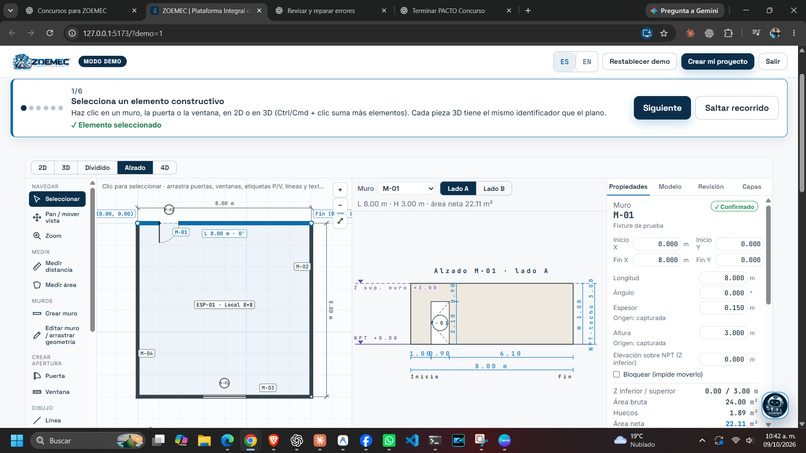
CUANTIFICACION Y PLANOS
-
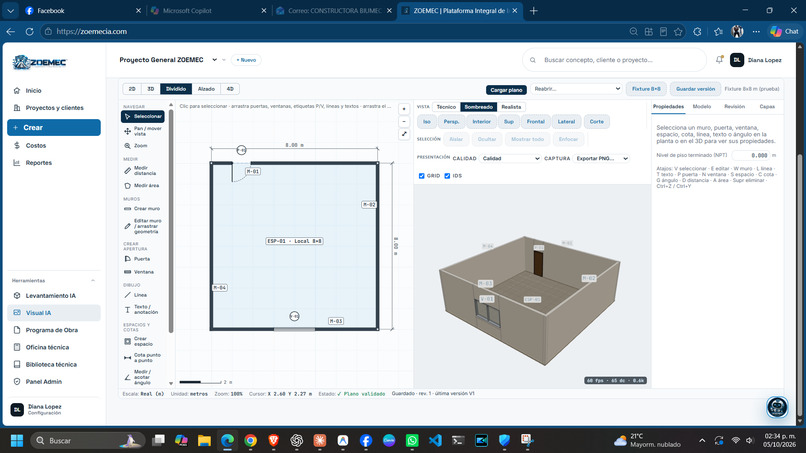
MODELADO CAD 2D Y 3D
-
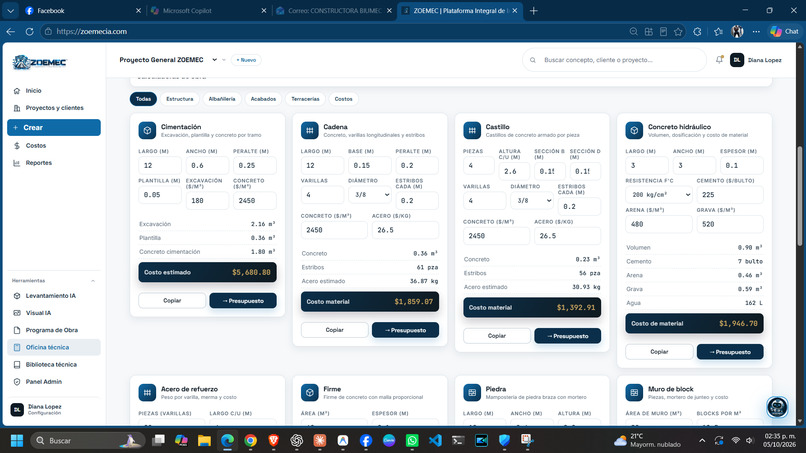
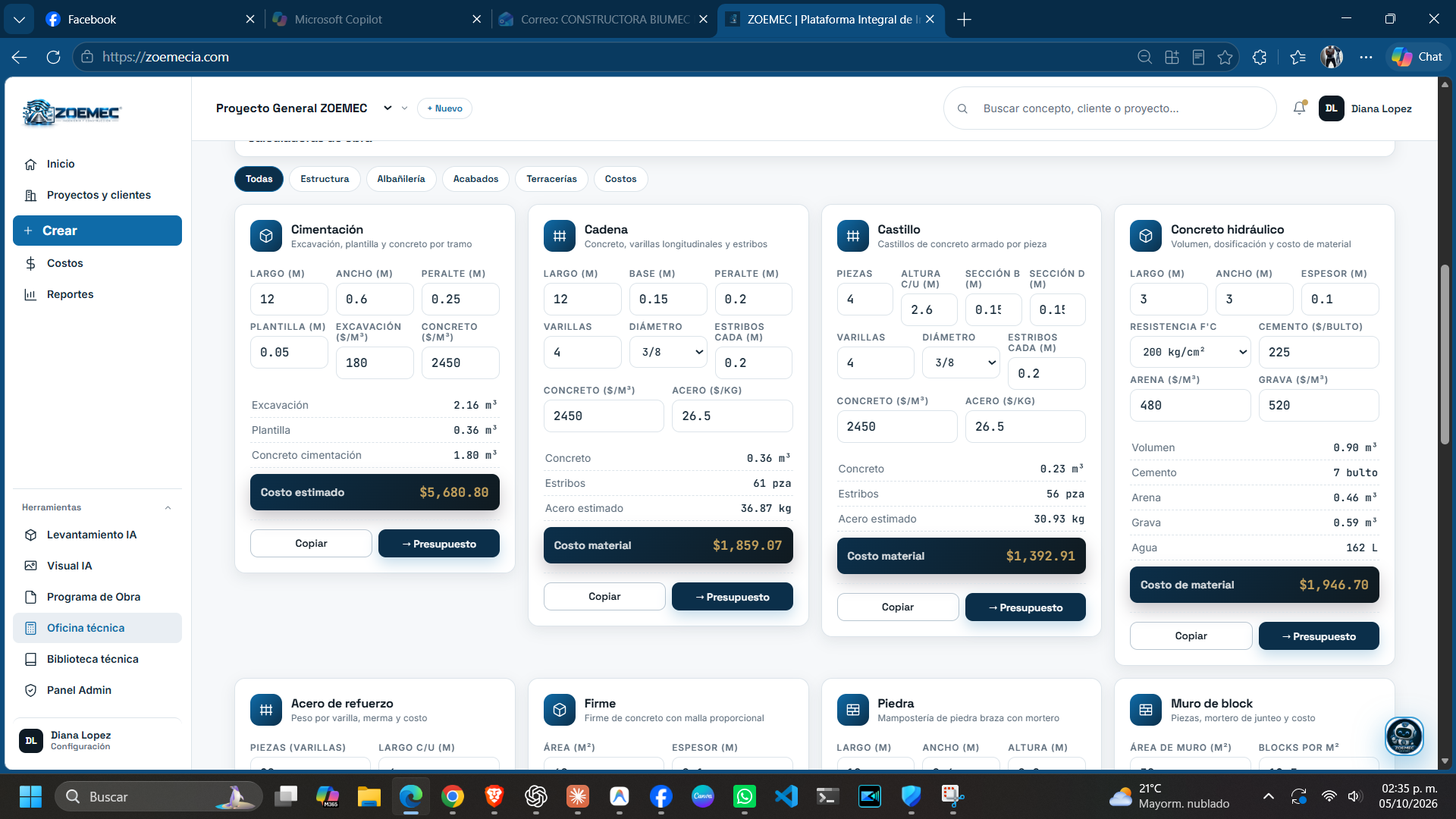
CALCULADORAS
Inspiration
Inspiration
Construction cost management is often fragmented across spreadsheets, drawings, quantity takeoffs, unit price analyses, and disconnected tools. This makes it difficult to understand not only how much a project may cost, but also where the uncertainty and financial risk actually come from.
ZOEMEC was created to bring these processes together in a single engineering platform, helping construction professionals move from raw project information to structured, traceable and explainable cost decisions.
What it does
ZOEMEC is an engineering and construction cost intelligence platform that combines quantity analysis, unit price analysis (APU), project cost evaluation, auditing and risk analysis.
The platform helps users organize construction information, analyze cost components, identify inconsistencies and evaluate the reliability of project estimates.
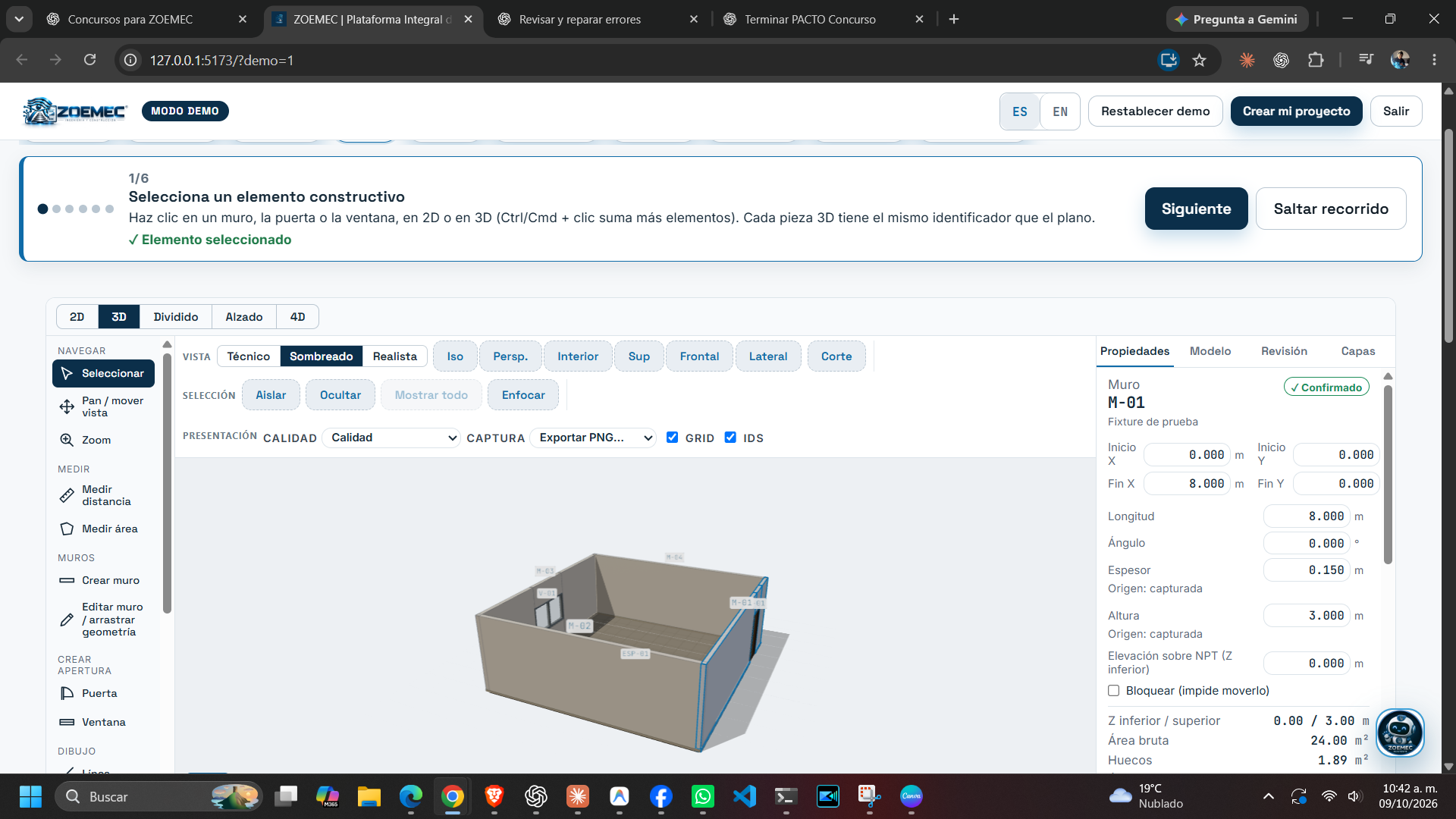
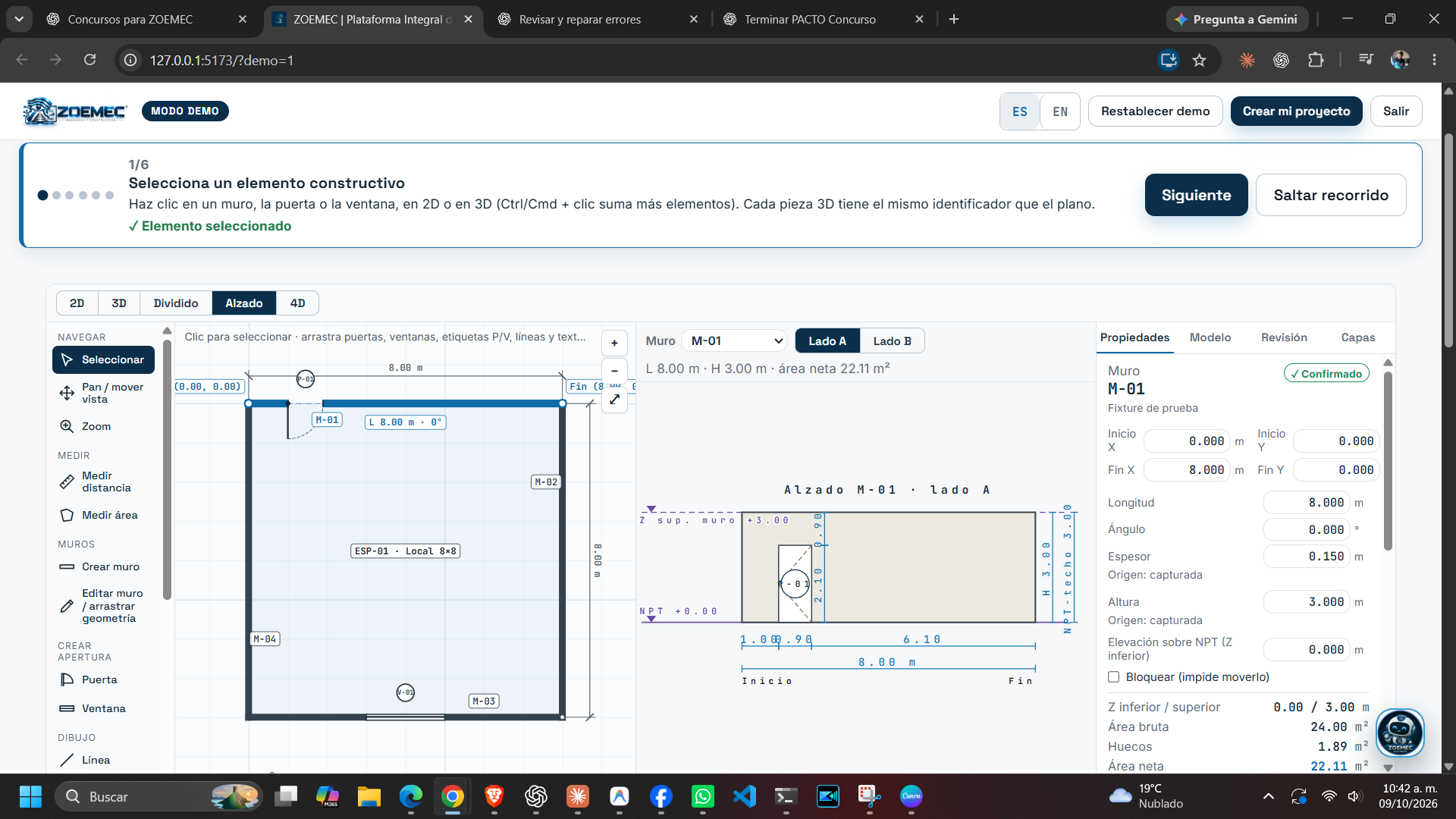
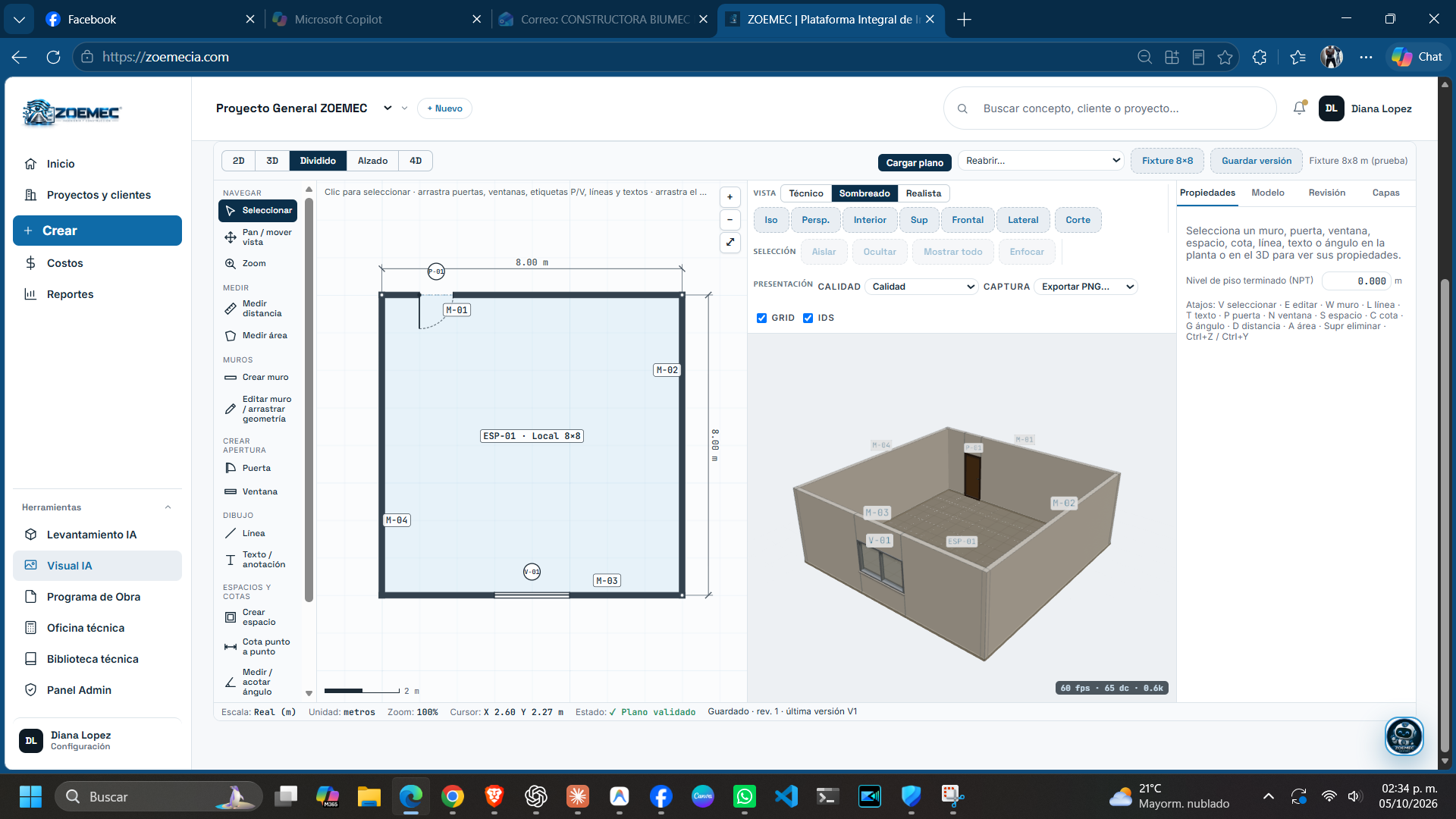
ZOEMEC also explores the connection between 2D/3D project information and cost analysis, allowing construction data to become actionable information rather than remaining isolated in drawings and spreadsheets.
What we are building for this hackathon
For the Nebius × NVIDIA Global AI Hackathon, we are extending ZOEMEC with a new AI intelligence layer powered by Nebius infrastructure and NVIDIA open models.
The goal is to enable professionals to interact naturally with project and cost data and ask questions such as:
- Why is this unit price considered risky?
- Which cost components contribute most to uncertainty?
- What inconsistencies should be reviewed before submitting a bid?
- Which project elements require human verification?
- What factors are driving the estimated project cost?
Instead of simply generating an answer, the AI layer is designed to use structured engineering information from ZOEMEC to produce contextual and explainable analysis.
How we built it
ZOEMEC combines a web-based engineering platform with structured construction cost data, quantity analysis, APU workflows, risk evaluation and project auditing.
During this hackathon, we are integrating Nebius AI infrastructure and NVIDIA open models to create the new conversational and reasoning layer.
This new layer will connect AI reasoning with ZOEMEC's existing engineering data so that responses can be grounded in actual project information instead of generic construction knowledge.
Challenges
One of the main challenges is ensuring that AI does not replace engineering calculations or invent project information.
Construction decisions can have significant financial consequences, so our approach is to separate deterministic calculations from AI reasoning. Quantities, costs and structured engineering data remain controlled by the platform, while AI is used to interpret, explain and help professionals investigate that information.
Another challenge is transforming complex construction data into context that an AI model can understand while preserving traceability.
What we learned
Building ZOEMEC has reinforced an important idea: AI in engineering becomes more useful when it can explain structured evidence rather than simply generate text.
The combination of deterministic engineering calculations, project data and AI reasoning can create a more transparent way for professionals to understand cost, uncertainty and risk.
What's next for ZOEMEC
Our next step is to complete the Nebius and NVIDIA integration and evaluate the AI layer with real construction workflows.
We want ZOEMEC to evolve from a construction cost platform into an intelligent engineering environment where professionals can analyze projects, investigate risks and understand the reasoning behind critical cost decisions.
What it does
How we built it
Challenges we ran into
Accomplishments that we're proud of
What we learned
What's next for ZOEMEC IA
Built With
- ai
- firebase
- javascript
- nebius
- nemotron
- nvidia
- react
- three.js

Log in or sign up for Devpost to join the conversation.