-
-

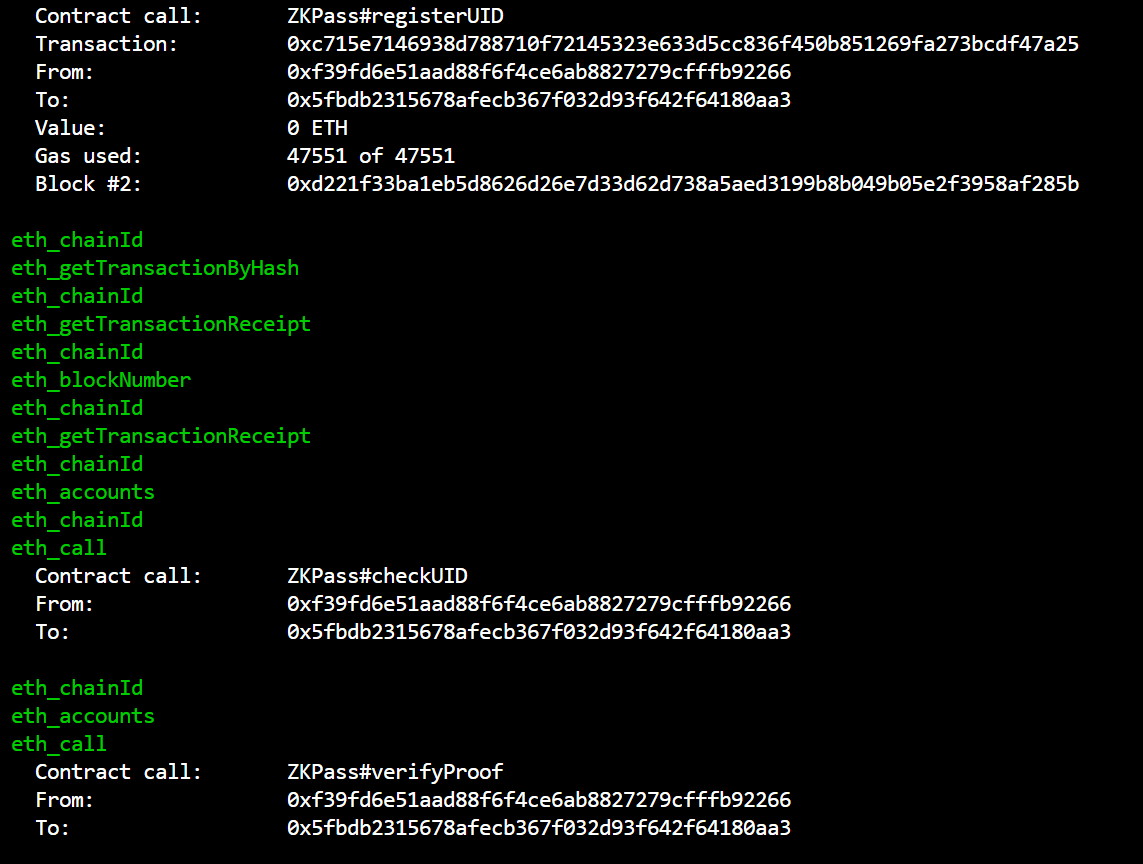
blockchain interaction
-
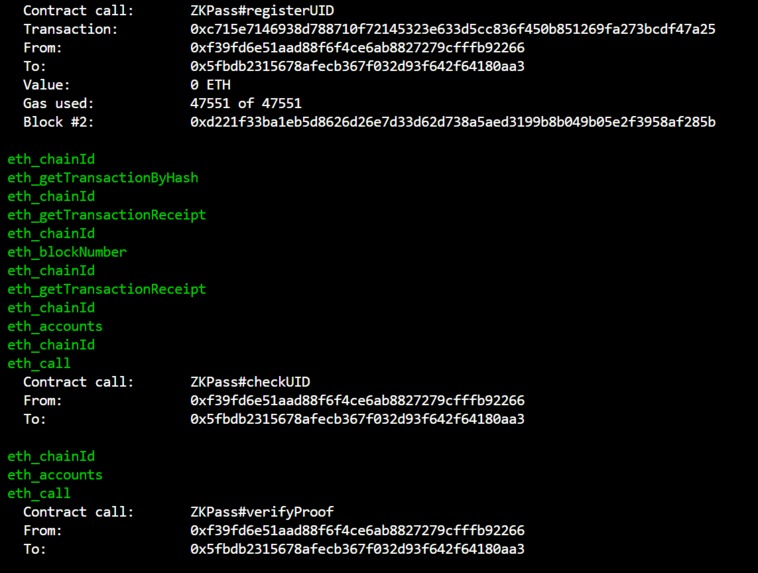
blockchain interaction
-
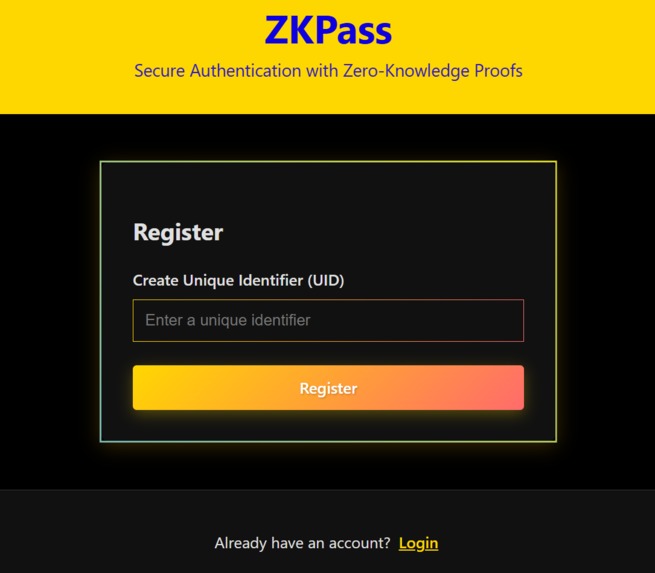
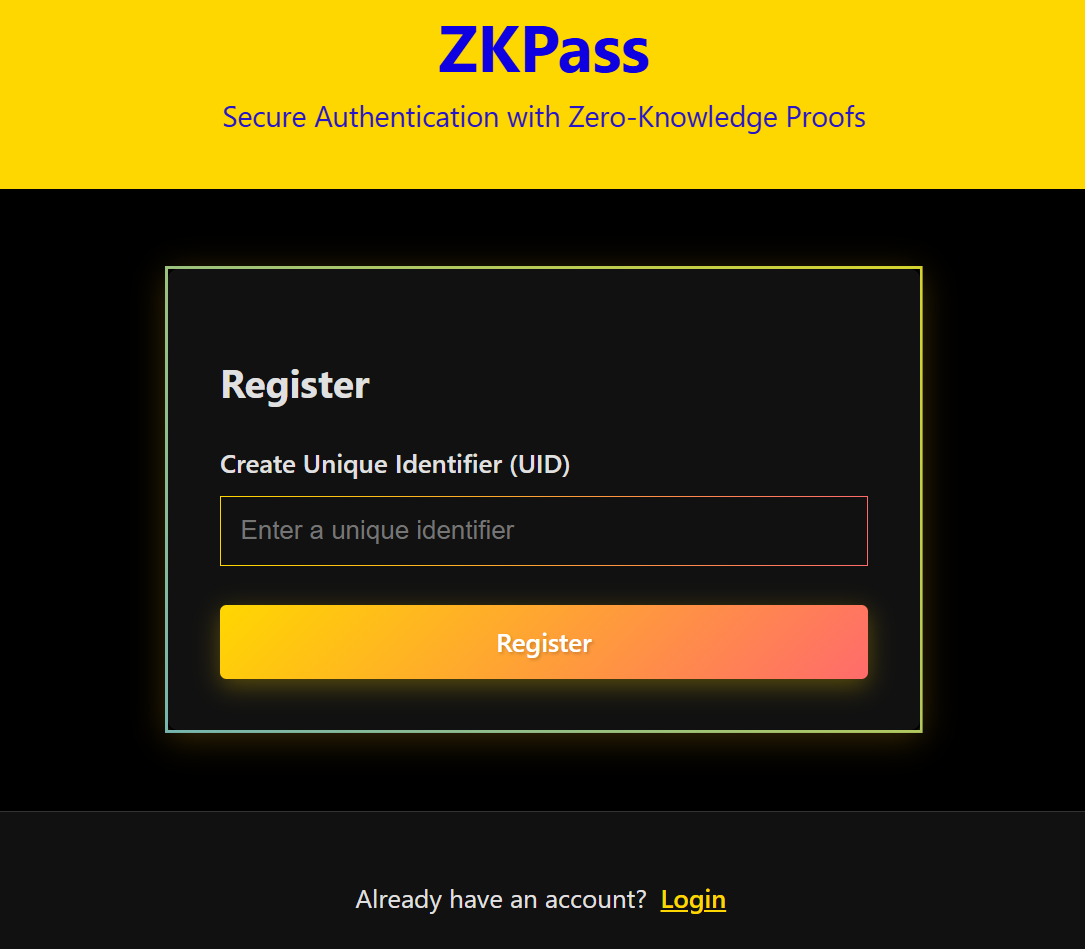
register page
-
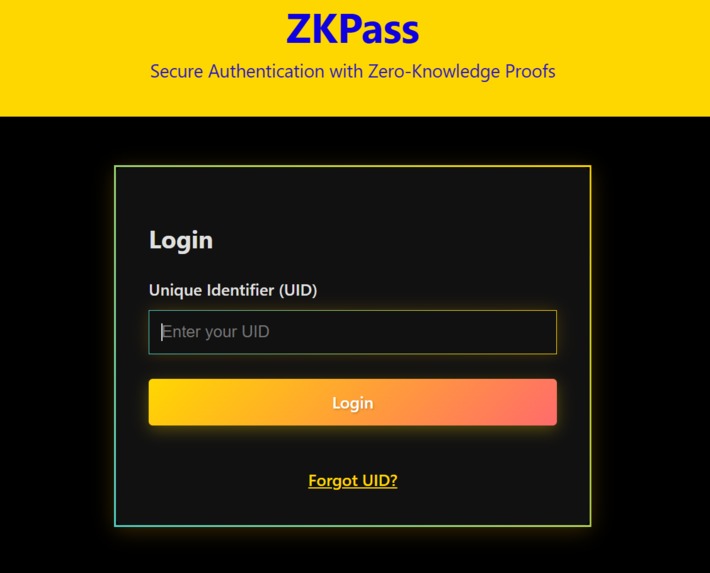
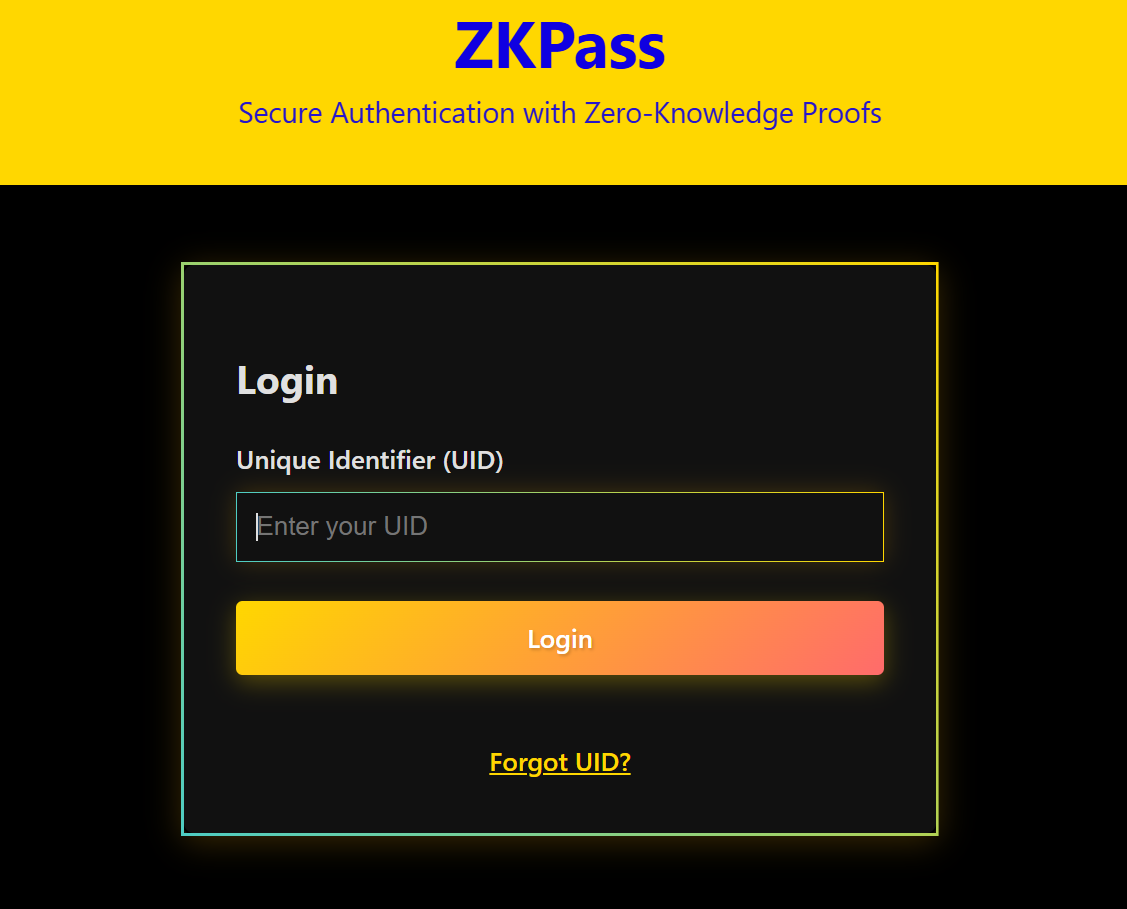
login page
-
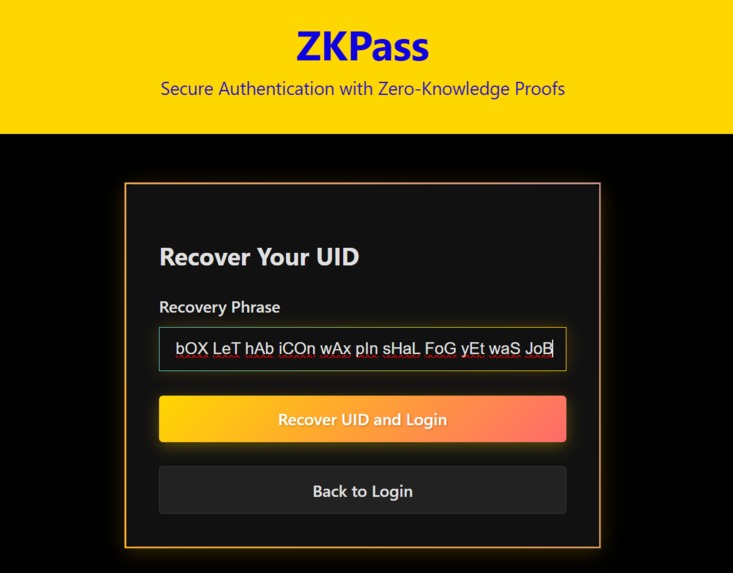
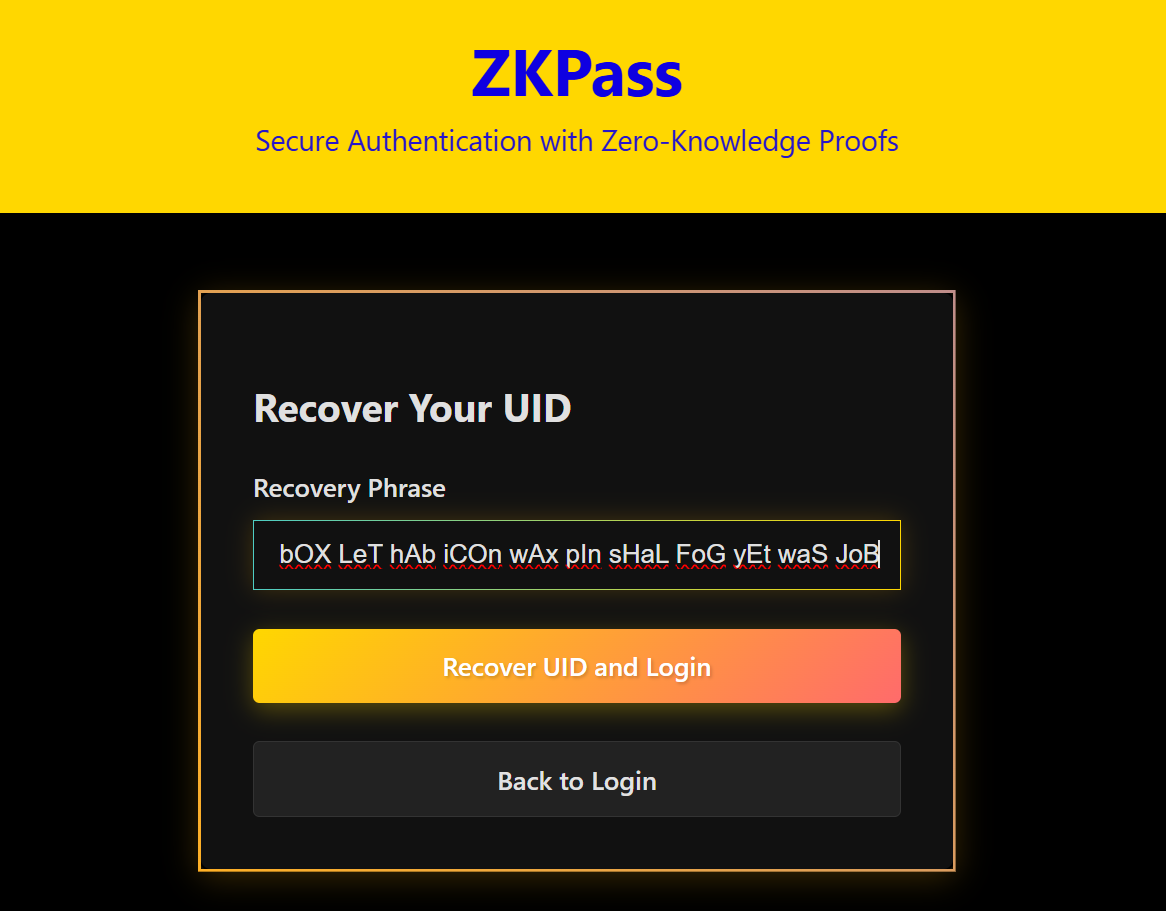
uid recovery
-
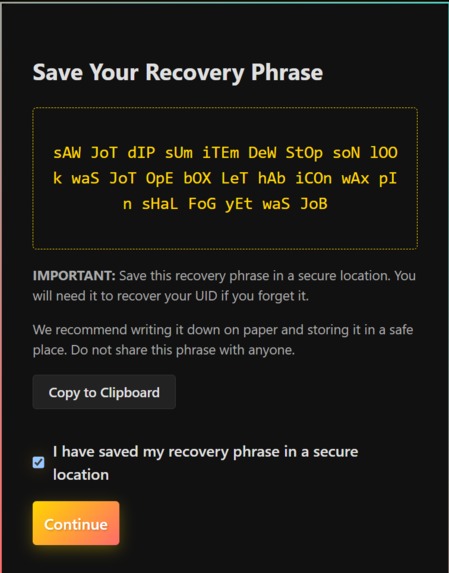
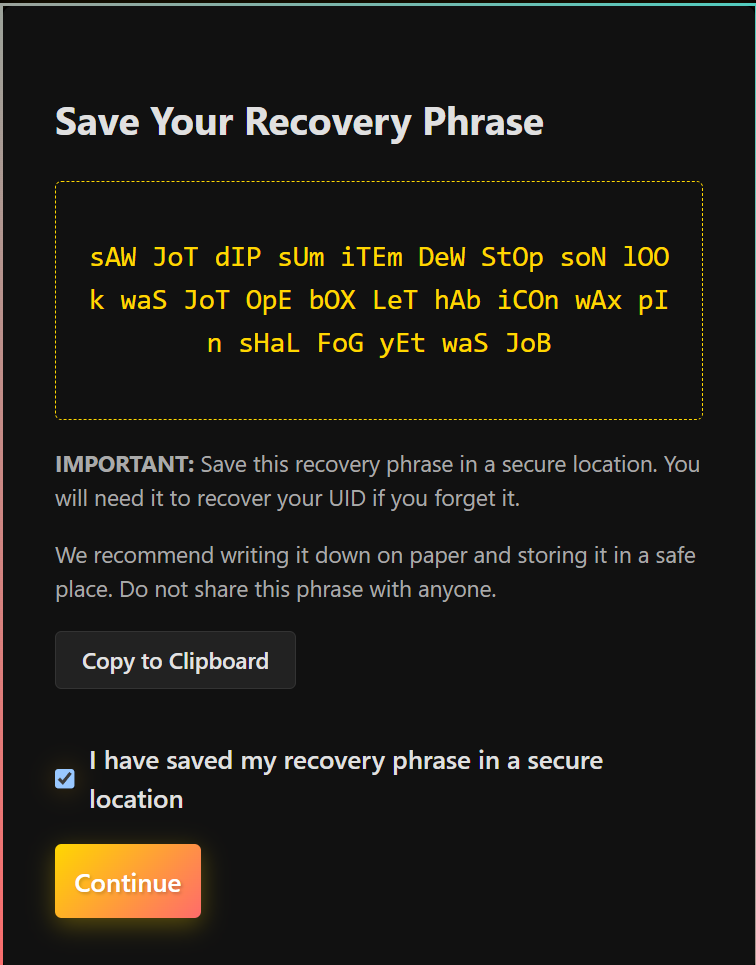
recovery phrase

Inspiration
Traditional logins use email and passwords, but they expose secrets, risk data leaks, and rely heavily on trust in centralized servers. We wanted to build something privacy-first, user-owned, and future-ready. Inspired by Self-Sovereign Identity (SSI) and Zero-Knowledge Proofs (ZKPs), we created ZKPass — a secure login system where users prove their identity without ever revealing their secret.
What it does
ZKPass enables users to log in using a unique identity (UID) without ever sharing a password. Instead, the system uses Zero-Knowledge Proofs to verify that users know their secret (derived from UID) — without revealing it. It ensures:
- No password storage
- No identity leaks
- Blockchain-based UID ownership
- Fast, trustless, cryptographic login
How we built it
Frontend: React + Tailwind for a sleek UI Backend: Node.js + Express handles ZKP verification ZKP Layer: Groth16 zk-SNARKs (compiled using Circom and SnarkJS) Blockchain: Smart contracts store UIDs on the Polygon Mumbai testnet Integration: The client derives a priKey from the UID and uses it to generate a ZKP proof. The backend verifies the proof using on-chain UID and a precomputed verifying key.
Challenges we ran into
ZKP Complexity: Learning and integrating zk-SNARKs (Groth16) was tough, especially proving/verification circuits. Private Key Derivation: Designing a safe one-way derivation method without storing anything sensitive. Blockchain Integration: Syncing UID verification with the smart contract and keeping gas costs low. Recovery Mechanism: Creating a secure yet user-friendly recovery phrase flow.
Accomplishments that we're proud of
Built a passwordless login system using real cryptography (zk-SNARKs). Achieved login verification under 2ms, even when integrated with blockchain. Stored no secrets on servers, keeping user identity private and self-owned. Designed a scalable modular architecture for future integrations.
What we learned
- Hands-on experience with zk-SNARKs, Circom circuits, and proof systems.
- How to structure a secure identity system without relying on centralized databases.
- The importance of modular architecture when combining frontend, backend, blockchain, and ZKP components.
- Best practices in privacy-preserving authentication and cryptographic proof generation.
What's next for ZKpass
🔐 Add support for multi-device identity syncing via encrypted keys. 🪪 Integrate with SSI wallets and DIDs (Decentralized Identifiers) ⛓️ Move verification fully on-chain with verifier contracts. 🌐 Support additional use cases like e-voting, private DAO access, and web3 login systems. 📱 Build a mobile-first version with QR-based proof authentication.
Built With
- blockchain
- node.js
- typescript
- vite
- zkp

Log in or sign up for Devpost to join the conversation.