-
-
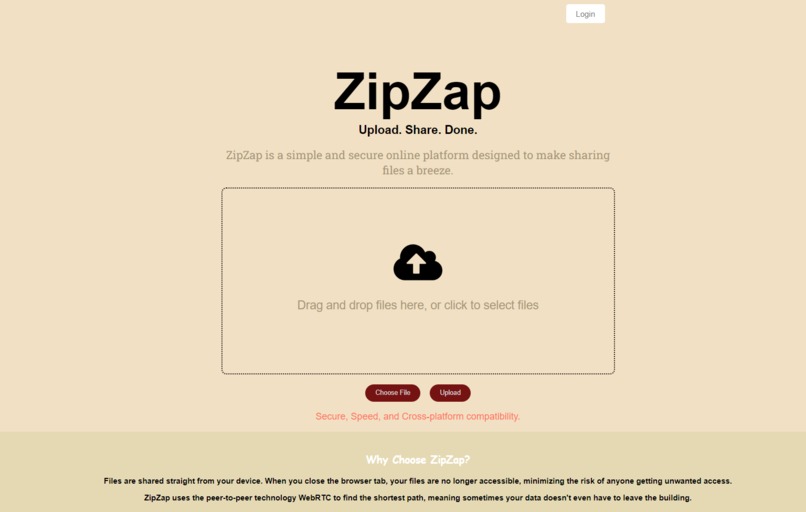
P2P File sharing website
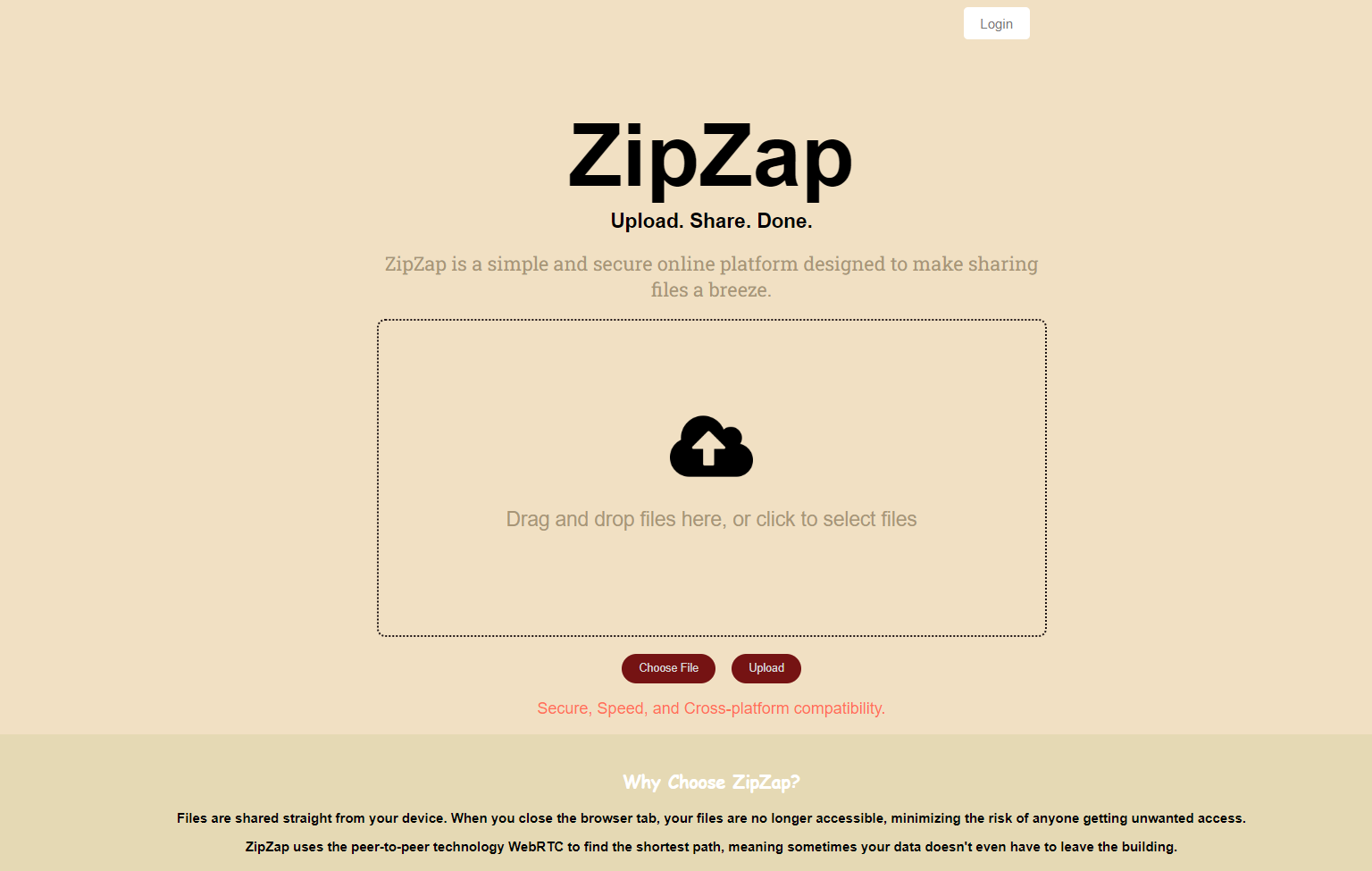
Inspiration The idea for ZipZap - File Sharing Website stemmed from the everyday frustrations of transferring files between devices. Whether it was sending large videos to friends or sharing documents with colleagues, the process often involved cumbersome cables, slow uploads, and unreliable cloud services. We envisioned a more seamless solution that leveraged the power of the internet and peer-to-peer technology.
What it does ZipZap is a web-based platform that enables users to upload files and generate shareable links. These links can be copied, emailed, or shared via QR codes, providing a convenient way to transfer files between devices.
How we built it We built ZipZap using Python and the Flask framework for the backend, and HTML, CSS, and JavaScript for the frontend. For P2P file transfers, we utilized WebRTC, a real-time communication technology that allows for direct data exchange between peers.
Challenges we ran into 1) Asynchronous Programming: Working with asynchronous operations in Python and Flask was a new challenge. We had to learn to handle concurrent requests and manage file transfers efficiently. 2) Security: Protecting user data and preventing unauthorized access was a top priority. We employed encryption and other security measures to safeguard sensitive information. 3) Scalability: As the website gained popularity, we had to consider scalability challenges. We implemented strategies to handle increased traffic and optimize resource usage.
Accomplishments that we're proud of:- 1) Creating a user-friendly interface: We focused on providing a simple and intuitive experience for users, making it easy to upload, share, and download files. 2) Implementing P2P technology: We successfully integrated WebRTC to enable direct peer-to-peer file transfers, eliminating the need for a central server. 3) Ensuring data security: We implemented robust security measures to protect user data and prevent unauthorized access.
What we learned:- 1) The importance of user experience: A well-designed interface can significantly enhance user satisfaction and engagement. 2) The challenges of P2P communication: We gained valuable experience in working with WebRTC and overcoming network-related issues. 3) The need for scalability: As a project grows, it's essential to consider scalability from the beginning to avoid performance bottlenecks.
What's next for ZipZap - File Sharing Website We have several exciting plans for ZipZap's future: 1) Expanding features: We aim to add new features like file encryption, password protection, and integration with cloud storage services. 2) Improving performance: We will continue to optimize the platform for speed and efficiency, especially as the user base grows. 3) Exploring mobile compatibility: We plan to develop a mobile app to provide a seamless experience for users on the go.

Log in or sign up for Devpost to join the conversation.