-
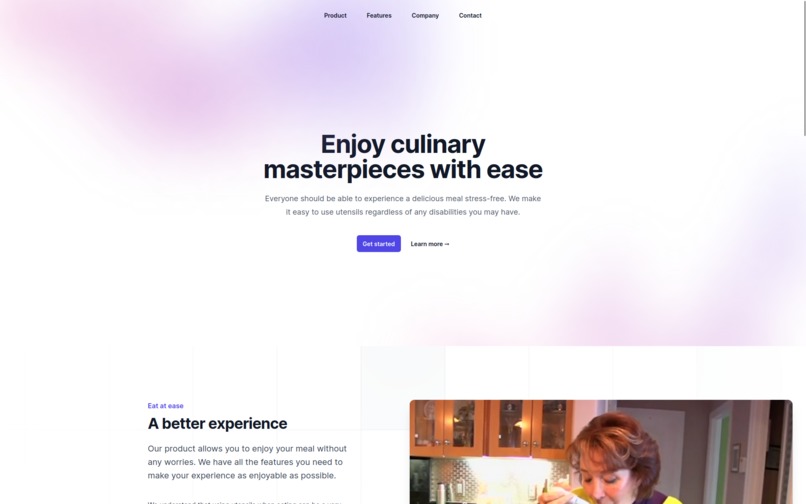
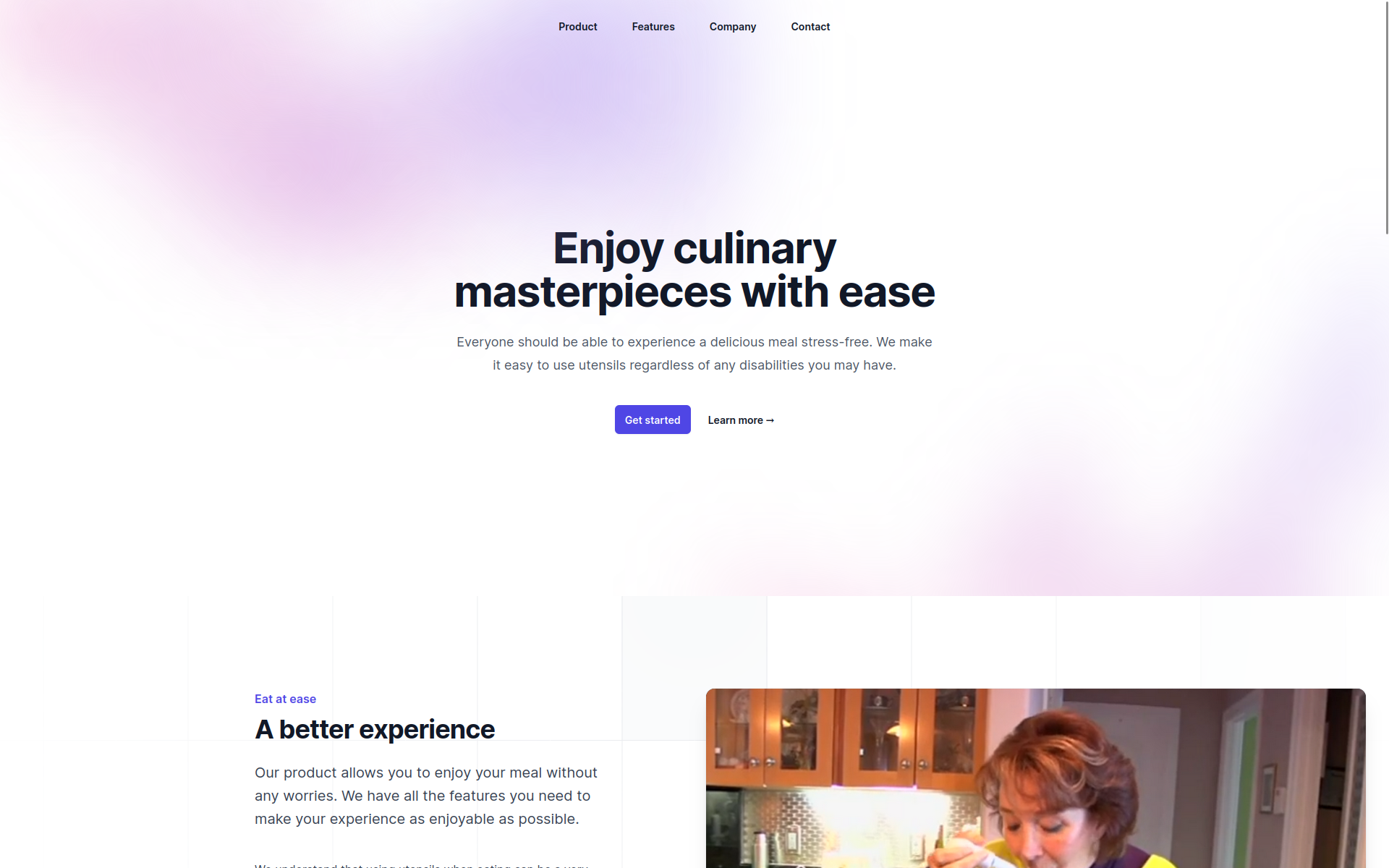
Website Snapshot
-
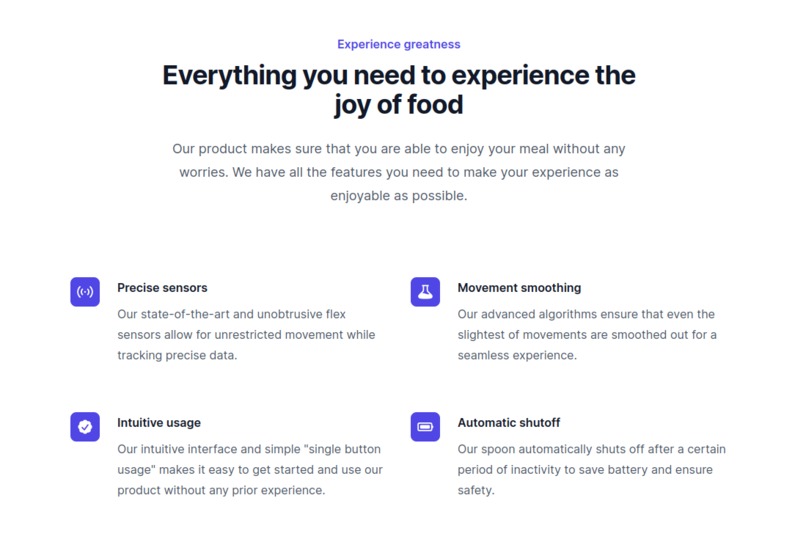
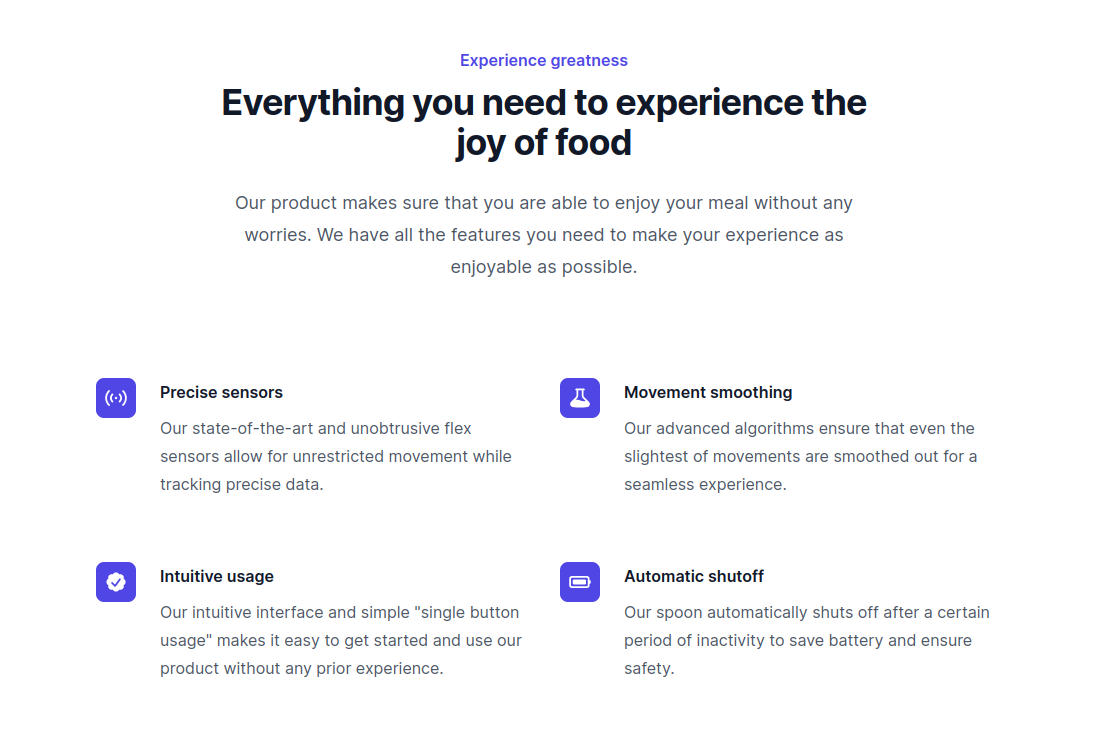
Project Features
-
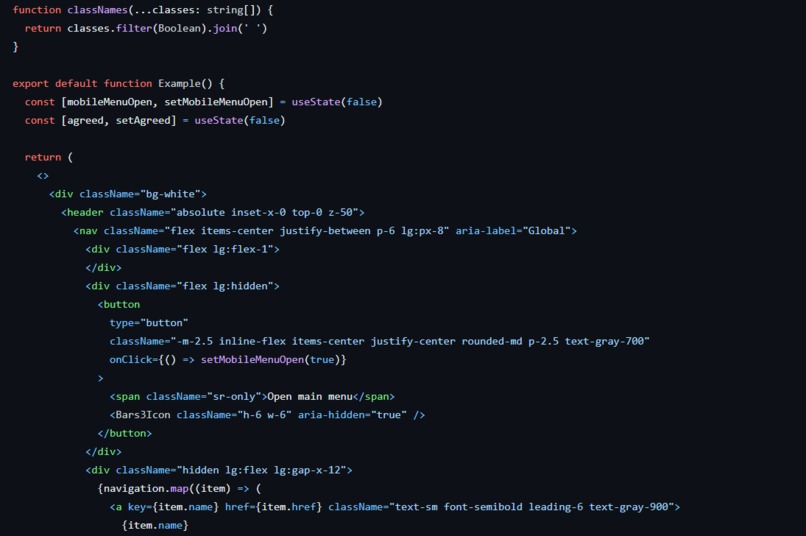
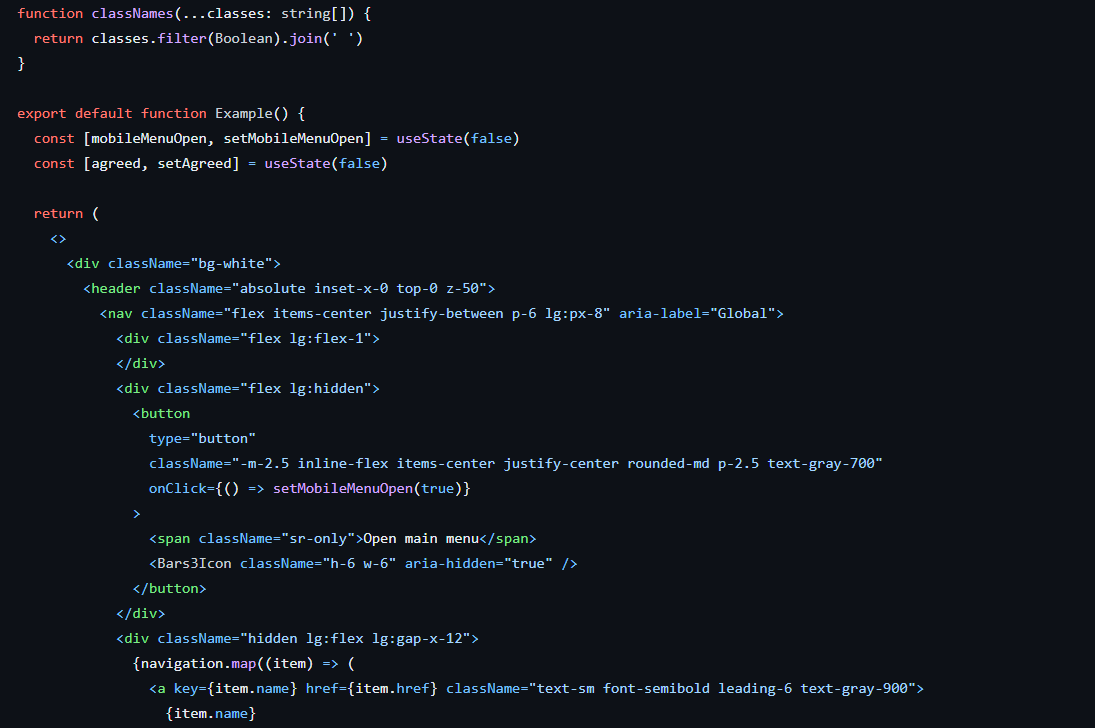
Website Code
-
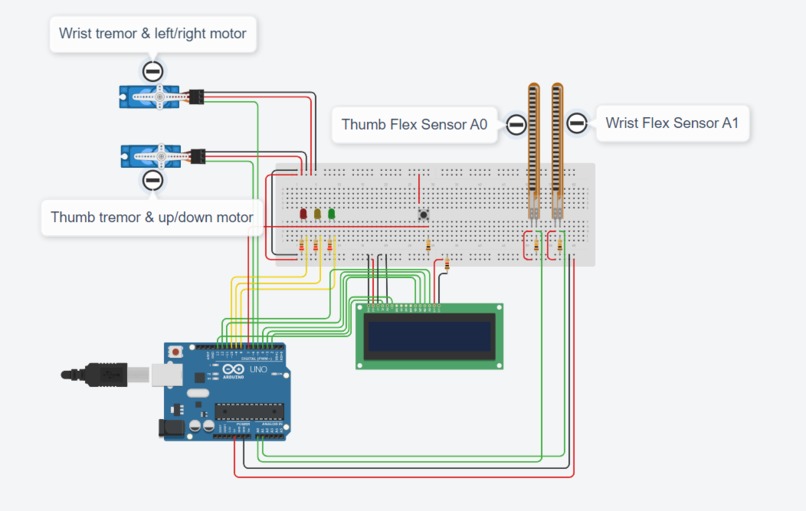
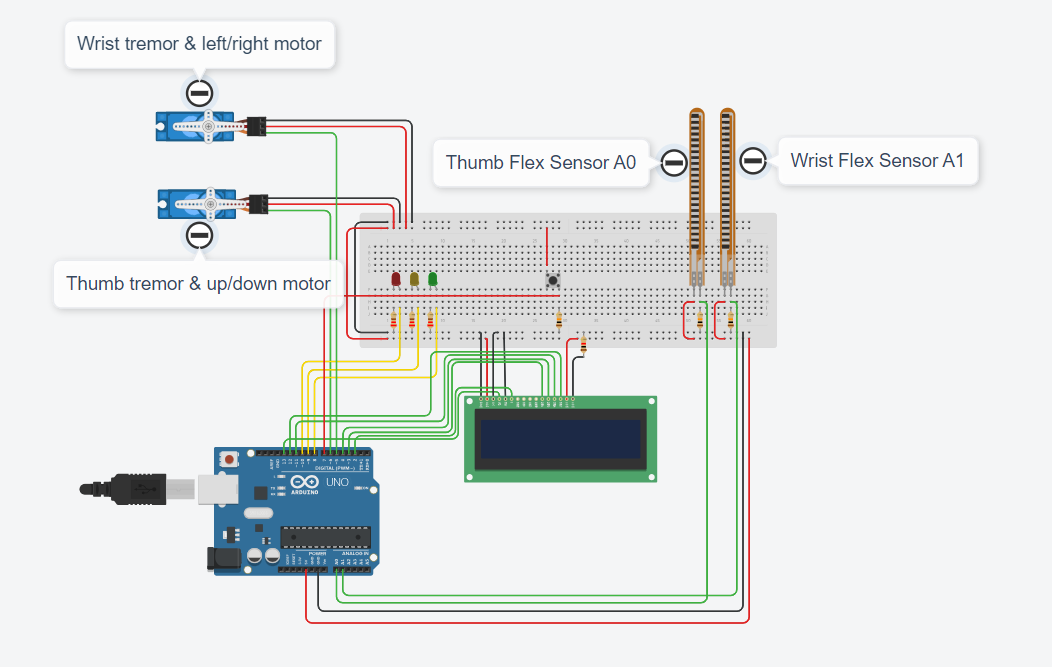
Our Product on TinkerCad
-
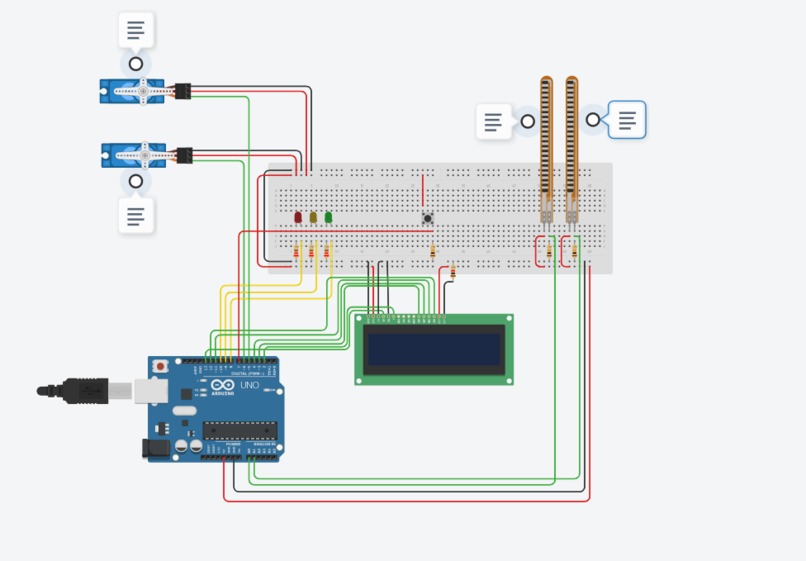
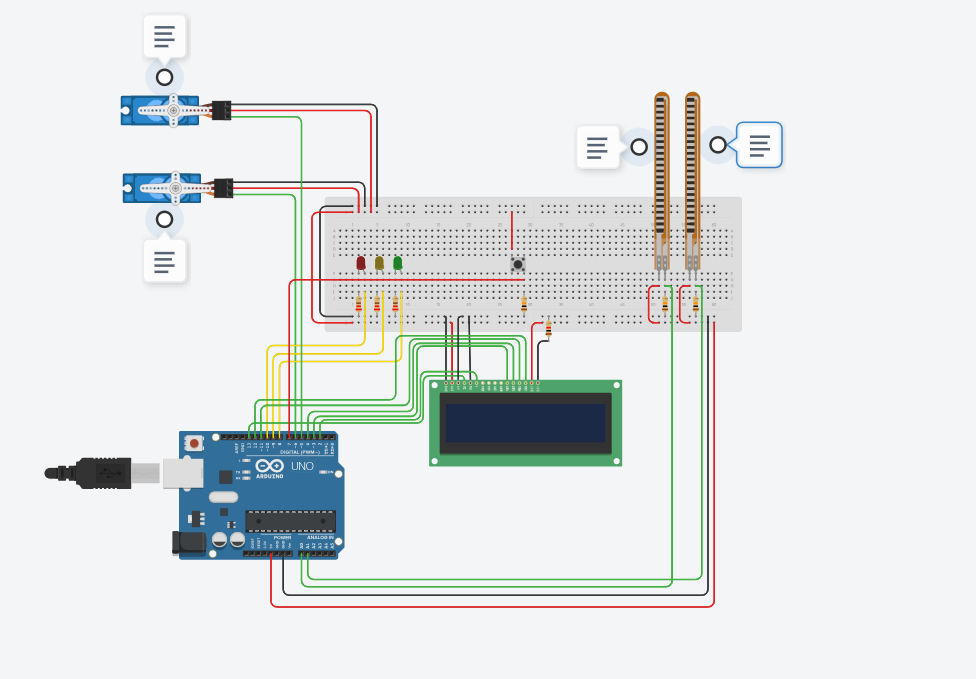
Our Product on TinkerCad
-
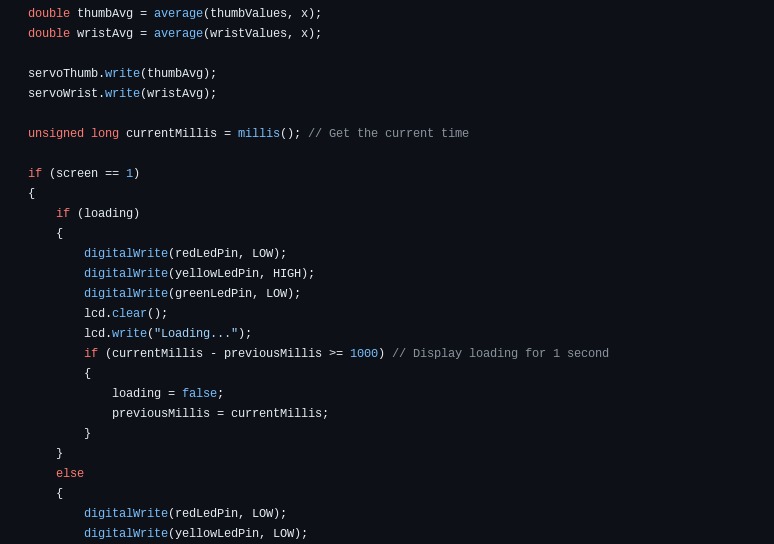
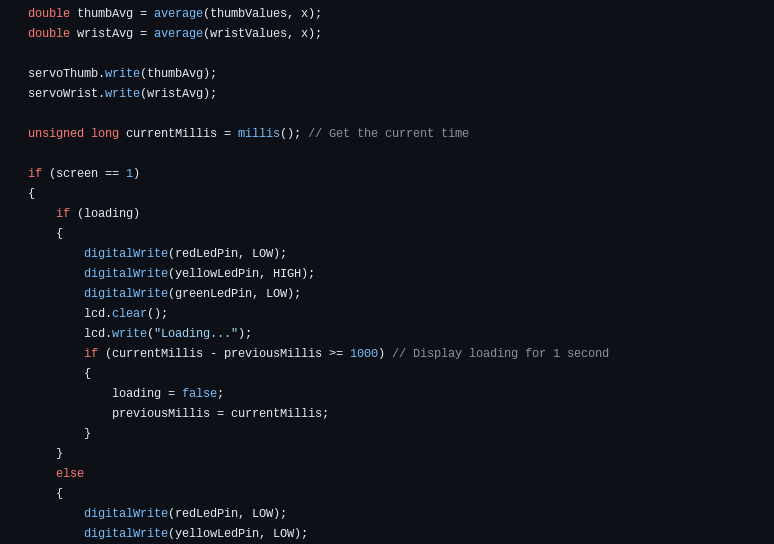
Arduino Code
Inspiration
Our inspiration for this project came from one of our group members elderly family members, who has problems handling utensils due to excessive tremors. Given the theme is "food", we want to make sure that everyone is able to experience the joy of culinary arts regardless of any disabilities involving tremors.
What it does
Our product uses flex sensors to unobtrusively measure the user's joint movements in the wrist. These movements are then smoothened with our algorithm to correct the spoon's movement, allowing users who suffer from tremors to handle utensils.
How we built it
The team spent the initial hours designing and prototyping a solution to the problem of utilizing utensils with tremors. After experimenting with tilt sensors, accelerometers, full arm flex sensors, and fast fourier transforms, we settled on a mixture of non-intrusive flex sensors on the wrist and an optimized smoothening algorithm. We also optimized the resistor values and angle modifiers in the code to map Ohms to degrees.
Challenges we ran into
Our first major strife was deciding on the scope/idea of our project. We had decided before coming to the hackathon that we wanted to be as thorough as possible with our plan before starting development, as we thought we could finish development quite quickly. This took much longer than expected, as disagreements on where we wanted to take the project took up a good chunk of time. Our second major issue that we ran into was our software. We used TinkerCad to simulate hardware, but it had many limitations. For example, we wanted to use devices like an accelerometer or tilt sensors to correct and guide the motion of the spoon. Unfortunately, the accelerometer was only available in a legacy version, and we had to scrap the approach for a less precise, although implementable solution instead.
Accomplishments that we're proud of
This hackathon was the first hackathon for most of our group members. Thus, simply finishing the event, and having a finished product to show for it was one thing we were extremely proud of. That being said, there were a few other elements of our development journey that we were pleased with. The biggest of these was that going in to the hackathon, our group had little to no experience actually developing hardware projects. Most of us learned how to use things like flex sensors, breadboards and Arduino while at the event. It really provided us with a way to step out of our comfort zone, and try to do things which we had never attempted.
What we learned
As the first hackathon for the majority of our group's members, this event was a major learning experience for us in many different ways. None of our group members had much experience working with hardware before today. In fact, a majority of our development time was focused on learning how to use the different components, like using Arduino to control sensors, etc. With the knowledge we've gained in these past 12 hours, we hope to improve on our ability to develop hardware solutions for future hackathons, and potentially even for employment.
What's next for SmoothSpoon
Our project also has applications in many other areas. For example, this could also be used as a physical educational tool. In areas such as sports or calligraphy, our product could be used to identify improper movements. Re-purposing our product could make it into a tool improving things like a golf stroke, writing characters in languages like Chinese, or badminton technique. We already have a way of tracking the movement of the joints of our users limbs. We can then compare these to a 'recording' of a professional performing the same actions, and highlighting the areas with the greatest difference, to help correct them.

Log in or sign up for Devpost to join the conversation.