-
-

Home
-

Upload Materials
-
Records
-

Mine
-

Record Details
-

Processing Suggestions




Inspiration
Consumer disputes rarely fail because people cannot describe what happened. They fail because useful facts are scattered across receipts, order screenshots, payment records, chat logs, and personal descriptions.
Existing AI assistants can write a polished complaint, but they often skip the harder questions: Is the uploaded material relevant? Which evidence is still missing? Is the requested remedy supported by the transaction status and available proof? Should the user contact the merchant, the platform, or a regulator first?
We built ZhiSu AI to turn fragmented consumer materials into a practical and responsible action plan.
What it does
ZhiSu AI is an agentic consumer-dispute copilot designed for everyday disputes involving products and services.
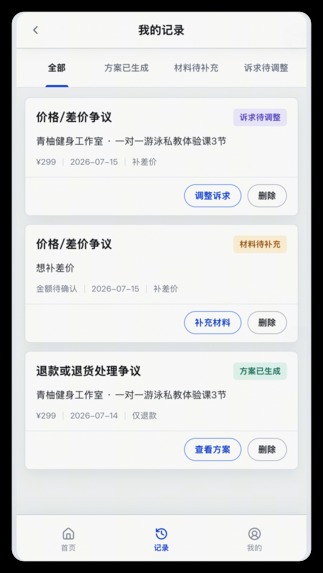
A user uploads receipts, order pages, payment records, chat screenshots, or on-site photos, then describes the problem and selects an expected remedy.
The system:
- Extracts information from uploaded images with OCR.
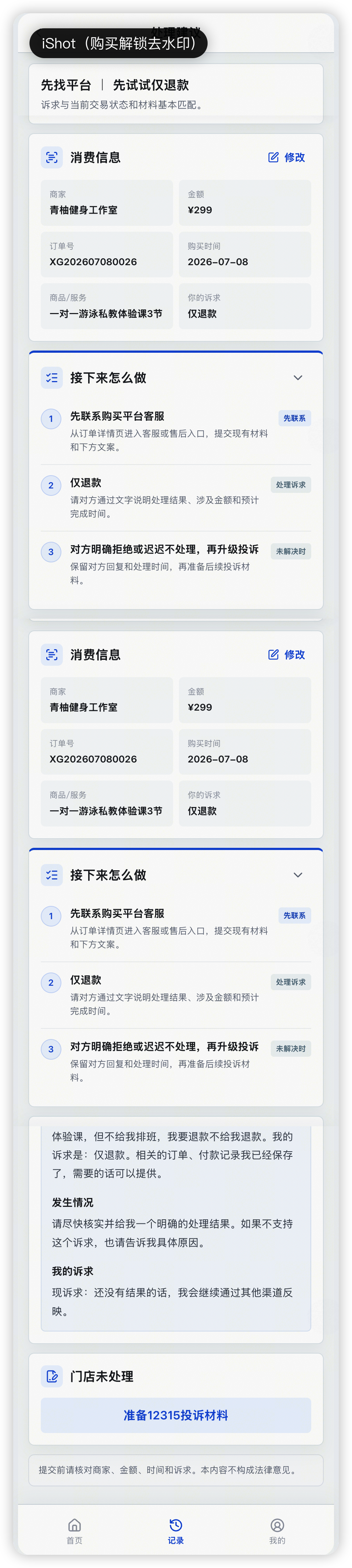
- Identifies the merchant, amount, order number, purchase date, product or service, and dispute facts.
- Checks whether each uploaded image is relevant and readable.
- Evaluates whether key evidence is missing.
- Reviews whether the requested remedy is supported, needs adjustment, or should be blocked.
- Generates a case-specific resolution path instead of a generic complaint.
- Produces a ready-to-send platform or merchant complaint draft.
- Generates a regulatory complaint draft only when escalation is appropriate.
If the evidence is incomplete, the system does not pretend to have enough information. It identifies the specific missing material and explains why it matters. If the requested remedy is unreasonable or unsupported, it recommends a more realistic alternative before generating formal text.
How we built it
ZhiSu AI uses a hybrid architecture rather than relying on a single prompt.
Baidu OCR extracts text from uploaded evidence. A normalization layer converts OCR results and user descriptions into structured transaction facts.
A bounded agent runtime powered by DeepSeek V4 Flash then works through controlled capabilities:
- Build an evidence map
- Check case gaps
- Evaluate the requested remedy
- Retrieve applicable handling rules
- Ask focused follow-up questions
- Create a resolution plan
Deterministic rules and model judgments are reconciled before the result is shown. This allows the language model to understand ambiguous user descriptions while keeping important product boundaries explicit.
The generation layer also includes output guardrails. It checks for unsupported factual claims, invented attachments, missing required facts, and formal complaint text generated without sufficient evidence. Unsafe output is rewritten or replaced with a constrained fallback.
The product includes an internal quality console and an evaluation framework for testing evidence classification, request validation, factual consistency, agent decisions, and output usefulness. The current codebase is covered by 352 automated tests.
The application is built with Node.js, Express, JavaScript, HTML, and CSS, and is deployed on Render.
Challenges we ran into
The hardest problem was not generating fluent text. It was deciding when the system should generate text at all.
Early versions produced plausible but generic advice even when users uploaded unrelated images or lacked basic transaction proof. Another challenge was preventing the system from repeatedly requesting evidence that had already been submitted.
We addressed this by separating OCR, fact normalization, evidence review, request validation, planning, and writing into distinct capabilities. We also introduced explicit states for missing evidence, request adjustment, and completed plans.
Latency was another challenge. OCR, model review, agent planning, and final generation can become a slow sequential workflow. We reduced unnecessary model involvement in deterministic image extraction and reserved the language model for semantic understanding, judgment, and personalized generation.
Accomplishments that we're proud of
We are proud that ZhiSu AI does more than produce complaint copy.
It can reject irrelevant materials, identify specific evidence gaps, challenge unsupported remedies, and explain the next practical action. The product is designed to be useful even when the correct outcome is not immediate escalation.
We also built the system with measurable AI quality in mind. Its evaluation framework covers factual grounding, evidence sufficiency, request validity, actionability, personalization, and safety instead of relying only on whether the output sounds fluent.
What we learned
We learned that a trustworthy consumer AI product needs clear boundaries.
A strong model is not enough. The product also needs structured facts, explicit decision states, deterministic checks, output guardrails, traceable agent actions, and evaluation cases based on realistic failure modes.
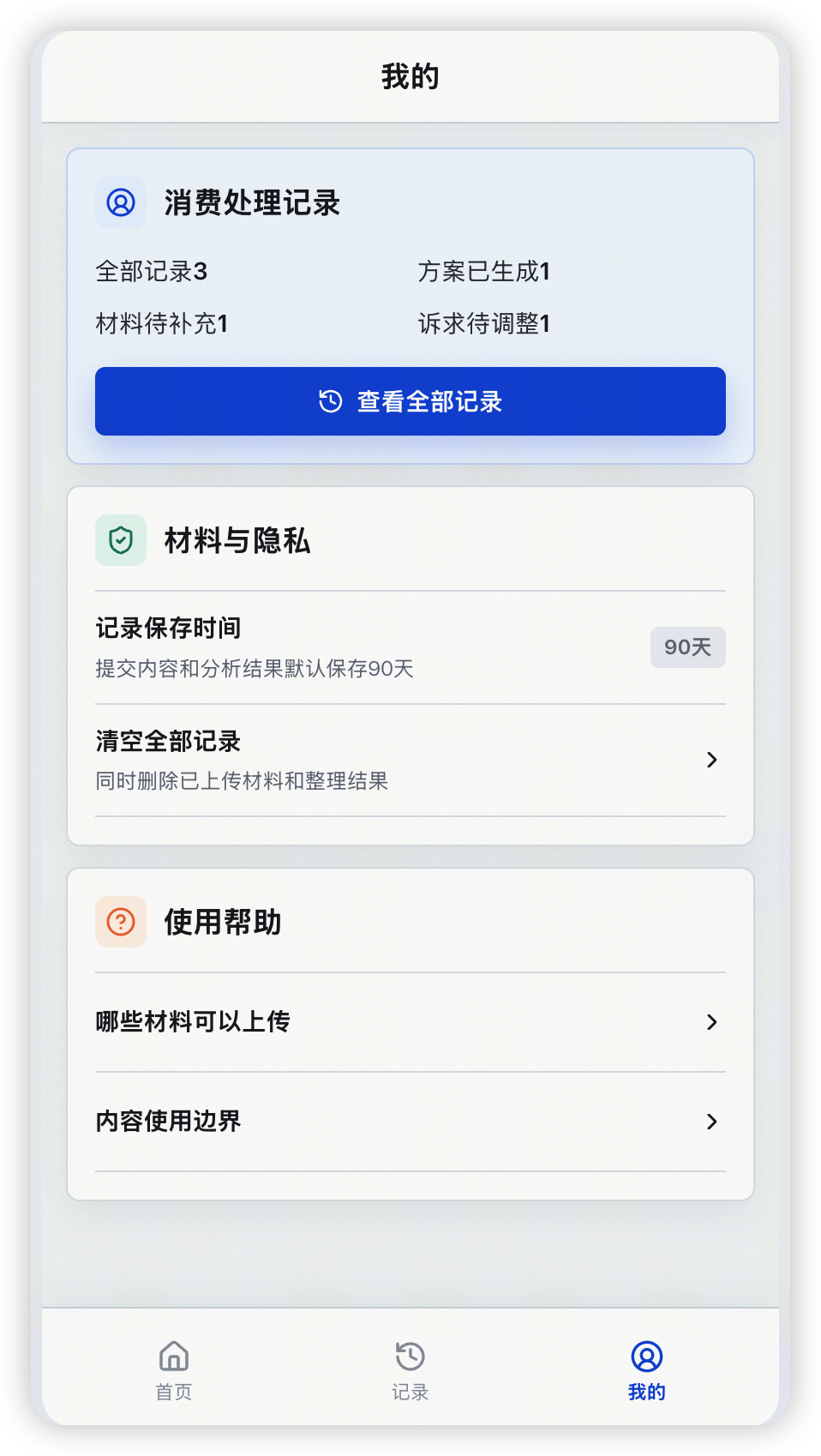
We also learned that personalization does not mean writing longer text. It means using the user's actual merchant, transaction, evidence, dispute status, and requested remedy to recommend the correct next step.
What's next for ZhiSu AI: Consumer Dispute Copilot
Next, we plan to:
- Expand the evaluation dataset with more realistic online and offline consumer disputes
- Compare multiple language models using quality, latency, and cost metrics
- Add persistent encrypted storage and automatic deletion controls
- Improve rule retrieval with platform-specific and jurisdiction-specific knowledge
- Measure whether users successfully complete the recommended next action
- Build a feedback loop that prioritizes low-scoring cases for human review and prompt or rule improvement
Our goal is not to replace professional legal advice. It is to help ordinary consumers organize their facts, avoid ineffective complaints, and take the next reasonable step with confidence.
Built With
- agent
- css3
- deepseek
- express.js
- html5
- javascript
- node.js
- ocr
- render


Log in or sign up for Devpost to join the conversation.