-
-
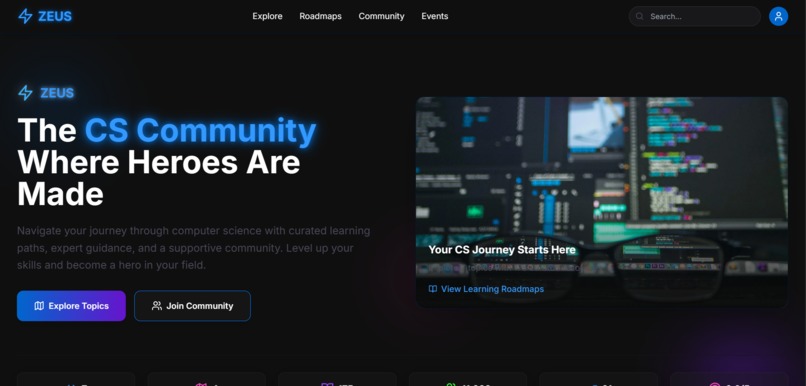
home page
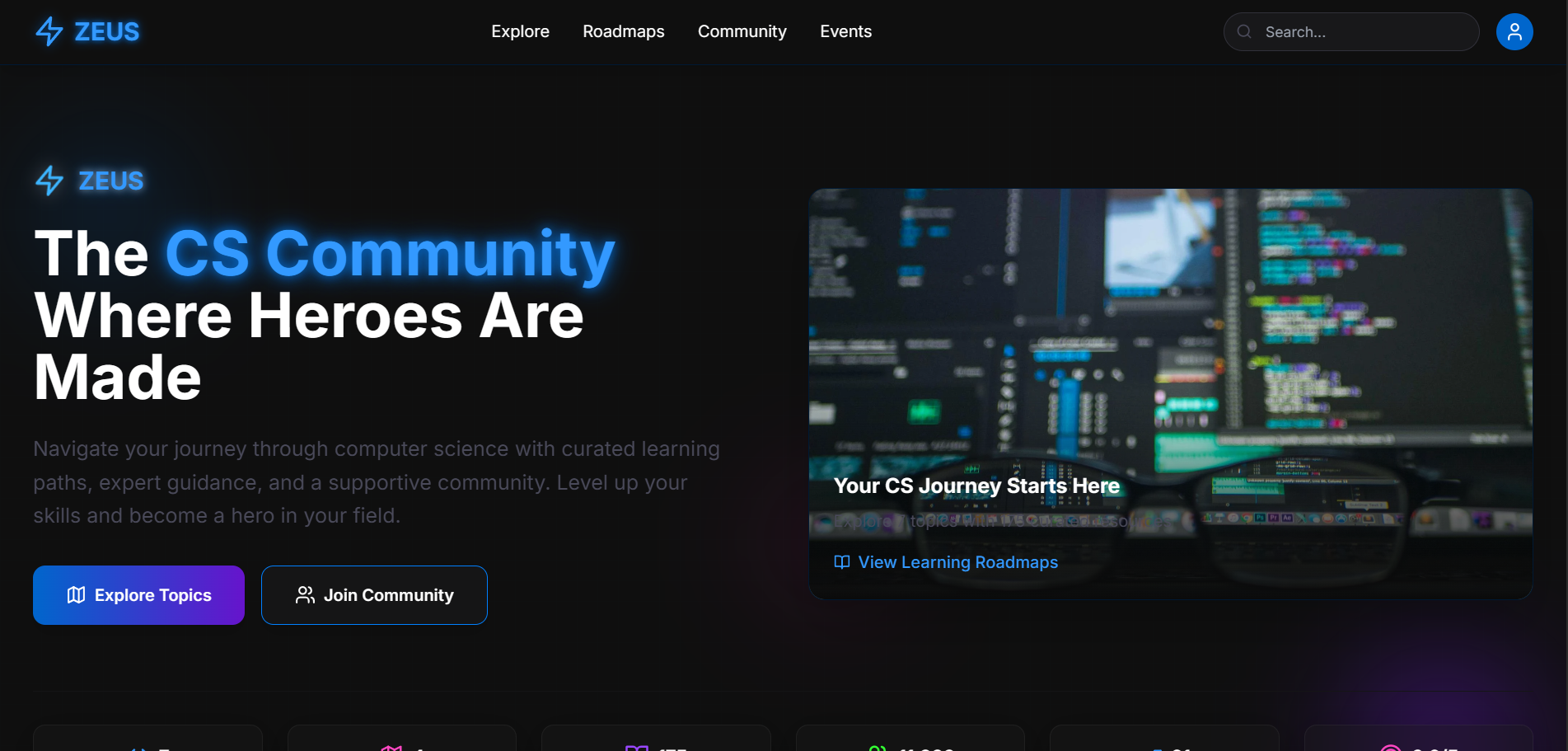
Zeus - Computer Science Knowledge Organizer
Project Overview
Zeus is an interactive, visually stunning web-based platform designed to organize and present computer science knowledge in an engaging, cyberpunk-inspired interface. Named after the king of gods, Zeus aims to reign supreme as the ultimate CS learning companion, transforming complex technical concepts into an accessible, navigable knowledge map.
🎯 Purpose & Vision
The project was inspired by the popular "Map of Computer Science" visualization, but goes beyond static representation to create a living, breathing knowledge ecosystem. Zeus addresses the common challenge faced by CS students and professionals: the overwhelming nature of the field's breadth and the difficulty in understanding how different concepts interconnect.
Core Vision: Make computer science knowledge exploration as exciting as the field itself through immersive design and intuitive organization.
✨ Key Features
Interactive Knowledge Cards
- 8 Major CS Domains: Algorithms, Data Structures, Programming, AI/ML, Computer Systems, Databases, Cybersecurity, and Theoretical CS
- Expandable Content: Click any topic card to reveal detailed subtopics and descriptions
- Hover Effects: Dynamic animations and visual feedback enhance user engagement
Advanced User Experience
- Real-time Search: Instantly filter topics and subtopics as you type
- Keyboard Navigation: Power-user shortcuts (
/for search,Escapeto close) - Responsive Design: Seamless experience across desktop, tablet, and mobile devices
- Navigation Dots: Quick-jump navigation for efficient browsing
Cyberpunk Aesthetic
- Neon Color Palette: Cyan and magenta glow effects against deep space backgrounds
- Animated Elements: Floating code snippets, pulsing logos, and shimmer effects
- Futuristic Typography: Monospace fonts that evoke terminal and coding environments
- Interactive Animations: Smooth transitions, scale transforms, and dynamic lighting
🛠 Technical Implementation
Frontend Technologies
- HTML5: Semantic structure and accessibility
- CSS3: Advanced animations, gradients, and responsive grid layouts
- Vanilla JavaScript: Lightweight, dependency-free interactivity
- Modern CSS Features: Grid layouts, custom properties, and complex animations
Performance Optimizations
- Efficient Animations: GPU-accelerated transforms and optimized keyframes
- Lazy Content Loading: Topic details only render when accessed
- Minimal Dependencies: No external libraries for faster load times
- Responsive Images: Optimized visual elements for all screen sizes
🎨 Design Philosophy
Visual Hierarchy
The design employs a clear information architecture where primary topics are immediately visible, with secondary information revealed through interaction. This prevents cognitive overload while maintaining comprehensive coverage.
Color Psychology
- Cyan (#00ffff): Represents technology, innovation, and digital clarity
- Magenta (#ff00ff): Adds energy, creativity, and visual interest
- Deep Purple Background: Creates depth and focuses attention on content
Animation Principles
All animations serve functional purposes:
- Feedback: Hover states confirm user interactions
- Guidance: Transitions help users understand navigation flow
- Engagement: Subtle movements maintain visual interest without distraction
📚 Educational Value
Comprehensive Coverage
Zeus covers the full spectrum of computer science education:
- Foundational Concepts: Algorithms and data structures
- Practical Skills: Programming languages and software engineering
- Emerging Technologies: AI, machine learning, and distributed systems
- Theoretical Framework: Computational complexity and formal methods
Learning Pathways
The organization suggests natural learning progressions, helping students understand prerequisites and advanced topics within each domain.
🚀 Future Enhancements
Planned Features
- Deep Linking: Direct URLs to specific topics and subtopics
- Progress Tracking: Personal learning journey visualization
- Resource Integration: Links to courses, books, and tutorials
- Community Features: User-generated content and discussion areas
- Advanced Search: Semantic search with topic relationships
- Mobile App: Native iOS and Android applications
Scalability Considerations
The modular architecture allows for easy expansion:
- New topic categories can be added without code restructuring
- Content management system integration planned
- Multi-language support architecture ready
- API-driven content updates for dynamic information
🎓 Target Audience
Primary Users
- Computer Science Students: Undergraduate and graduate level learners
- Career Changers: Professionals transitioning into tech roles
- Self-Taught Developers: Independent learners seeking structured knowledge
- Educators: Teachers looking for comprehensive curriculum overviews
Use Cases
- Study Planning: Understanding CS curriculum structure and prerequisites
- Interview Preparation: Quick review of core concepts across domains
- Skill Assessment: Identifying knowledge gaps and learning opportunities
- Teaching Aid: Visual tool for explaining CS field relationships
🌟 Unique Value Proposition
Zeus differentiates itself from traditional educational resources through:
- Visual Learning: Transforms abstract concepts into interactive visual experiences
- Holistic View: Shows interconnections between CS domains rather than isolated topics
- Engagement: Gamifies learning through beautiful design and smooth interactions
- Accessibility: Makes complex CS knowledge approachable for all skill levels
- Modern Interface: Appeals to digital natives with contemporary design language
📈 Impact Goals
- Reduce Learning Barriers: Make CS education more approachable and less intimidating
- Improve Retention: Visual and interactive elements enhance memory formation
- Foster Exploration: Encourage curiosity-driven learning beyond required coursework
- Bridge Knowledge Gaps: Help learners see connections between different CS areas
Zeus represents the future of educational technology: where learning is not just informative but inspiring, not just comprehensive but beautiful, and not just functional but magical.
Built With
- netlfy
- react
- tsx

Log in or sign up for Devpost to join the conversation.