Zesty is a speculative design project. We ask you to read this with empathy first and feasibility second. Every capability we have imagined was inspired by a real human experience that deserves a better solution. Some of the sensory capabilities described are grounded in existing science, others are theoretical extensions of known biology, and some are intentional leaps into what we believe is possible. A full breakdown of what is scientifically confirmed, what is theoretical, and what is speculative is documented in the technological assumptions section at the end of this page.
Problem
Food is one of the most fundamental human experiences. It nourishes us, connects us, comforts us and defines our cultures. Yet for millions of people that relationship has been quietly broken. Food intolerances and allergies put entire cuisines out of reach. Illnesses like long COVID and medical treatments like chemotherapy can strip away the ability to taste effectively. Emotional and habitual eating quietly take over in ways people often do not even notice. These are people whose relationship with food has been damaged.
Solution
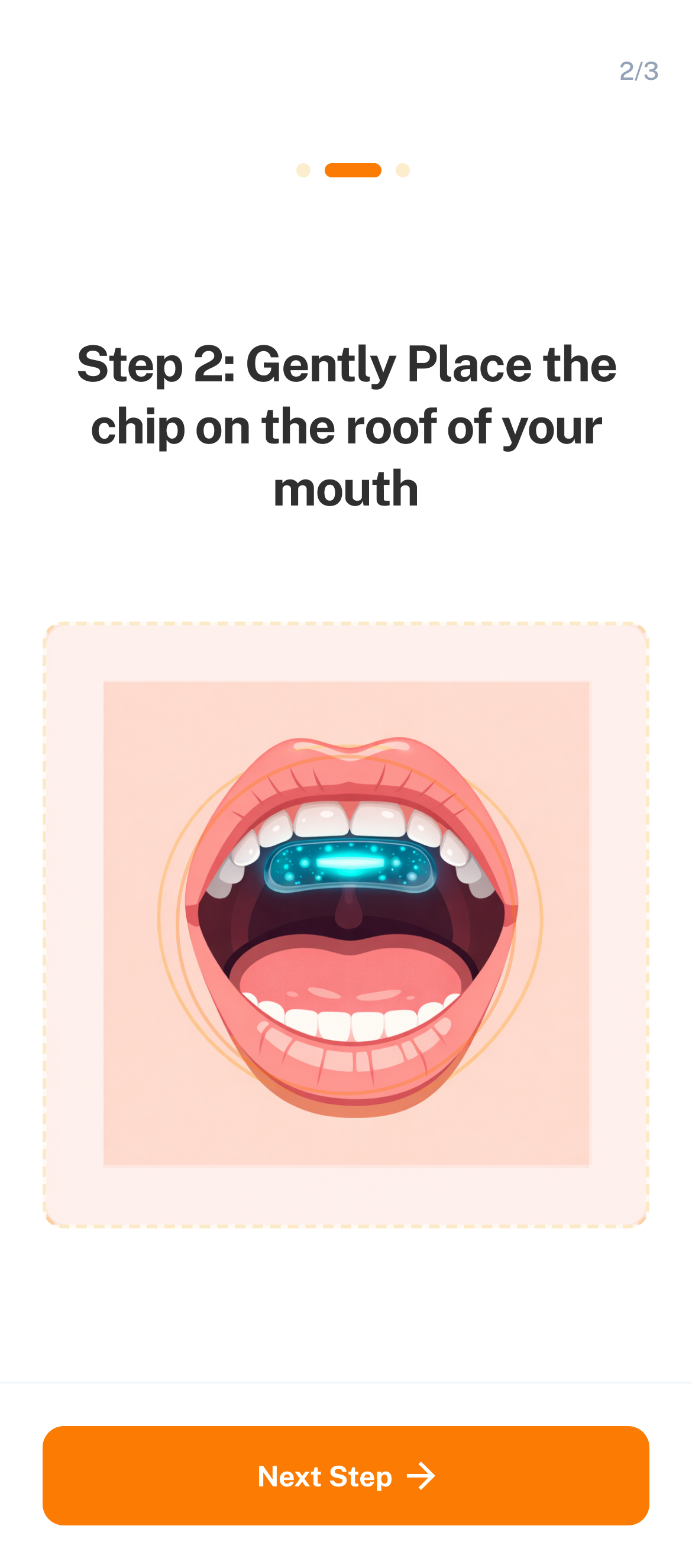
Zesty is a thin flexible strip that sits at the roof of your mouth and pairs with a smartphone app. It does two things. It reads your taste receptors to understand what you are experiencing, and it writes back to them to change what you taste in real time. On top of that it tracks signals like your heart rate, eating pace and bite patterns to understand the context behind your eating, whether you are hungry, stressed, or somewhere in between. Based on all of this, it can soften a taste when you are eating out of stress, amplify the taste when an illness has made food flavorless, or recreate one that your body could never safely experience on its own. All through your sense of taste.
Target Audience
Zesty is designed for adults whose relationship with food has been disrupted by illness, restricted by allergies or intolerances, or quietly eroded by the stress and habits of everyday life.
Additional Requirements:
- Ages 18 and above — Manipulating taste perception during childhood and adolescence can interfere with the natural development of food preferences, create psychological dependence on altered taste
- No active oral conditions — Dental issues, oral wounds, infections or ulcers can interact unpredictably with the device, potentially sending incorrect signals to taste receptors and interfering with the body's natural healing process.
- No swallowing disorders or severe gag reflex — While Zesty is designed with dimensions that prevent accidental ingestion, people with dysphagia or a heightened gag reflex may experience repeated discomfort or distress if the device shifts during eating.
Design Philosophy
Every wellness tool ever built has made the same assumption that the best way to change your behavior is to tell your conscious mind about it. A notification. A graph. A calorie count. And it makes sense in theory. But in practice, by the time you are stress eating at midnight or pushing through a meal that tastes like cardboard, your conscious mind is not in charge anymore.
For thousands of years, before grocery stores, before nutrition labels, taste was one of the most important tools humans had to make decisions about what to eat. Sweetness was the brain's signal for energy, for ripeness, for safety. It is why a child reaches for fruit before vegetables without being taught to. Sourness and bitterness were warnings. A sour piece of meat meant it was spoiled or a bitter berry could be toxic. These are not learned associations, they are hardwired responses .
Zesty uses this as its interface. When your body needs to slow down, food gradually tastes less rewarding. When it needs comfort, water tastes warm and satisfying. When a taste has been lost, it is given back. The feedback arrives exactly where the behavior happens, in the mouth, at the moment of eating, through the sense your brain has always trusted most. No willpower needed. No notification to dismiss. Just a response your body already knows how to have.
Core Features
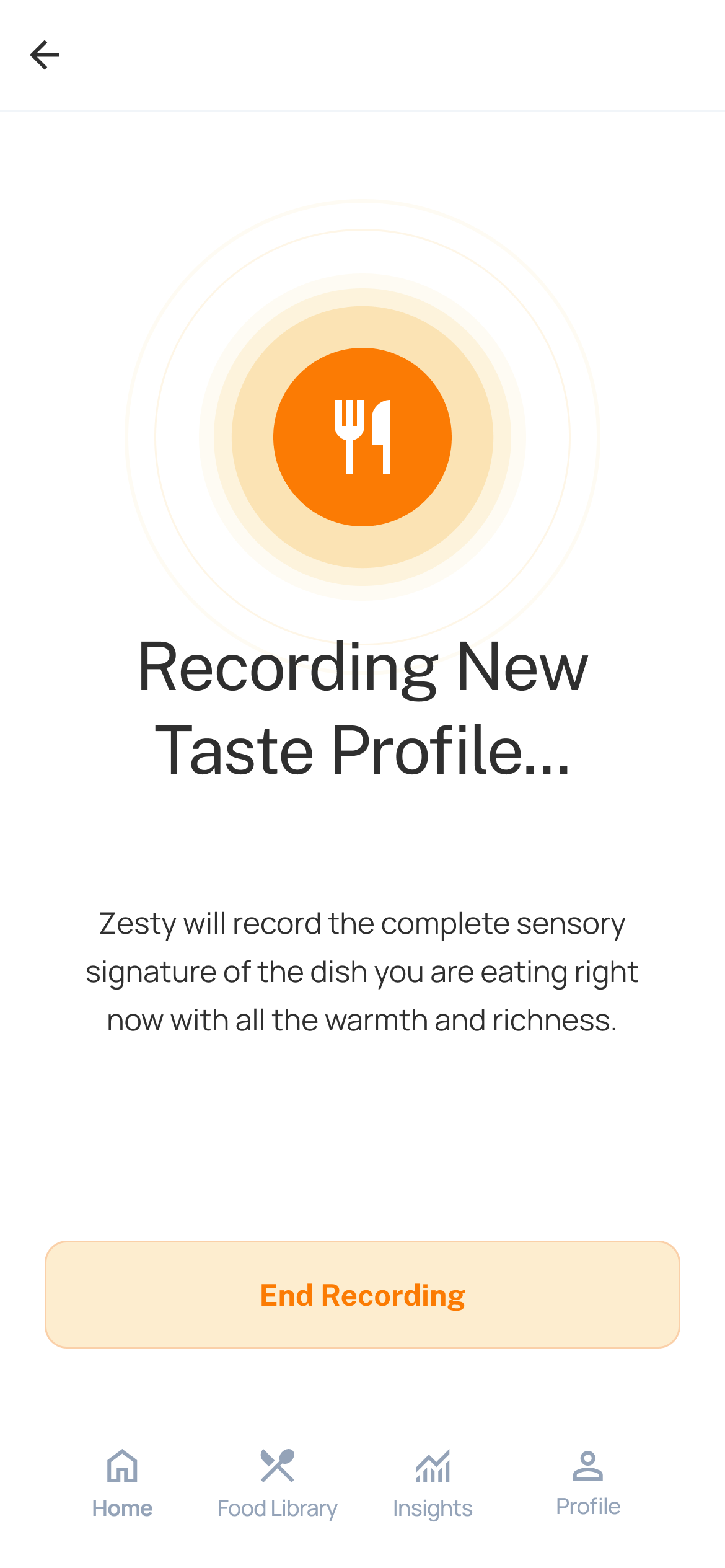
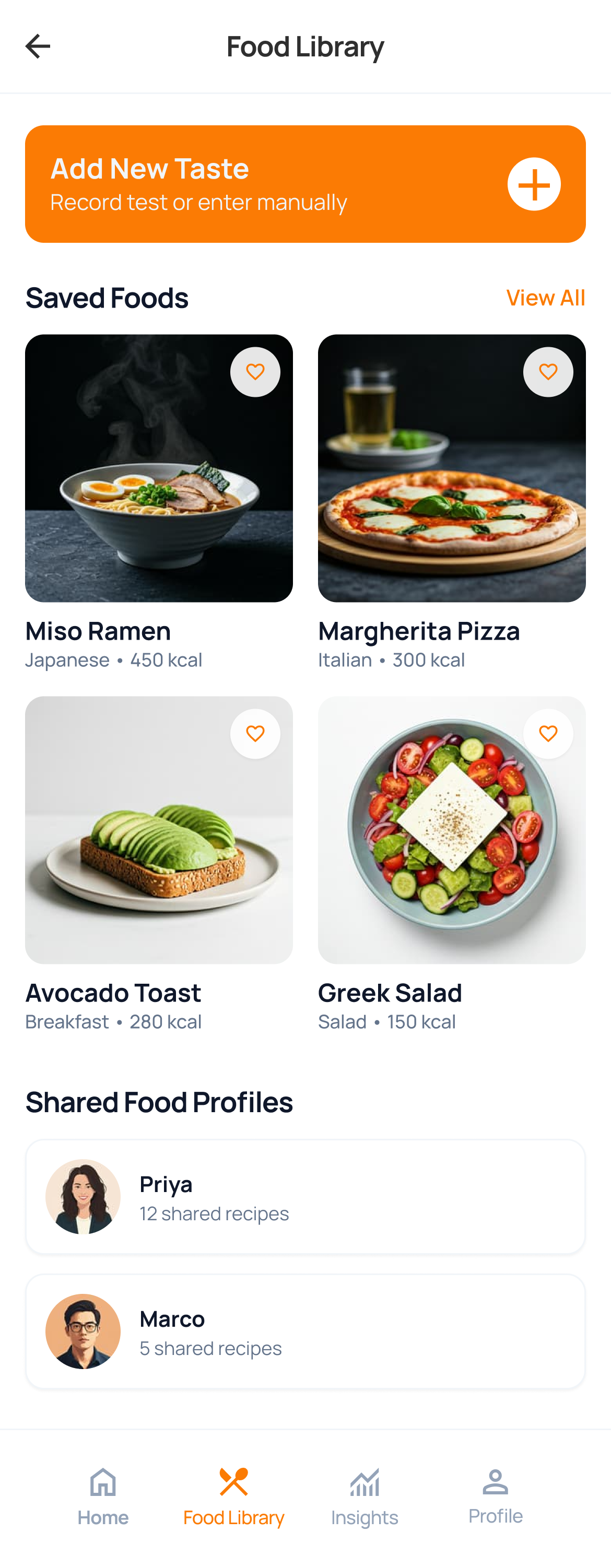
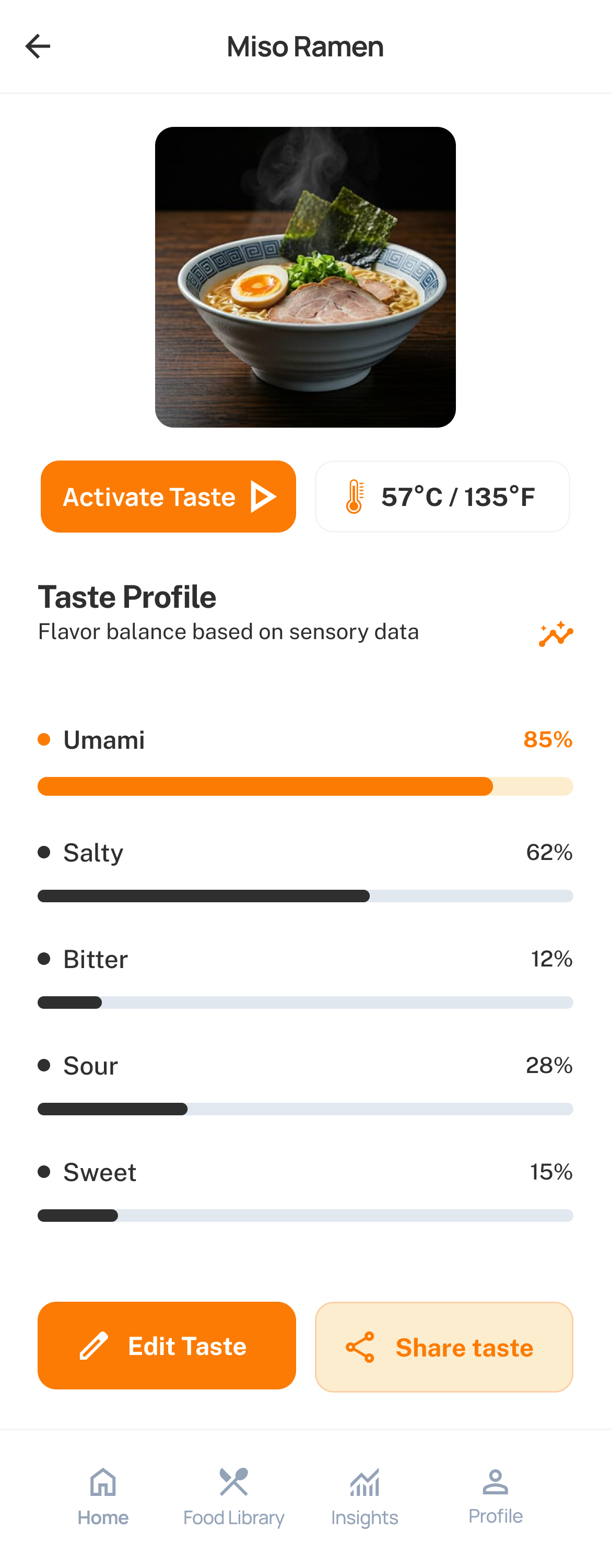
- Taste Profiles A saved taste experience that you can activate at any time. Each profile captures the full sensory signature of a food or flavor including its warmth, richness, intensity and texture impression. You can build one from memory using guided sliders in the app or record one by eating the real thing while wearing the device.
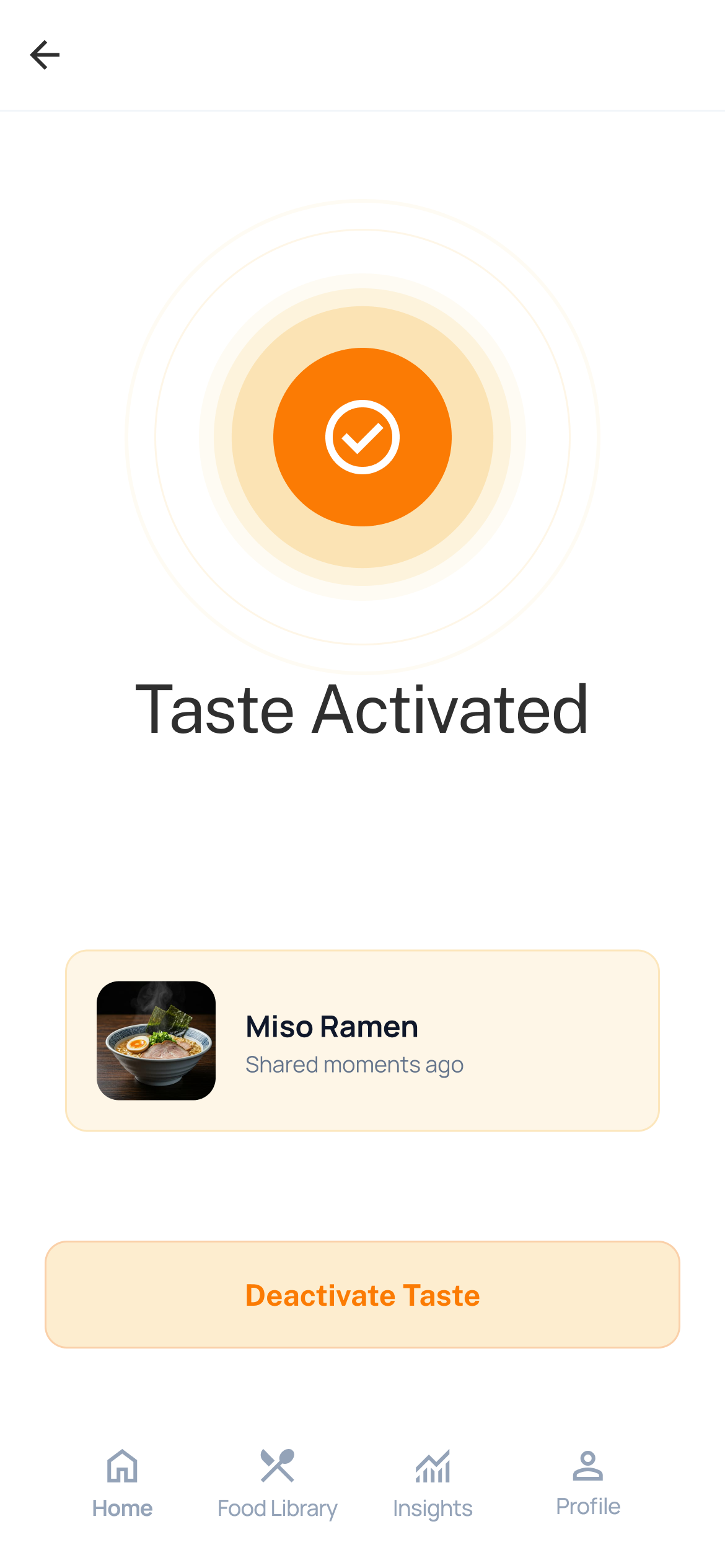
- Profile Sharing Any taste profile can be shared with another Zesty user directly through the app. When a shared profile arrives, the app automatically checks it against the receiving user's personal limits before activation to make sure it stays within their comfort range.
- Flavor Enhancement Amplifies the taste of whatever you are currently eating. Useful when illness, medication or age has dulled your natural sense of taste and food has started to feel bland or unappealing.
- Hunger vs Emotion Detection Zesty monitors a combination of your heart rate, eating pace, bite pressure and time of day to understand whether you are eating because you are genuinely hungry or because of stress, boredom or emotion. It responds differently depending on what it finds, without ever sending you a notification.
- Taste Dampening Gradually reduces the taste and flavor of the food when an emotional eating episode is detected. It does not taste bad, it just becomes progressively less rewarding, which naturally slows eating pace and reduces the urge to continue
- Overeating Protection Once you reach the consumption goal you set in the app, the food you are eating gradually starts to taste less pleasurable and a mild sourness begins to build. At the same time water starts to taste more satisfying and comforting, giving your body something to reach for instead.
Example Use Cases
Use Case 1 - Maya, 47, Breast cancer patient
Maya used to cook Sunday dinners for her whole family. Her lamb curry was legendary. Three months into chemotherapy, everything tastes like metal and cardboard. Her oncologist is worried because she has lost six kilograms in eight weeks.
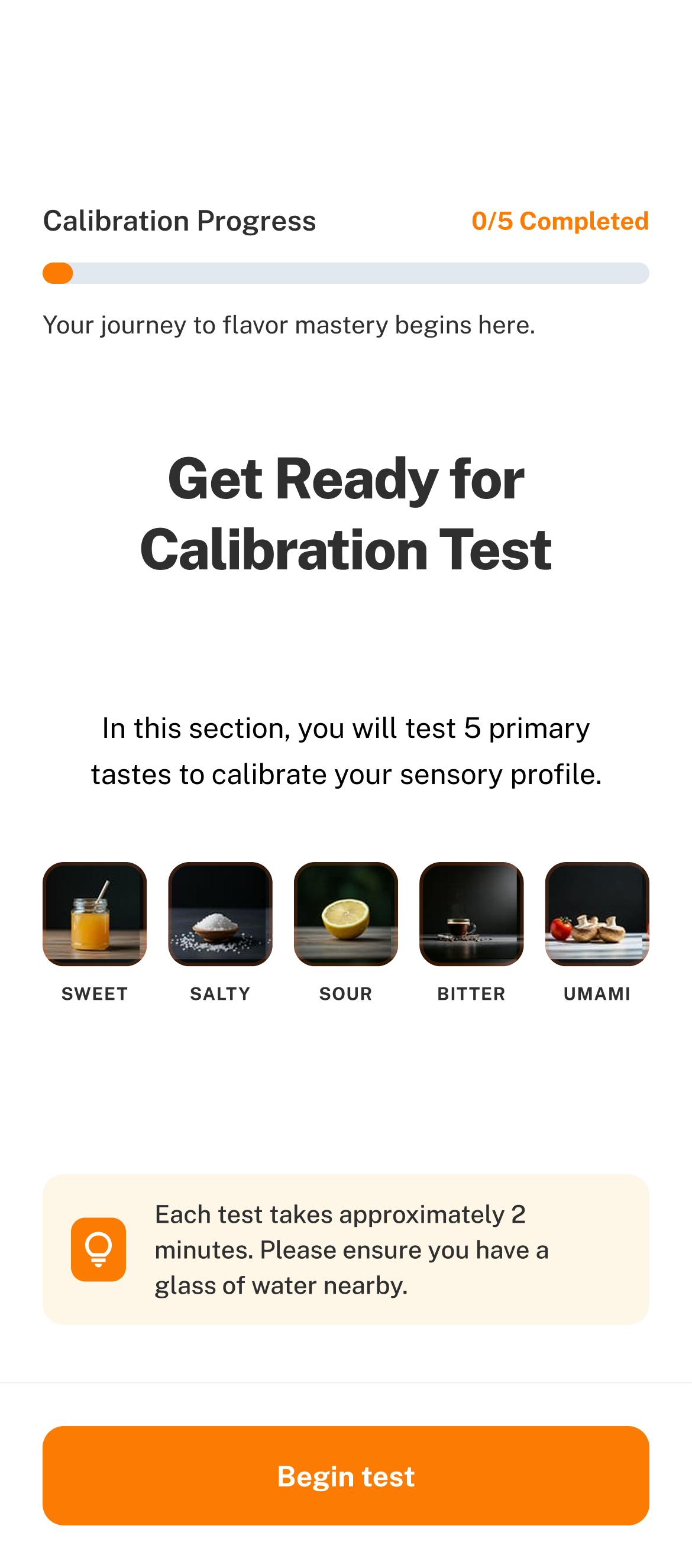
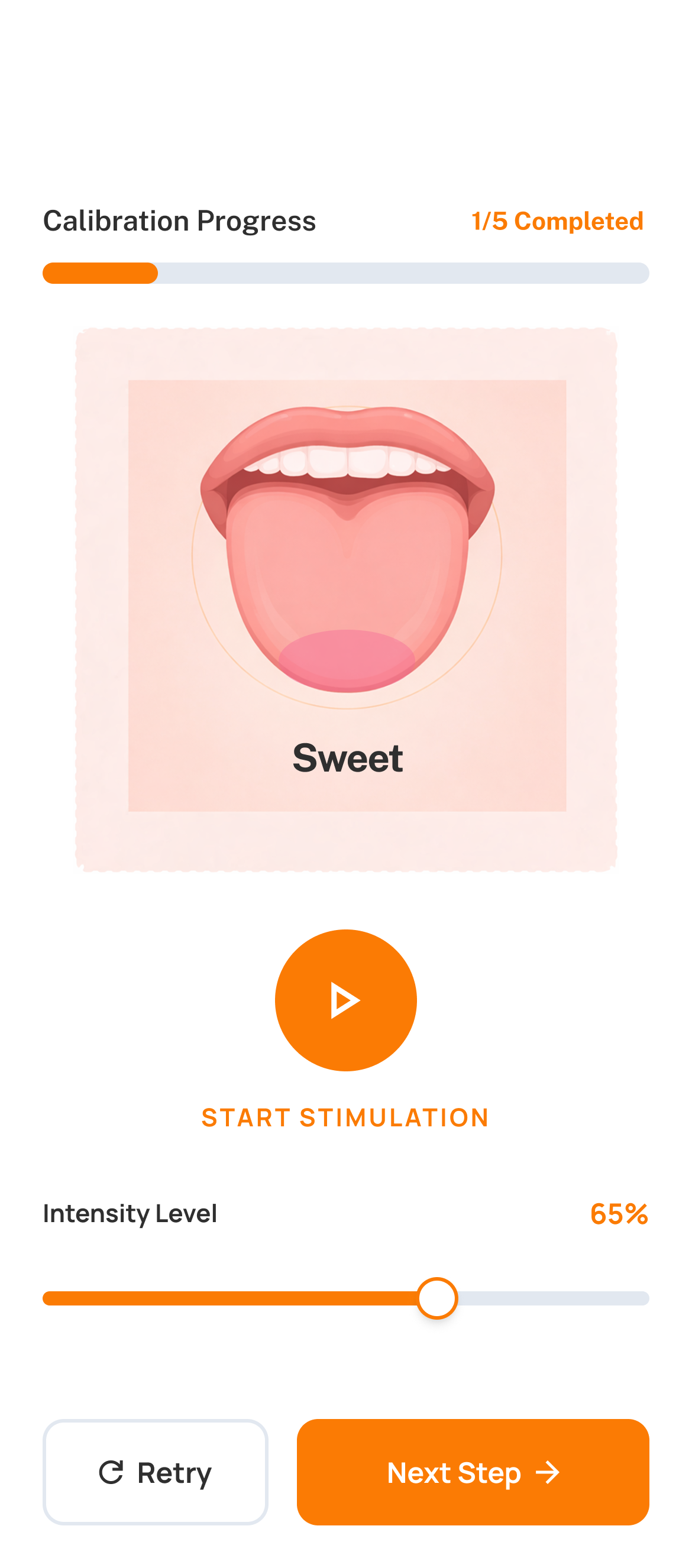
Her care team introduces her to Zesty. She presses the thin flexible strip to the roof of her mouth the same way you would apply a whitening strip. The app walks her through a calibration, a short guided tasting session where she rates how she currently perceives different flavors, temperatures and textures. Sweet, sour, warm, cool, smooth, textured. The calibration takes about three minutes. It builds a picture of exactly how chemotherapy has distorted her taste and sets the personal limits that Zesty will never cross.
Then comes the profile. A taste profile is not just a flavor. It is a complete sensory signature, the warmth of a dish, its richness, the way spices bloom and fade. The app guides her through a series of questions and sliders. She closes her eyes and thinks about the last time she had lamb curry before her diagnosis and creates a new taste profile.
That Sunday Maya sits at the family table. She activates the profile. She takes a spoonful of plain rice and soft boiled vegetables, the only things her stomach can tolerate right now. It tastes like home. She finishes her plate for the first time in weeks. Zesty did not cure Maya's cancer. But it gave her Sundays back.
Use Case 2 - James, 34. Project manager. Stress eater his entire adult life.
James has a stressful job with long hours and back to back meetings. By the time 3pm hits he is mentally exhausted and food has become the easiest way to take a break. A handful of chips here, something sweet there, a second lunch because the kitchen is always five steps away. He is not eating because he is hungry. He is eating because he is tired and it is the one thing that feels good in the moment and reduces his stress temporarily
James sets up Zesty and turns on Mindful Eating Mode. He does not change his diet. He does not set any rules. He just goes about his day as normal while the device quietly learns the difference between when he is genuinely hungry and when he is just eating out of habit or trying to distract himself from the stress of work.
Two weeks in, James grabs a bag of chips during an afternoon slump. Halfway through, the chips start to taste a little flat. Not bad, just not worth continuing. He puts the bag down and reaches for his water bottle. The water tastes surprisingly good. Clean and satisfying in a way he did not expect. He finishes the bottle and goes back to work.
Over the following months something unexpected happens. James starts reaching for water more, during stressful meetings, after long commutes, in moments he would previously have solved with food. His skin clears up. His energy in the mornings improves. He loses six kilograms without ever counting a single calorie.
Use case 3 - Priya, 26. Lactose intolerant
Priya's mother is from Punjab. Her kitchen has always smelled like butter and cream and slow cooked spices. Paneer tikka masala on Sundays. Mango lassi in the summers. Priya has watched her family eat these things her whole life but never once been able to join them. Not because she does not want to. Because the moment dairy touches her system, her body punishes her for it.
A friend of Priya's who does not have any intolerances wears her Zesty device and eats a full plate of paneer tikka masala. As she eats, Zesty records the complete sensory signature of the dish. Not just the flavor but the warmth, the richness, the way the spice builds slowly, the satisfying weight of it. This recording becomes a shareable taste profile, a complete blueprint of the experience. She sends it to Priya through the app with a single tap.
Priya opens the shared profile on her phone. Before she can activate it, the app checks it automatically against the personal limits set during her initial calibration. Every shared profile goes through this check without exception. If any element of the incoming profile exceeds what Priya's body is comfortable with, it is quietly adjusted down before activation.
She sits down with a bowl of plain tofu. She activates the profile. She takes her first bite. For the first time in her life, Priya tastes paneer tikka masala.
Safeguards
- Dislodgment and Choking Prevention
- Physical tether — Zesty is anchored to the upper teeth with a small flexible tether, similar to a retainer wire, so even if the device shifts during eating it cannot travel further into the throat.
- Size by design — The device is intentionally sized so that accidental ingestion is anatomically impossible for an adult, even in the unlikely event the tether fails.
- Dislodgment alert — If the device fully loses sensor contact, the app immediately sends a high priority alert to the user's phone, distinct from a regular disconnection notification, so the user knows to check and reposition it.
- Persistent Status Banner The current connection status and any active taste alteration are always visible in a permanent banner at the top of every screen in the app. The option to turn off or adjust is always one tap away, never buried in menus.
- Calibration Hard Limits During onboarding, Zesty calibrates the user's natural taste sensitivity and comfort levels. These calibration results set permanent hard limits that no profile or feature can exceed, no matter how the device is configured later.
- Automatic Rest Cycle Zesty automatically turns off every hour and stays off for 20 minutes. This ensures the device never overwrites the user's natural sense of taste for extended periods, protecting long term taste perception and psychological wellbeing.
- Bluetooth Safety Shutoff If Zesty loses connection to the user's phone, all taste alteration stops. The device never operates without the user having direct control nearby.
- Gradual Transitions Always Every taste change, whether activating a profile, triggering overconsumption feedback or powering down due to low battery, always happens gradually. No sudden or jarring shifts in taste perception under any circumstance.
- Physical Removal Anytime The device can be physically removed by the user at any moment regardless of phone availability. No tool or process is required.
- Nightly Sleep Reminder The app sends a reminder every night prompting the user to remove the device before sleeping. Zesty is never designed to be worn overnight.
- Fully Offline and Private The app works completely offline. No eating data, taste profiles or behavioral patterns ever leave the user's device. Ever.
- Intensity Ceiling on Corrective Feedback The sour signal used in overconsumption mode has a hard maximum intensity set during calibration. It is designed to be a gentle nudge, never a punishment.
Technological Assumptions
Sensory Capability Map
Every capability Zesty relies on sits somewhere on a spectrum between what is already demonstrated in research labs today and what remains a confident leap forward. The table below shows exactly where each one sits.
| Sense | Human Experience | Confidence Score (1–10) | Status & Reasoning | Source |
|---|---|---|---|---|
| Gustation | Flavor — sweet, salty, sour, bitter, umami | 8/10 | Galvanic tongue stimulation (GTS) actively demonstrated in labs. Electrical + thermal stimulation already generates mixed flavor profiles in controlled experiments | PMC — E-Taste Research · Frontiers — GTS |
| Thermoception | Temperature — hot soup, cold ice cream | 7/10 | TRPV1 and TRPM8 receptors are fully mapped and confirmed in human oral mucosa; chemical triggers (capsaicin, menthol) already activate them, the anterior tongue is especially sensitive to small changes in temperature; targeted micro-stimulation is theoretically achievable | ScienceDirect — Thermoreceptors · eNeuro — TRP in Oral Mucosa |
| Mechanosensation | Texture — smooth, grainy, creamy, rough | 5/10 | The tongue's mechanoreceptors are densely distributed and highly sensitive to electrical stimulation; conveying coarse vs. smooth impressions is plausible via electrotactile stimulation, but precise texture replication remains theoretical | PMC — Electrotactile Stimulation Tongue |
| Nociception / Chemesthesis | Spice, tingle, burn, carbonation | 7/10 | TRPV1 (capsaicin/heat) and TRPA1 channels are well understood and present in the tongue; chemical or micro-electrical activation of these pathways is already demonstrated in research | Nobel Prize Background — TRPV1 & PIEZO2 · PMC — TRPV1 Lineage |
| Retronasal Olfaction | Flavor aroma — the "smell" of food while eating | 4/10 | Real pathway exists (flavor compounds travel retronasally to olfactory epithelium through the mouth), but directly stimulating olfactory perception purely via tongue device is speculative; no demonstrated mechanism yet | PMC — Gut Sensing & Interoception |
| Interoception — Hunger | Distinguishing physical hunger from emotional craving at the body signal level | 4/10 | The biological distinction exists between emotional eating and eating out of hunger. True hunger involves ghrelin, blood glucose drops, gastric contractions. Emotional craving does not; passively sensing and differentiating these in real time via a wearable is theoretically grounded but not yet demonstrated | NIDDK — Gut Feelings · Harvard Medicine — Interoception |
| Heart Rate Variability (HRV) sensing | Stress vs. calm — the nervous system's emotional fingerprint | 9/10 | Fully real and commercially deployed today in Apple Watch, Garmin, Whoop; HRV is the most validated non invasive stress proxy available | Frontiers — HRV & Stress |
| Electrodermal Activity (EDA) | Emotional arousal — skin conductance spikes during anxiety, excitement, sadness | 8/10 | Real and deployed in Empatica E4 and early Fitbit Sense. measures sweat gland activity driven by emotional nervous system response. Miniaturization for palate device is theoretical | Empatica EDA Research |
| Eating Pace & Pattern Recognition | Behavioral signal — binge eating is measurably faster and more rhythmically irregular than hunger eating | 7/10 | Pace detection via tongue pressure and movement sensors is demonstrated in research contexts. distinguishing binge from normal eating patterns algorithmically is emerging but not fully solved | PMC — Eating Behavior Sensing |
Built With
- claude
- figma
- figma-make
- figma-slides
- nano-banana


Log in or sign up for Devpost to join the conversation.