-
-
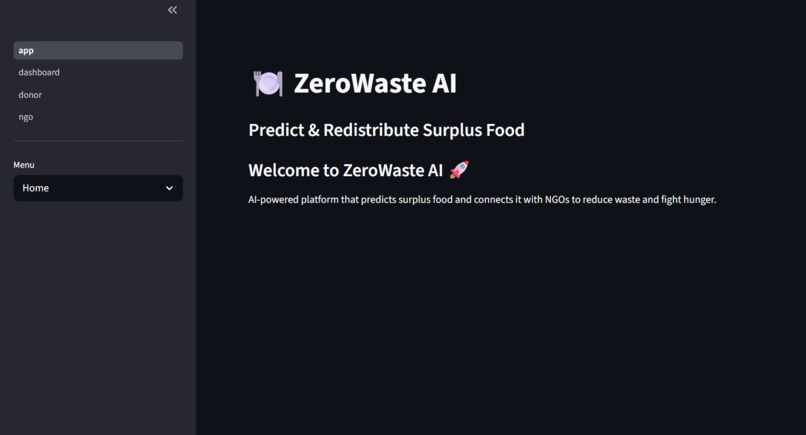
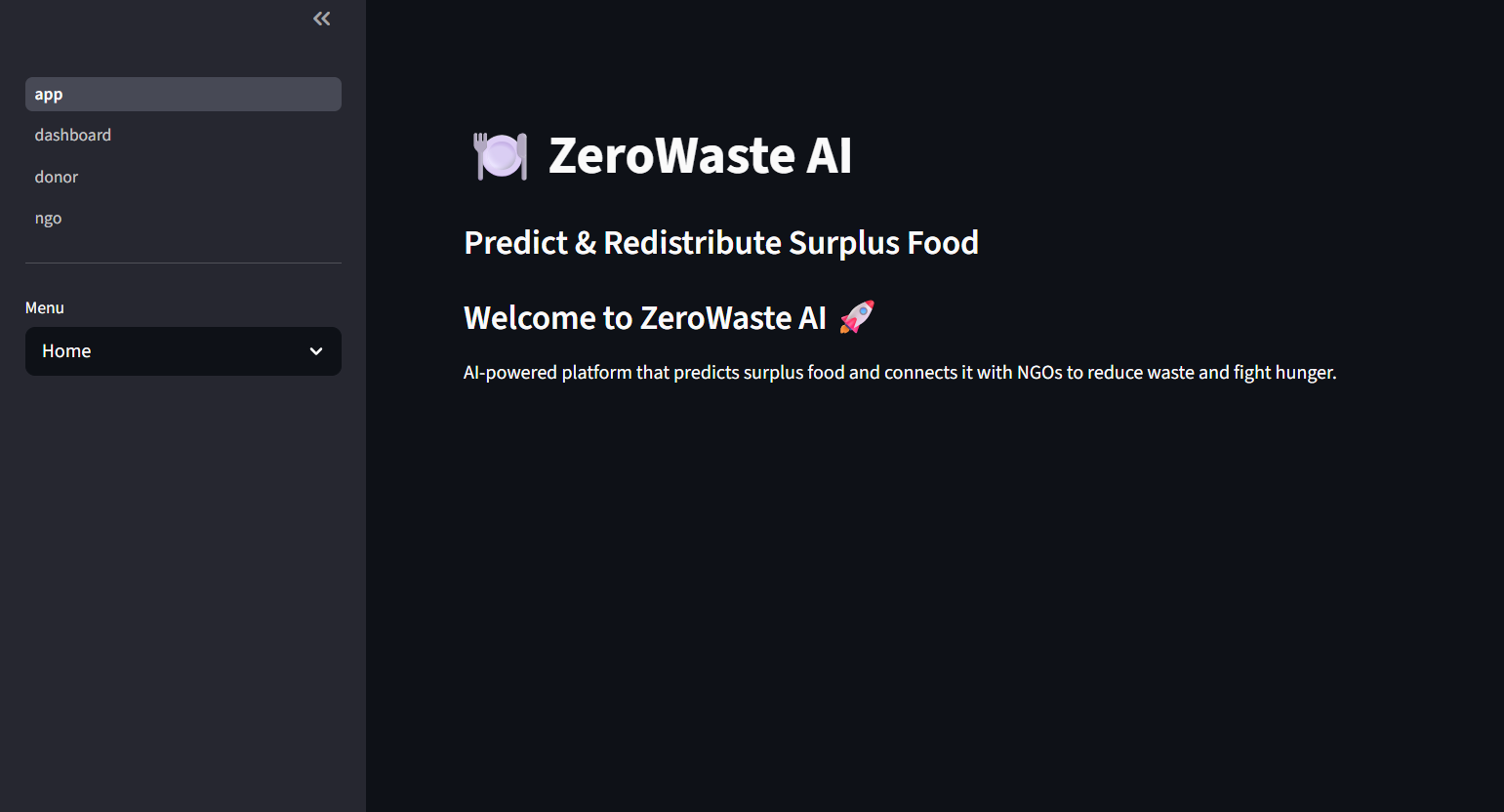
Home Page
💡 Inspiration
I was inspired by the contrast I see every day—large amounts of perfectly edible food being wasted at restaurants, events, and cafeterias, while many people still struggle to get even one proper meal. This gap made me realize that the problem is not food availability, but inefficient distribution. I wanted to build an AI-driven solution that could bridge this gap and create real social impact.
⚙️ What it does
ZeroWaste AI is an intelligent platform that predicts surplus food generation and connects food providers with nearby NGOs and shelters in real time. It allows restaurants, hostels, and event organizers to list excess food, while NGOs can discover and claim available food before it goes to waste. The system also provides insights into waste patterns and tracks the number of meals saved.
🛠️ How I built it
I built the prototype using Python and Streamlit for the frontend interface. For the backend logic, I used machine learning models (like regression/XGBoost) to predict surplus food based on historical and contextual data such as time, day, and demand patterns. I implemented a simple matching system that connects food donors with nearby NGOs based on location and urgency. The system also includes a dashboard to visualize food waste reduction and impact.
⚠️ Challenges I ran into
One of the biggest challenges was simulating realistic data for food surplus prediction, as real-world datasets are not easily available. Another challenge was designing an efficient matching system that balances distance, time, and food freshness. Additionally, ensuring that the solution remains simple yet impactful within the limited hackathon timeframe required careful planning.
🏆 Accomplishments that I'm proud of
I’m proud that I was able to turn a real-world social problem into a functional AI-based prototype within a short time. The system not only demonstrates prediction and matching but also highlights measurable impact, such as meals saved and waste reduced. Creating a solution that is both technically sound and socially meaningful is something I find very rewarding.
📚 What I learned
Through this project, I learned how to apply AI beyond just technical use cases and focus on real-world impact. I also improved my skills in building end-to-end systems—from data handling and model design to UI development. Most importantly, I learned how to think about scalability and usability while solving social problems.
🔮 What's next for ZeroWaste AI
Next, I plan to integrate real-time APIs and partner with local restaurants and NGOs to test the system in real-world scenarios. I also aim to improve the AI model with real data, add route optimization for faster deliveries, and develop a mobile app version for easier accessibility. In the long term, I envision scaling this solution to multiple cities and making it a reliable platform for reducing food waste globally.
Built With
- flask
- google-maps
- pandas
- python
- scikit-learn
- sqlite/firebase
- xgboost


Log in or sign up for Devpost to join the conversation.