About the Project
ZeroWait was inspired by a simple observation from my own family. My mom is a physician, and I’ve seen firsthand how difficult it can be to manage patient expectations around appointment timing. Even when a doctor is doing everything possible to stay on schedule, small delays throughout the day can add up. Patients often feel frustrated when they don’t know what’s happening, and front desk staff end up fielding constant questions about wait times.
I realized there was an opportunity to improve patient satisfaction by creating a simple tool that keeps everyone informed. ZeroWait allows patients to quickly check whether Dr. Sanchez is running on time or a few minutes behind. At the same time, it gives patients a convenient way to notify the office if they themselves are running late or need a timing-related accommodation.
The goal was to create something that felt effortless for both sides. Instead of calling the front desk or waiting in uncertainty, patients can simply speak to a voice assistant to check the schedule status or send a quick update to the office.
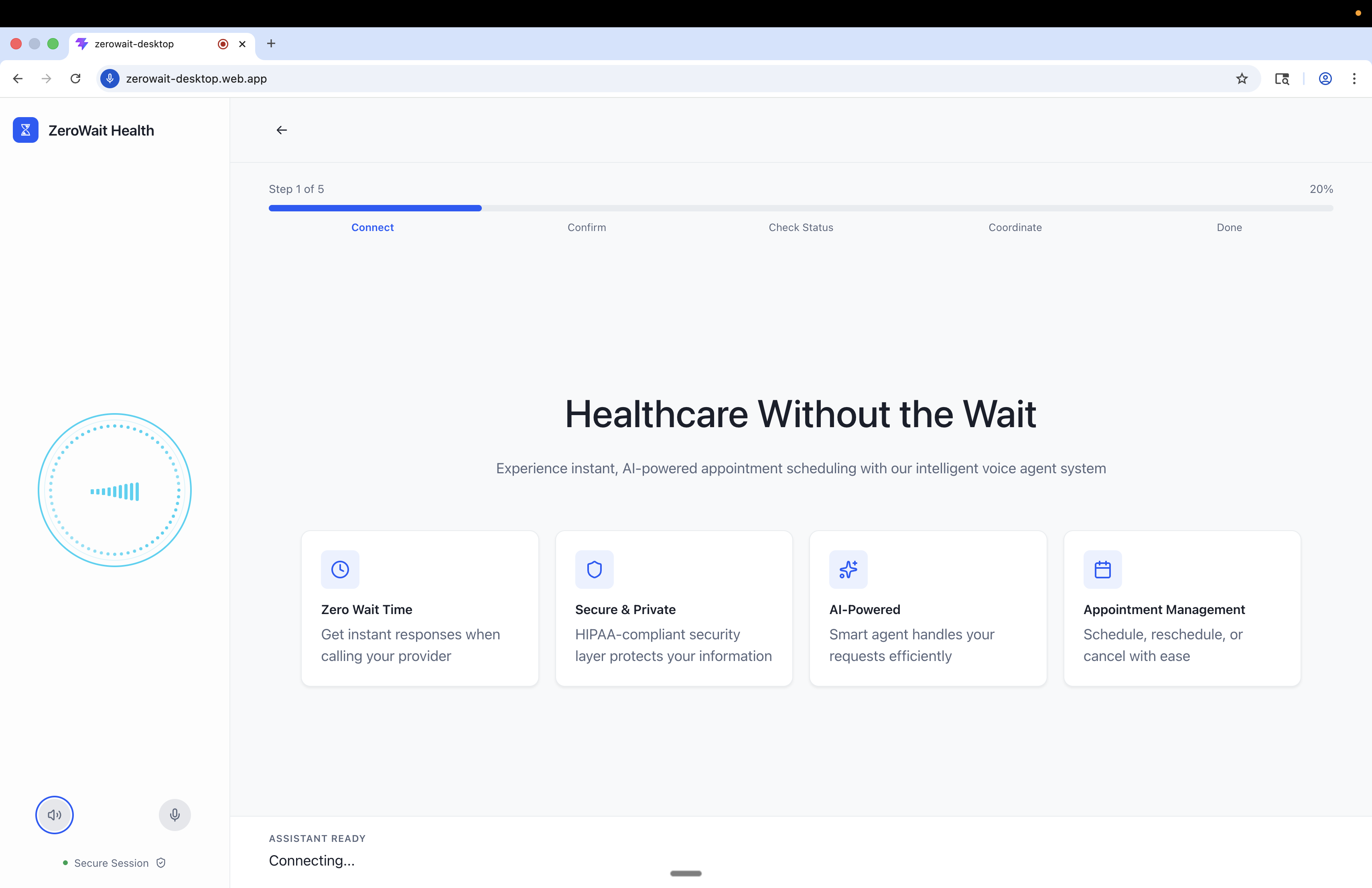
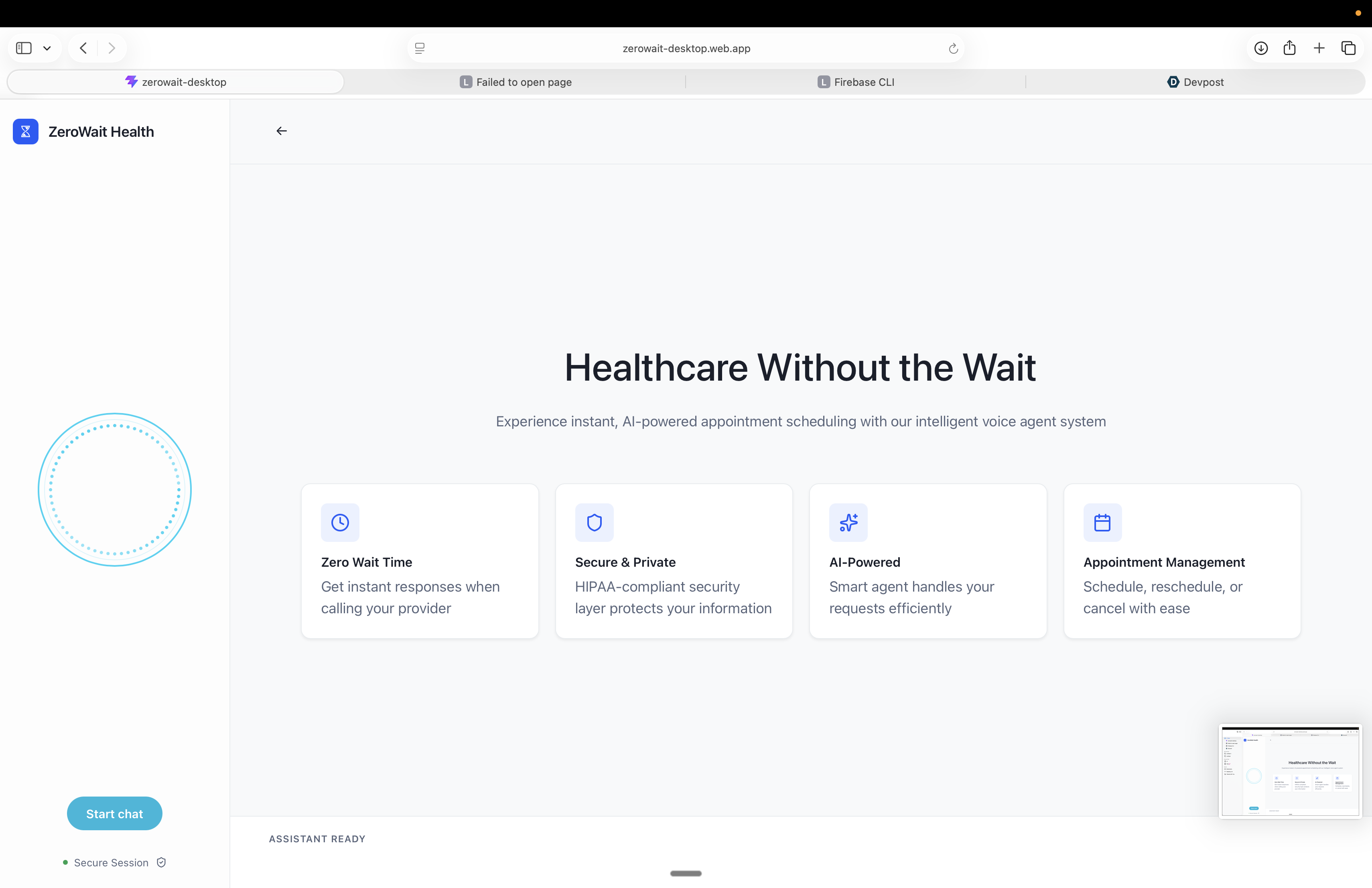
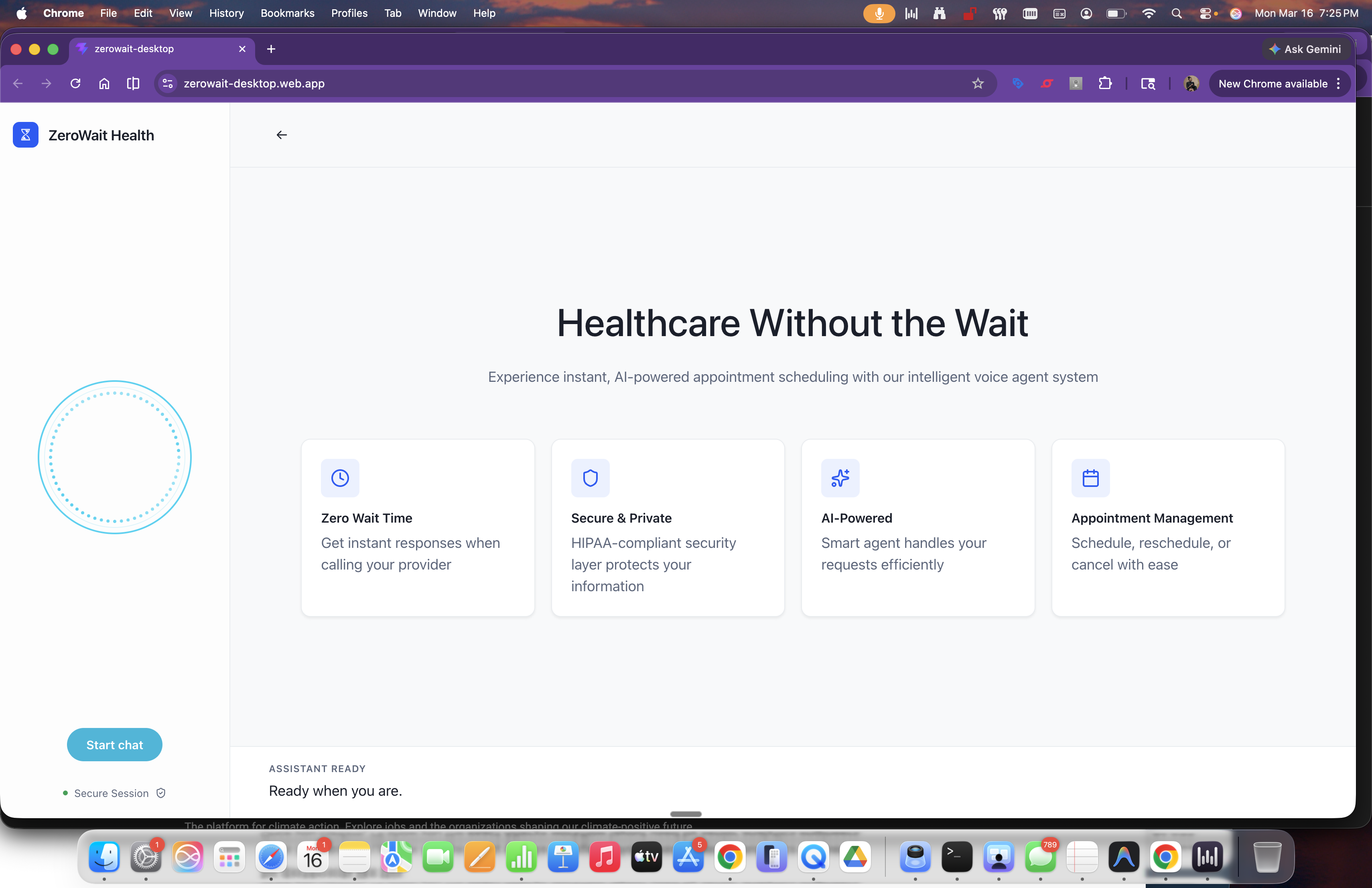
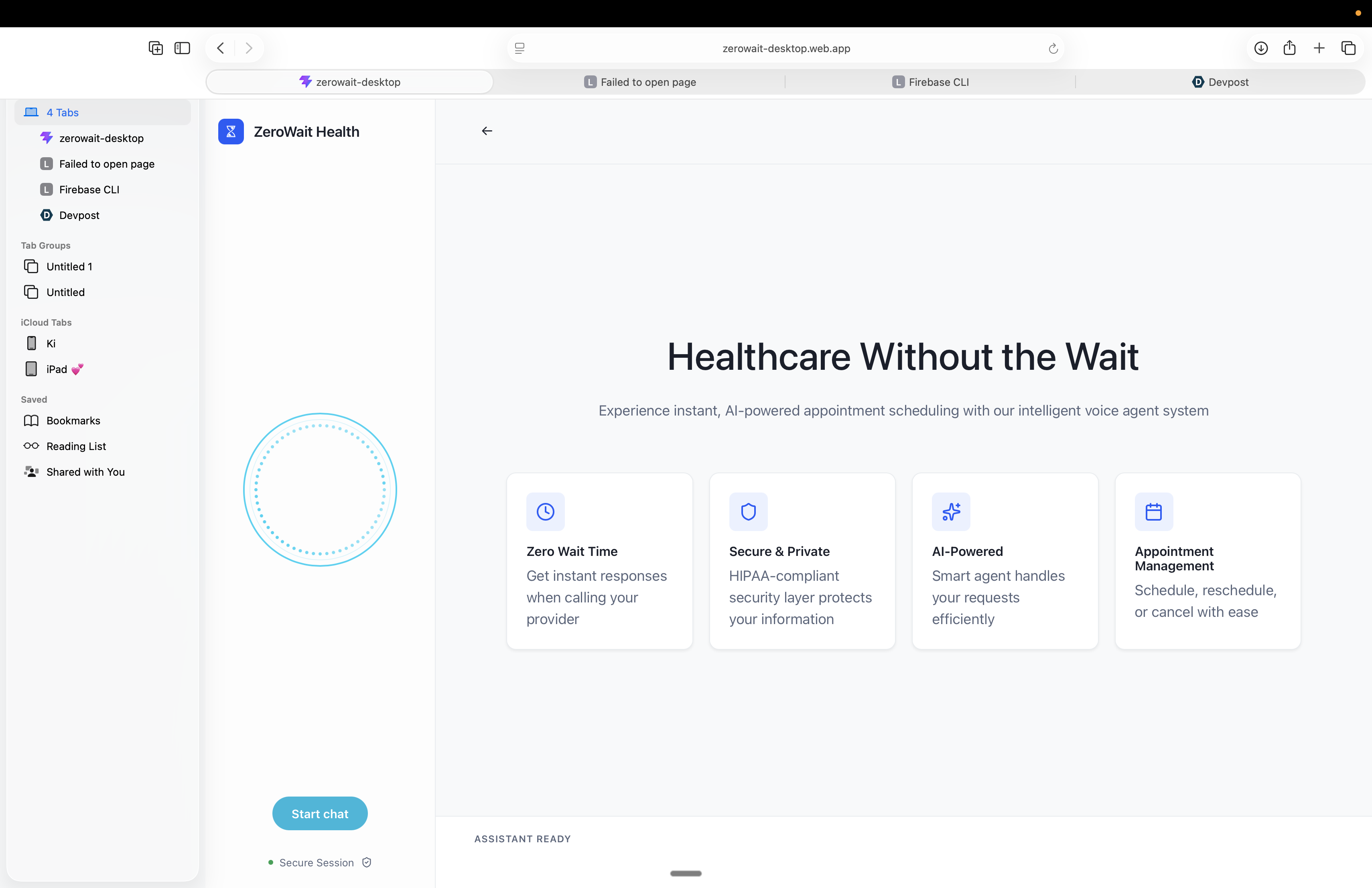
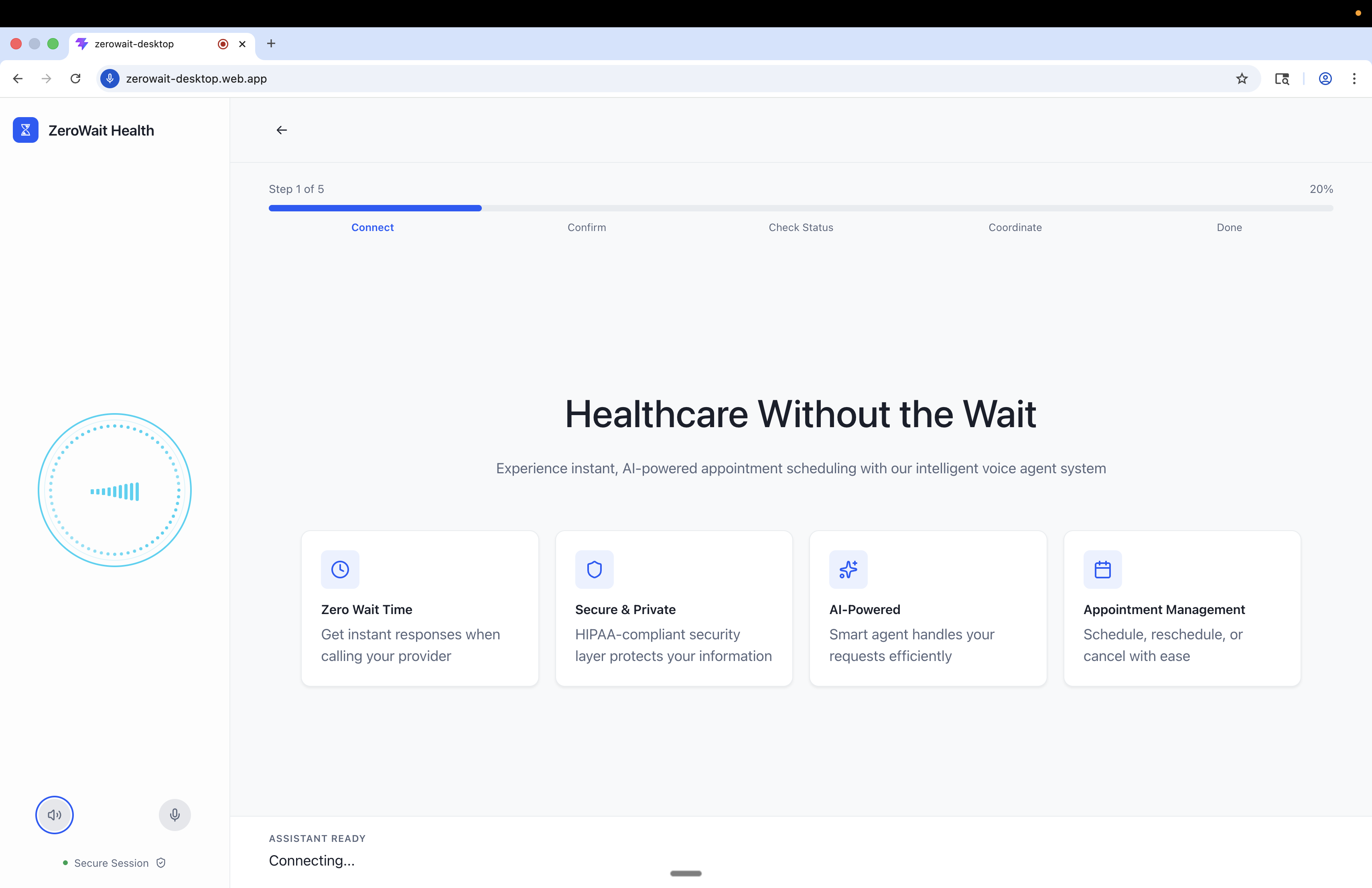
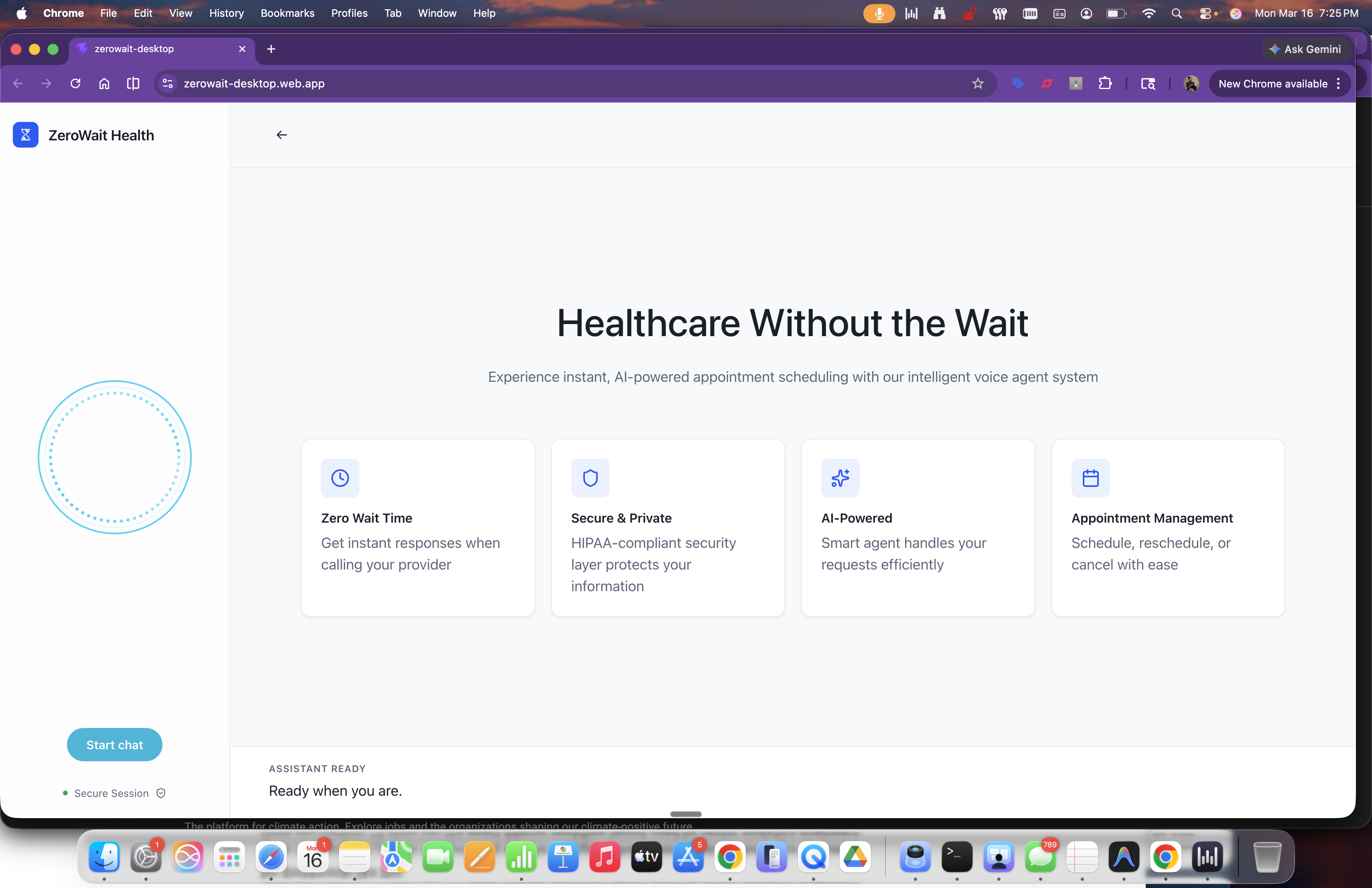
I built ZeroWait as a voice-first experience powered by Gemini Live. The system listens for patient requests like checking the current wait time or reporting a delay, then surfaces the right information or submits the update to the office. The interface dynamically adapts to the conversation, showing status panels, confirmations, and next steps as needed.
One of the main things I learned while building this project was how important it is to design around real-world workflows. In a busy medical office, both patients and staff need tools that reduce friction rather than add complexity. That meant focusing the product on a narrow but meaningful problem: appointment timing coordination.
From a scheduling perspective, delays compound throughout the day. If each appointment runs slightly longer than planned, the delay accumulates. A simple way to express this is:
$$ \text{Total Delay} = \sum_{i=1}^{n} (\text{Actual Appointment Time}_i - \text{Scheduled Appointment Time}_i) $$
Even small differences between scheduled and actual visit lengths can result in significant wait times later in the day. ZeroWait helps reduce uncertainty by communicating those timing changes in real time.
A major challenge was designing the interface so that it stayed conversational while still presenting structured information clearly. The system needed to respond naturally to voice input while also showing confirmation panels, wait-time updates, and accommodation options at the right moment.
Ultimately, ZeroWait is meant to make the appointment experience calmer and more transparent. Patients know what to expect before they arrive, and the office receives timely updates when plans change. Even small improvements in communication around wait times can make a meaningful difference in patient satisfaction.
Built With
- css
- firebase
- gemini-api
- html
- react
- typescript
- vite
- websockets

Log in or sign up for Devpost to join the conversation.