Inspiration
Mainframes have reliability, stability, and security that modern systems rarely match — yet their tooling, UX, and programmability feel decades behind. My wife works in mainframes, and seeing her daily challenges gave me a simple question:
“What if we could keep the strengths of mainframes, but rebuild the experience using modern tooling?”
That became the spark for Zeroframe OS — a lightweight microkernel skeleton designed in Kiro, capable of powering multiple applications from the same core.
How we built it
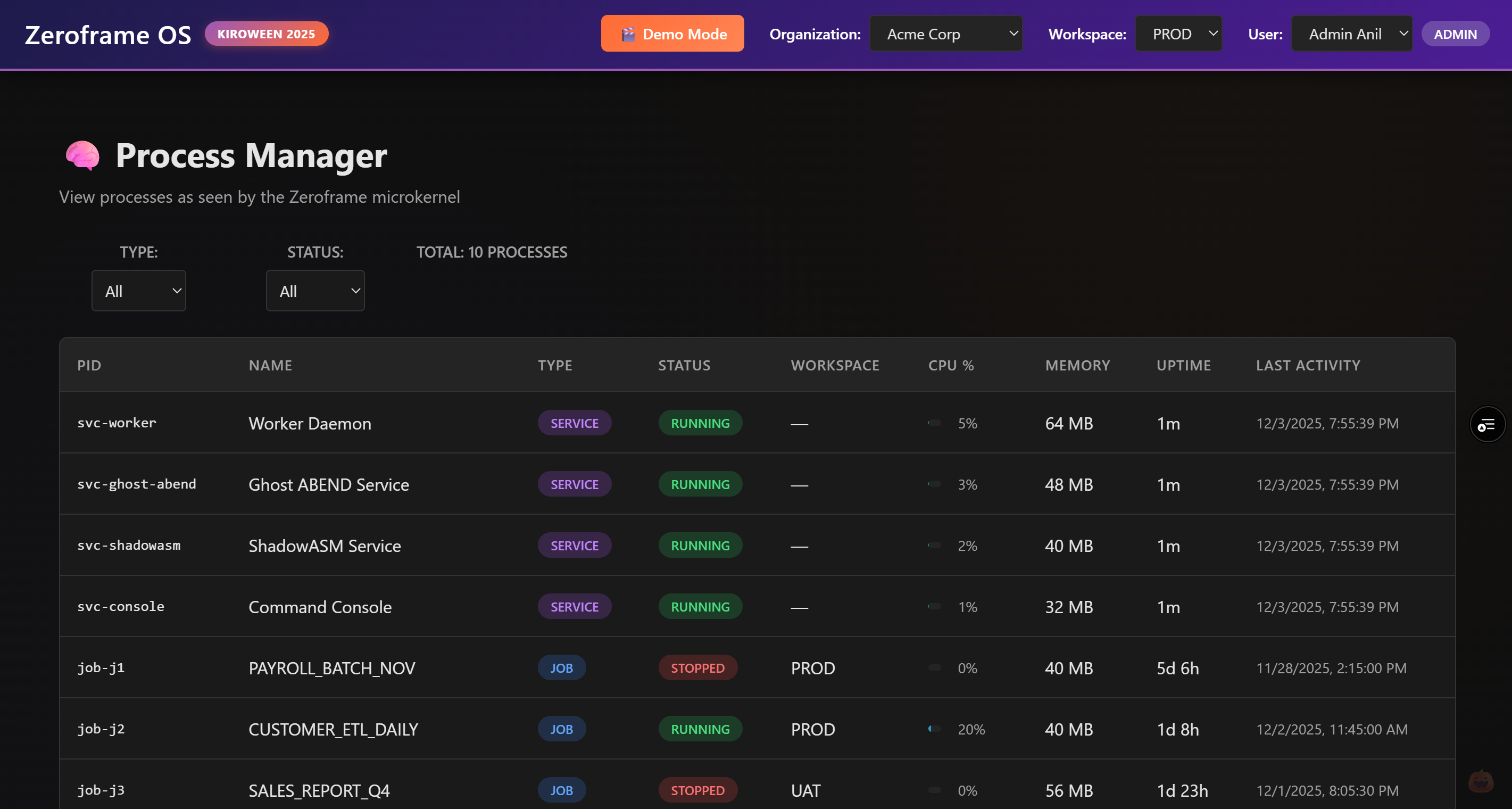
Zeroframe OS is a Kiro-built microkernel, with:
a secure dispatcher and capability-gated syscalls
multi-tenant org/workspace isolation
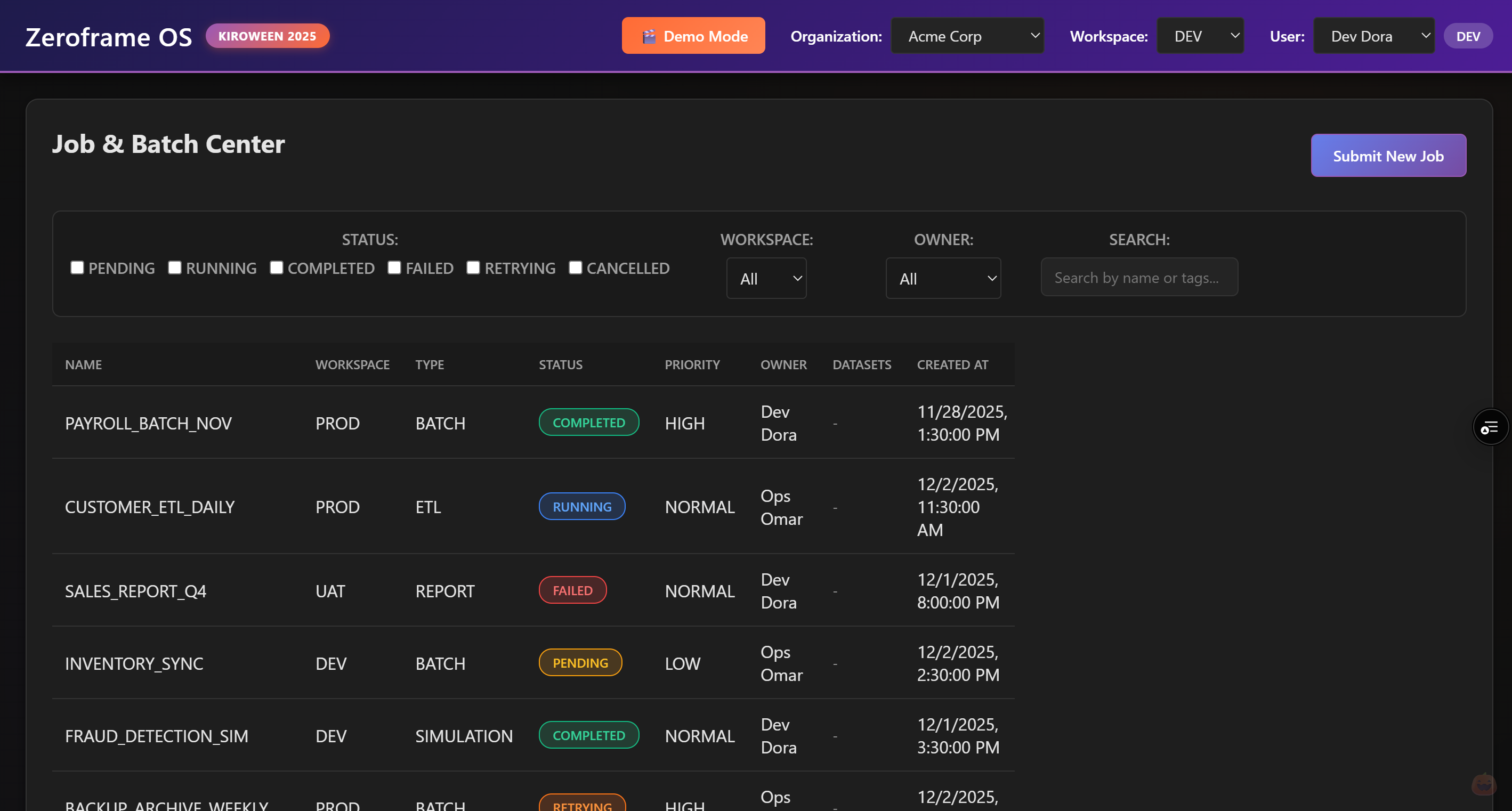
datasets, jobs, lineage, profiling
scheduler/cron subsystem
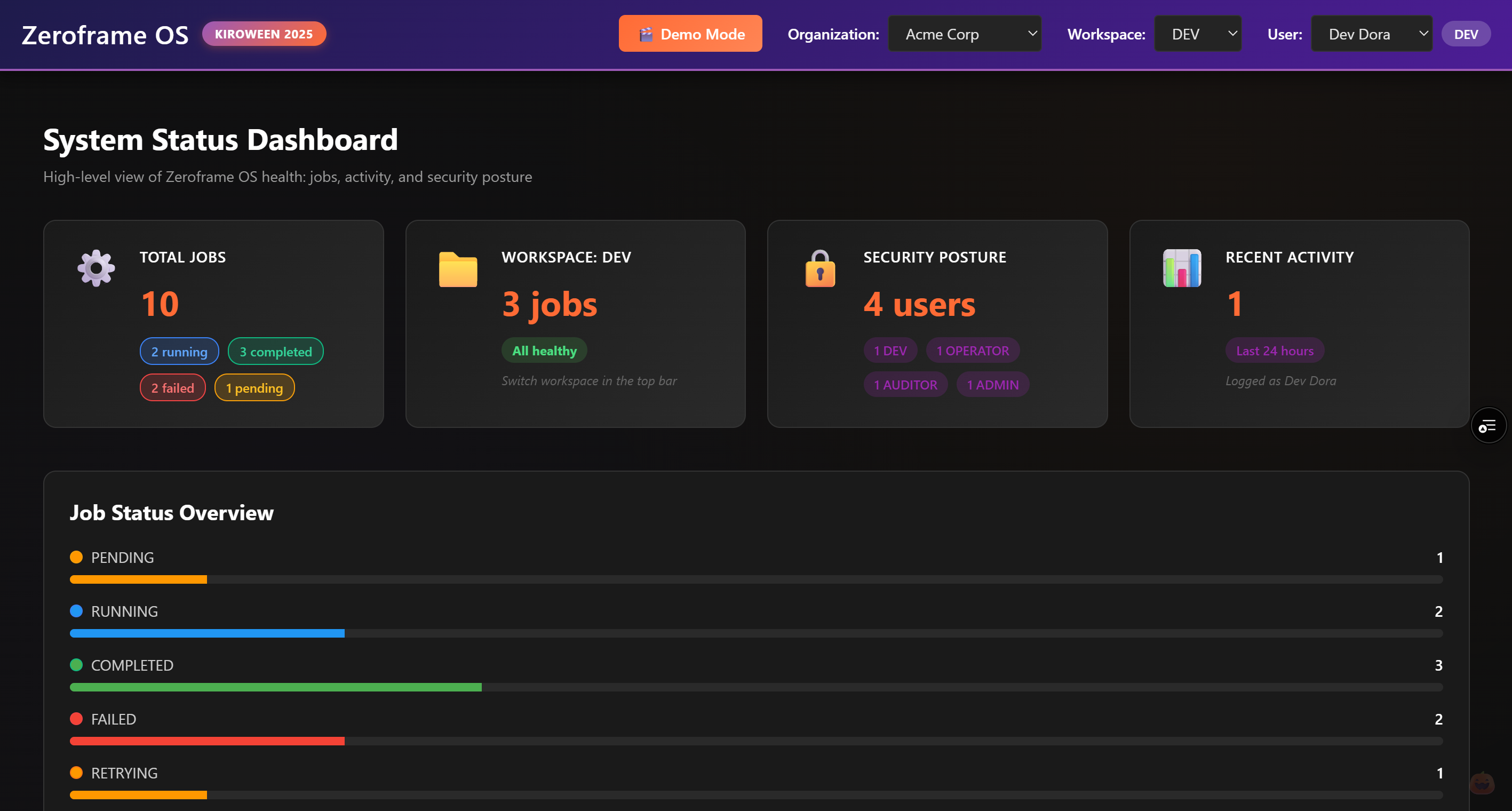
kernel alerts and metrics
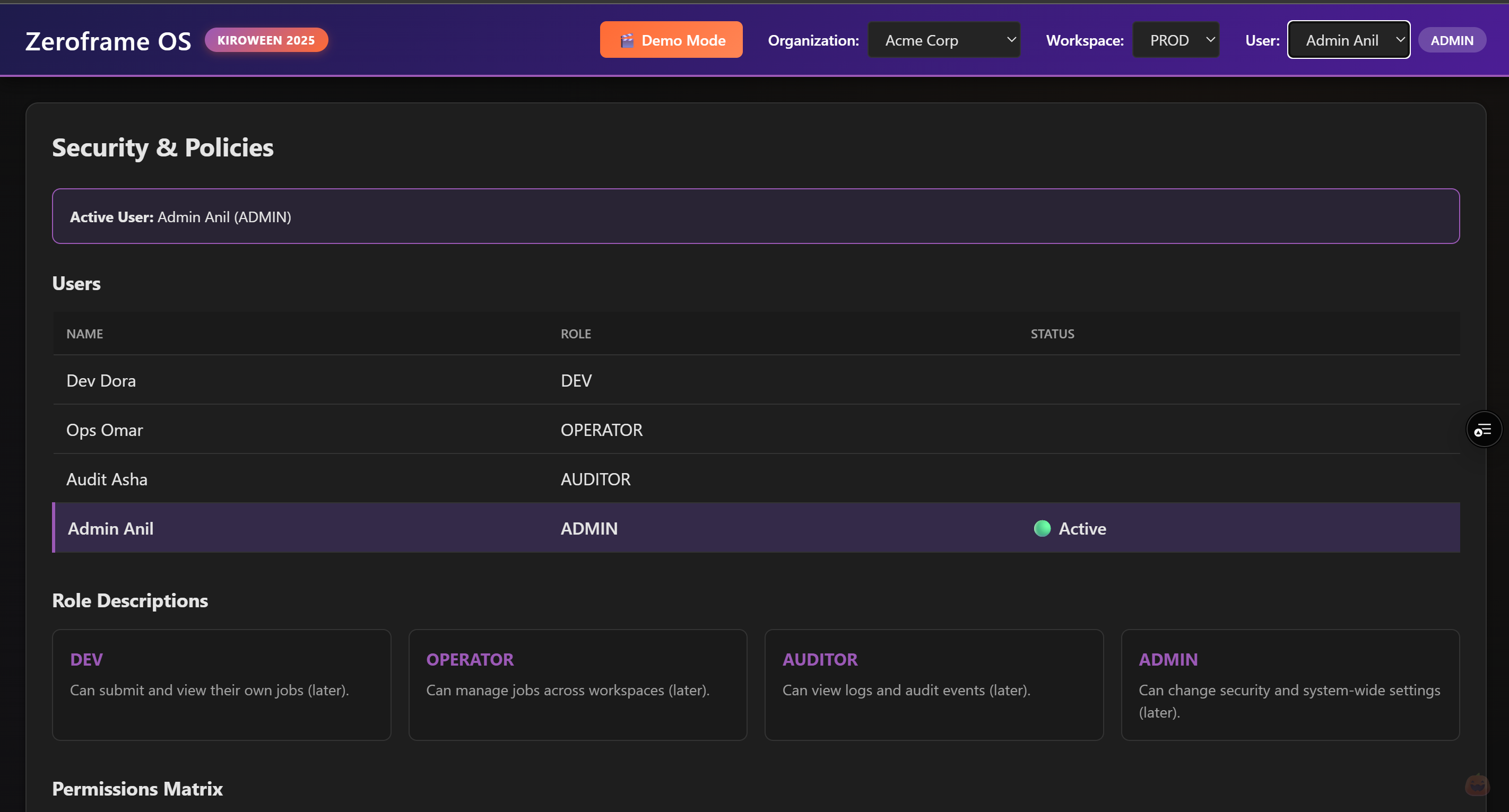
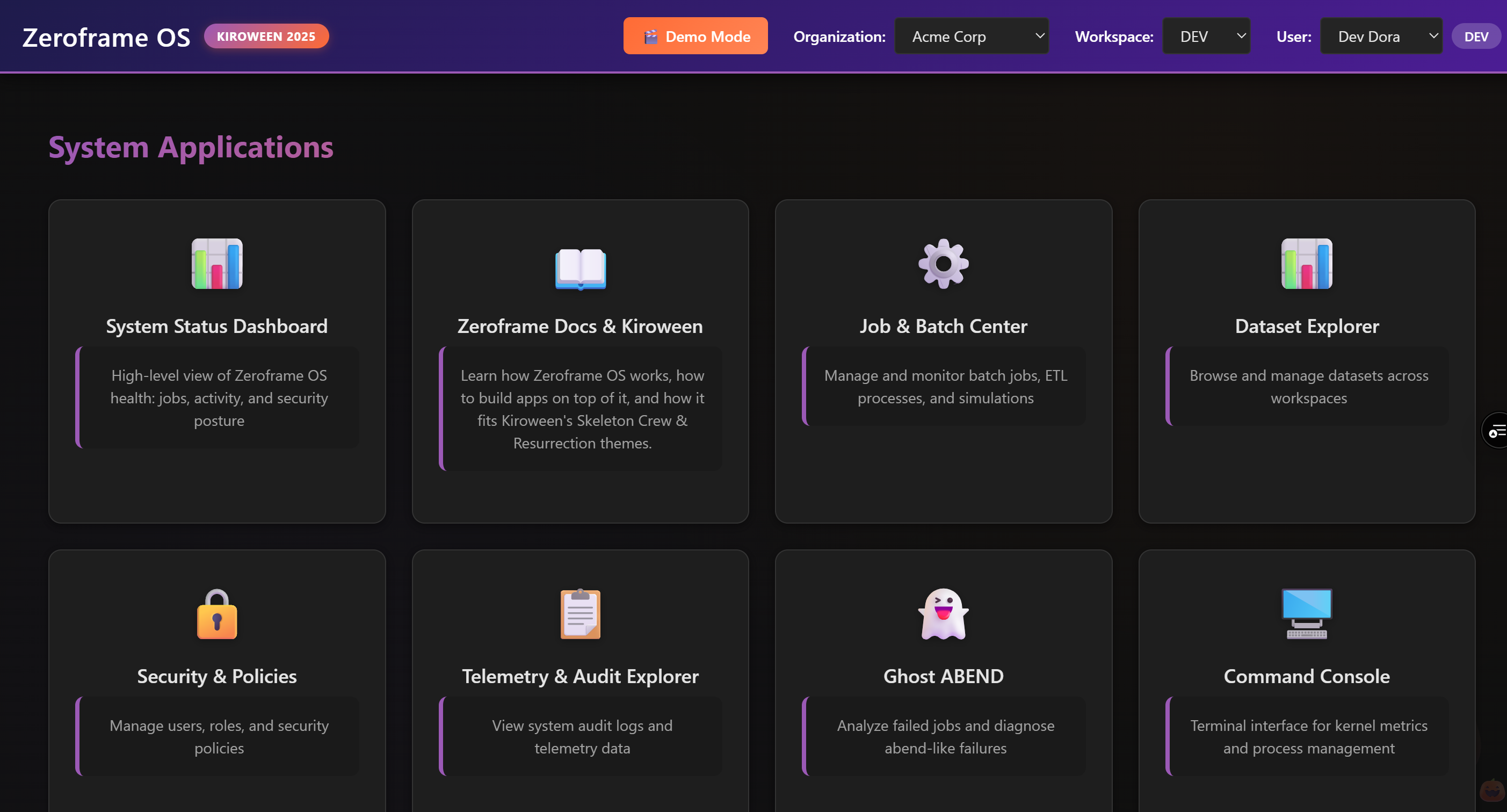
a full desktop-style UI layer
system apps registered dynamically through the skeleton
From this single foundation, we created two distinct applications:
Ghost ABEND – a dataset-aware job failure analyzer with suggestions, lineage tracing, and context-driven insights.
ShadowASM – a dataset-integrated, low-level “assembly-style” simulator that auto-generates starter programs from schema and submits simulation jobs back to the kernel.
Both apps are thin wrappers built entirely on top of the same skeleton, with no duplicated code. We used Kiro the way it’s meant to be used:
Vibe coding to iterate quickly on kernel design, system app flows, and UI structure.
Spec-driven development — everything is defined in .kiro/specs so the kernel and apps evolve consistently.
Steering documents to lay out architecture, constraints, and the microkernel’s responsibilities.
Refactoring via prompts to reorganize the whole project into a clean Skeleton Crew monorepo:
/skeleton-core → the OS
/app-ghost-abend
/app-shadowasm
Kiro handled the heavy lifting while we kept complete control over architecture and correctness.
Challenges we ran into
Designing a microkernel that feels realistic but still lightweight enough to run in a browser.
Getting scheduler ticks, alerts, lineage, and profiling working end-to-end without breaking isolation.
Ensuring both apps actually depend on the skeleton, not just copy it — important for Skeleton Crew.
Dealing with refactors inside Kiro without accidentally creating two independent projects.
Keeping the UX clean while exposing kernel metrics, processes, job flow, and dataset tools.
What we learned
How far a microkernel-style architecture can go even inside a browser environment.
The importance of capability-gated syscalls and workspace isolation when simulating an OS.
How to use Kiro effectively: write clear specs, iterate through vibe coding, and treat Kiro as a collaborator rather than a generator.
How to reorganize a large project into a proper monorepo skeleton that cleanly supports multiple applications.
What's next for ZeroFrame
Mainframe concepts are powerful, but the ecosystem is aging. Zeroframe OS shows that you can:
preserve the good parts (isolation, reliability, deterministic behavior)
modernize the experience dramatically
and build multiple fully working applications on a shared kernel skeleton.
It’s not just a demo — it’s the beginning of a framework for rebuilding legacy-grade reliability in a modern, browser-native platform.

Log in or sign up for Devpost to join the conversation.