-
-
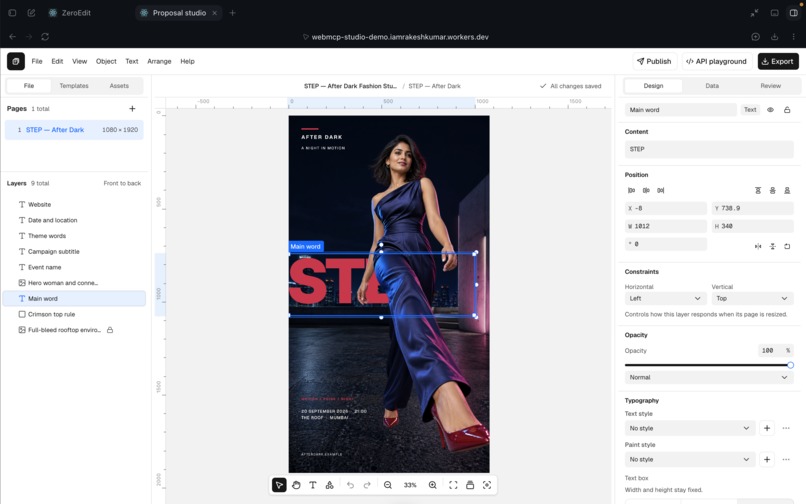
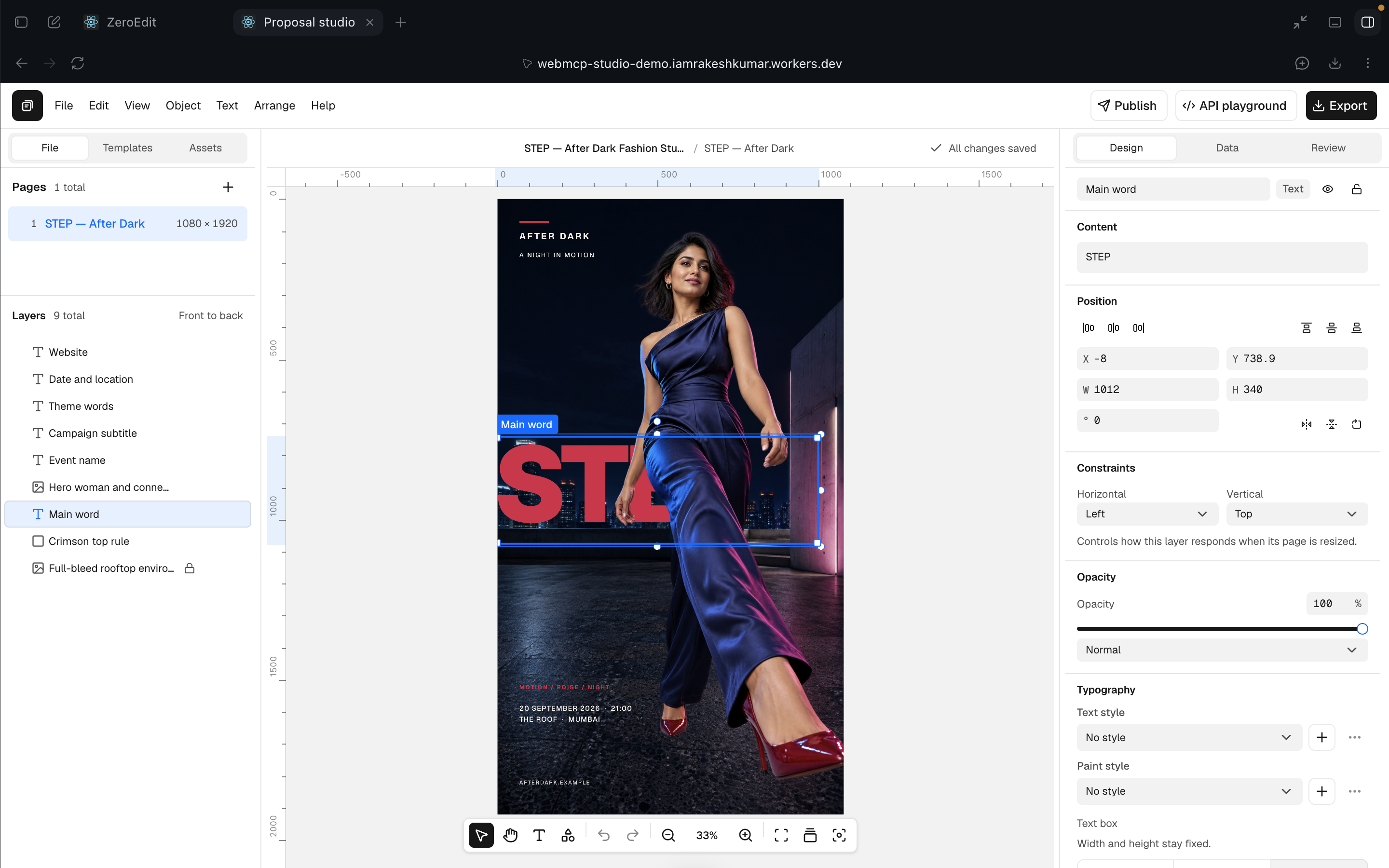
Editor page with advertisement poster
-
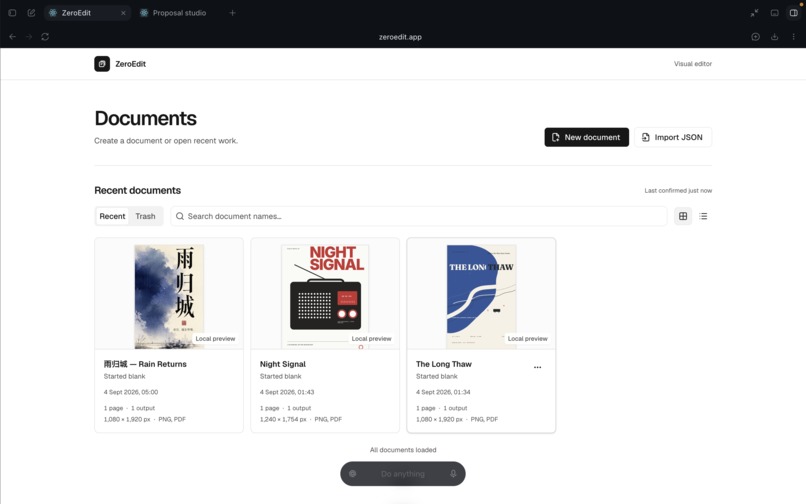
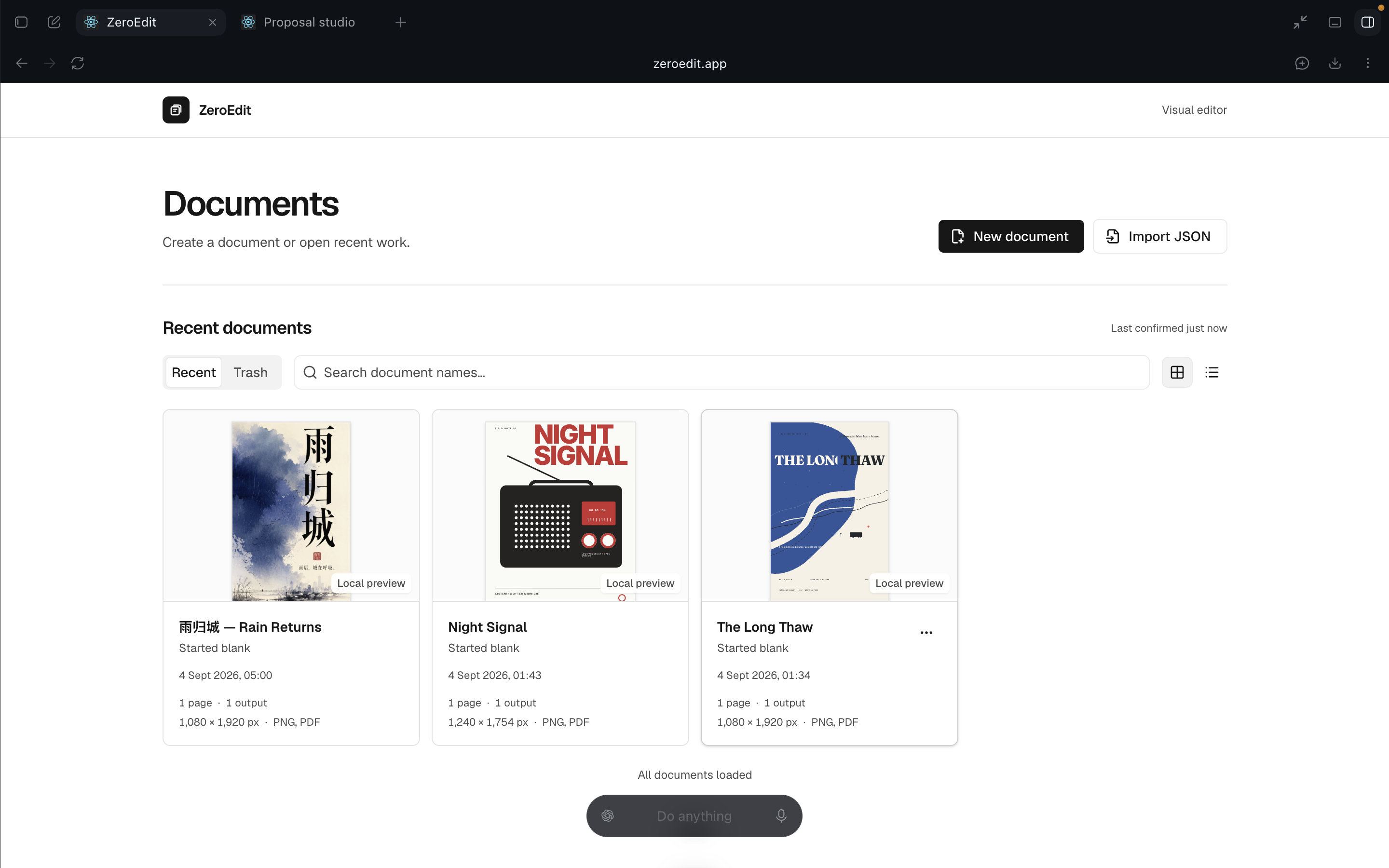
Home page with all the listing of generative documents
-
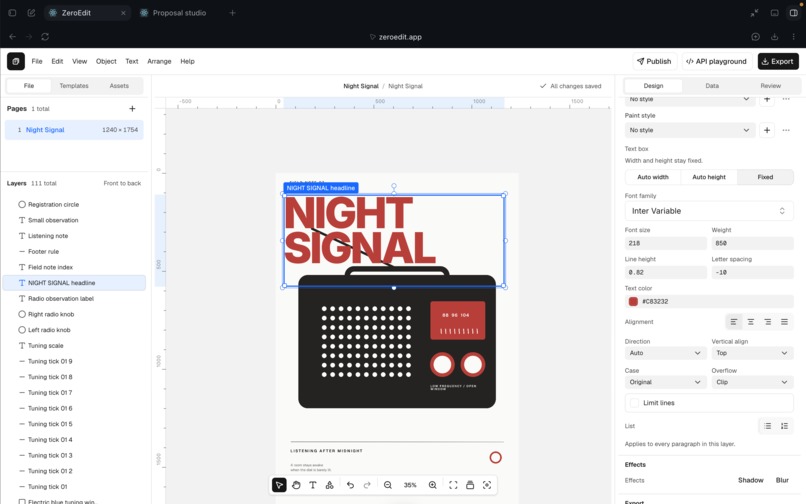
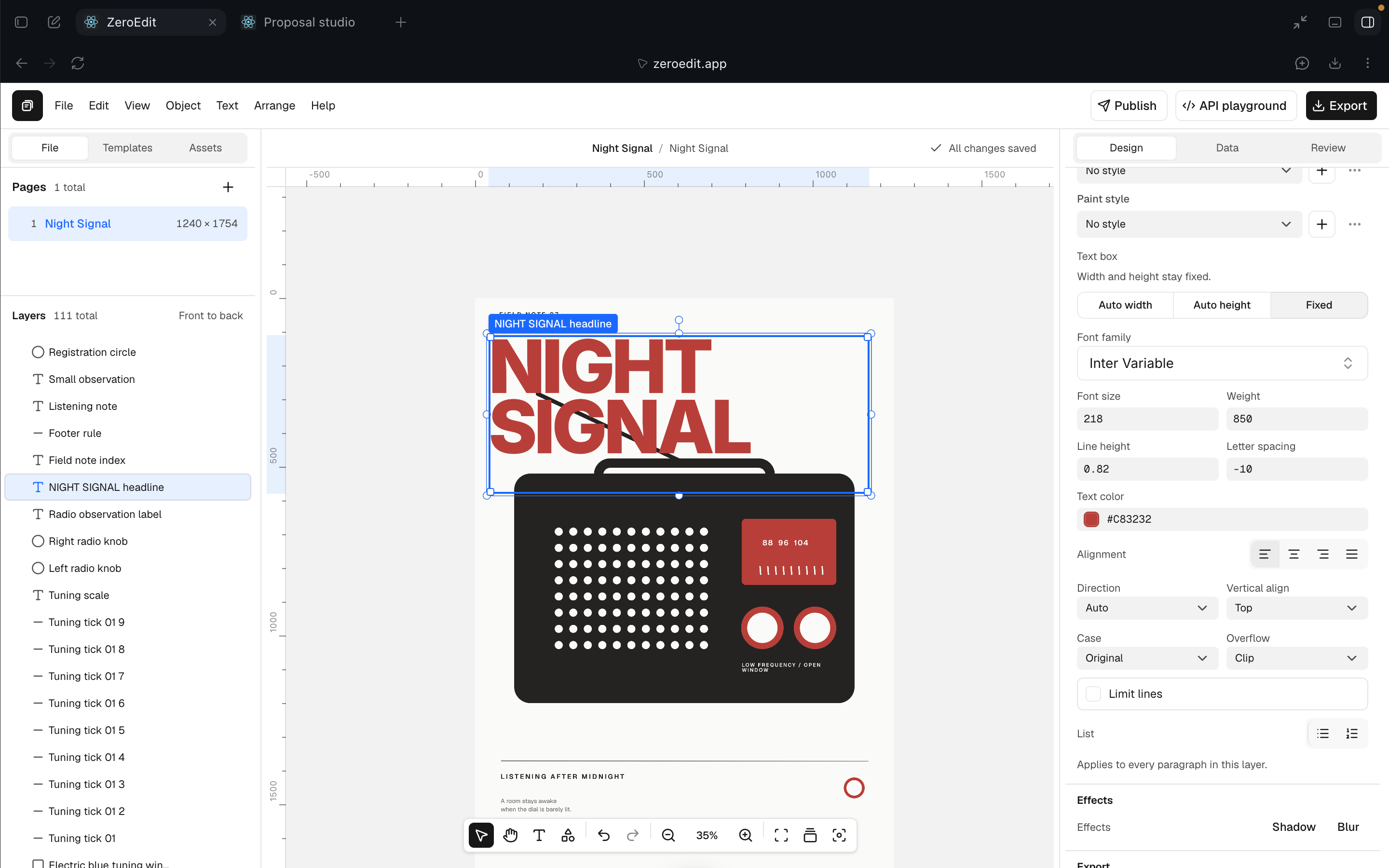
specific skill poster
-
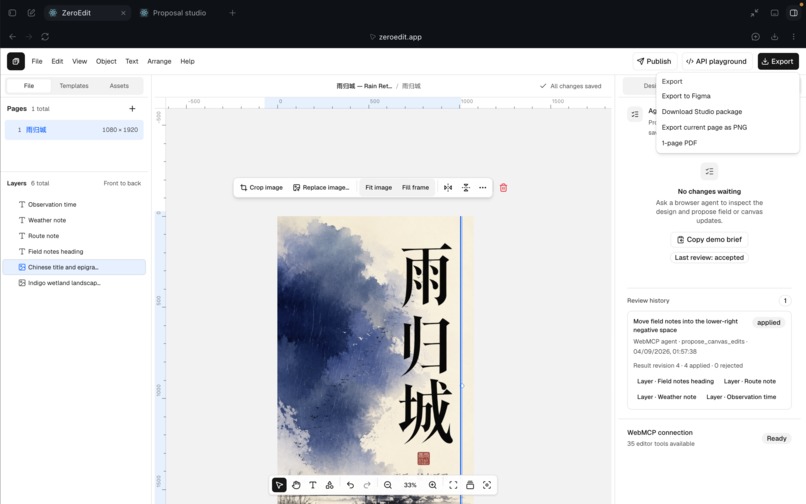
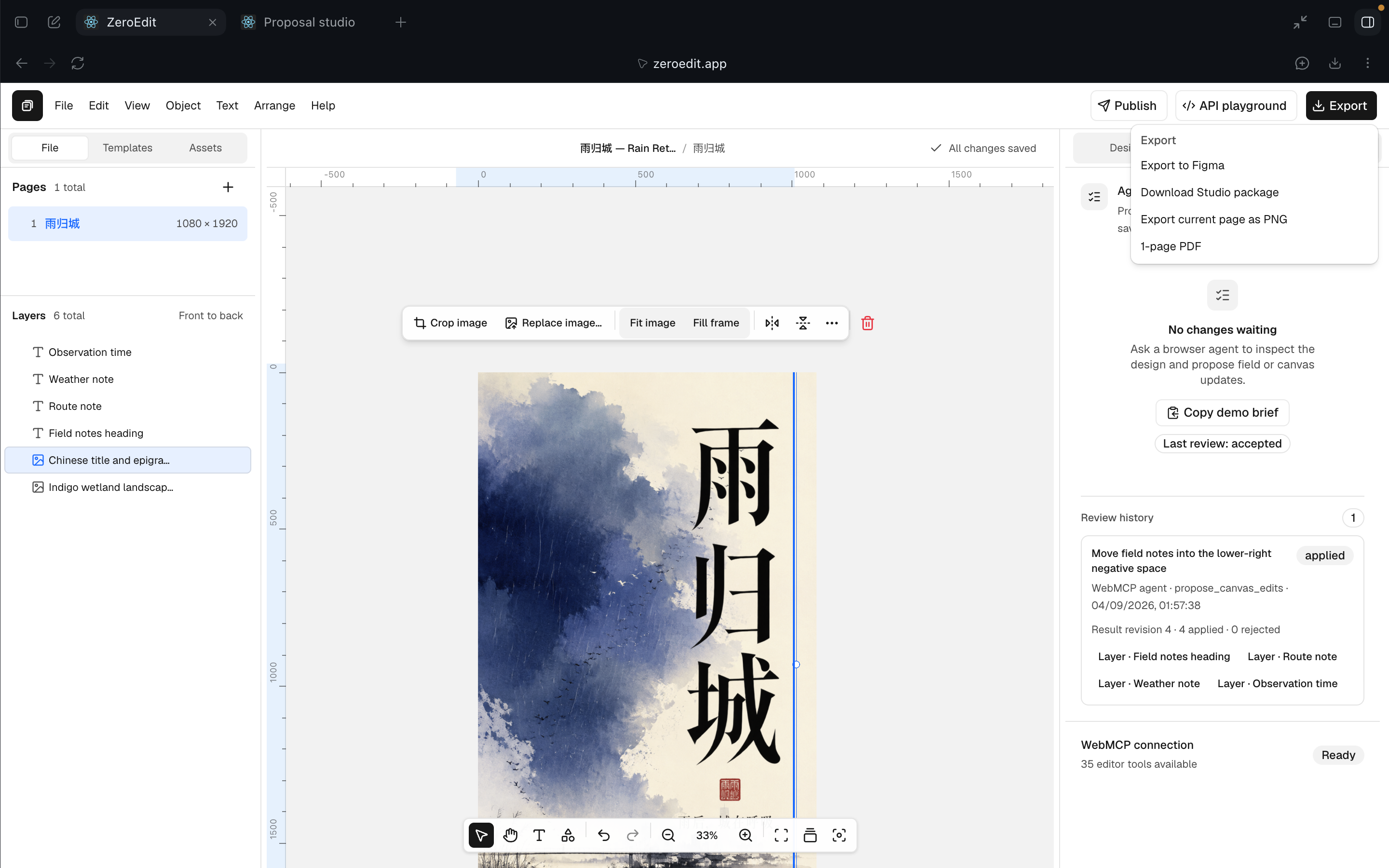
chinese poster
-
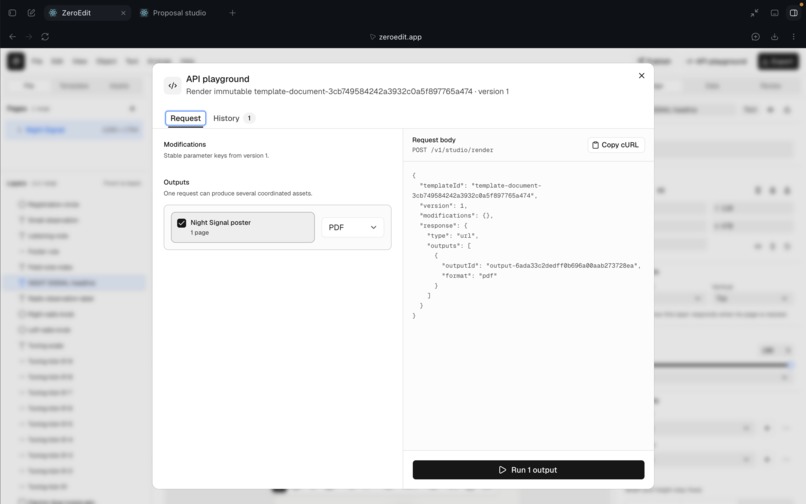
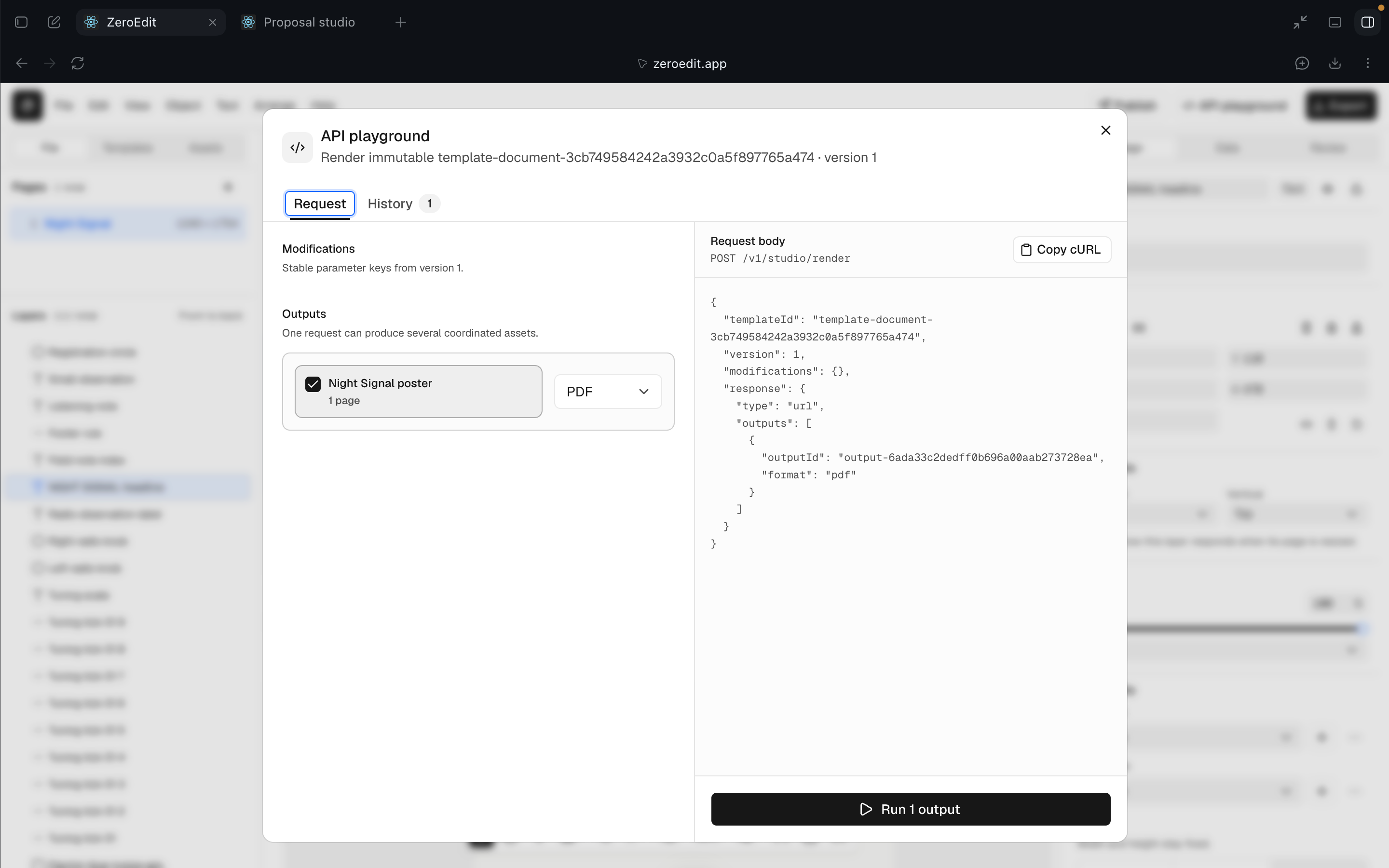
api virew
Inspiration
ZeroEdit began with a problem I had while working on another SaaS product. I needed quotation documents that could be edited manually, updated through an API, reused for different clients, and exported reliably.
I had tried building something similar before, but every solved problem exposed several new ones.
But now things are different so I decided to give it a try .
What it does
It basically gives ChatGPT images an editable and controllable canvas.
Many people use ChatGPT to create moodboards, posters, social graphics etc. even if the image generated looks really good with skills. It is still very hard to manipulate it further according to your need exactly . let alone reuse it for some other purposes.
If you ask the model to regenerate one detail , it can change everything else because of nondeterministic nature.
Our version zero edit should not be this final, it should be something you start with .
Through WebMCP, an agent can:
- Inspect the active document and editor capabilities.
- Create a document from editable text, images, shapes, groups, and styles.
- Upload generated or licensed image assets safely.
- Render and inspect a candidate before presenting it.
- Repair a visible issue without replacing the whole design.
- Show every proposed operation in Review.
- Wait for the user to approve or reject the changes.
After approval, the result remains a normal editable document. The user can move layers, change text, replace images, adjust typography, undo changes, and export PNG or PDF.
A document can also be published as a reusable API template. New data can produce new outputs without asking an image model to recreate the design. ZeroEdit also has a Figma handoff for continuing the work in an established design tool.
ZeroEdit is not intended to replace Figma or canva. It focuses on the stage before that, the exploration phase.
How we built it
Taking apart old repos of mine and referencing new repos like openpencil etc for some stuffs
Challenges we ran into
Compositing layers with each other hard, in first try I noticed it has basically no way of telling what is good composition from bad . so we (codex mostly) added a inspect and repair loop basically, so that agent can inspect .
Fonts caused another serious issue during rendering , it still has not been fixed properly.
Image transfer was also difficult from chatgpt images to application. codex creates a short-lived upload reservation so an agent can upload the original image bytes directly and receive an approved workspace asset.
and lot more I don't even remember half.
Accomplishments that we're proud of
Saving time for users and money for AI companies .
What we learned
Skills.md files are to be taken seriously for the end result of the agent .
What's next
A lot of bad code has gone into it, I would reevaluate everything for example it has still fabric from my old unifinished repo from years back . I dont think that's a good idea anymore. I will see if I can turn into some kind of saas , which can be hosted by client on their server safely and secure for their workflow or some kind of multitenant thing I may explore not sure since the product still has so many gaping holes to fix first.
Built With
- bun
- cloudflare
- fabric
- shadcn
- tanstack
- typescript

Log in or sign up for Devpost to join the conversation.