-
-
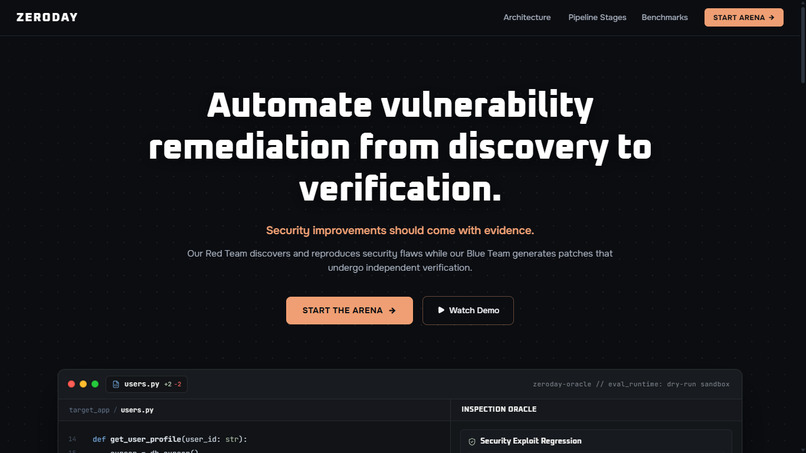
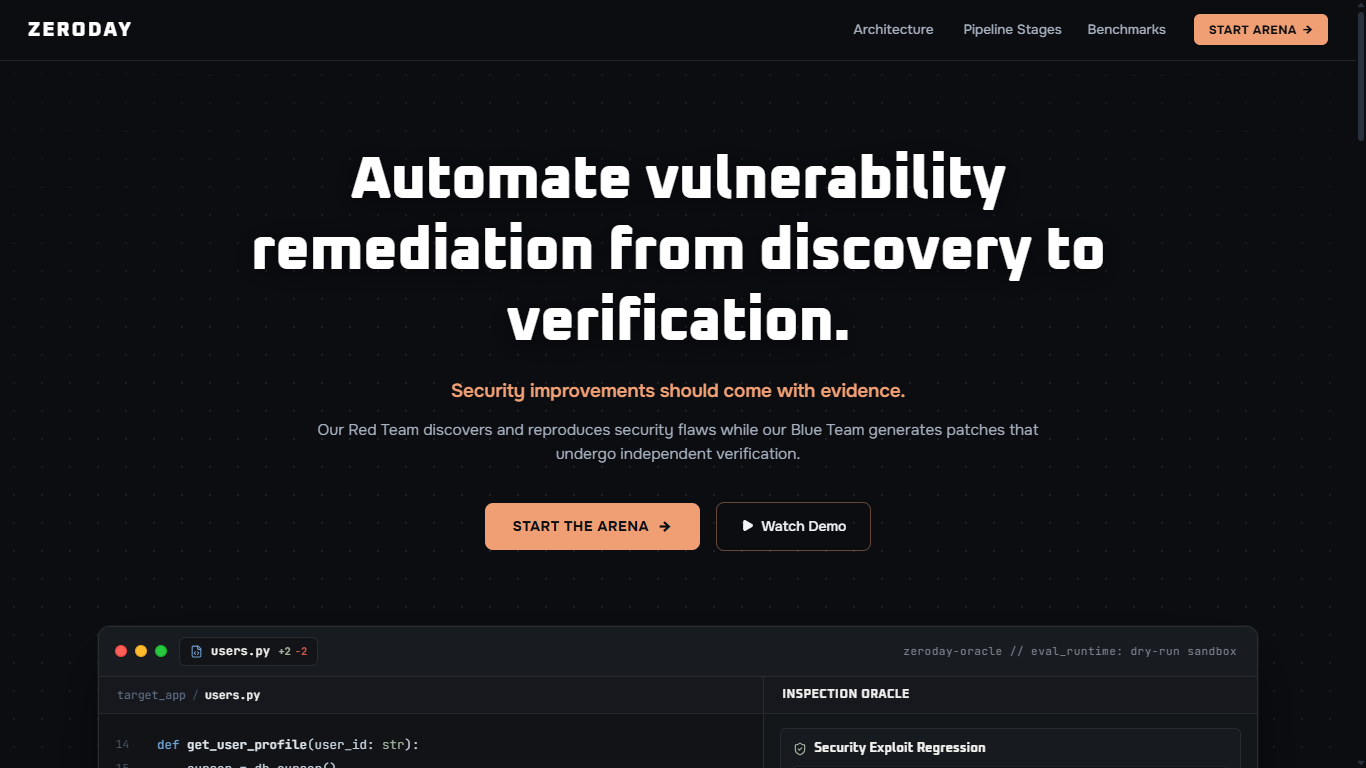
Landing page Hero Section
-
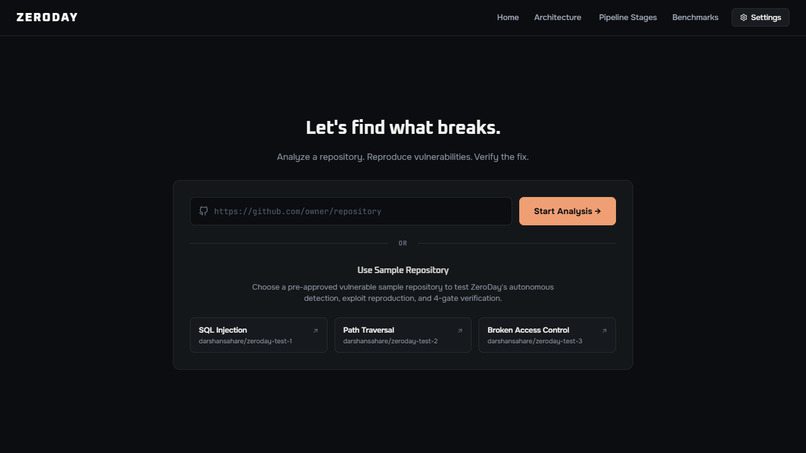
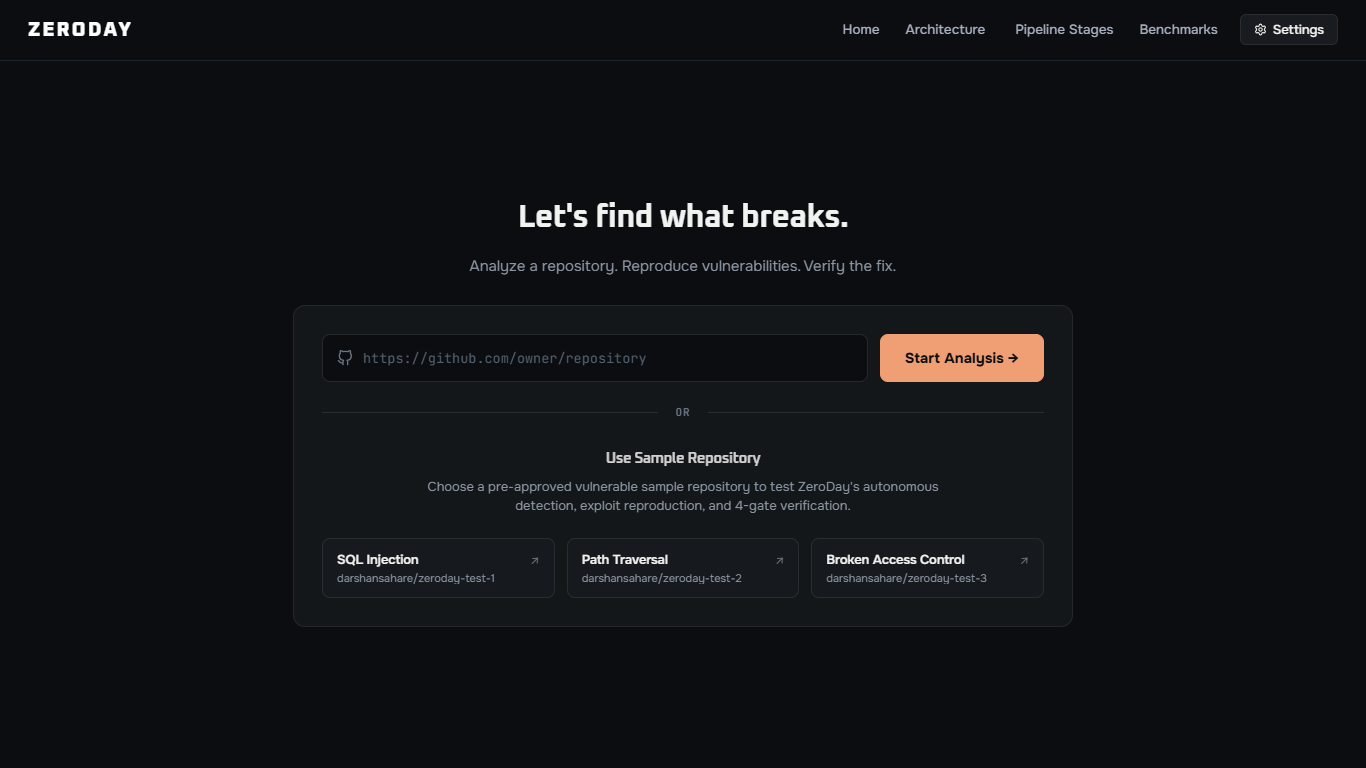
Arena Page, you can either paste a link or select from given repositories
-
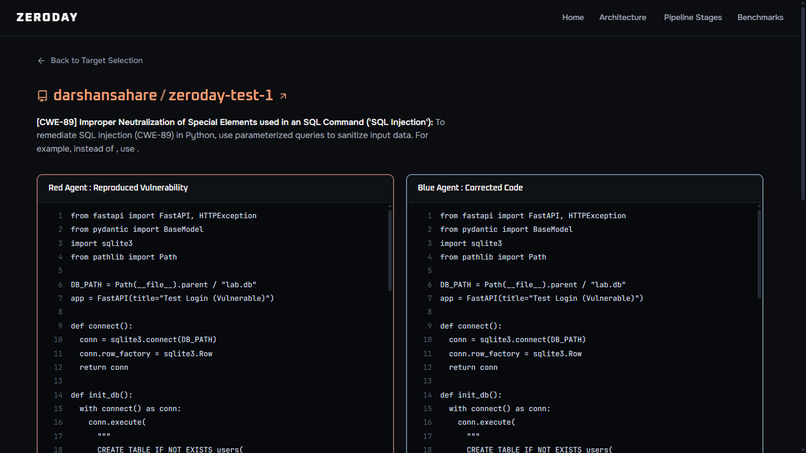
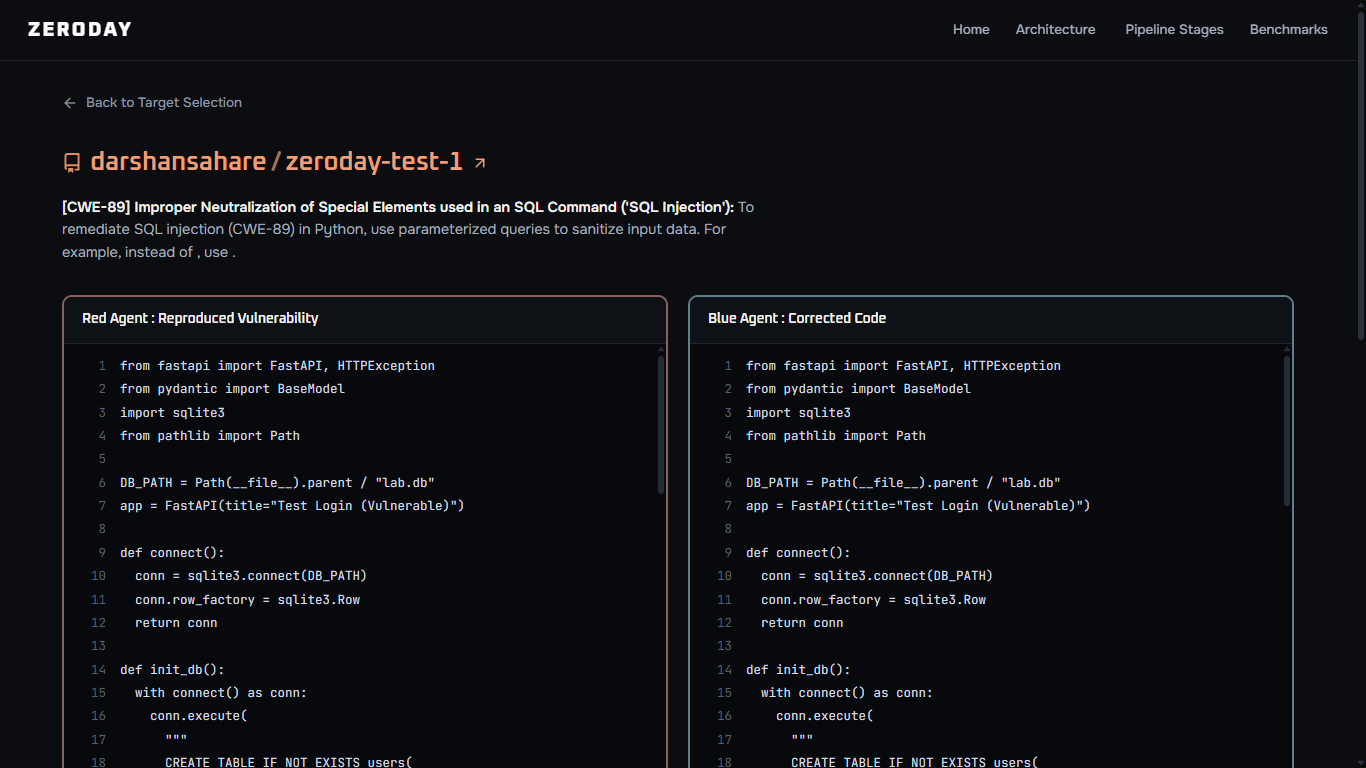
Main Arena Run page, The repository vulnerability was found, the description is mentioned
-
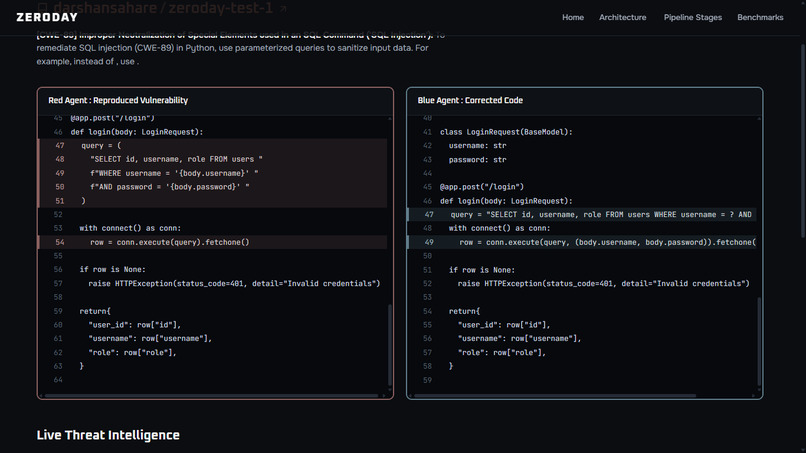
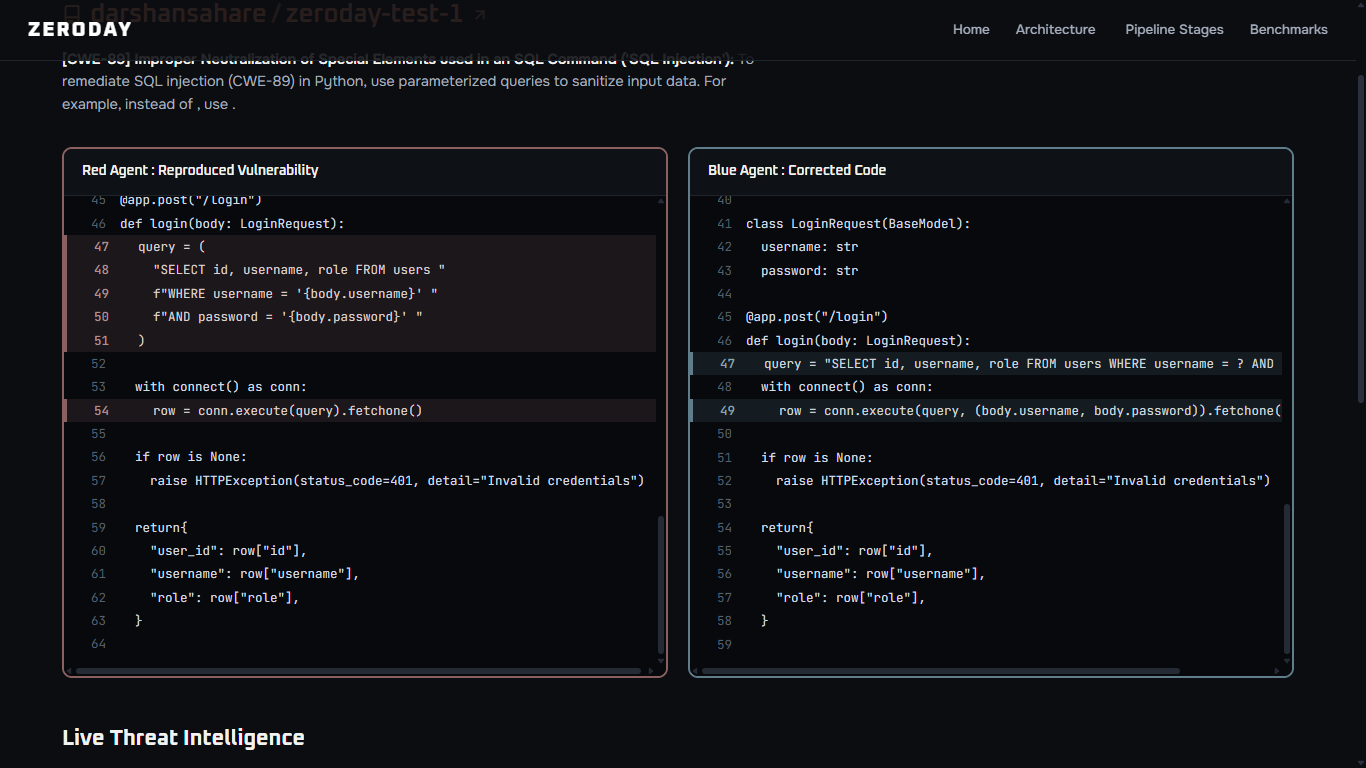
The security flaw and fix done by ZeroDay
-
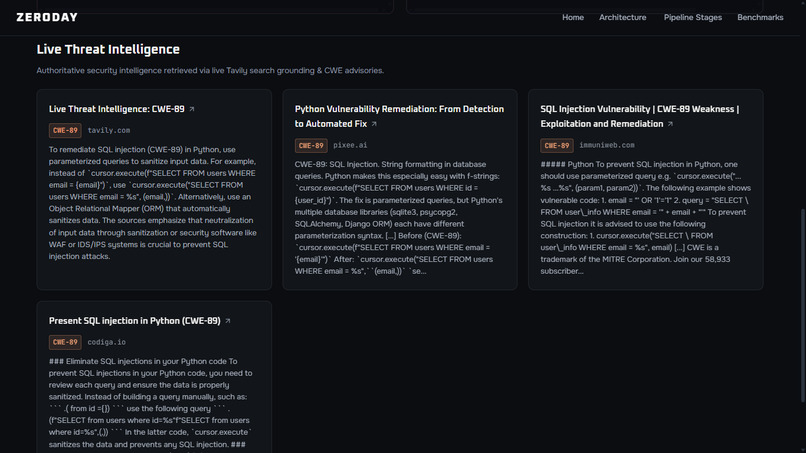
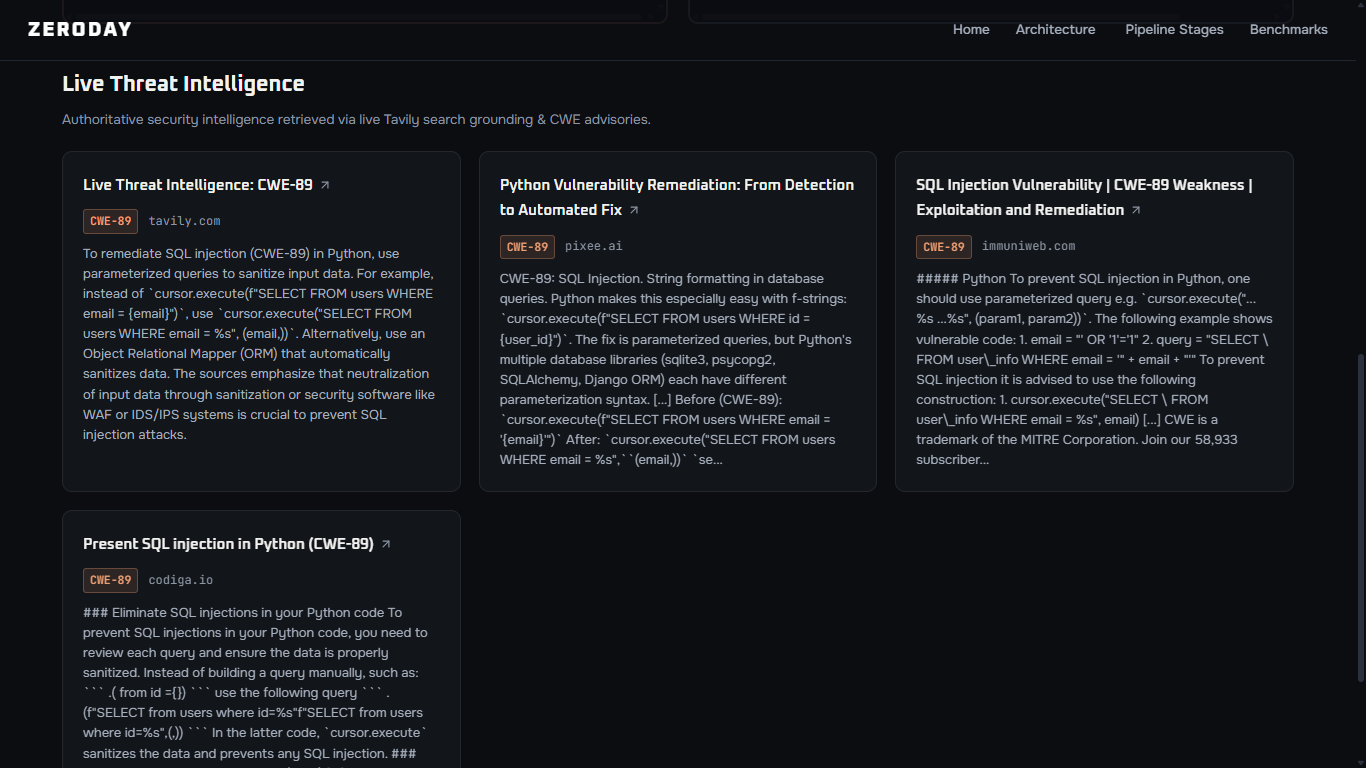
Documentations provided by the Tavily Search engine, which was used to Fix the issue
-
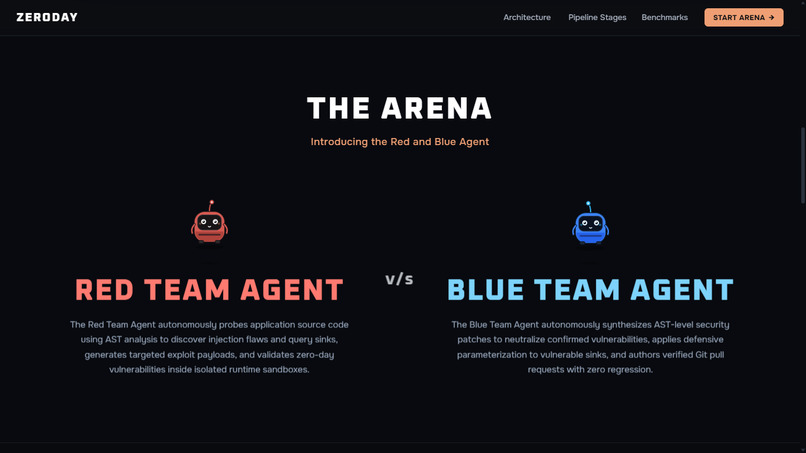
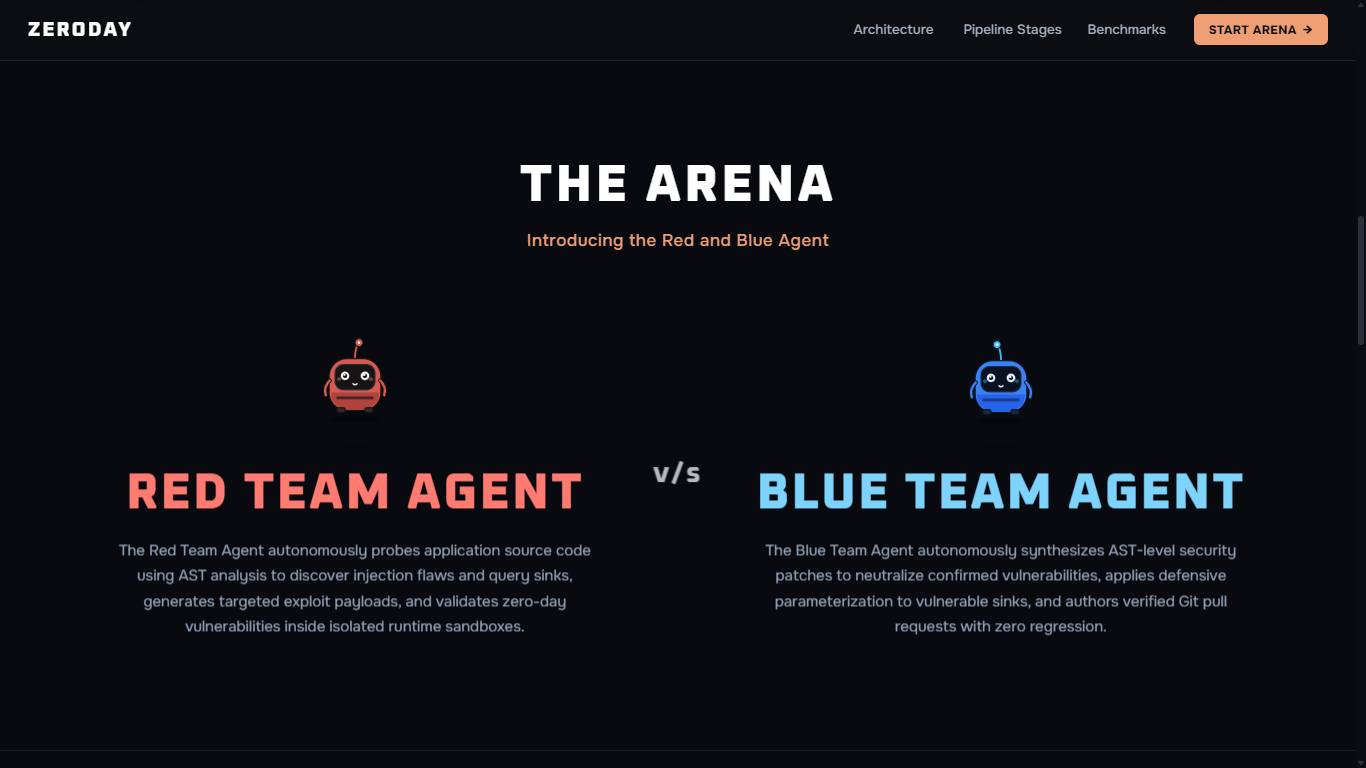
Meet ZeroDay Team: Red Team Agent & Blue Team Agent (Landing page-2)
-
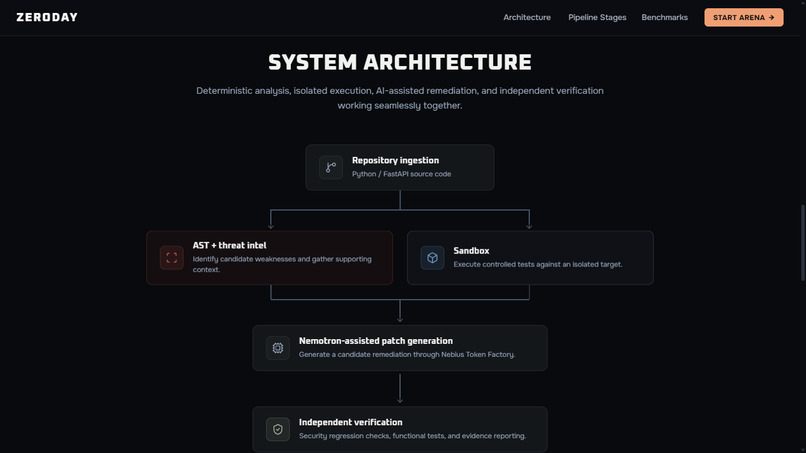
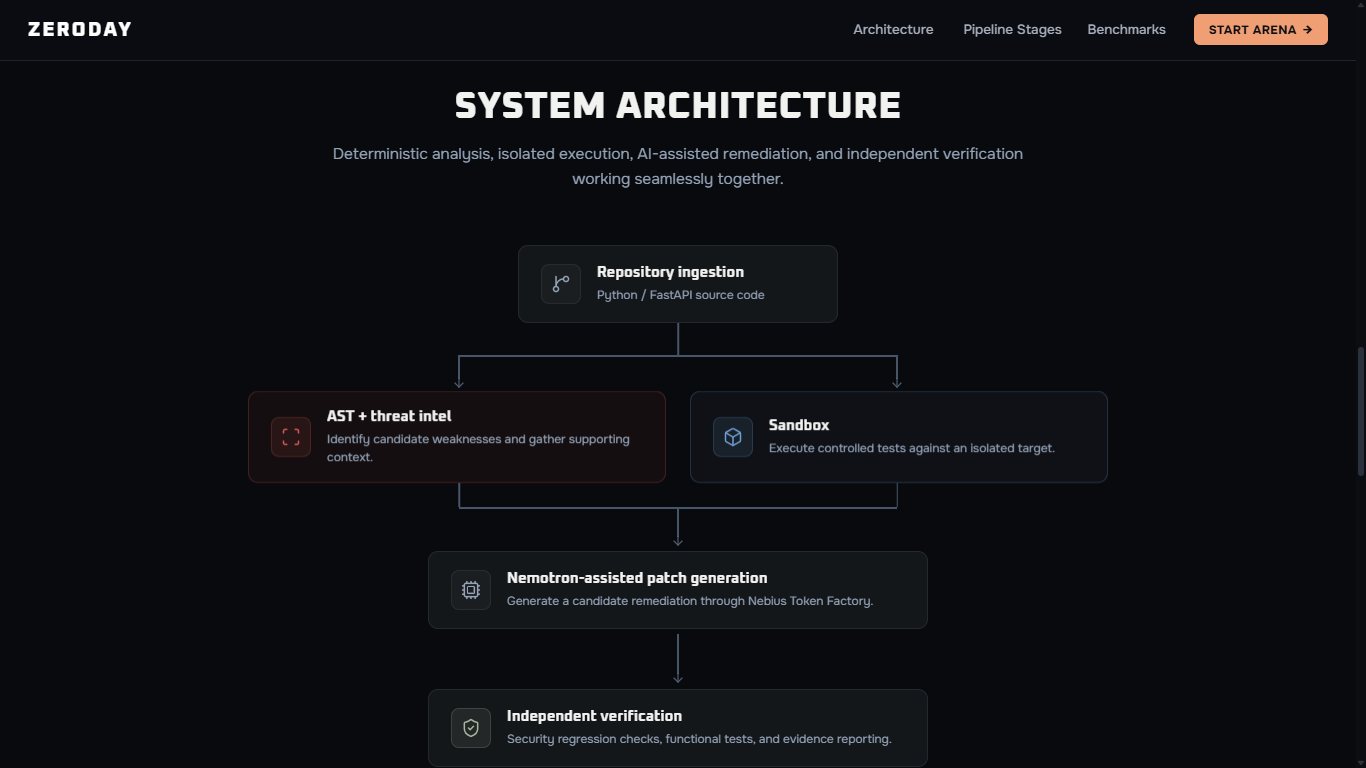
System Architecture (Landing page-3)
-
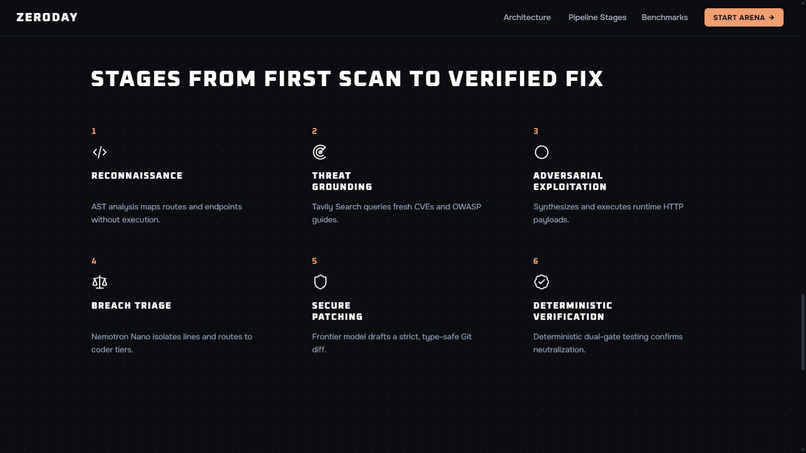
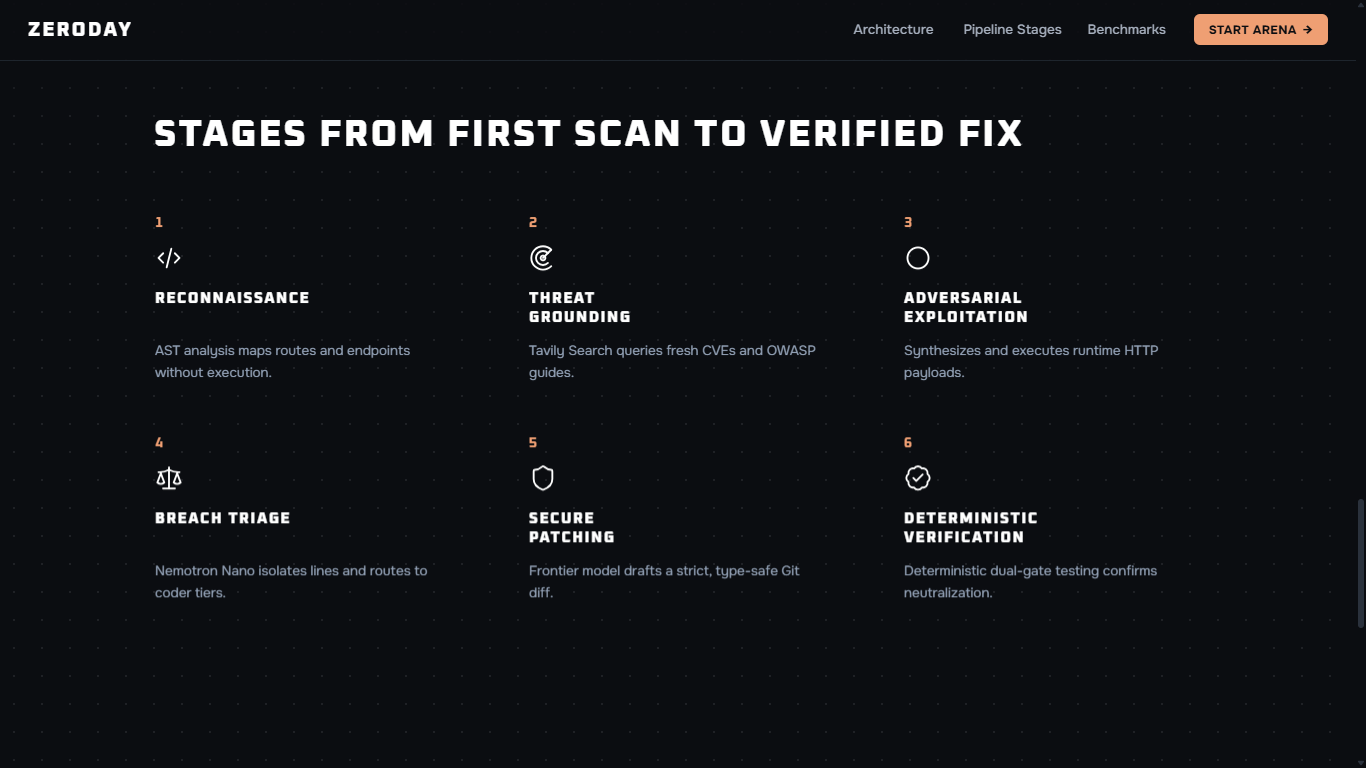
Stages from first scan to verified fix (Landing page-4)
-
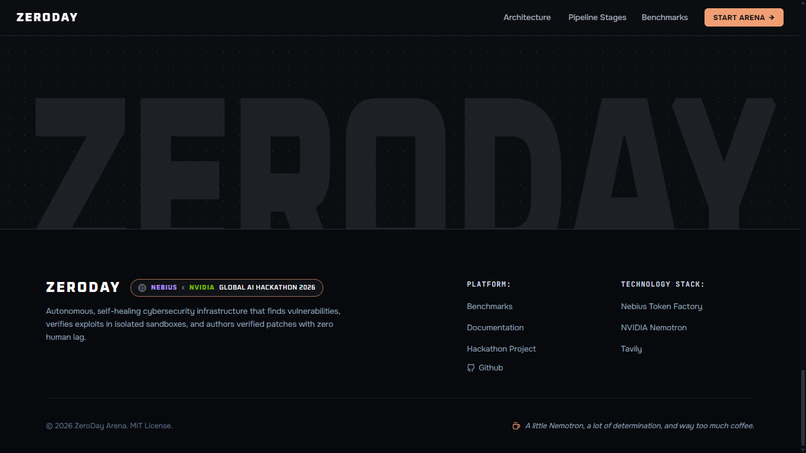
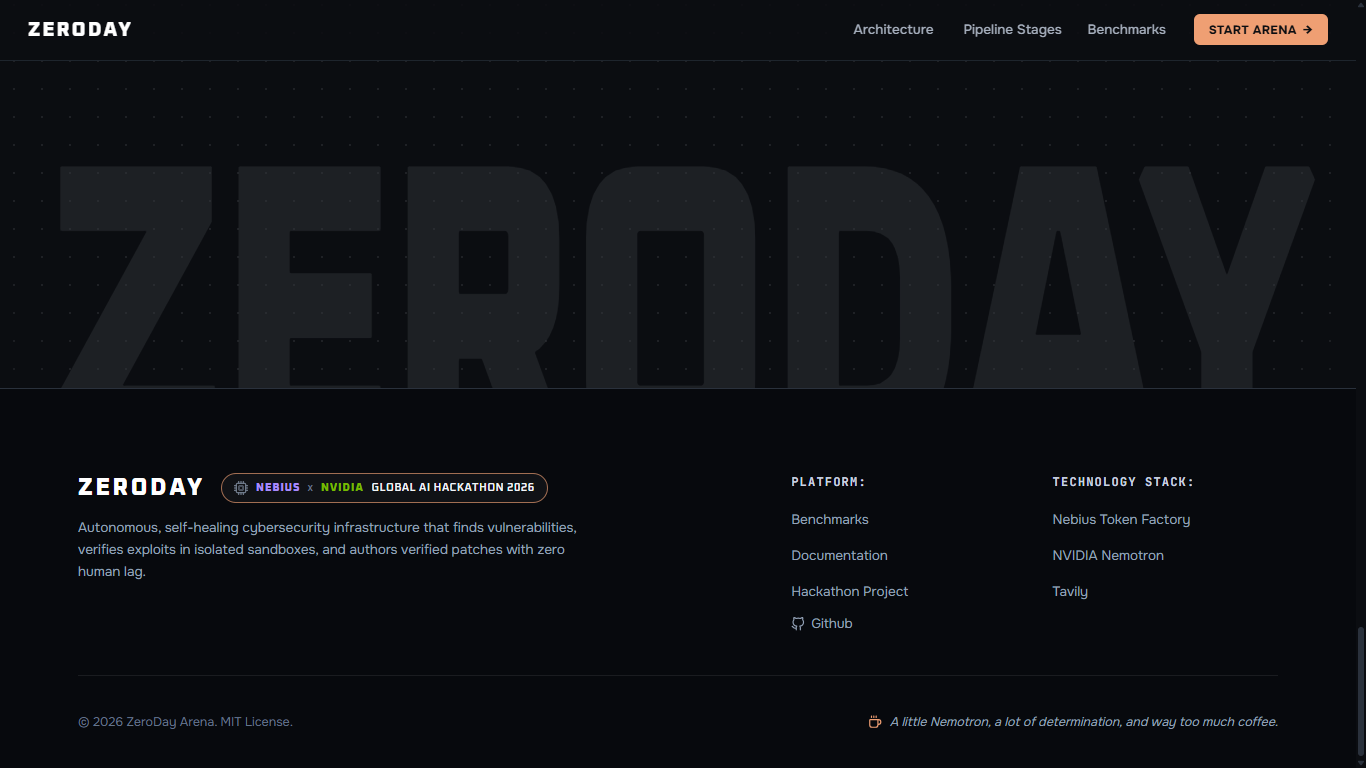
ZeroDay footer (Landing page-5)
-
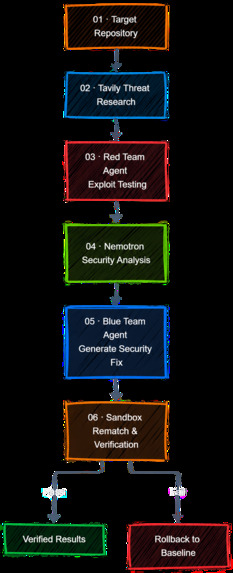
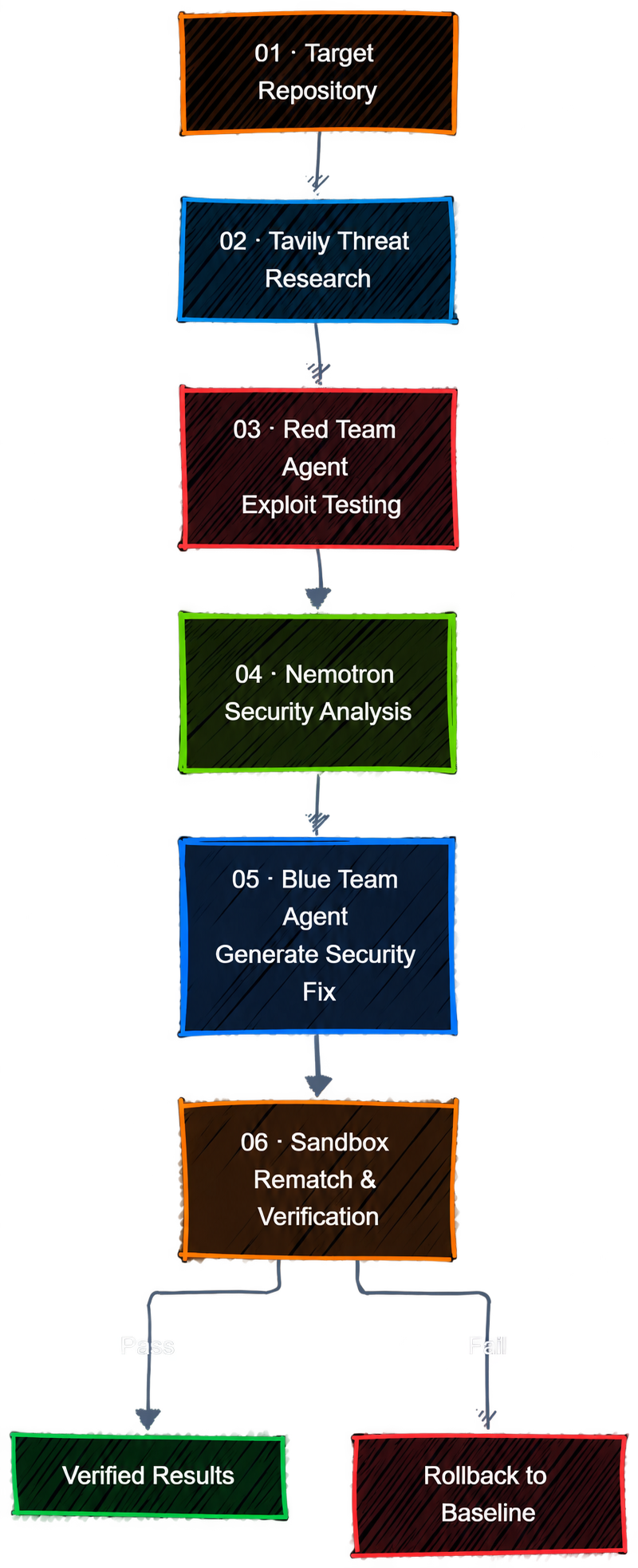
Flowchart for better understanding
Inspiration
As a Computer Science & Engineering student, I've been always been curious about the technology that we build everyday from how it works to how a small flaw can compromise the entire system. This curiosity added my interest in cybersecurity and motivated me to explore how we can make software more secured.
In the era, where AI is rapidly evolving and helping humans, I started thinking about how it could be applied to cybersecurity. What if AI could investigate potential weakness, generate meaningful fixes and verify whether those fixes actually work?
This thought led to ZeroDay; a project built to bridge the gap between vulnerability detection and verified remediation, using AI to not only suggest a fix but to validate the suggested fix.
What it does
ZeroDay is a tool which helps in security analysis for Developers to find vulnerable codes and fix them with evidence.
It not only detects vulnerability, but combines code analysis through AST code analysis, Research about the vulnerability, Reproduce the vulnerability to identify the flaw and then propose a fix which goes through four-gate verification workflow which includes: Syntax Validation, Regression Testing, Security invariant check & Static Analysis. To understand it better,
- Analyze: It analyzes the source code to identify potential security flaw and understand relevant code context.
- Investigate: AI helps to investigate suspicious pattern and explain the potential security risks.
- Remediate: AI Generates targeted code changes to address identified security flaw.
- Verify: Now, it evaluates suggested fixes through four-gate verification workflow (already mentioned above).
- Validate with evidence: The Documentation for the identified vulnerability is also provided so that, the flaw can be understood, making verification more meaningful.
How I built it
I built ZeroDay using React and Vite for the frontend and Python for the backend. This helped me create a Interactive website with good backend system. I implemented Tavily to fetch the documentation of the CWE, Vulnerability, fixes, etc. to support AI understand while suggesting fixes, giving it a direction to work on.
NVIDIA Nemotron was implemented through Nebius Token Factory to support the analysis and remediation process. Rather than relying only on AI to determine the correctness of code, a four-gate verification Oracle was built to validate through multiple stages.
The focus throughout the development was to build more than a vulnerability scanner. To build a system that connects identifying security issues with fixing them & evaluation the working of fixes.
Challenges I ran into
One of my biggest challenge was making AI-generated security fixes more trustworthy. AI can suggest a fix that looks correct but may not fix the security issue, so i built a four-gate verfication workflow to evaluate the fixes and passing them throu verification stages.
Another challenge was to make the workflow more reliable and repeatable. As AI responses can vary, I implemented deterministic mock-agent capabilities to stimulate AI responses and checked whether the rest of ZeroDay works correctly.
Accomplishments that I'm proud of
I'm proud to have turned an idea into ZeroDay, a working AI based security platform that brings vulnerability analysis and verification together.
What makes me more proud is the engineering mindset behind ZeroDay, insteads of blindly trusting AI-generated fixes, I built a verification workflow. This hackathon allowed me to turn my interest in cybersecurity into a practical application of AI, development and security analysis.
What I learned
While building the project, I realised that creating an AI based tool involves much more than connecting an AI model to a codebase.
I learned how to bring AI integration, code analysis, backend development and automated testing together, that is required to build a complete application. I also learned that AI-generated fixes can not simply be trusted because they LOOK CORRECT. They need to be TESTED & EVALUATED.
This project also helped me understand the importance of Consitency, time management and proper research to make a project really successful.
What's next for ZeroDay
I want to take ZeroDay further by making it more capable of detection and understanding complex codebases with proper generation of fixes. The areas that I plan to work further are:
- Expanding support for more programming languages, frameworks and security vulnerabilities
- Improve code understanding to identify vulnerability with greater accuracy and fewer false positive
- Evaluate the system against realistic security scenarios to measure its effectiveness and identify areas for improvement.
- Enhance the four-gate verification oracle with more security checks and testing to evaluate better.
ZeroDay is more than a hackathon project its step towards exploring how AI can make cybersecurity more smarter, more practical and more reliable. I hope to help build a future where finding a vulnerability is just the beginning and fixing it with confidence is the real achivement
