-
-
ZERO WASTE SMART CLASSROOM
Inspiration
The idea for this project came from observing everyday classroom habits. We noticed that a lot of food was wasted during lunch breaks, plastic wrappers were thrown without segregation, and lights and fans were often left on even when not needed. These small actions, when repeated daily, create a large negative impact on the environment. This inspired us to design a solution that could bring sustainability directly into the classroom.
What it does
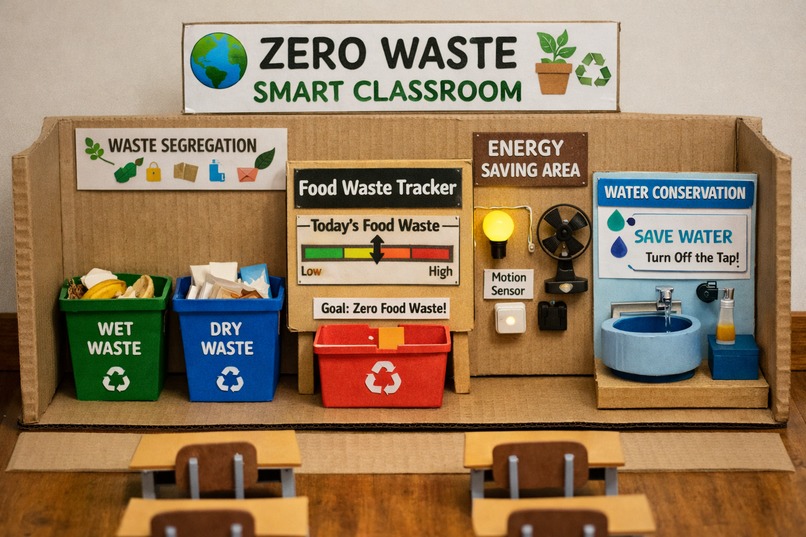
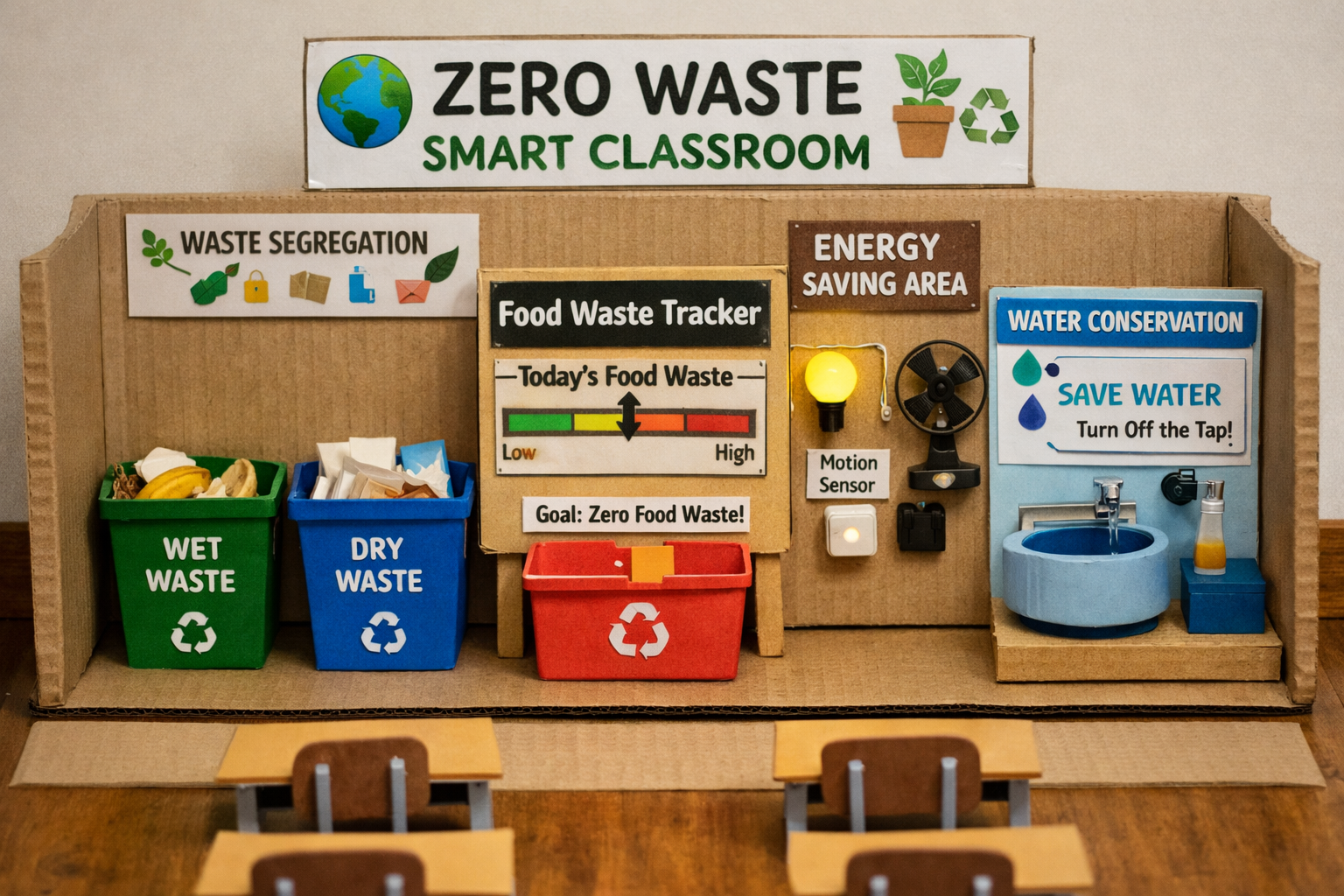
The “Zero Waste Smart Classroom” helps reduce waste and conserve resources within a classroom environment. It encourages students to follow sustainable habits by introducing systems for proper waste segregation, monitoring food wastage, and promoting mindful use of electricity and water. The project demonstrates how everyday actions like disposing waste correctly, avoiding food waste, and switching off unused appliances can significantly reduce environmental impact. It acts as both a functional model and an awareness tool, inspiring students to adopt eco-friendly practices in their daily lives.
How we built it
We created a miniature model of a classroom using materials like cardboard, paper, and basic craft supplies. The model includes: A waste segregation system with separate bins for dry and wet waste A food waste tracker to monitor and reduce food wastage An energy-saving concept to represent automatic control of lights and fans A water conservation setup to show efficient usage of water Each component was carefully designed to demonstrate how simple systems can make a big difference in sustainability.
Challenges we ran into
While building the project, we faced several challenges. Designing a model that clearly represents real-life systems was not easy. Managing time and materials efficiently was also a difficulty. Additionally, simplifying complex ideas like energy-saving systems into a basic model required creative thinking. However, we overcame these challenges through teamwork, planning, and continuous improvement.
Accomplishments that we're proud of
“We turned a simple idea into a meaningful, eco-friendly solution that can create real impact.”
What we learned
Through this project, we learned the importance of sustainability and how small daily actions can create a big impact on the environment. We understood concepts like waste segregation, energy conservation, and responsible use of resources. We also developed important skills such as problem-solving, creativity, teamwork, and time management. This project helped us realize how STEM knowledge can be applied to real-life situations to create meaningful solutions. Most importantly, we learned that being responsible towards the environment starts with simple habits in our everyday life.
What's next for “Zero Waste Smart Classroom”
The next step is to move from a model to real-life implementation in classrooms. This project can be expanded by installing actual waste segregation bins, introducing a real food waste monitoring system, and using simple sensors for automatic energy saving. In the future, the concept can be applied to the entire school, creating a Zero Waste Campus. Awareness campaigns, student involvement programs, and eco-clubs can further strengthen its impact. With support and improvement, this idea can be scaled to other schools and communities, promoting a sustainable lifestyle on a larger level.
Built With
- basic-sensor-concepts
- canva
- chatgpt

Log in or sign up for Devpost to join the conversation.