-
-
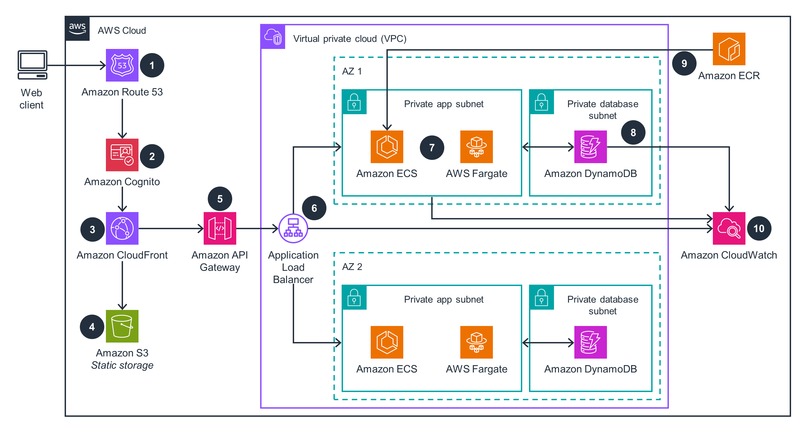
use this as an input example(diagram.png)

Inspiration
Autonomous AI agents are shifting from development novelties to production-grade cloud operators. However, granting an LLM-driven agent active AWS credentials introduces a terrifying new vulnerability: the hallucinated blast radius.
If an agent misinterprets its context window and issues a destructive command (like DeleteDBInstance) against a production database, traditional IAM policies will blindly execute it because the syntax is perfectly valid. Standard APIs know what a resource is, but they cannot comprehend why it matters. We realized the enterprise community needs a fundamentally new security primitive: a system that moves beyond checking API syntax to visually verifying semantic business intent.
What it does
The Zero-Trust Multimodal Sentinel is an enterprise-grade execution gateway that prevents autonomous AI agents from causing catastrophic outages.
Instead of routing agent commands directly to the AWS control plane, the Sentinel intercepts them. It forces the agent to prove semantic safety by feeding the targeted resource's actual human-authored architecture diagram into Amazon Nova Pro. Nova Pro visually traces the dependencies, reads handwritten human warnings (e.g., "Legacy Billing - DO NOT DELETE"), and calculates the true business blast radius. If the action violates the visual business logic, the Sentinel issues a deterministic denial, cryptographically signed by AWS KMS.
Mathematically, standard agentic risk is a function of the probability of an LLM hallucination multiplied by the execution impact: $R_{standard} = P(H) \times I$
Our Sentinel mitigates this by introducing an independent, multimodal verification layer, drastically reducing the overall risk probability:
$$R_{sentinel} = P(H) \times P(M_{fail}) \times I \approx 0$$
(Where $M_{fail}$ is the probability of the Multimodal model failing to read the human diagram).
How we built it
The entire architecture was deployed as Infrastructure-as-Code (IaC) using AWS CDK in Python.
- The Human Context Vault: We used Amazon S3 to store system architecture diagrams containing human-authored business logic. These are indexed by canonical resource ARNs in an Amazon DynamoDB table.
- The Execution Interceptor: We deployed an Amazon API Gateway backed by an AWS Lambda function to act as the Sentinel's brain, intercepting all rogue agent payloads.
- Multimodal Intent Verification: The Lambda function fetches the diagram from S3 and passes it to Amazon Bedrock using the
amazon.nova-pro-v1:0multimodal model. We engineered a specific prompt directing Nova Pro to cross-reference the ARN payload with the visual diagram nodes. - Cryptographic Attestation: To ensure the audit trail is immutable, the final ALLOW/DENY decision is digitally signed using an asymmetric AWS KMS key.
Challenges we ran into
Building a bleeding-edge security pipeline in a hackathon environment pushed us to our limits:
- Strict Payload Validation: When integrating Boto3 with Amazon Bedrock, we initially hit validation exceptions regarding the multimodal payload structure. The Bedrock API requires strict schema adherence, and we had to meticulously debug our JSON structures to ensure the base64-encoded image and text prompts were passed perfectly without redundant keys.
- CDK Bootstrapping & IAM: Provisioning the infrastructure required carefully tuning the execution roles. We ran into deployment roadblocks when our agent lacked the
cloudformation:DescribeStackspermissions to deploy the stack. We had to pivot, manually elevate the IAM permissions to grantAdministratorAccessfor the bootstrapping phase, and engineer least-privilege policies directly into our CDK Python script for the Lambda function.
What we learned
We learned that the future of cloud security is multimodal. Text-based tagging and IAM policies are no longer sufficient when dealing with autonomous agents. We also gained deep, hands-on experience using AWS CDK to rapidly spin up and tear down complex, multi-service architectures, and learned how to leverage Amazon Nova Pro not just as a chatbot, but as a deterministic, programmatic security gate.
What's next for Zero-Trust Multimodal Sentinel
The next step is to build an open-source middleware SDK. We want to allow developers building with LangChain, LangGraph, and Bedrock Agents to drop a single line of Python into their code that automatically routes all critical AWS tool calls through the Sentinel for multimodal verification before execution.

