-
-
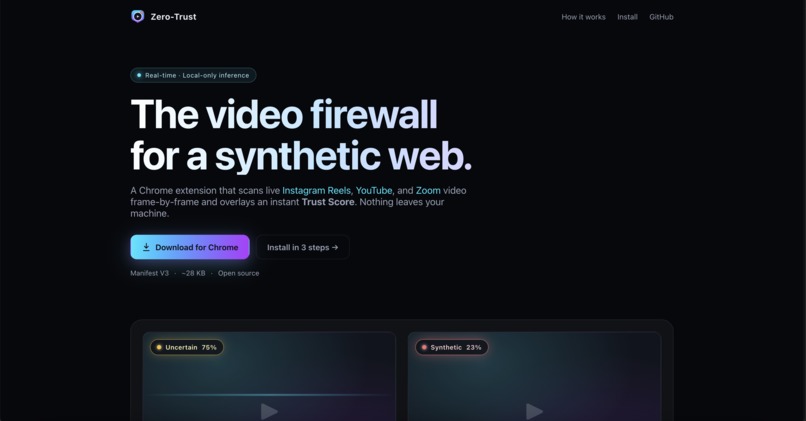
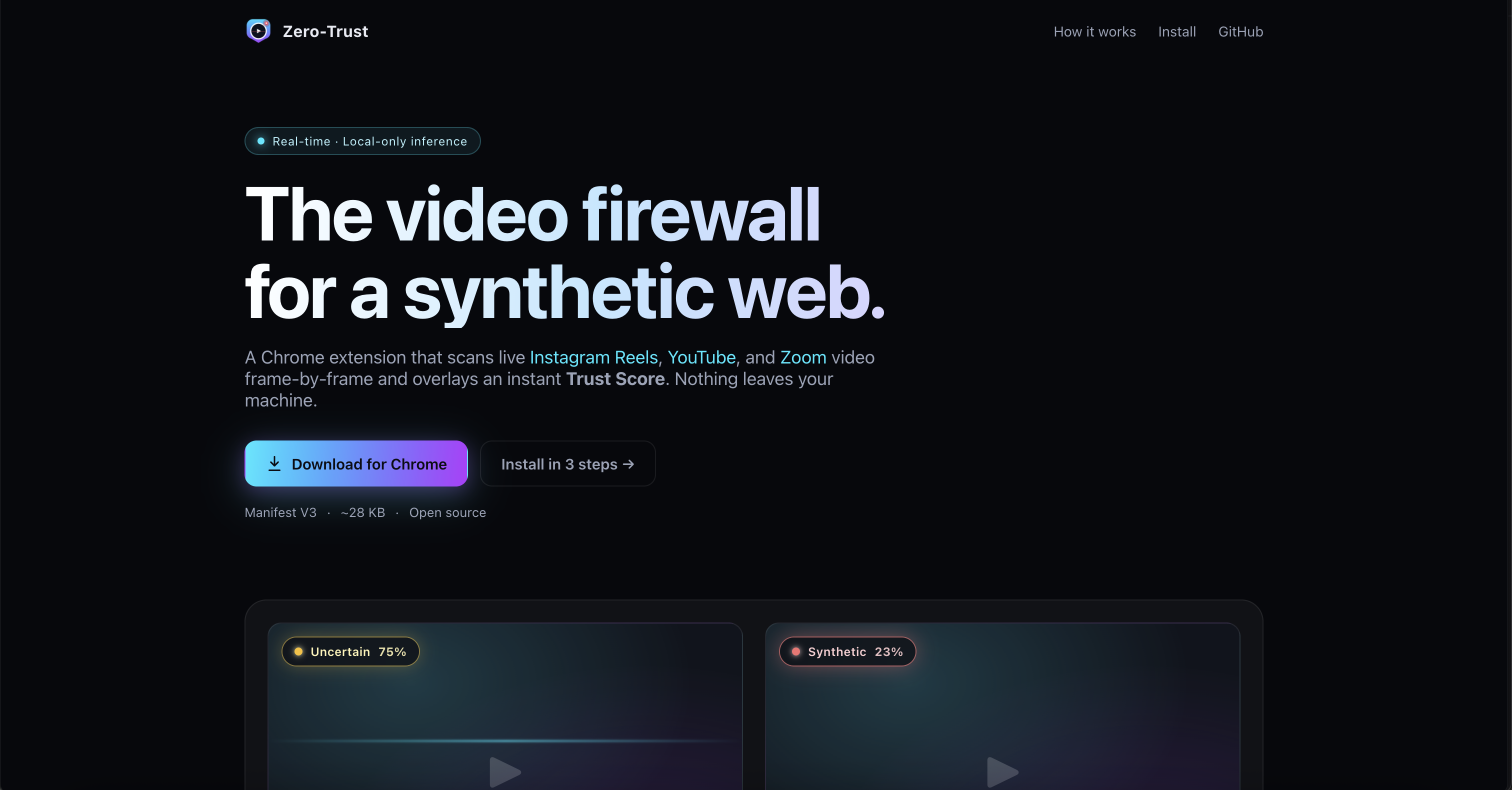
Website
-
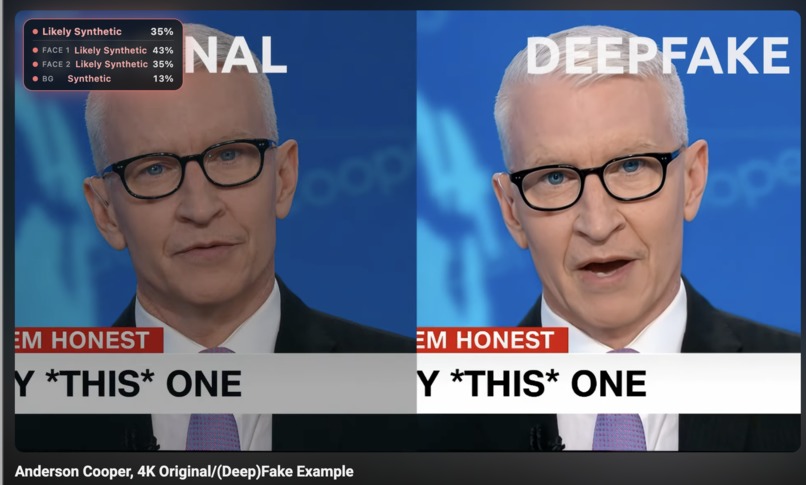
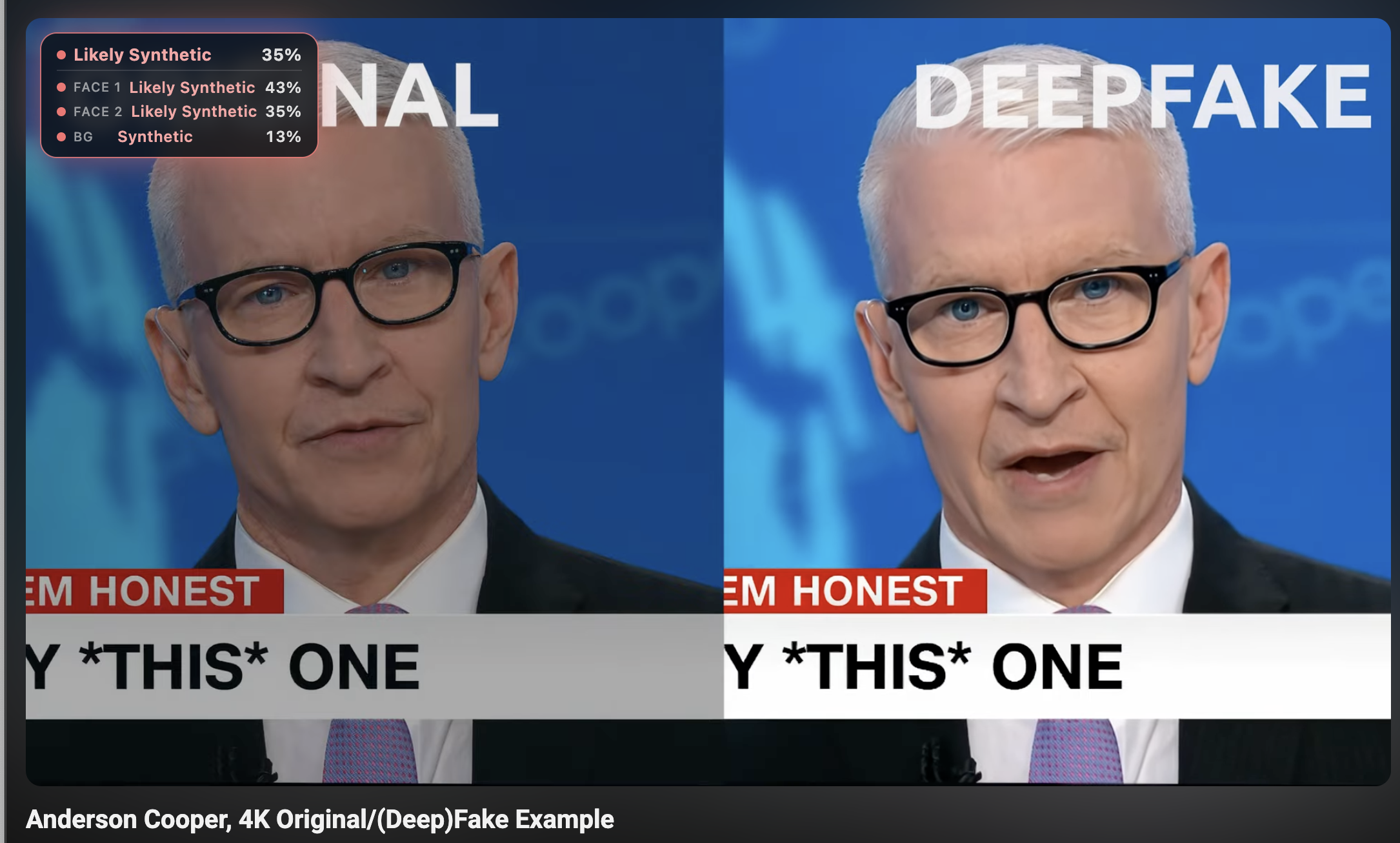
Extension example on video
Inspiration
Deepfakes are becoming easier to create and harder to notice, especially in fast-moving feeds and live video. We wanted detection to happen where people actually watch content, not after they leave the platform.
What it does
Zero-Trust is a Chrome extension that scans videos and images on sites like YouTube and Instagram, sends frames to a local AI engine, and overlays a real-time trust score: Authentic, Uncertain, or Synthetic.
How we built it
We built a Manifest V3 Chrome extension that detects media elements, samples frames, and sends them over WebSocket to a Python engine. The engine uses deepfake classification, spectral analysis, background detection, and temporal scoring to return a trust score.
Challenges we ran into
The biggest challenge was connecting browser video capture to a local ML engine reliably. We also had to handle model size, dependency setup, cross-origin media, WebSocket connection failures, and keeping the download lightweight.
Accomplishments that we're proud of
We built an end-to-end browser safety layer that works directly on real web content. We are proud that the AI runs locally, the extension gives immediate visual feedback, and the system can use real model weights without bundling huge files.
What we learned
We learned how much engineering sits between a model and a usable product: browser permissions, frame capture, local networking, packaging, deployment, and user setup all matter as much as the classifier itself.
What's next for zero-trust
Next, we want smoother installation, stronger model accuracy, better support for more platforms, live-call detection, clearer explanations for each score, and a hosted option for users who cannot run local models.
Built With
- chrome-extension-manifest-v3
- css
- docker
- google-cloud-run
- html
- hugging-face
- javascript
- numpy
- pillow
- python
- pytorch
- transformers
- websockets

Log in or sign up for Devpost to join the conversation.