-
-
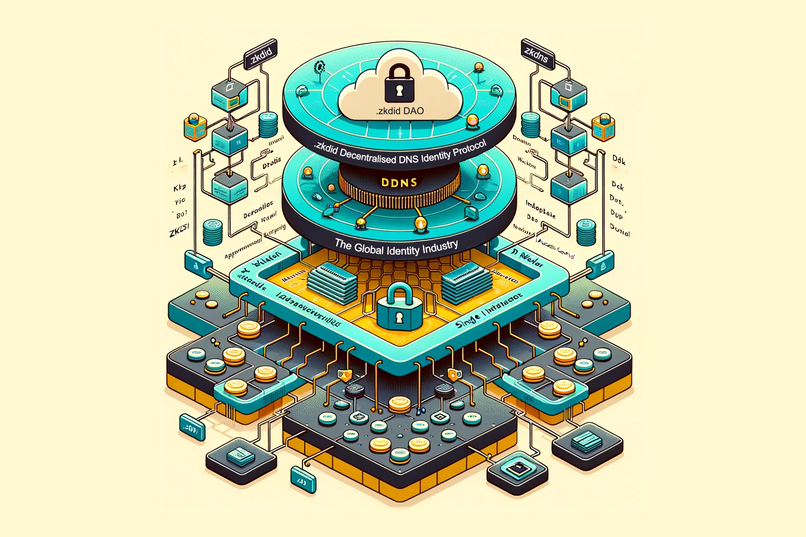
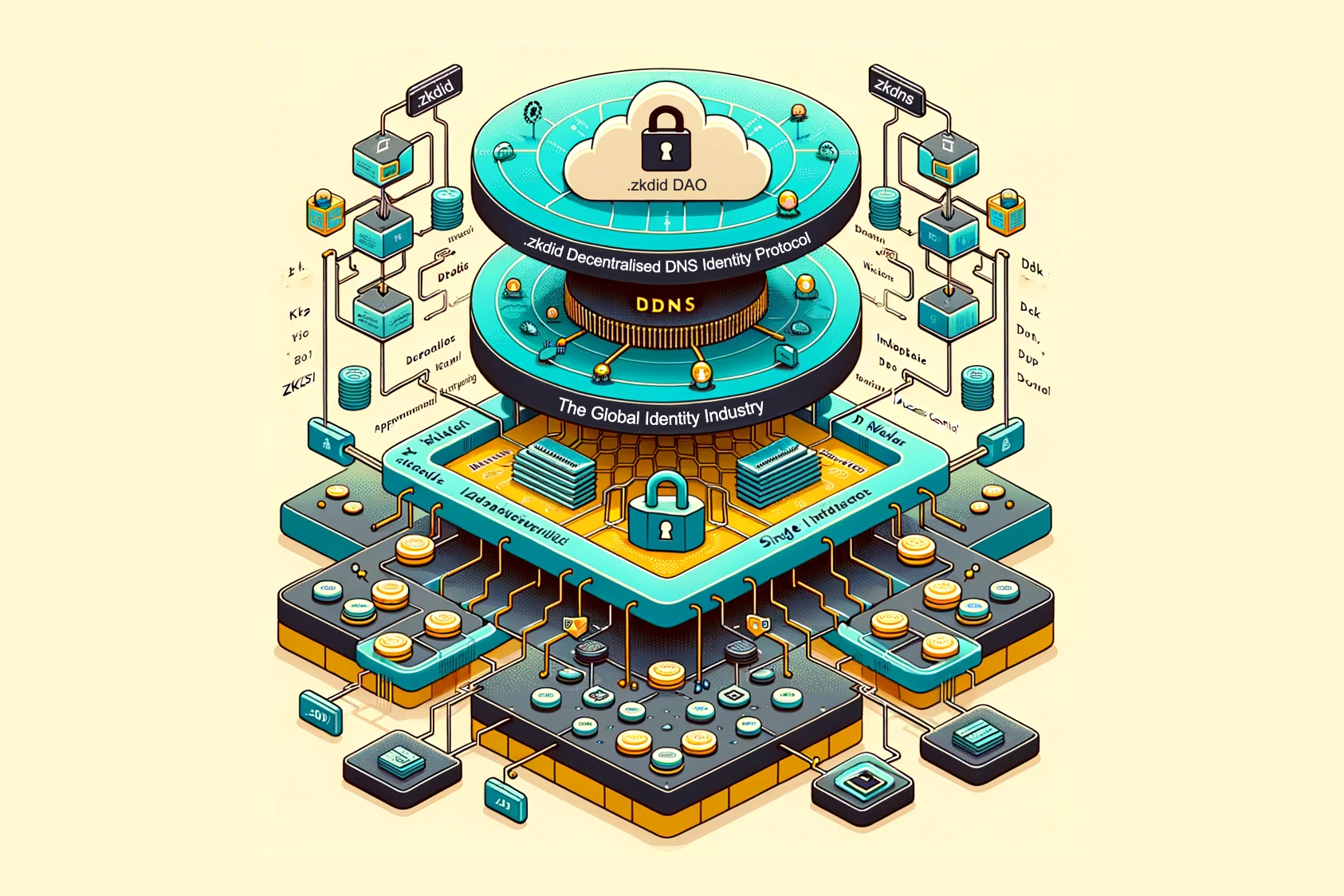
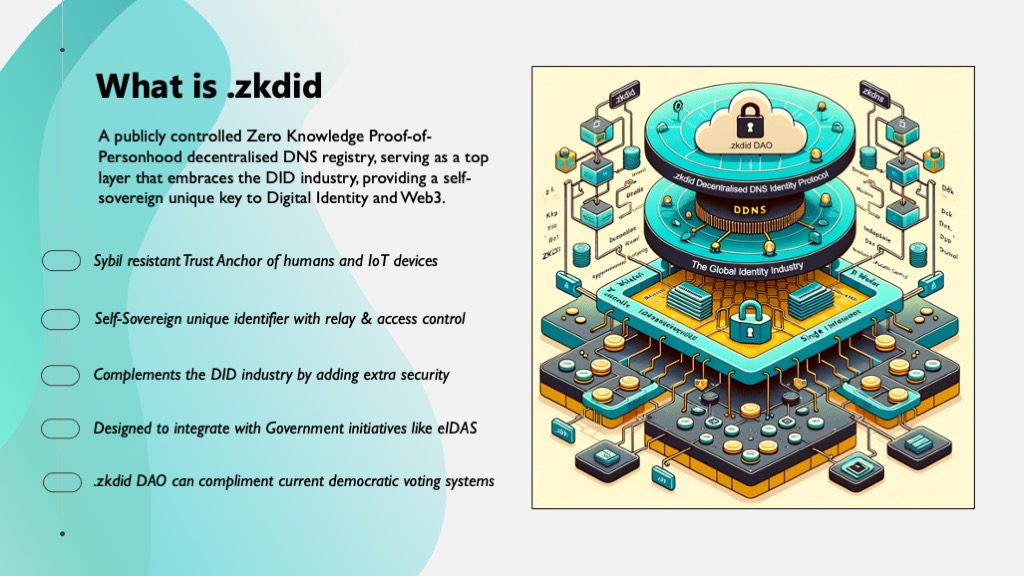
.zkdid encapsulates the DID industry with a decentralised Zero Knowledge Proof of Personhood registry for DID Access Management control.
-
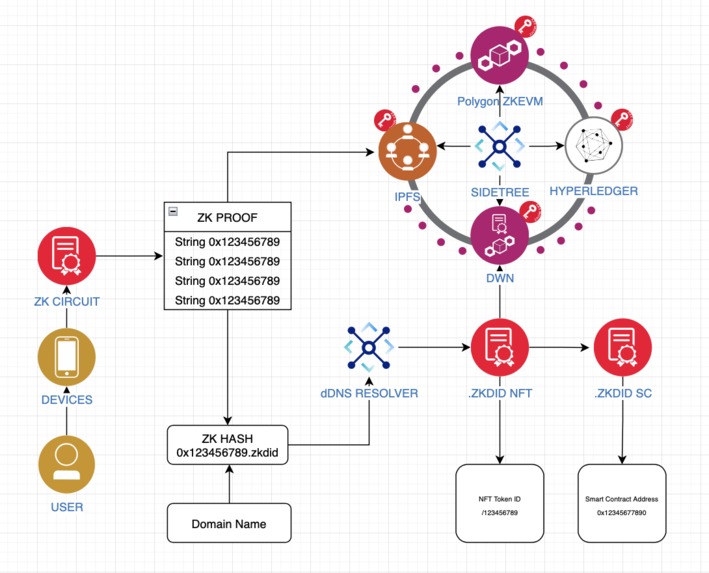
Proof of Concept flow chart diagram.
-
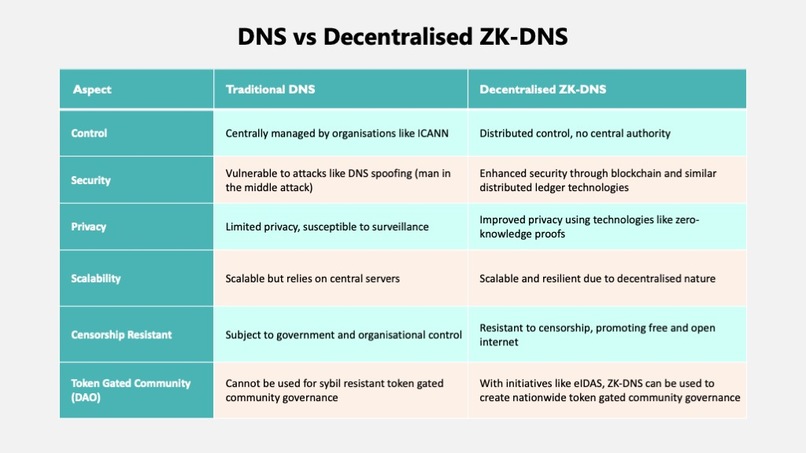
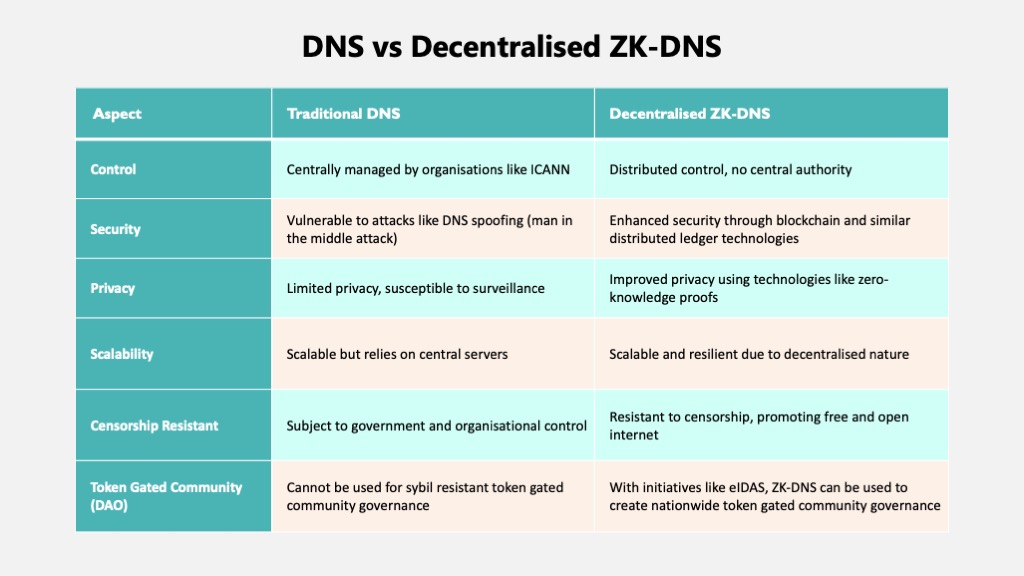
DNS vs Decentralised ZK-DNS
-
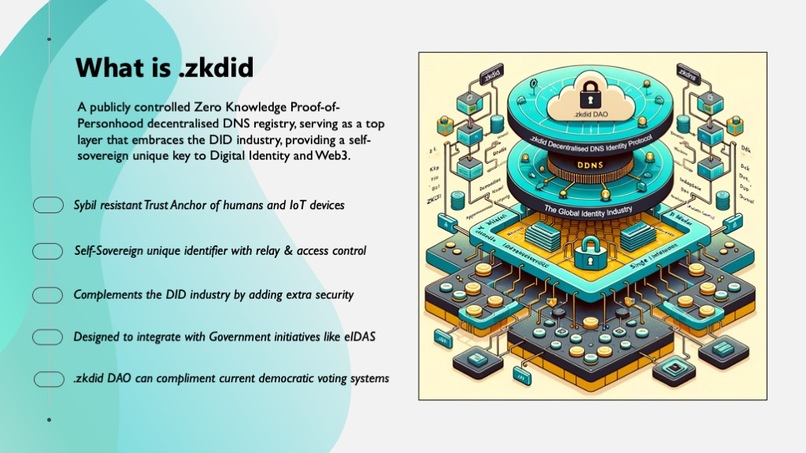
What is .zkdid
-
Thank You :-)

Inspiration
The concept of a reliable proof of personhood registry presents significant challenges, balancing privacy, fraud prevention, scalability, accessibility and public scrutiny. Currently, there's no universally recognised or widely adopted standard that meets these criteria.
.zkdid aims to address a puzzle yet to be solved, sometimes referred to as the Trust Paradox, by establishing a global identity standard built using Web3 infrastructure harnessing Zero Knowledge Proofs and Decentralised DNS.
This approach empowers users with sovereignty of their digital identity and fosters collective ownership and management through consensus-democracy thanks to the decentralised nature of the DNS protocol.
Traditional DNS systems, with their centralised servers, struggle to protect privacy, often leading to censorship, surveillance, and centralised control. In contrast, decentralised identity protocols, such as those using Verifiable Credentials and SSI, can benefit significantly from .zkdid's decentralised self-sovereign trust anchor.
Our objective is to develop a Sybil-resistant and completely anonymous decentralised Zero Knowledge DNS proof-of-personhood protocol, that can accommodate and distinguish between humans and IoT device identities.
Ultimately, the goal is to design a decentralised DNS protocol that can positively enhance trust on the internet, a protocol that emphasises security, privacy, equity, resilience, interoperability and scalability.
A publicly owned and not for profit foundation, intended to serve as a public good and to level the playing field with self-sovereign identity (SSI).
What it does
The .zkdid solution is powerful yet simple, harnessing Zero Knowledge technologies and the emerging dDNS industry. The .zkdid dDNS protocol is intended to harmonise with global identity initiatives to issue anonymous unique identifiers that can be used to prove identity without having to reveal the identity.
Designed to be Sybil resistant and compliant with the W3C, ICANN and government initiatives such as eIDAS and developed entirely around privacy, self-sovereign identity (SSI) and trust.
This project is intended to bridge from blockchain to the traditional DNS and we are actively researching the possibility of a ZK DNS infrastructure that can facilitate seamless interaction between decentralised and traditional web protocols.
A blockchain-based dDNS identifier is crucial for connecting users to decentralised Web3 solutions. It notably empowers the public to utilise emerging decentralised governance technologies. Thus enabling users to truly own their identities while maintaining anonymity, which is essential for private and secure governance.
The .zkdid protocol is being designed to reinforce users to exercise sovereign control over their digital identities via a Decentralised Autonomous Organisation (DAO).
By harnessing open-source smart contracts within the progressive Web3 paradigm, the protocol requires strict adherence to user-centric governance rules. This ensures that DID wallet service providers comply with established protocol standards. Essentially .zkdid provides a framework for personal identity access control management.
These unique set of properties allow the protocol to evolve and adapt to the users preferences, and also govern the protocol through a consensus model, the users identity is kept anonymous at all times while promoting trust with every digital transaction.
The .zkdid protocol encourages trust through a Sybil resistant NFT gated community by allowing us to distinguish between unique humans and Ai, to be certain we have established a connection with a unique individual not a deep fake, or imposter, a concern that is growing rapidly by the day.
How we built it
Please see accompanying documents inside .zip file attached!
Challenges we ran into
The main hurdle at the hackathon was the time constraints and the teams initial unfamiliarity with the complex and novel technologies integral to this project. The concept involves numerous components like Decentralised DNS, DNS, NFTs, Smart Contracts and Zero Knowledge proofs.
With more time we could have included more sponsors and DIF tools into the Proof-of-Personhood protocol, though we have expanded on some of those possibilities, please see our documentation.
The level of complexity of the underlying technologies is immense, most are cutting edge and required significant time for the team to research.
Given the project's abstract and complicated nature, we have built a basic proof-of-concept, it was not feasible to design a more advanced proof-of-concept within the time constraints of the hackathon, the .zkdid project has many moving parts and it will take some time to refine as we seek input from a plethora of industry experts in both the tech field and also legal/ human rights sector.
The learning phase was essential, yet it meant that much of our time was spent on foundational education rather than immediate development. The deadline put the team under pressure which can effect teams moral and performance, though with great poise, we delivered well considering.
We worked right up to the finish line, without a day to rest. We have completed as much as possible up to the last few hours of the hackathon.
Error Message
Please note, we had some minor issues with DWN where the remote nodes went offline, to fix this temporarily we have set the nodes to run locally. If you do get an error, try clearing your cache and trying again or switch setup. Please let us know if you encounter any issues.
Accomplishments that we're proud of
We are proud that given such time constraints and complicated nature of the project, the team came together and started to grasp the underlying technologies and how they thread together.
We were initially concerned that too much time had passed during our research phase and that we would only have time to submit written documentation of the .zkdid concept.
Over the last weekend one of the team members Alex Hache had learnt enough to start building a Proof of Concept.
During the last week Alex had assembled a diagram for a possible, albeit simple Proof of Concept which would demonstrate an integral piece to this puzzle, the PoC proves the concept is possible.
In all, we have formed a friendly and committed team who are passionate about human rights and privacy, and interested in cutting edge technologies that can push the boundaries of the internet infrastructure to help carve a better internet experience for all, one where cybercrime and identity fraud is reduced considerably, where privacy is at the heart of the protocol.
What we learned
We’ve learned that the .zkdid concept, a ground breaking initiative, offers a high degree of anonymity, until it interfaces with traditional DNS and TCP/IP infrastructure.
This highlighted the need to develop the project into the traditional DNS arena and work on the possibilities of a Zero Knowledge (ZK) DNS system that uses the web infrastructure thus maintaining privacy when querying the .zkdid registrar using any online service from any device.
We identified that the decentralised nature of DNS and the anonymity afforded by Zero Knowledge proofs are only as robust as the weakest link, which, in this case, is the traditional internet infrastructure and the wallet.
To fully realise the vision of .zkdid and solve the trust paradox, we're now exploring the design of a ZK DNS infrastructure that can seamlessly integrate with the traditional web, thereby upholding the comprehensive anonymity and privacy essential to our Zero Knowledge decentralised DNS protocol while adhering to W3C standards for DID and SSI.
What's next for Zero Knowledge Decentralised DNS Identity protocol .zkdid™
The hackathon may be over but we intend to continue pushing forward. We’ve had some interest from other experts in the IT field who see the great potential of this project and how it can underpin a decentralised economy, these experts wish to join us in a ZKDID <> ZKDNS DIF work-group where we’ll continue to build and reach out to the open source and identity community for help on this immense vision.
There are so many possibilities with this technology we are literally just skimming the surface, the power to own our identity while keeping it 100% self-sovereign, anonymous and decentralised was a dream until just recently, society is moving at a fast pace which is increasing in velocity, projects like .zkdid are instrumental to harbouring trust on the Internet and protecting people’s privacy, data and human rights for the coming future.
Built With
- css3
- erc721
- for
- foundry-for-smart-contracts
- html
- javascript
- open
- react-(vite)
- solidity
- tbd-web5-for-dwn
- third-web-for-web3-connection
- zeppelin
- zokrates-for-zk-proof-generation-and-verifying


Log in or sign up for Devpost to join the conversation.