🚀 Project Story: ZeroBreach
📌 About the Project
ZeroBreach is a cloud security monitoring web application designed to detect and prevent potential threats before they occur. The core idea behind this project is proactive security—rather than reacting to breaches, the system continuously monitors risk levels and provides real-time updates to help prevent vulnerabilities in cloud environments.
💡 Inspiration
With the rapid growth of cloud computing, security has become a major concern. Most systems today focus on detecting breaches after they happen, which can lead to data loss and system compromise.
This inspired the idea:
“What if we could monitor and stop threats before they actually occur?”
ZeroBreach was built to address this gap by creating a simple yet effective system for real-time risk monitoring and prevention.
🛠️ How We Built It
The project was developed using a modern web stack:
🔹 Frontend
- HTML, CSS, JavaScript
- Dynamic UI to display real-time risk levels
🔹 Backend
- Node.js with Express.js
- REST API for sending and retrieving risk data
🔹 Database
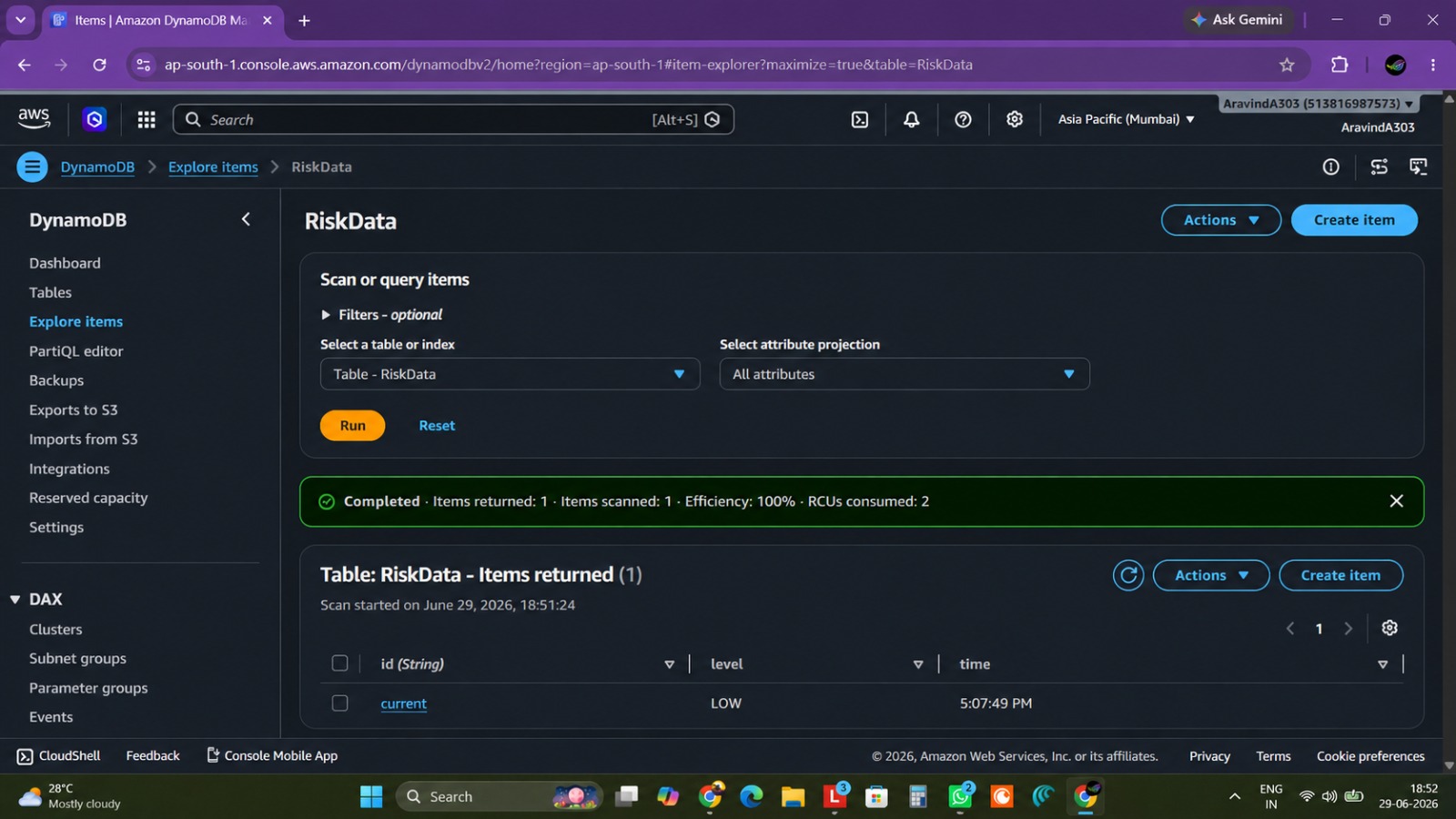
- AWS DynamoDB for fast and scalable NoSQL storage
🔹 Deployment
- Frontend deployed on Vercel
- Backend deployed separately (Render / AWS)
⚙️ Working Flow
[ \text{Frontend} \rightarrow \text{API Requests} \rightarrow \text{Backend Server} \rightarrow \text{DynamoDB} ]
- The frontend sends risk data using API calls
- The backend processes and stores it in DynamoDB
- The frontend fetches updated data periodically
📚 What We Learned
Throughout this project, several important concepts were learned:
- Connecting frontend and backend using APIs
- Working with AWS services like DynamoDB
- Handling environment variables securely using
.env - Understanding deployment challenges across platforms
- Debugging real-world integration issues
⚠️ Challenges We Faced
🔸 1. Deployment Issues
Initially, deploying the backend on Vercel caused problems because Vercel does not support traditional Express servers.
✅ Solution: We separated frontend and backend deployments.
🔸 2. API Connectivity
Connecting the frontend to the backend required proper handling of ports and URLs.
✅ Solution: Used environment-based API URLs for local and production environments.
🔸 3. AWS Configuration
Setting up DynamoDB and managing access keys securely was challenging.
✅ Solution:
Used .env files and followed best practices for security.
🔸 4. Real-Time Updates
Ensuring the UI updates dynamically required periodic API calls.
✅ Solution: Implemented timed fetch requests for continuous monitoring.
🎯 Conclusion
ZeroBreach demonstrates how a simple system can be built to enhance cloud security through proactive monitoring. While the current version focuses on basic risk tracking, it can be extended with:
- AI-based threat prediction
- Real-time alerts and notifications
- User authentication and dashboards
🔥 Future Scope
- Integrate machine learning for predictive analytics
- Add WebSocket-based real-time updates
- Deploy fully on AWS with scalable architecture
- Implement role-based access control
🏁 Final Note
This project is a step toward building smarter and safer cloud systems. ZeroBreach is not just about monitoring—it’s about prevention.

Log in or sign up for Devpost to join the conversation.