Zentia – Because Healing Never Takes a Break
Inspiration
It began with a simple yet powerful realization: Mental health doesn’t work on a weekly schedule.
For millions, therapy means one hour a week—just sixty precious minutes with a trusted therapist. But what happens afterward? Our co-founder, Vaibhav Patil, experienced this gap personally. After meaningful therapy sessions, Vaibhav found himself alone with overwhelming emotions, without guidance, and unable to reconnect with the powerful insights from therapy. He turned to generic AI tools like ChatGPT, but while helpful, they lacked the personalized care, safety, and emotional resonance that his therapist provided.
The question asked was:
Why does therapy stop when the session ends? What if your therapist’s guidance could stay by your side, continuously and compassionately, every single hour?
With this vision, Zentia was born, not just as another app, but as a companion for the overlooked 167 hours each week, transforming mental healthcare into an ever-present partnership.
What Zentia Does
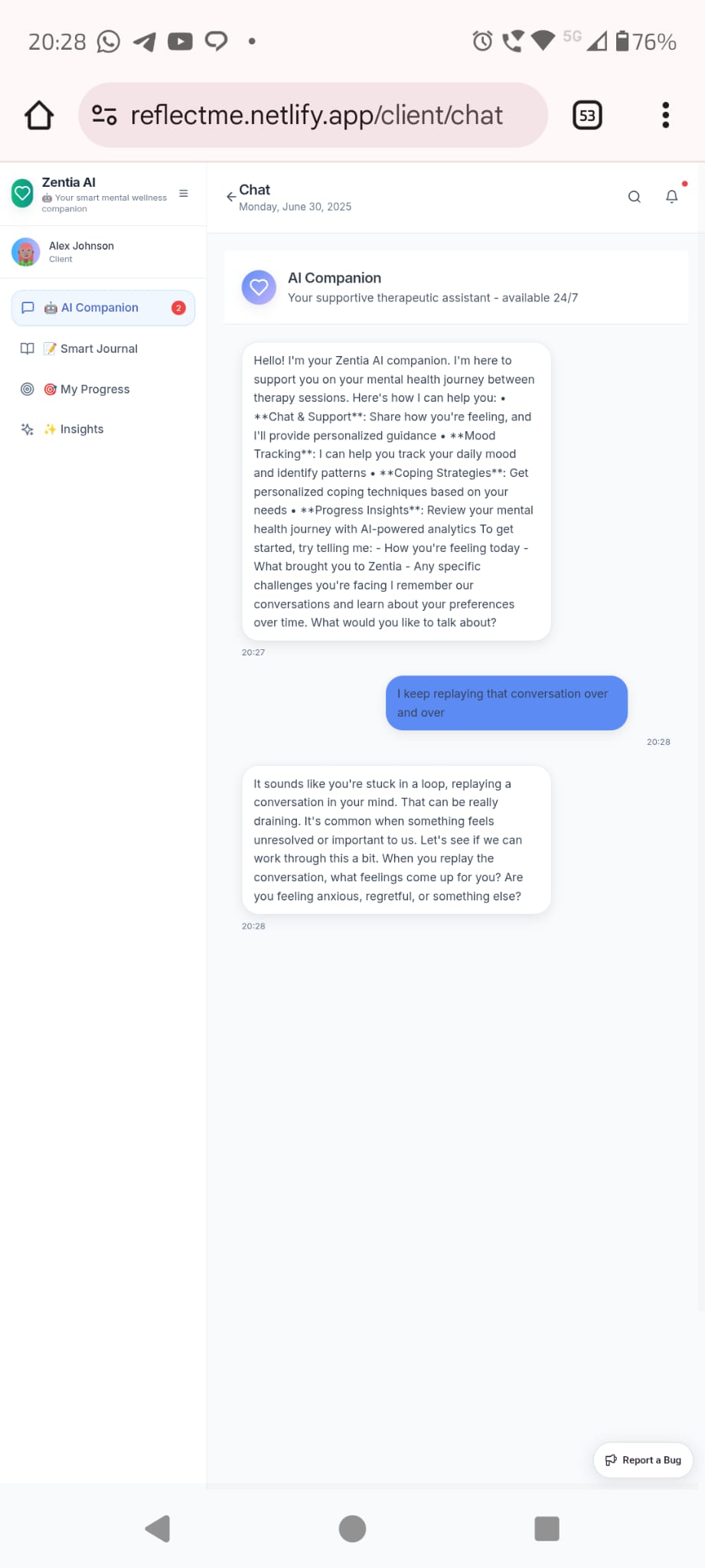
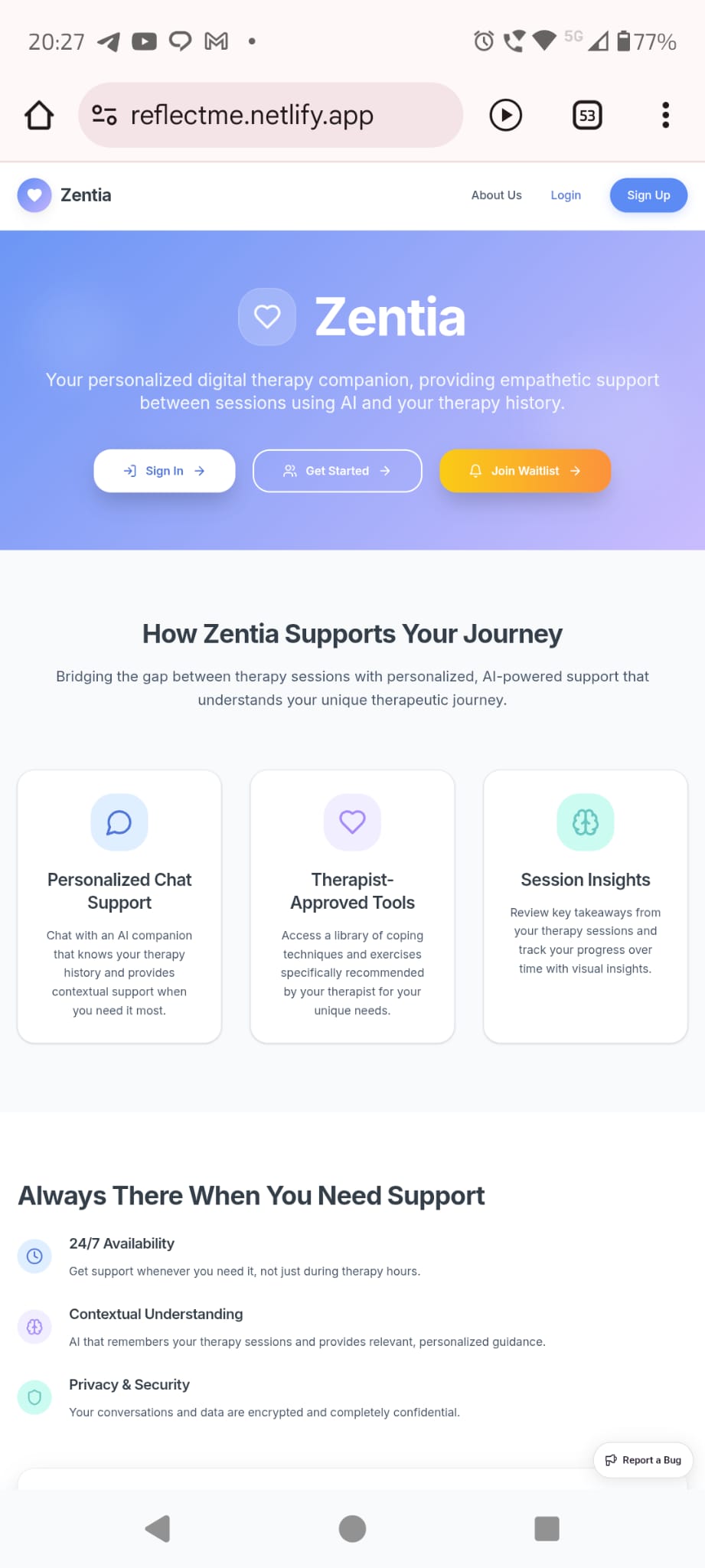
Zentia fundamentally reimagines therapy, turning it from a single session into a continuous conversation. We’ve built a secure, therapist-powered AI companion designed specifically to support users between sessions, right when they need it most.
Key Features:
Therapist-Powered AI:
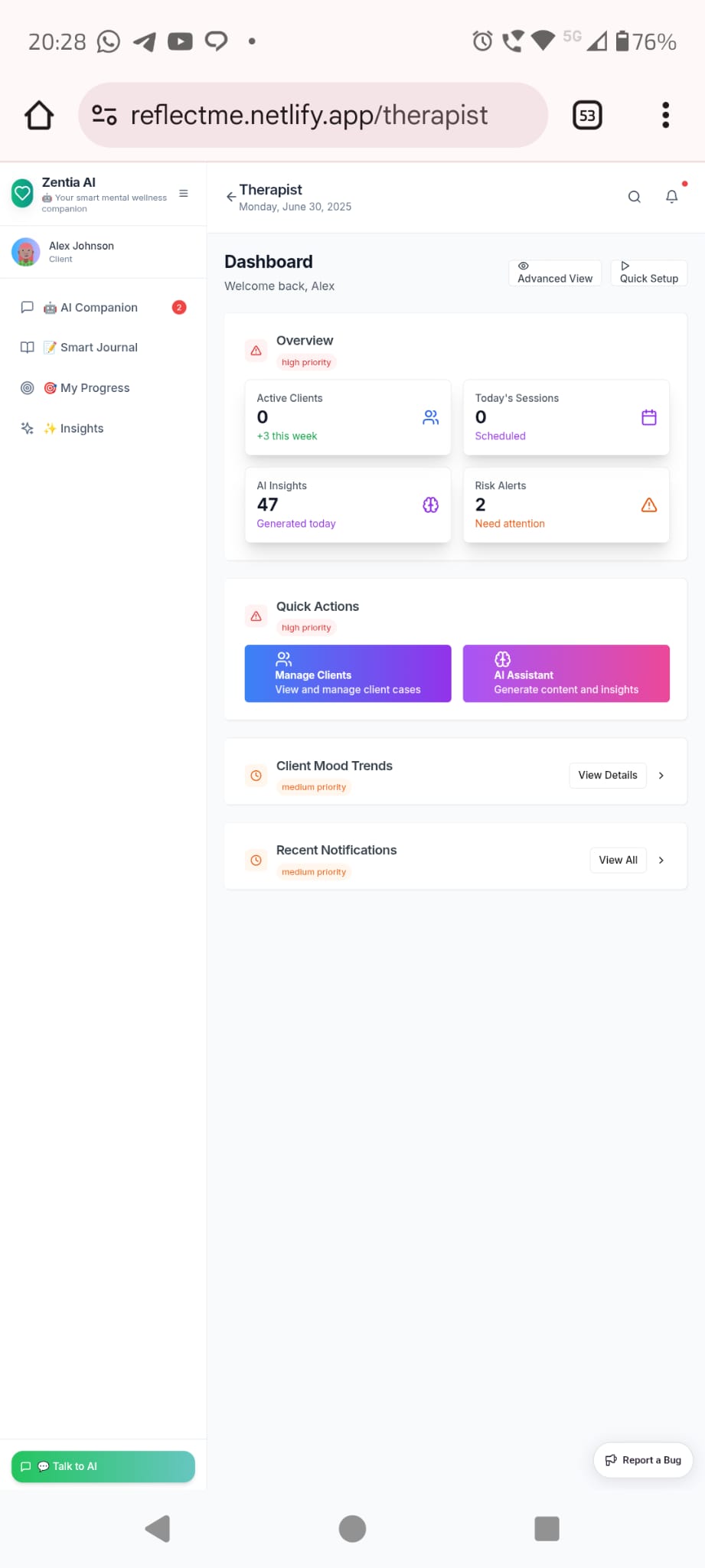
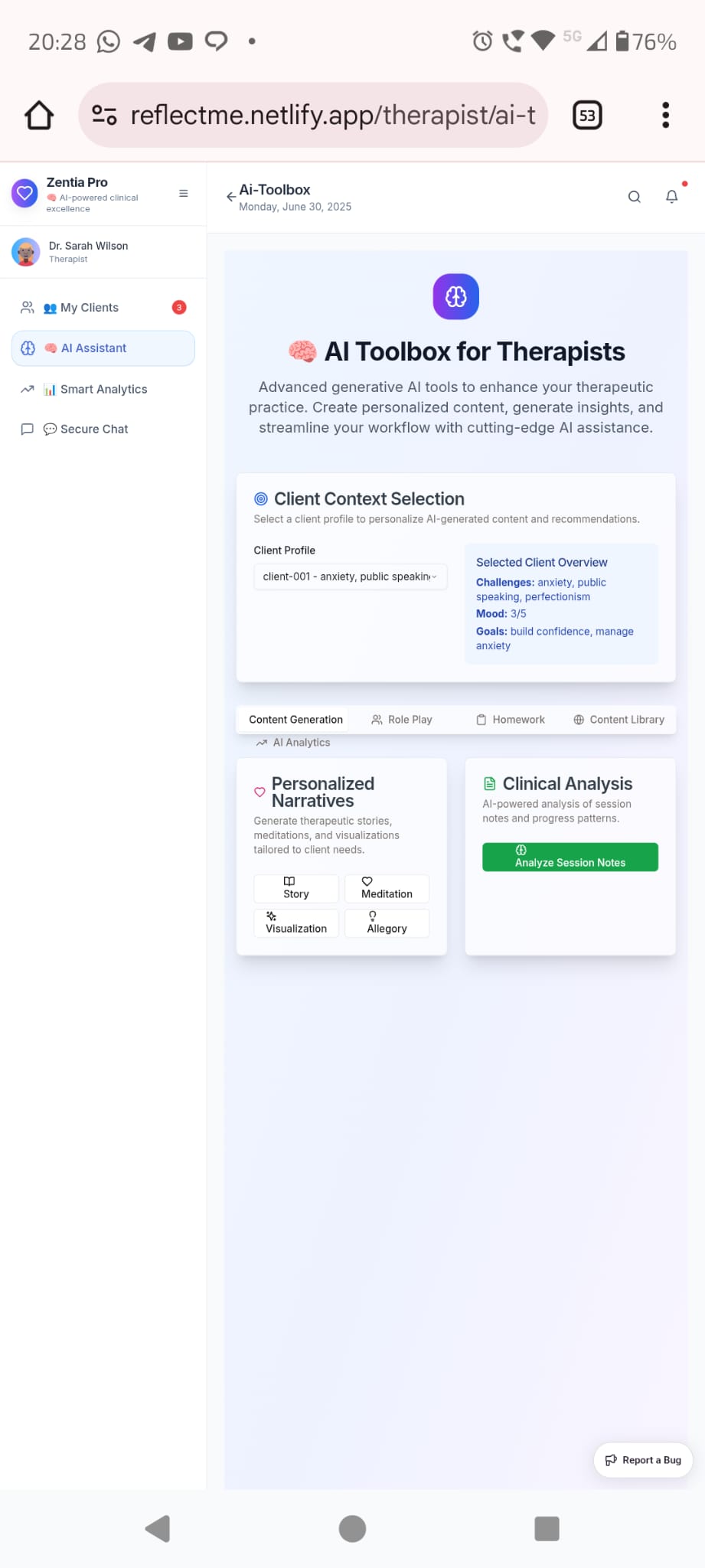
An AI assistant trained and directly guided by your therapist’s insights, tone, and therapeutic style, offering genuine, personalized support anytime, day or night.Real-Time Emotional Companion:
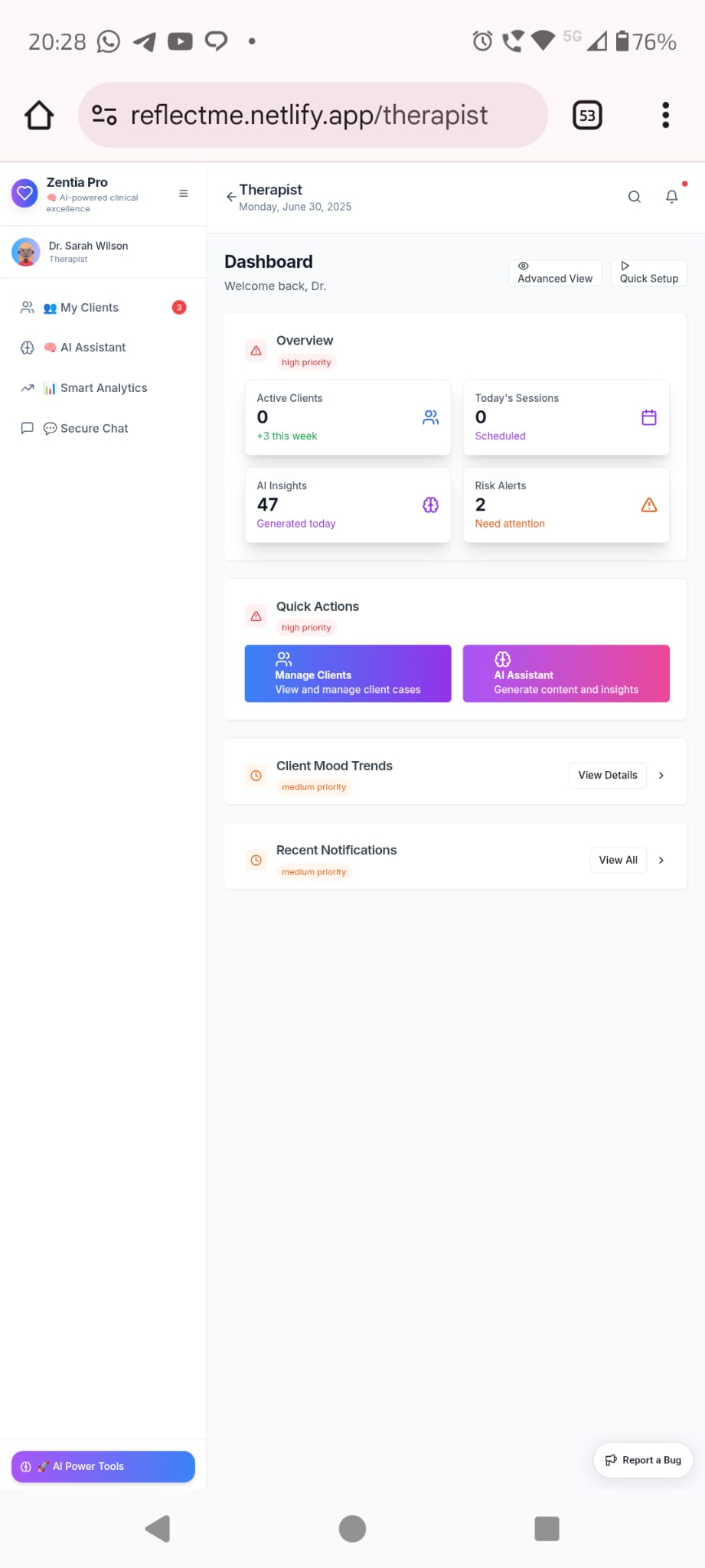
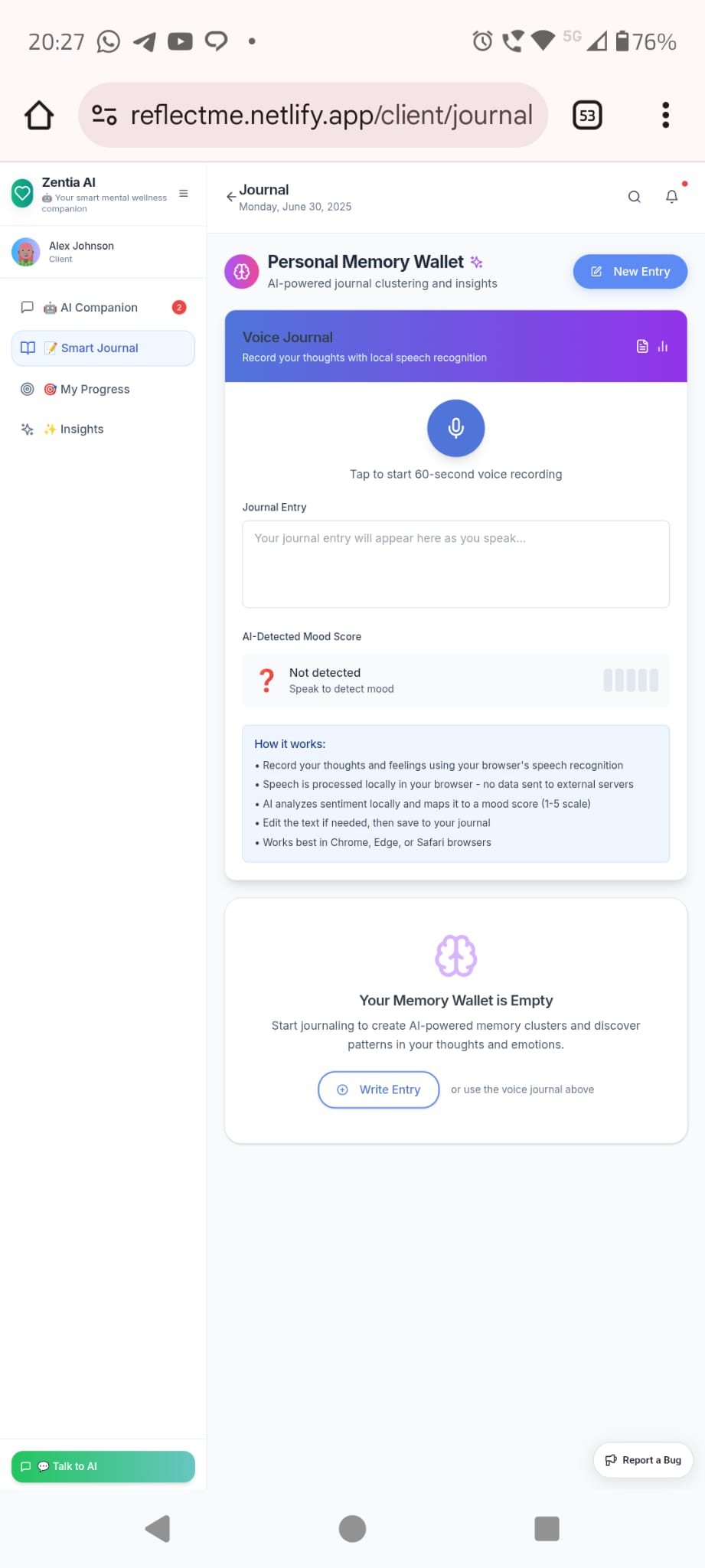
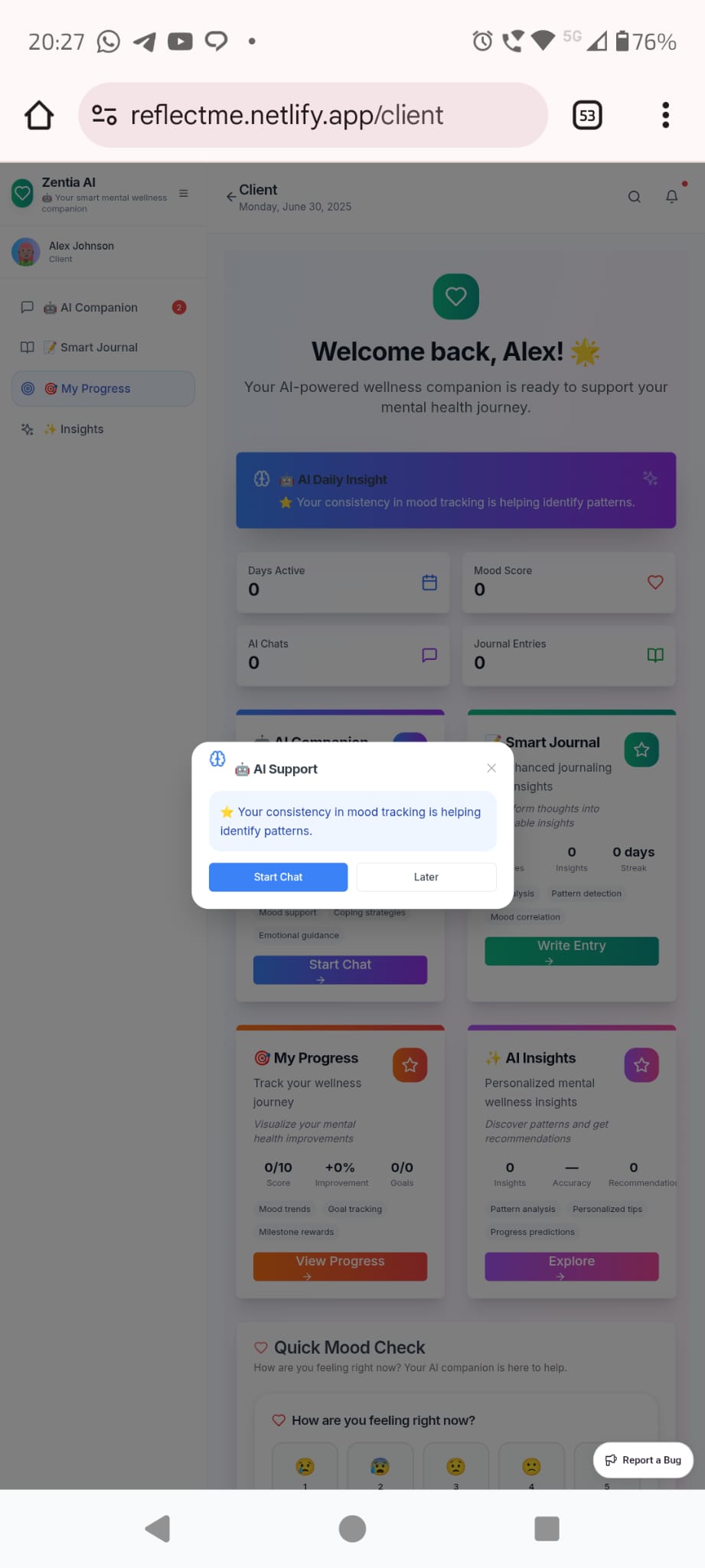
Captures emotions, triggers, and daily challenges instantly, creating a continuous, evolving client profile to guide and enrich every therapy session.Clinician Insight Dashboard:
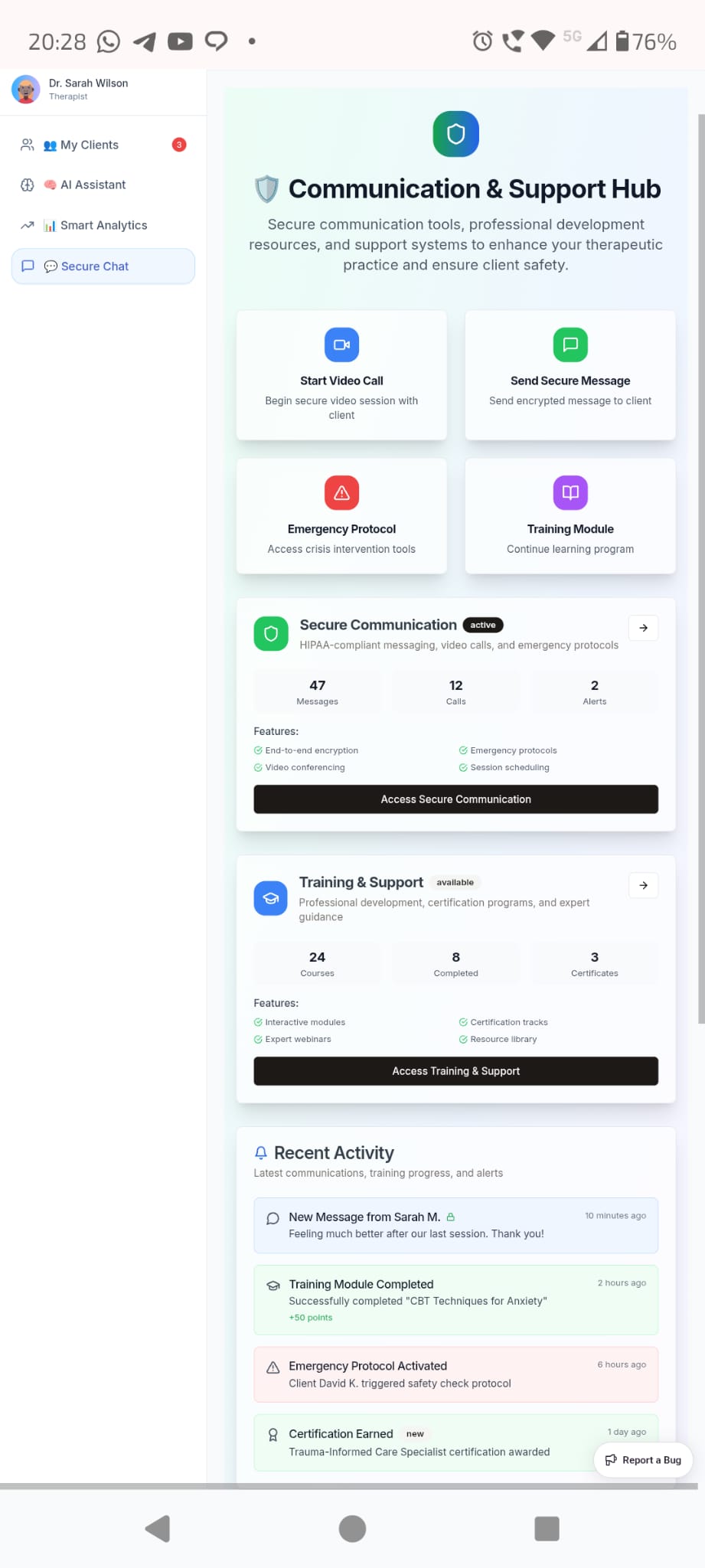
Therapists access powerful, concise dashboards highlighting real-time client insights, trends, and critical moments—transforming session preparation from guesswork into precision.Privacy-First Architecture:
Built from day one with HIPAA-grade encryption, stringent audit trails, and complete user data control.Universal, Accessible Design:
An intuitive, calming, and accessible interface—designed to support everyone, from digital natives to elderly users navigating digital care for the first time.
How We Built Zentia
Our tight-knit, passionate team built Zentia in record time, leveraging modern technology, rapid prototyping, and genuine clinical collaboration.
- Frontend: React 18, Tailwind CSS, Radix UI—for an engaging, empathetic user experience.
- Backend: Node.js with Supabase PostgreSQL and Prisma ORM—for robust, secure, real-time data management.
- AI & NLP: Google Gemini for authentic, therapist-guided reflections, combined with a custom-built emotional context recognition pipeline.
- Visualization & UX: Engaging visualizations through Recharts, Framer Motion animations, and natural voice journaling.
- Security: Fully HIPAA-compliant, secure data storage, with real-time error monitoring via Sentry.
Every Zentia interaction is clinically vetted, combining cutting-edge AI with human oversight to maintain the highest standards of trust and therapeutic alignment.
Strategic Insights Guiding Zentia’s Design
Personalization as a Key Hypothesis:
We strongly believe that clients will engage more deeply and trust the platform more fully when it genuinely mirrors their therapist's unique therapeutic style.Privacy as Fundamental to Adoption:
We designed Zentia from the start with comprehensive security, assuming clinicians and users require visible and trustworthy data protection to feel comfortable adopting new technologies.Focused Clinician Dashboards:
Understanding that therapists’ time is limited, we hypothesize that concise, actionable insights rather than extensive data will improve clinician satisfaction and clinical outcomes.
Challenges We Addressed
Replicating Authentic Therapist Tone:
Crafting AI interactions to accurately reflect a therapist's personal style required intensive prompt engineering, careful calibration, and iterative refinement.Balancing Security and Performance:
Ensuring data encryption met HIPAA standards without compromising app responsiveness presented significant technical complexity.Designing for Therapist Confidence:
Recognizing that clinicians may hesitate to adopt new technology, we've carefully designed Zentia with intuitive, easy-to-review interactions, aiming to minimize clinician workload and maximize comfort with the platform.Accessibility and Performance Optimization:
Zentia’s design explicitly accounts for low-bandwidth scenarios and offline-first functionality, ensuring clients can access critical support in any network environment.
Why Zentia Matters Now
In a world increasingly recognizing the urgent need for mental health support, traditional models remain limited. Zentia positions itself uniquely—not as a replacement for therapists, but as an extension of their reach, turning episodic therapy into continuous care. We’re aiming to bridge the critical gap between sessions, fostering stronger connections and better outcomes.
The Team Behind Zentia
Vaibhav Patil – Product & UX
Former strategy consultant and IIM Ahmedabad alum specializing in product strategy, user experience design, and human-centered innovation. Leads Zentia’s product vision with strategic clarity and deep empathy.Luca De Angelis – AI & Engineering
Expert in conversational AI and NLP safety, dedicated to building emotionally intelligent AI systems tailored for sensitive use-cases like mental health.Saurabh Lohiya – Strategy & Ops
Serial entrepreneur and nonprofit founder, experienced in scaling impact-driven projects. Focuses on strategic partnerships, growth, and ethical technology implementation.
What’s Next for Zentia?
Our focus now is on moving from product build to early-market traction. We’ve already collaborated with therapists to shape Zentia’s core experience—our next step is validating the MVP with paying customers.
Phase-1 Go-to-Market Strategy (Next 6–12 Months):
- Pilot Launches: Roll out paid pilots with digitally-forward therapy clinics that have engaged with us during product development.
- Freemium Onboarding: Offer therapists free access for a limited number of clients to reduce adoption friction and build early usage data.
- Case Study Development: Partner closely with early adopters to document outcome improvements, workflow benefits, and client engagement.
- Therapist Directory Outreach: Leverage targeted outreach channels to reach tech-savvy independent therapists.
This phase is designed to validate core value, generate early revenue, and create the foundation for scaled growth through partnerships and product-led acquisition.
Therapy shouldn’t be confined to an hour. Zentia is designed to ensure support never stops, making mental health care truly continuous.
Built With
- auth
- authentication
- custom-sentiment-analysis
- custom-sentiment-analysis-pipeline
- framer-motion
- google-gemini-api
- hipaa-aligned
- javascript
- node.js
- prisma-orm
- progressive-web-app-(pwa)-**cloud-services:**-supabase-(postgresql
- pwa
- radix-ui
- react-18
- recharts
- recharts-**platforms:**-node.js
- sentry
- sentry-(error-tracking)-**databases:**-supabase-postgresql-**apis-&-ai:**-google-gemini-(nlp/reflection-generation)
- storage)
- supabase-(postgresql
- tailwind-css
- typescript
- typescript-**frameworks/libraries:**-react-18
- vercel
- vercel-(deployment)
- voice-api
- voice-api-**security:**-hipaa-aligned-encryption


Log in or sign up for Devpost to join the conversation.