-
-
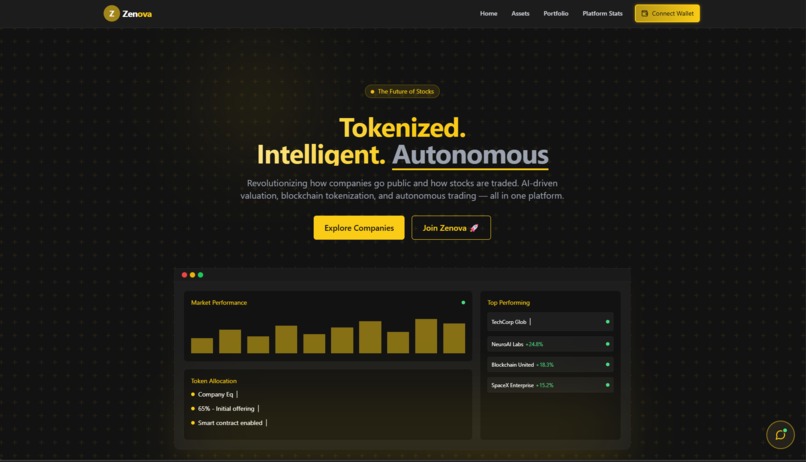
Hero Section
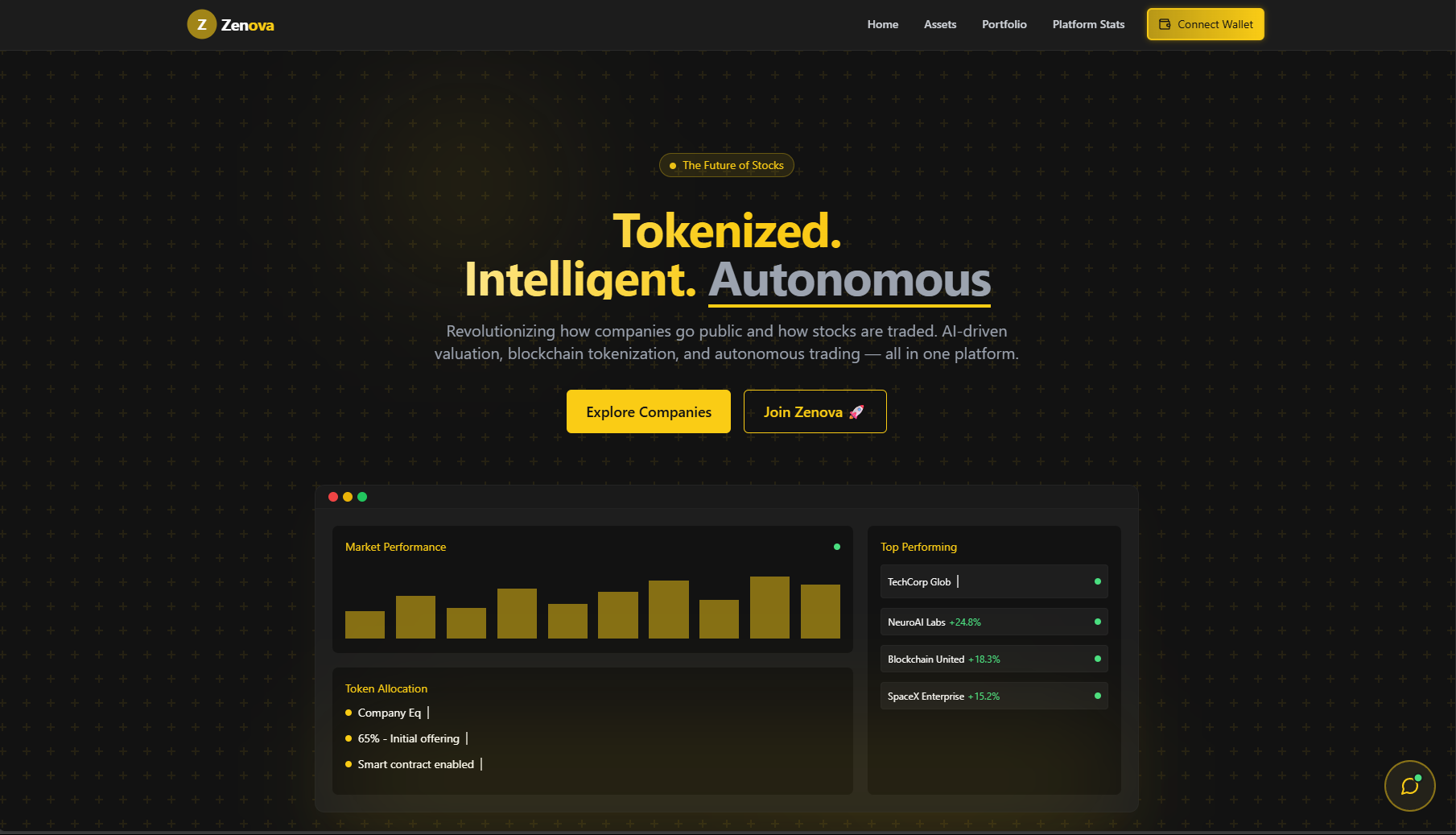
Inspiration Zenova started as a wild idea I couldn’t shake off—what if AI and Web3 didn’t just exist in the same space, but actually worked together to create something smart, fast, and visually stunning? I’d seen plenty of blockchain tools and AI apps on their own, but never one that brought them into a single, seamless experience. I wanted Zenova to be that bridge—a sleek, futuristic platform where interacting with smart contracts and decentralized assets feels just as smooth as getting intelligent insights and automation from AI.
What it does Zenova is a unified AI + Web3 platform. With it, users can:
Connect their wallet and explore assets or dApps through a clean, responsive UI.
Use AI to generate smart summaries, insights, and suggestions tailored to their activity.
Visualize data in real time—from blockchain transactions to AI outputs—all in one place.
Automate or personalize parts of their experience using intelligent features.
It’s a digital playground for curious users, built to feel powerful and simple at the same time.
How I built it The stack had to be fast, modern, and scalable—so I went with tools that made sense:
Frontend: Next.js (with app router), Vite (for lightning speed dev experience), and Tailwind CSS.
Web3: I used Wagmi and RainbowKit for wallet connection, smart contract interactions, and clean onboarding.
AI: I connected to language models via API to provide insights, automation, and summaries.
Backend/Data: Supabase for real-time syncing and authentication, and Convex for structured database logic and reactivity.
Utilities: TanStack React Query for managing async state, Resend for emails, and extras like React Three Fiber for interactive visuals.
Challenges I ran into Merging Web3 and AI into a single intuitive flow wasn’t easy—getting both to play nicely in terms of UX and performance took trial and error.
Wallet connection behavior sometimes clashed with how AI needed to interpret user actions.
Optimizing real-time data updates and AI latency required tuning both frontend and backend logic.
And of course, trying to do all of this under a tight timeline pushed me to stay extremely focused.
Accomplishments that I’m proud of I built the entire product in under 3 days, from design system to final deploy.
I created a sleek UI that feels futuristic but stays user-friendly.
I merged AI and Web3 workflows into one interface that actually makes sense for everyday users.
I kept the whole thing performant, polished, and visually engaging despite tight deadlines.
What I learned Time constraints force clarity—every feature had to earn its place.
Users don’t want to “learn” tools—they want to feel like they already know how to use them. Design made that possible.
Integrating Web3 smartness with AI interpretation unlocks serious power when done right.
Tools like Wagmi, RainbowKit, and Convex can really accelerate full-stack dev when paired with clear vision.
What’s next for Zenova Introduce AI customization, letting users personalize their smart assistant based on their behavior and connected assets.
Add cross-chain support for better asset and protocol coverage.
Build a modular plugin system so devs can extend Zenova with their own tools.
Launch a fully optimized mobile experience.
Open up community sharing for dashboards, smart automations, and more.
Zenova was a sprint—but it’s also the start of something way bigger. I’m just getting warmed up.
Built With
- mastra
- nextjs
- rainbowkit
- solidity
- supabase
- tailwindcss
- tanstack-react-query
- upstash
- wagmi

Log in or sign up for Devpost to join the conversation.