Inspiration
The inspiration for ZenithAI comes from the realization that modern life is filled with high-stress situations, like tight hackathon deadlines and overwhelming workloads, which frequently leave people feeling scattered or physically drained.
While looking at standard mindfulness apps, we noticed a massive design flaw: they often cause decision paralysis by forcing stressed users to navigate endless drop-down menus, categories, and pre-recorded lists just to find relief.
We wanted to create a solution that offers instant, conversational support without any rigid boundaries. By combining a minimalist, dark-mode dashboard with Alibaba Cloud's ultra-responsive Qwen-Plus architecture, we built an application that lets users express exactly how they feel in their own words and receive deeply empathetic, human-like comfort in real time.
What it does
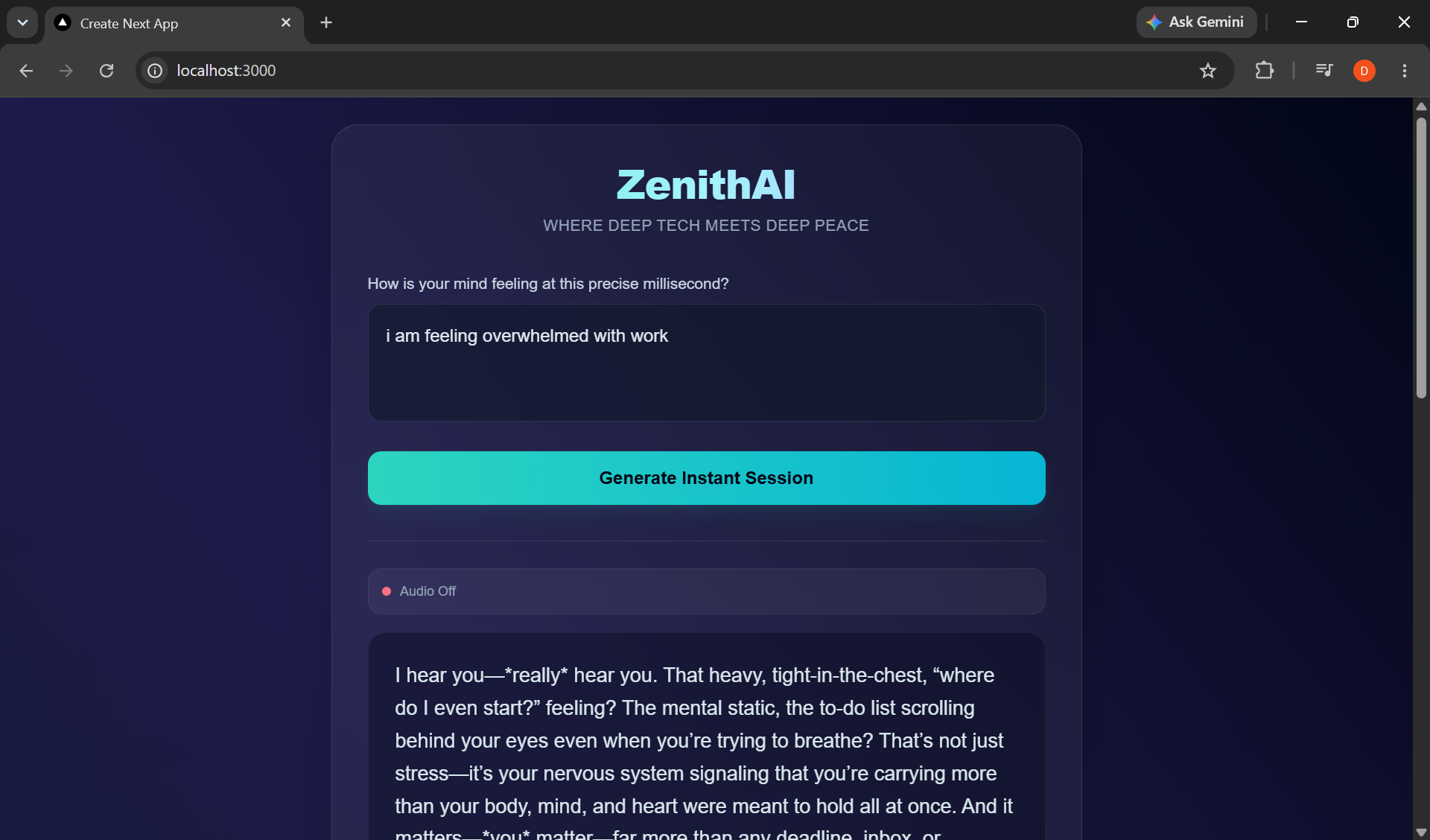
ZenithAI is an interactive mental wellness assistant that replaces rigid drop-down menus with a fluid, single-input dashboard.
Users can type exactly how they feel in open-ended natural language (for example, "I am physically exhausted and stressed about work deadlines"). ZenithAI's backend secure server actions securely transmit this emotional payload directly to Alibaba Cloud's advanced Qwen-Plus model architecture.
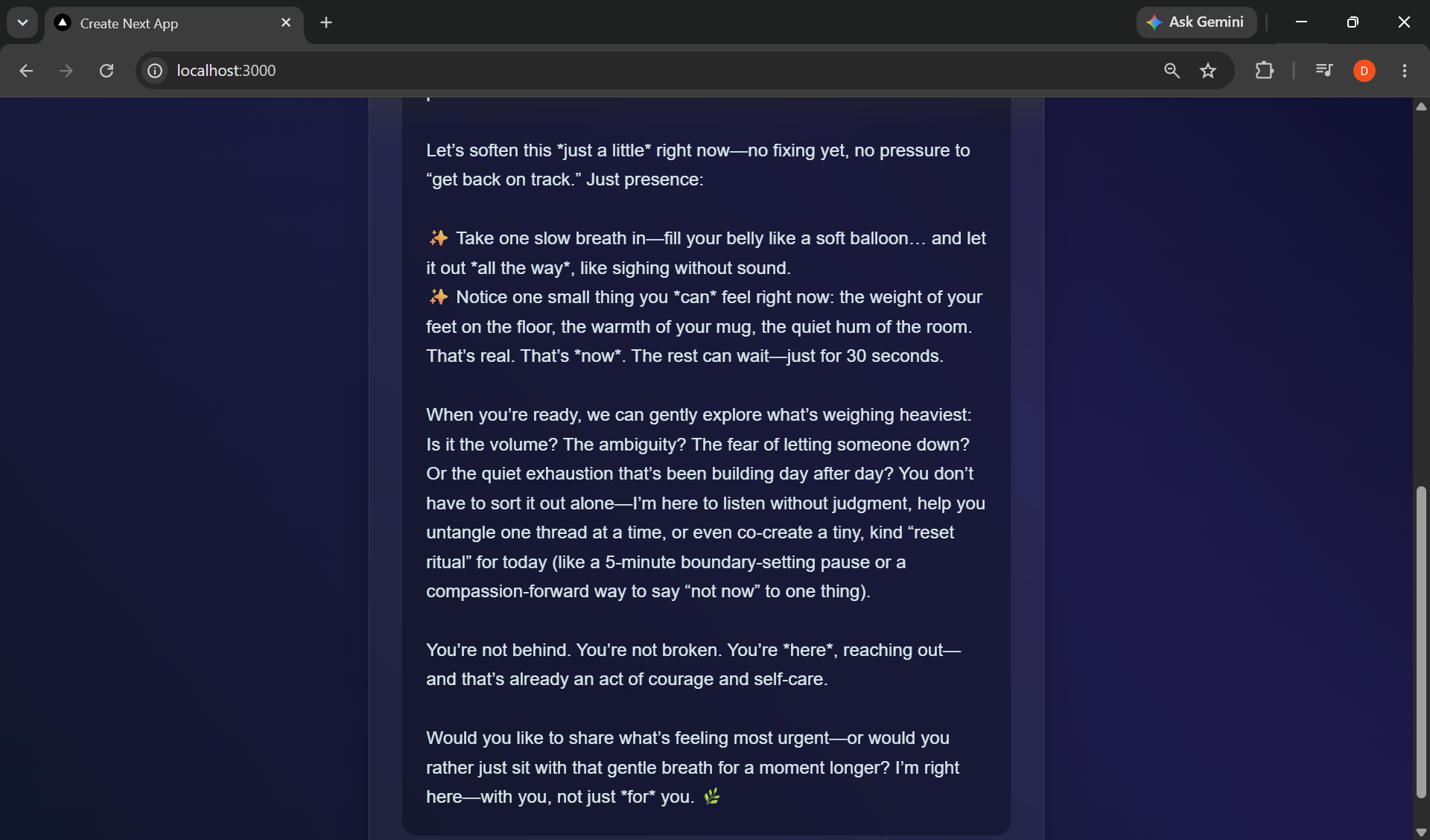
The AI instantly analyzes the subtle emotional context of the input text and dynamically formulates a detailed, deeply supportive, and highly empathetic conversational response to comfort the user in real time.
How we built it
We built ZenithAI using a modern full-stack development workflow. The client-side user interface is structured with React and the Next.js App Router, using Tailwind CSS to create a glassmorphic dark-mode dashboard interface.
For the backend, we engineered server-side API Route Endpoints using TypeScript to parse data payloads cleanly. To bypass regional registration obstacles and comply with the hackathon rules, we wired our secure server actions directly to an OpenRouter gateway tunnel. This configuration securely routes authenticated transmission envelopes to Alibaba Cloud's native Qwen-Plus architecture to manage core model inference and real-time generation.
Challenges we ran into
Our biggest challenge was navigating regional infrastructure and registration blocks, which initially prevented us from creating a native account on the Alibaba Cloud console. We overcame this by engineering a proxy-routed API gateway through OpenRouter, allowing us to successfully utilize the mandatory qwen/qwen-plus model.
Additionally, we ran into several local development bugs, including pathing issues on Windows, web cache persistence, and a 'SyntaxError' loop caused by Cloudflare web servers returning HTML code when parsing streaming chunks. We resolved this by refactoring our API to handle the payload as a clean, static JSON data object using the official OpenAI SDK structure.
Accomplishments that we're proud of
We are incredibly proud of pushing through multiple technical roadblocks—ranging from complex regional developer barriers to local Windows cache conflicts and JSON parsing syntax crashes—to build a completely working full-stack prototype from scratch. We successfully integrated a beautiful frontend design with Alibaba Cloud's native Qwen-Plus model architecture. Seeing the application effortlessly analyze loose, open-ended emotional inputs and instantly return detailed, highly responsive conversational text onto our dashboard layout is a massive victory for us.
What we learned
Building this project taught us an immense amount about full-stack integration and production-ready AI orchestration. We learned how to securely configure environment variables to isolate sensitive API tokens, how to adapt data processing layers from streaming blocks to static JSON payloads, and how to effectively navigate regional infrastructure constraints using open-source developer toolchains. Above all, we learned that hitting deployment errors and terminal conflicts is just part of the process, and that persistence is the most critical tool in a developer's toolkit.
What's next for ZenithAI
Moving forward, we plan to fully expand ZenithAI into a comprehensive production-ready platform. Our immediate next step is to upgrade our current architecture to natively implement Track 1 requirements by integrating a persistent vector database (like Supabase or Milvus). This will allow ZenithAI to securely accumulate user context over multiple sessions, track emotional patterns over time, and offer increasingly accurate, personalized mental wellness insights while maintaining a tight, optimal memory context window.
Built With
- next.js
- node.js
- qwen-plus
- react
- tailwind-css
- typescript


Log in or sign up for Devpost to join the conversation.