-
-
Task List
-
Ready for Launch
-
Space Station
Inspiration
Both of us are on the the satellite development program at UMD (project THEIA) and are very passionate about space. We both also have a heavy work load and do not prioritize our physical and mental wellness as well as we should. We wanted to make a website that would allow us to keep track of all of our tasks while still giving us wellness reminders (for when we inevitably do not add them to our task list) and also incorporate our love for space. Both of us joined this hackathon to find a community of women with similar interests to us, when you find the right community of people it makes it easier to navigate spaces where you are the outlier. Throughout our journeys in coding and with space development, both of us know what it is like to be the only or one of only a few women in a room. We want to show that both of these spaces are for women to be and thrive in. We wanted to make a tool that can aide women and underrepresented people in these fields while remaining a useful everyday tool.
What it does
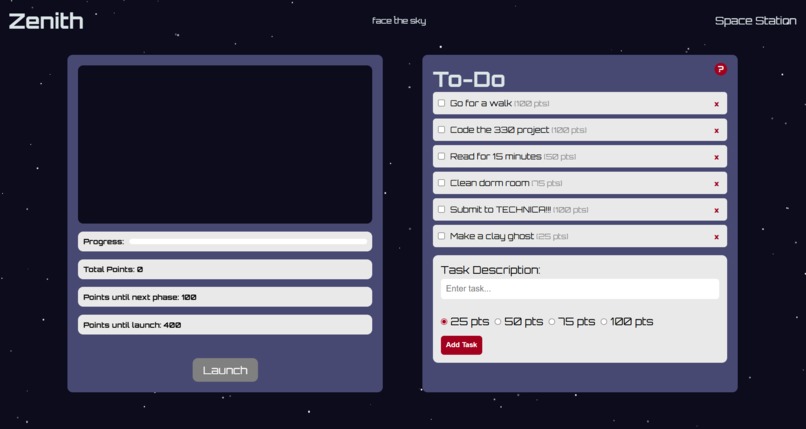
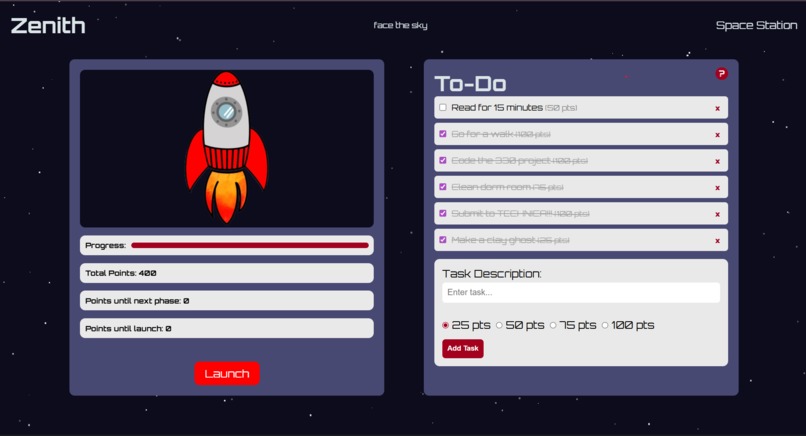
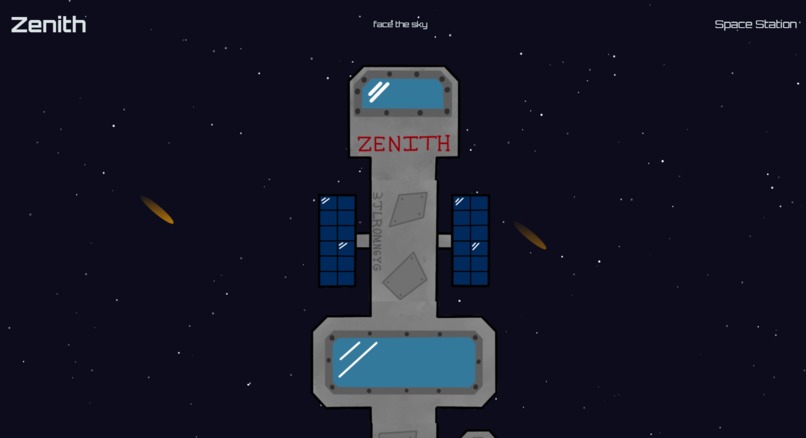
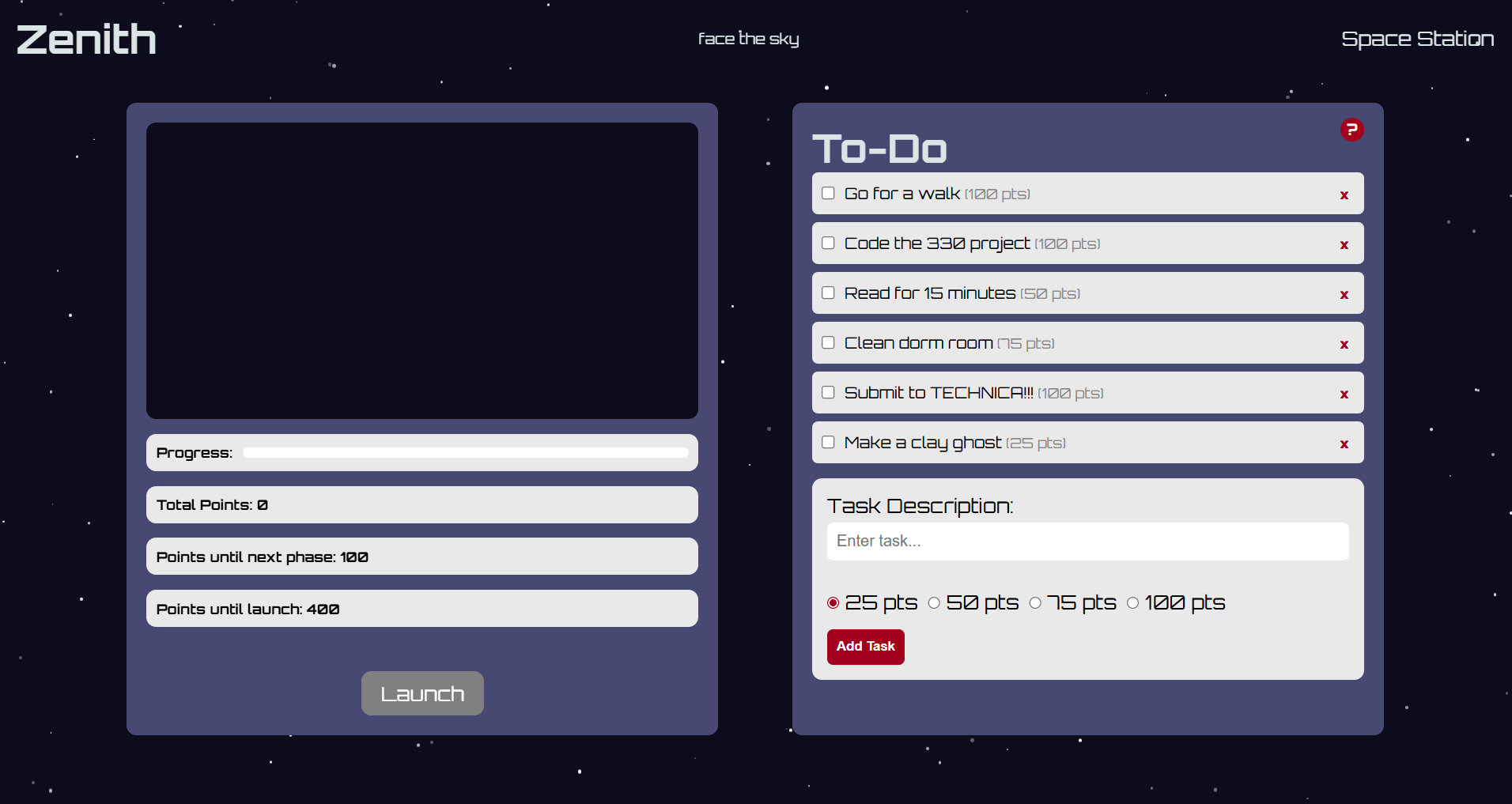
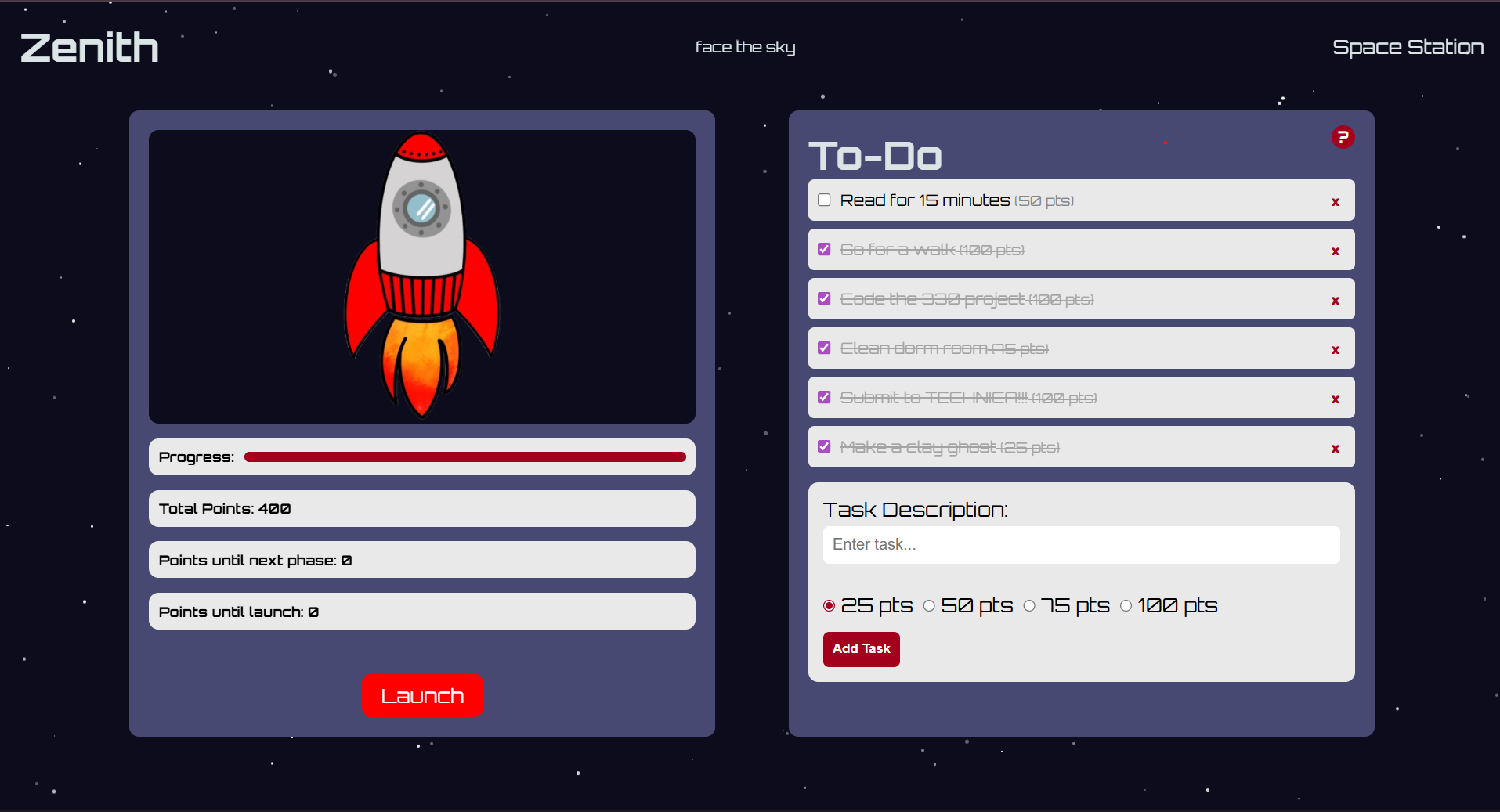
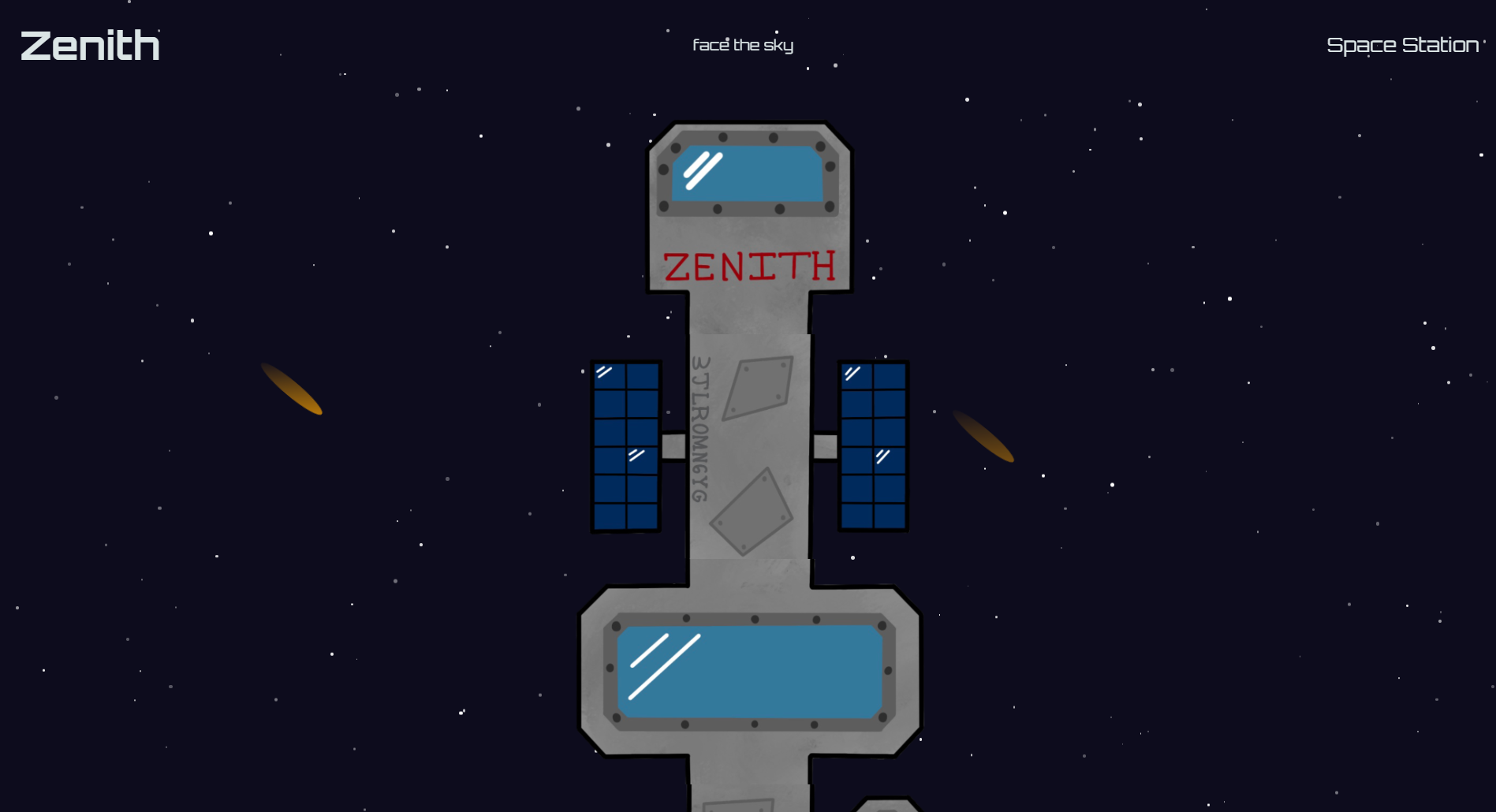
Zenith is mainly a task tracker/to-do list. When it is your first time on the site it will auto-populate with a few wellness focused tasks but you can easily delete those and add your own and assign them points values. You gain points as you complete tasks as you work to build a rocket ship. Once you have enough points to launch you will gain another module in your space station "Zenith" that you are able to see by clicking on the space-station button on the navbar. Shooting across the sky in this view are self care comets, if you click on it, a pop-up with a wellness tip will appear. Once you launch, your selected tasks are deselected, you can either delete them if it was a one time task or keep it if it is a reoccurring task (good for weekly assignments or daily wellness goals). Don't worry about losing your progress, your tasks are saved using browser cookies and even when you refresh or exit out of the browser, you can simply continue where you left off without the hassle of needing to log in or out.
How we built it
We are using Firebase for hosting our site since one of our members has used it on a previous project and is familiar with the application. For front-end development, we are using HTML and CSS and JavaScript to add our functionality and interactive elements on the back-end. Since there were two of us working together, we used Git to maintain version control and to allow for simultaneous coding on different branches without merge conflicts.
Challenges we ran into
In the beginning we ran into a lot of merge conflicts because both of us had limited experience working with Git merges before. After some troubleshooting, we were able to get a better idea of how to fix them and generally avoided merge conflicts for the rest of the hackathon. Also, between the two of us one of us does not have a lot of JavaScript experience and the other does not have a lot of experience with any of the coding languages that we used for this project, so there was a learning curve when figuring out how everything needs to be structured in the code.
Accomplishments that we're proud of
For one member this was their first hack and for the second, it was her second time doing a project but her first time being a main coder for the project. When we first started, we were unsure of how much functionality we would be able to implement. We ended up placing a lot of features into the "If we have time at the end" category. We were able to knock out basically that entire category and more. We would keep finding new and better features to add to enhance the project. Since coming here, we were unsure if we would even have something to present. We are very proud to that we finished and are demoing our project.
What we learned
Both of us built upon our current knowledge of Git. We now are better at debugging merge conflicts and how to avoid them. We also learned how different branches work and how to merge those branches to the main (and double checking to make sure you pull first). We also learned a lot more about web development especially when it comes to dynamic and interactive web applications. Additionally, we learned to incorporate moving elements, including layering a moving interactive background that covers the entire page over other interactive elements on the page.
What's next for Zenith
For Zenith we would like to add more variety and customization in the modules that are being added to your space station. It will make it more exciting to see your Space Station grow if there are different ways that it can be built. Additionally, instead of just seeing the outside, being able to actually see the different interiors of the Space Station modules is a future feature we would like to implement. The interior design could also be your choice based on what the module is, to add more customization for the user. We would also like to make it where there is a second section on the home page, specifically for wellness where a user can input as many goals as they want and everyday the list will randomly populate with a few of them. This will make it where it is more exciting to keep up with your health and wellness since you will never know what your new tasks for the day will be.


Log in or sign up for Devpost to join the conversation.