Inspiration
The transition to renewable energy is accelerating, but the systems supporting it remain fragmented and inefficient. While many households are adopting rooftop solar, the benefits are limited by isolated operation and lack of coordination.
We realized that the real problem is not just adoption — it is the absence of intelligence in how energy is generated, shared, and utilized across communities.
Zenith was built to bridge this gap by combining individual decision-making with system-level optimization.
What it does
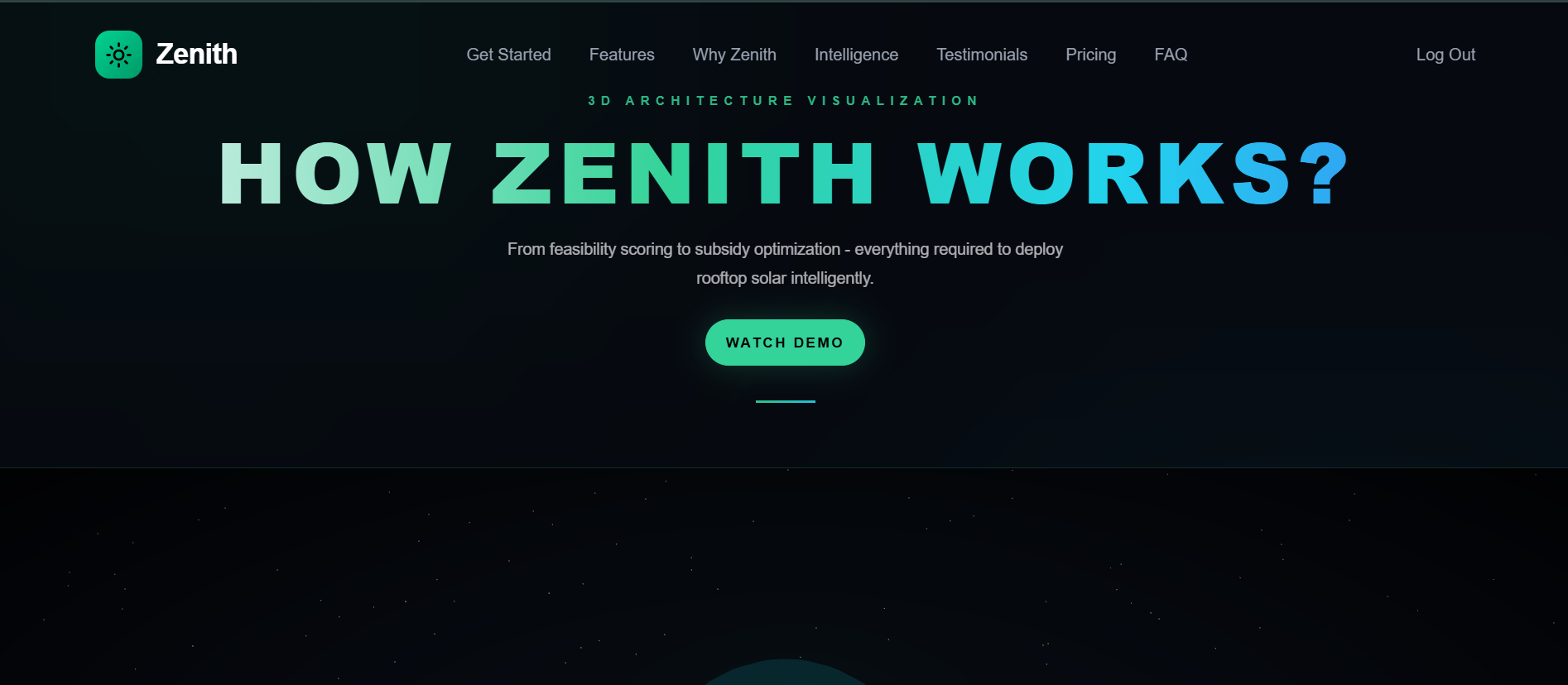
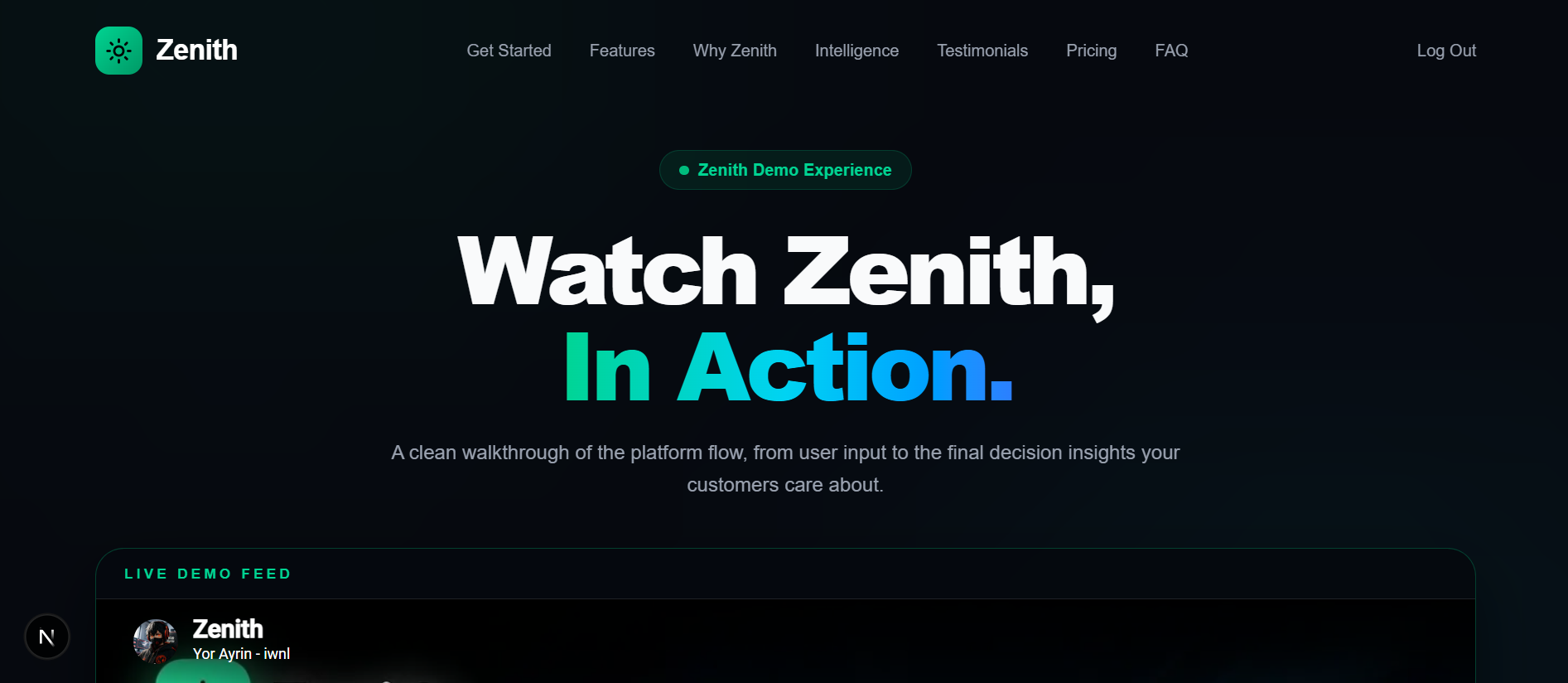
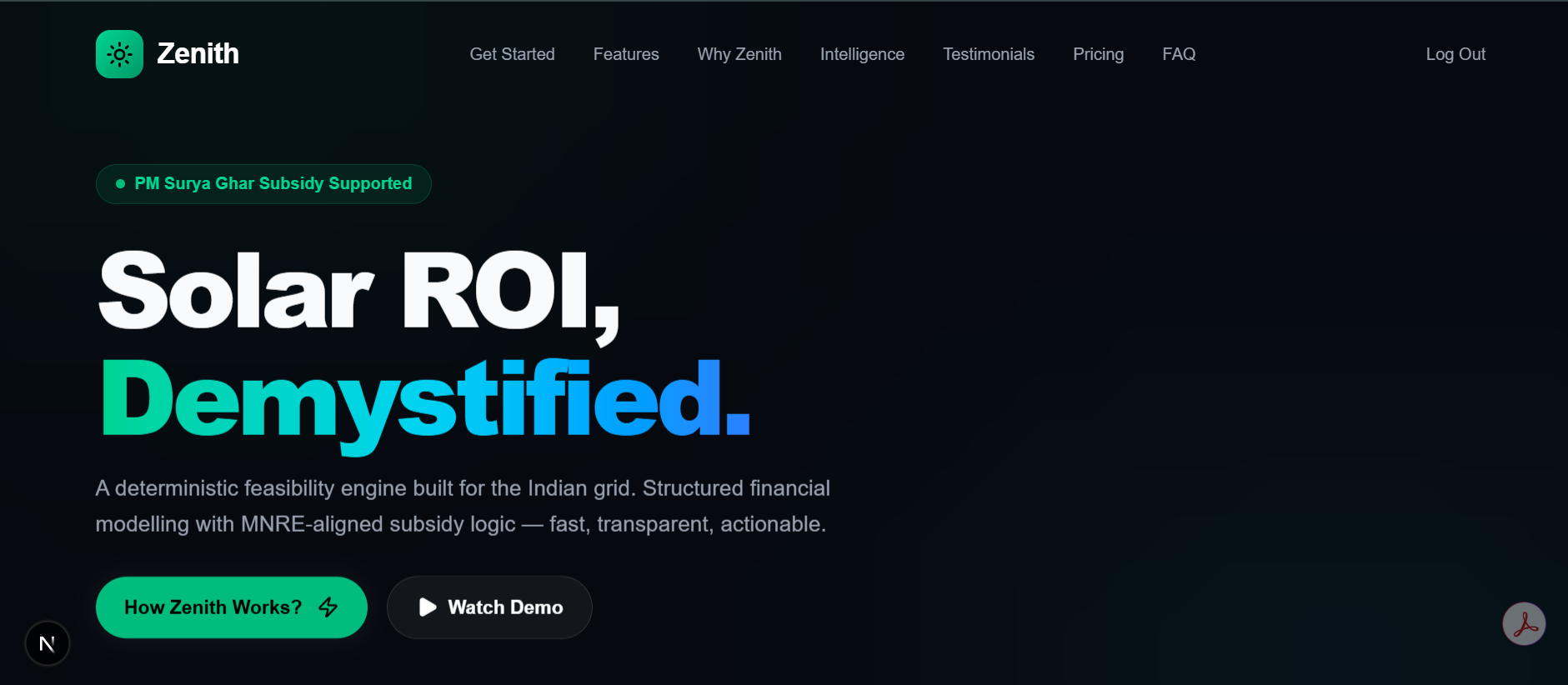
Zenith is a decentralized energy intelligence platform that operates at two levels:
Individual Intelligence:
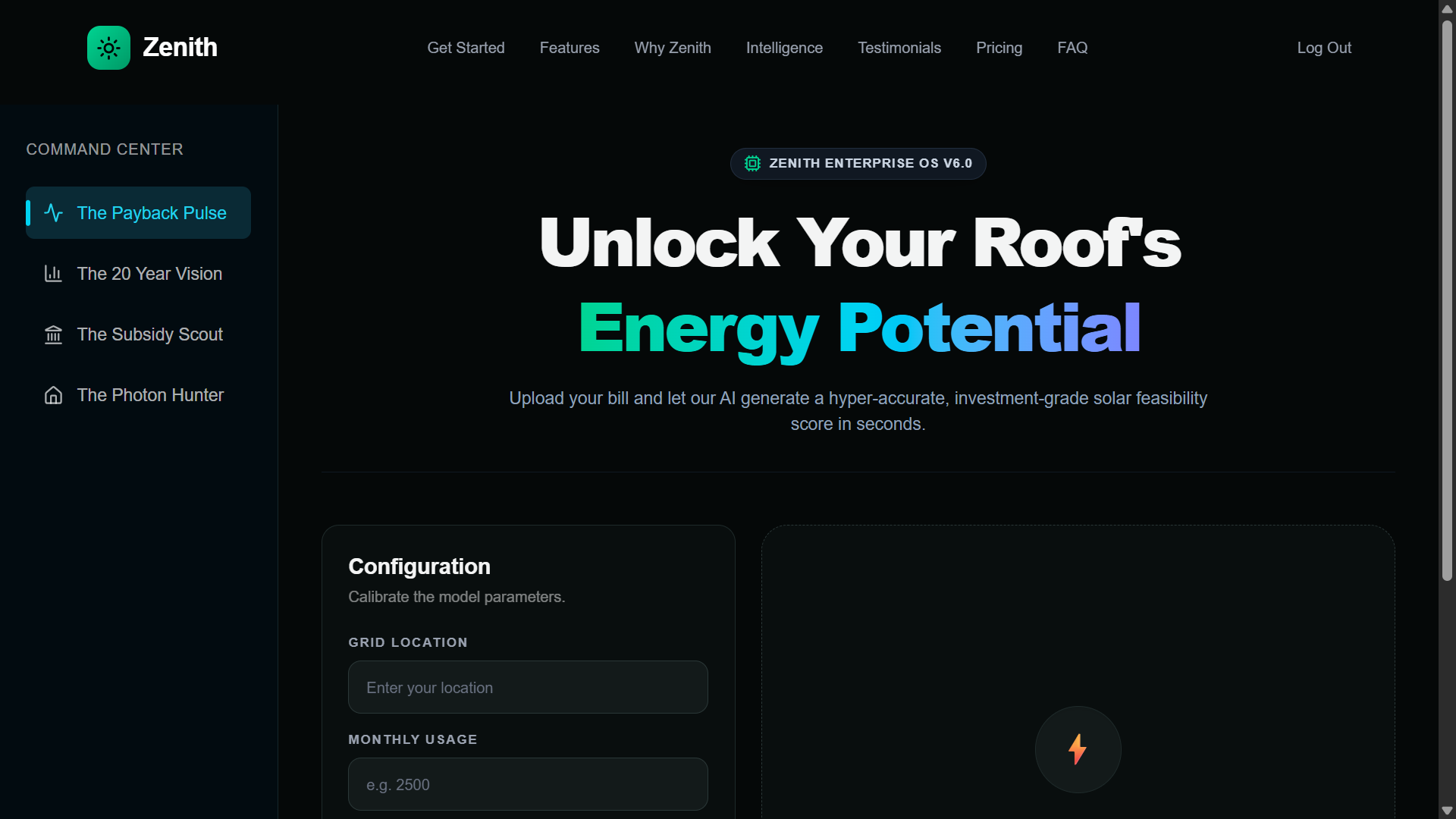
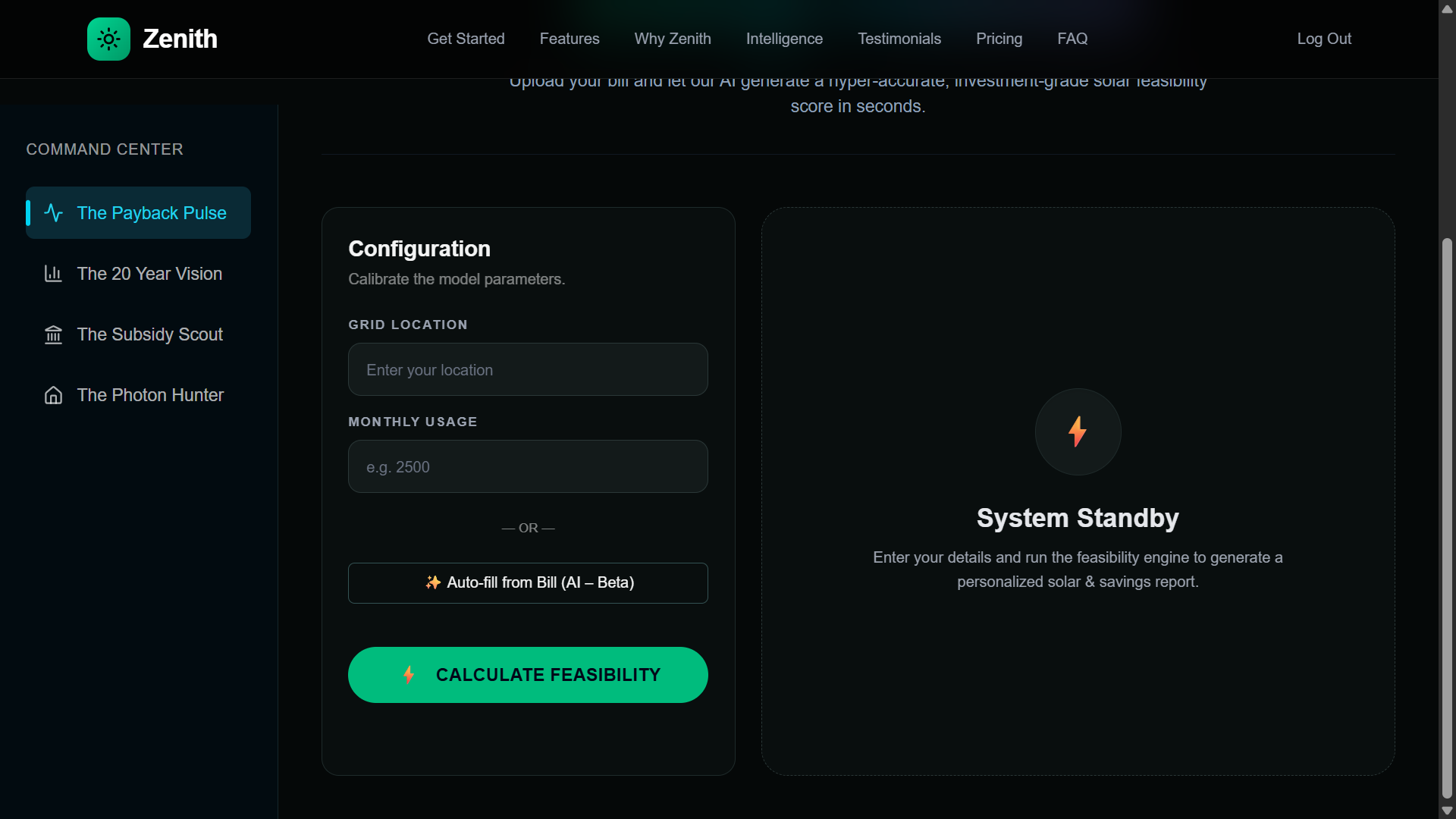
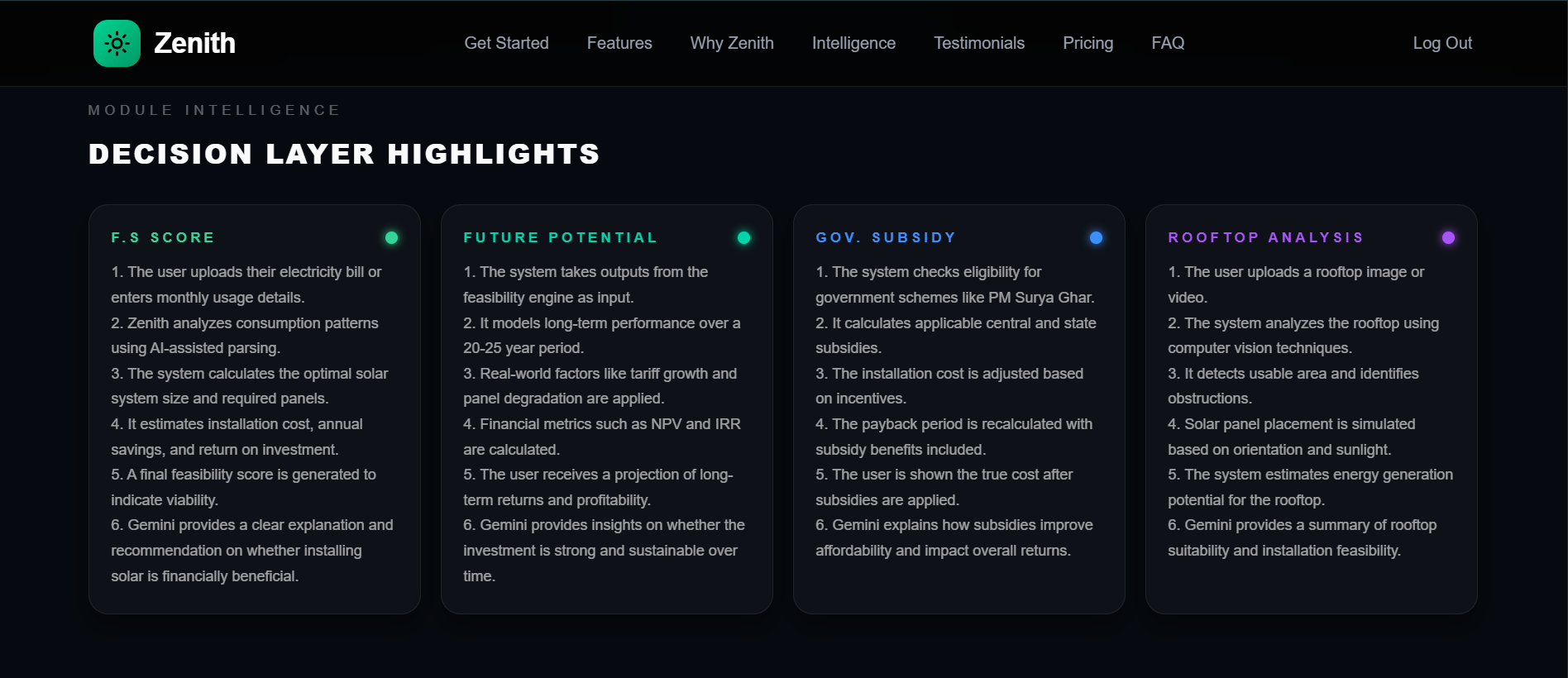
- Parses electricity bills using AI
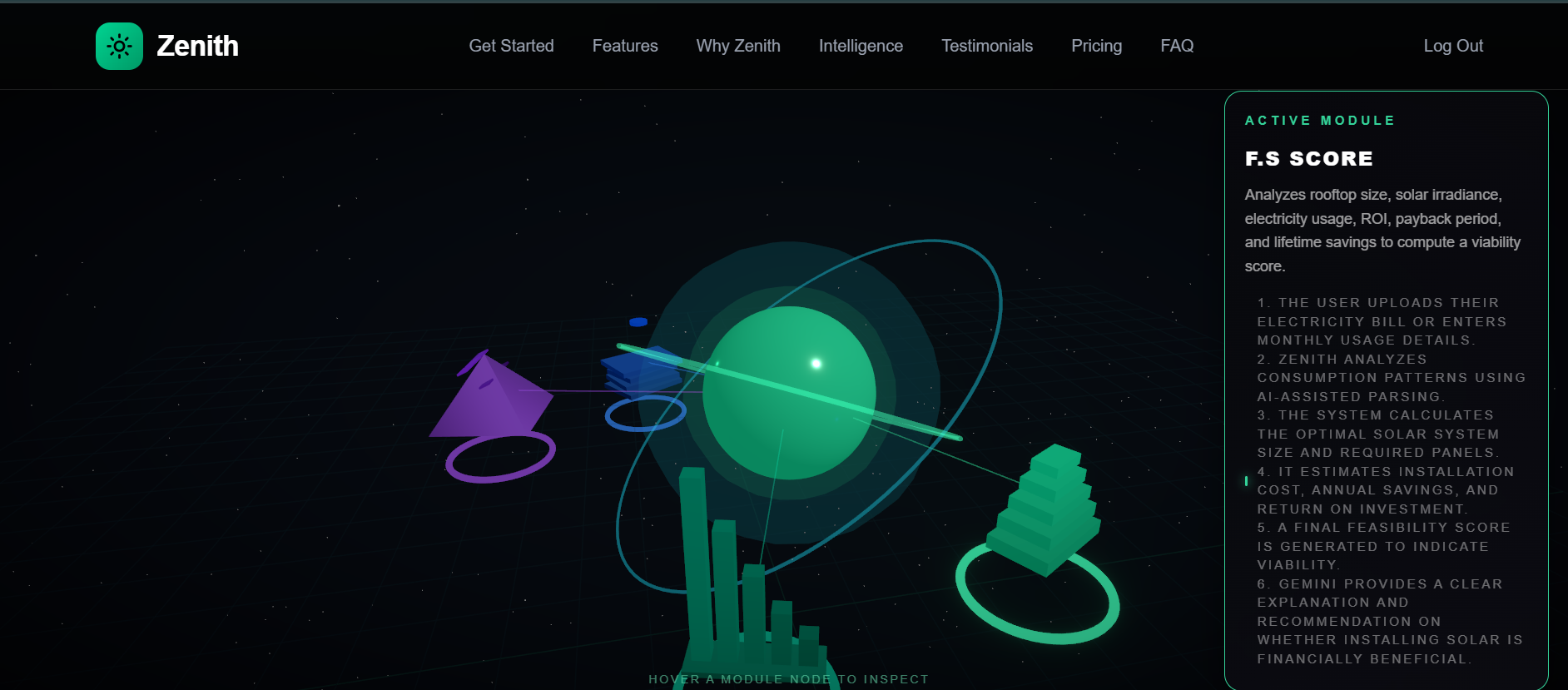
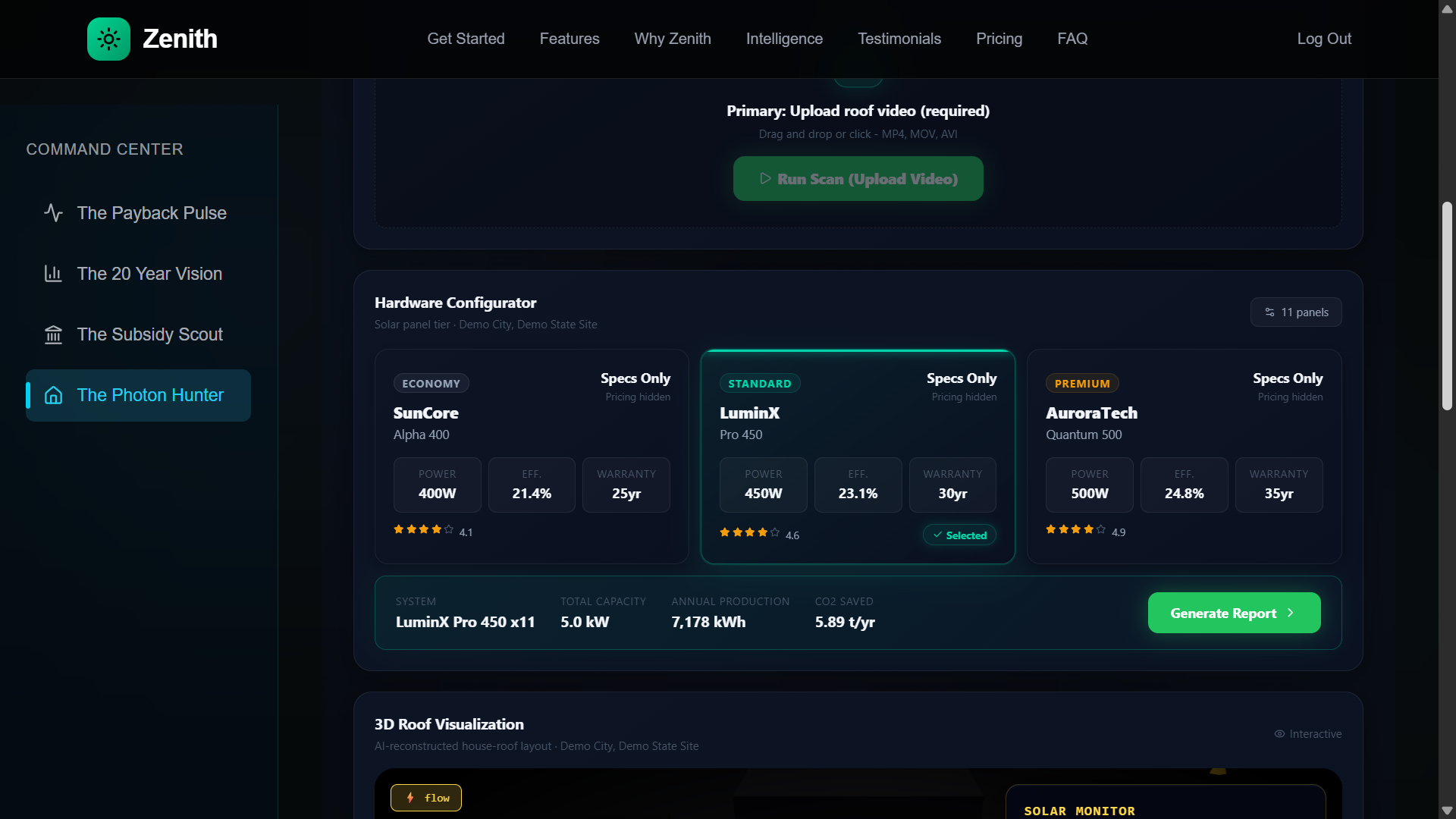
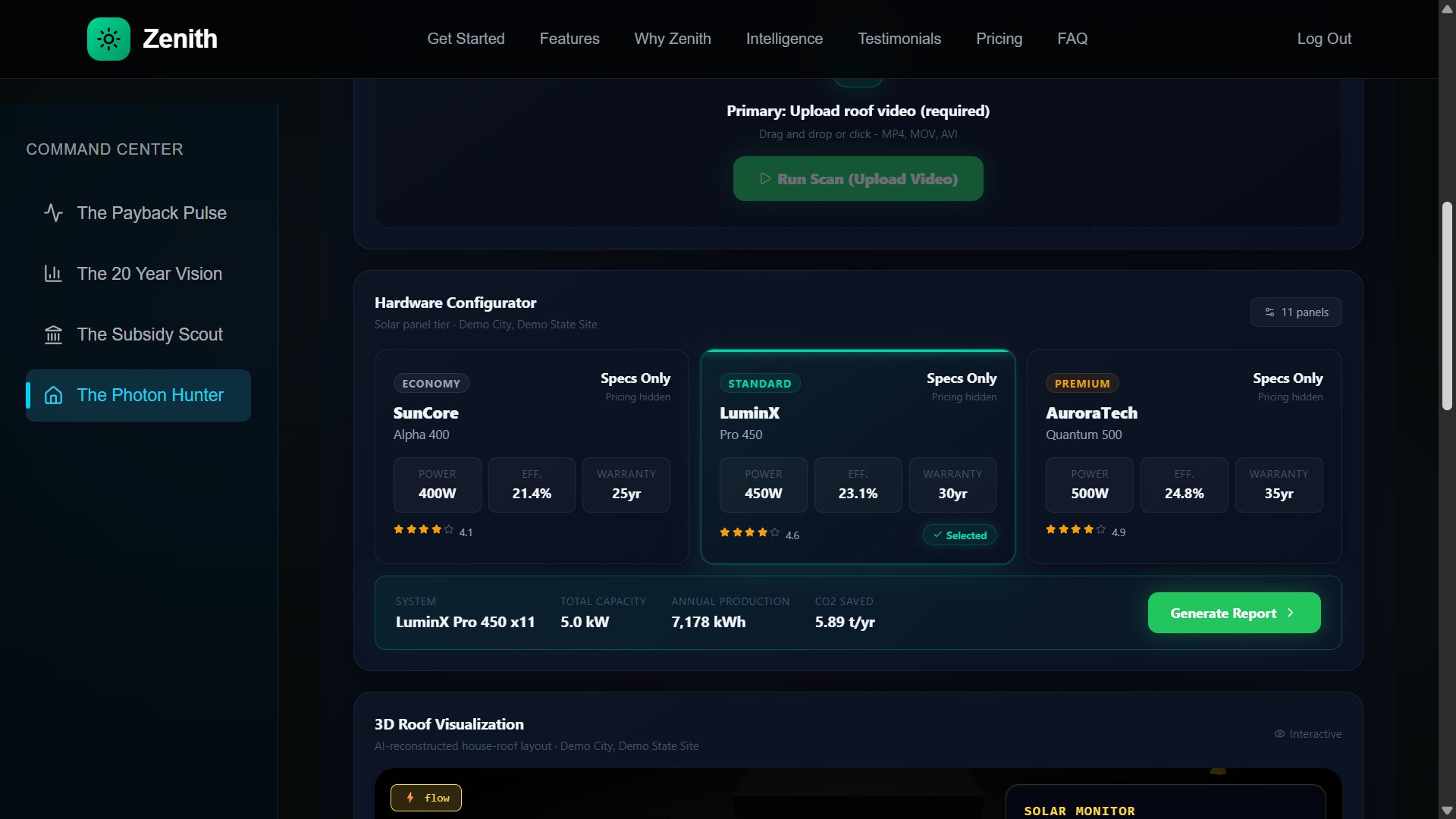
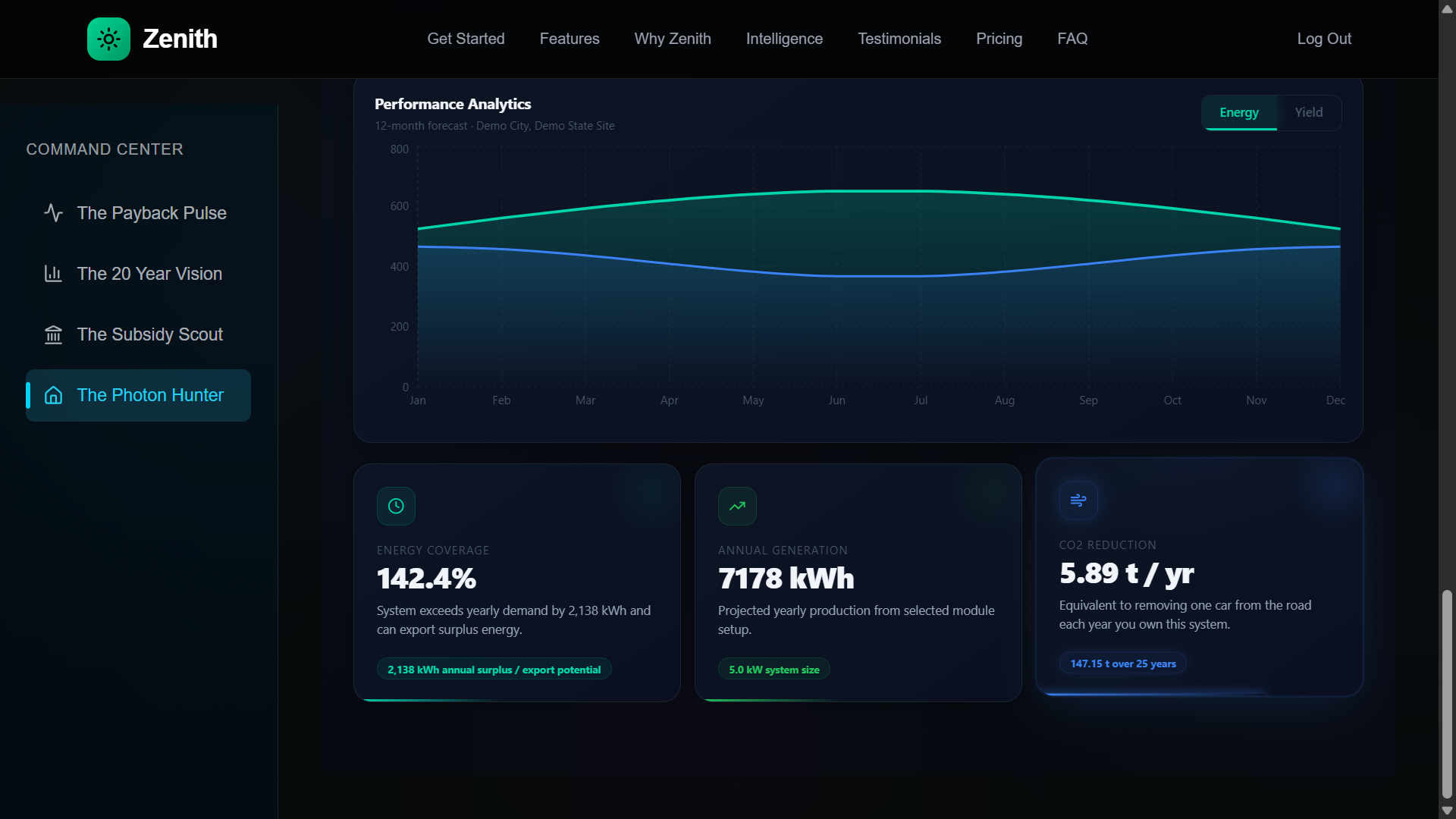
- Estimates optimal solar system size
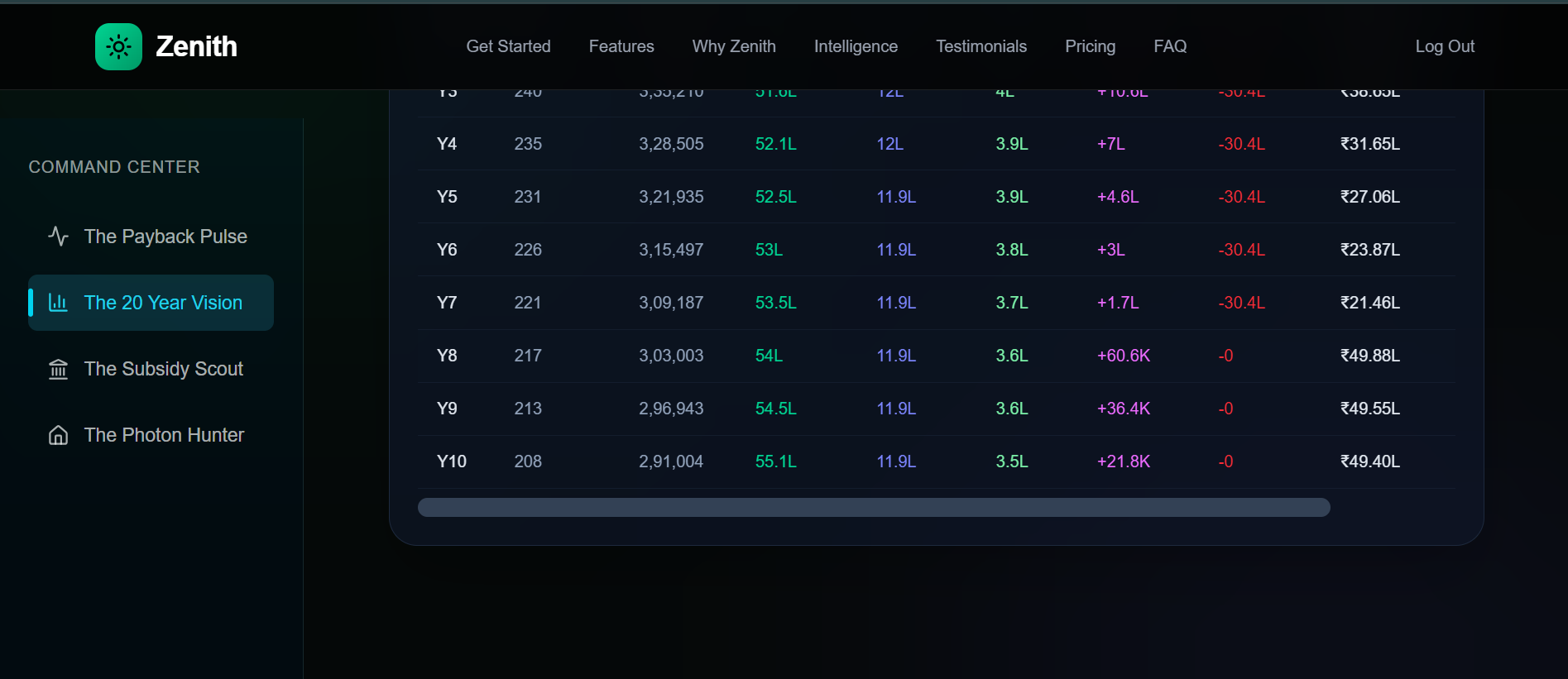
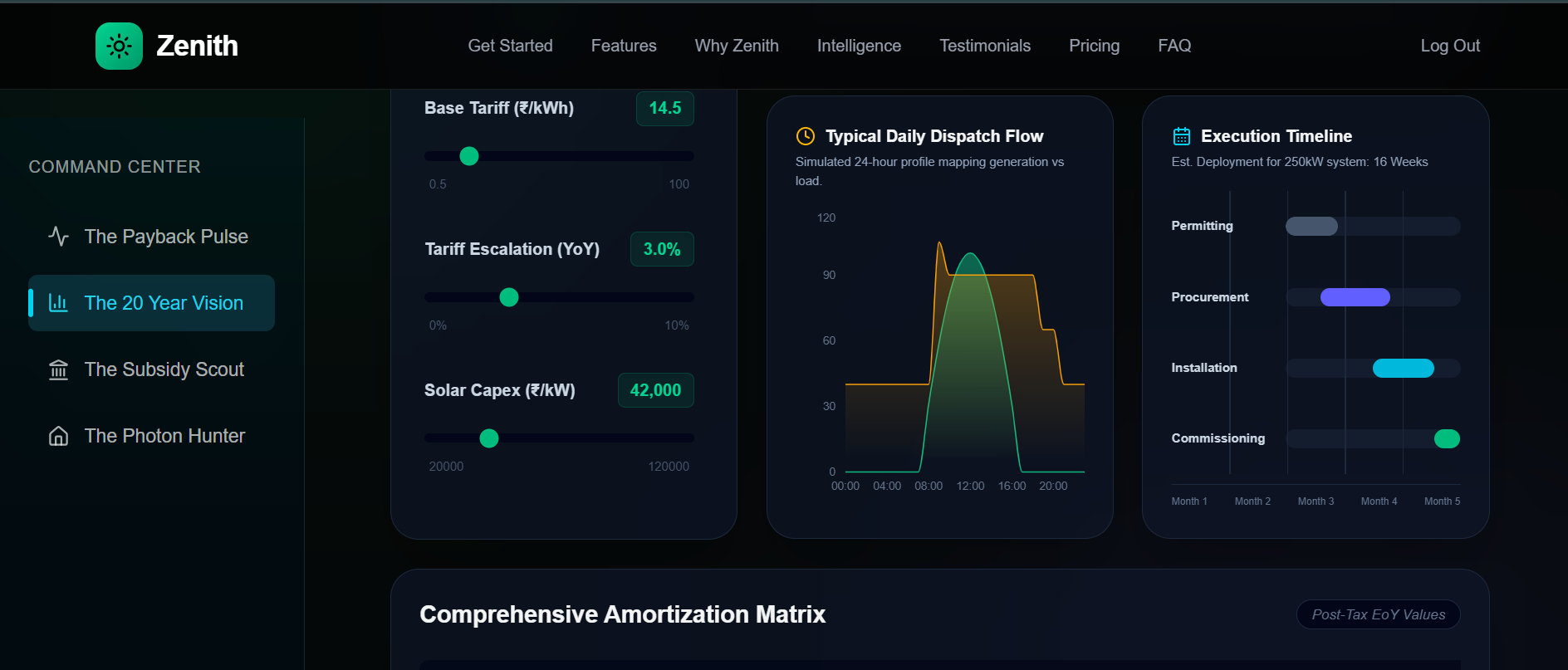
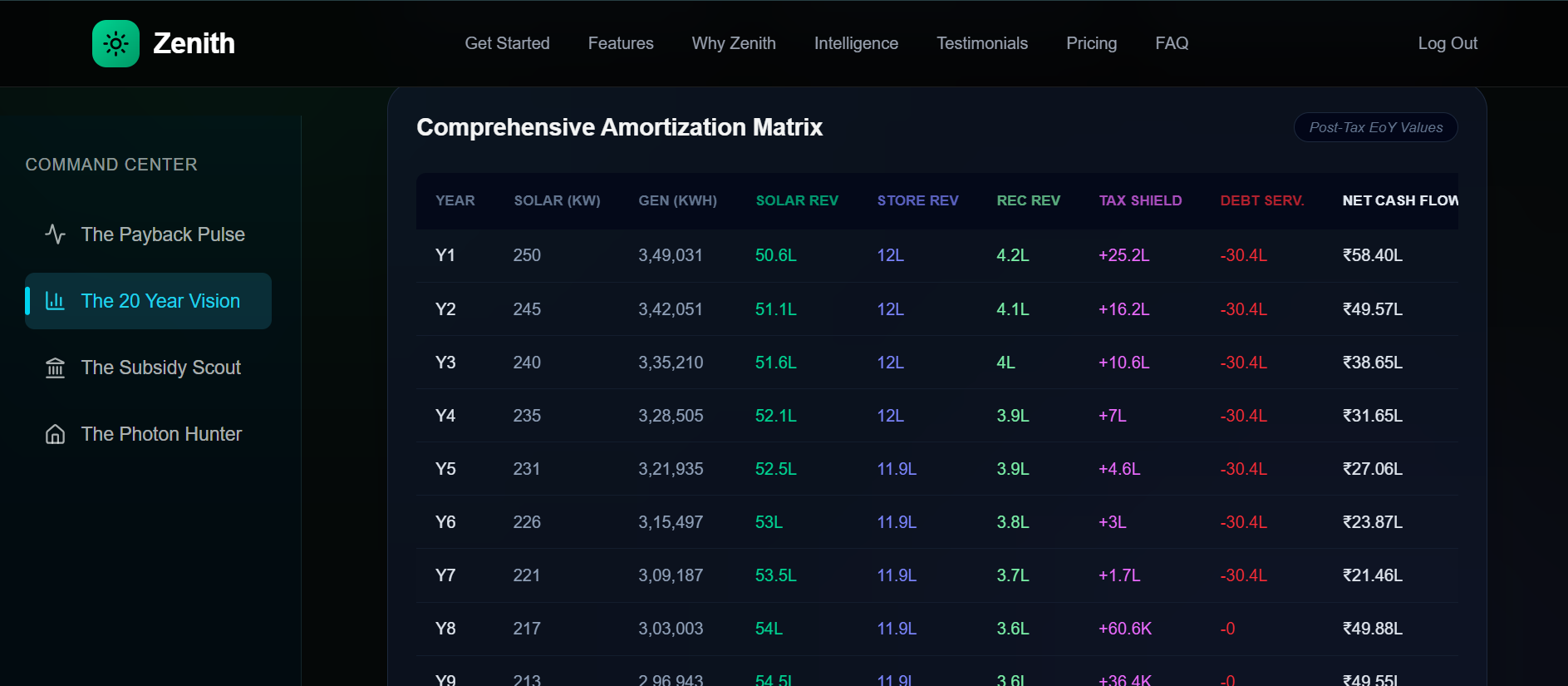
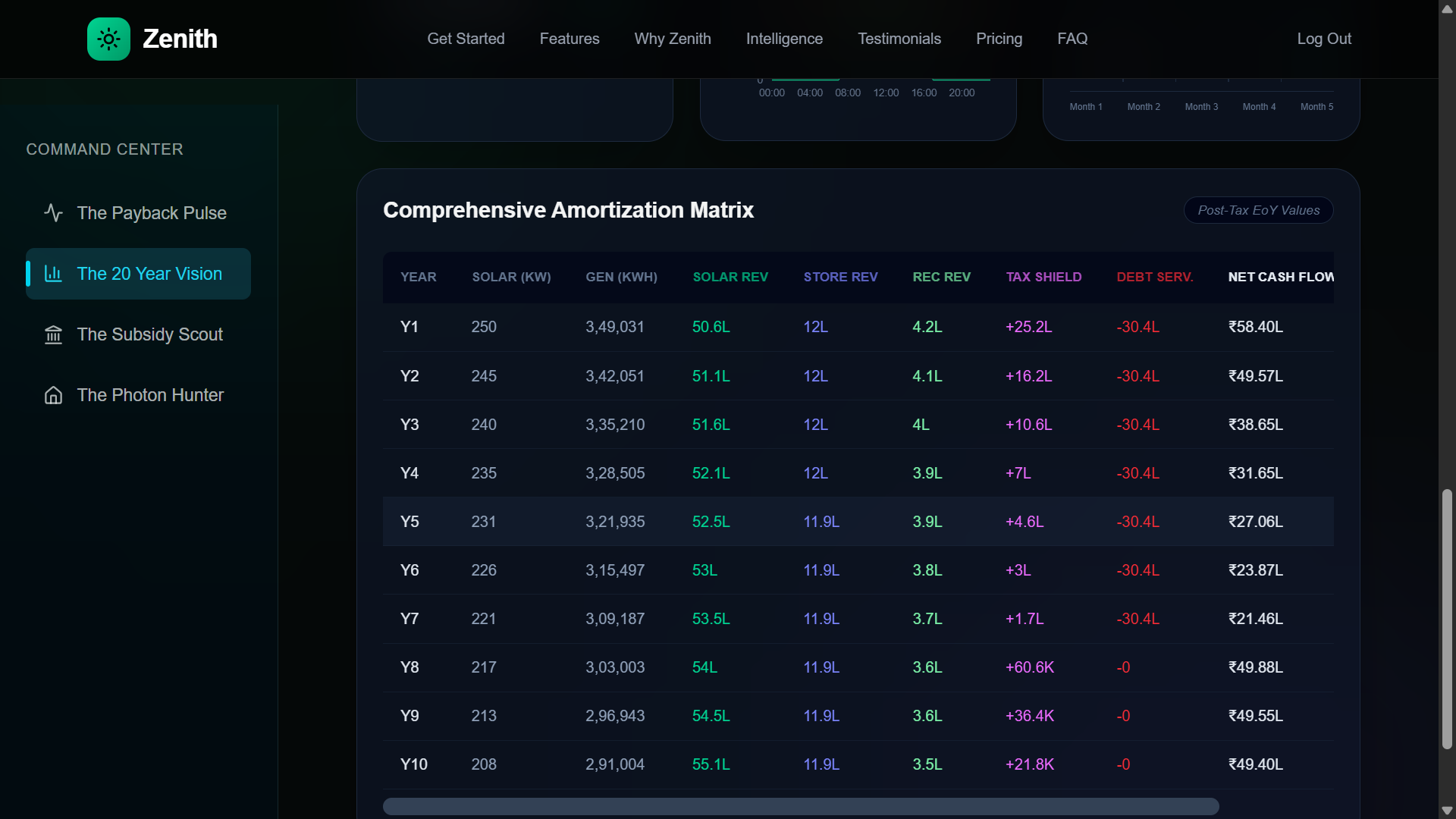
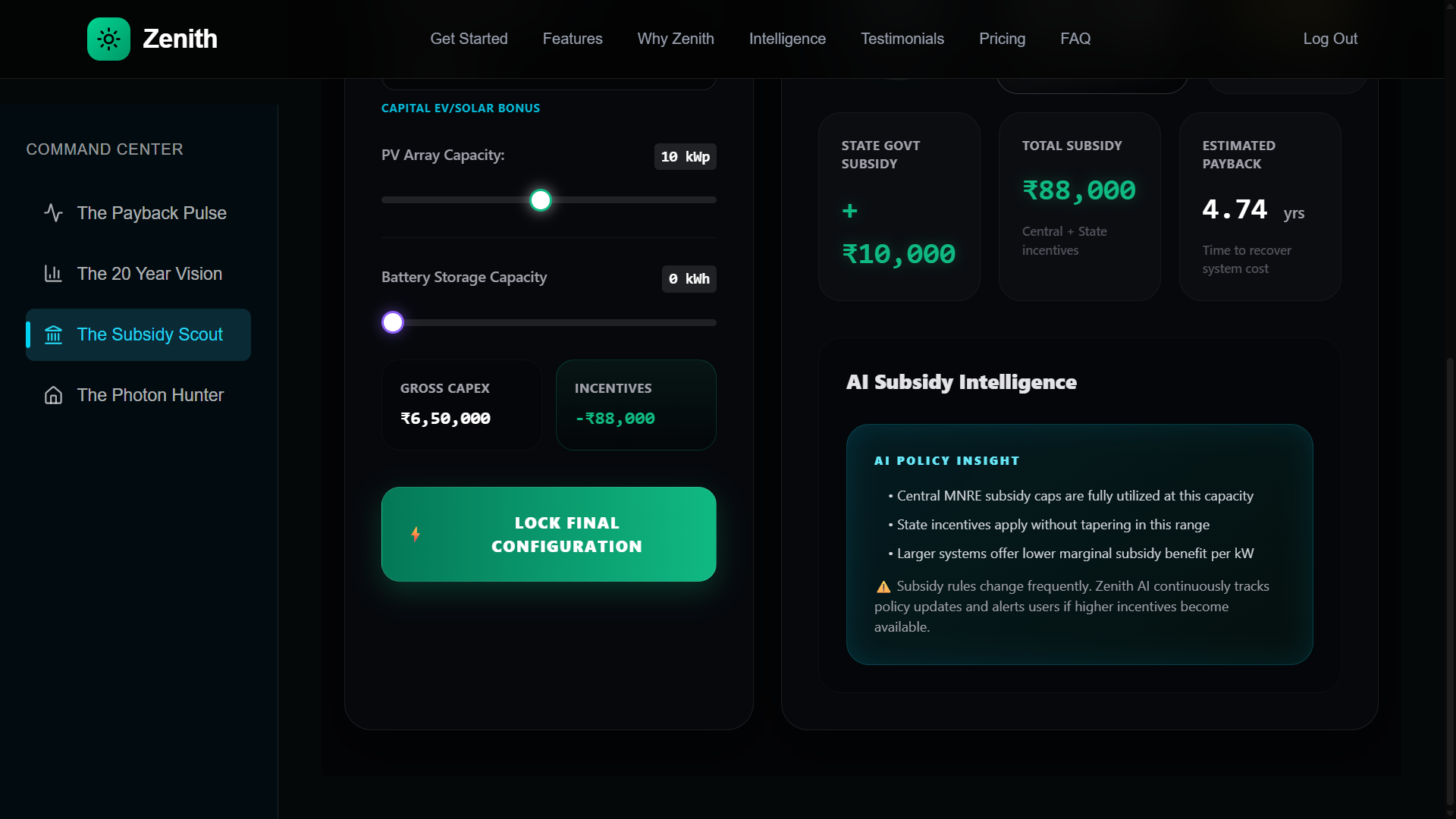
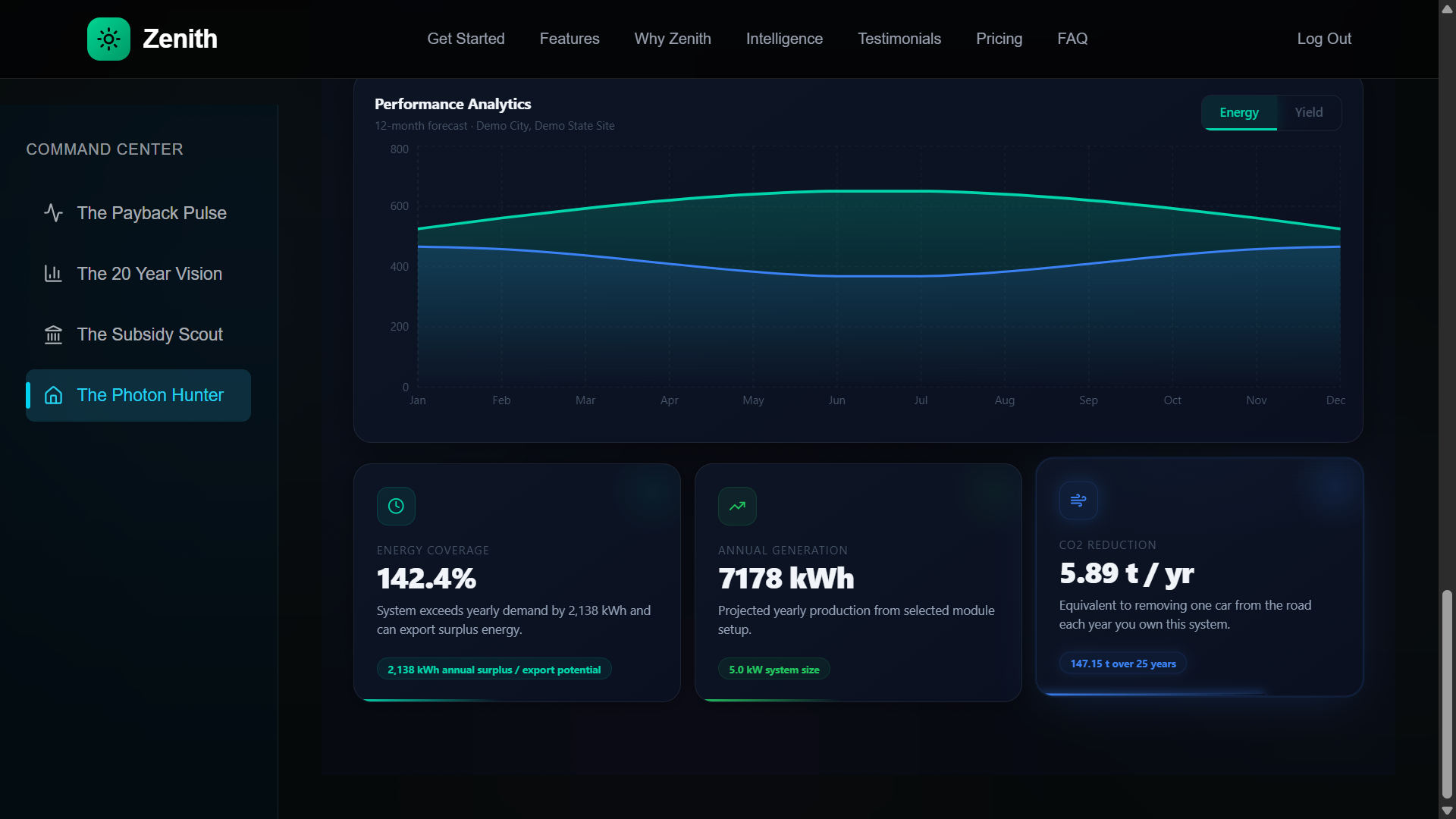
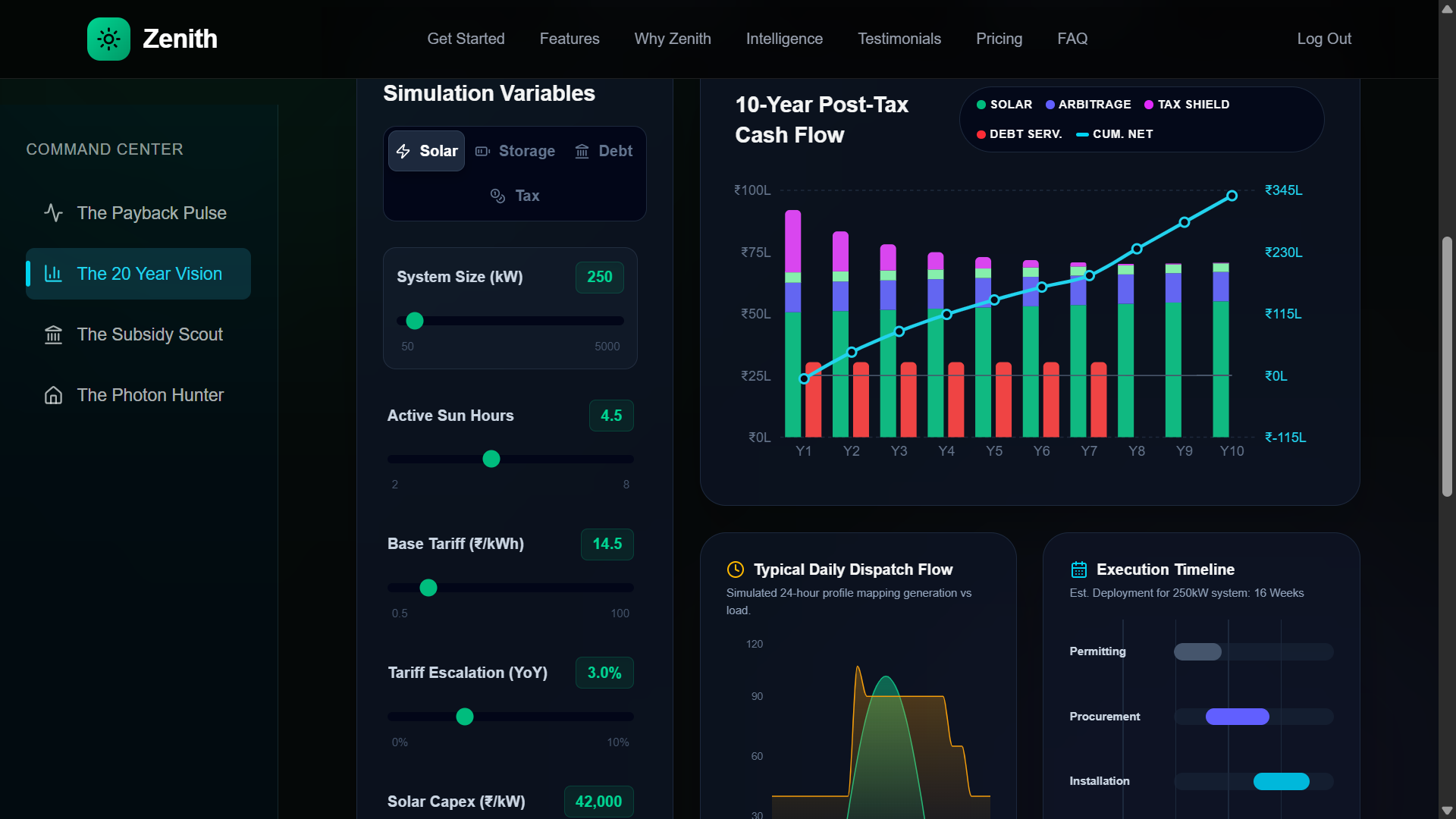
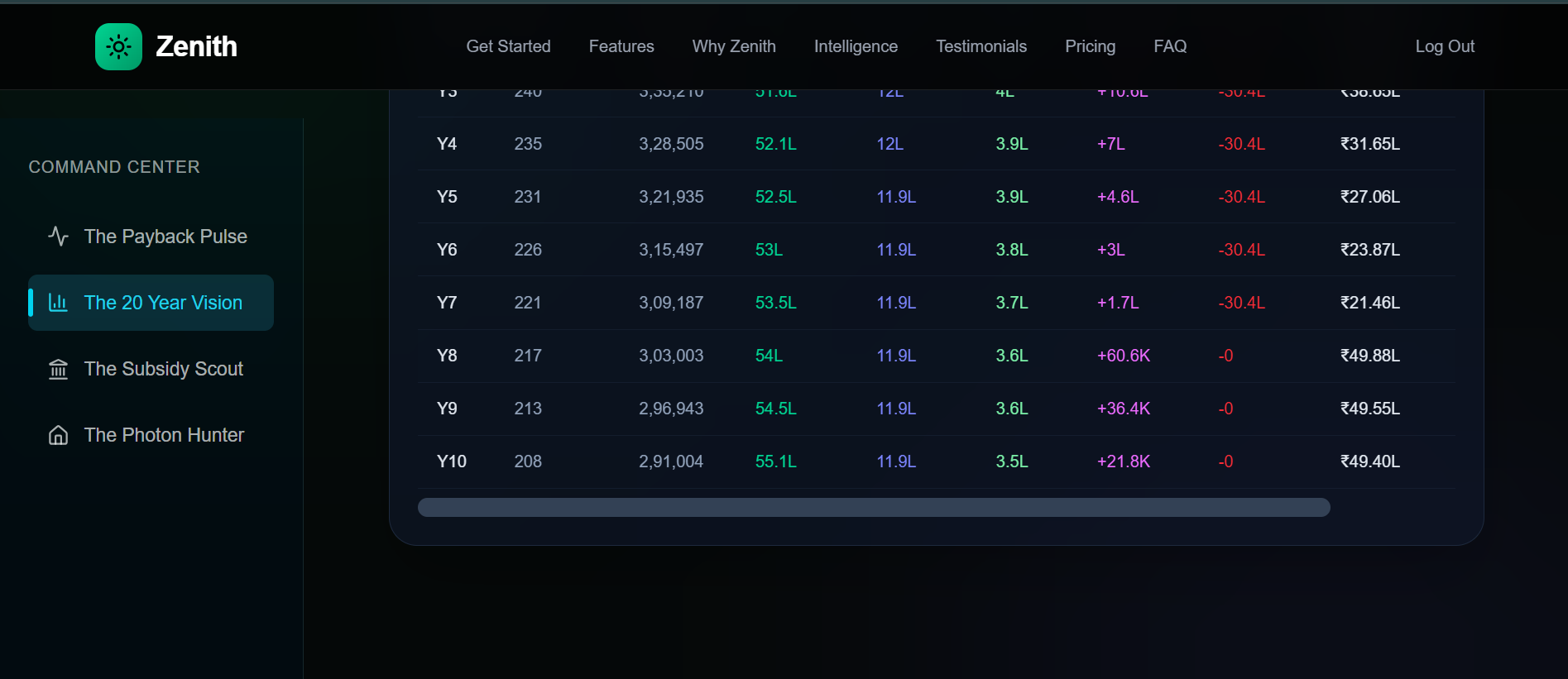
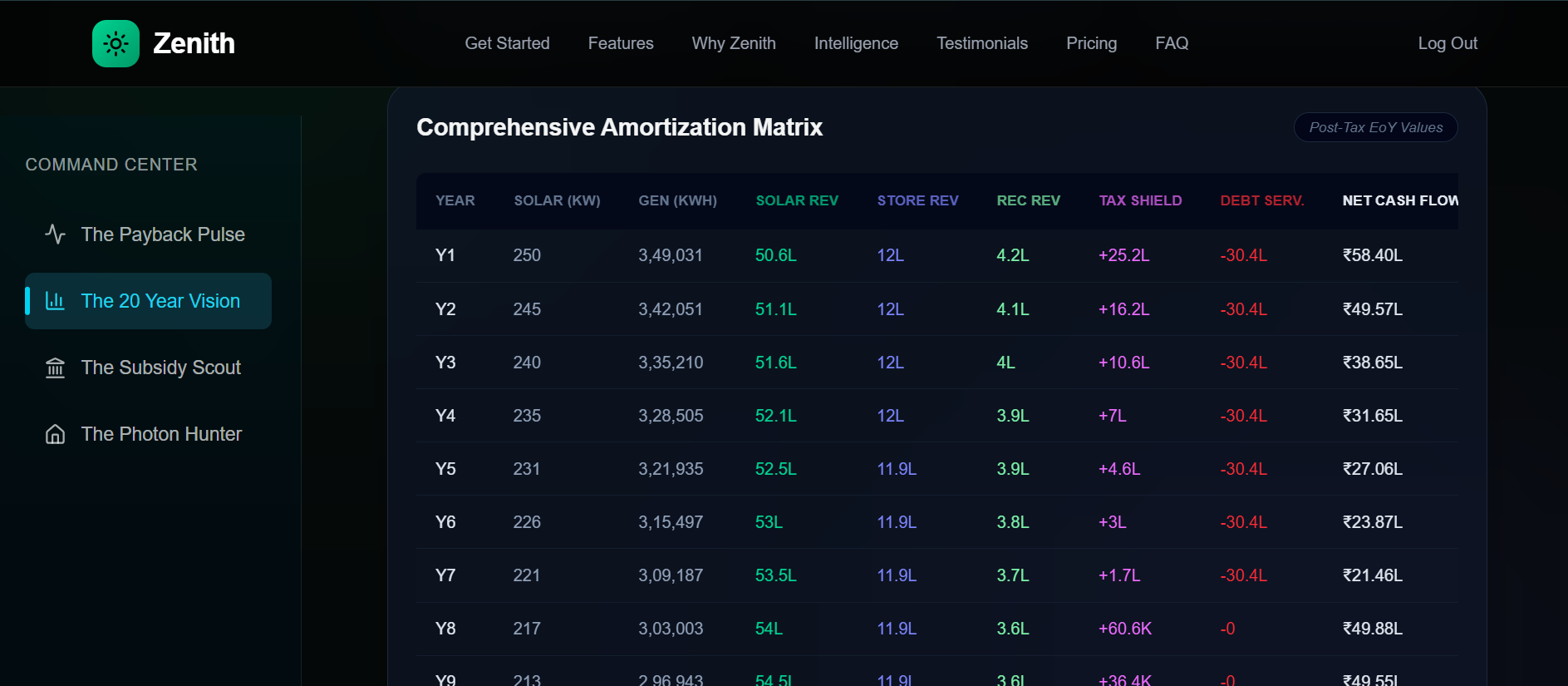
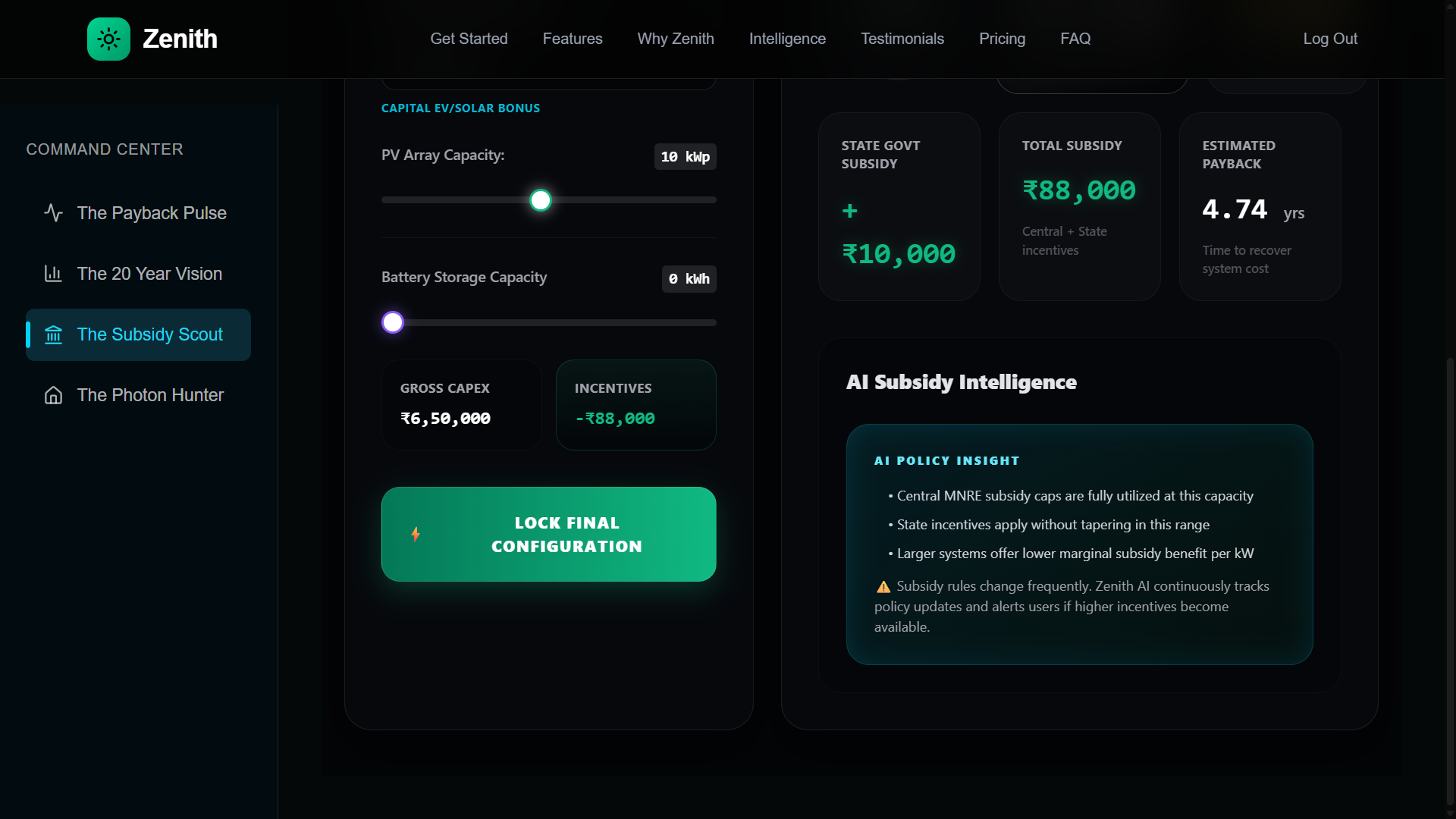
- Calculates installation cost, savings, and payback
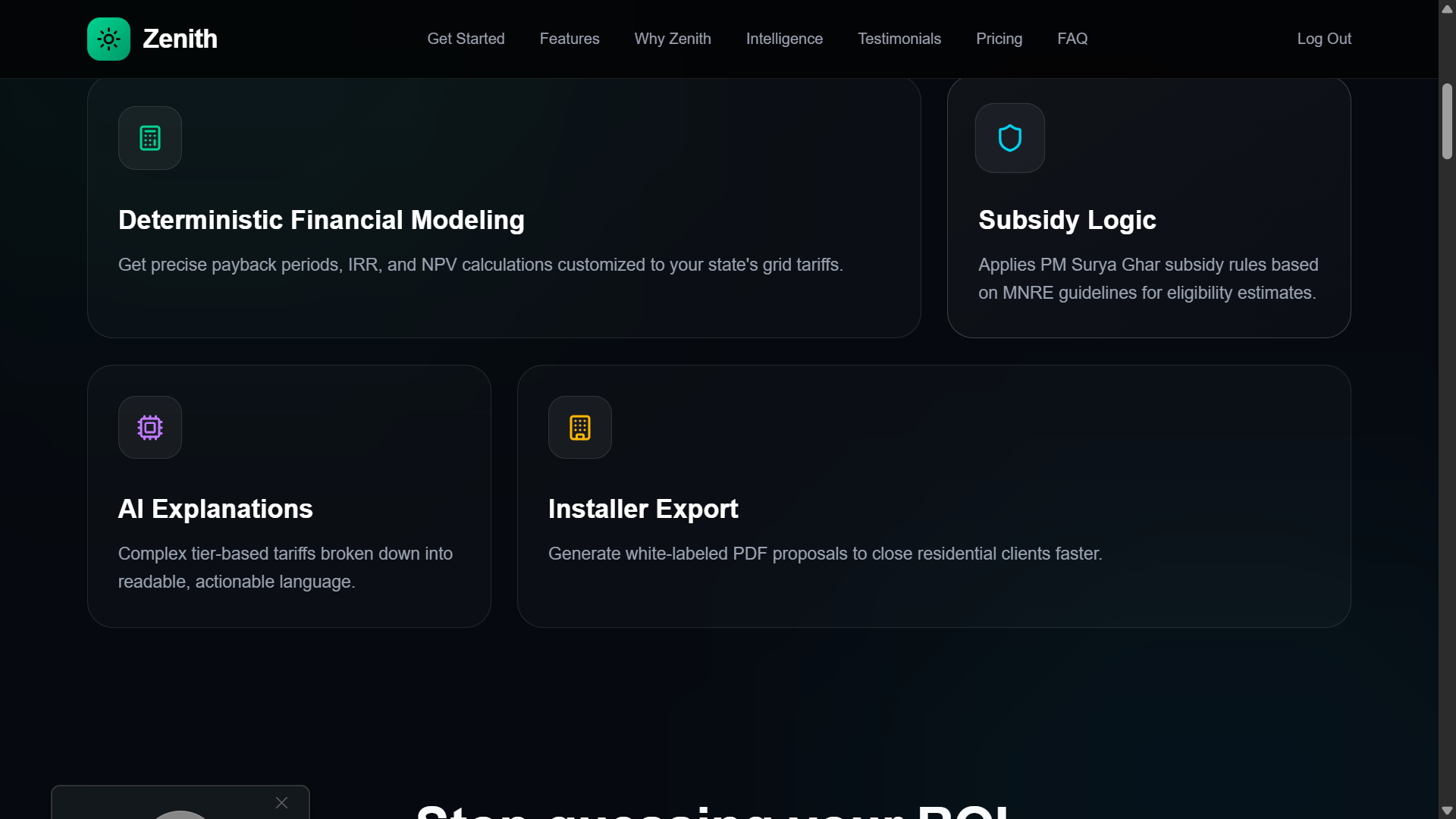
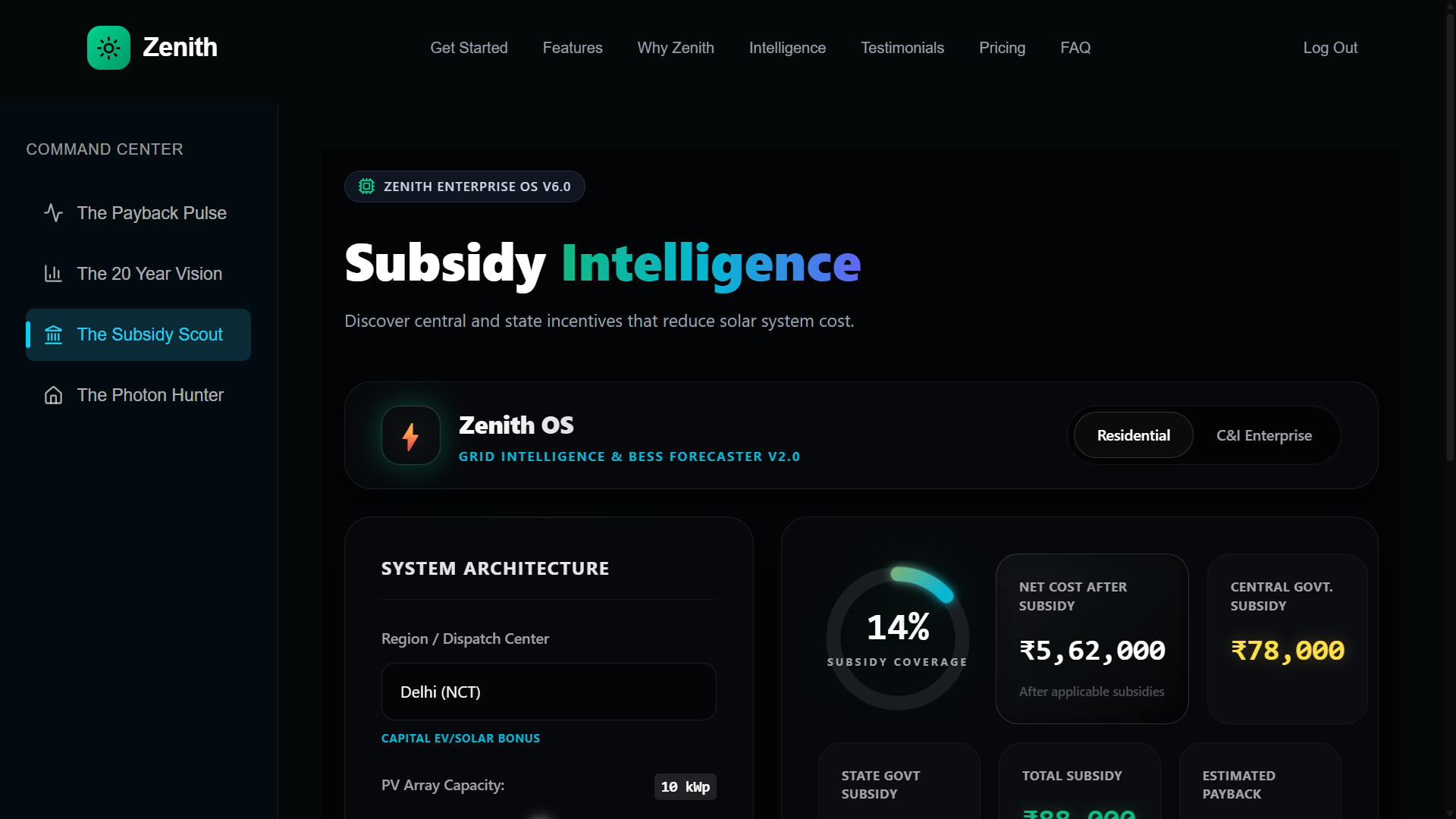
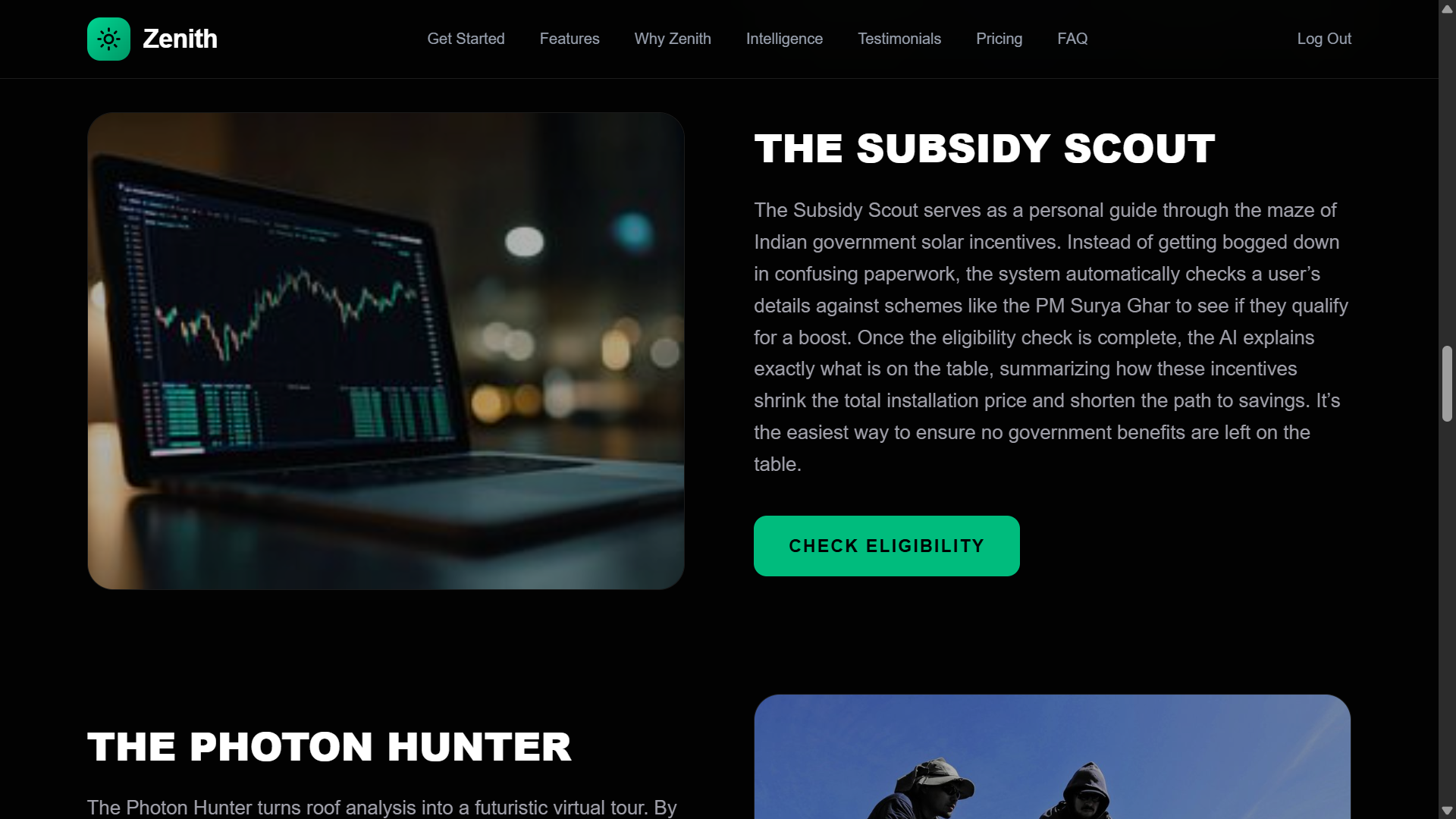
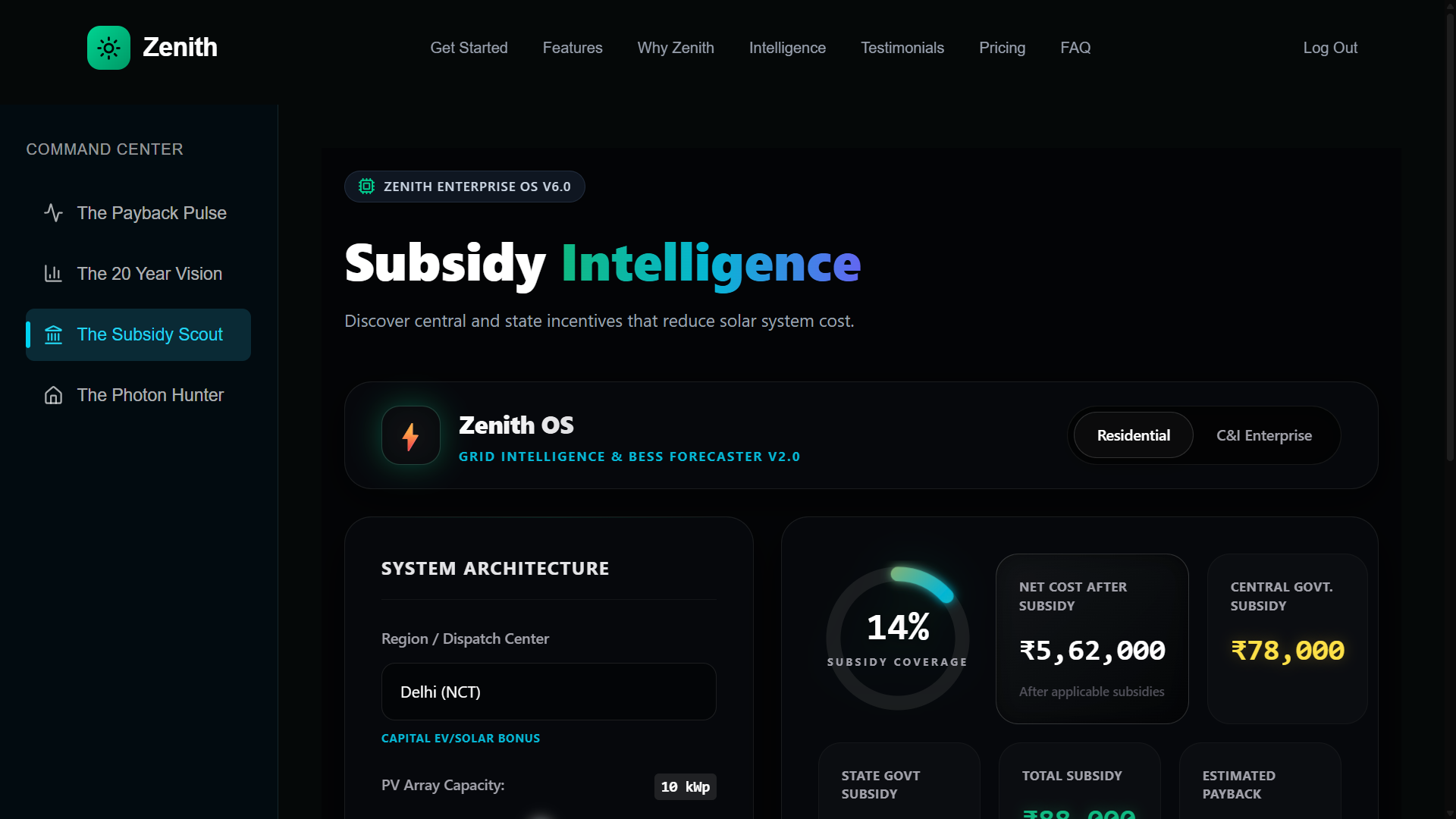
- Applies government subsidies
- Provides AI-generated explanations for decision clarity
Community Intelligence (Lumen Logic + GridGuardian):
- Connects multiple homes into a shared microgrid
- Enables peer-to-peer energy sharing
- Uses optimization algorithms to route energy efficiently
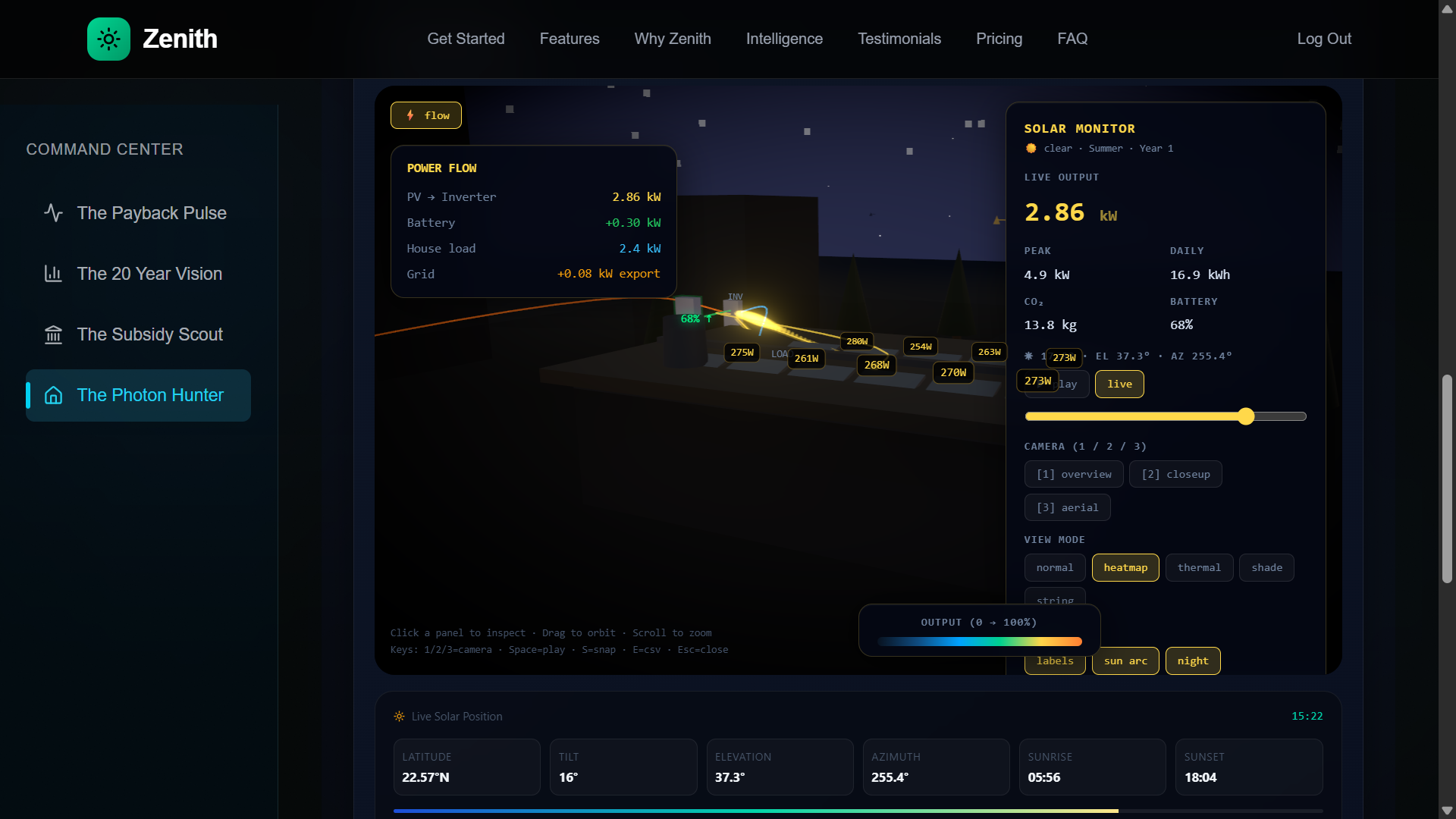
- Visualizes energy flow through the GridGuardian interface
- Minimizes grid dependency and electricity costs
This transforms solar energy from a passive system into an intelligent, adaptive network.
How we built it
Zenith is designed as a modular, full-stack system combining frontend experience, AI reasoning, and mathematical optimization.
Frontend:
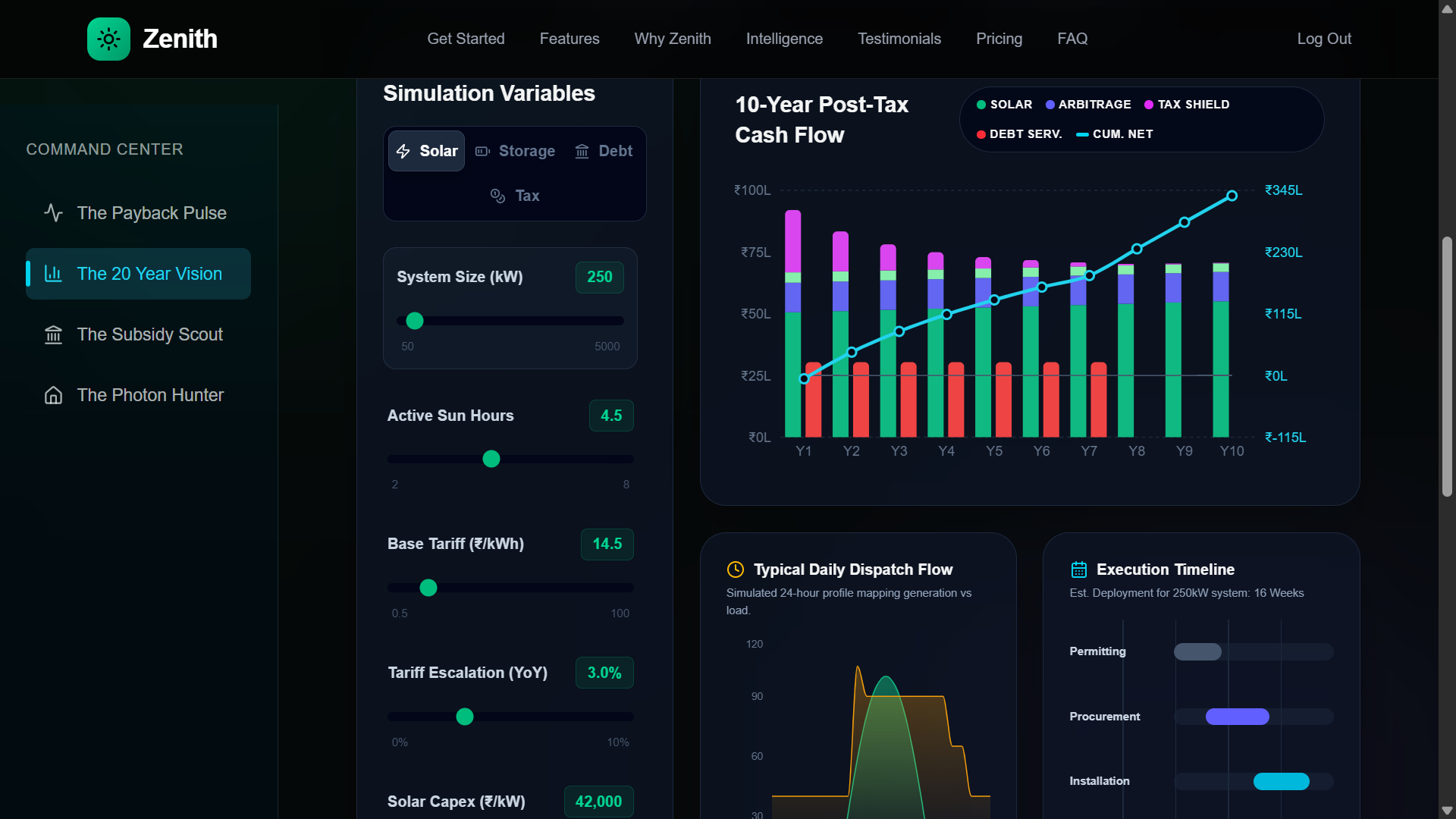
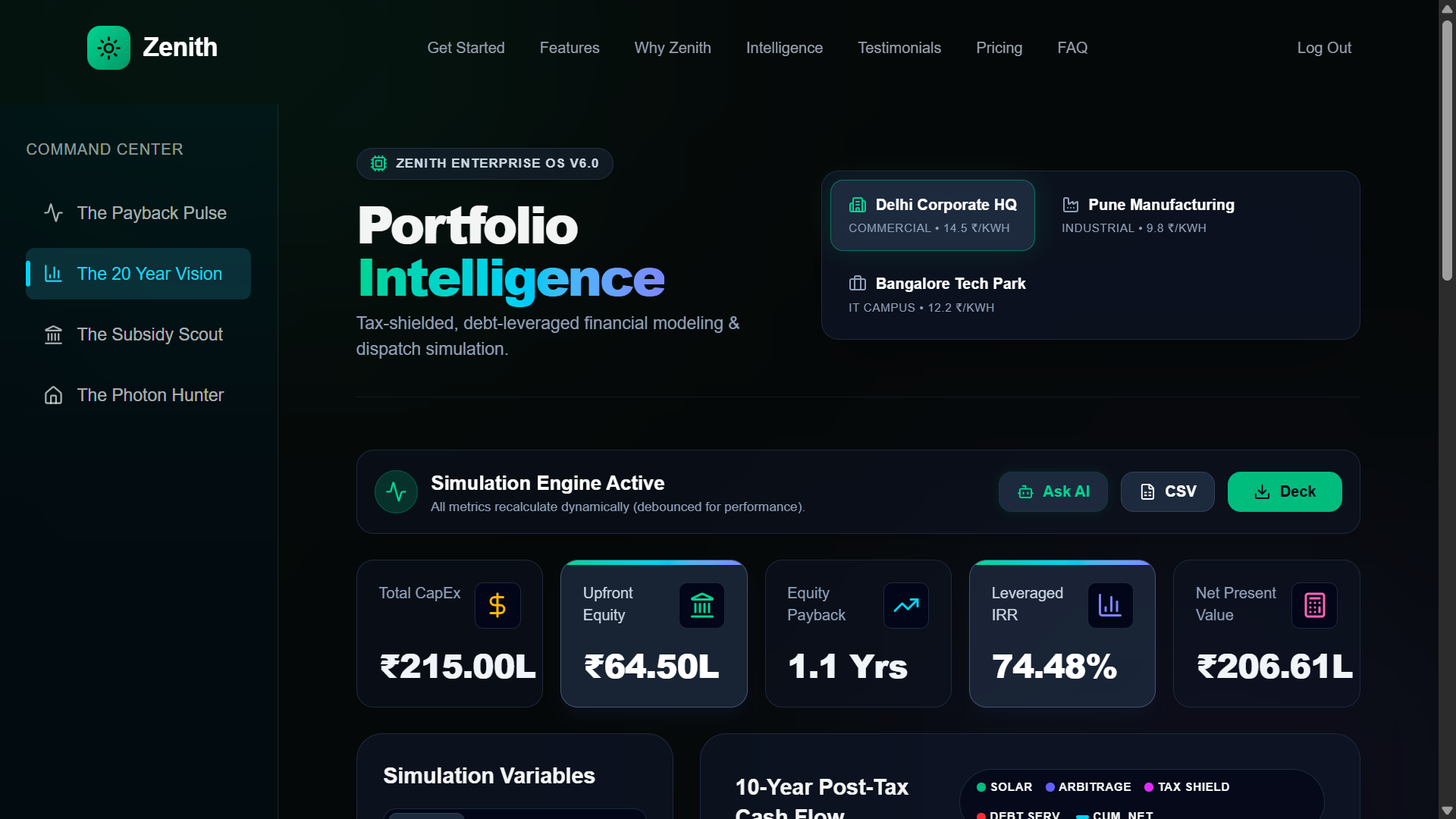
- Next.js + Tailwind CSS
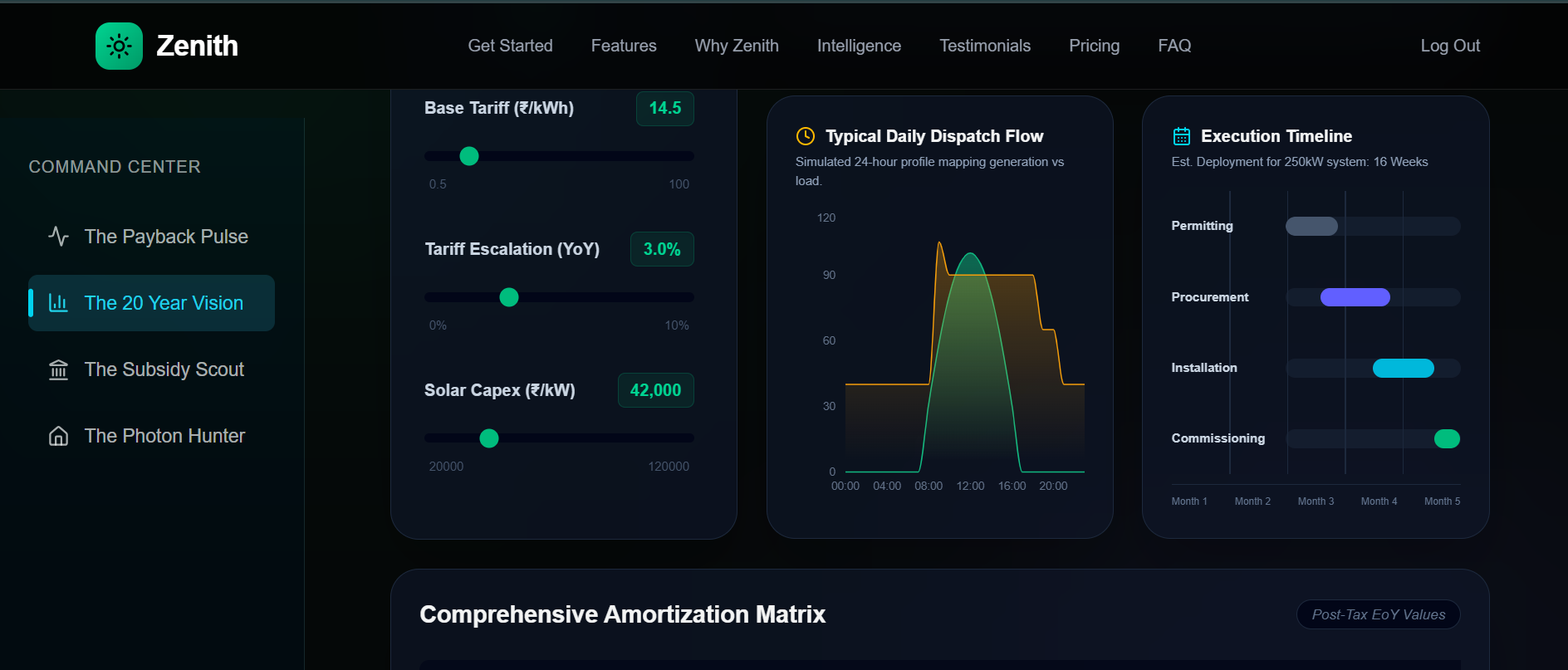
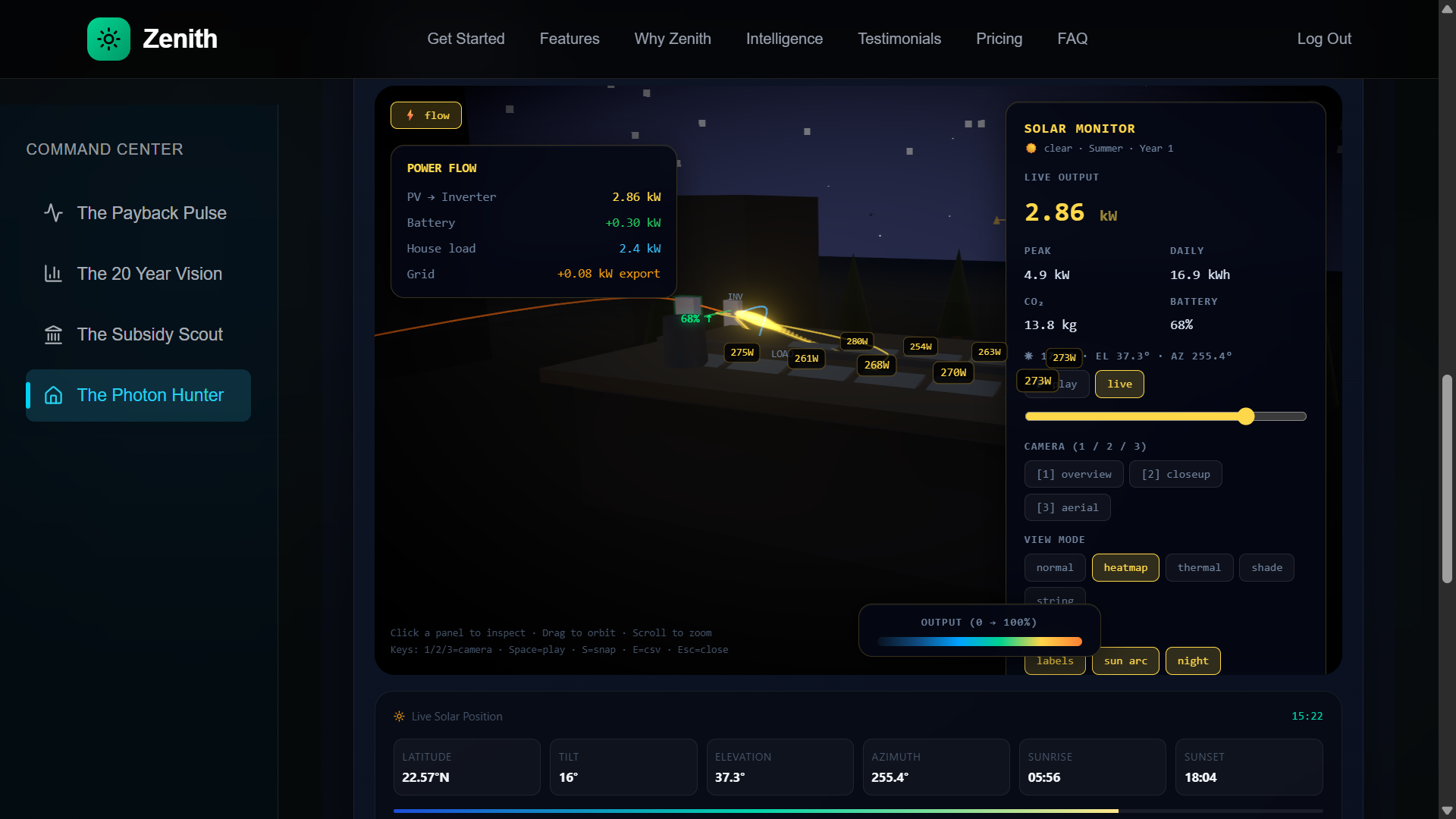
- Interactive dashboard with animated energy flow visualization (GridGuardian)
AI Layer:
- Gemini API for human-readable explanations
- Bill parsing and insight generation
Core Solar Model:
- System sizing and financial calculations based on real-world assumptions
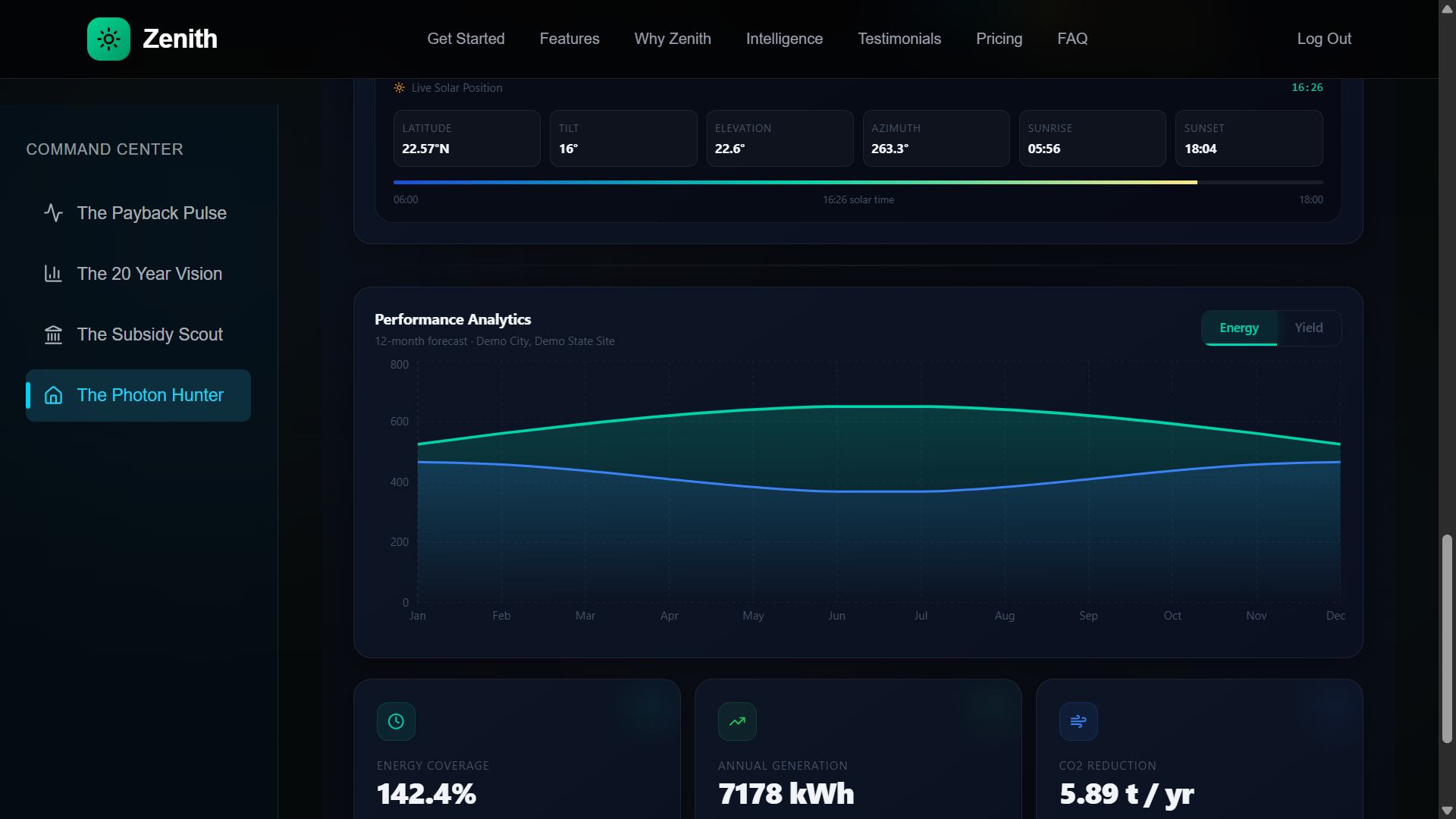
- Outputs include system size, cost, savings, payback period, and lifetime profit
Optimization Engine (Lumen Logic):
- Built using Linear Programming (PuLP)
- Models energy flow between multiple homes
- Minimizes total cost by balancing grid usage and peer-to-peer energy exchange
- Produces measurable outputs like cost savings and efficiency gains
Challenges we ran into
The biggest challenge was bridging two levels of complexity:
- Individual solar feasibility and financial modeling
- Community-level energy optimization
We had to ensure the system remained technically accurate while keeping the interface simple and intuitive.
Another challenge was translating optimization outputs into meaningful, user-friendly insights, which required careful integration of AI explanations with system results.
Accomplishments that we're proud of
- Built an end-to-end solar decision and optimization system
- Implemented a Linear Programming-based microgrid engine
- Created an interactive energy flow visualization (GridGuardian)
- Integrated AI explanations for improved user understanding
- Extended the system from individual analysis to community intelligence
Most importantly, we transformed a fragmented energy process into a unified, intelligent system.
What we learned
We learned that renewable energy is not just an infrastructure problem — it is an intelligence problem.
Without coordination, even efficient systems remain underutilized. By combining optimization models with AI-driven explanations, we can bridge the gap between complex systems and real-world usability.
What's next for Zenith: Decentralized Energy & Microgrid Platform
- Integrate real-time data (weather, consumption, IoT devices)
- Expand microgrid simulation to larger communities
- Improve battery and storage optimization
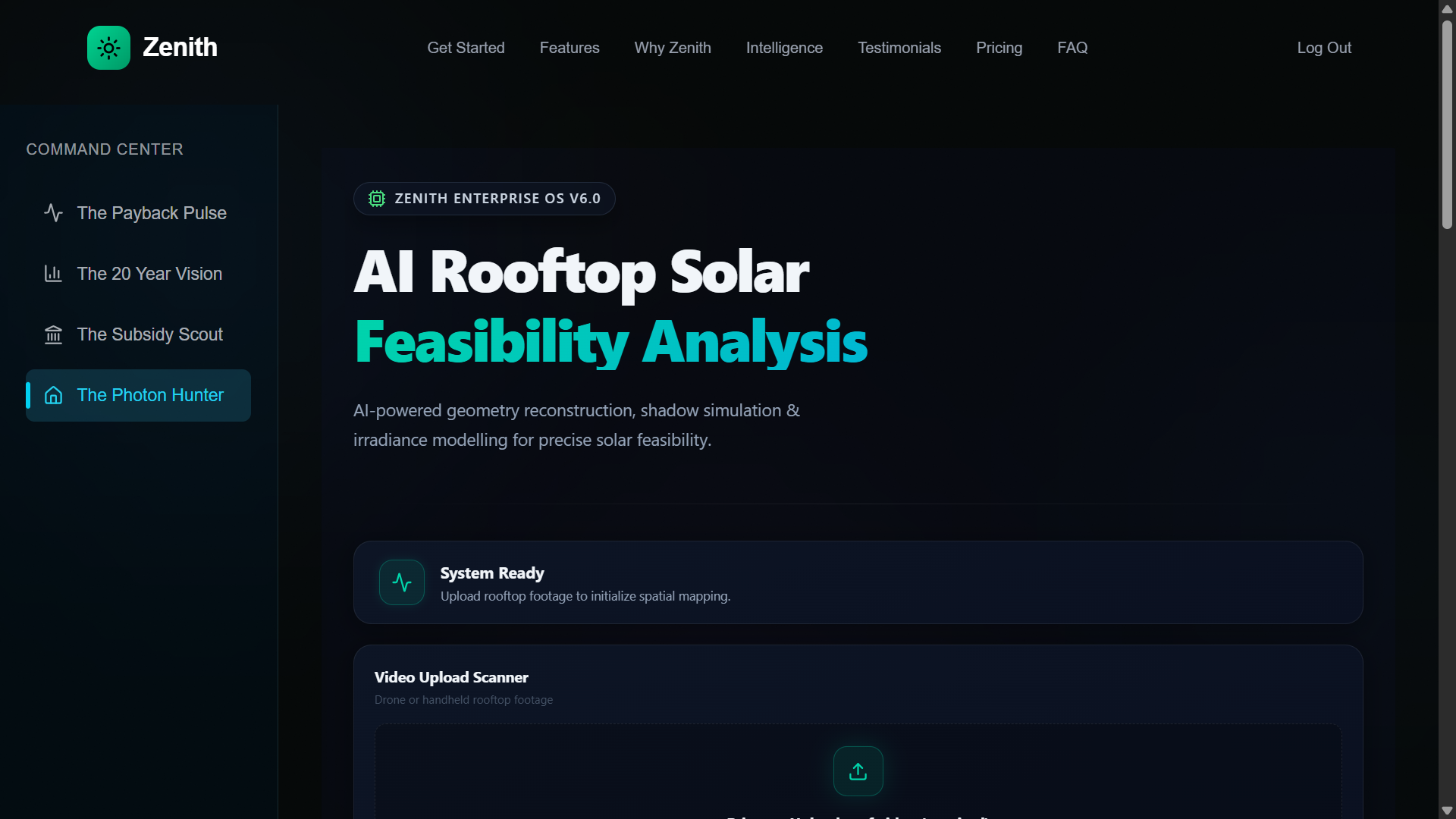
- Enhance rooftop analysis accuracy
- Move toward real-world deployment with smart grid integration
Our long-term vision is to build a scalable decentralized energy platform that powers intelligent, self-sustaining communities.
Built With
- framer-motion
- google-gemini-api
- next.js
- pulp-(linear-programming)
- python
- react
- react-three-fiber
- recharts
- tailwind-css
- three.js
- typescript
- vercel

Log in or sign up for Devpost to join the conversation.