-
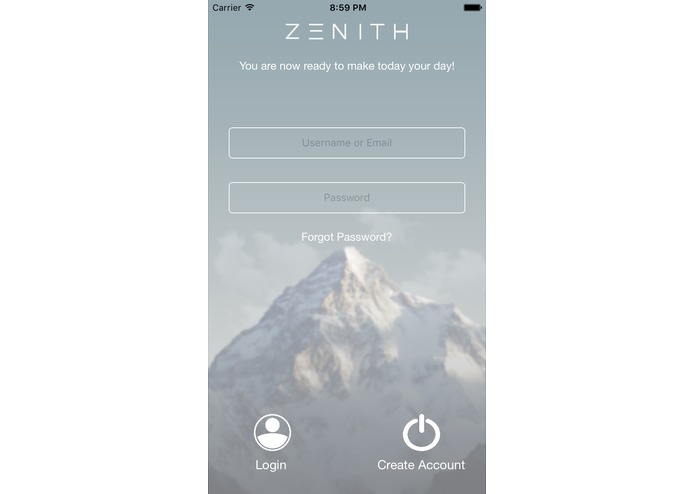
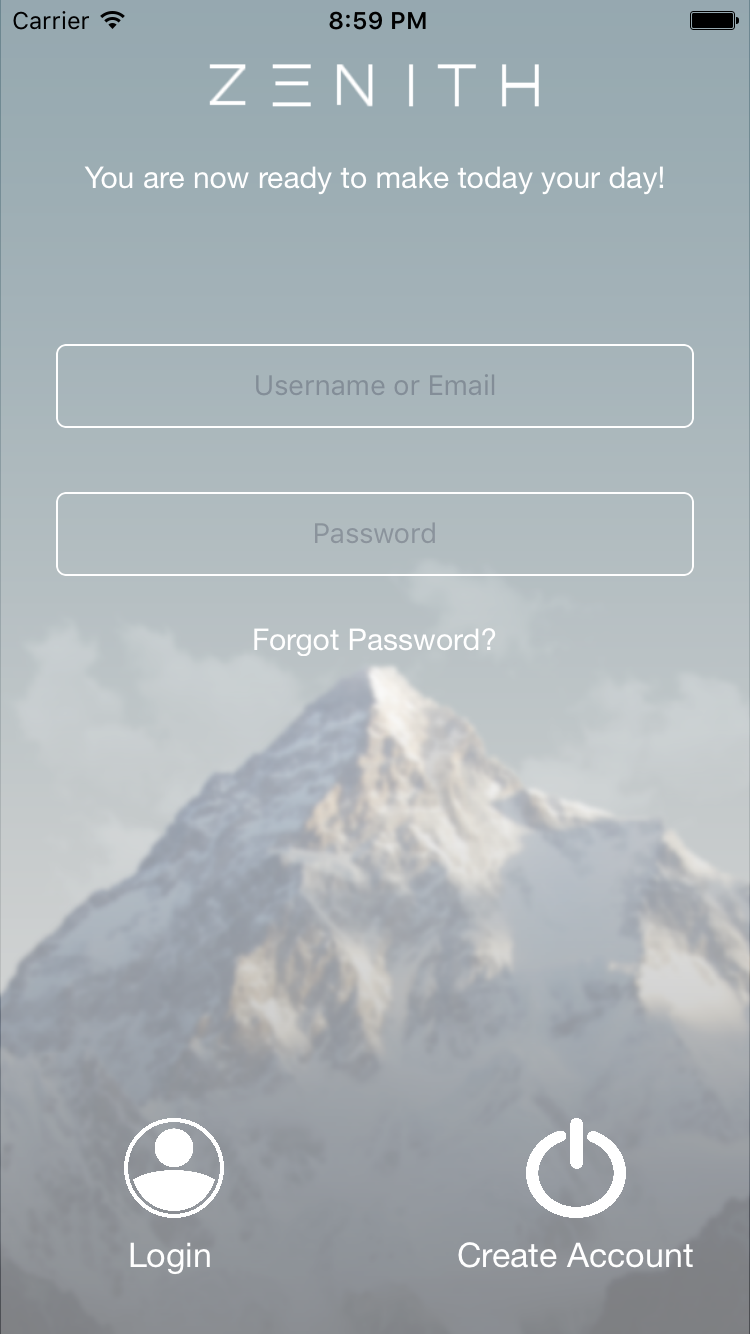
Homepage, including user registration and login.
-
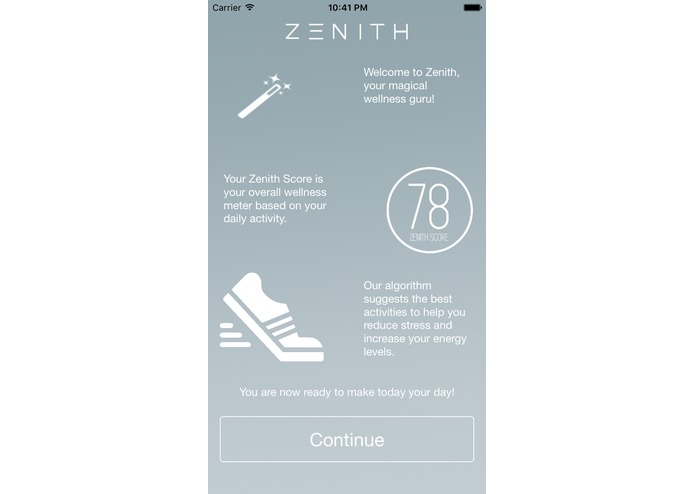
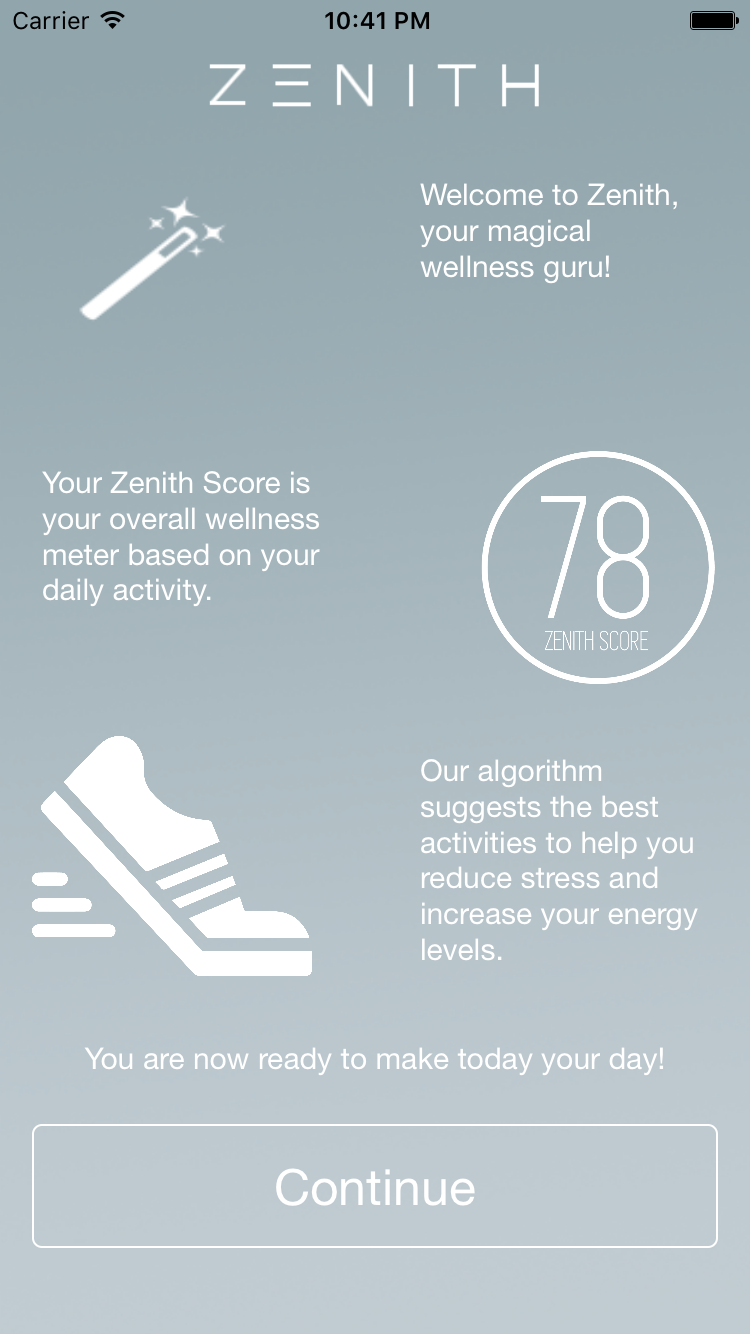
Tutorial, which briefly introduces users to Zenith, their Zenith Score and the activity selection process.
-
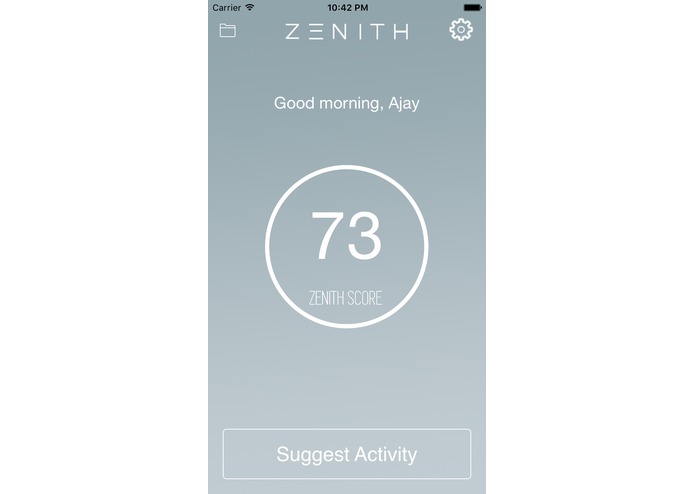
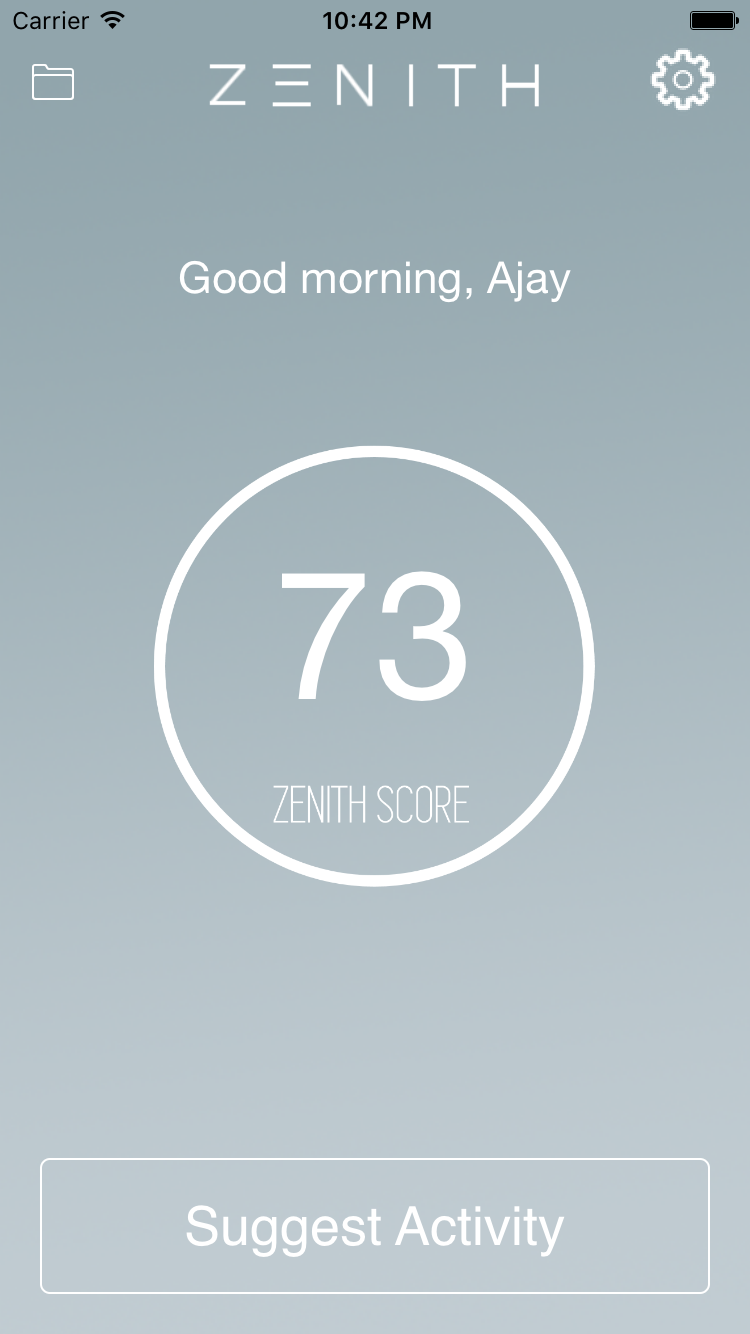
Your Zenith Score, which is your overall wellness meter based on your daily activity.
-
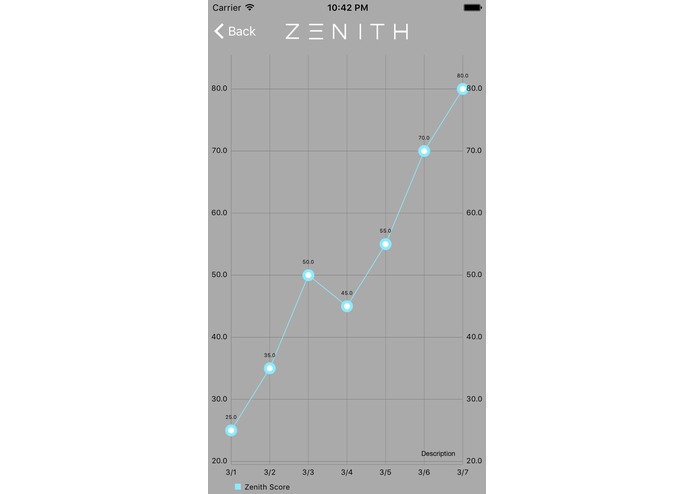
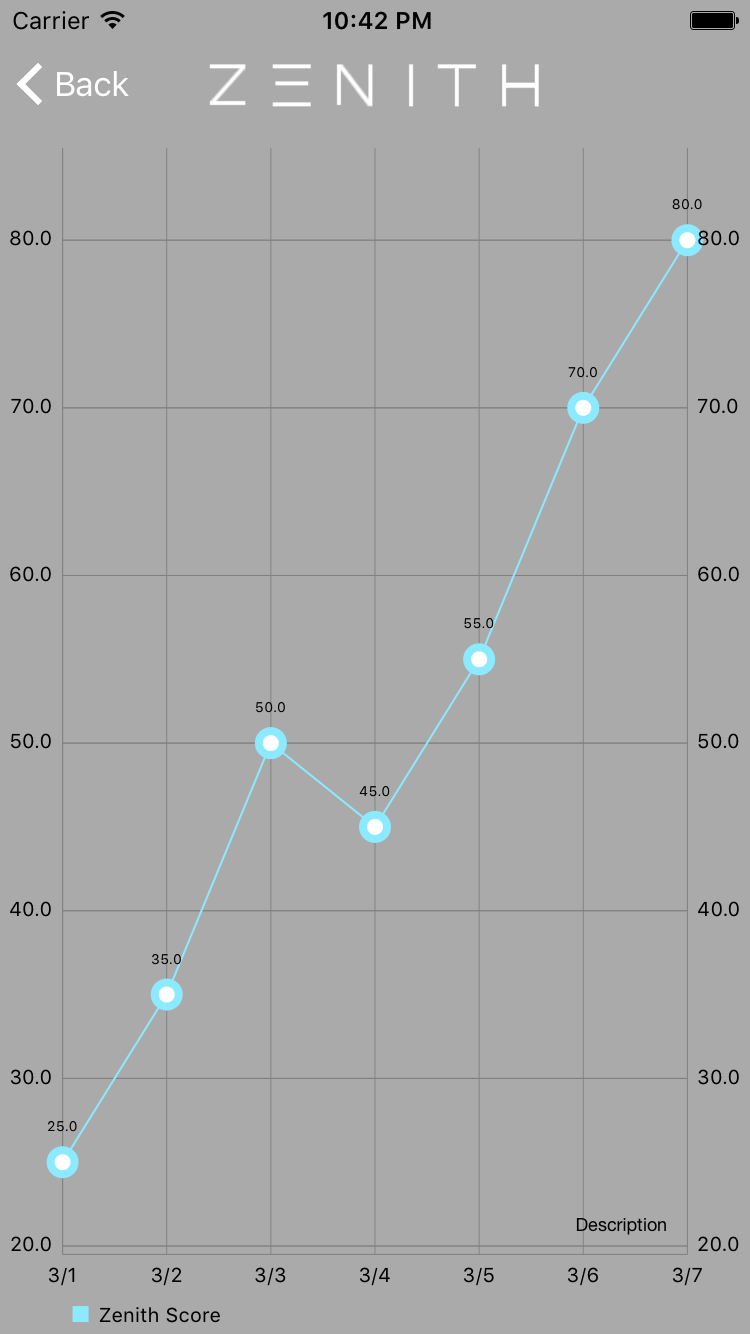
In Depth Data Analytics, which forecasts future scores, stress and wellness levels based on data inputs processed by our algorithm.
-
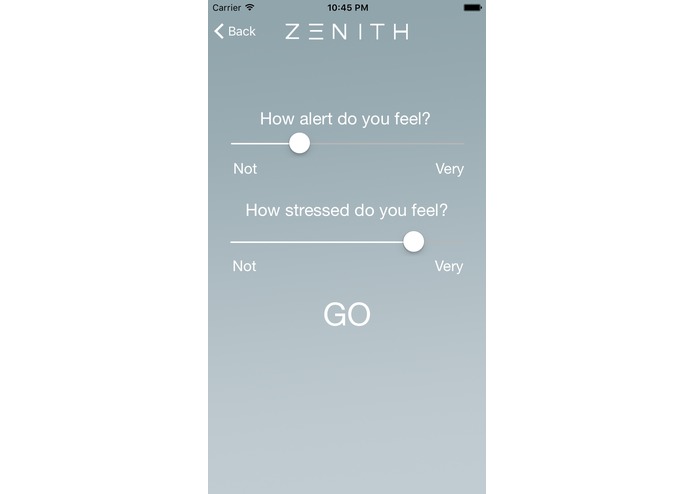
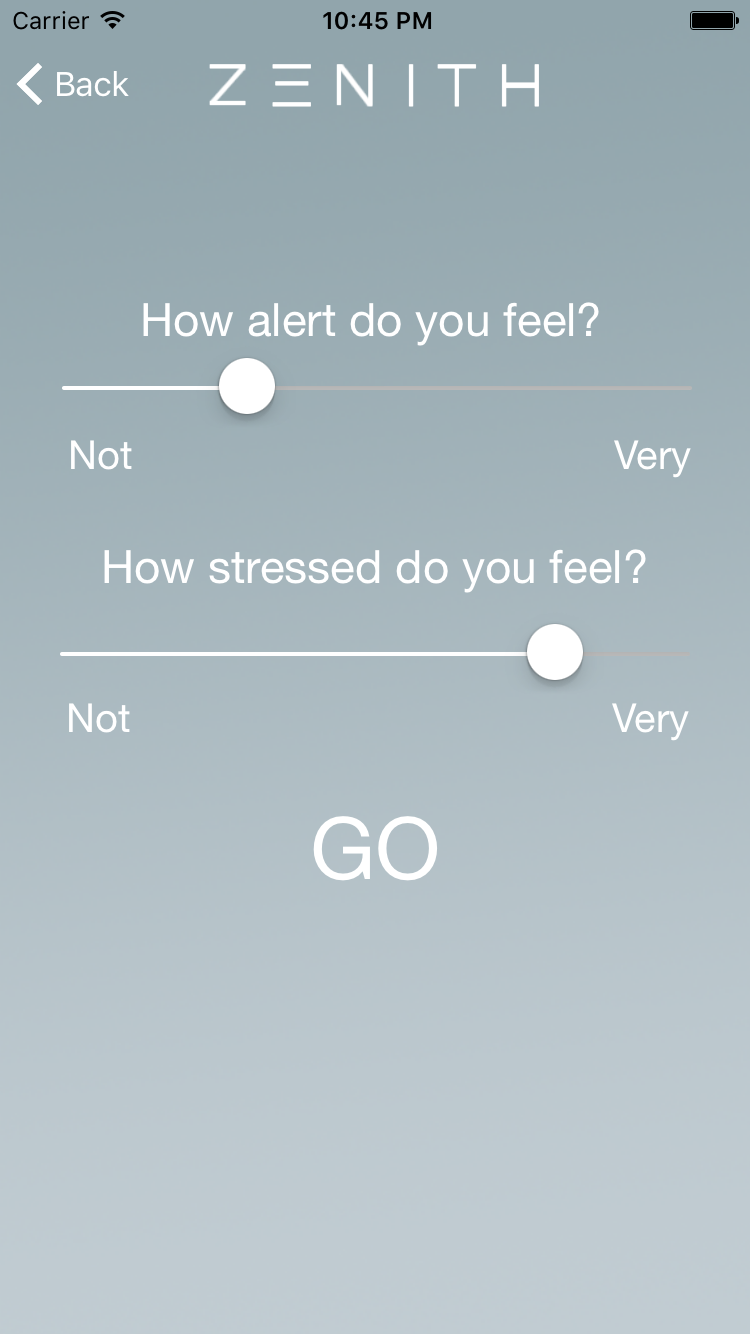
User Reported Data, which is processed by the algorithm along with healthkit on your iphone and any wearables during activity selection.
-
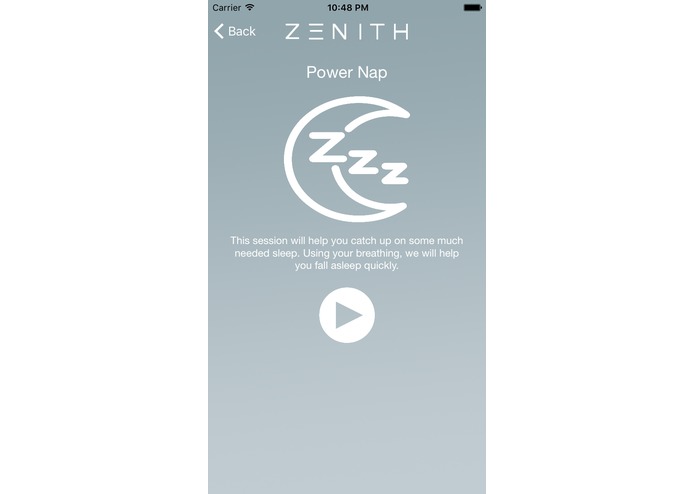
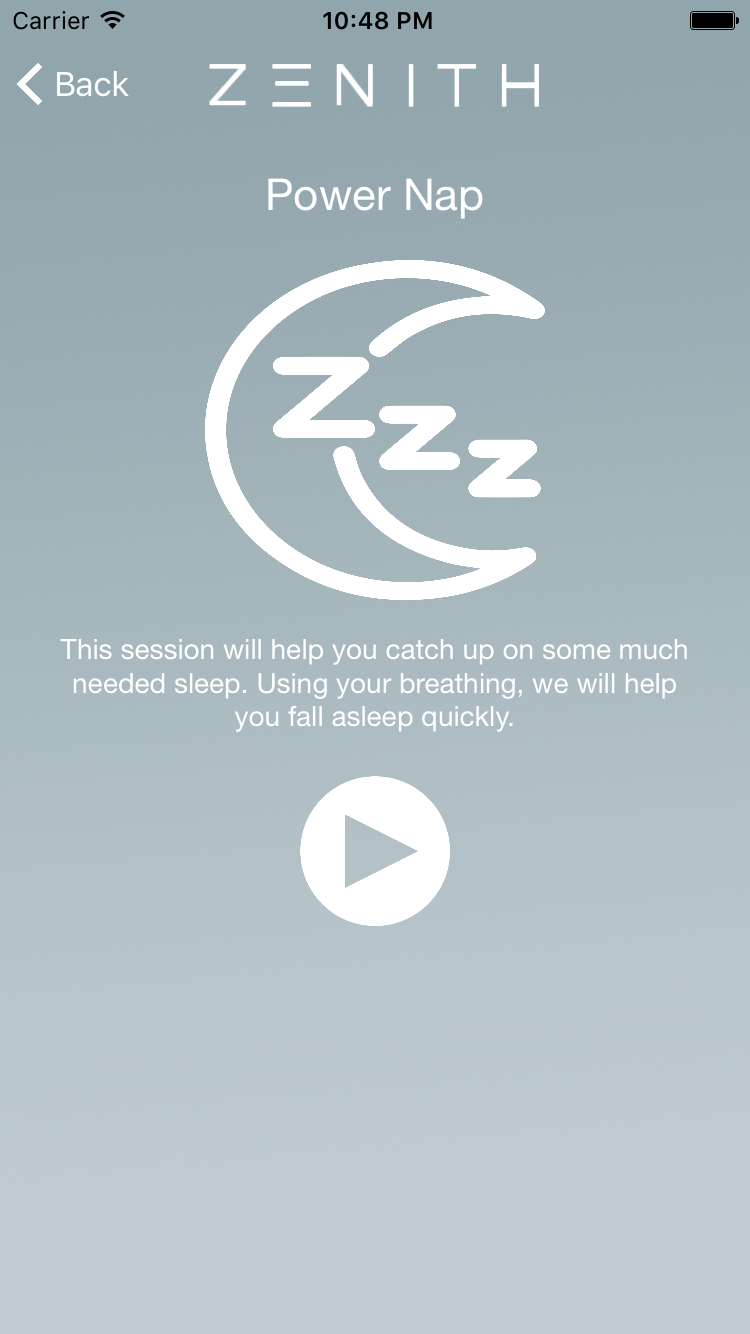
Activity Session, which includes researched guiding audio made by us to lead users through activities in an optimal fashion.
Inspiration
We know people need Zenith because our friends are stressed out of their minds. Stress is everywhere – in people's offices and homes – and we want to help solve it.
What it does
Zenith is a mobile app that analyzes health data to provide personalised action plans that improve users’ well-being. We integrate data from your phone, wearables and user-reported emotion data to predict future well-being and suggest the activity that will best reduce stress and increase mental alertness. Example activities include: guided meditation, stretching, aerobics, power nap, reading (we’ve got a list of 20). Users complete the activity by following our guiding audio track. Over time, Zenith’s feedback loop adapts the algorithm to respond to what activities work best for each individual user. The algorithm is also used to forecast future scores, stress and energy levels providing more in-depth data analytics.
At HackPrinceton, we built the entire backend algorithm and almost all of the key features of the app. We did start designing and implemented a few, much more rudimentary features over the past couple of months.
Zenith's unique value proposition
At the moment, when people want to relieve stress, people just choose ad-hoc activities, staying with what they already know how to do. Zenith applies data analysis bringing science to help people make the best choices, and it provides audio content to guide them through it. Unlike existing solutions targeting stress or physical fitness, Zenith uses the body to eliminate stress and fatigue in the mind.
How we built it
The algorithm designed was based on discussions with Professors in the Princeton Molecular Biology Department and Neuroscience Institute as well as the independent study of a number of research papers in the field. We then coded the entire iOS app in Swift with some Objective C and C. We recorded tailored audio in house based on our research. We worked through numerous design mockups to make the UI as flawless as possible.
What's next for Zenith
We will submit to Apple later today (3 April 2016). We are then planning to hustle to get as many users as possible next week. We will then push an update with new features that users want based on our market research insights. This may involve improving our algorithm as well as a bird’s-eye-view web dashboard. We also hope to build our enterprise dashboard by the middle of the month so that we can launch our agreed partnership with the Princeton HR department towards the end of April. We will be focusing on the following methods to accelerate growth:
Early adoption on Princeton campus to get evidence that our system works. To reach wider markets, online marketing and promotion through health influencers' blogs.
We are reaching out to Princeton alums to break into the enterprise market. We will first start with individual teams, then expand across whole businesses.
To accelerate growth, we are designing social gamification features, such as Zenith score leaderboards.
Accomplishments that we're proud of
We are really proud to have create a market ready product that will start to make a difference in peoples' lives next week! We are also pleased with the accuracy and sophistication of the algorithm. Finally, we worked really hard to design the perfect UI and are very happy with the final product.
Challenges we ran into
Modelling and forecasting future health is tricky. However, our research and discussions with Professors in the Princeton Molecular Biology Department and Neuroscience Institute helped us to bring real science to mental wellness.
What we learned
We learnt so much, which is always one of our key aims at any hackathon. Mostly, we realised that making the UI sleek takes a lot of iterations, which take time to implement.

Log in or sign up for Devpost to join the conversation.