-
-
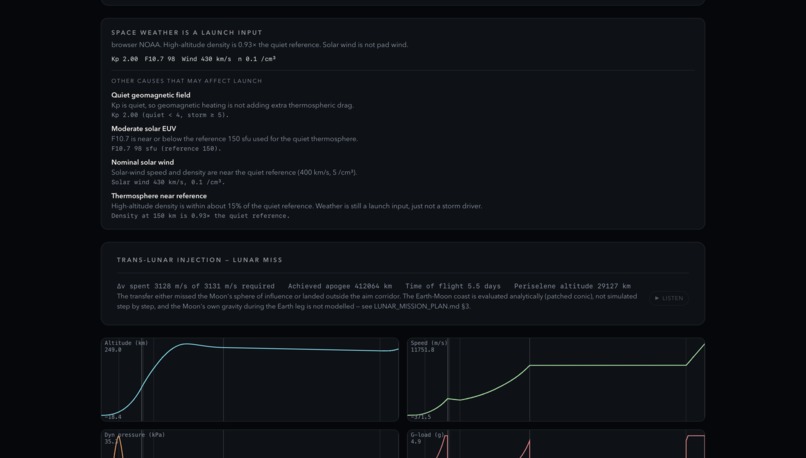
Post mission analytics
-
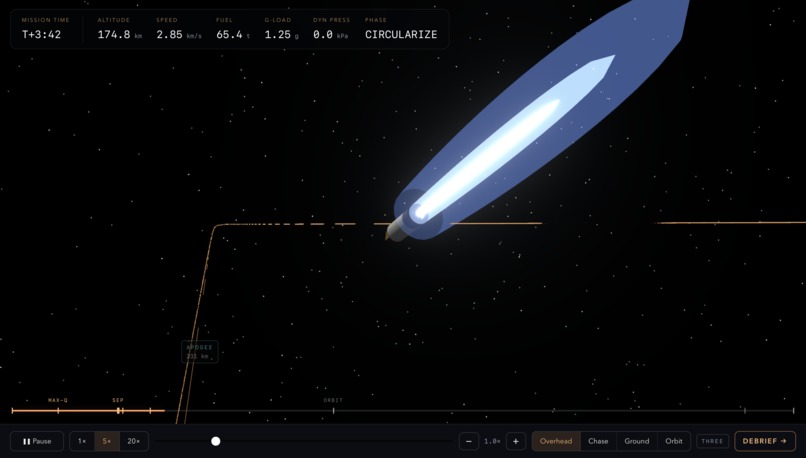
Second booster
-
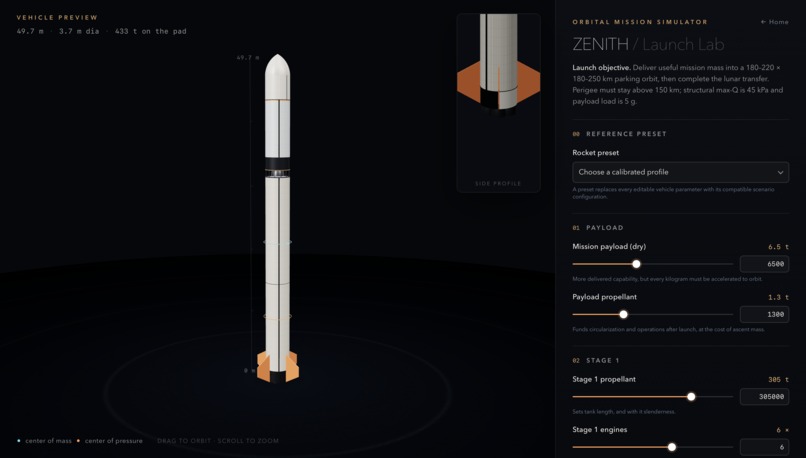
Rocket design lab
-
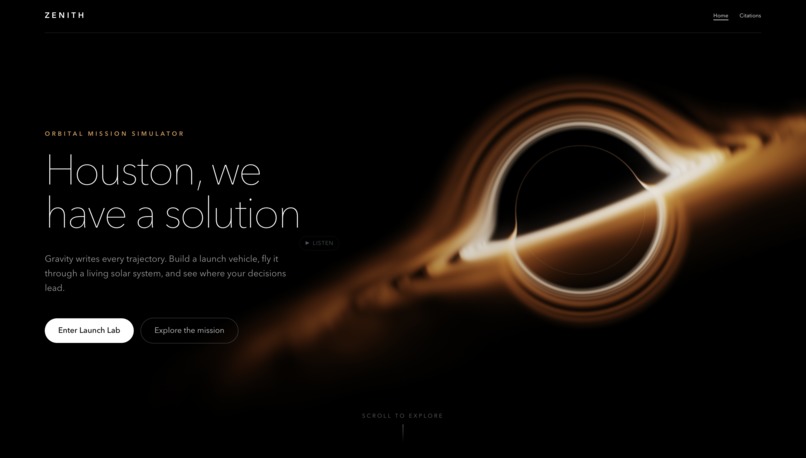
Landing page
-
Liftoff
-
Rocket launch
Inspiration
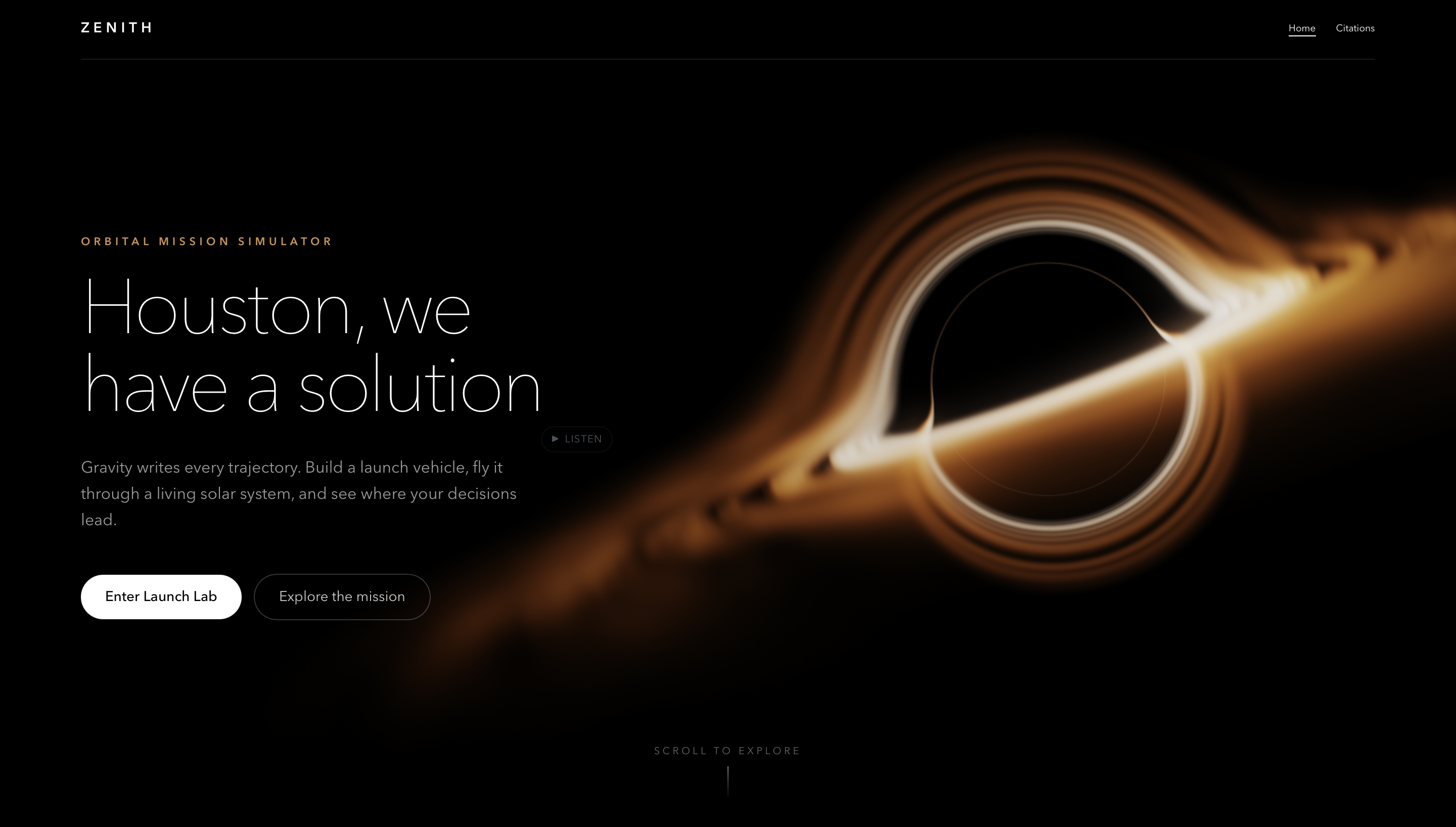
Zenith was inspired by the gap between learning rocket science and actually feeling the tradeoffs behind a launch. We wanted to turn orbital mechanics, vehicle design, weather, and mission planning into something interactive and visual instead of a static calculation.
What it does
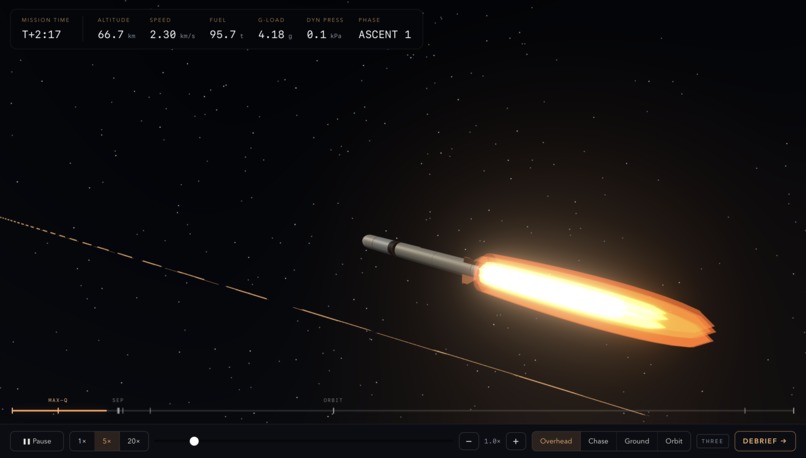
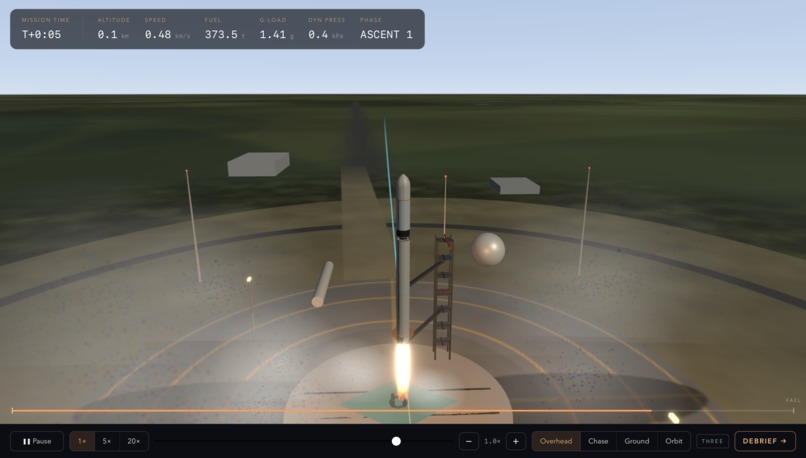
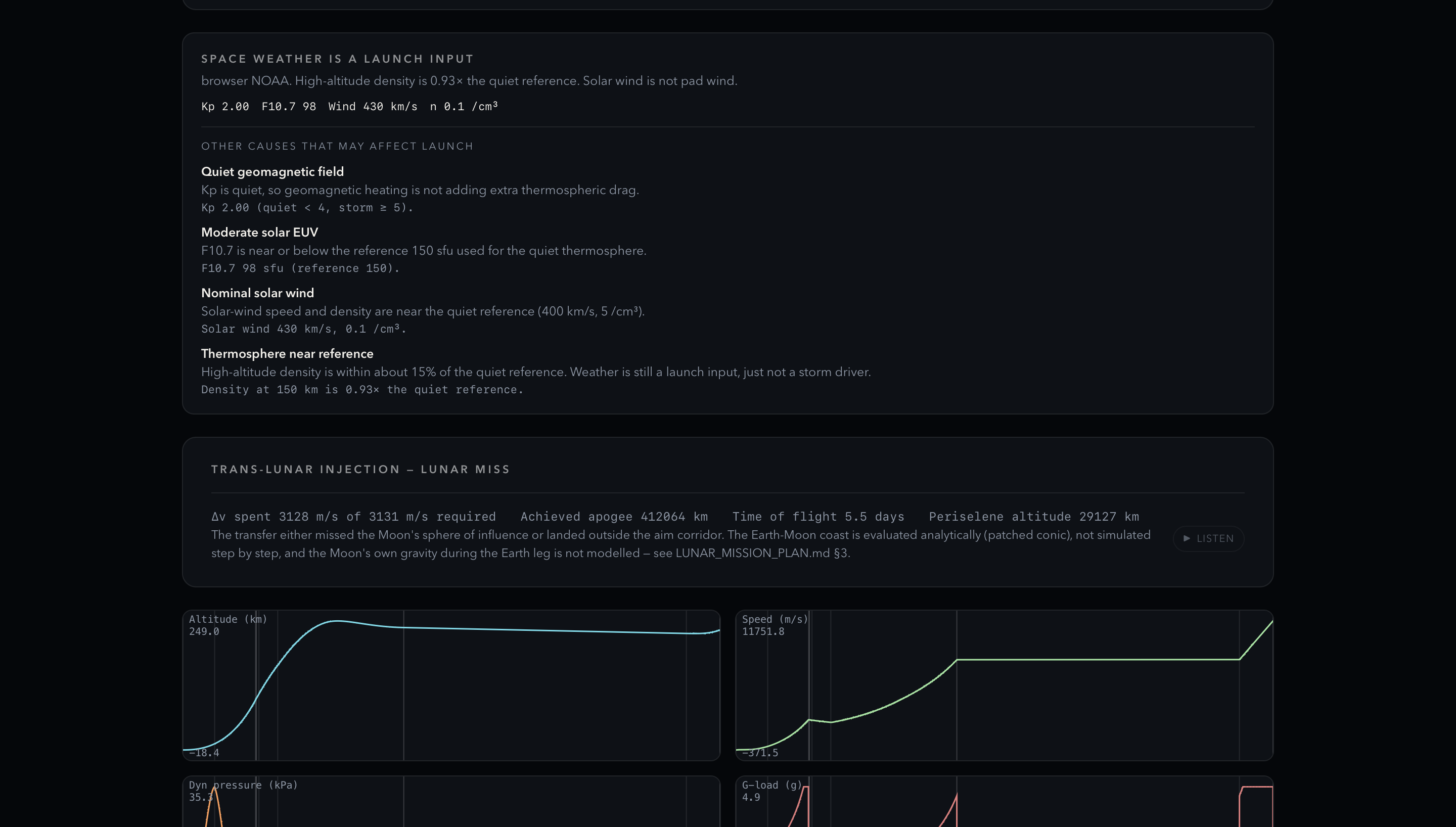
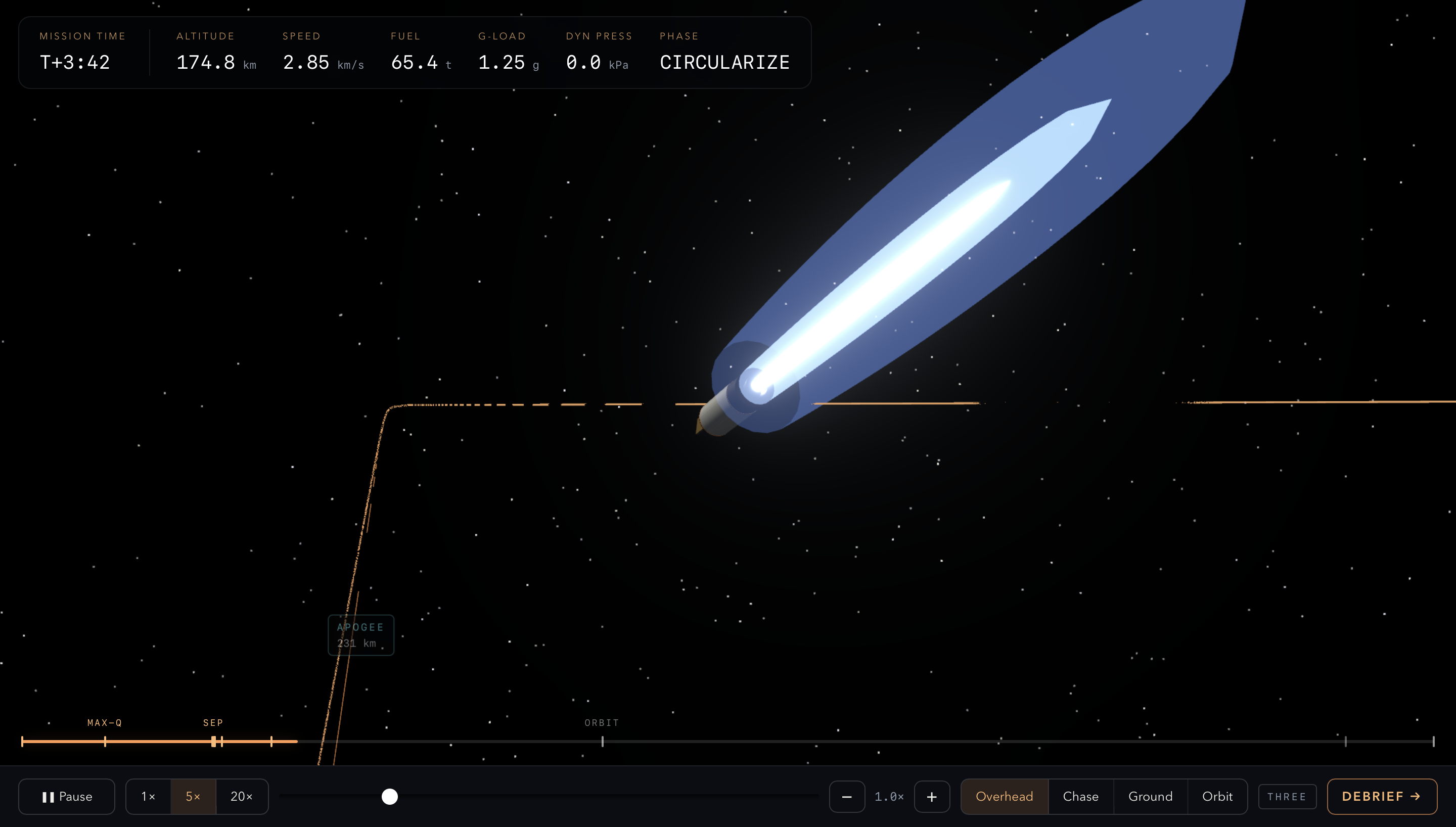
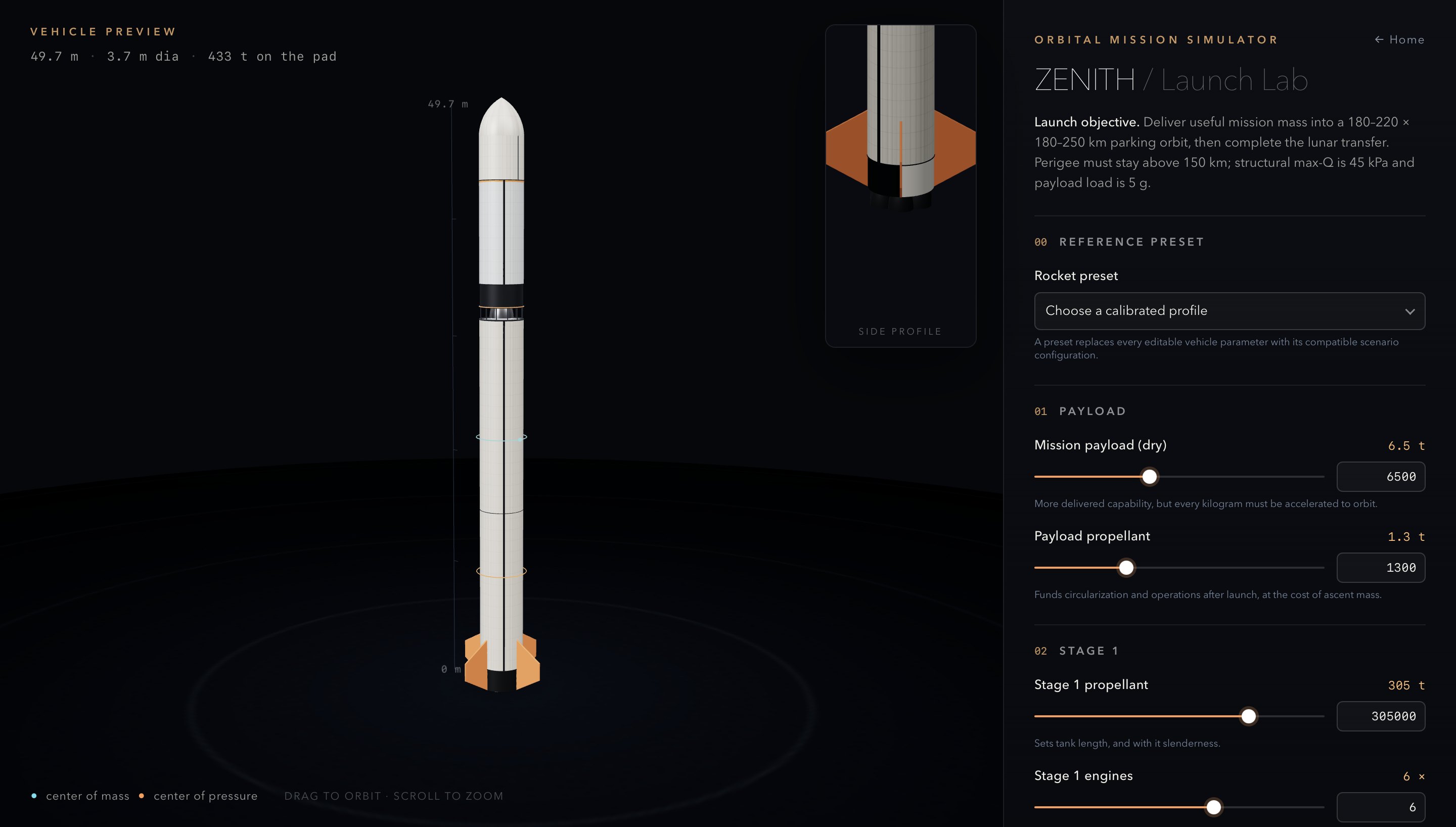
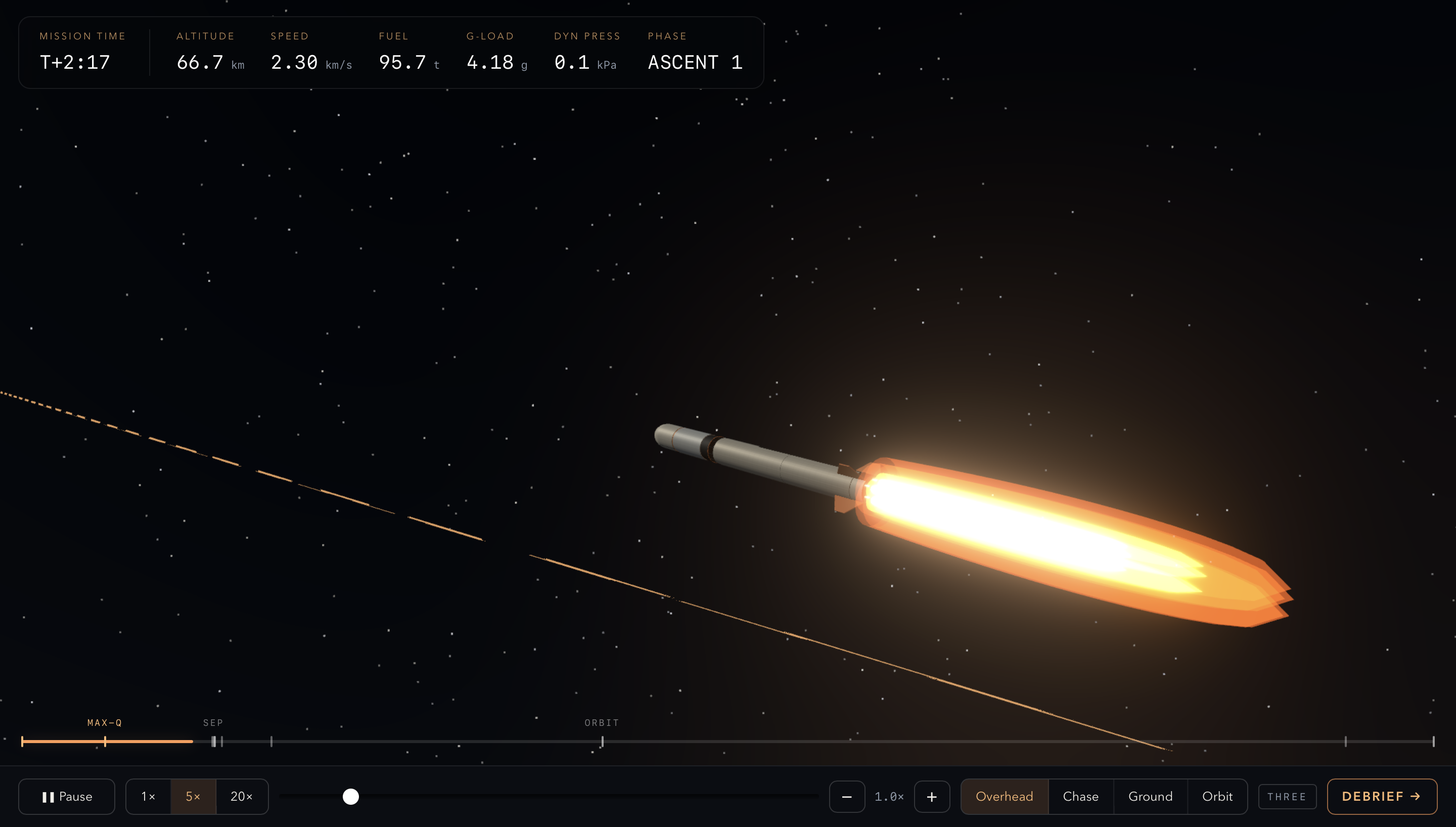
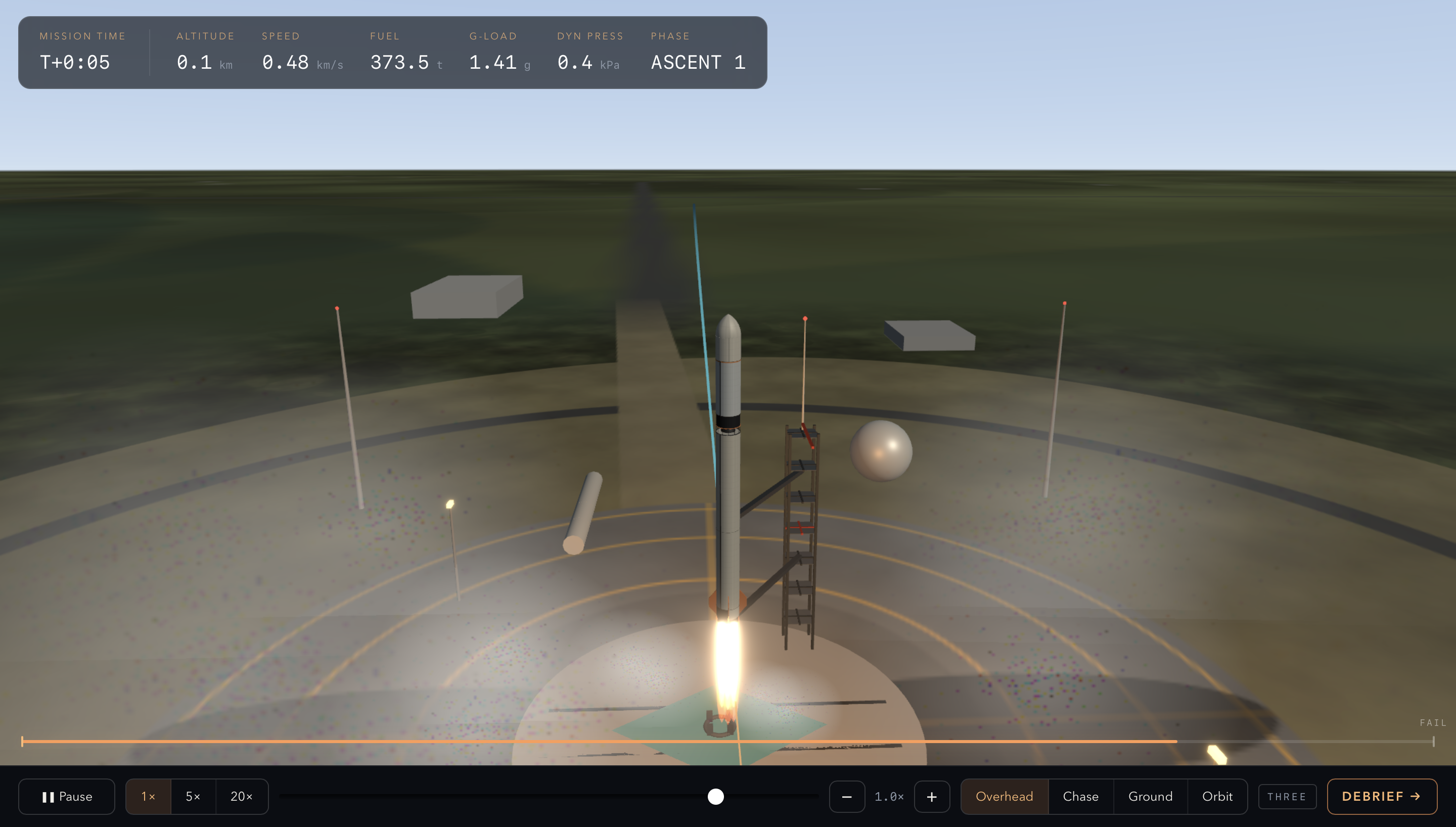
Zenith is a launch mission simulator where players design a rocket, choose engines and fuel loads, and attempt to deliver a payload to orbit and beyond. It simulates ascent, staging, flight conditions, orbital outcomes, and mission success. Players can watch the result through an interactive 3D launch view, explore telemetry, and review a post-flight debrief.
How we built it
We built Zenith as a TypeScript and React web app with a physics-driven simulation layer. The interface uses Three.js for the default real-time flight visualization, with an optional Unity WebGPU renderer for a more immersive launch view.
The simulator models vehicle mass, thrust, drag, atmospheric ascent, staging, orbital mechanics, mission constraints, and weather inputs. We also built playback controls, camera modes, mission analysis, narration, persistence, and a debrief experience that explains what happened during a launch.
Challenges we ran into
The biggest challenge was making the simulation feel understandable without hiding the real tradeoffs. Rocket design involves interconnected variables, so changing payload mass or engine count can affect thrust, drag, fuel use, stability, trajectory, and final orbit.
We also ran into a difficult Unity loading issue. React development behavior could start overlapping Unity player loads, causing duplicate canvases and conflicting callbacks. We added cancellation and lifecycle protection so the renderer now starts once and cleans up safely.
## Accomplishments that we're proud of
We are especially proud of:
- A simulation-backed rocket design experience
- Interactive flight playback with telemetry and camera controls
- Mission outcomes that connect launch decisions to orbital consequences
- A clear debrief flow that turns failures into learning opportunities
- A working optional Unity WebGPU renderer alongside the Three.js fallback
- A responsive interface that makes technical concepts approachable
What we learned
We learned that good educational simulations need to balance accuracy, feedback, and clarity. Realistic physics alone is not enough if users cannot understand why a mission succeeded or failed.
We also learned how important renderer lifecycle management is when integrating a large engine like Unity into a React application. Async loading, browser GPU support, cleanup, and shared callbacks all need careful handling.
## What's next for Zenith
Next, we want to expand Zenith with more mission types, more detailed launch environments, additional celestial destinations, and richer vehicle customization. We also want to improve the debrief system with clearer recommendations, compare multiple launch attempts, and add collaborative or competitive mission planning. Long-term, Zenith could become a hands-on way for students, educators, and space enthusiasts to experiment with the systems thinking behind real spaceflight.
Why we fit in OPEF's track
Environmental Problem: Rocket launches create environmental tradeoffs through fuel emissions, atmospheric pollution, noise, and discarded stages. However, these impacts are difficult for students and early-stage propulsion teams to evaluate before conducting expensive physical tests. Environmental Intelligence: Zenith analyzes launch conditions and vehicle telemetry, including fuel type, propellant consumption, atmospheric density, altitude, flight path, engine efficiency, and staging events. It uses these signals to estimate where emissions occur throughout the atmosphere and how different rocket configurations change a mission’s environmental footprint. Technology: We built a physics-based simulation engine that models thrust, drag, gravity, changing vehicle mass, fuel consumption, staging, and orbital trajectories. An AI-assisted debrief interprets the simulation’s telemetry and identifies inefficient burns, excessive propellant use, and alternative configurations that could accomplish the same mission with less fuel and fewer emissions. What We Built: During the hackathon, we built an interactive mission simulator where users design a rocket, select engines and propellants, configure stages and payloads, and observe the complete launch in 3D. After each flight, Zenith presents telemetry, orbital results, estimated fuel consumption, mission success, and an environmental-efficiency debrief. Impact: Zenith enables aspiring engineers and small propulsion teams to compare designs before building or launching them. It helps users answer a practical environmental question: Which rocket configuration can complete the mission while using the least fuel and producing the lowest estimated environmental impact?
Built With
- c#
- css
- eslint
- fastapi
- html
- javascript
- lygia
- playwright
- python
- react
- typescript
- unity
- uvicorn
- vite
- webgl
- webgpu


Log in or sign up for Devpost to join the conversation.