Inspiration
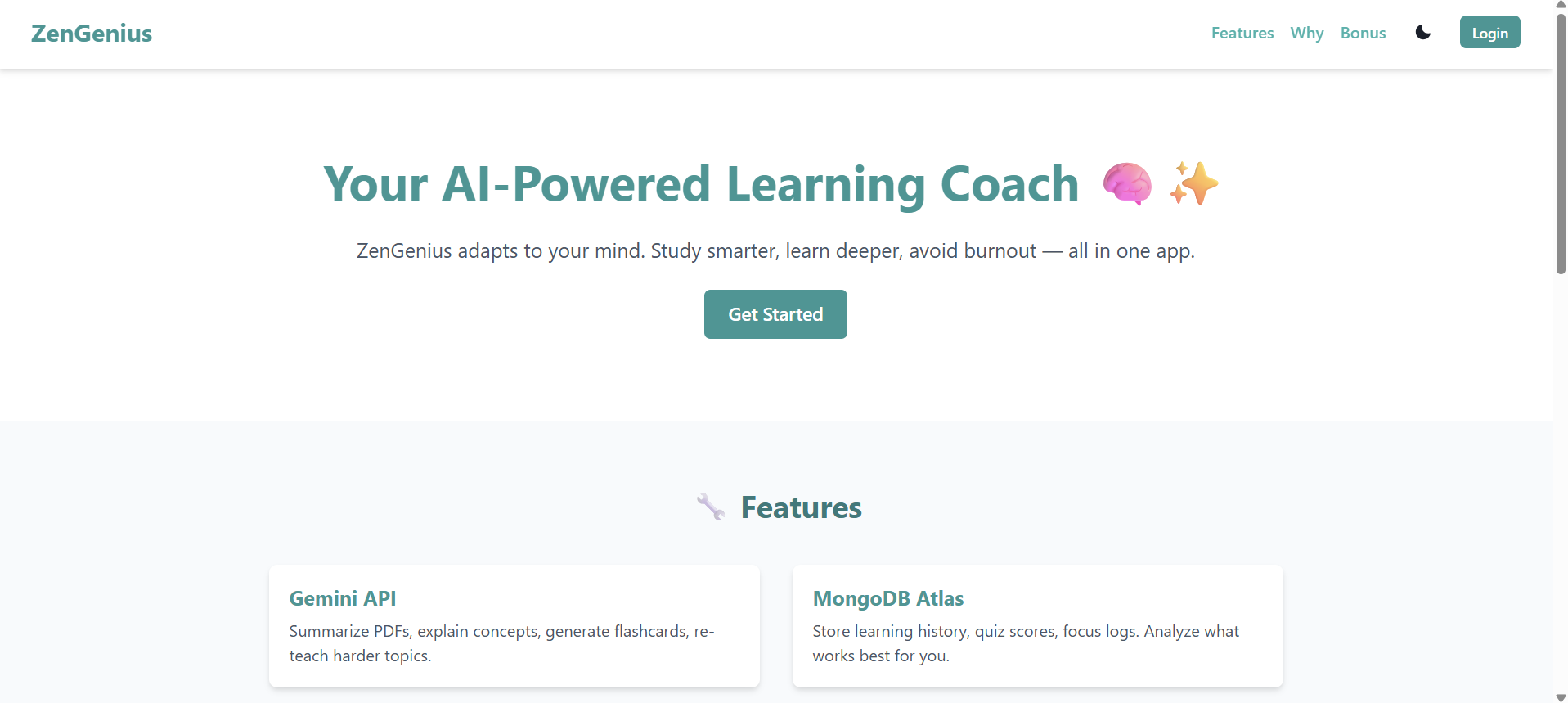
In a world filled with overwhelming amounts of information and distractions, we wanted to create a tool that not only makes studying more efficient, but also more engaging. Our inspiration came from a simple yet powerful idea: turn passive reading into active learning. We imagined a world where students could upload lecture PDFs, instantly generate key takeaways and quiz questions, and actually enjoy their revision process.
That dream became our hackathon project: ZenGenius.
What We Built:
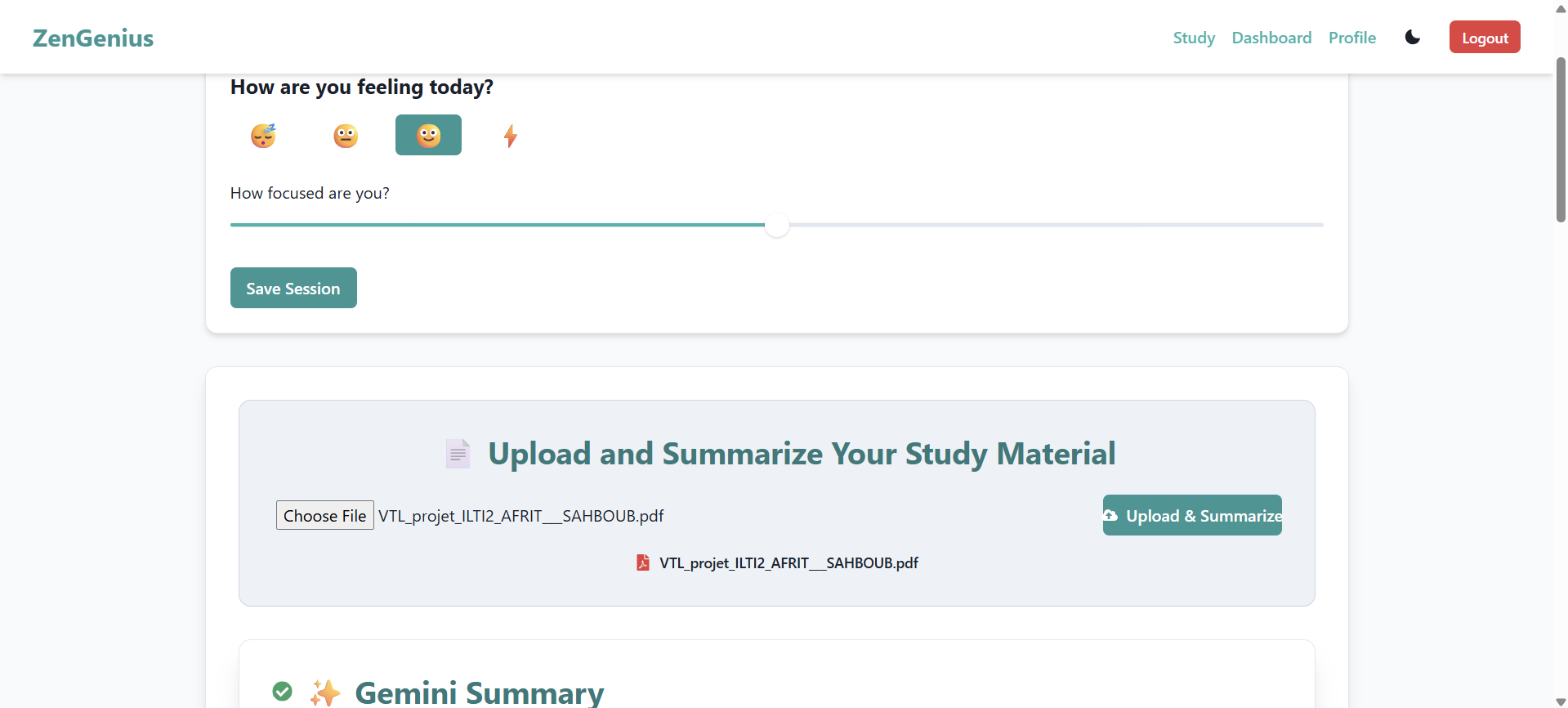
ZenGenius is a full-stack study tool powered by generative AI that allows users to: -Upload a PDF (e.g. a lecture or textbook)
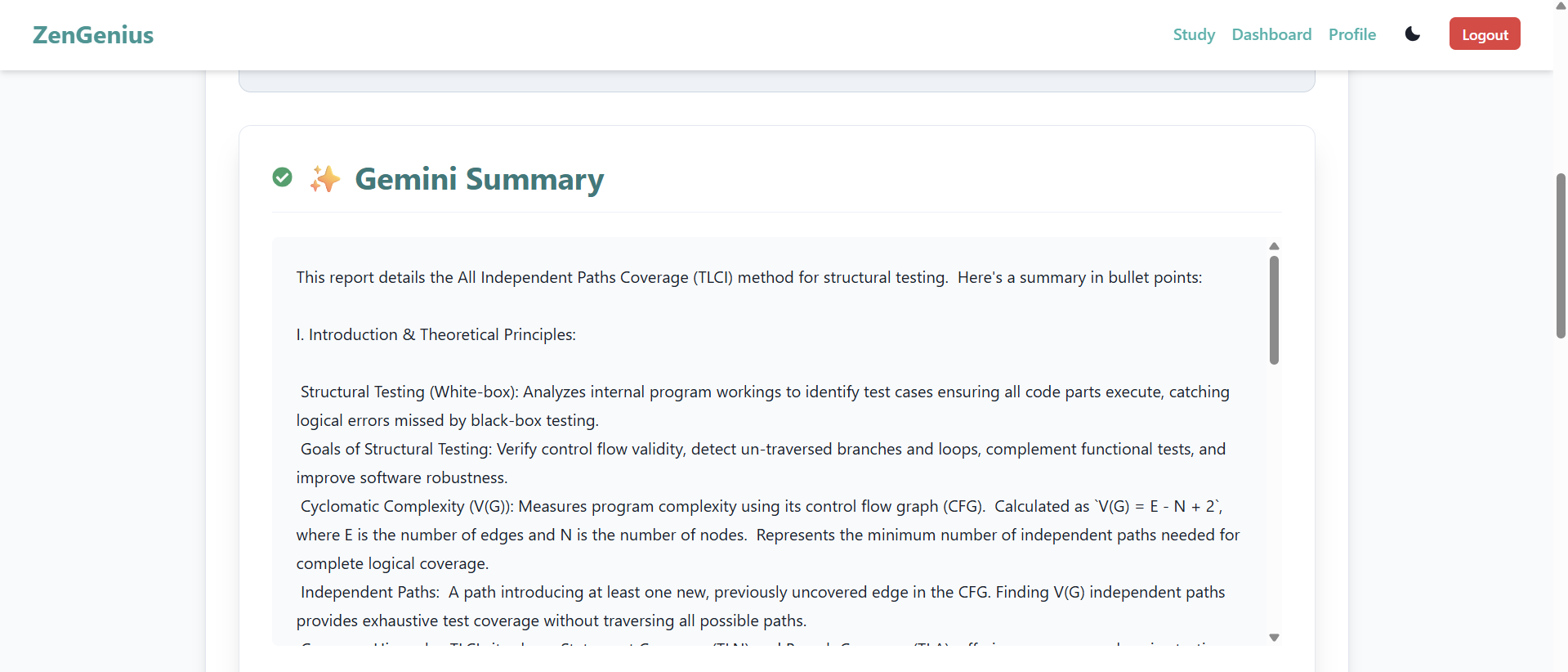
- Automatically summarize the content using Google’s gemini-1.5-flash model
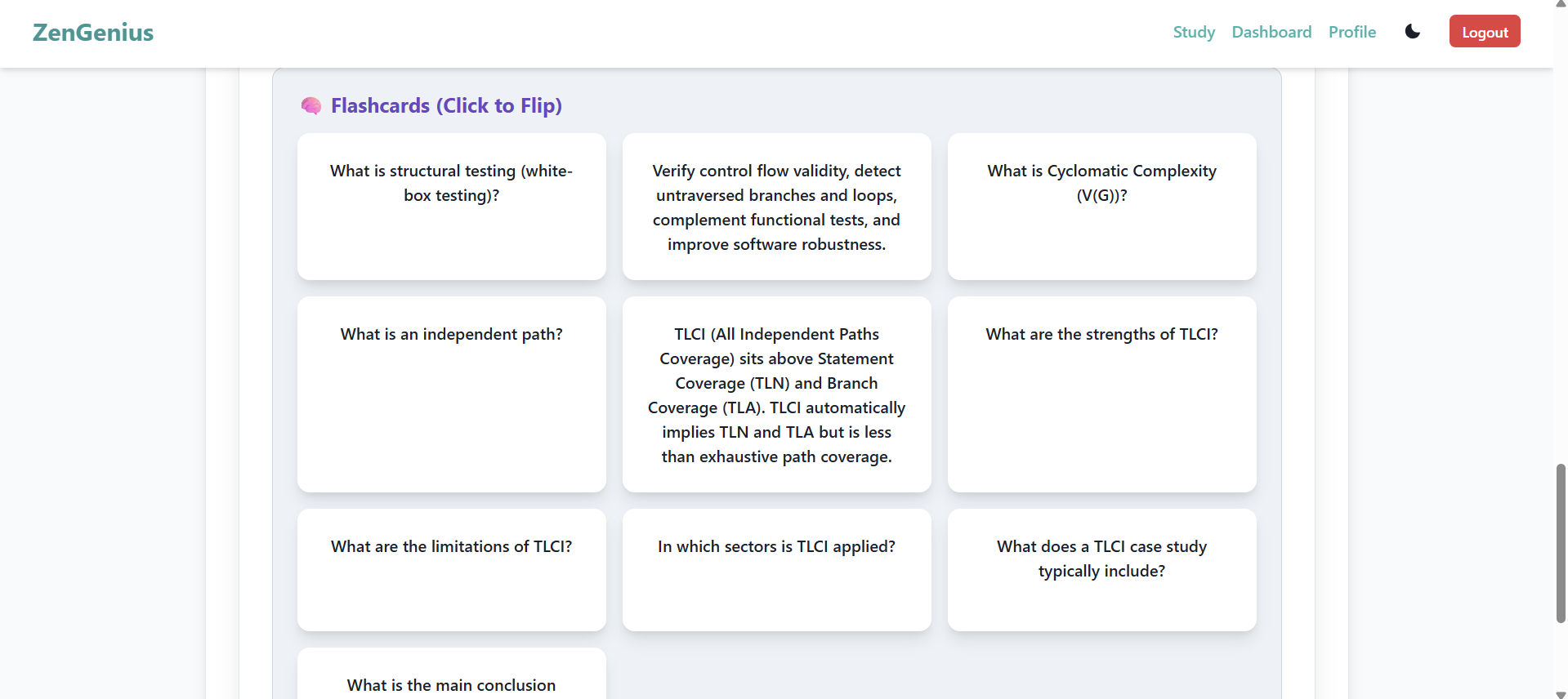
- Generate flashcards with questions and answers
- Flip through flashcards in a smooth UI
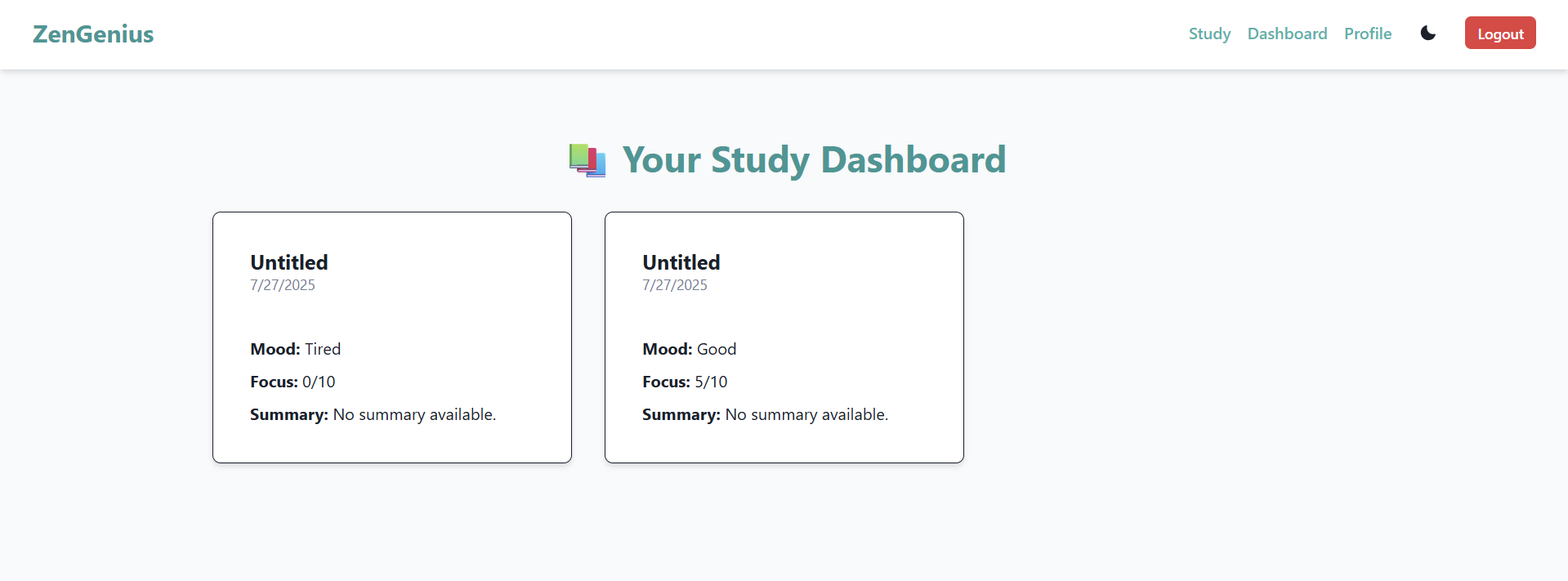
- Track their study sessions and progress
It’s a sleek platform that combines AI summarization, authentication via Auth0, and a fully integrated MongoDB backend, with a user-friendly React frontend powered by Chakra UI.
Tech Stack: -Frontend: React, Chakra UI
- Backend: Node.js, Express, MongoDB, Mongoose
- Auth: Auth0
- AI: Google Generative AI API (gemini-1.5-flash)
How We Built It:
- Designed a REST API backend using Express and connected it to MongoDB with Mongoose
- Used multer and pdf-parse to handle PDF uploads and extract raw text
- Connected to the gemini-1.5-flash API to summarize the document and generate Q&A
- Secured routes using JWT and Auth0 integration
- Built a flashcard interface using Chakra UI with flip animations
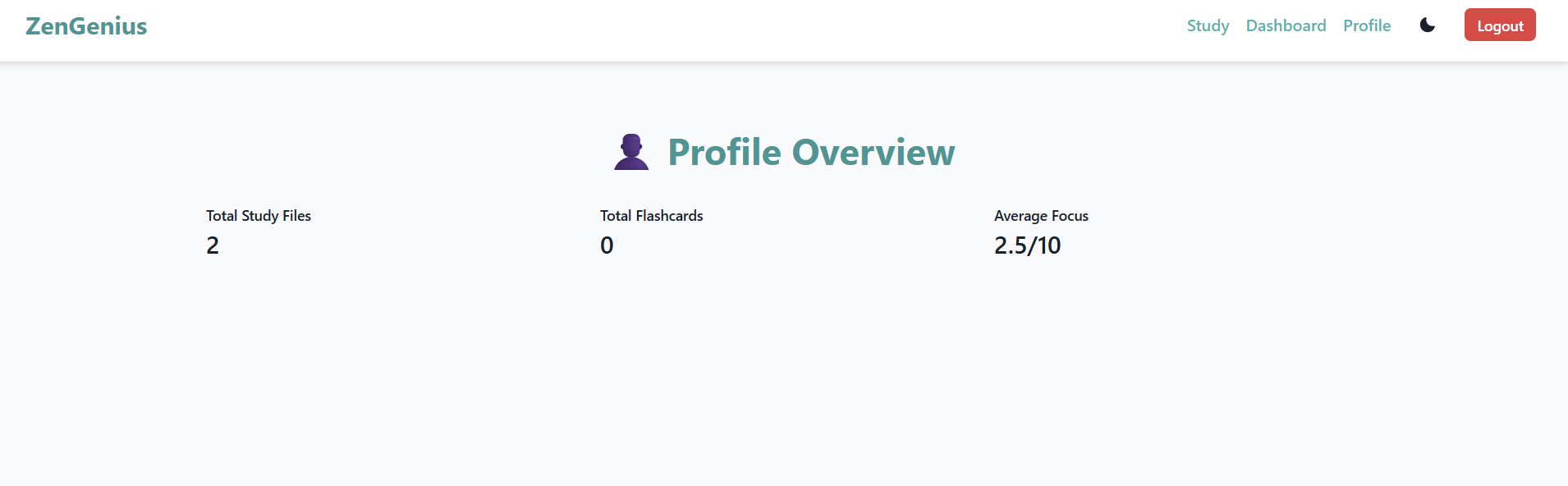
- Implemented user dashboard and profile pages for personalized study session history
Challenges We Faced:
- Parsing and cleaning PDF content for AI ingestion
- Dealing with API limits and latency for summarization
- Making the flashcard flow intuitive and responsive
- Integrating multiple systems (AI API, Auth0, MongoDB) into a cohesive app
- Time pressure during the hackathon
Built With
- auth0
- chakra
- express.js
- geminiapi
- javascript
- mongoose
- node.js
- react
- vite


Log in or sign up for Devpost to join the conversation.