-
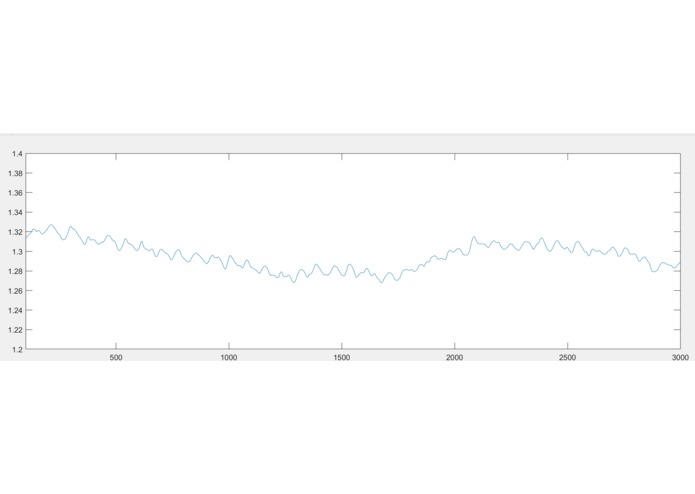
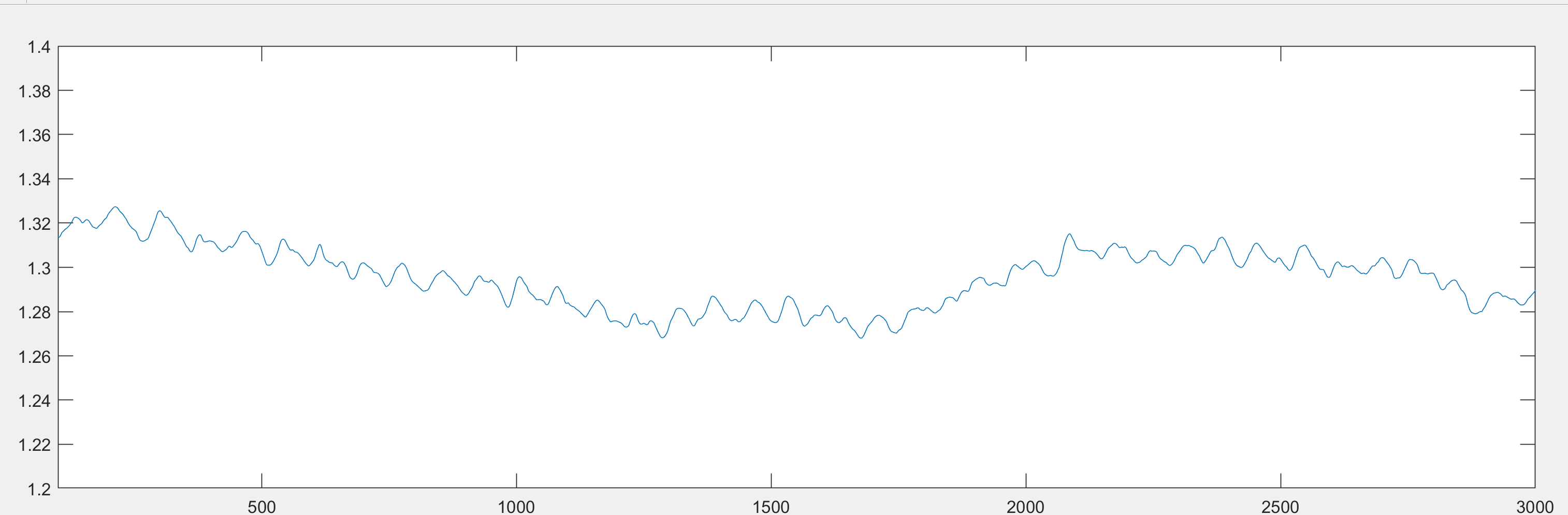
Heart Beat signal versus Time (in milliseconds)
-
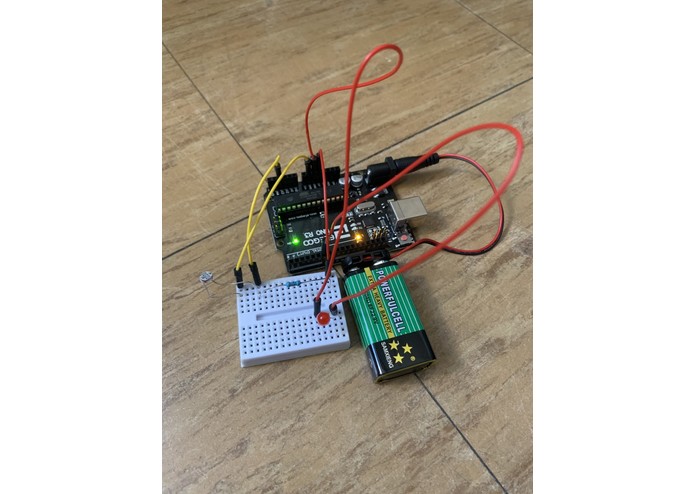
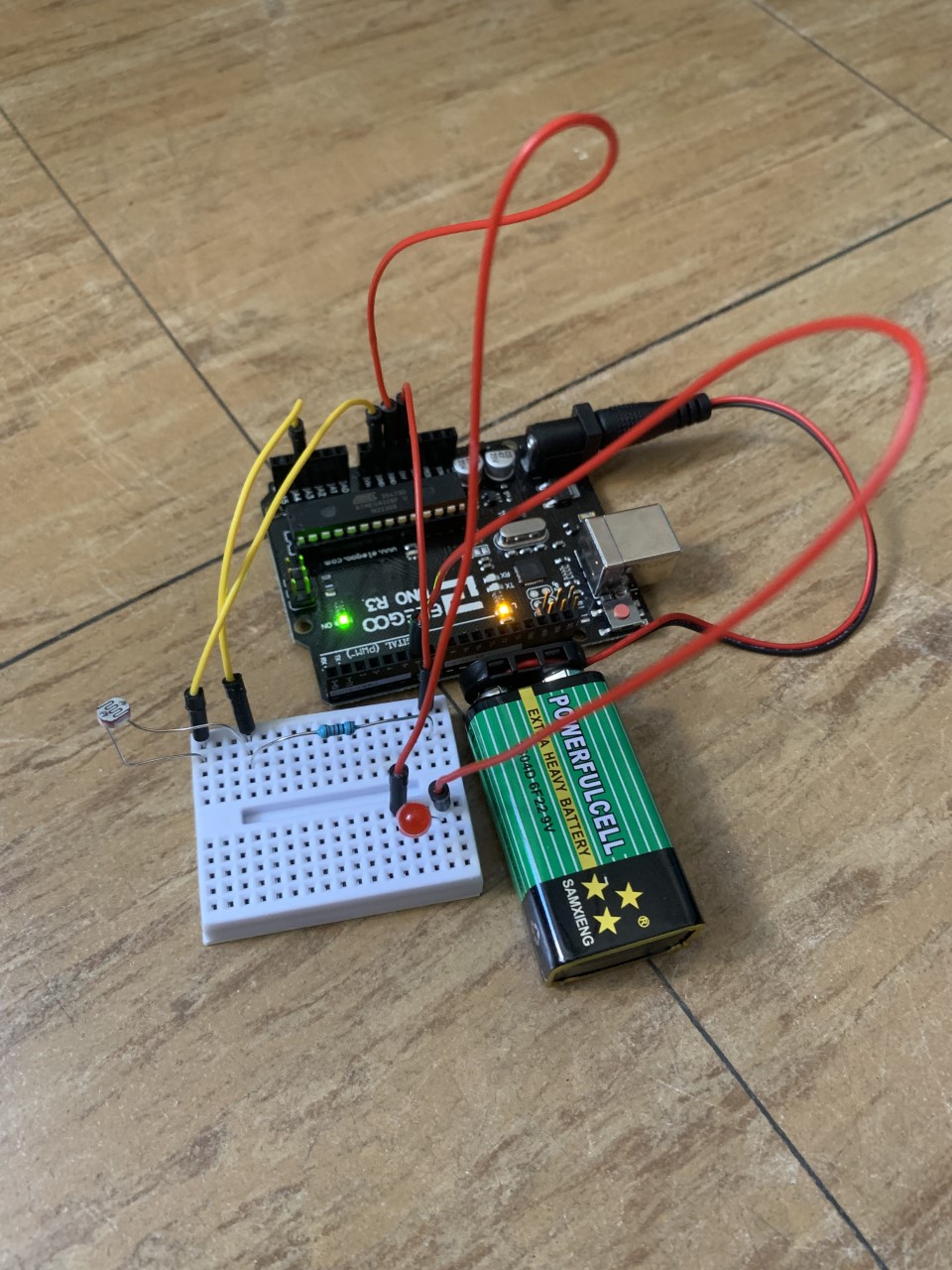
ZenBeat hardware
-
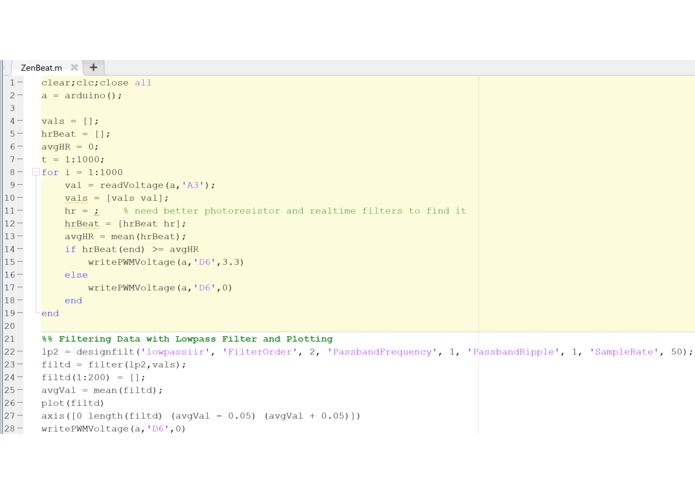
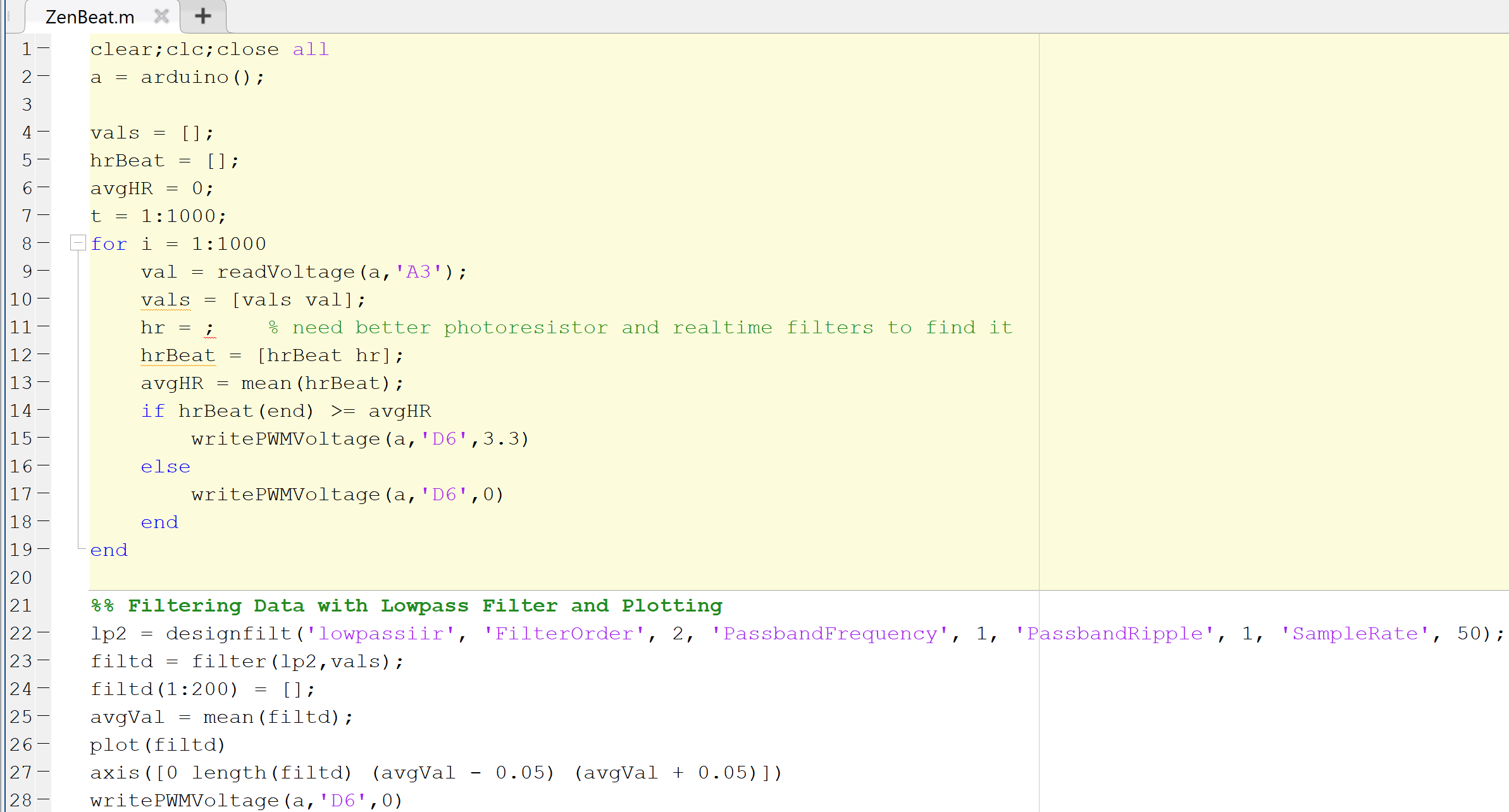
ZenBeat Code in MATLAB
Inspiration
Nearly every college student struggles to recognize stress or excessive tiredness and relax to relieve them. We wanted to create a wearable indicator to assist students in their journey to Zen.
What it does
ZenBeat monitors the wearer's heart beat and illuminates a LED when the pulse exceeds a lower (too tired) or higher (too agitated) level.
How we built it
Material: Arduino UNO, resistors, photoresistors, and LEDS Used photoresistors to measure the pulse (visible due to changes in light intensity of the blood with each heart beat), and the Arduino to control the LED indicator appropriately. Many different combinations and configurations were tested before the final design was determined.
Challenges we ran into
Reliably calculating the heart rate of the wearer in real time was very challenging. Illuminating the wearer's finger with a red laser should have made our data more accurate, but we did not have that capability. In addition, the photoresistor would not always stay flush to the skin, thus resulting in variability in the data. The resolution of the photoresistor was also not enough to reliably indicate such a small change in light from the heart beat.
Accomplishments that we're proud of
We are proud of how quickly we were able to learn to program and control the Arduino, as neither of us had used them before HackMIT. Also, we are proud of having been able to create a device that (reasonably accurately) detects pulse.
What we learned
We learned how to control and program an Arduino, using both the Arduino IDE and MATLAB. We also learned how different pulse measuring devices work, from gym equipment to phone pulse sensors. Additionally, we gained a lot of experience using digital filters on data to clean up the signal.
What's next for ZenBeat
For the future, the design needs to be improved so as to make it smaller, with the goal of making it the size of a ring so it is not a hindrance to the wearer. Additionally, we would implement a better way of sensing the pulse, such as using a red laser or using infrared lighting so that the wearer's fingers are not constantly lit up. We would also look into using more circuitry, such as op amps and physical filters, to improve our signal strength and remove more variability. With better data, we would be able to calculate the person's heart rate in real time to provide instantaneous indication to the wearer via an indicator light.

Log in or sign up for Devpost to join the conversation.