-
-
-

-
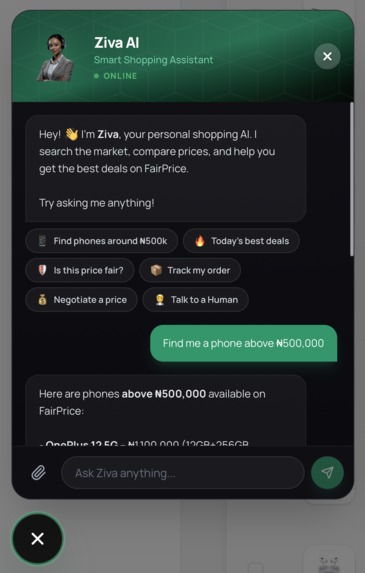
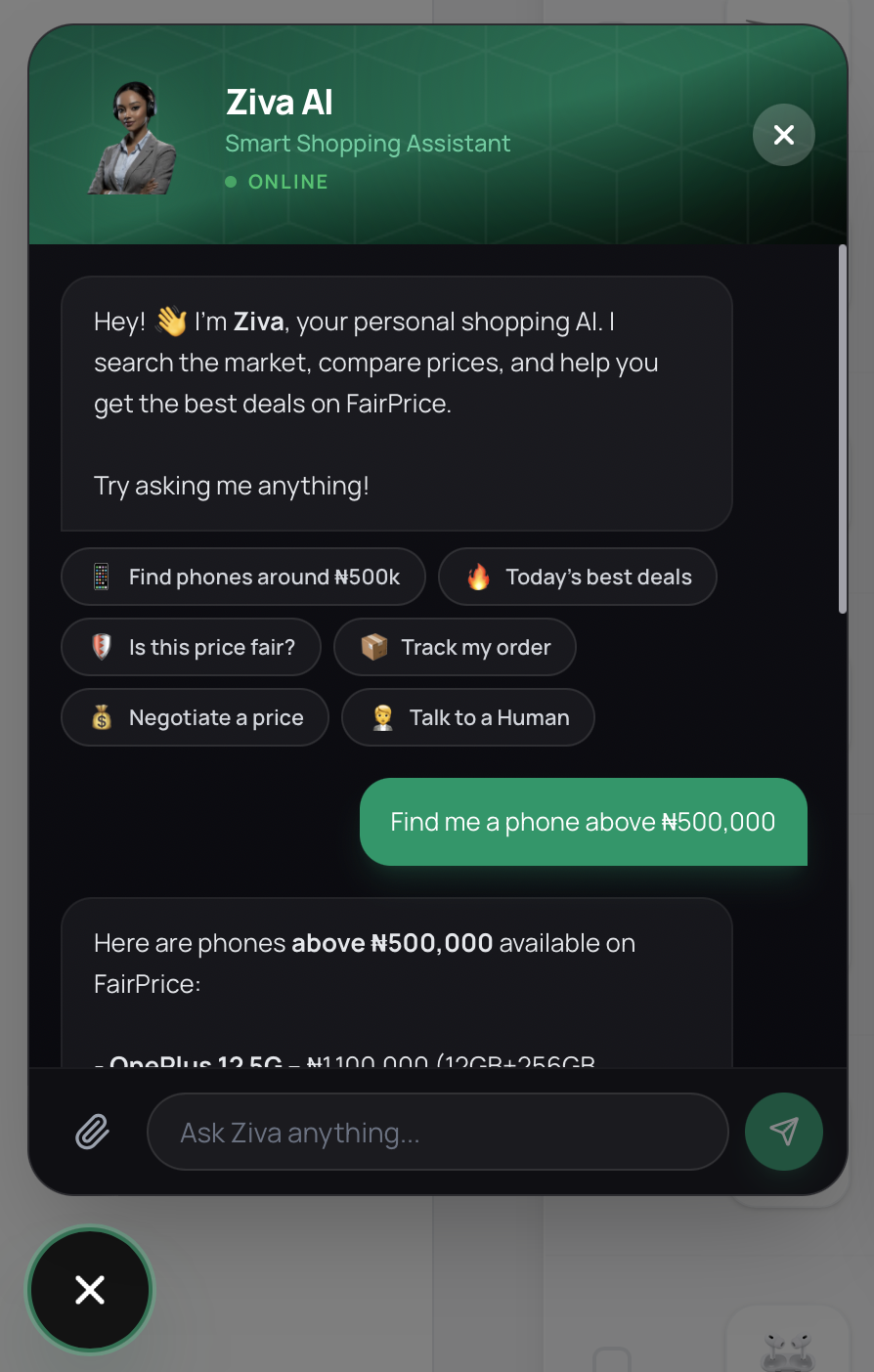
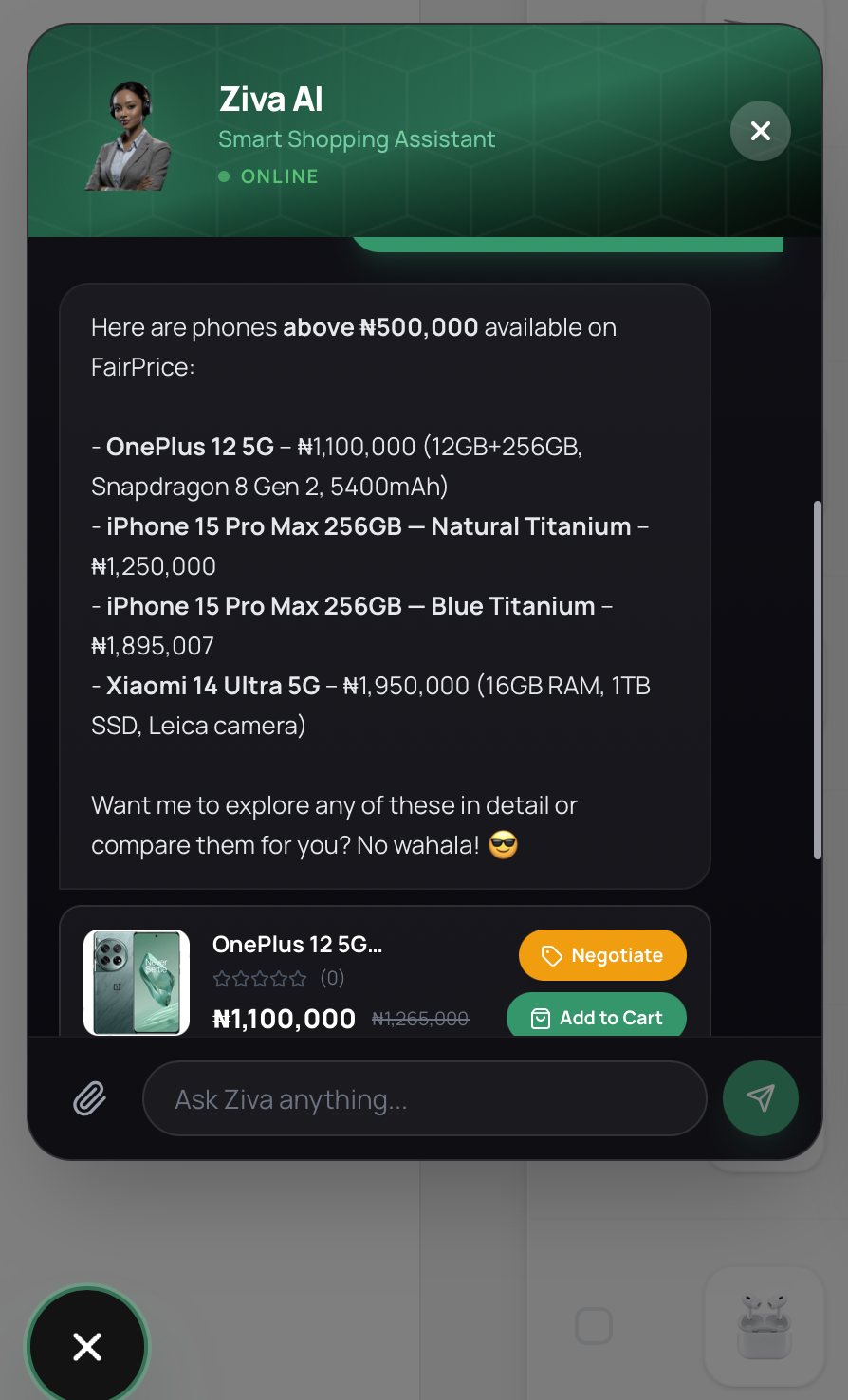
Ziva AI agentic shopping assistant with MCP powered by Qween
-
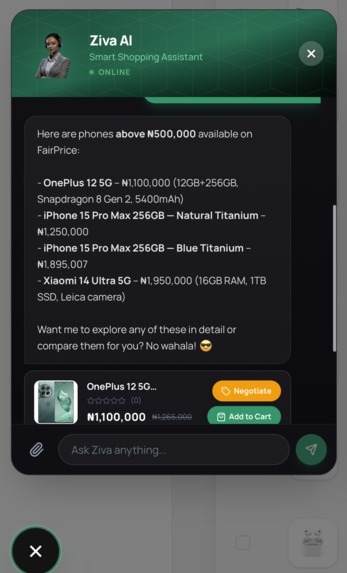
Ziva AI agentic shopping assistant with MCP powered by Qween
-
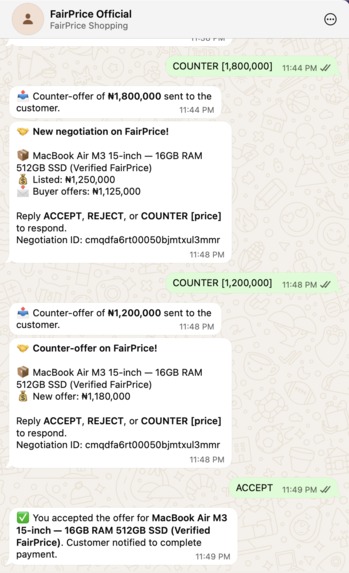
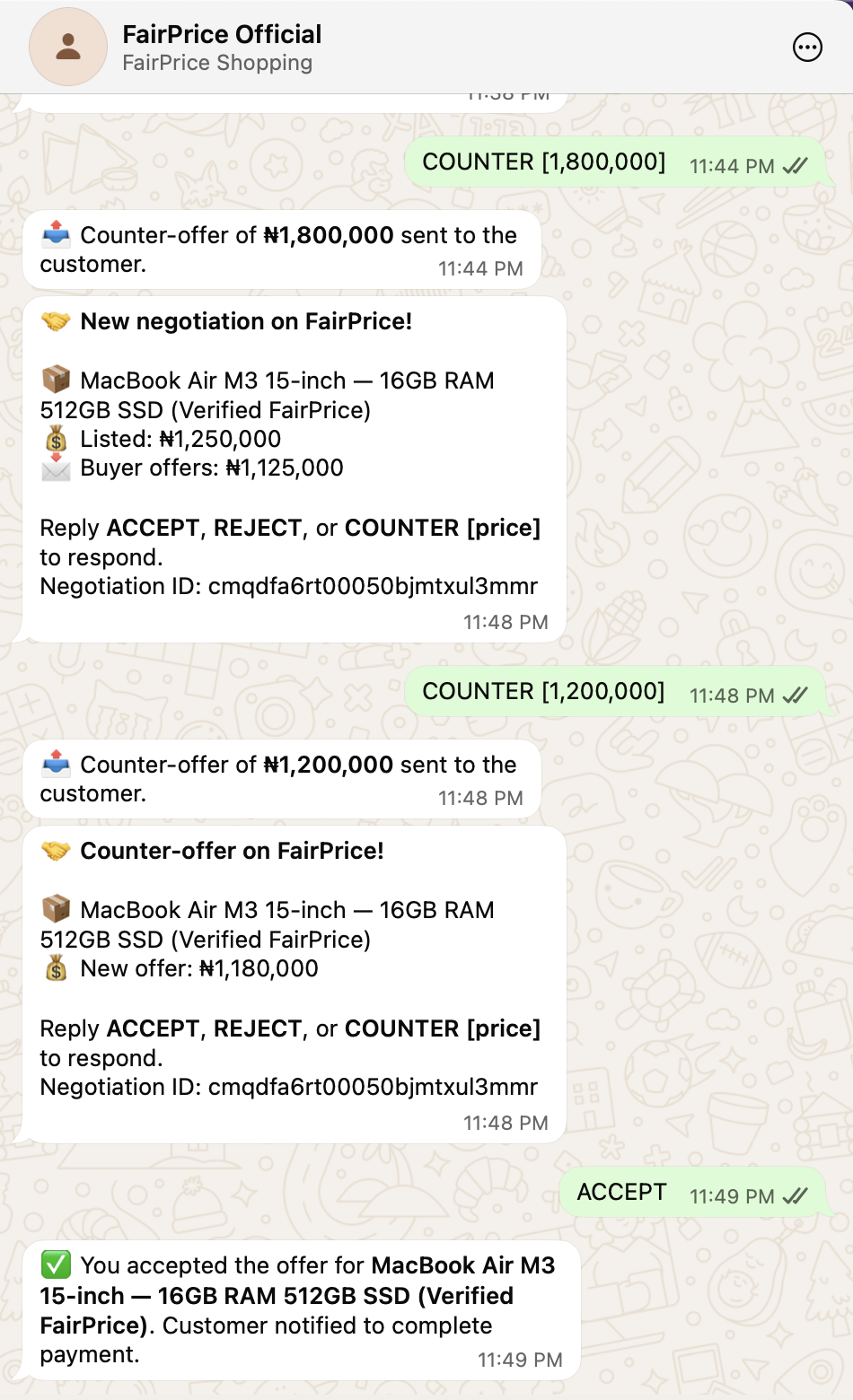
Zema360 on WhatsApp, handling negotiation between sellers and buyers routed via fairprice.ng
-
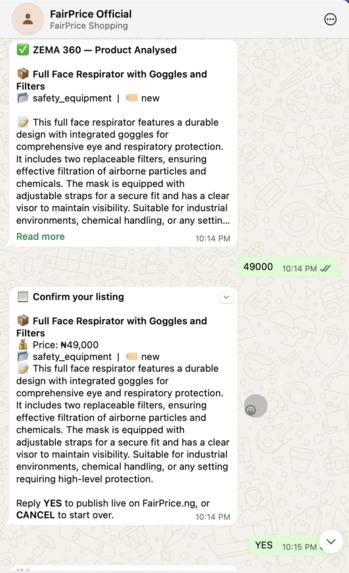
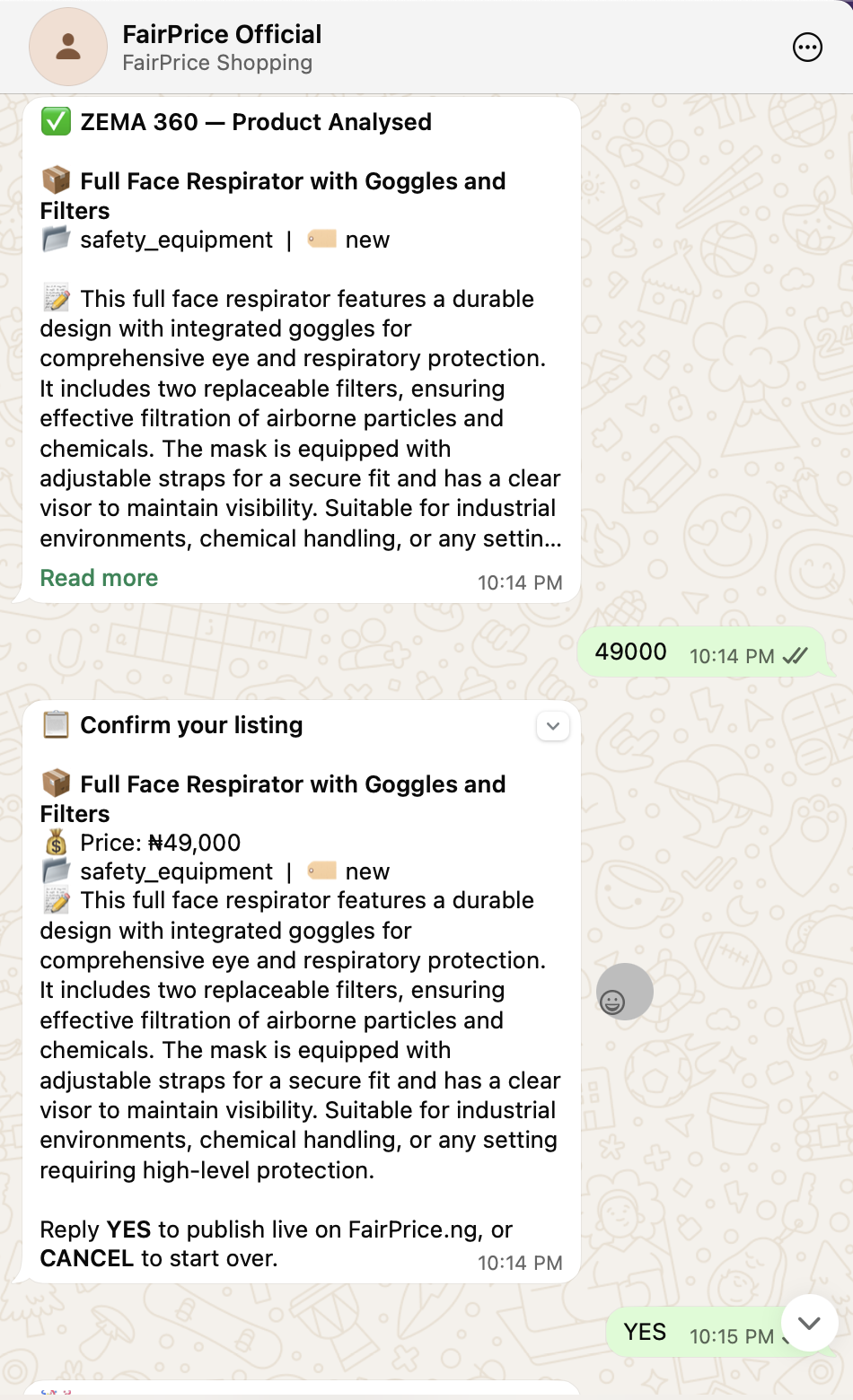
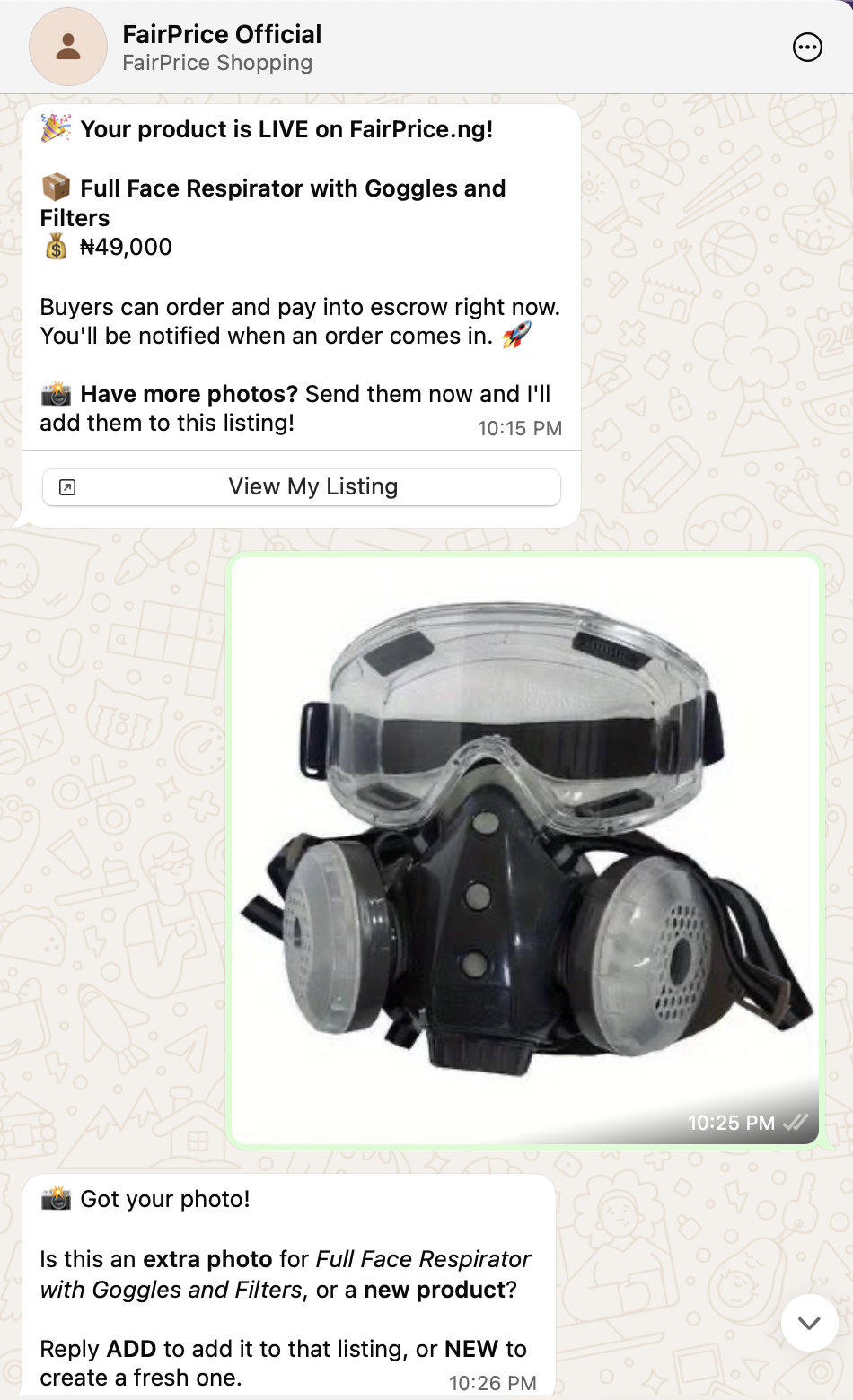
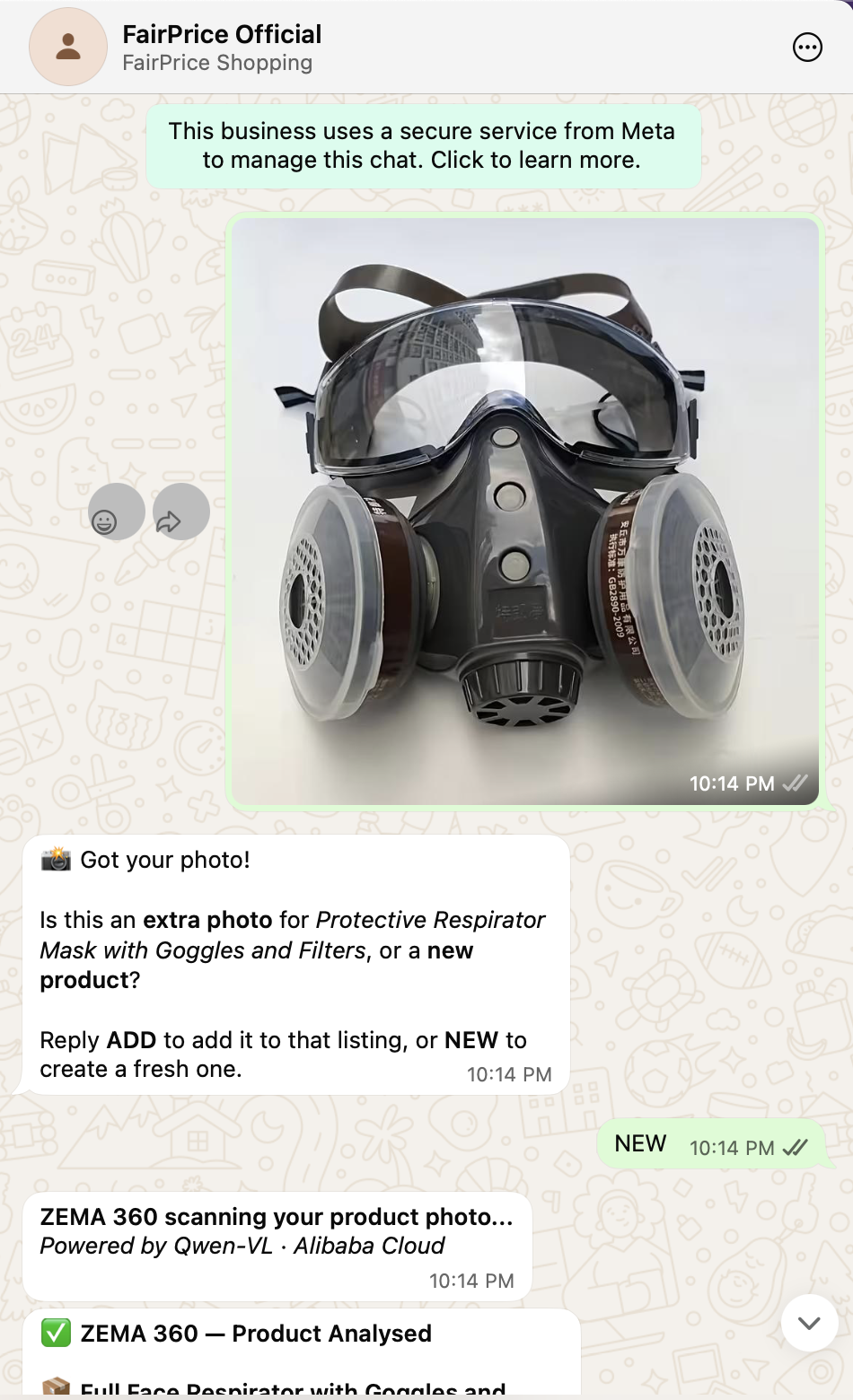
Zema360 live in action on WhatsApp, creating product listing for sellers on fairprice.ng with just an image upload
-
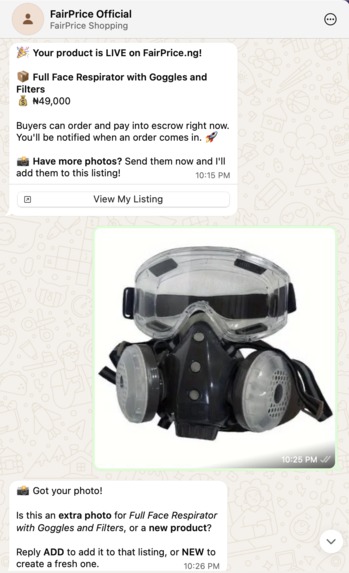
Zema360 live in action on WhatsApp, update product listing for sellers on fairprice.ng with just an image upload
-
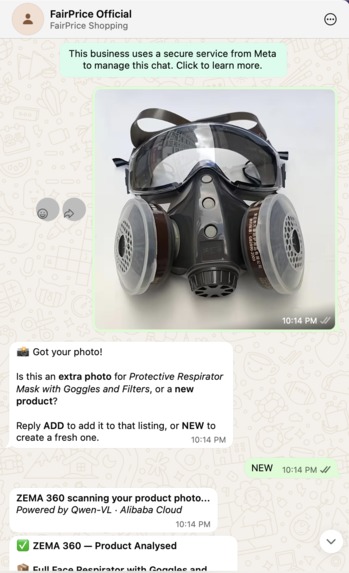
Zema360 live in action on WhatsApp, creating live listing for sellers with just an image upload
-
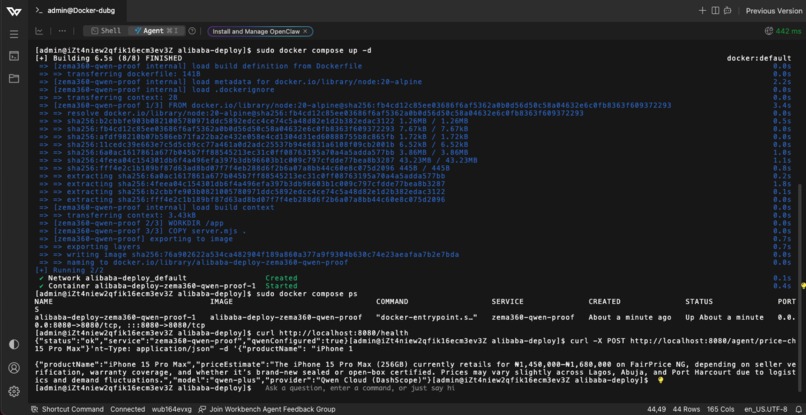
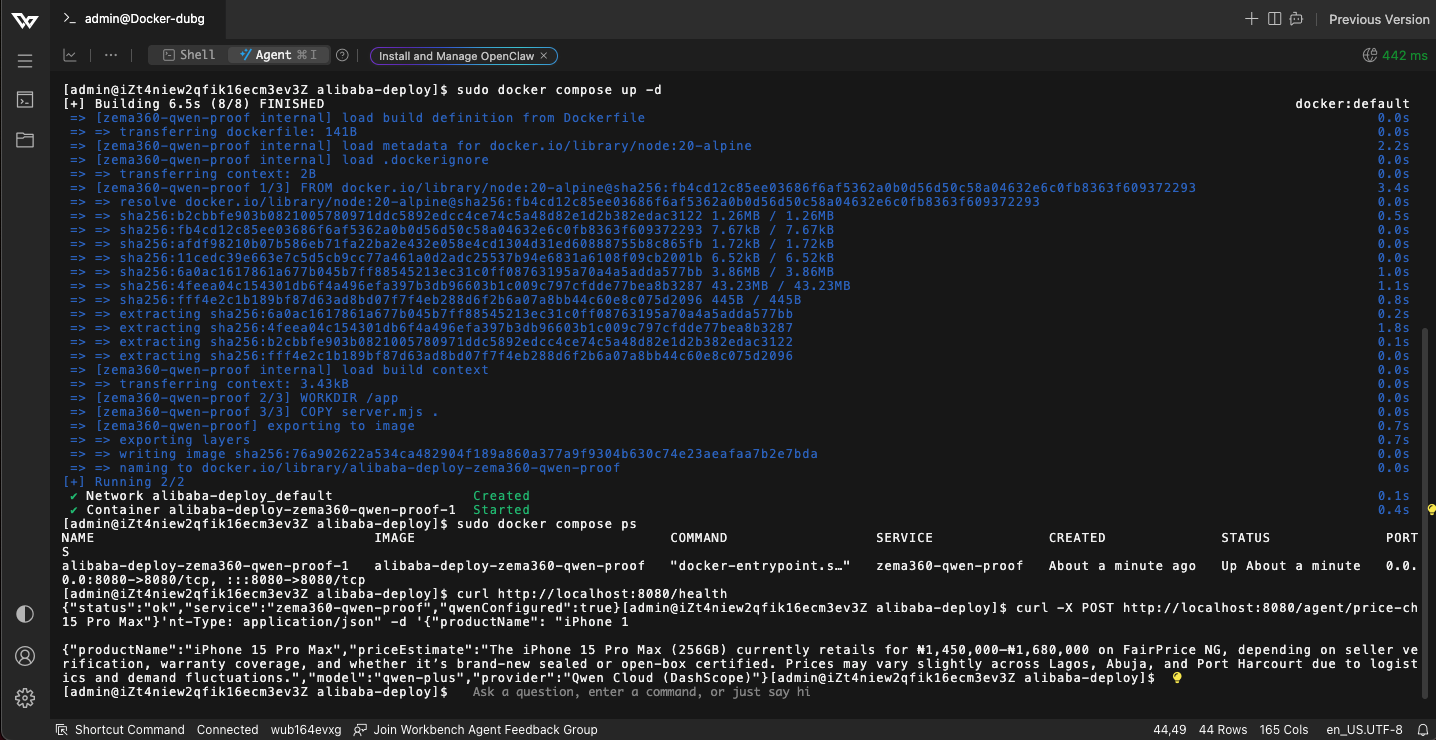
Proof of Deployment

Inspiration
Alibaba didn't start as a technology company. It started because Jack Ma watched small Chinese traders get crushed by a trust gap; no way to prove legitimacy, no payment safety net, no digital presence. He built the rails. The rest is history.
We looked at Nigeria's ₦250 trillion informal economy and saw the same gap, twenty years later, on a different continent.
FairPrice.ng was our answer to the trust problem; an escrow marketplace where buyers pay into a protected vault, sellers ship, and funds release on confirmation. We went live, onboarded sellers, processed real orders. And then we hit a wall.
Every order generated a chain of 23 manual steps: inventory checks, carrier assignments, escrow timing, payout triggers, dispute flags, WhatsApp follow-ups. A human was touching every single one. We had built a marketplace. We had accidentally also built a call centre.
The moment we ran Qwen-Max against a live order end-to-end and watched it coordinate inventory, fulfillment, and payout in 23 seconds flat; with one WhatsApp tap for human approval, that was the moment Zema360 stopped being an idea and became something we had to build.
What it does
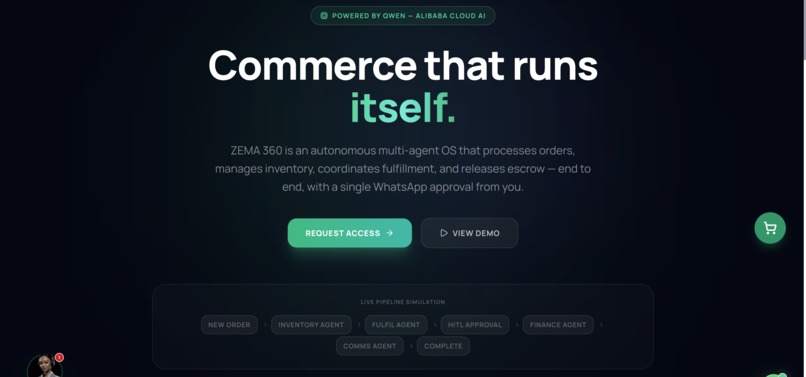
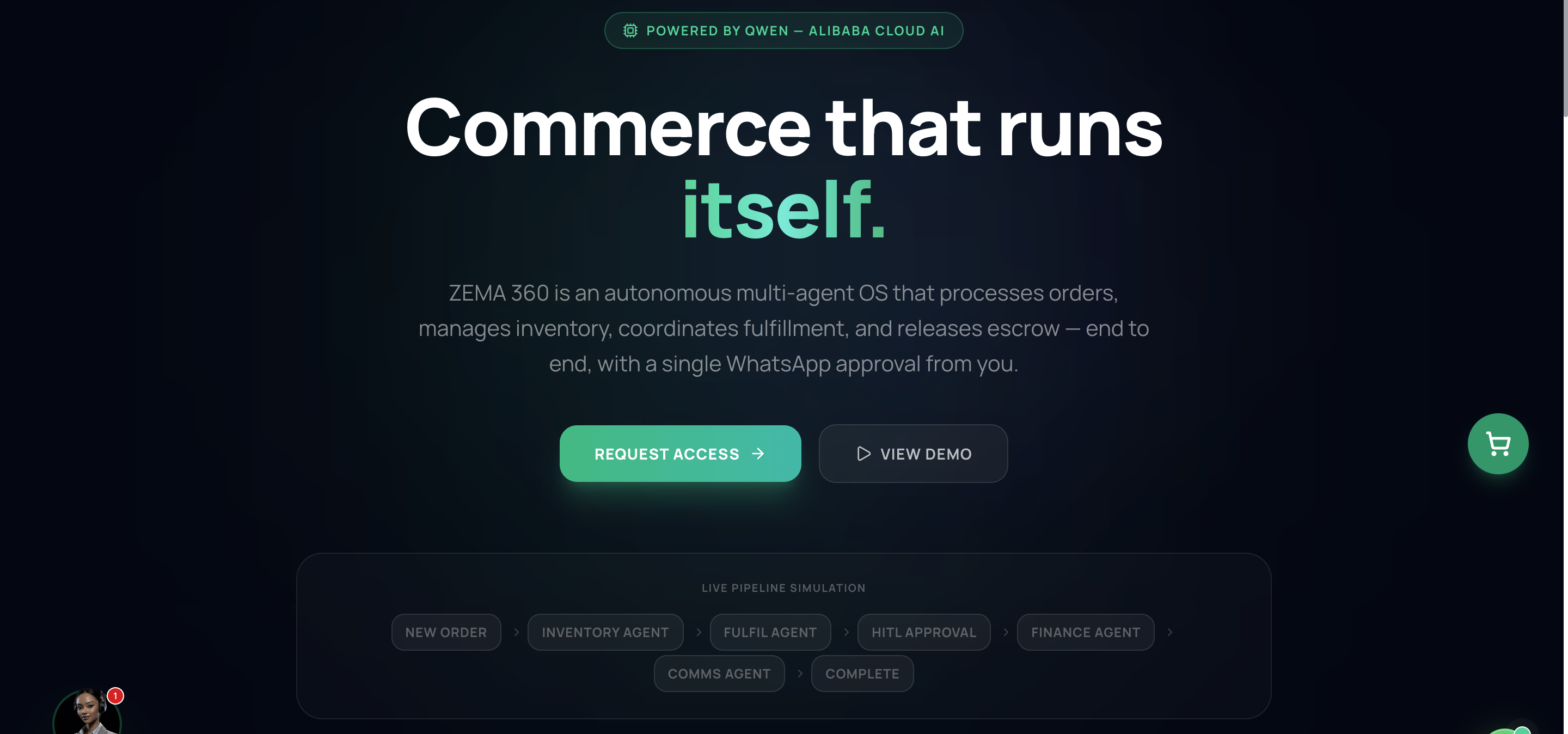
Zema360 is an autonomous commerce agentic operating system. It runs the full back-office of an e-commerce operation; from the moment an order is placed to the moment a seller is paid, using a coordinated squad of Qwen-powered agents, each owning a specific domain.
An order comes in. The Inventory Agent checks stock and reserves units. The Fulfillment Agent assigns a carrier, generates tracking, and pushes live updates to the buyer via WhatsApp. The Finance Agent monitors the escrow window and initiates a Paystack payout the moment release conditions are met. The Comms Agent handles every buyer and seller touchpoint throughout.
For anything that touches real money or real trust; a refund, a disputed delivery, a negotiated credit deal, a KYC flag, the pipeline pauses. Zema360 sends a structured WhatsApp message to the approver. One reply (approve or reject ) resumes or reroutes the entire pipeline automatically.
No dashboards to monitor. No queues to manage. No emails to write. The seller wakes up and their orders are processed, their buyers are updated, and their payouts are on the way.
How we built it
The brain: Qwen on Alibaba DashScope We use qwen-max for orchestration, multi-round reasoning, and negotiation logic via Alibaba's Singapore MaaS endpoint. qwen-vl-max powers our photo-to-listing pipeline; a seller photographs a product and Qwen-VL extracts the title, specs, category, and pricing estimate in one shot. qwen-plus handles lightweight tasks like intent classification and dispute triage where cost efficiency matters.
The hands: MCP tool server We built a Python MCP server that exposes eight production tools; get_order, get_inventory, set_tracking, release_escrow, paystack_payout, process_refund, send_whatsapp, create_negotiation.
Each tool is a thin, retrying wrapper over our existing Next.js API routes, authenticated via a service token. Qwen calls these tools. The tools call real infrastructure. When release_escrow runs, actual funds move.
The infrastructure: Alibaba Cloud The agent backend runs on Alibaba Function Compute, isolated from our Vercel frontend, independently scalable. Product photos, KYC documents, and generated receipts land in an Alibaba OSS private bucket in Singapore with signed URL access. This wasn't just a rubric requirement, FC's concurrency model fits agentic workloads better than traditional serverless because multiple pipeline steps can share a warm instance.
The marketplace: Next.js + Neon + Paystack FairPrice.ng runs on Next.js 15 App Router with Neon Postgres and Prisma. Paystack handles escrow funding and payout transfers. WhatsApp Business API handles all buyer/seller communication. Zema360 agents call the same production APIs that the marketplace's human operators use, there's no simulation layer.
Challenges we ran into
Agents move faster than humans, but escrow release is irreversible. Our hardest architectural decision was where to put the HITL gate; too early and you kill the automation benefit, too late and you risk a bad payout. We settled on a threshold-plus-signal model: transactions above a set value, or carrying a dispute signal, pause for explicit WhatsApp approval. Below threshold and clean? The agent closes the loop automatically.
Agents hallucinating facts they hadn't checked Early versions had the Inventory Agent confidently reporting stock levels it had never fetched. We fixed this with a strict tool-grounding rule: no agent can assert a factual state it hasn't retrieved via a tool call in the current session. Qwen's structured tool-calling enforced this cleanly once we made it explicit in the system prompt.
Building on a live production system This is a real marketplace with real users. We couldn't spin up a sandbox and break things. Every agent code path was feature-gated with an AI_PROVIDER switch so our existing Gemini-backed flows stayed untouched until the Qwen path was fully verified. We ran parallel sessions; Zema360 on one terminal, the live site on another before every merge.
Low-connectivity users Most of our sellers are not in Lagos tech hubs. They're on 3G in markets in Kano, Aba, Onitsha. Every agent output that surfaces to a human is a short, structured WhatsApp message; no app required, no login, no dashboard. Pipeline state persists in Postgres so a dropped connection resumes exactly where it left off.
Accomplishments that we're proud of
We ran a real order, placed by a real buyer, from a real seller on FairPrice.ng — through the full Zema360 pipeline. Inventory reserved. Carrier assigned. Tracking pushed to buyer on WhatsApp. Escrow release triggered. Paystack payout initiated. Human approval requested and processed via a WhatsApp reply. Total elapsed time: 23 seconds. The same flow took a human operator an average of 4 hours across a working day.
We're proud that this wasn't a demo. It wasn't a mock API. Every number that moved was real money in a real escrow account on a live marketplace. That's the bar we set for ourselves and the one we hit.
We're also proud of the MCP architecture. Eight tools. Clean contracts. Every tool call logged to Alibaba OSS with a structured JSON trace; timestamp, input, output, agent ID, decision rationale. Judges can audit every decision the system ever made. There's no black box here.
What we learned
The hardest part of multi-agent systems isn't the agents. It's the seams; the handoff points where one agent's output becomes another's input. That's where context bleeds, assumptions go unchecked, and pipelines silently fail. We spent more engineering time on handoff contracts and orchestrator memory than on any single agent.
We also learned that "human-in-the-loop" is almost always framed as a concession, something you add because you don't trust the AI yet. We reframed it as a trust signal. Our sellers trust Zema360 more because they know it asks before touching anything that matters. The approval WhatsApp message isn't a limitation. It's the feature that made adoption possible.
And we learned that the informal African market is not a constraint to design around. It's a design brief. Low connectivity, WhatsApp-native, cash-preference, high interpersonal trust; these aren't bugs. They're the exact context that makes a WhatsApp-first, escrow-backed, AI-operated commerce system the right answer.
What's next for Zema360 — Autonomous Commerce Agentic OS by Zema AI Labs
The enterprise API is live: POST /api/zema360/process-order accepts an issued API key and runs the full agent squad on any submitted order, returning a structured audit trail of every decision made. That's the B2B product; other African platforms plugging into the same agent infrastructure we built, without having to build it themselves.
Next on the roadmap:
Cross-border commerce — West Africa has 15 countries with porous borders and massive informal cross-border trade. Zema360's pipeline generalizes. The agents don't care whether the seller is in Lagos or Accra; the tools just need local payment rails plugged in.
Voice-native seller onboarding — Qwen-VL already handles photo-to-listing. We're adding Qwen's audio capabilities so a seller can voice-describe a product in Pidgin, Yoruba, or Hausa, and get a structured listing back. No typing required.
Predictive inventory — The Finance and Inventory agents currently react. The next version predicts; using order velocity and seasonal patterns to recommend restock timing before a seller runs out, not after.
Africa has 54 countries. Most of them have the same infrastructure gap, the same informal economy dominance, and the same shortage of tools built for their context rather than retrofitted from somewhere else. Zema360 is the operating system we're building for all of them, starting here, scaling outward, with Qwen and Alibaba Cloud as the engine underneath.
Built With
- 15
- alibaba
- api
- business
- compute
- css
- dashscope
- fastapi
- framer
- function
- mcp
- motion
- neon
- next.js
- orm
- oss
- paystack
- postgresql
- prisma
- python
- qwen-max
- qwen-vl-max
- server
- tailwind
- typescript
- vercel


Log in or sign up for Devpost to join the conversation.