Inspiration
We sought inspiration from the world around us, especially in physical media and art. We were inspired by the community-driven and creative culture of zine-making. Handmade art such as patchwork quilts, sashiko, and kintsugi were especially inspiring due to the physical embodiment of connection and healing. We took inspiration from analog photography, which has become wildly popular amongst young people. In a world where you can take a thousand photos for free with your phone, people are spending hundreds to buy and develop film. The price, suspense, and tactile feel all lend to analog photographers being more mindful about the photos that they take.
What it does
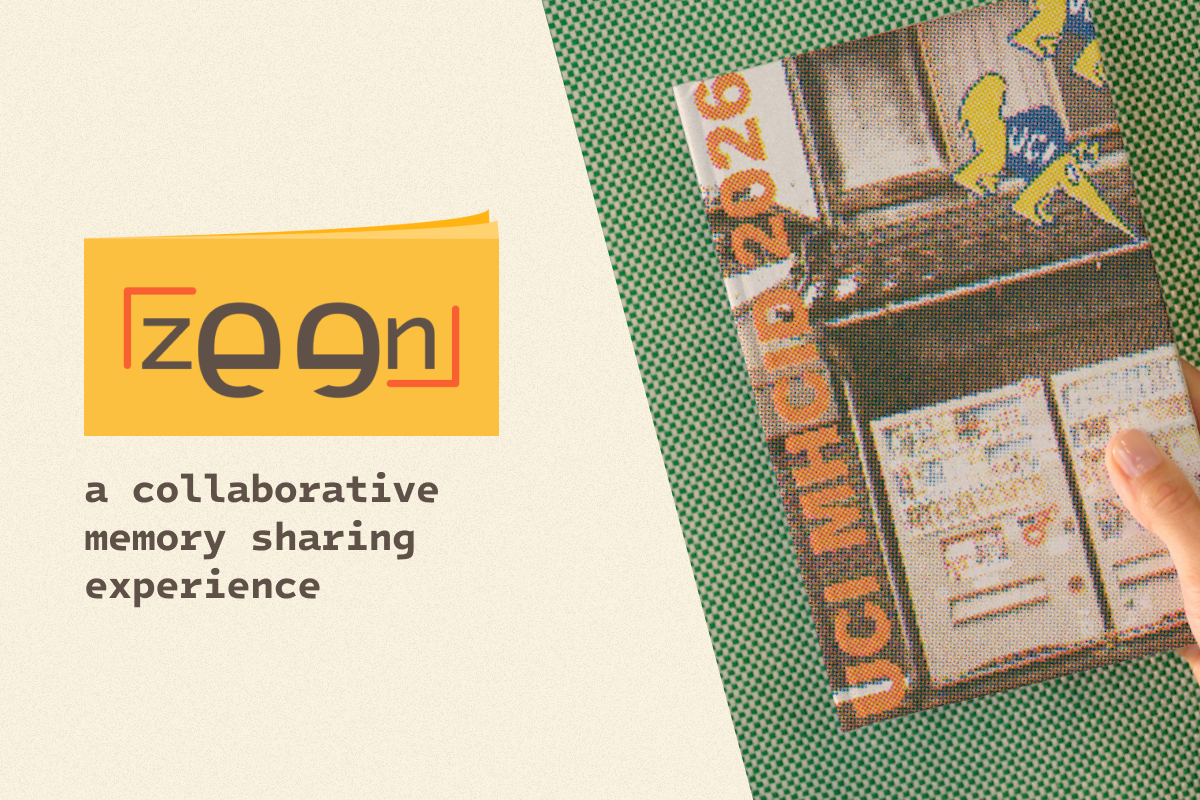
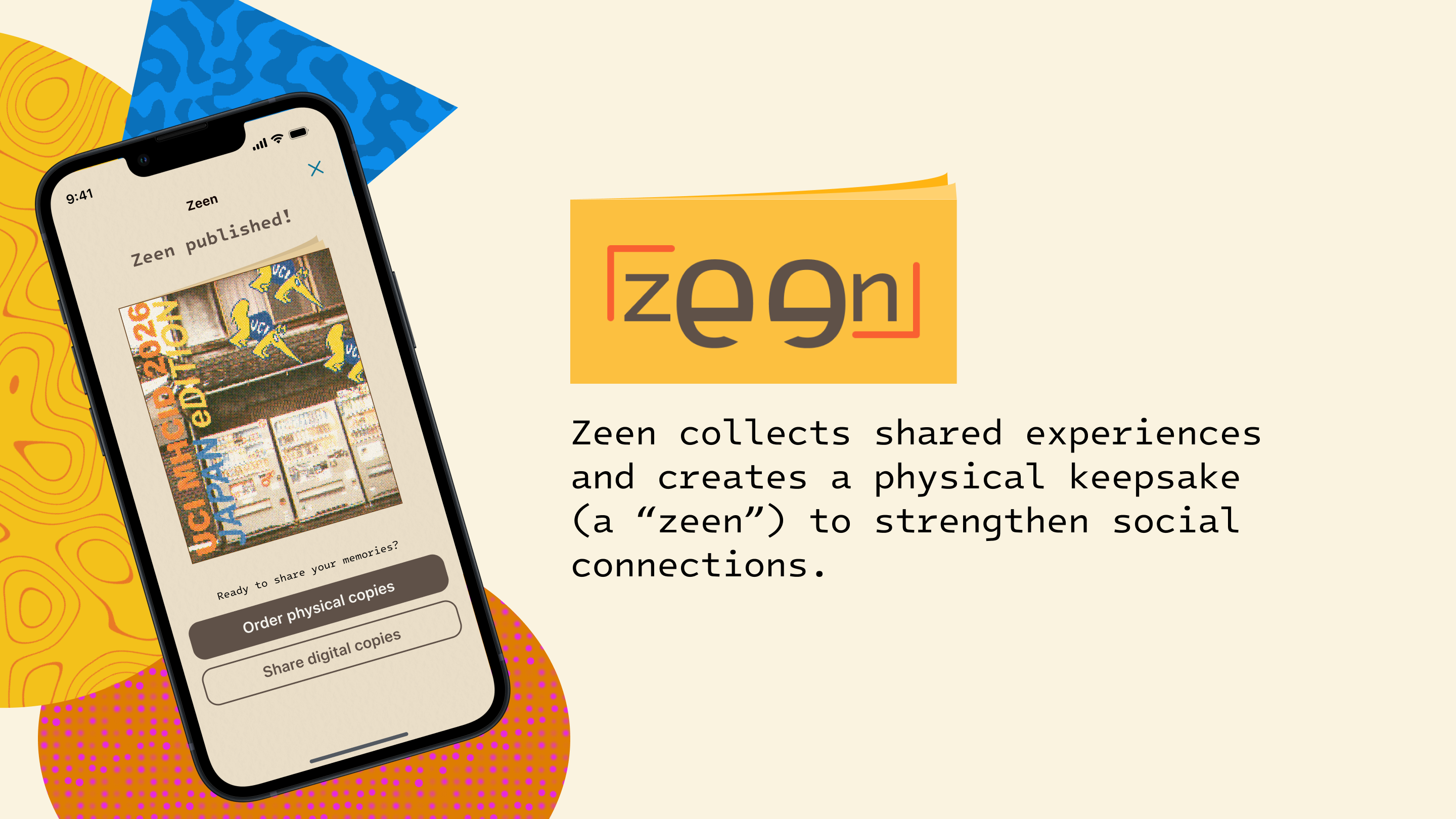
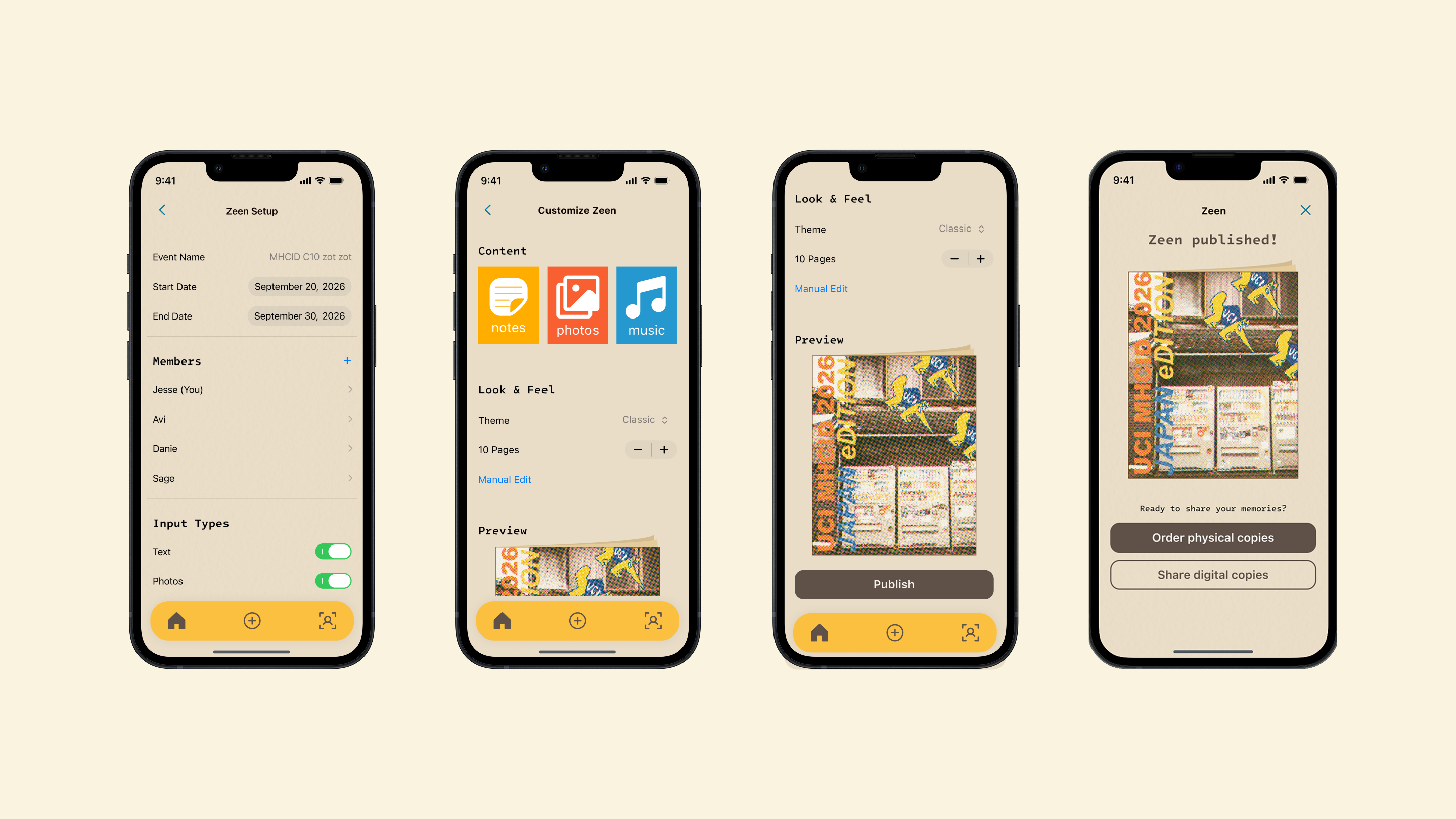
Zeen captures memories as represented by artifacts collected on the mobile phone. When you have an ongoing event or trip, zeen can record notes, photos, music listened to, and even locations tied to the submissions. After the event or trip is over, zeen creates a personalized booklet, which you can customize to your liking. The best part is you can print zeen into a real, tangible collection of your memories, which you can then share with others.
How we built it
We built zeen through a mix of loose and creative ideation with a mix of scientific papers and images that evoke certain feelings. We narrowed down our best ideas, storyboarded a user in a specific scenario, and went on to create high fidelity assets.
Challenges we ran into
Going from a vague and idealistic prompt to a detailed concept and prototype within less than two days was a major challenge. Time management is crucial (I'm currently writing this at 3:56am).
Accomplishments that we're proud of
We are most proud of zeen as a concept, and would love to use it ourselves! The retro vibe and warm color palette invoke nostalgia as well, which is refreshing in 2026. We're especially proud of the passive capture mechanic: the idea that the best memory-keeping tool is one you forget you're using.
What we learned
Avi expanded practical figma skills, Sage pushed her boundaries on creating graphic design elements, and Danie learned how to create cohesive narratives within a fast-paced hackathon environment. As a group, we learned that constraints make better design and that clarity came from us as we were building zeen.
What's next for zeen, a collaborative memory sharing experience
The next logical step would be to test with users for the MVP we designed. Afterwards, we would look into adding nice-to-have features, like allowing multiple friends contribute to the same zine in real time. In the future we would look into expanding the business side with an in-house print shop and zeen gallery where people can browse and collect published zines from stranger's trips.
Built With
- figma


Log in or sign up for Devpost to join the conversation.