Inspiration
Every photo on a shopping site is someone else wearing the clothes. You guess, you buy, you return — a quarter to 40% of apparel orders come back, and the reason is almost always "it didn't look like that on me."
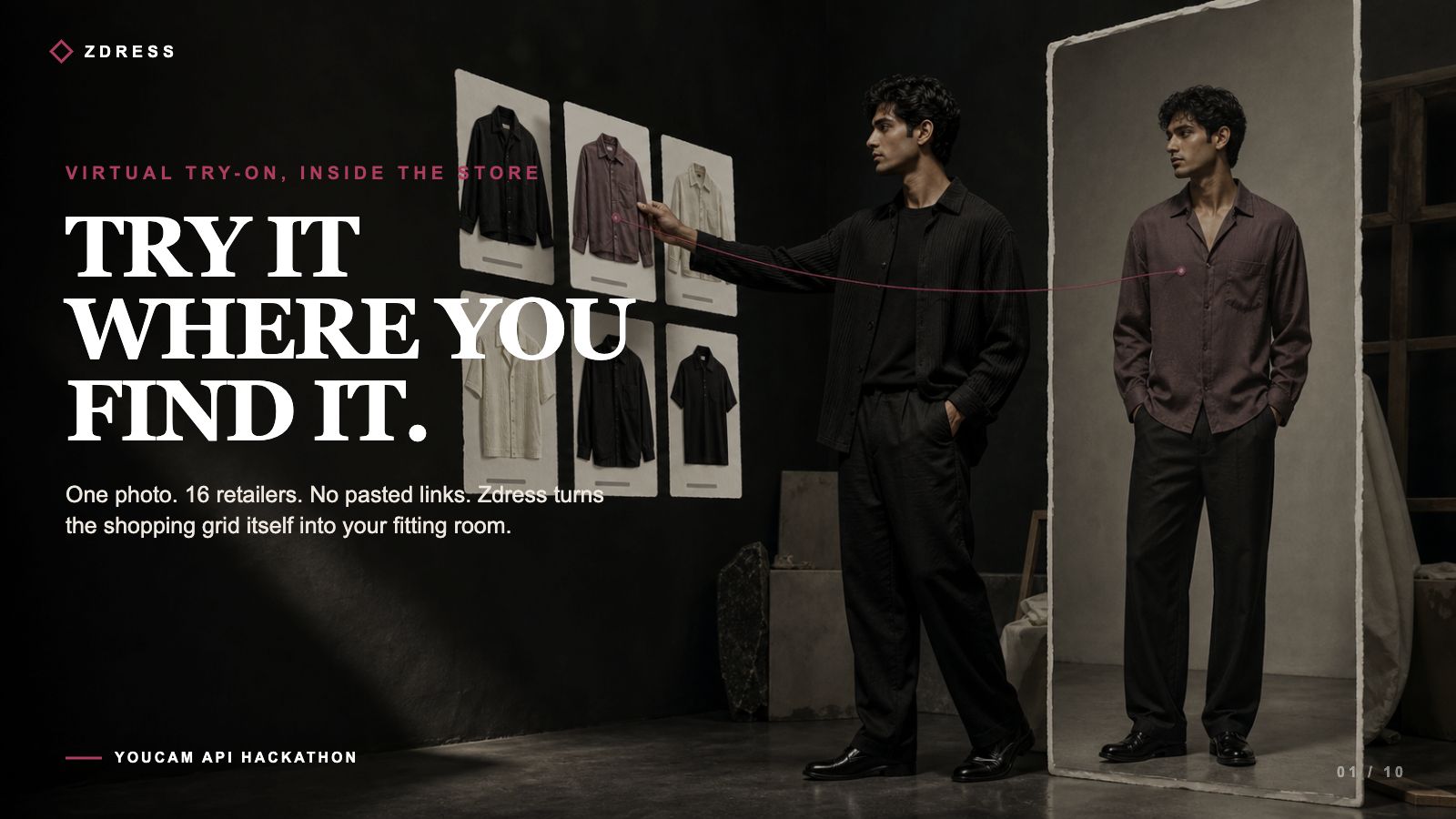
Virtual try-on already exists, but it lives on its own page or extensions or apps. Leave the store page, find the tool, upload your photo again, paste a product link. By then you've lost the thing that mattered: comparing this shirt against the forty others still on screen. We wanted the try-on to happen where the decision happens in the retailer site itself
What it does
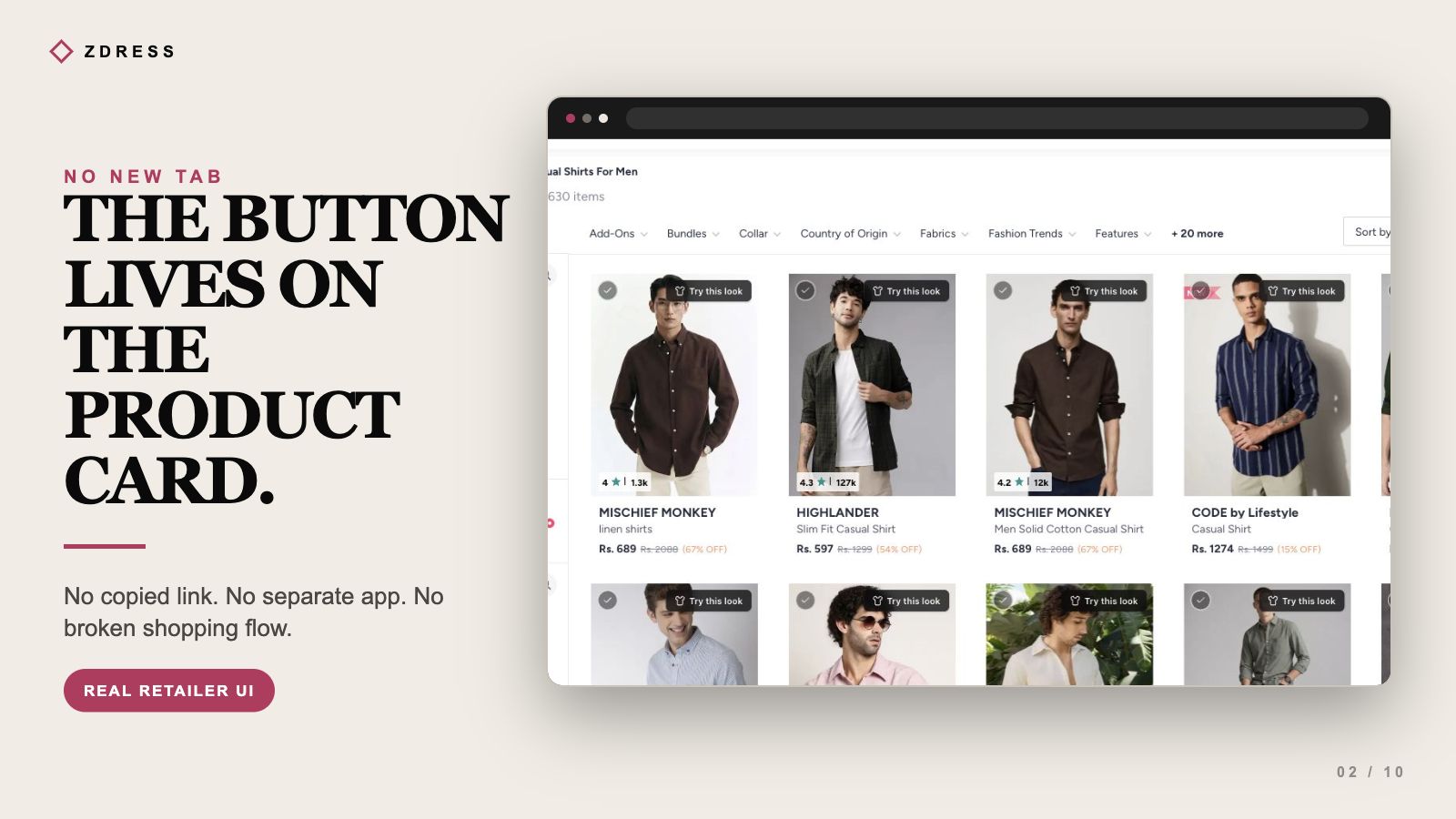
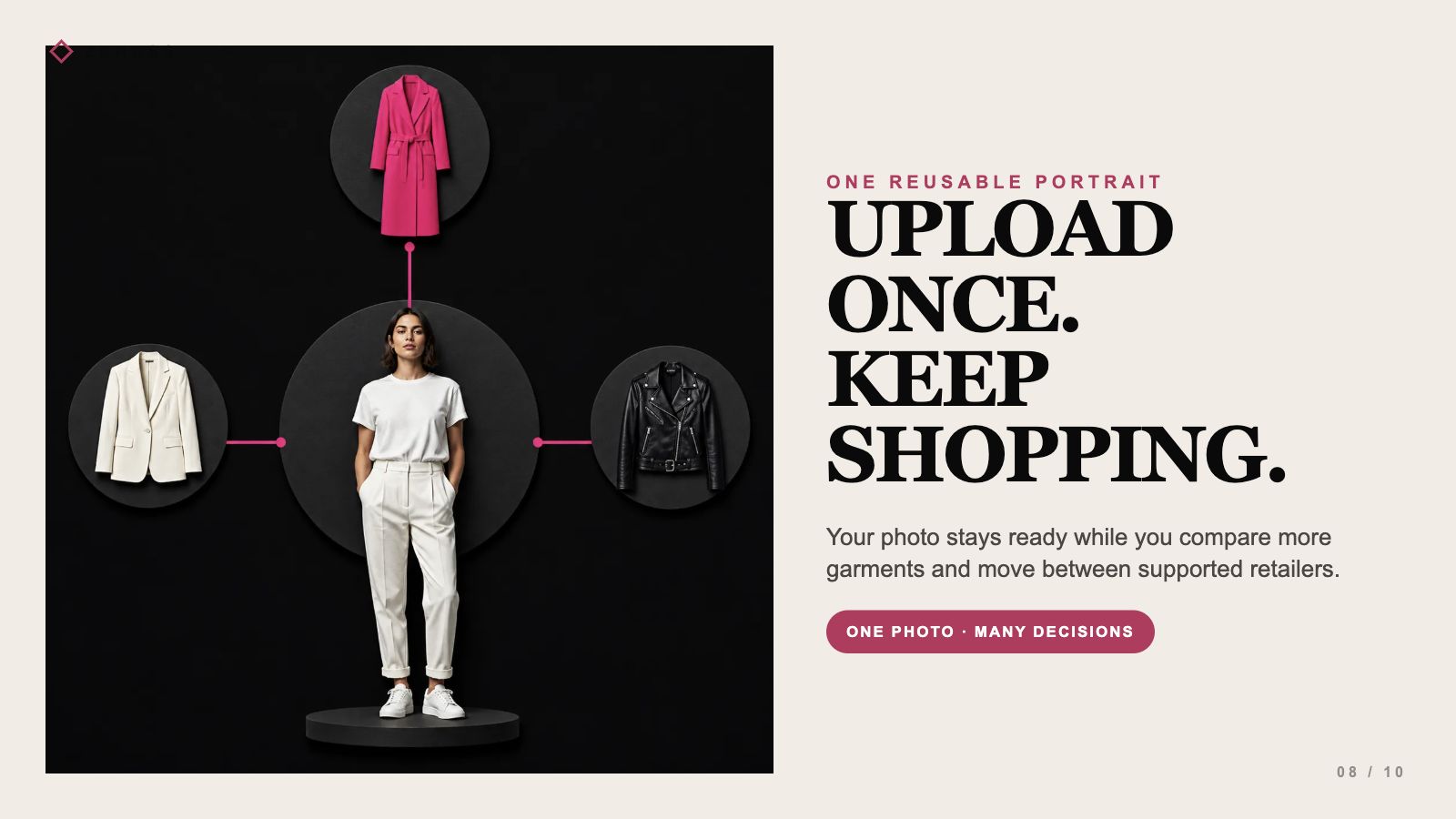
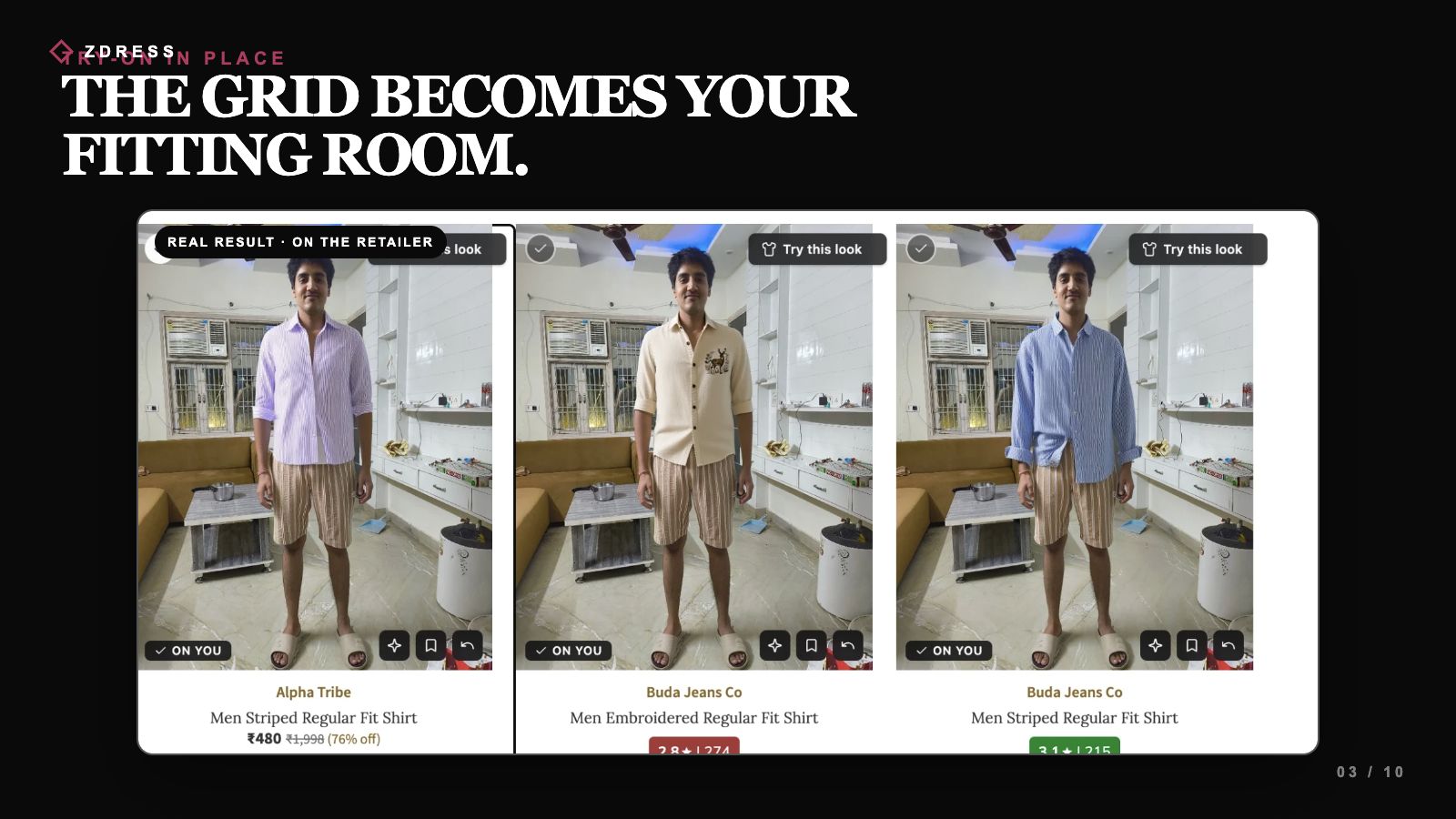
Zdress puts a "Try this Look" button inside every product card across 16 retailers and Pinterest. Click it and that card's photo becomes you wearing the item, right there in the grid. No tab, no modal, nothing to copy or paste. You upload one photo, once, and it's reused for everything after, you can save fits and links.
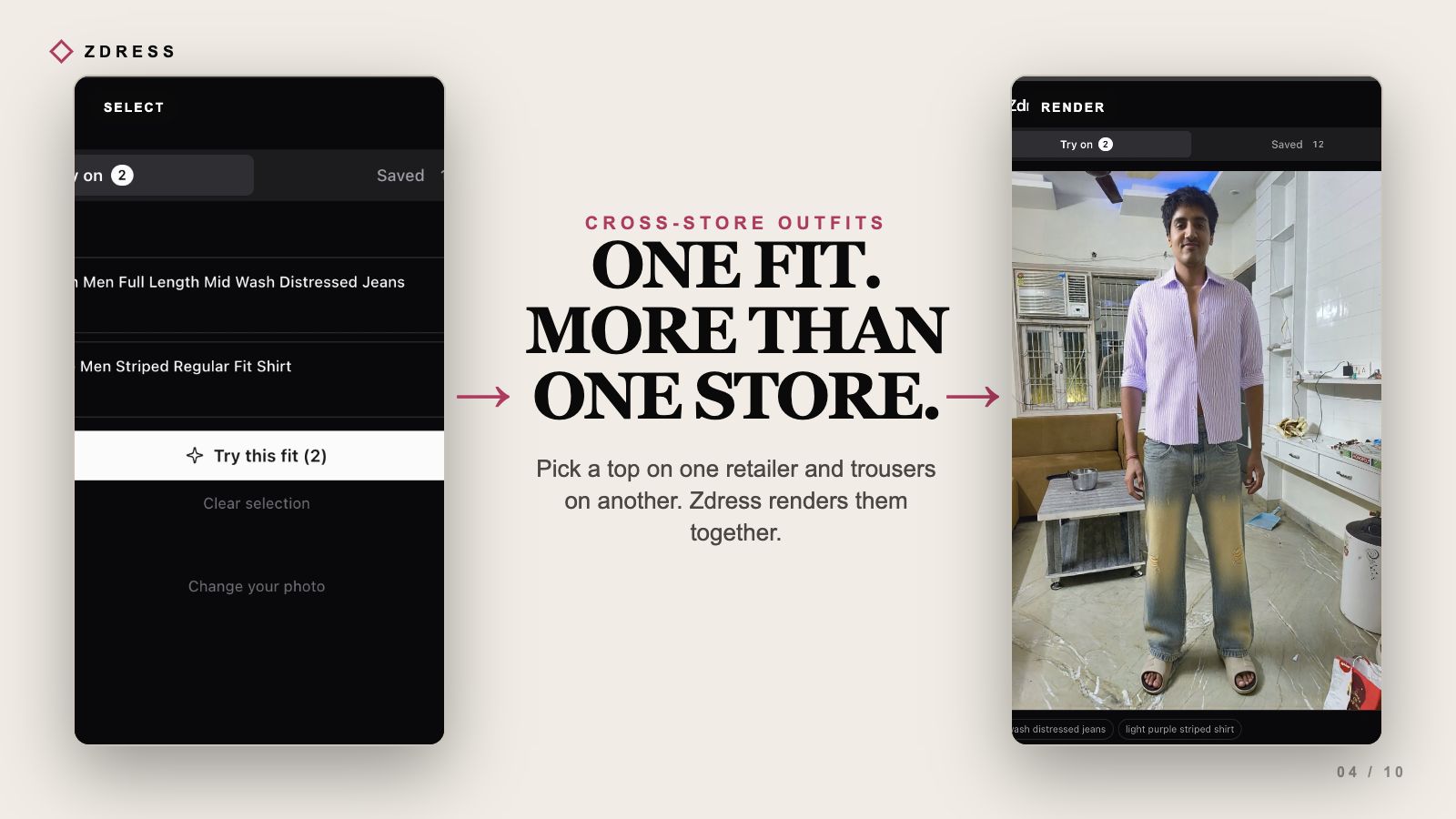
Click three products and all three render at the same time while you keep scrolling. Or tick items instead and build a whole outfit — a shirt from one store, jeans from another — rendered as a single image. Saved looks go into collections that keep both the render and every source link.
How we built it
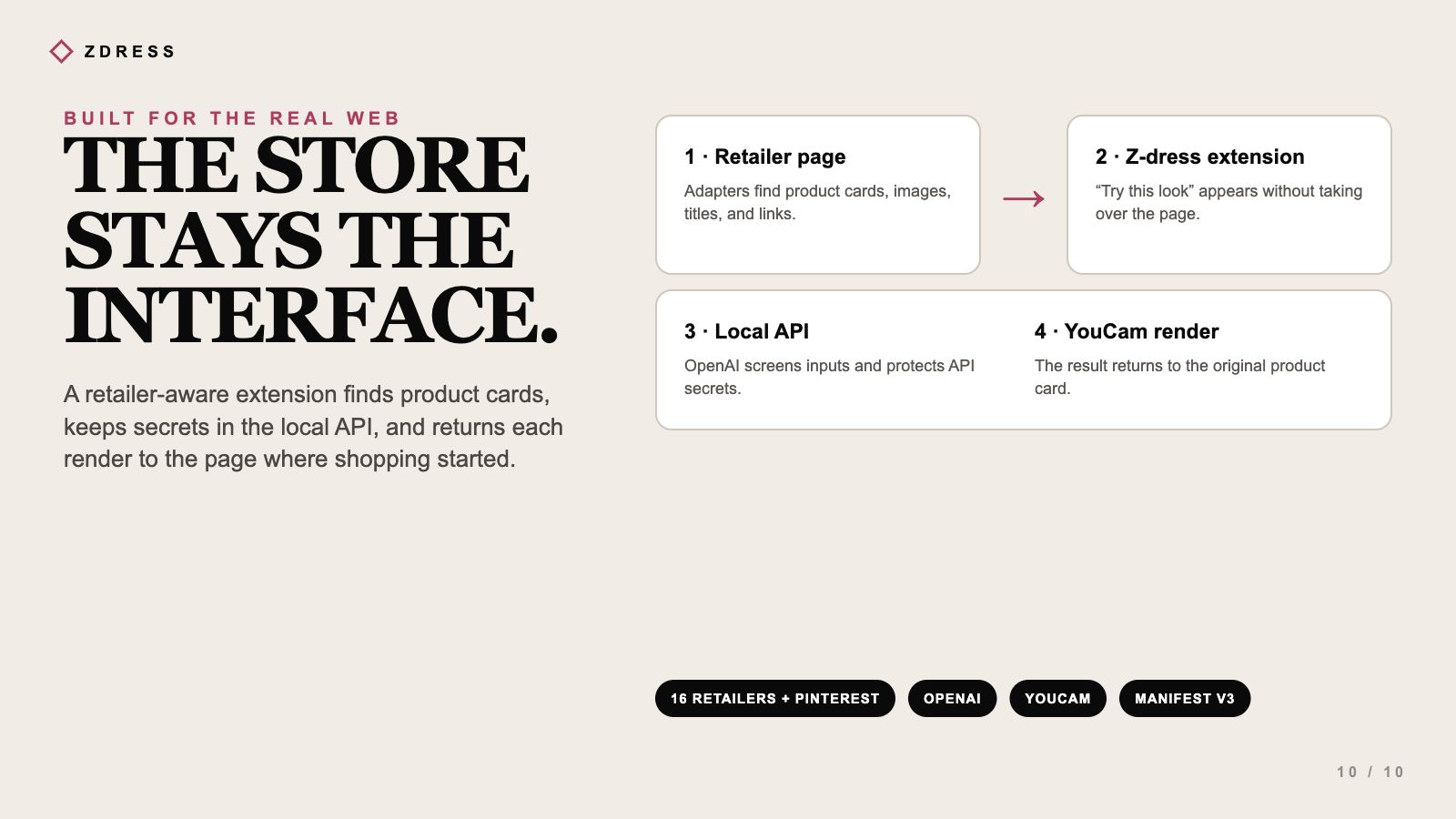
A Manifest V3 extension for Chrome and Firefox from one source tree, plus a small local Express server that holds the API keys — an extension can't keep a secret, and CORS would block the calls anyway. Site adapters live in one file, so adding a retailer never touches the core.
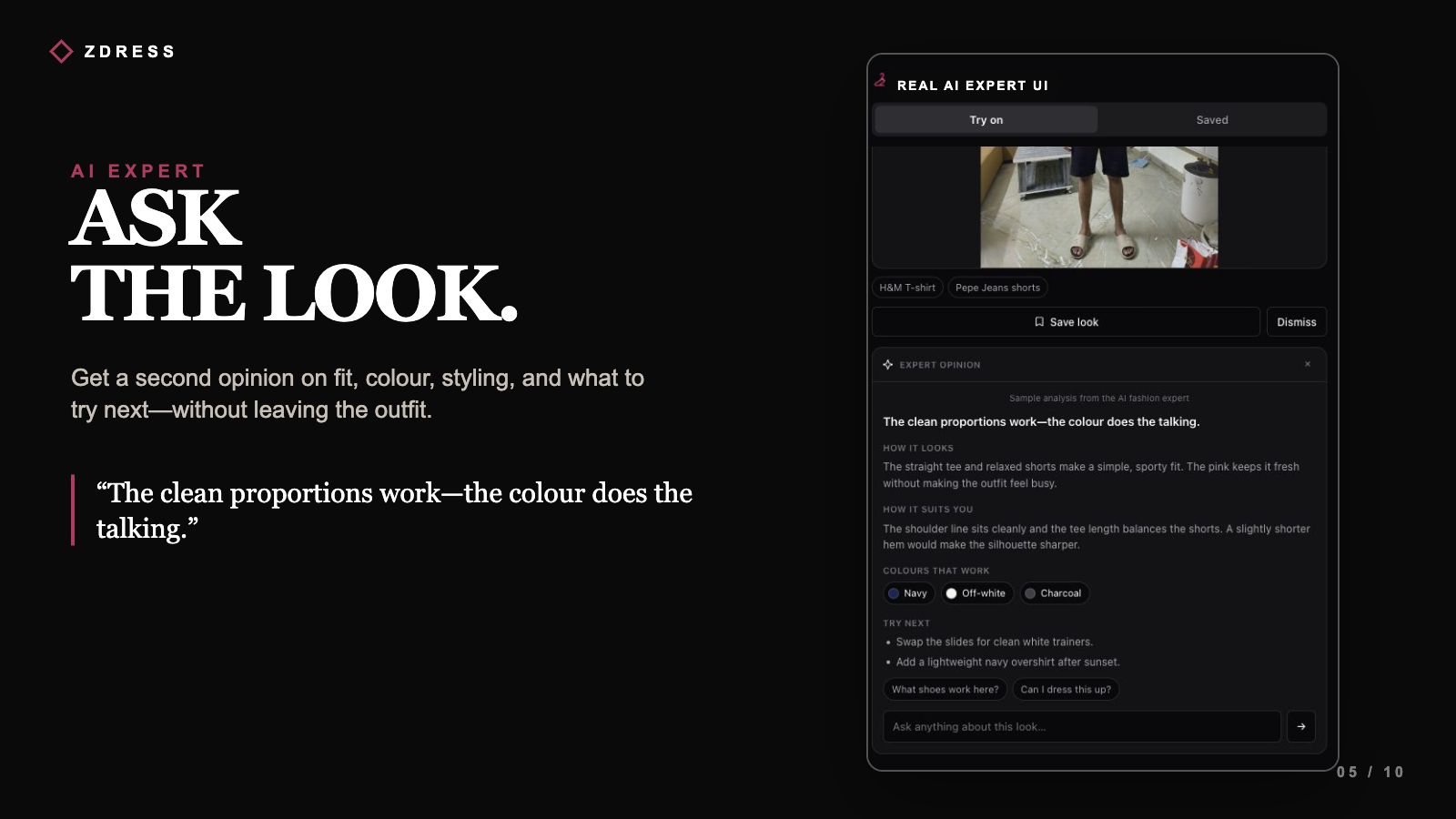
Renders come from YouCam's Apparel Virtual Try-On. Before spending anything, a vision pre-flight screens the image and picks the garment category. Sharp does the cropping; finished renders are written to disk.
Challenges we ran into
The cloth endpoint takes one garment per call, so outfits had to be chained, each render becoming the person image for the next. Order matters — lower body before upper, or a long shirt gets clipped by the waistband.
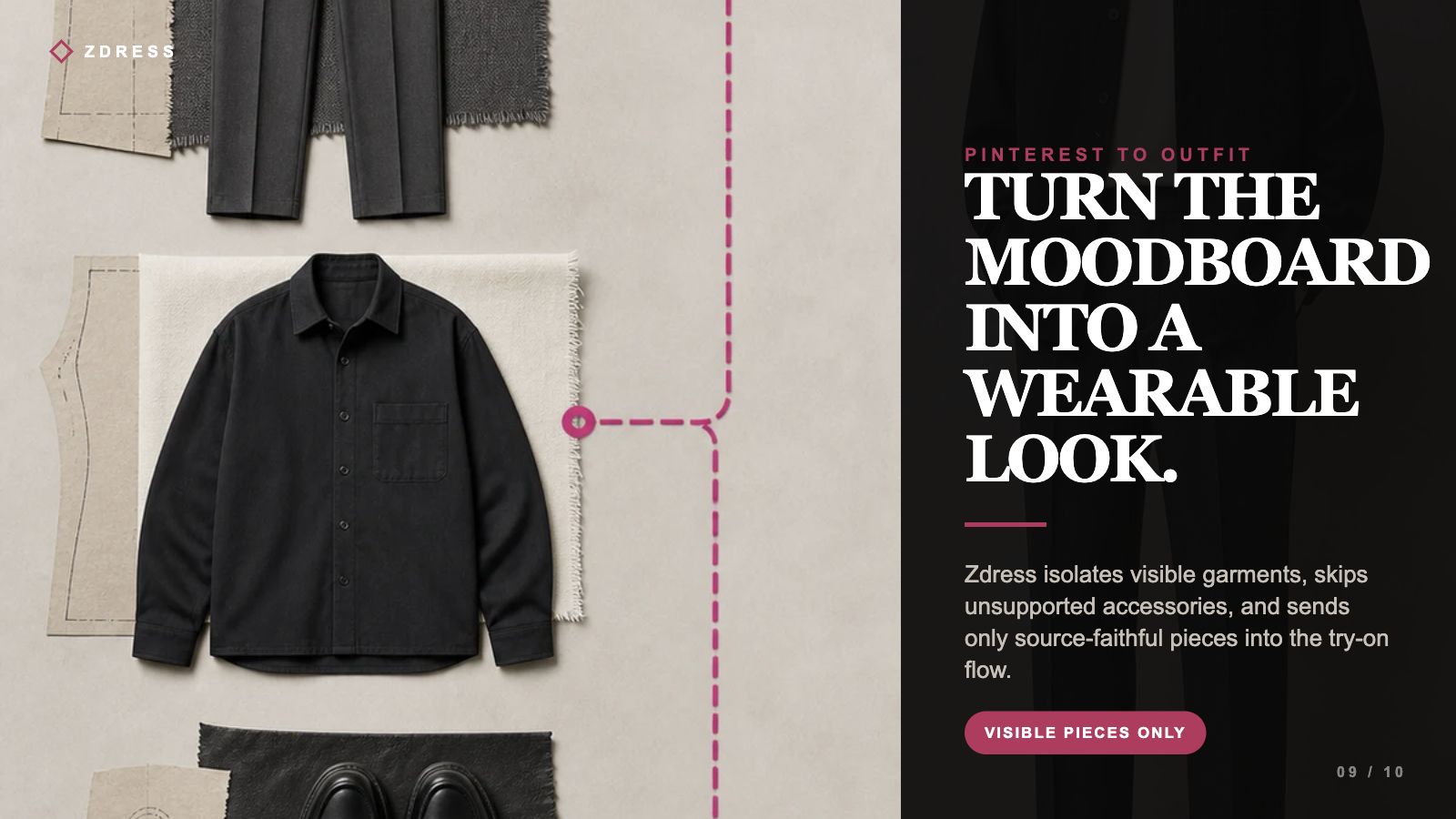
Pinterest was worse. Screening kept reading moodboards of separate pieces as "co-ord sets" and pushing the whole board through as one garment. With nothing to say how long the legs were, full-length jeans came back as shorts. Fixing it took a separate signal for board-shaped images, then a second check on every crop for whether the garment ran off its own edge.
Accomplishments that we're proud of
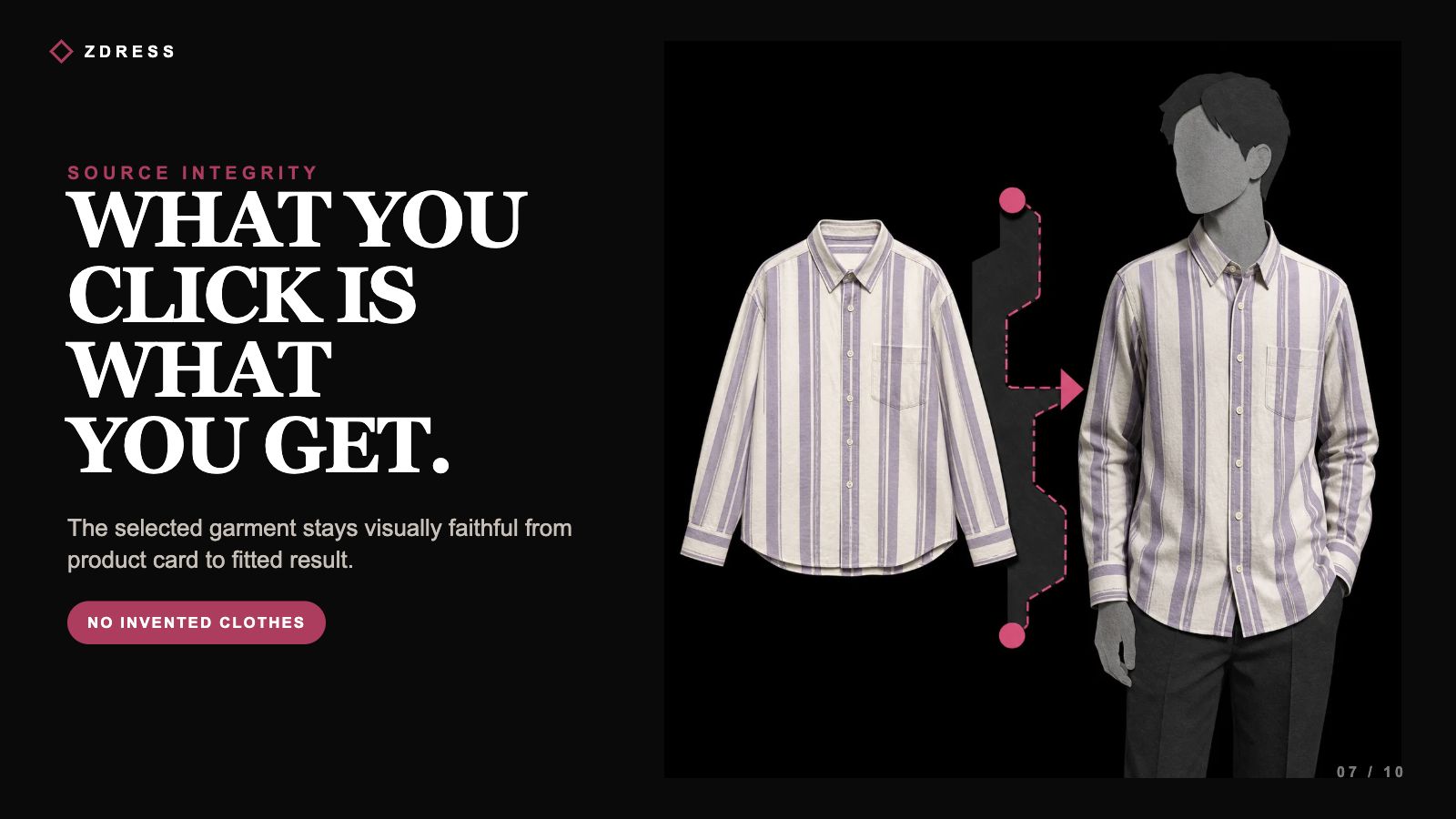
Nothing is invented. On Pinterest we only locate garments and cut the real pixels out — rebuilding them with an image model lost logos and dropped whole pieces.
Outfits that cross stores work, because the selection lives in the extension rather than the page. And the original goal held: you never leave the page you were shopping on.
What we learned
A check is only worth having if it can disagree with you. Most of our render bugs weren't the render — they were us handing the model a conclusion and asking it to agree. Passing a guessed garment label into screening just got the guess confirmed.
Also: gate before you spend. Screening costs a fraction of a render, and refusing a handbag early beats explaining a bad result later.
What's next
More retailers, and size guidance layered on top of fit, I would love to launch this as a serious product with the YouCam team!
Built With
- chrome
- computer-vision
- express.js
- firefox-extension
- framer-motion
- gpt
- javascript
- manifest-v3
- next.js
- node.js
- openai
- perfect-corp
- react
- shadcn-ui
- sharp
- tailwindcss
- typescript
- webextensions
- youcam


Log in or sign up for Devpost to join the conversation.