-
-
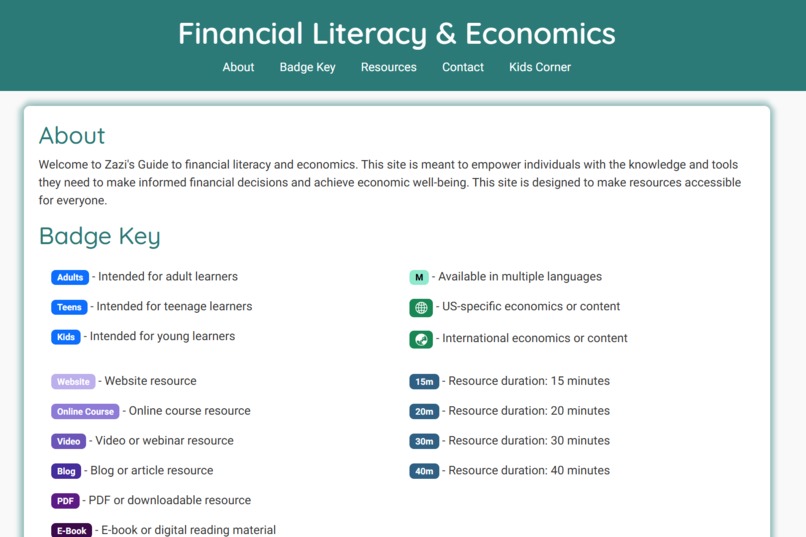
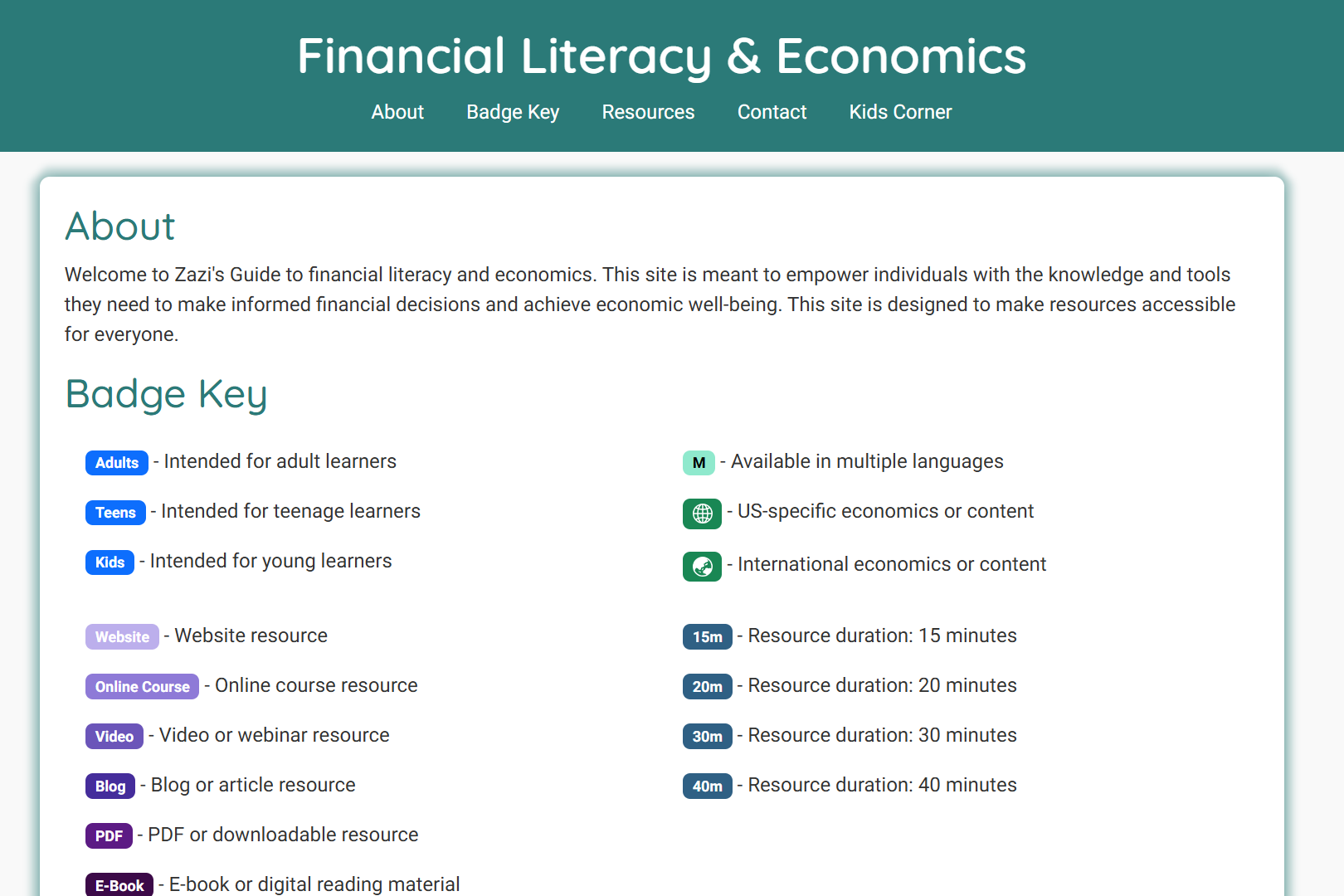
Index Page
-
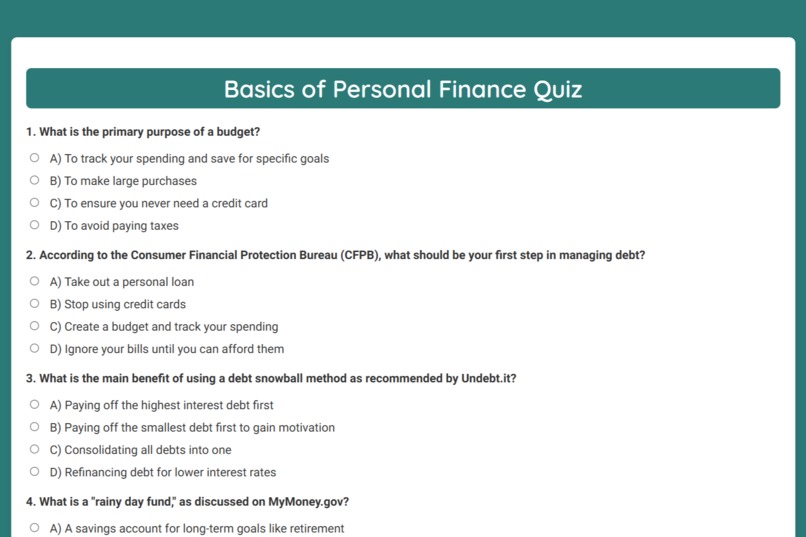
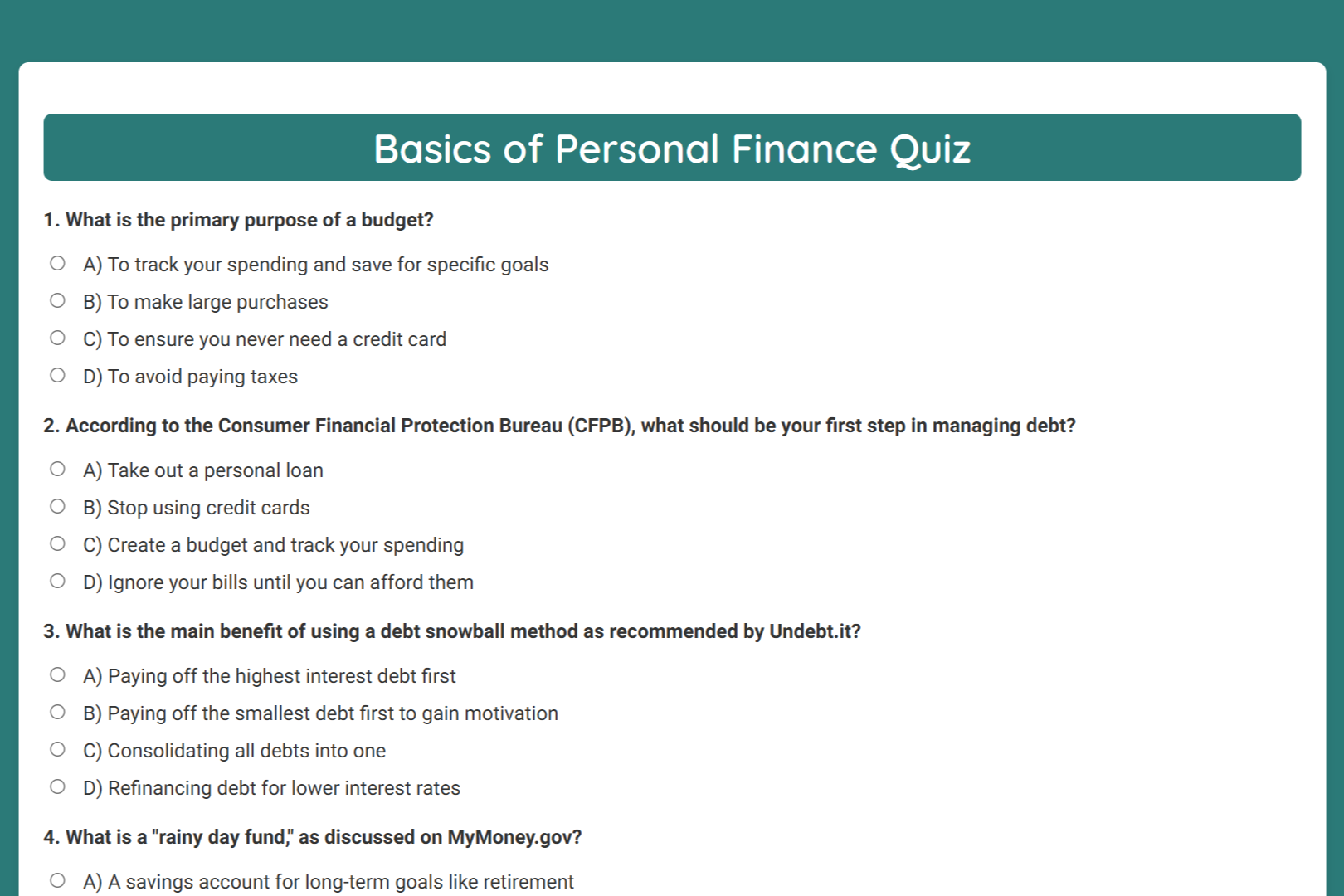
First Sub-Section Quiz
-
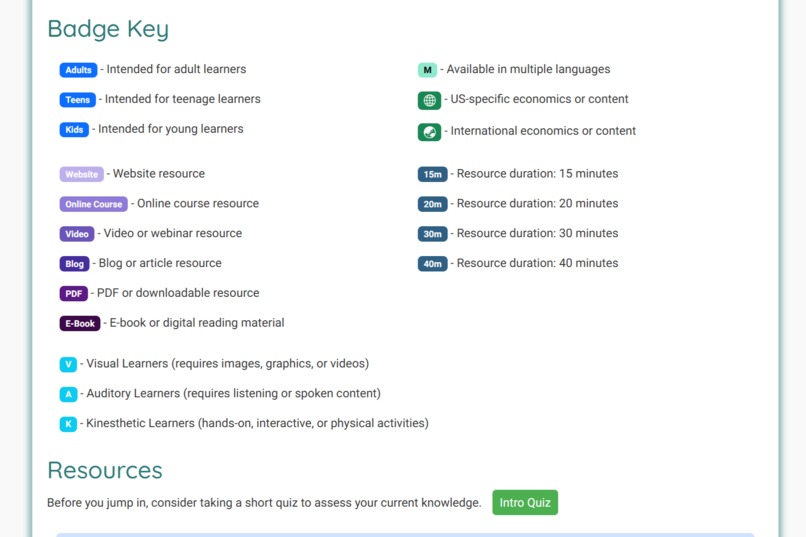
Badge Key
-
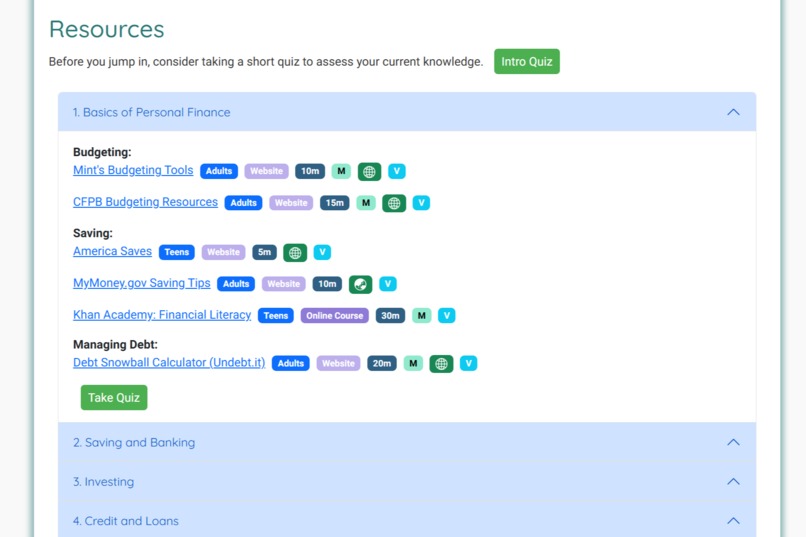
Library
-
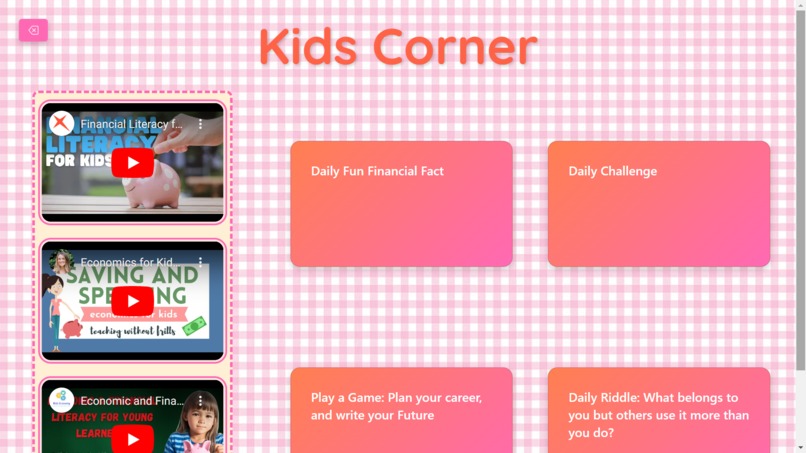
Kids corner homepage
-
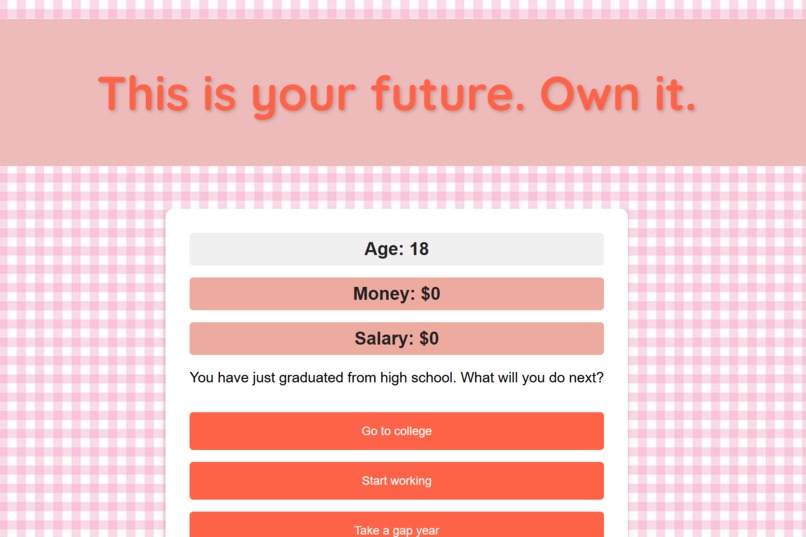
Kids Finance Game
Inspiration
The inspiration for Zazi's Guide to Financial Literacy and Economics comes from the realization that financial literacy is a critical yet often overlooked skill, especially among young people. By combining interactive storytelling with educational content, this resource aims to make learning about money management, career planning, and economics engaging and relatable. The challenges faced by young individuals, particularly those from underrepresented backgrounds, served as a driving force behind this project.
What it does
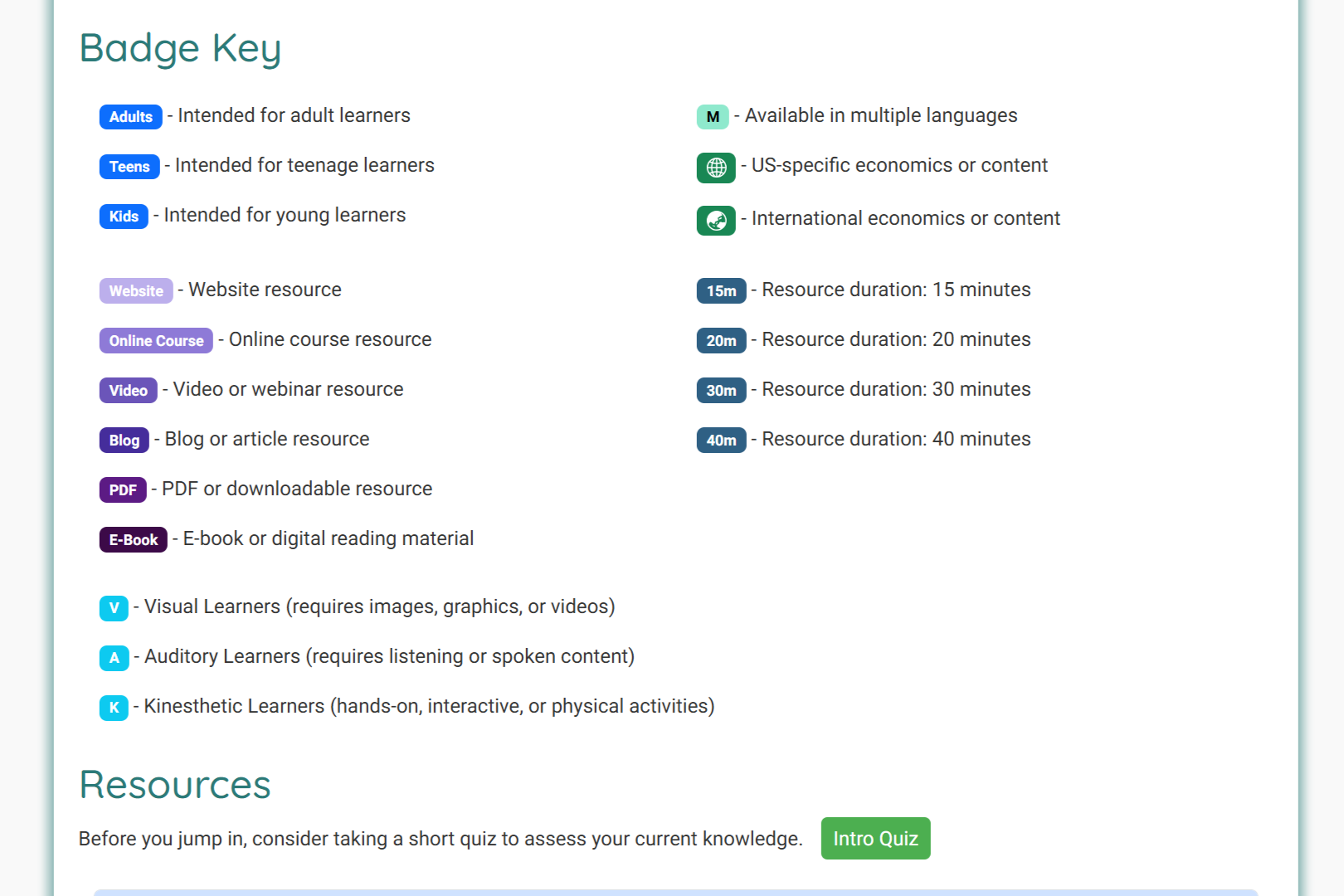
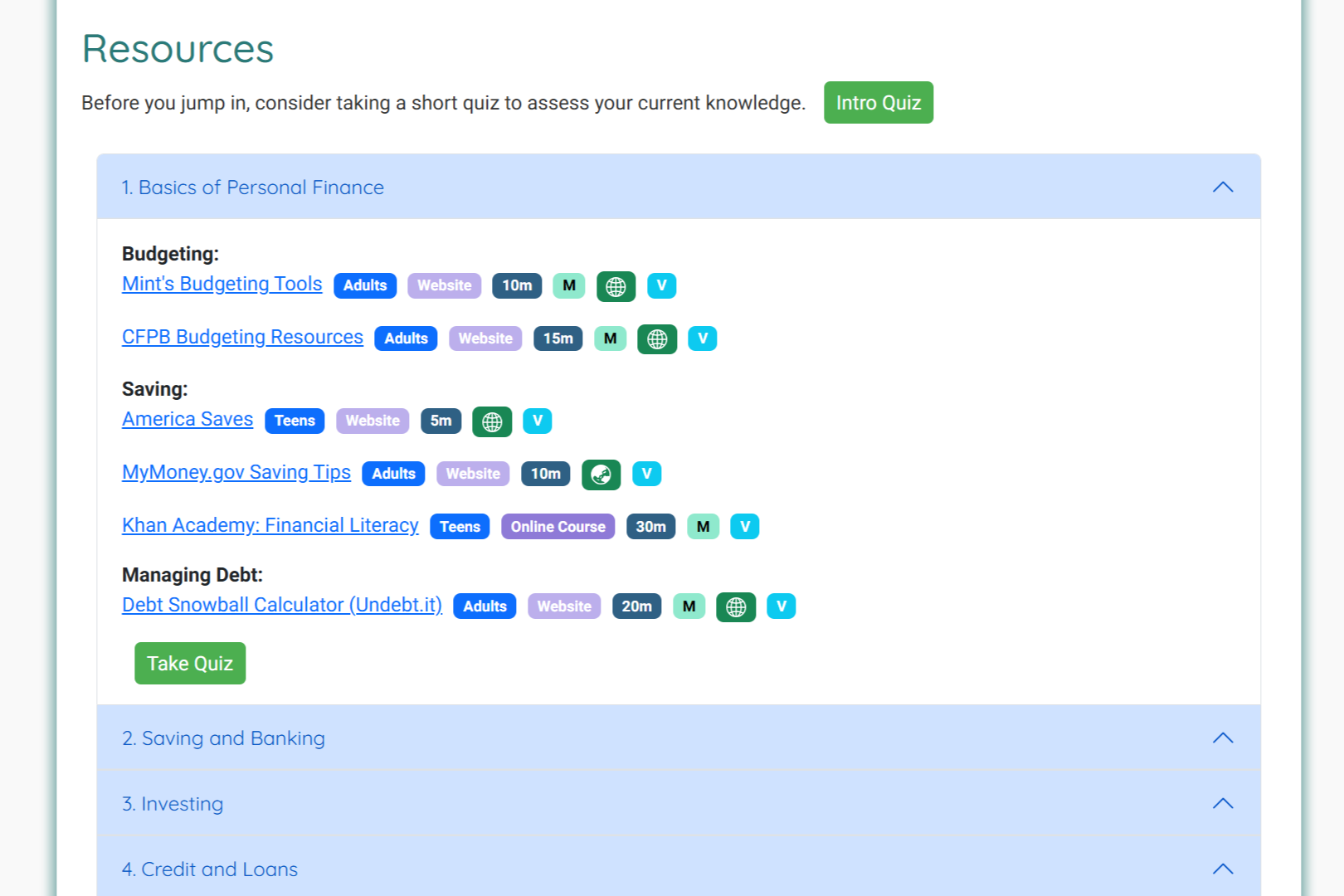
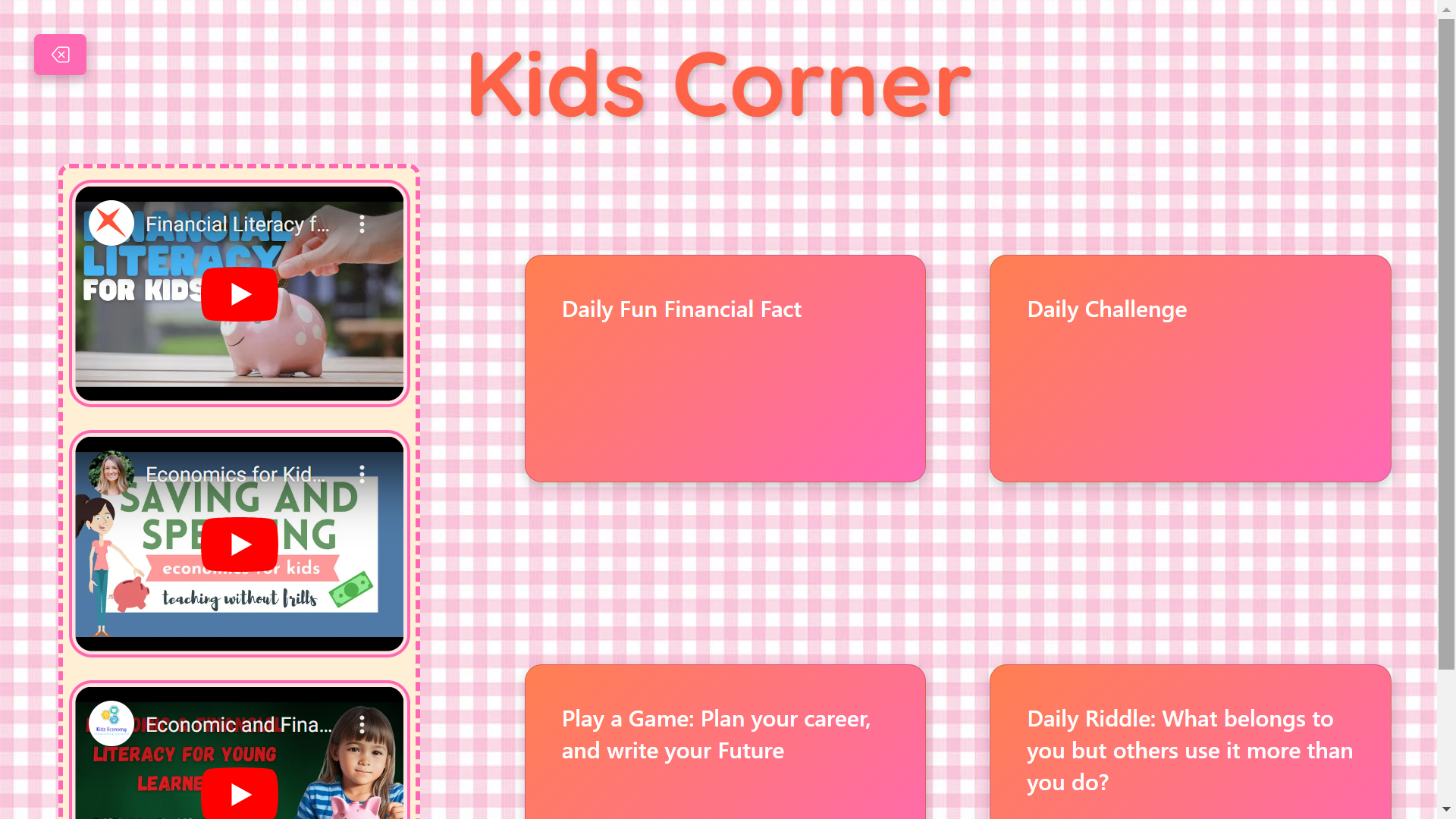
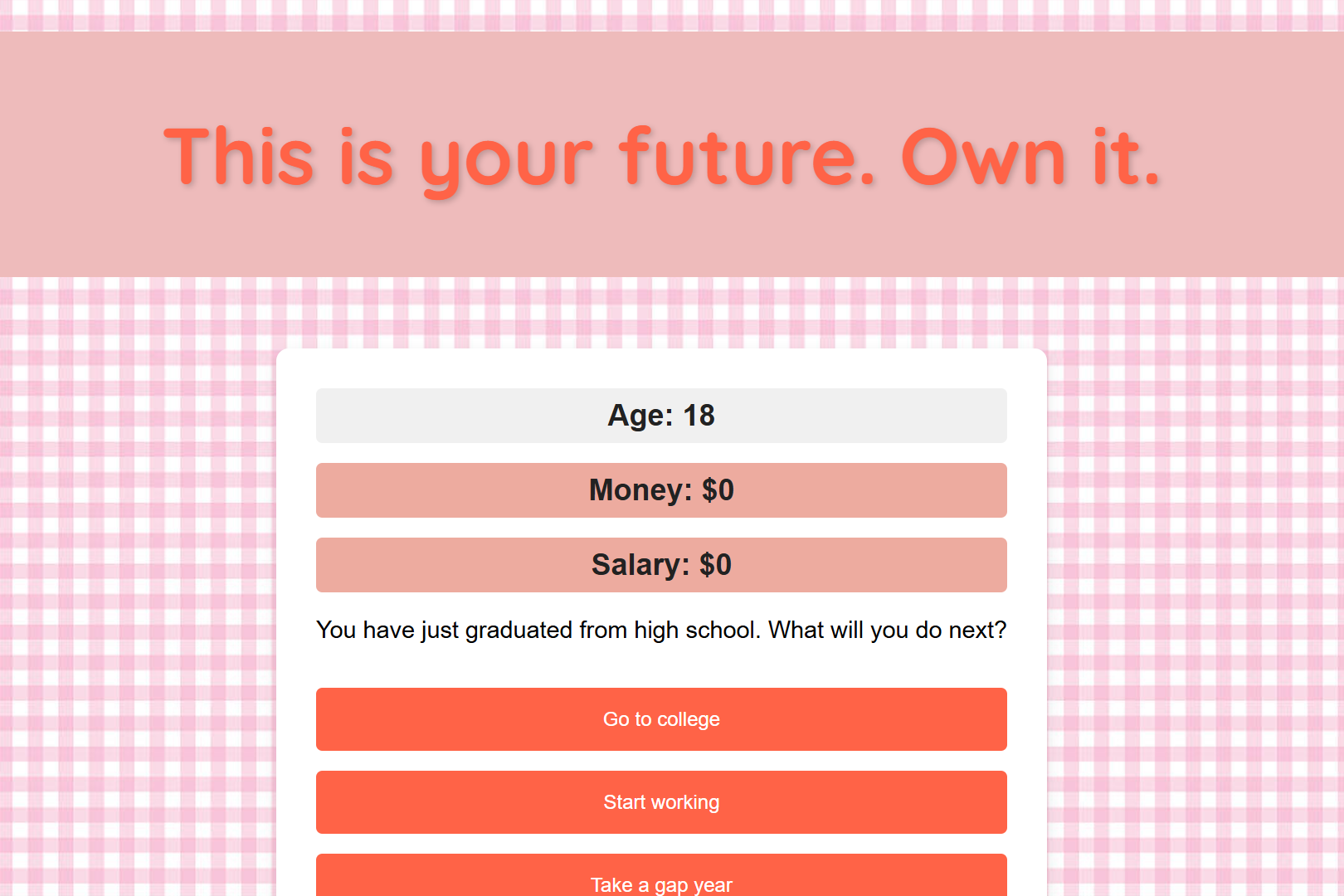
Zazi's Guide to Financial Literacy and Economics has three main components to its functionality. The index page which functions as a free resource library, organized by topics and utilizing relevance tags. The second part of it's functionality are the quizzes imbedded within the library of content. This aims to help make sure users are not only learning new content, but retaining the information. The last aspect of its functionality is the Kids' Corner, the most interesting part of which is the interactive, choose-your-own-adventure game that immerses users in life-like scenarios where they make decisions about their careers, education, and finances. You start at age 18, fresh out of high school, the game tracks users' age, salary, and money, adjusting dynamically as they encounter opportunities and obstacles. Players learn to budget, save, invest, and manage expenses while navigating through career choices, education paths, and personal challenges.
How I built it
The project is built using HTML, CSS, and JavaScript, creating a fully interactive and responsive web application. The core functionality involves a dynamic decision tree implemented through JavaScript, which tracks the user's progress, calculates expenses and income, and adjusts gameplay elements like age and financial status. The UI design emphasizes clarity and engagement, ensuring users can easily navigate the website.
Challenges I ran into
One of the main challenges was structuring the complex decision tree to allow for multiple pathways and outcomes while maintaining a cohesive narrative. Balancing realism with accessibility was another challenge—simplifying financial concepts without losing their educational value required careful thought. Additionally, designing an intuitive interface that supports diverse user needs was a continuous effort.
Accomplishments that I am proud of
I am proud of creating an engaging educational tool that blends entertainment with practical knowledge. I am specifically proud of the choose your own adventure game on the Kids' Corner page. Though it is not finished, the dynamic tracking of age, salary, and finances adds depth to the gameplay, providing users with a sense of progression and real-world relevance.
What we learned
This project taught me the importance of user-centric design, particularly in educational tools. I gained valuable insights into structuring interactive narratives and managing data dynamically in a web application. Additionally, I deepened our understanding of the challenges and opportunities in promoting financial literacy through innovative approaches.
What's next for Zazi's Guide to Financial Literacy and Economics
The next steps include:
- Expanding the range of scenarios to cover more diverse career paths, life challenges, and financial decisions.
- Integrating data analytics to track user engagement and learning outcomes.
- Improve mobile-friendly UE.
- Collaborating with educators and financial experts to refine content and incorporate feedback.
- Exploring gamified rewards or certifications to enhance user motivation and retention.
- Adding localization and translation options to make the guide accessible to a global audience.
- Make the current quizess more comprehensive. Add time monitors to allow hints after x amount of time. Finish adding the rest of the quizzes.
- Make the Kids' Corner more engaging to retain a young audience's attention.
- A new game that links daily life to finances/economics
- Add search bar for the resource library. Add filter for the badges/tags.
- Add accessibility tags and/or ratings for people who use accessibility tools such as screen readers with their technology.
- Add synopses for each resource that provide more insight into the types of people that would benefit from that specific resource to help users match themselves with adequate resources.
- Add an AI chatbot that can help them navigate the site, and find resources through other filters.
- Potentially add more filters (is needed/useful)
- Community forum so that users can help each other, find more free resources, and find study-buddies.
- A newsletter with new resources, games, etc.
Built With
- bootstrap
- css
- daisyui
- html
- javascript

Log in or sign up for Devpost to join the conversation.