-
-
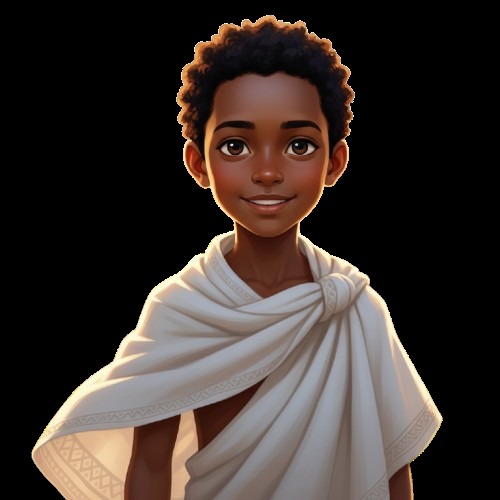
Andry one of your heros
-
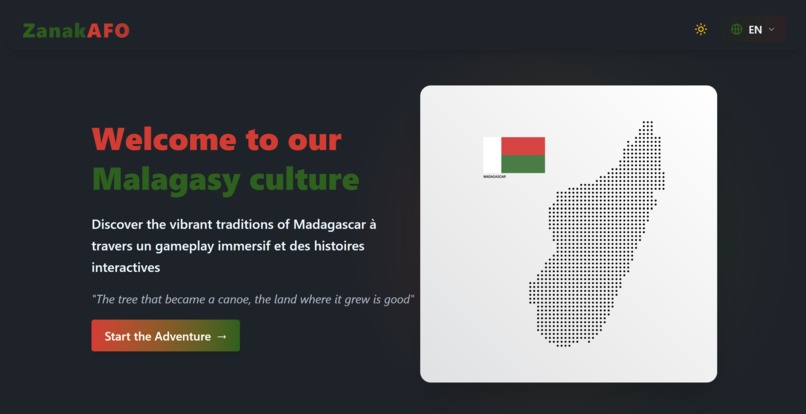
Home page
-
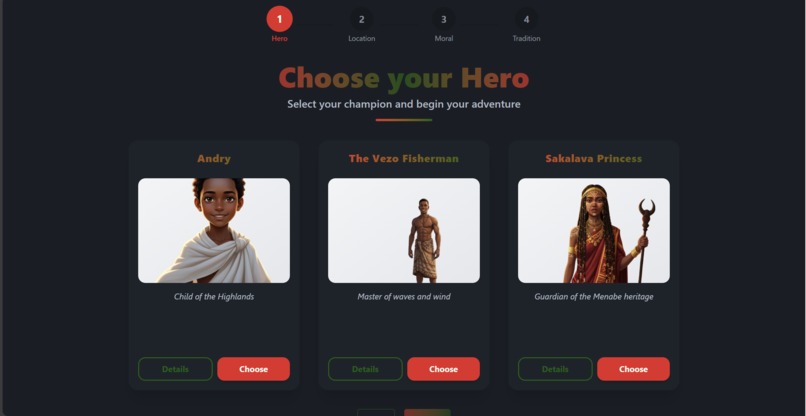
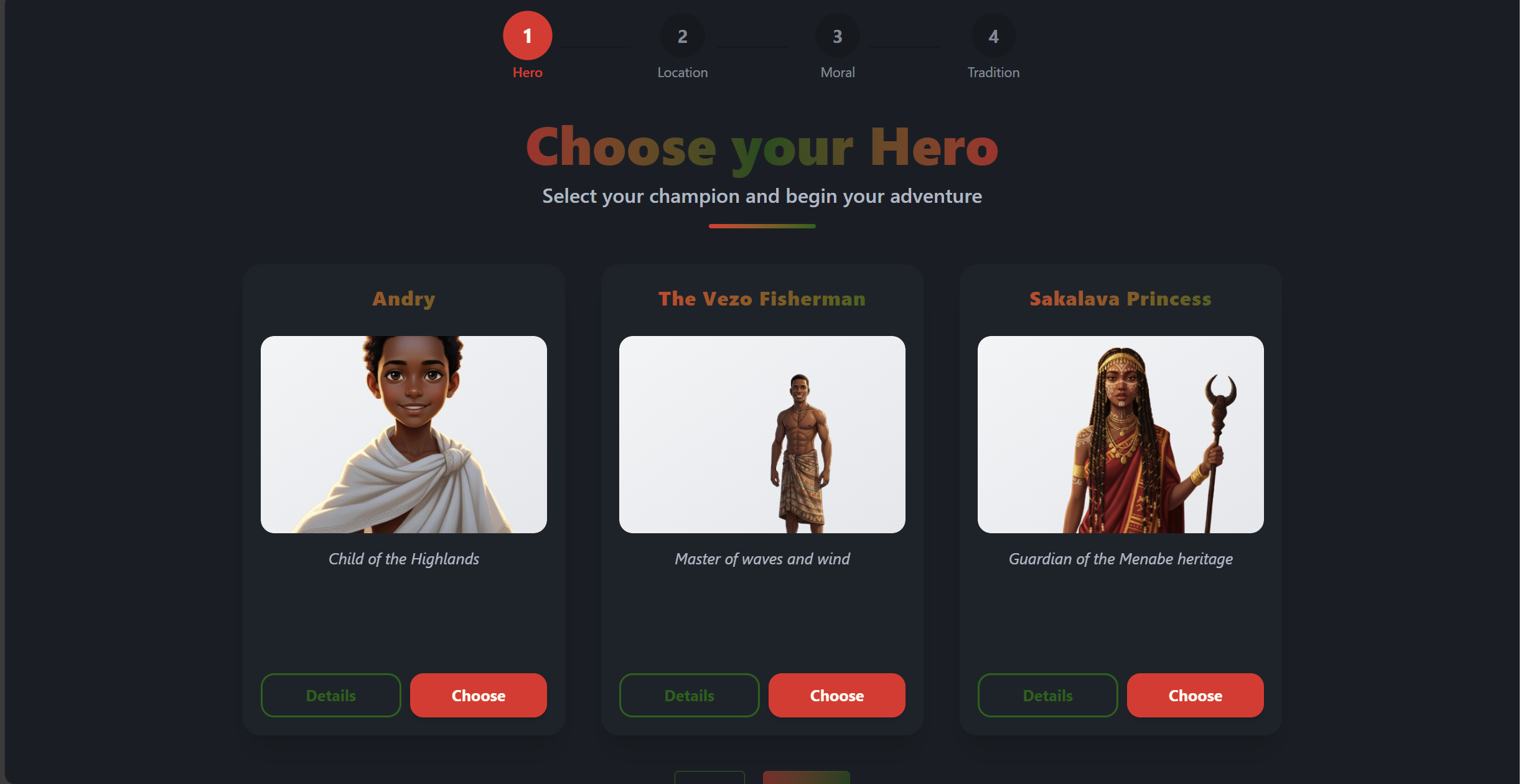
Screen HERO choice
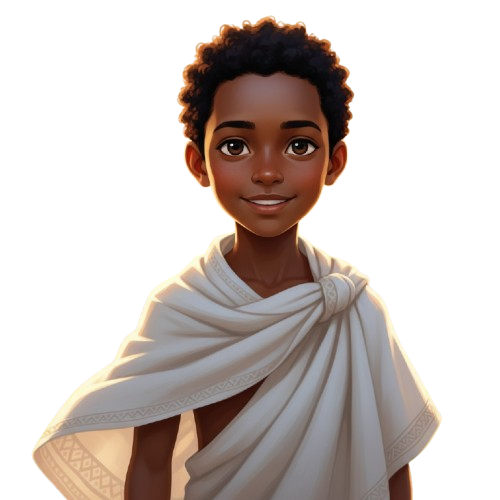
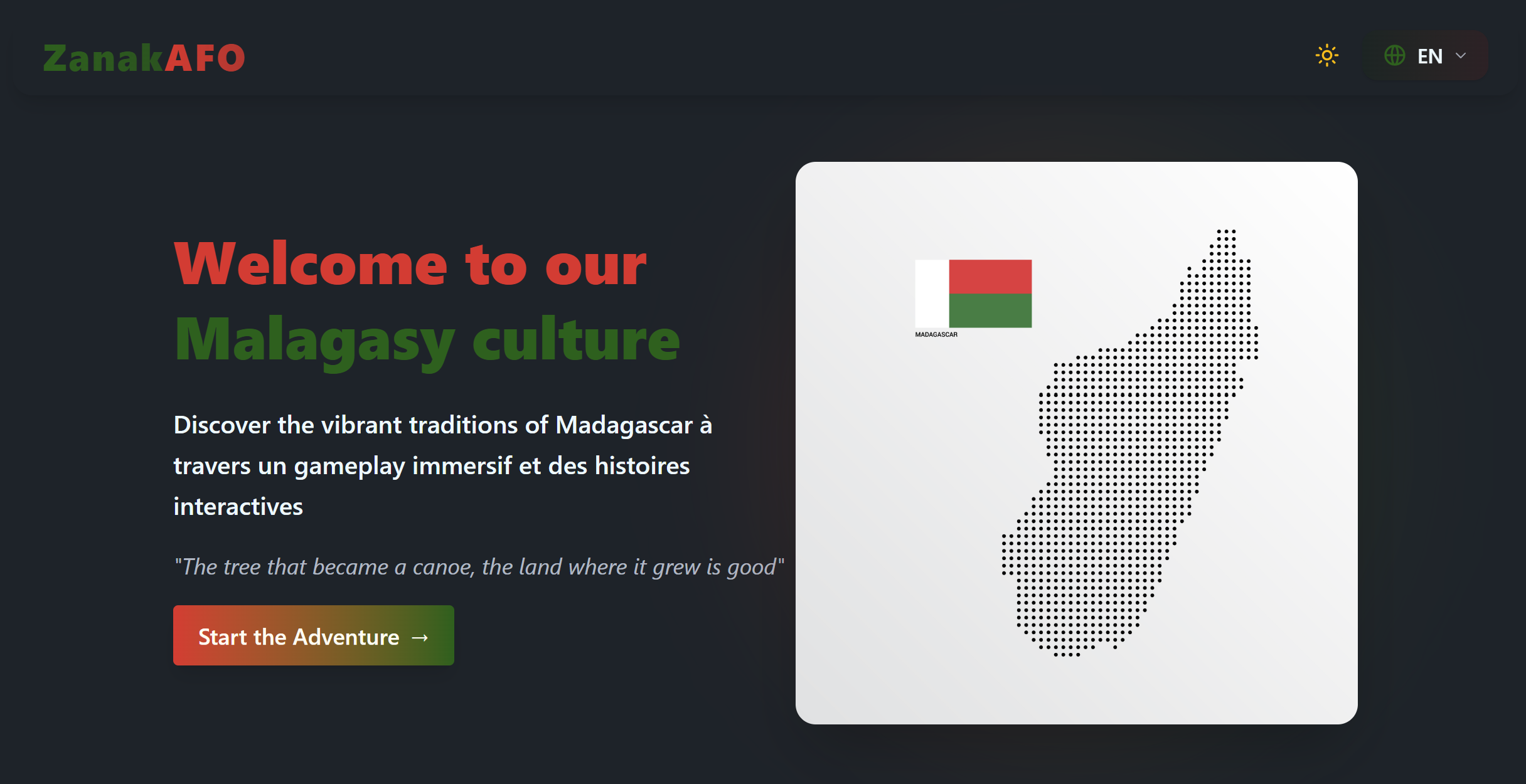
ZanakAFO
Inspiration
In Madagascar, many children grow up with oral stories, but these tales are slowly disappearing as there are fewer storytellers and almost no modern, accessible formats. At the same time, local educational content is scarce and often replaced by foreign stories that do not reflect Malagasy realities.
ZanakAFO was born from the desire to preserve Malagasy narrative heritage while using AI and web technology to reach young people where they really are. The project also addresses accessibility: offering an interactive, multilingual format for children who read little, in both urban and rural areas.
We were inspired by the urgency to act before these oral traditions vanish completely, and by the opportunity to show that AI can serve cultural preservation rather than replace it.
What it does
ZanakAFO is an interactive Malagasy storytelling studio where users:
- Choose a hero (child from the Highlands, Vezo fisherman, Bara shepherd girl, Sakalava princess)
- Select a place (village, forest, coast, sacred site)
- Pick a moral (respect for ancestors, solidarity, environmental protection)
The AI then generates a custom story with text, images, and multiple choices. During the story, users make decisions—respecting or breaking a fady, helping or ignoring a stranger—that change the plot and the ending. Each story highlights key themes of Malagasy culture such as respect for ancestors, solidarity of the fokonolona, protection of nature, and the importance of traditions.
How we built it
We structured ZanakAFO into four blocks: cultural content, AI narrative engine, multimedia interface, and delivery.
Cultural Content Foundation
We catalogued authentic Malagasy elements:
- Hero archetypes: child from the Highlands, Vezo fisherman, Bara shepherd girl, Sakalava princess
- Emblematic locations: villages, forests, coasts, sacred sites
- Traditions: famadihana (turning of the bones), tromba (spirit possession), fady (taboos), joro (offerings), zebu sacrifice
AI Narrative Engine
A language model generates story scenes based on user choices, following a clear structure:
- Initial situation
- Triggering event
- 3–5 interactive decision points
- Resolution based on choices
- Explicit moral lesson
Multimodal Integration
We combined:
- Text generation for narrative
- Image generation to illustrate key scenes
Web-First Design
The interface was optimized for low-bandwidth environments common in Madagascar, with progressive loading and efficient resource management.
Challenges we ran into
Cultural Sensitivity
Our first challenge was respecting Malagasy cultural sensitivity when integrating sacred traditions (fady, famadihana, tromba, role of ancestors) without distortion or caricature. We had to ensure the AI wouldn't generate content that misrepresented or trivialized these important cultural elements.
Balancing Creativity and Education
We had to balance AI creativity with educational coherence—stories must stay short, understandable, and appropriate for children while still being engaging and culturally authentic.
Technical Orchestration
Orchestrating several modalities (text, images, audio) in an interactive, near real-time flow forced us to simplify the architecture to stay feasible within a hackathon timeframe. Coordinating these different AI systems while maintaining narrative coherence was complex.
Dual Requirements
We needed to design both for low-bandwidth web access (practical necessity in Madagascar) and for a strong demonstration impact (hackathon presentation).
Accomplishments that we're proud of
We are proud that we turned elements of Malagasy folklore—heroes, places, traditions, morals—into a modern interactive system without losing the soul of the original tales.
The prototype already lets users:
- Select a hero, place, and moral
- Play through a story with multiple choices
- Experience different endings based on their decisions
- See their agency reflected in the narrative
We managed to integrate narration, visuals, and audio into a single experience that is web-accessible and designed for both children and educators. The project clearly demonstrates multimodal AI used for concrete cultural and educational impact in Madagascar.
What we learned
AI as Cultural Narrative Engine
We learned that a language model can act as a cultural narrative engine if you give it strong guardrails: hero archetypes, locations, traditions, morals, and story structure. The model doesn't need to "create" culture—it needs to recombine authentic elements in meaningful ways.
Importance of Co-Design
Working on traditions (famadihana, tromba, fady, joro) showed us how important it is to co-design with local stakeholders such as teachers, storytellers, linguists, and artists. Technology alone cannot preserve culture—it requires partnership with cultural bearers.
Power of Interactivity
We saw that interactivity—choices with visible consequences in the story—greatly boosts engagement and retention of values for children. When children make decisions and see outcomes, they internalize moral lessons more deeply than through passive listening.
Multimodal Development
We better understood how to leverage a multimodal model (text, image, audio) to quickly build a credible MVP in a hackathon context, and how to orchestrate these systems for coherent storytelling.
What's next for ZanakAFO
Near Term: Validation and Expansion
Next, we plan to co-create and validate content with traditional storytellers, teachers, and cultural associations to guarantee authenticity and educational impact. We want to expand the catalog of heroes, regions, and traditions so that ZanakAFO reflects the full cultural diversity of Madagascar.
Medium Term: Educational Integration
We plan a "classroom mode" for schools, where:
- Teachers select a moral theme (solidarity, environment, respect for ancestors)
- Students explore different choices in small groups
- The class discusses the moral and different story outcomes together
Long Term: Pan-African Platform
In the longer term, ZanakAFO could become a living library of interactive African tales:
- Web-first design for accessibility across devices
- Learning paths organized by language and by value
- Expansion to other African countries and cultures
- Integration with formal curricula across the continent
Our vision is to prove that AI can be a tool for cultural preservation and transmission, not just disruption.


Log in or sign up for Devpost to join the conversation.