Update:
This project has been Selected as a Global Nominee by NASA for the 2025 Space Apps Challenge , placing ZAMEXO among the top 10% of projects worldwide, out of over 11,500 submissions.
Inspiration
The discovery of exoplanets is one of the most exciting frontiers in astrophysics. Yet, analysing light curves from missions like Kepler, K2, and TESS is often too complex for students and enthusiasts without specialised software. We wanted to simplify that process making real NASA science accessible through a modern, open, and interactive web tool.
What it does
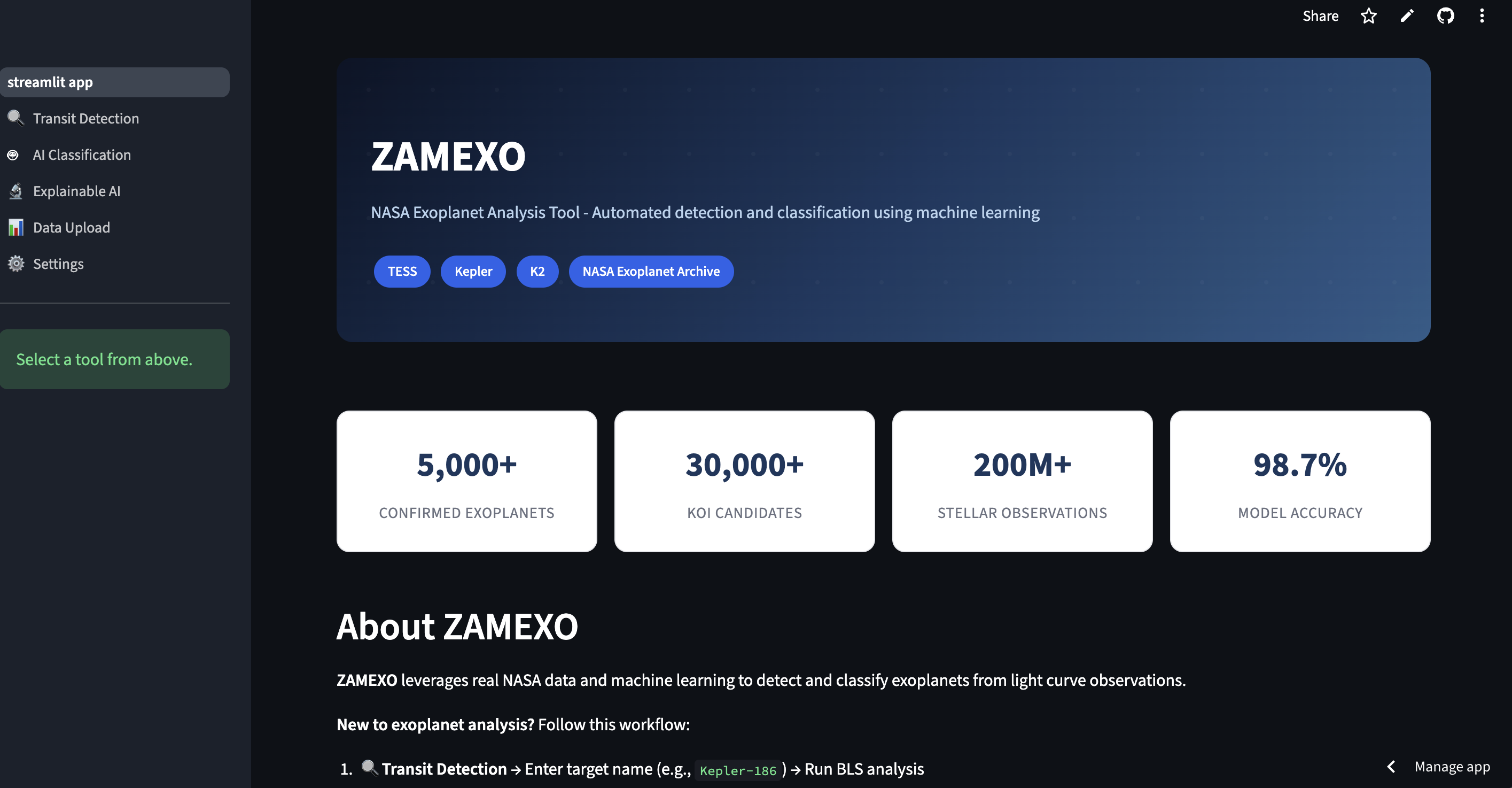
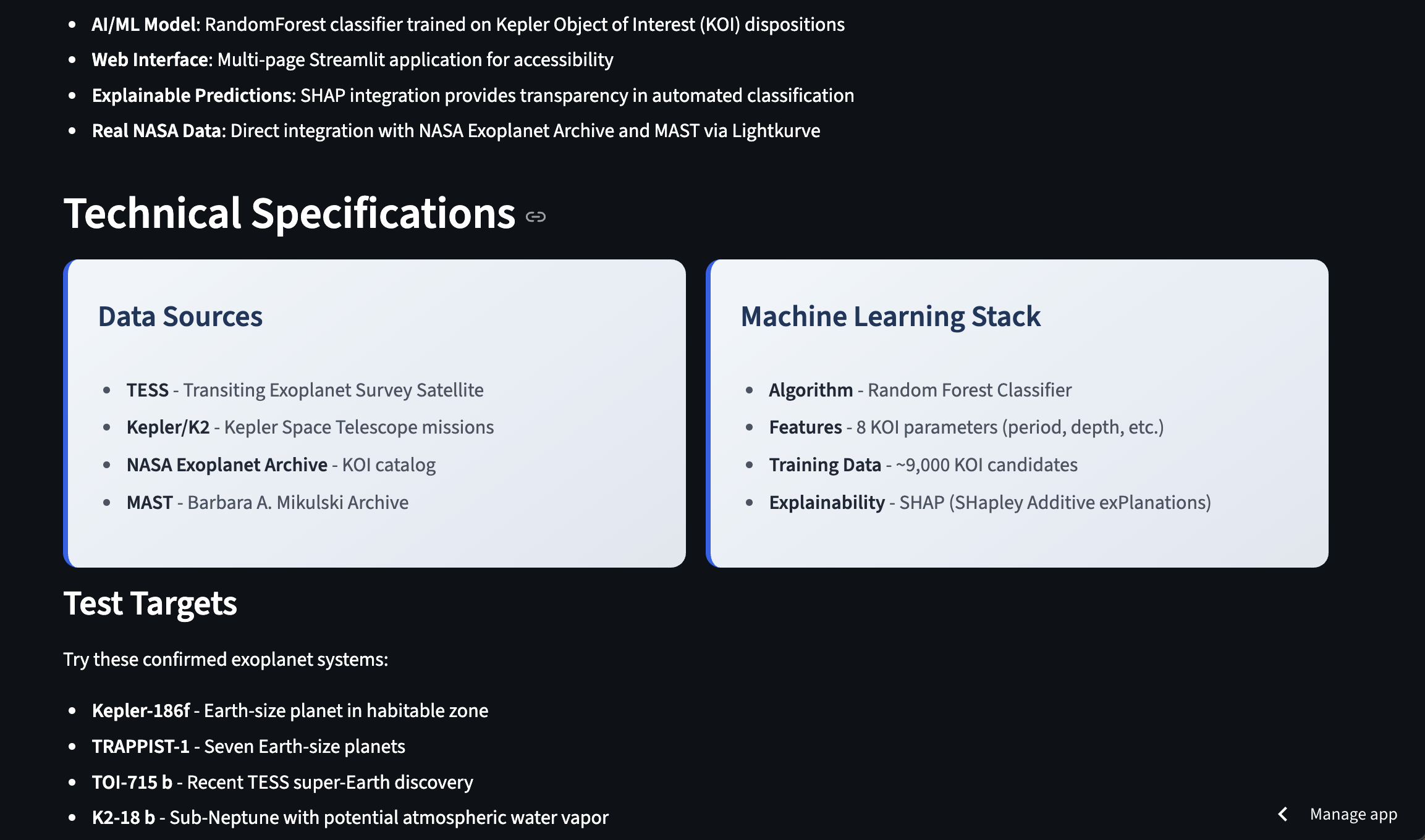
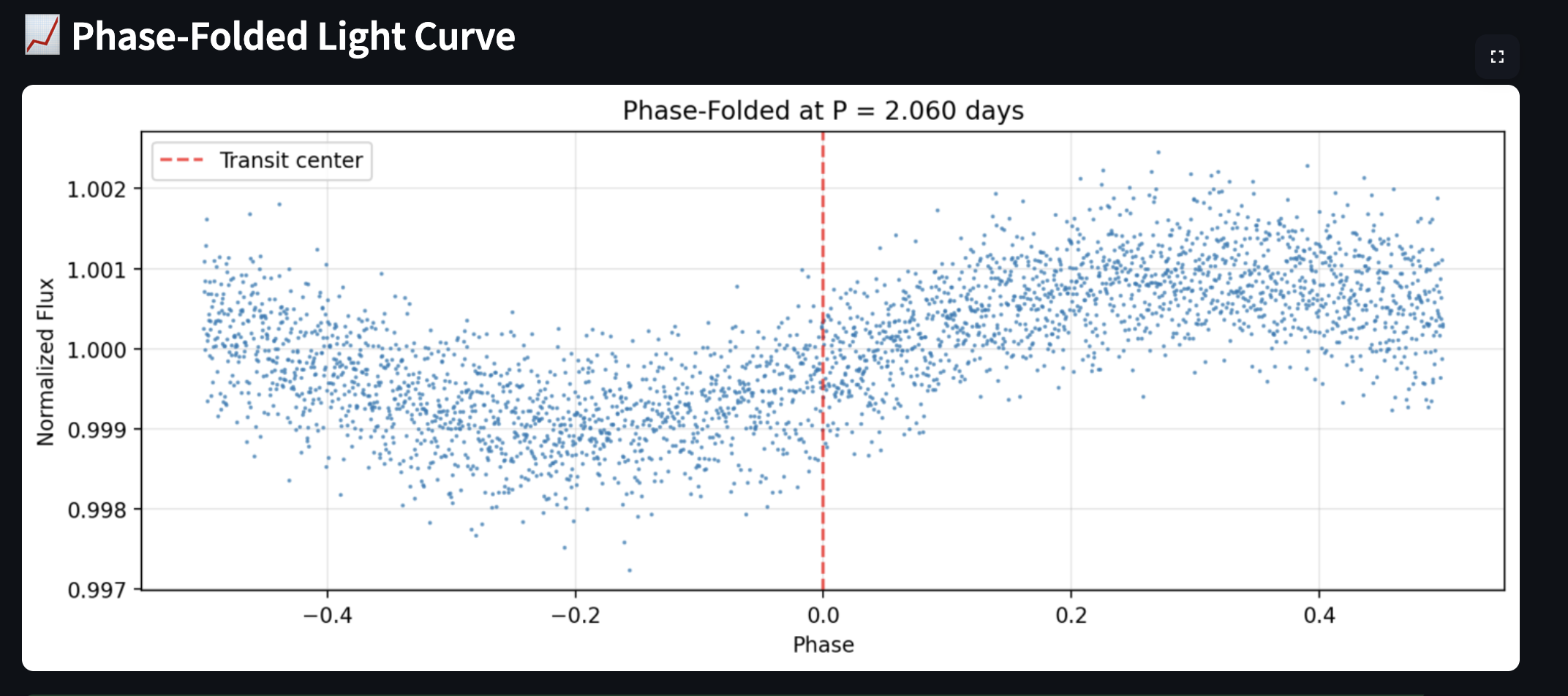
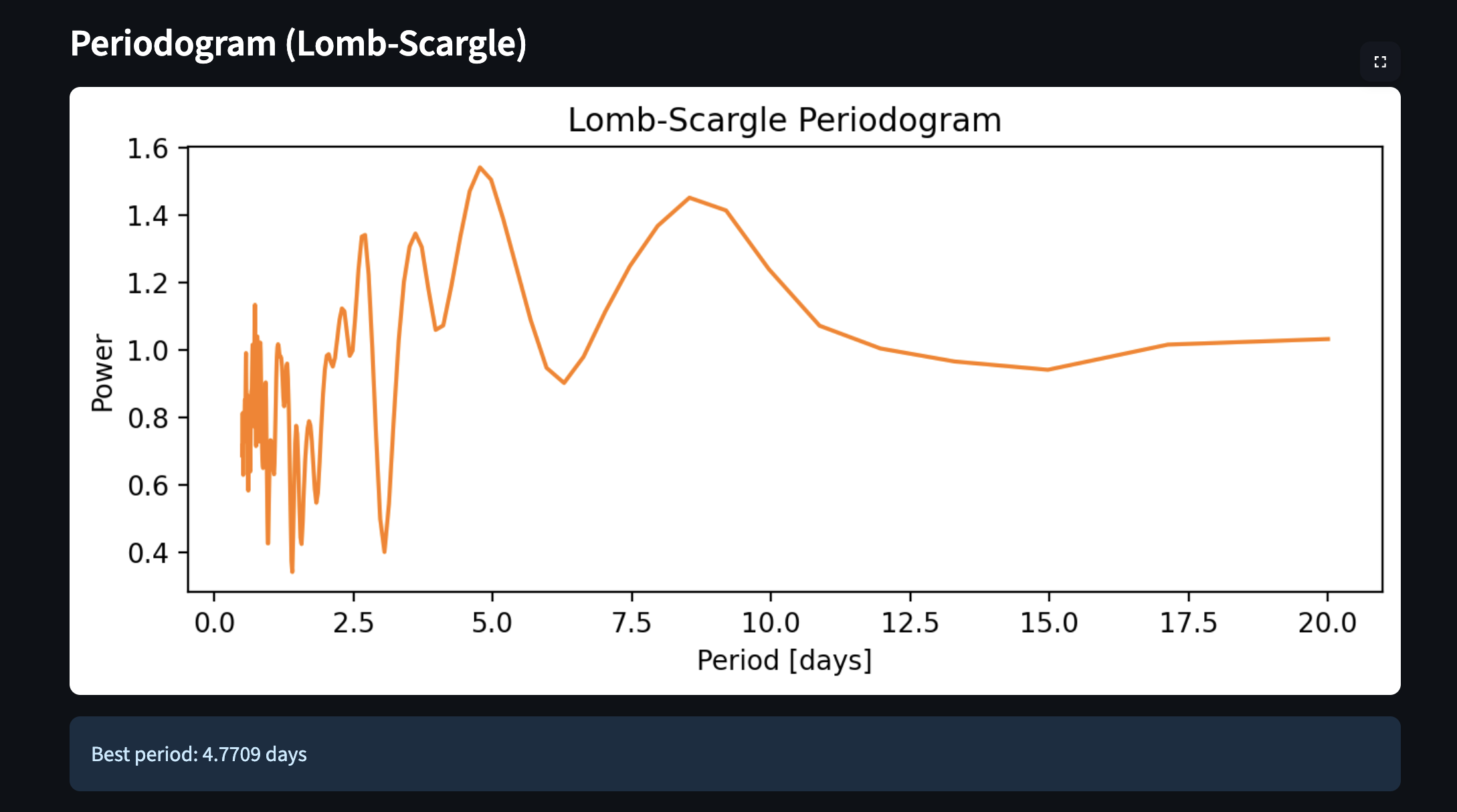
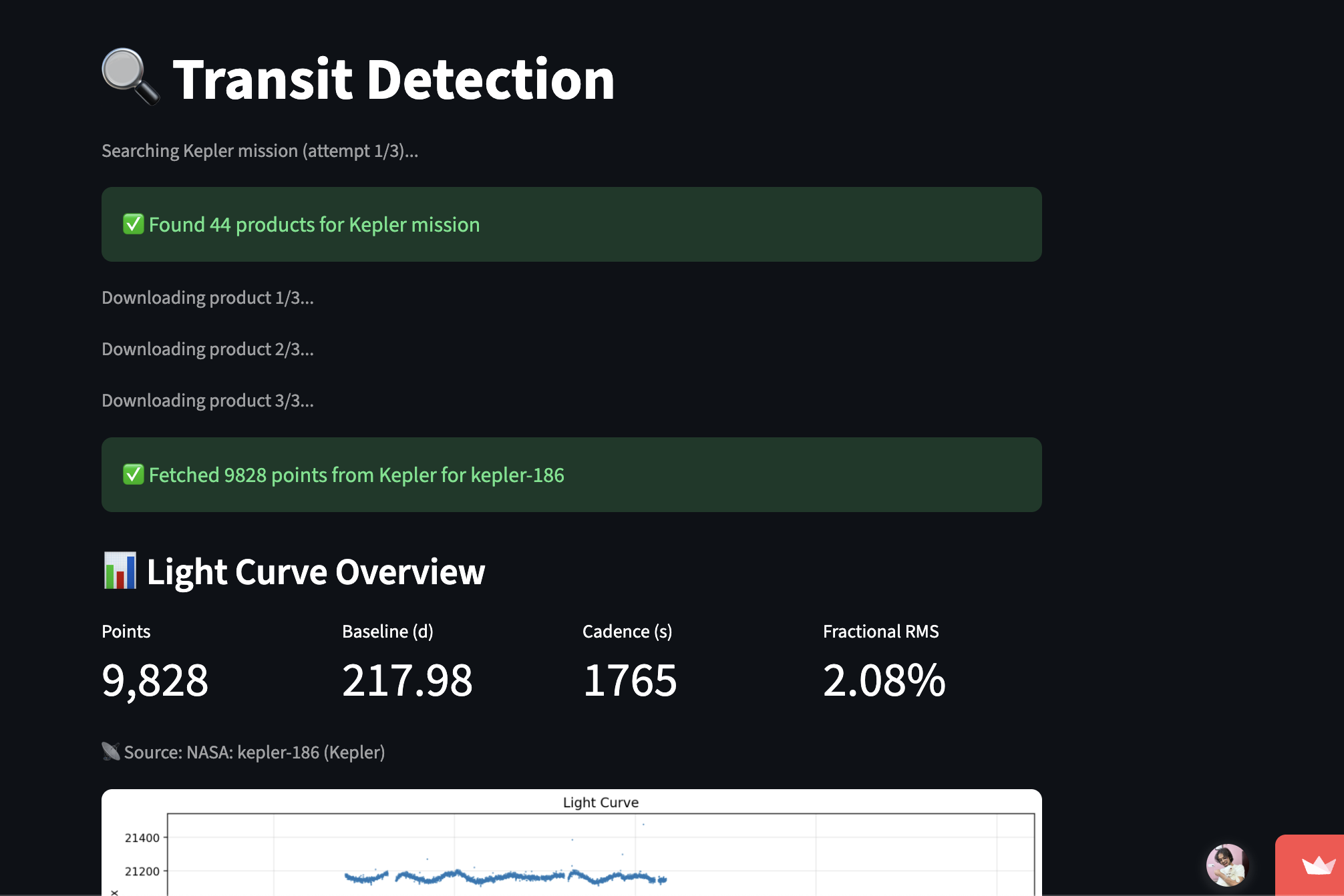
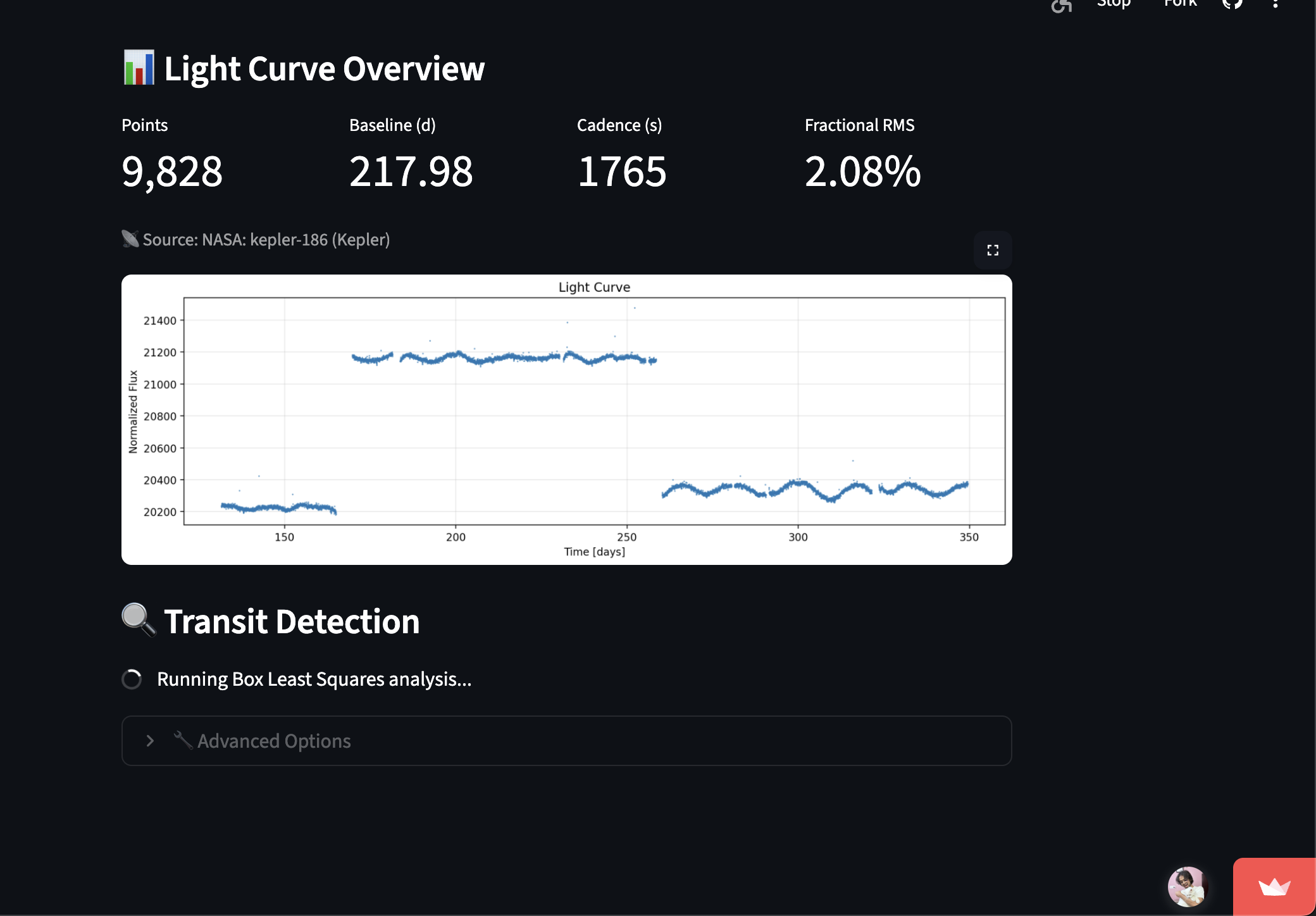
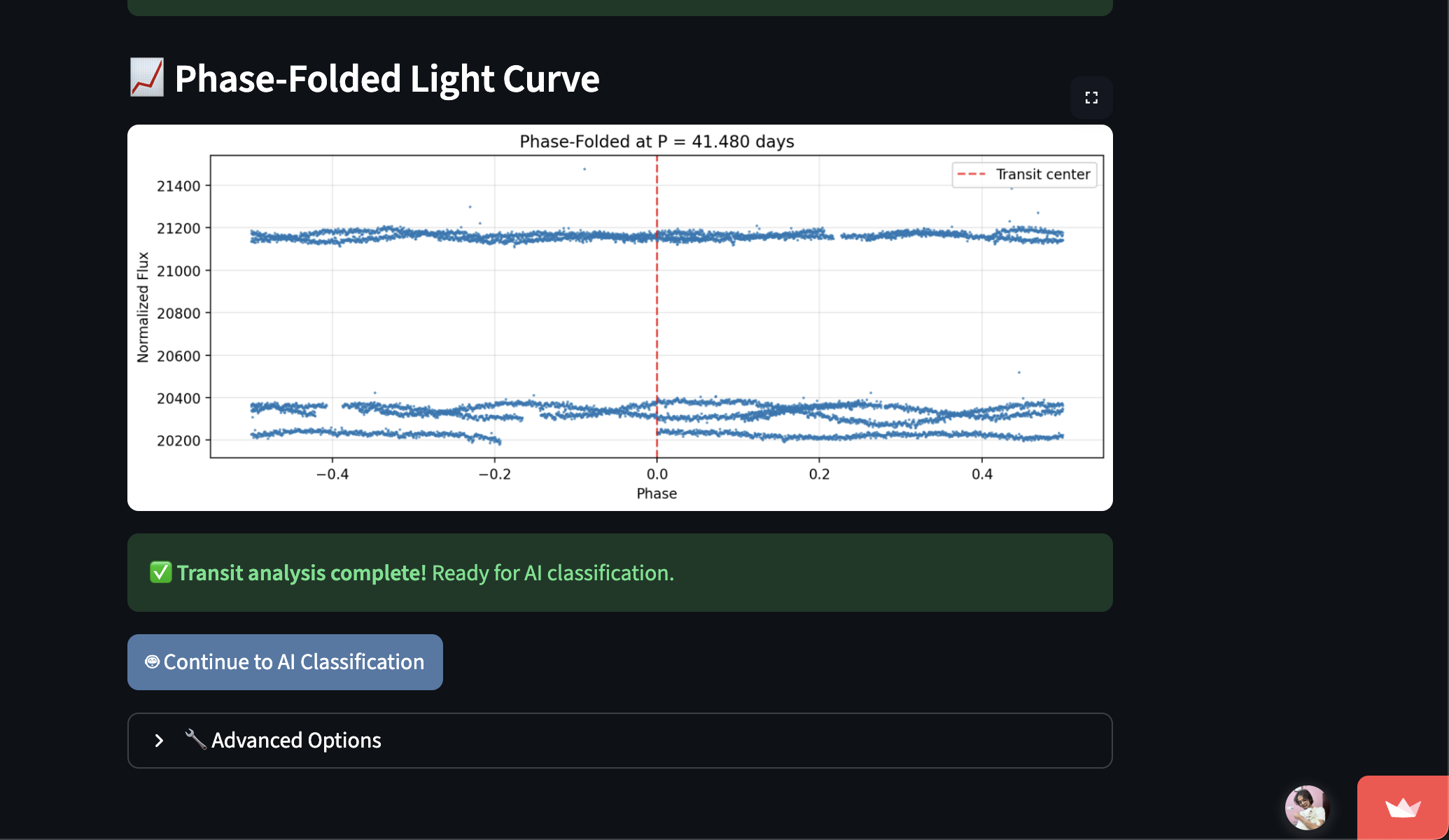
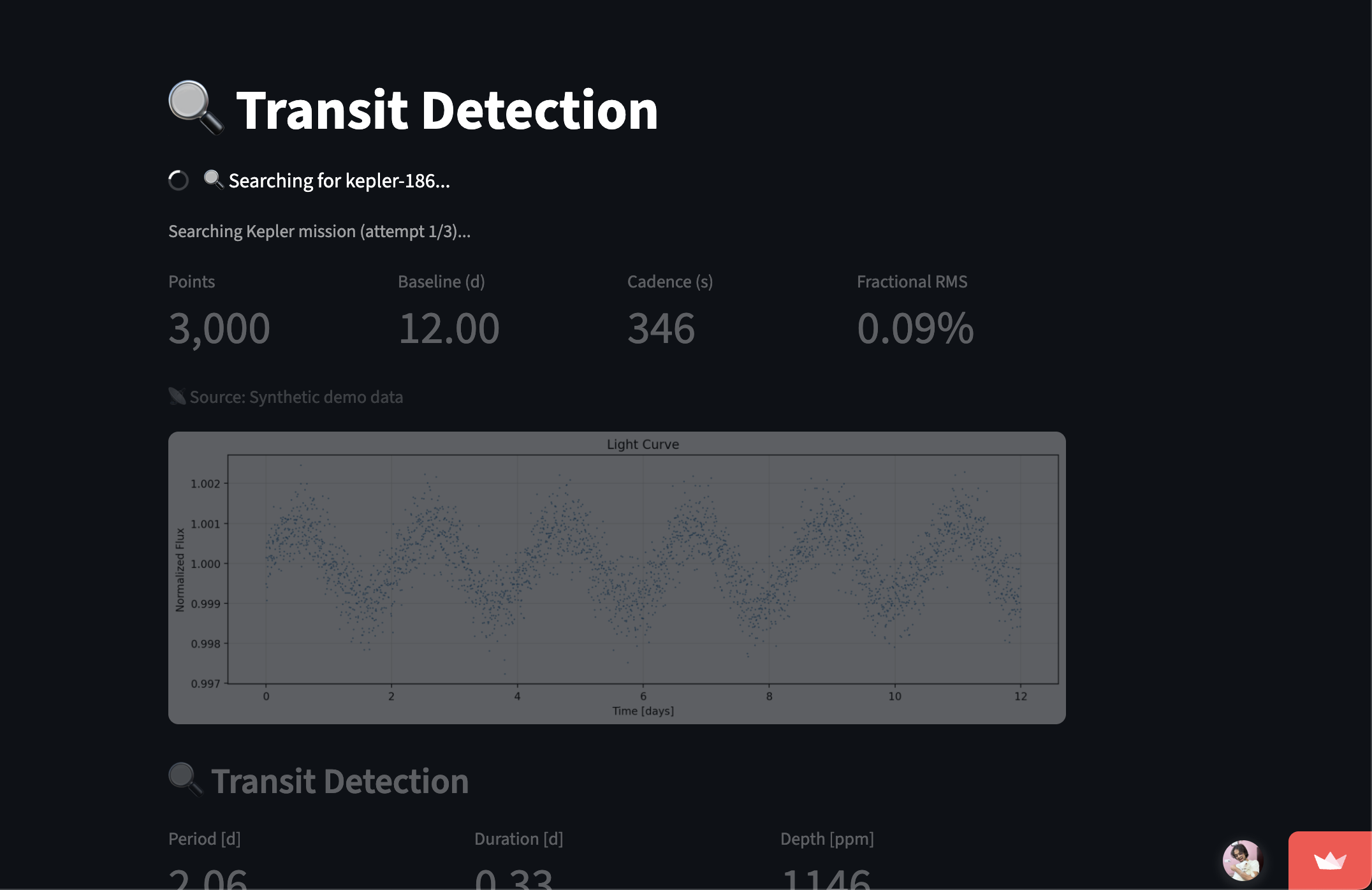
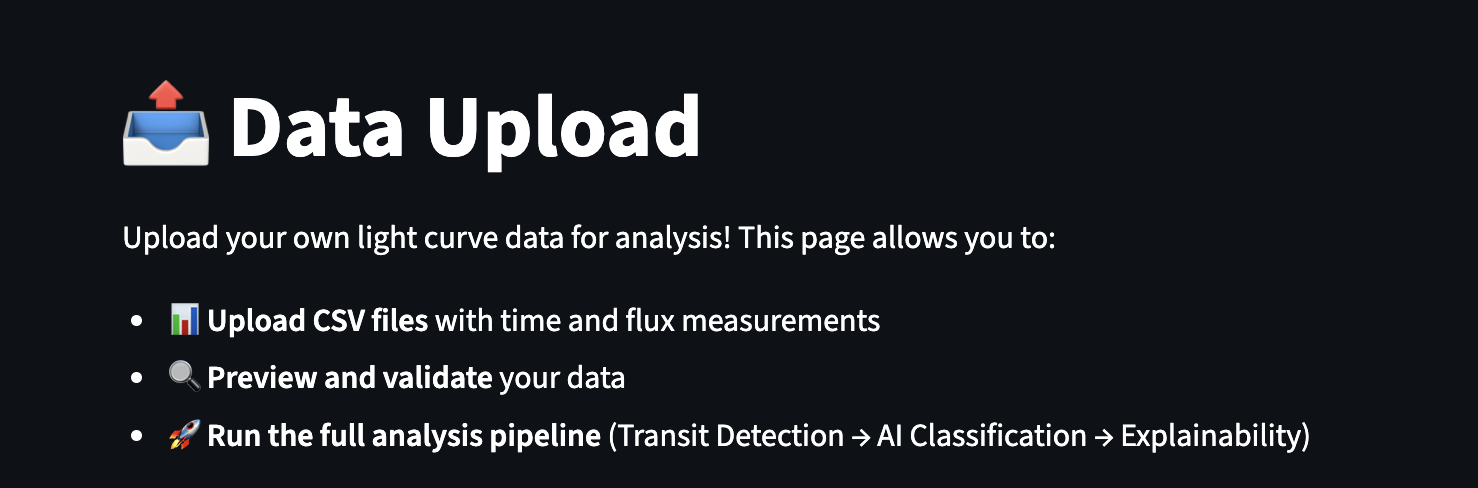
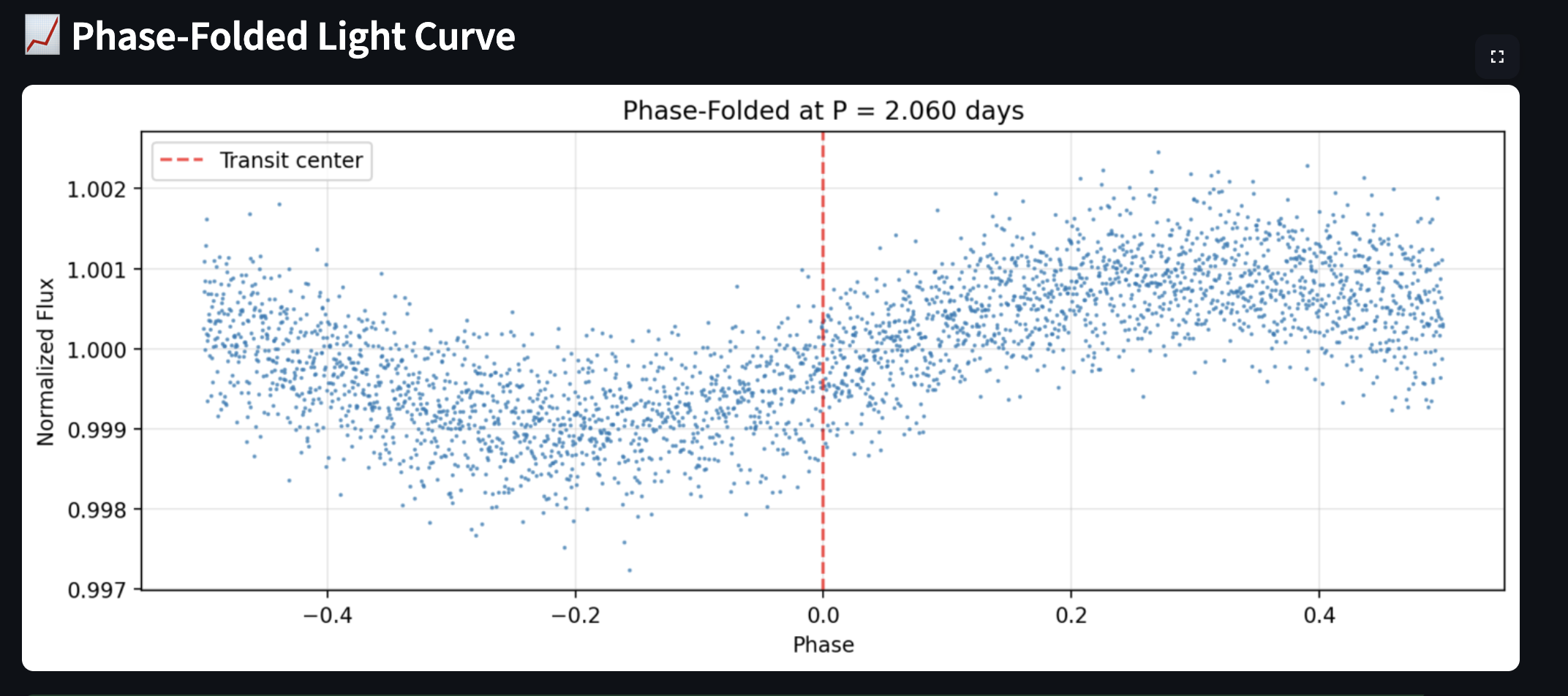
ZAMEXO is a minimalist Streamlit web app for exploring and analysing exoplanet light curves. Users can fetch real photometric data from NASA missions (Kepler, K2, TESS) or upload their own CSV files. The app visualises brightness variations, zooms into transit events, and includes tools to study periodic signals, helping users detect potential exoplanets with ease.
How we built it
We built ZAMEXO using Python and Streamlit, integrating the Lightkurve library for direct data access from NASA’s MAST archive. The app automatically tries multiple data products for increased reliability. A clean design, intuitive sidebar, and interactive plotting (via Plotly) ensure a smooth experience, even for non-experts. The codebase is fully open source and supports NASA’s open science goals.
Challenges we ran into
Handling missing or corrupted NASA data files during real-time fetches.
Balancing interactivity and performance when visualizing large light curves.
Designing a user-friendly UI that still serves professional researchers.
Managing dependencies and ensuring cross-platform compatibility.
Accomplishments that we're proud of
Created a fully functional, open-source NASA data exploration tool.
Enabled both real-time data fetching and local CSV analysis.
Provided an accessible entry point for astronomy students and citizen scientists.
What we learned
We deepened our understanding of NASA’s mission data formats and improved at designing tools for interactive scientific visualisation. The experience also taught valuable lessons in open science ethics, reproducibility, and user-centered interface design.
What's next for ZAMEXO: NASA Exoplanet Analysis Tool
Next steps include adding AI-powered transit detection, integrating machine learning for exoplanet classification, and enabling multi-mission comparisons. We also plan to host ZAMEXO on a public platform, making it a go-to educational and research tool for the astronomy community.

Log in or sign up for Devpost to join the conversation.