Inspiration
Zahvox was built from a simple problem: people often think faster than they type.
Typing works when the sentence is already clear. But when the thought is still rough, typing can make people edit too early. The idea slows down before it becomes usable.
We wanted to build a simple browser tool that helps people capture spoken thoughts and turn them into useful writing.
What it does
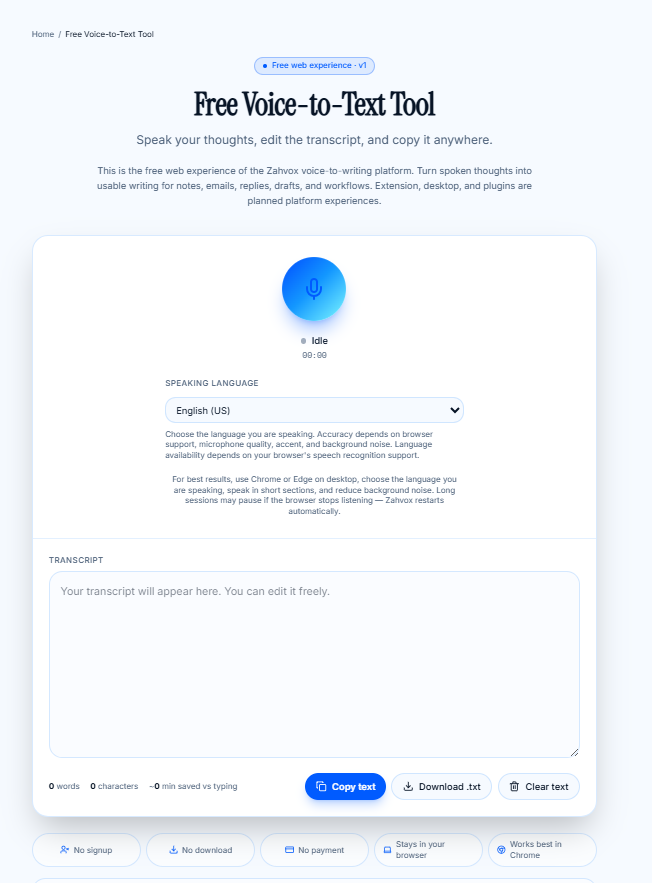
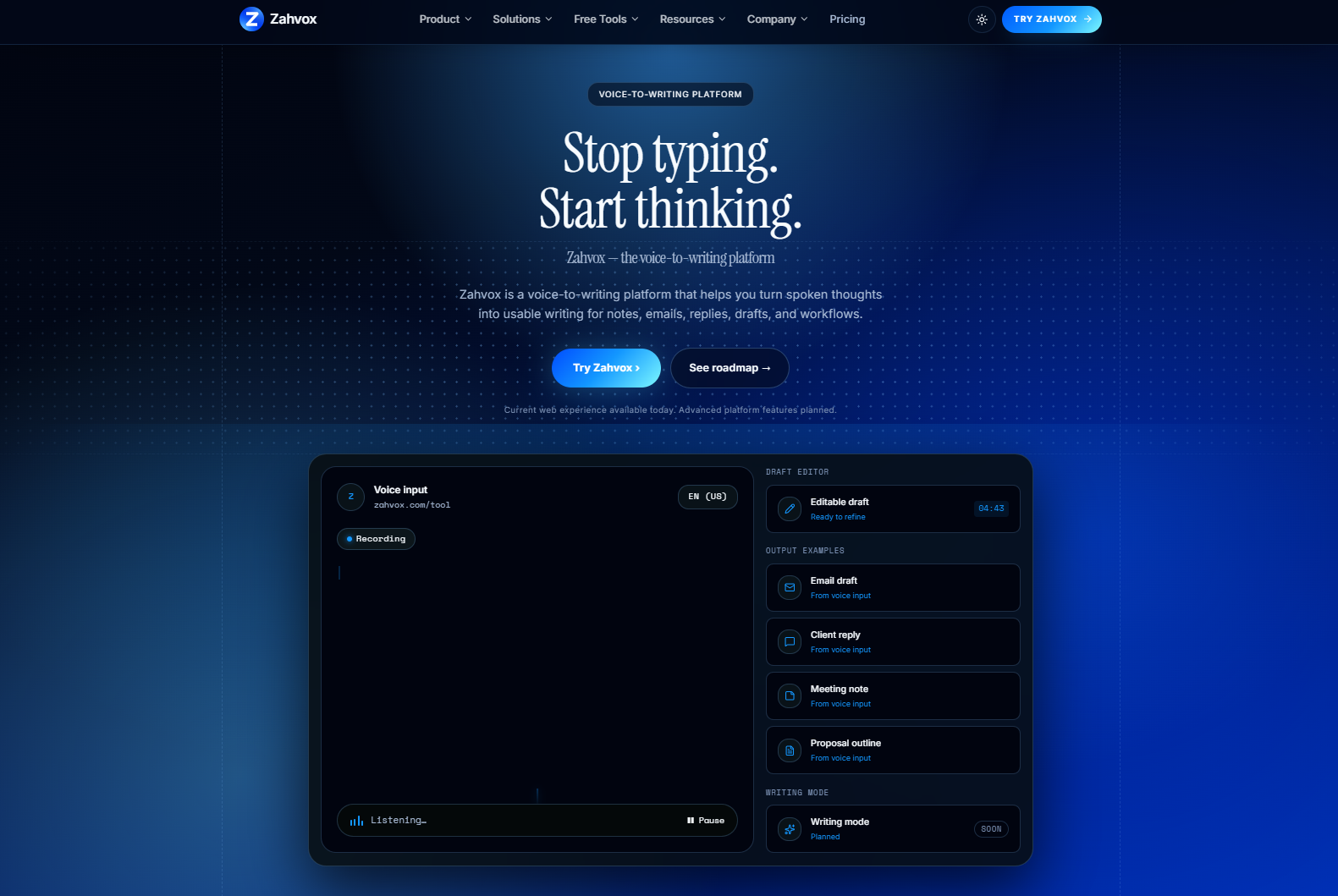
Zahvox is a browser-based voice-to-writing tool.
Users can speak into the browser, get a live transcript, edit the text, copy it, download it, and use writing utilities for everyday writing workflows.
The first version includes:
- live voice transcript
- editable transcript
- copy text
- download text
- voice notes cleaner
- email draft generator
- meeting notes formatter
- word counter
- character counter
- reading time calculator
- typing speed calculator
The goal is not only speech-to-text. The goal is to help users move from rough spoken thought to usable writing.
Who it is for
Zahvox is useful for:
- founders
- freelancers
- students
- salespeople
- consultants
- creators
- agencies
- operators
- customer support teams
- people who prefer speaking before writing
It can help with notes, emails, replies, drafts, meeting summaries, client updates, and workflow text.
How we built it
Zahvox was built as a browser-first product.
The early version focuses on fast voice capture and editable output. The tool uses browser speech recognition behavior for live transcript capture, then gives the user a simple editor where they can fix, copy, or download the result.
The product also includes lightweight writing utilities so the transcript can move closer to usable output instead of staying as raw text.
Challenges
One of the main challenges is transcript reliability.
Browser speech recognition can behave differently across browsers, devices, microphones, accents, languages, and speech speed.
Another challenge is transcript handling. If interim and final speech results are not handled carefully, a voice tool can repeat text or create messy output.
This matters because users do not judge the product by the technology behind it. They judge it by whether the transcript is useful.
What we learned
We learned that voice-to-writing is different from basic speech-to-text.
Speech-to-text converts audio into words.
Voice-to-writing needs a better workflow after that. The text needs to be editable, easy to copy, easy to download, and useful for real writing tasks.
Small details matter:
- language selection
- duplicate transcript handling
- browser microphone states
- editable transcript output
- clear product limits
- fast access without heavy setup
What's next
Next, Zahvox will focus on:
- better transcript handling
- language selection
- AI cleanup
- writing templates
- saved history
- high-accuracy transcription
- browser workflows
- future API access for automation and team use cases
The long-term goal is to help people turn spoken thoughts into usable writing across the tools and workflows where they already work.
Built With
- ai
- javascript
- lovable
- react
- saas
- speech
- typescript
- web

Log in or sign up for Devpost to join the conversation.