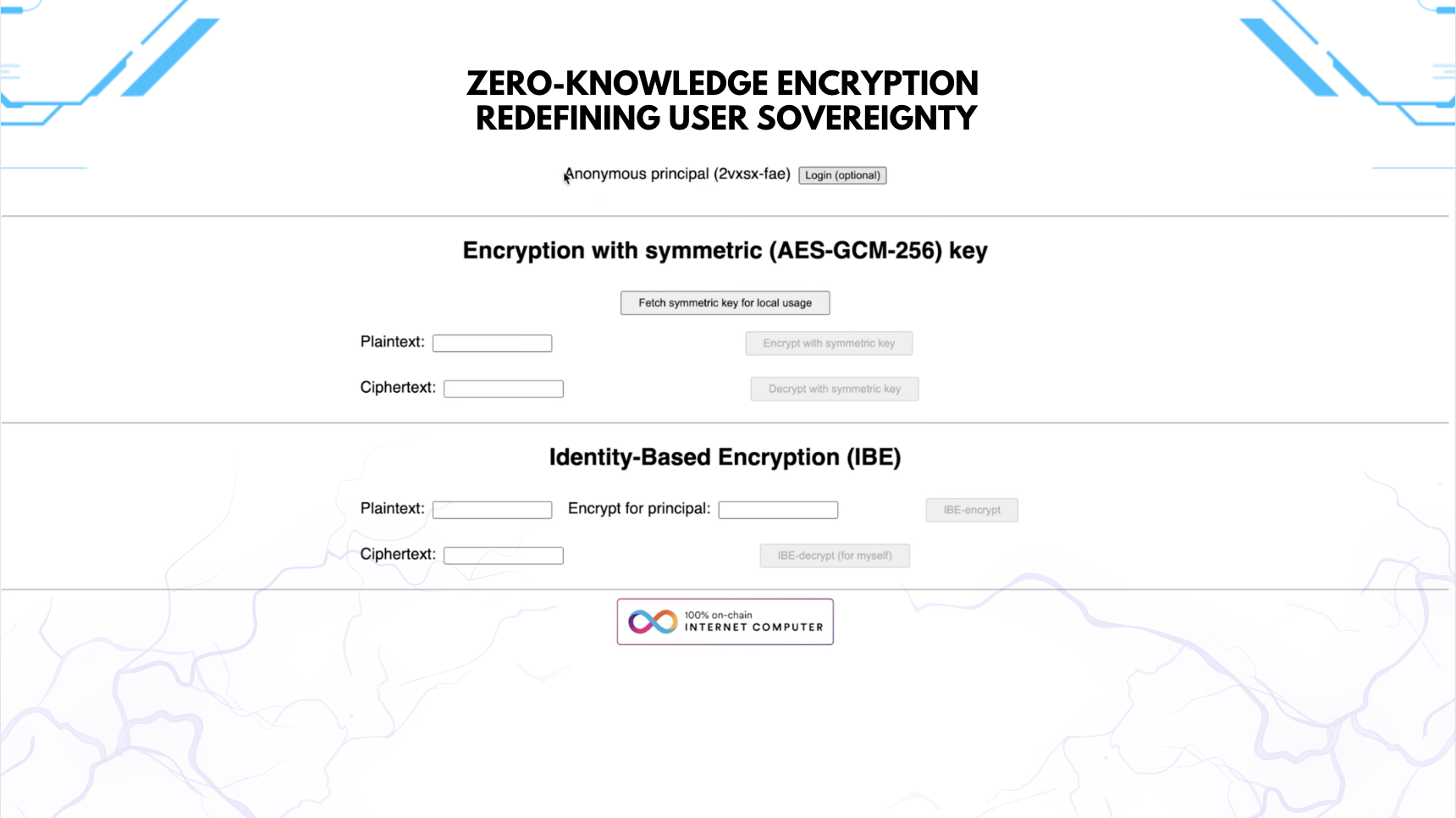
Zero-knowledge Encryption Redefining User Sovereignty (Z.E.R.U.S.) DIP721 CAPTCHAs and Internet Identity
Inspiration
Dfinity's Internet Computer Protocol (ICP) seeks to provide an alternative to the traditional internet infrastructure, decentralizing the web and facilitating the creation of open, tamper-proof, and serverless dApps and platforms. As a result, there was a clear demand for platforms on the ICP network to facilitate the minting, management, and trading of NFTs. Leveraging ICP's unique features like its Chain Key Technology, canister smart contracts, and seamless interoperability, platforms can offer a faster, more efficient, and cost-effective NFT experience.
Recognizing this transformative potential, innovators are keen to blend the revolutionary capabilities of ICP Dfinity with the booming NFT ecosystem, driving the evolution of digital art and collectibles towards a more decentralized, transparent, and user-centric direction. The primary goal of ZERUS is to provide a secure, efficient, and user-friendly environment for NFT enthusiasts to mint and trade unique digital assets. By integrating with the Internet Computer, ZERUS aims to:
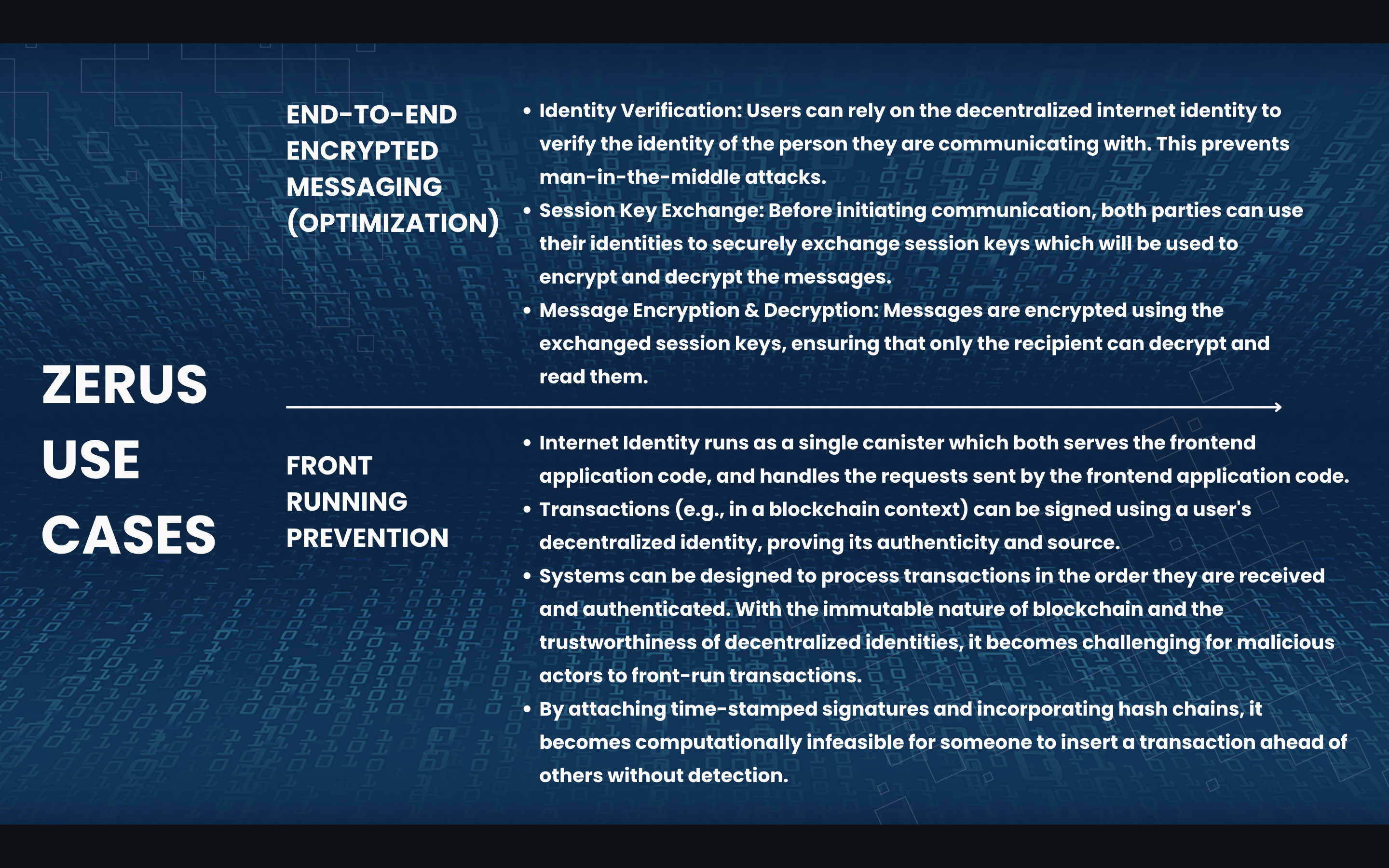
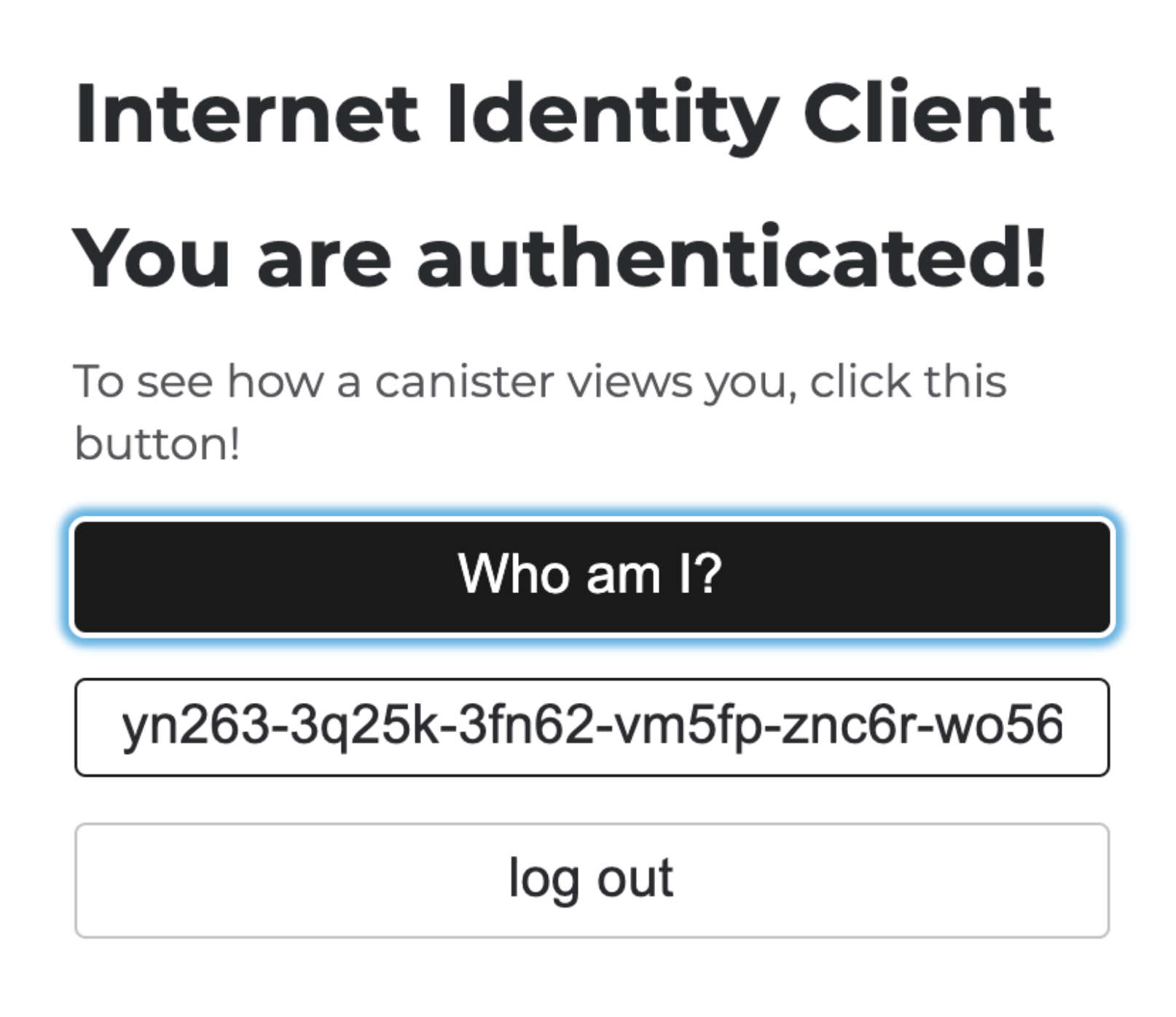
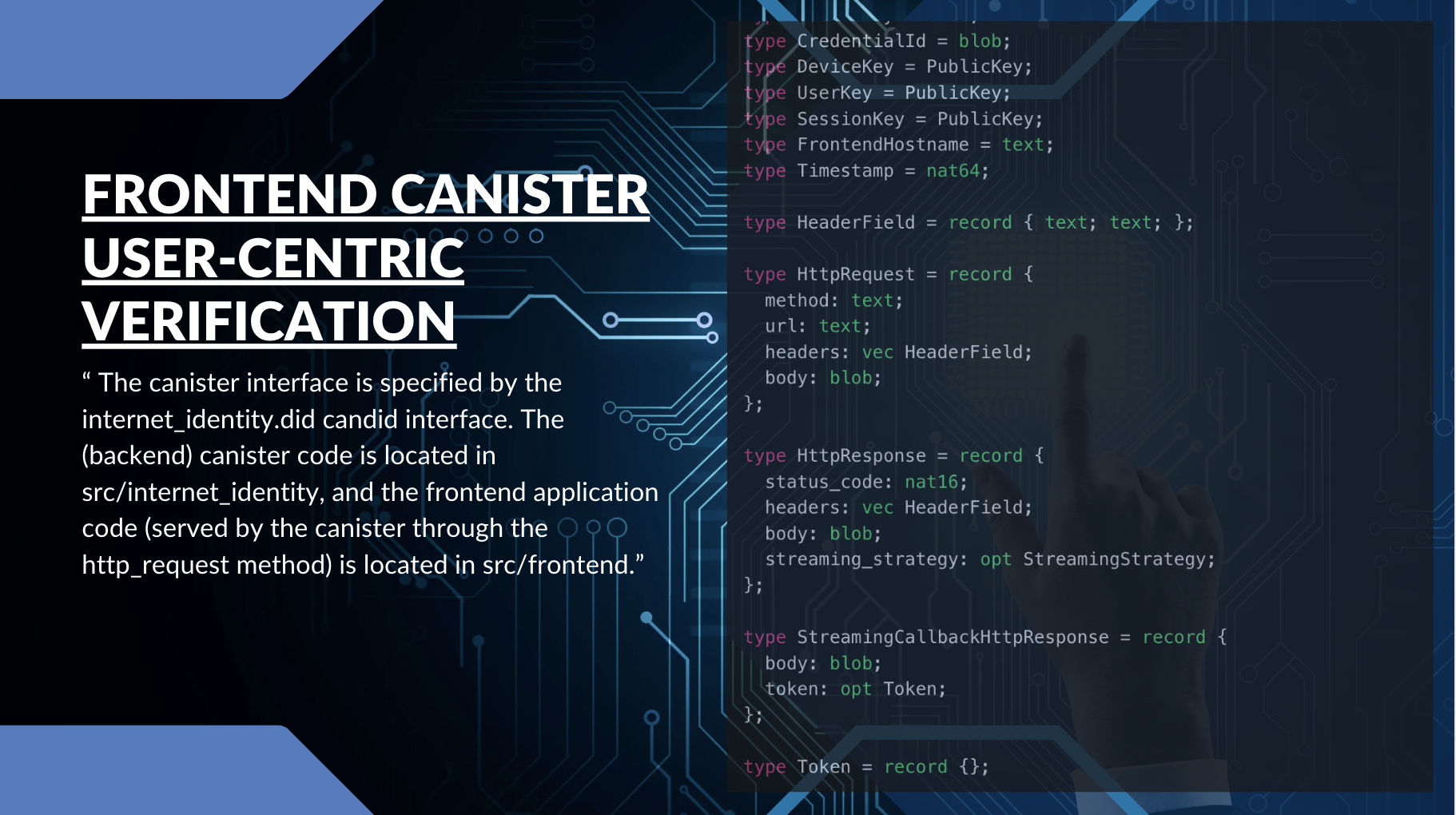
- Enhance the security of NFT minting and trading processes by leveraging Internet Identity for authentication. https://github.com/dfinity/internet-identity/tree/main
- Enable global scalability, ensuring ZERUS remains resilient against the growing demands of the NFT marketplace.
- Foster a decentralized ecosystem for NFT creators, buyers, and sellers that remains free from monopolistic control and offers true ownership of digital assets.
Example: When you click on a sketchy discord link, allow access to your Eclair wallet, and accidentally lose $14,000 :(
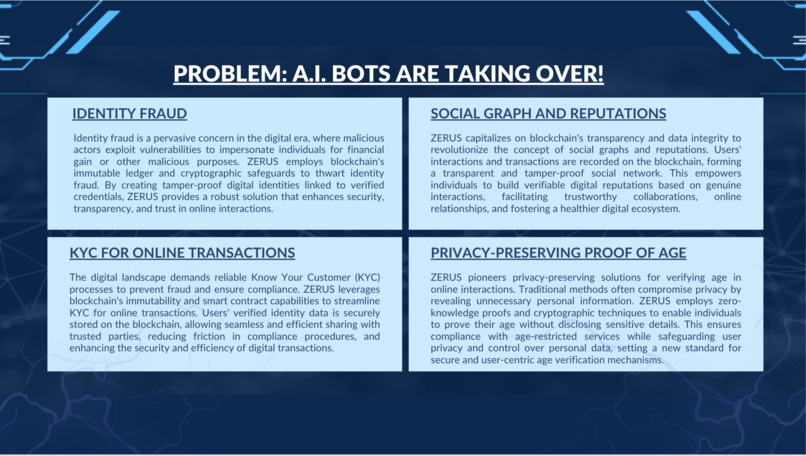
ZERUS stands for Zero-knowledge Encryption Redefining User Sovereignty. The inspiration for building ZERUS stemmed from several key observations and challenges within the burgeoning NFT and blockchain ecosystem.
Emergence of NFTs: With the meteoric rise of Non-Fungible Tokens (NFTs) as a means to represent unique digital assets and their growing adoption in various industries such as arts, gaming, entertainment, and real estate, there was a clear demand for platforms to facilitate the minting and trading of these tokens.
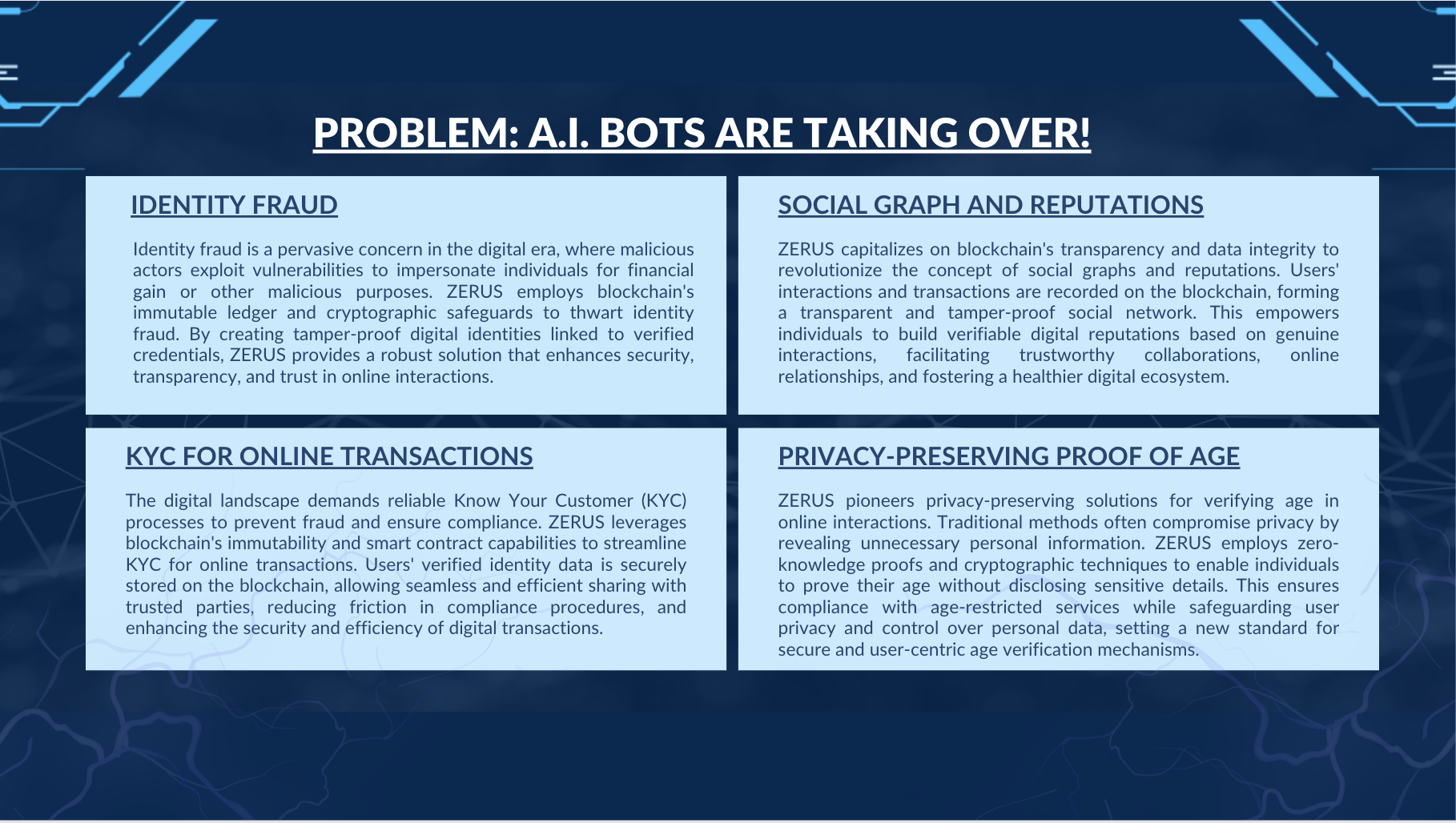
Security Concerns: As with any rapidly growing technology sector, security issues began to arise. There were reports of bots minting limited edition NFTs before genuine users could get a chance. Furthermore, cases of fraud, counterfeiting, and theft in the NFT space highlighted the need for enhanced security during the minting and trading process.
Complexity for New Users: The NFT minting process, being built on sophisticated blockchain technology, was often too complex for newcomers to navigate. There was a need for a user-friendly, intuitive platform to make the NFT journey more accessible.
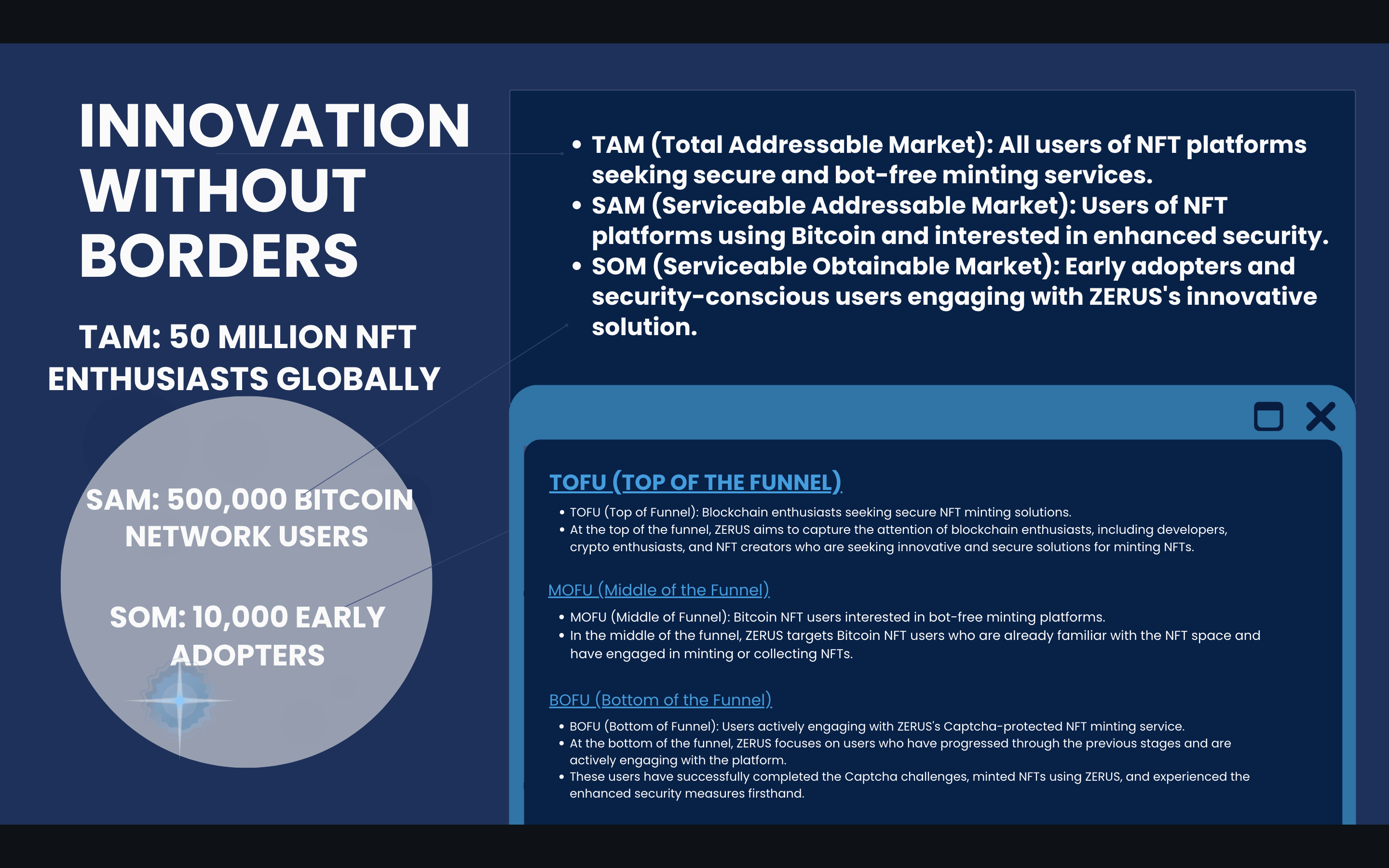
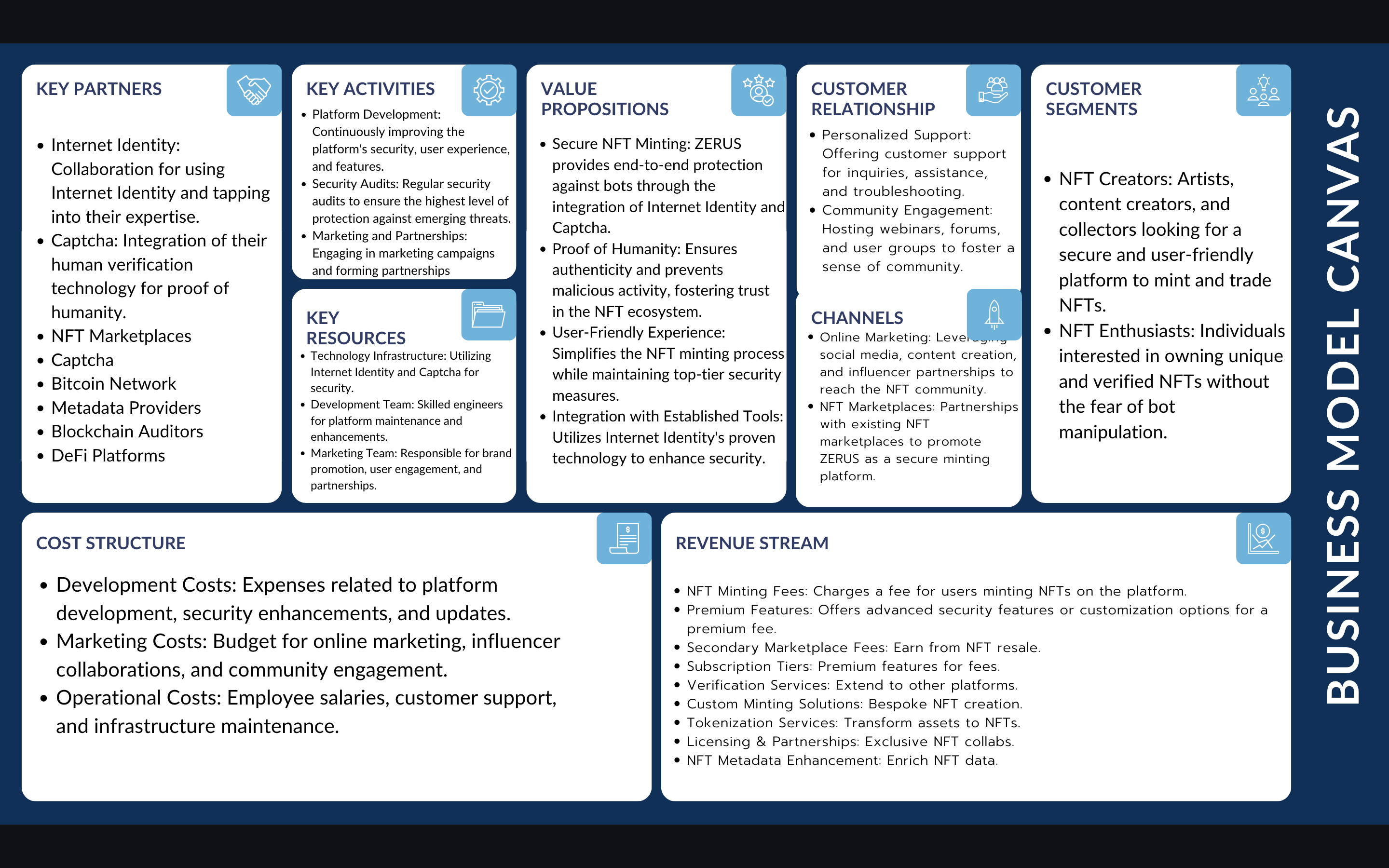
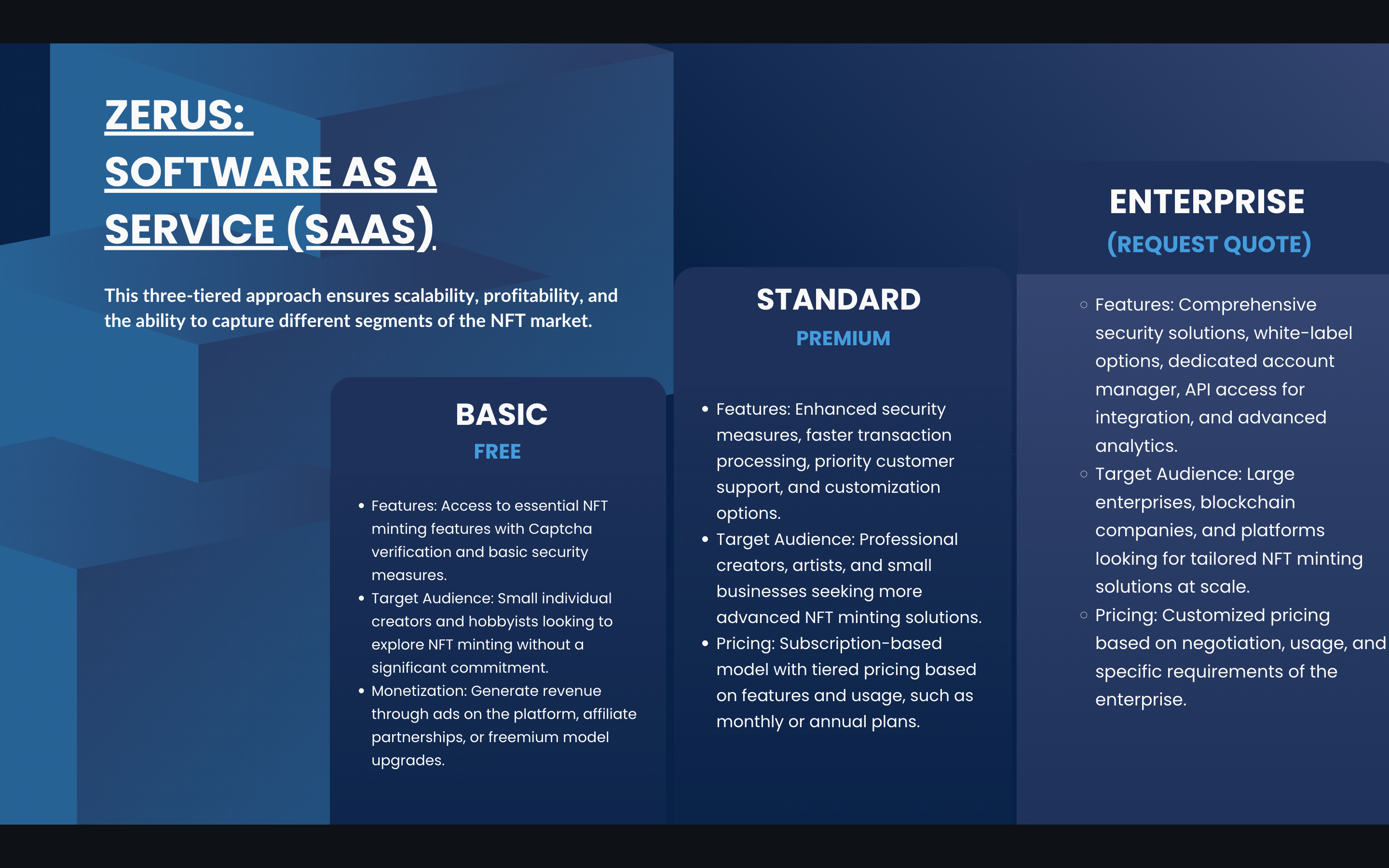
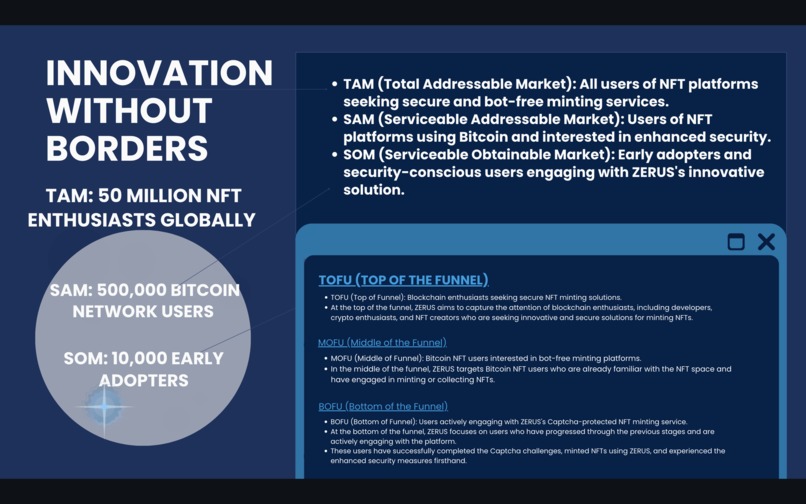
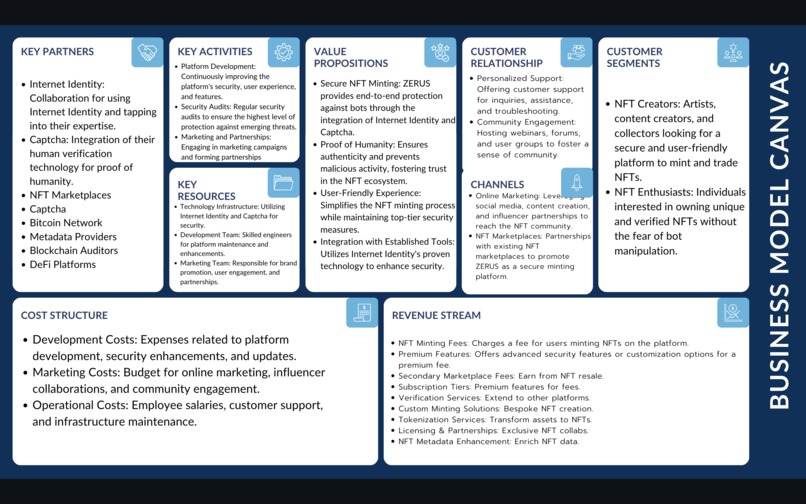
ZERUS Market Segmentation
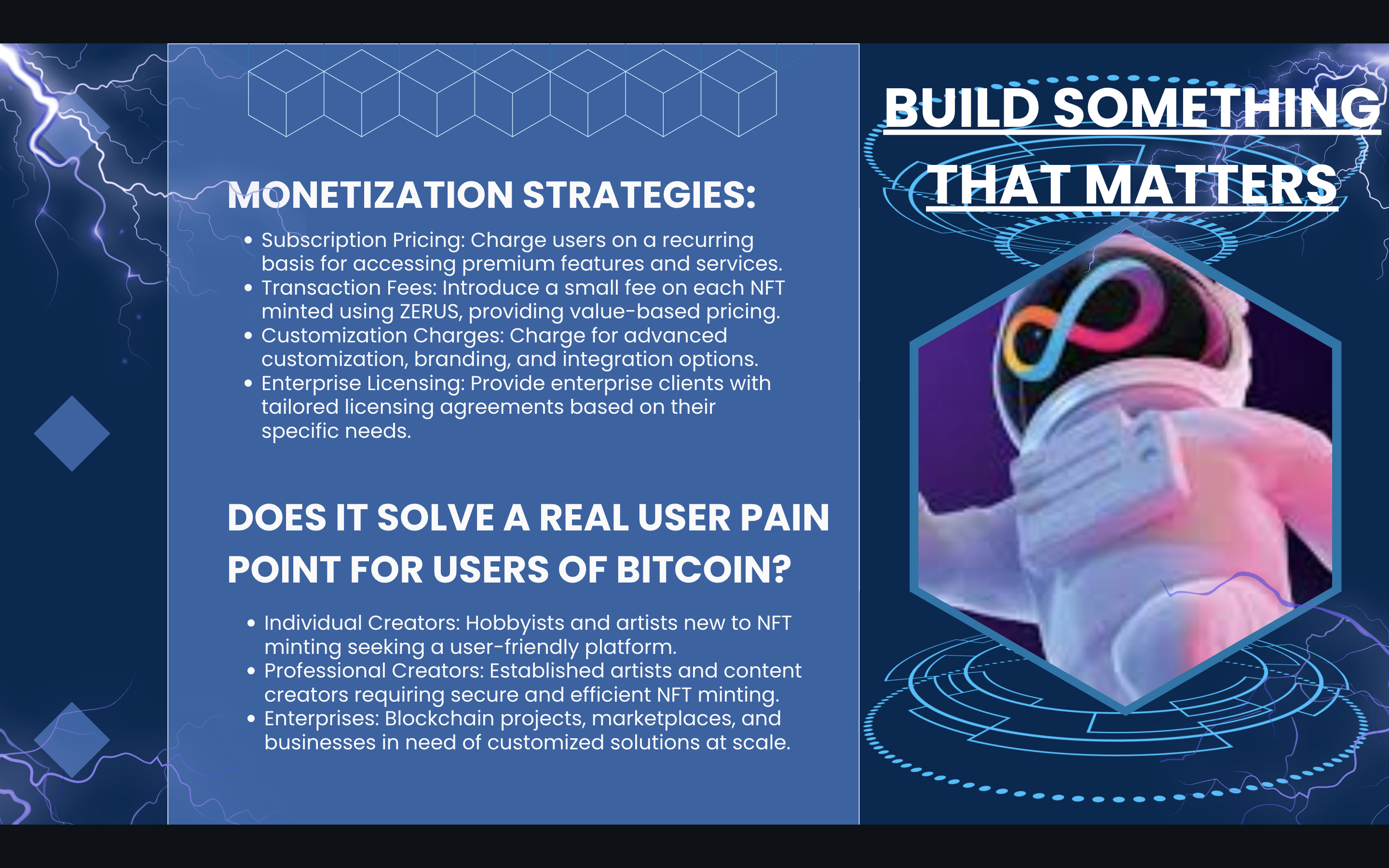
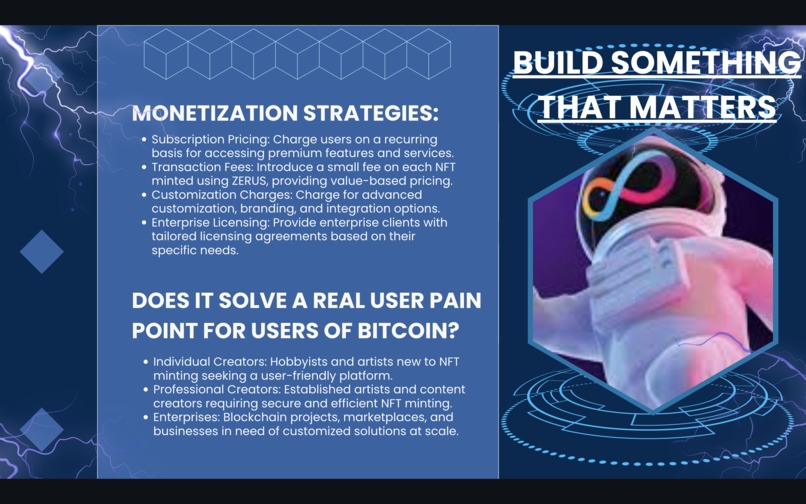
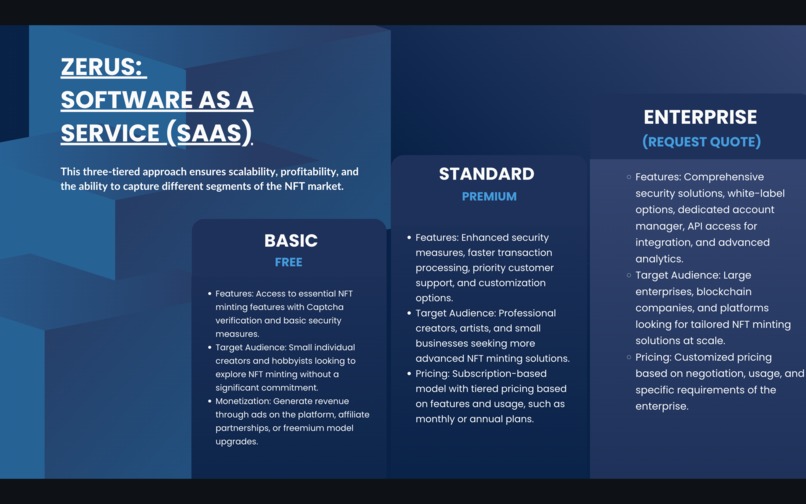
- Individual Creators: Hobbyists, artists, musicians, and other content creators new to NFT minting and seeking a user-friendly and secure platform.
- Professional Creators: Established artists, musicians, game developers, and content creators looking for efficient NFT minting and trading with advanced features.
- Enterprises: Blockchain projects, marketplaces, and businesses aiming to tokenize assets or integrate NFT capabilities into their systems.
Desire for Verifiable Authenticity: With the high prices that some NFTs were fetching in the market, ensuring the authenticity and originality of these tokens became paramount. Collectors and investors wanted a way to be sure that the NFTs they were purchasing were genuine and not duplicated or counterfeit.
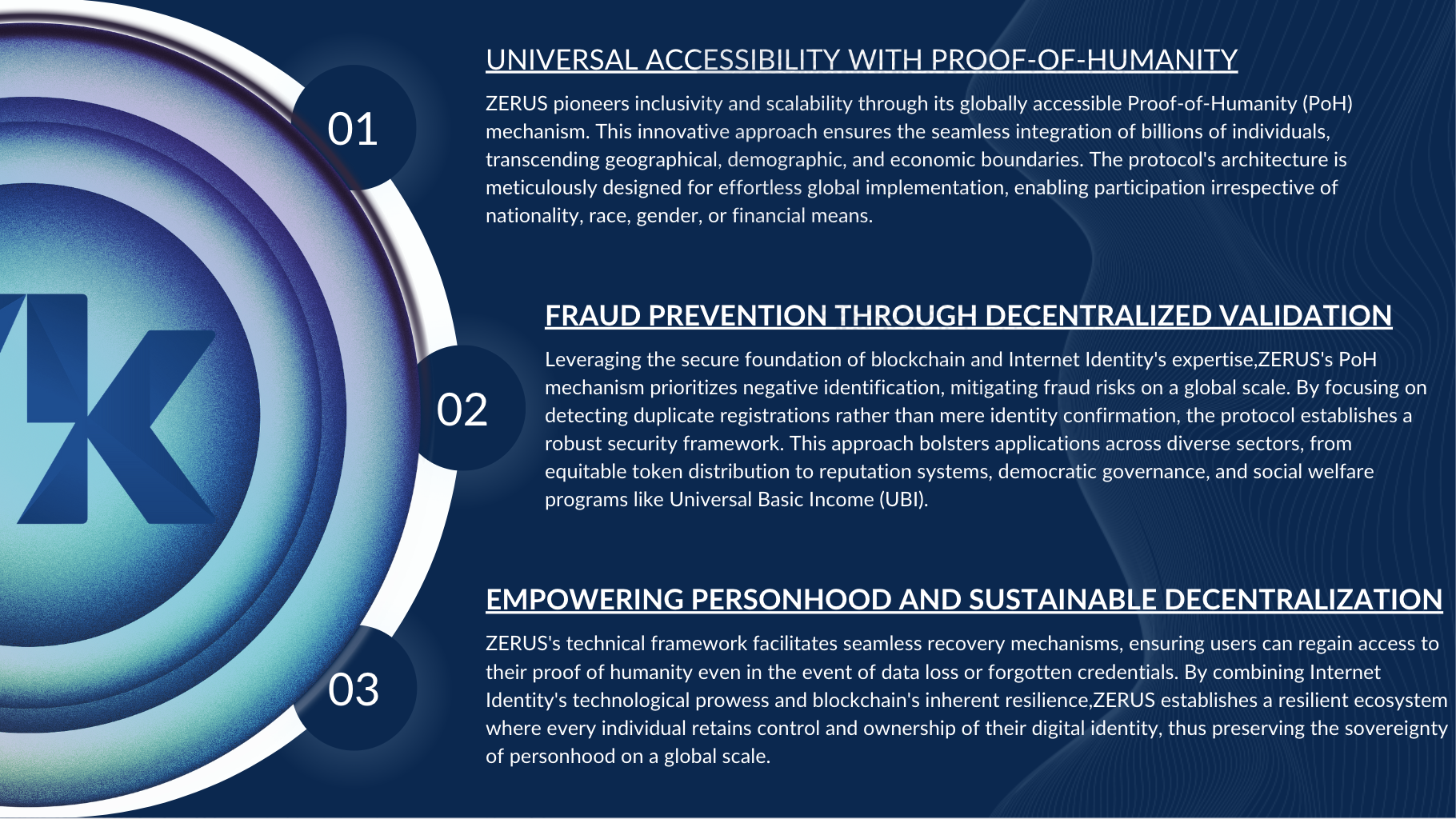
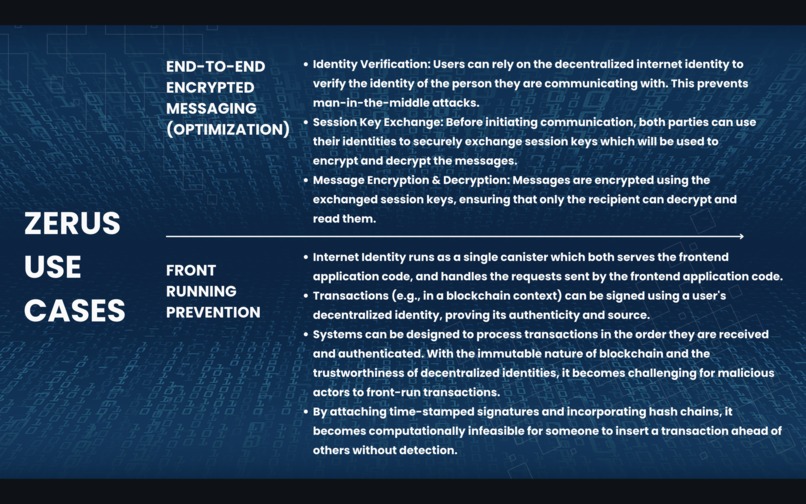
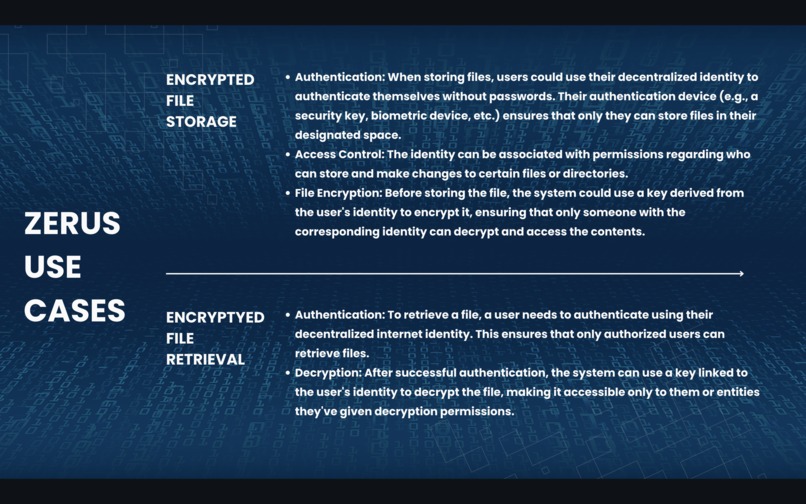
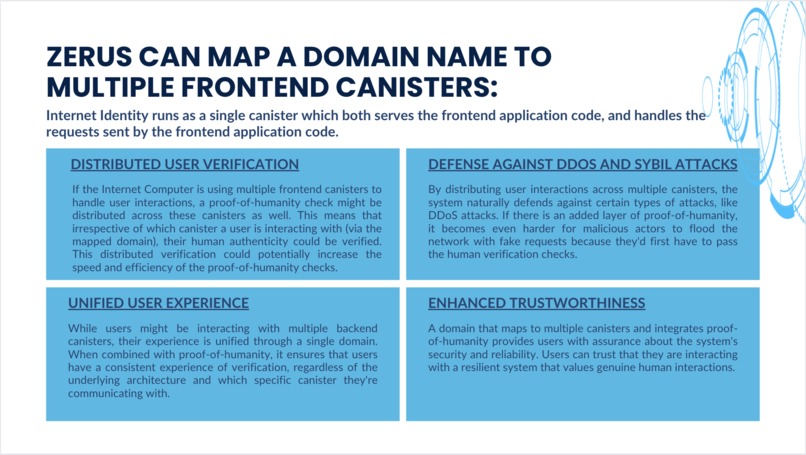
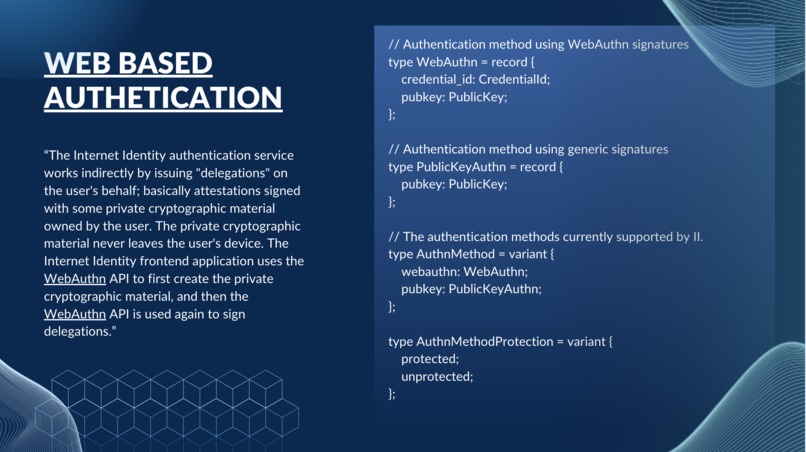
Integration of Internet Identity: Recognizing the potential of decentralized identity solutions like Internet Identity to streamline authentication processes and boost security, the idea emerged to incorporate such solutions within an NFT platform. This would eliminate the need for passwords, reduce the risk of unauthorized access, and enhance overall user experience.
Holistic Ecosystem Vision: Beyond just creating another NFT minting platform, there was a vision to build a comprehensive ecosystem that would cater to all NFT-related needs, including education, collaboration, and enhanced security, all under one roof.
Feedback from the Community: Early discussions with artists, creators, blockchain enthusiasts, and potential users highlighted the gaps in the existing NFT platforms and provided valuable insights into what features and functionalities were most desired.
ZERUS is a cutting-edge platform designed to facilitate the minting, management, and trading of Non-Fungible Tokens (NFTs). Focused on delivering a user-friendly experience and bolstered security, ZERUS aims to revolutionize the NFT space by integrating with DFINITY's Internet Computer and leveraging its unique features like Internet Identity. ZERUS's core offerings include a unique tokenization strategy, an intelligent royalty mechanism, and robust smart contract capabilities, ensuring NFT creators and traders have an unparalleled experience.
Drawing from these observations, the idea for ZERUS was born—a platform that would not only provide a secure, user-friendly environment for NFT minting but would also continuously evolve based on user feedback, industry trends, and technological advancements to stay at the forefront of the NFT revolution.
What it does
ZERUS is a platform built on Dfinity's Internet Computer Protocol (ICP), designed to facilitate the minting, management, and trading of Non-Fungible Tokens (NFTs). With a primary focus on user-friendly experiences and enhanced security, ZERUS integrates ICP's advanced decentralized computing capabilities to offer a more efficient and scalable NFT platform.
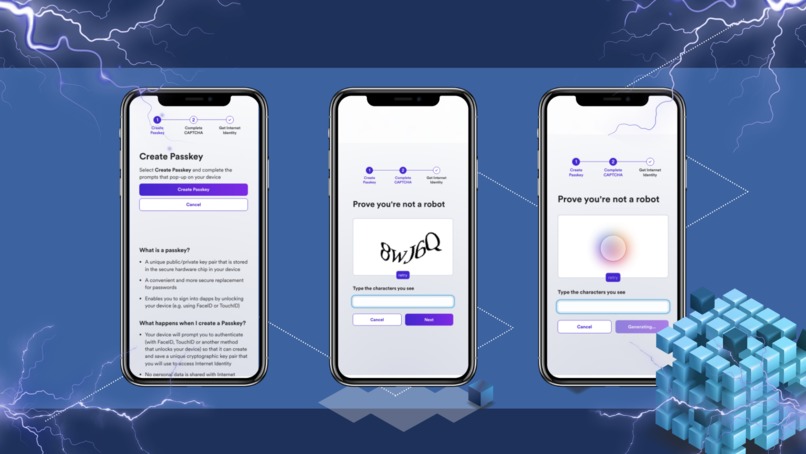
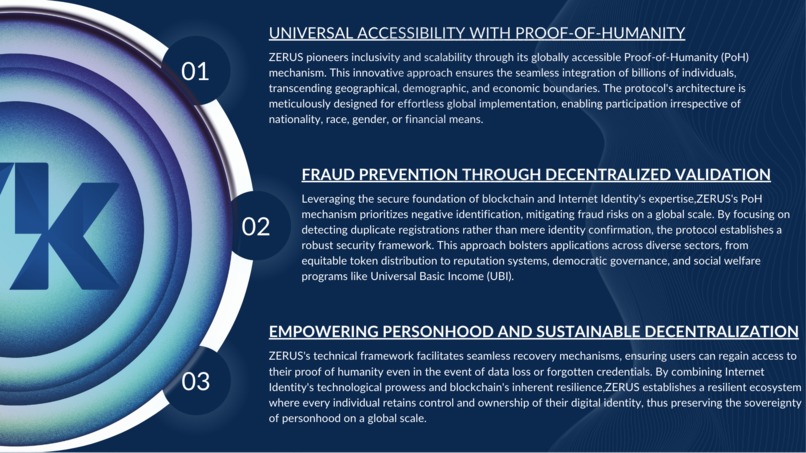
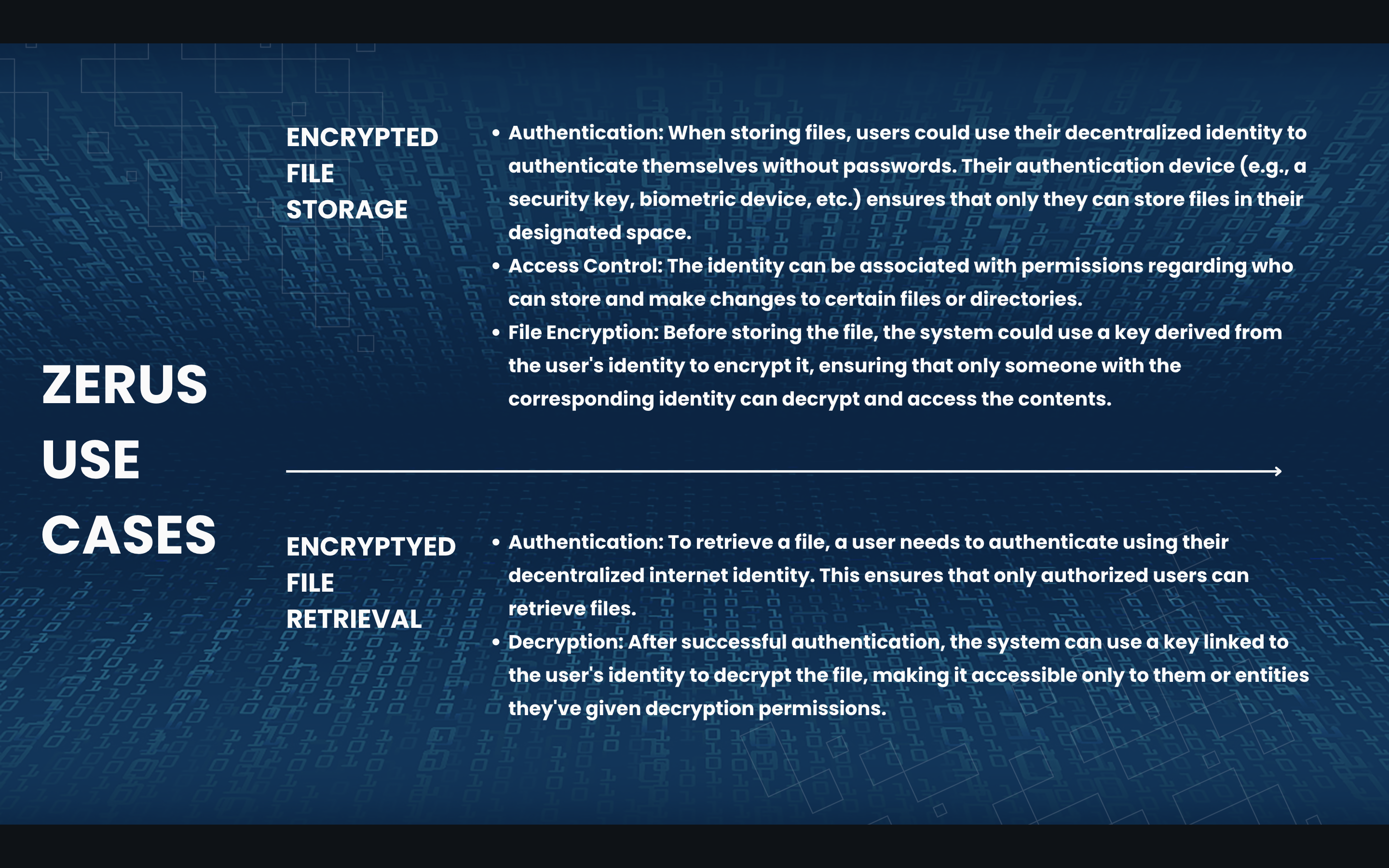
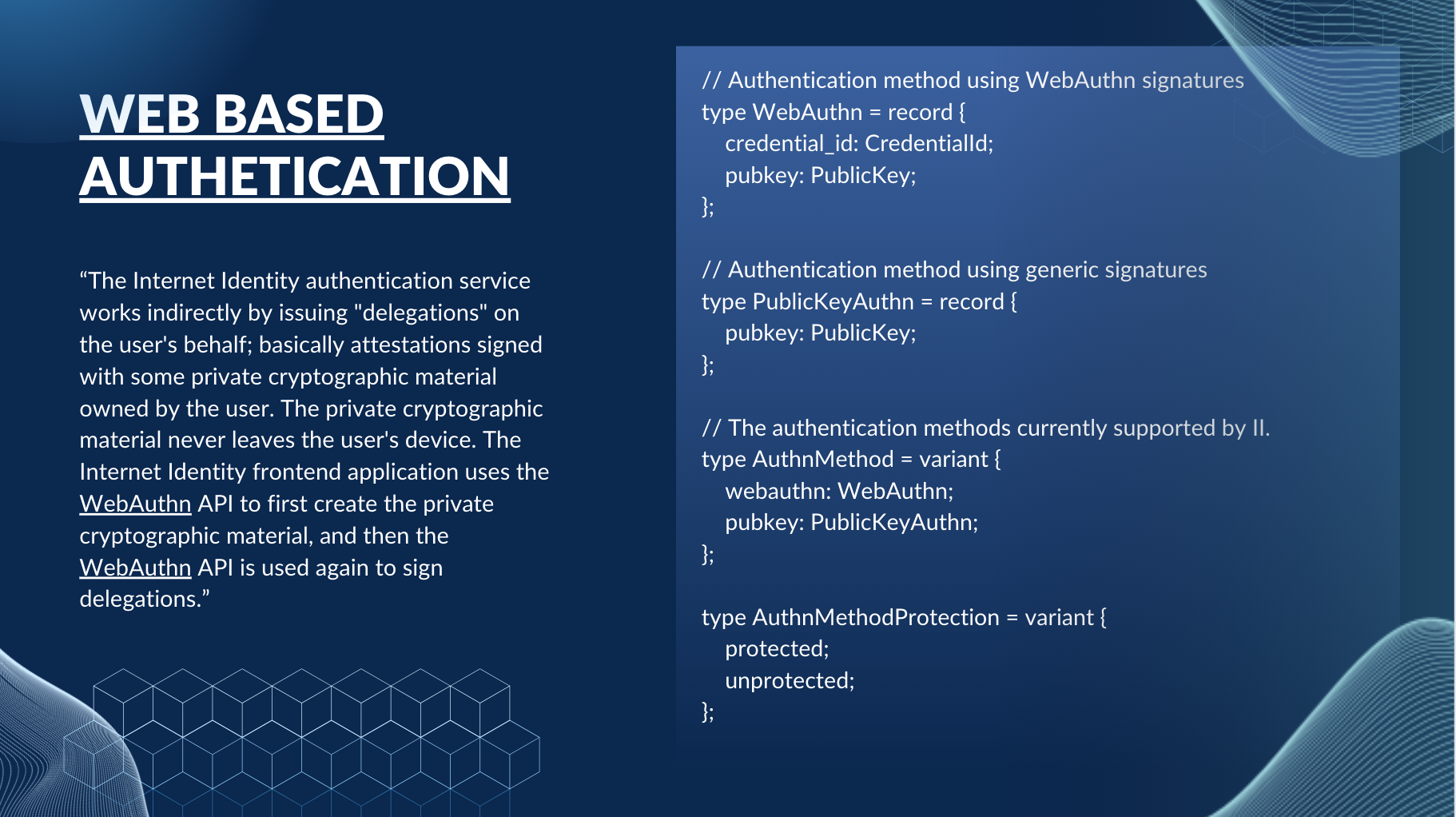
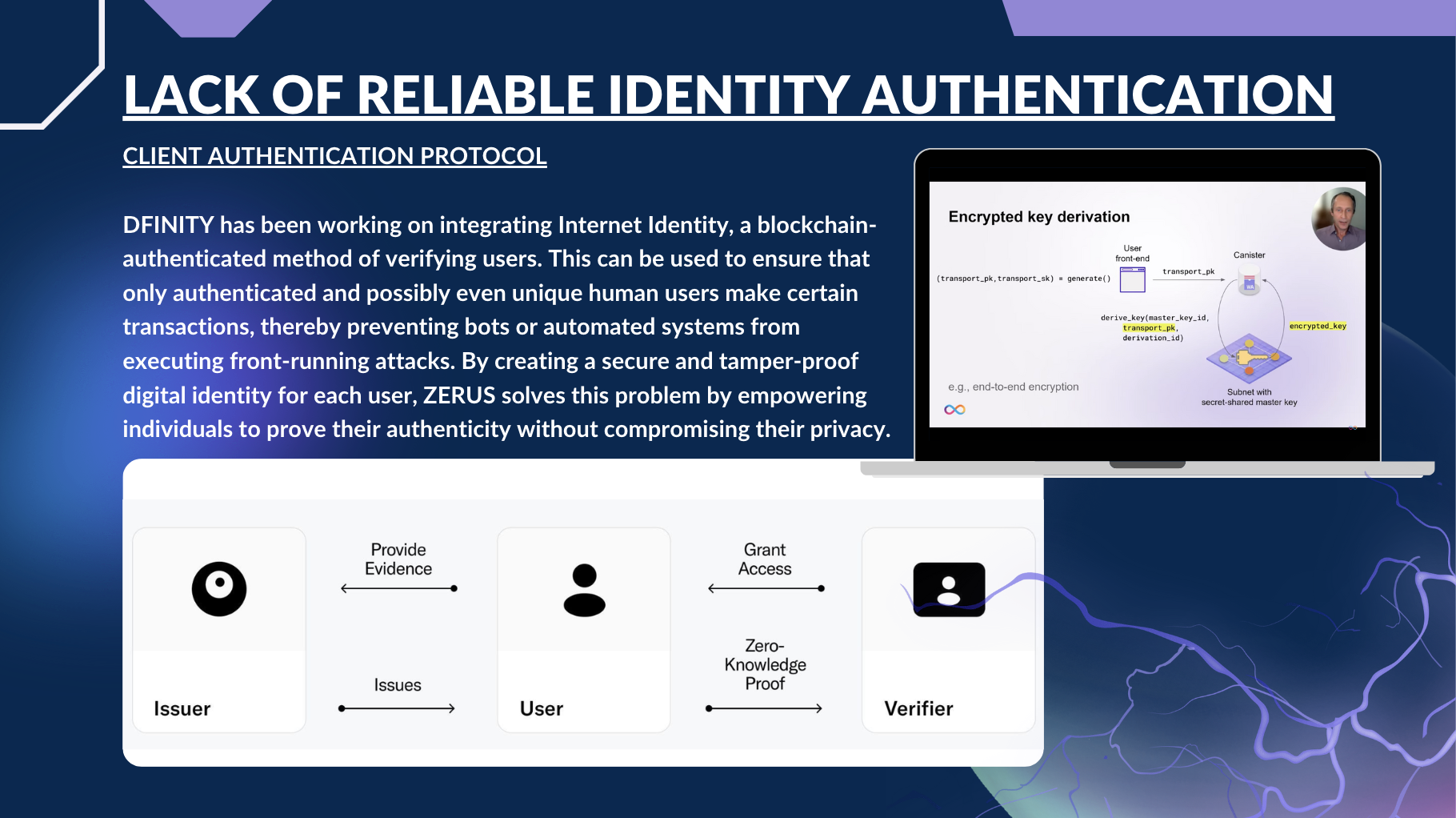
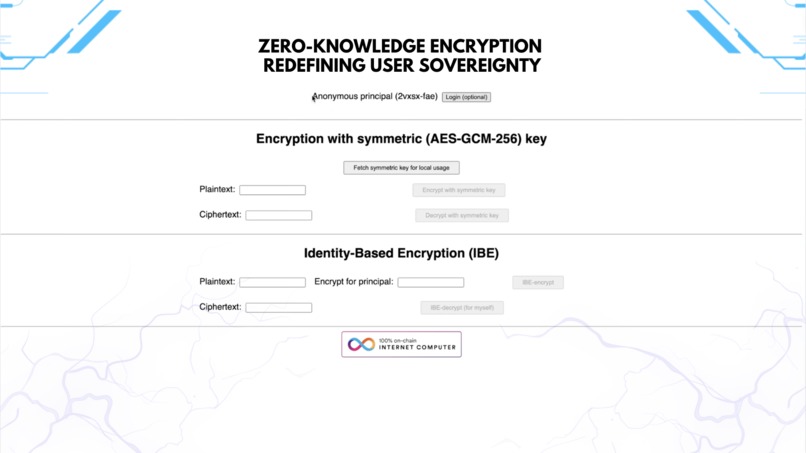
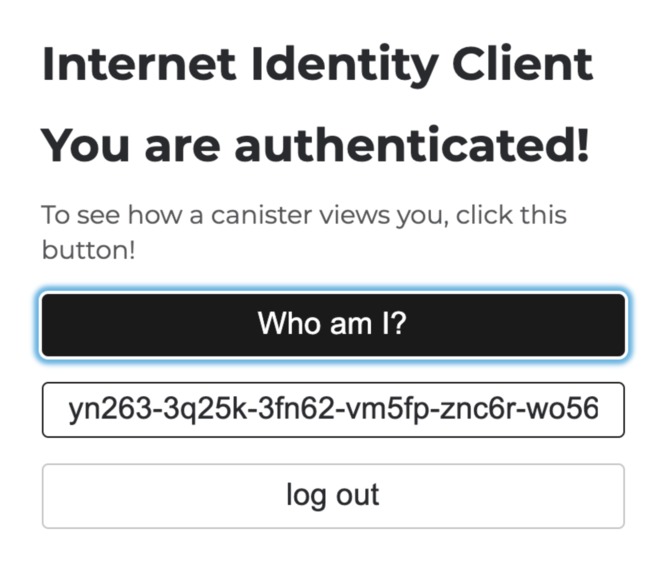
One of the standout features of ZERUS is its integration with Dfinity's Internet Identity, a blockchain-based authentication system. This ensures users have a secure, seamless, and password-less authentication experience when interacting with the platform. By leveraging Internet Identity, ZERUS provides users with enhanced privacy and security, minimizing the risks associated with centralized databases and potential data breaches.
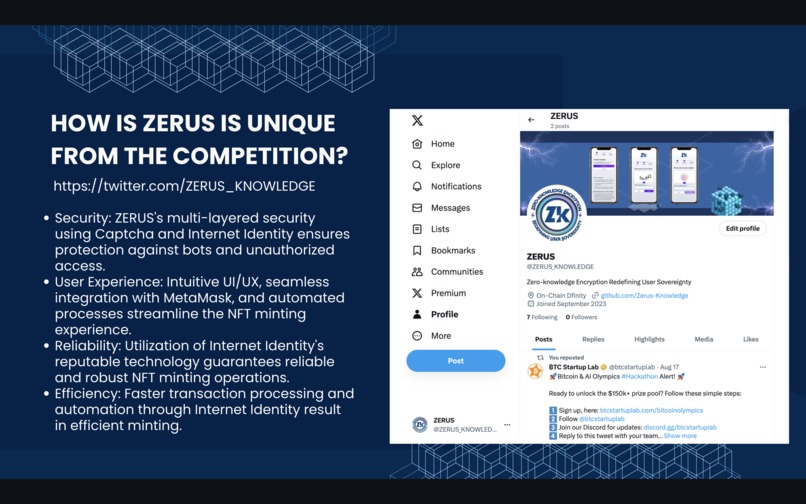
Through the combination of ICP's revolutionary technology and Internet Identity, ZERUS positions itself as a leading platform in the NFT space, emphasizing decentralization, transparency, and user empowerment.
ZERUS is a platform designed to facilitate the minting, management, and trading of Non-Fungible Tokens (NFTs) with a focus on user-friendly experiences and enhanced security.
What ZERUS Does:
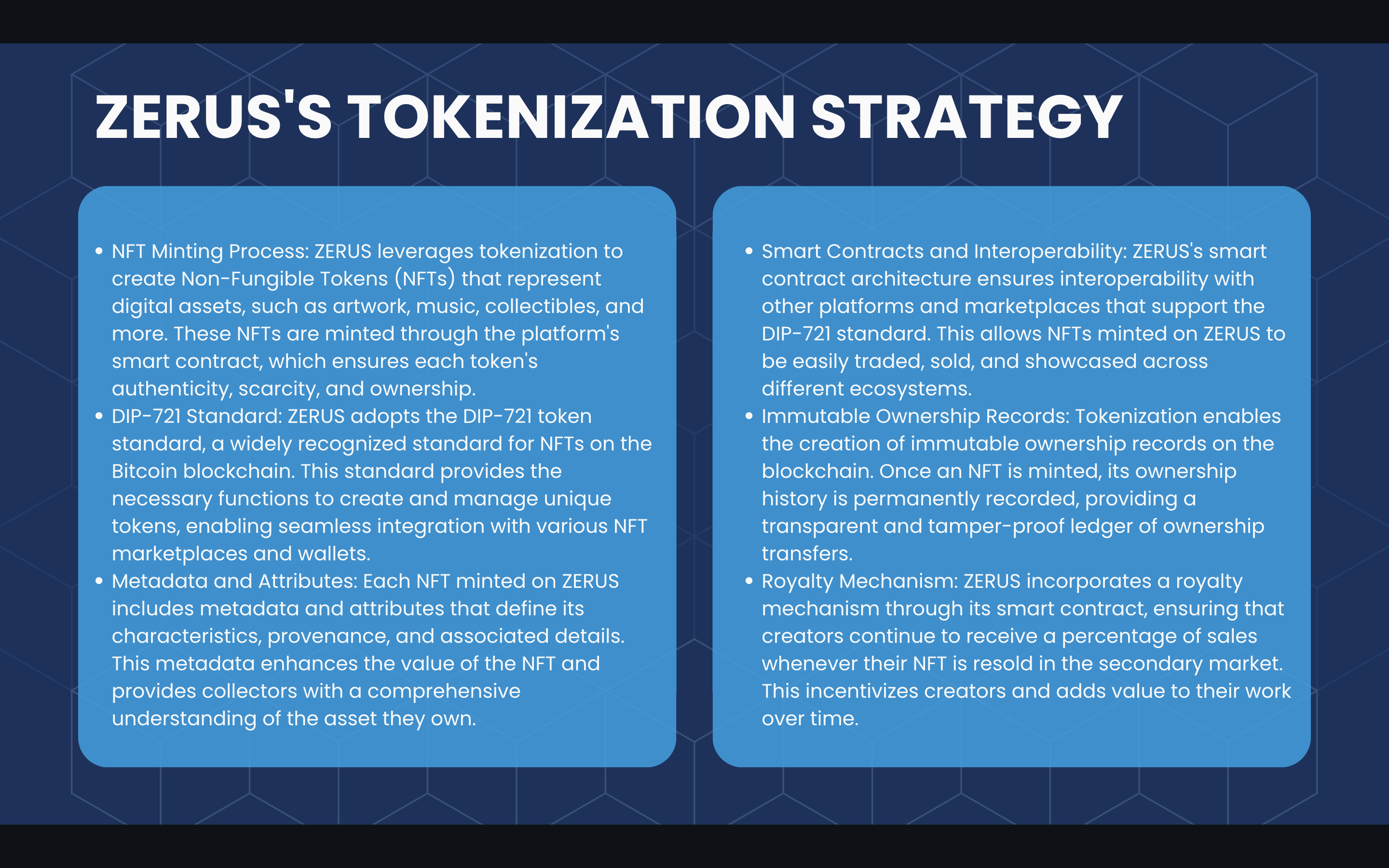
NFT Minting: At its core, ZERUS provides a platform for users to create (or "mint") NFTs. These NFTs can represent a wide variety of digital assets, including artwork, music, collectibles, and more.
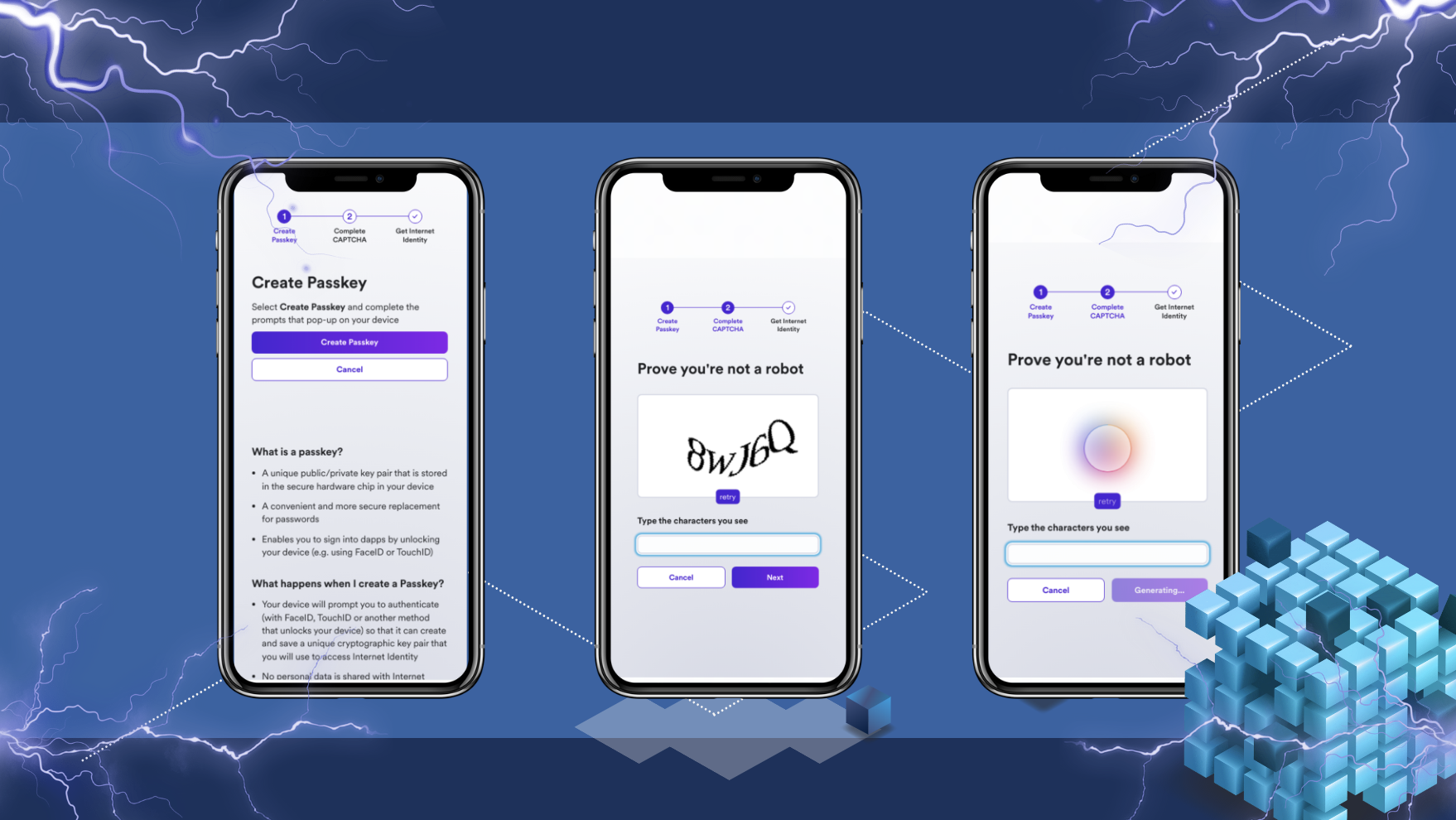
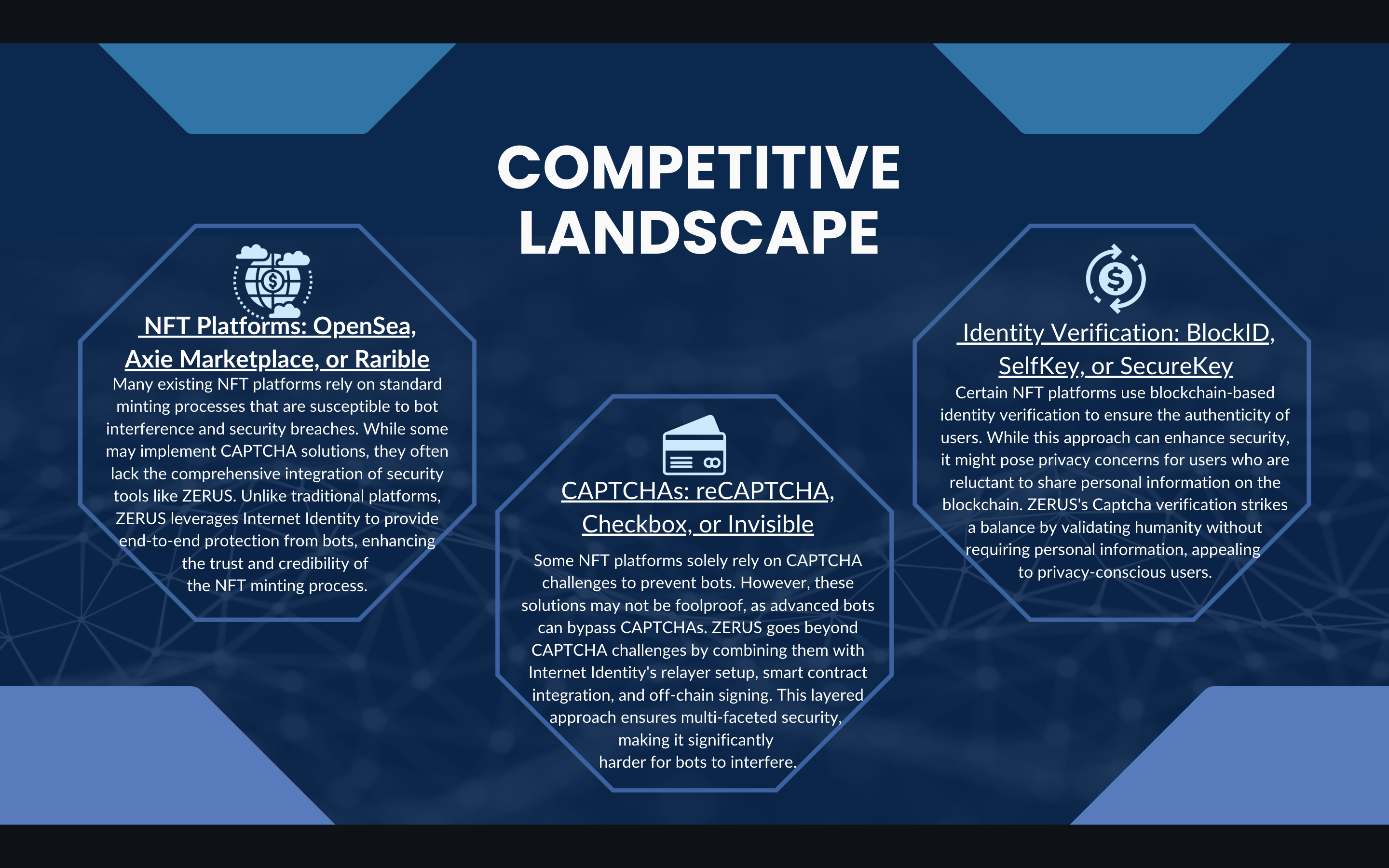
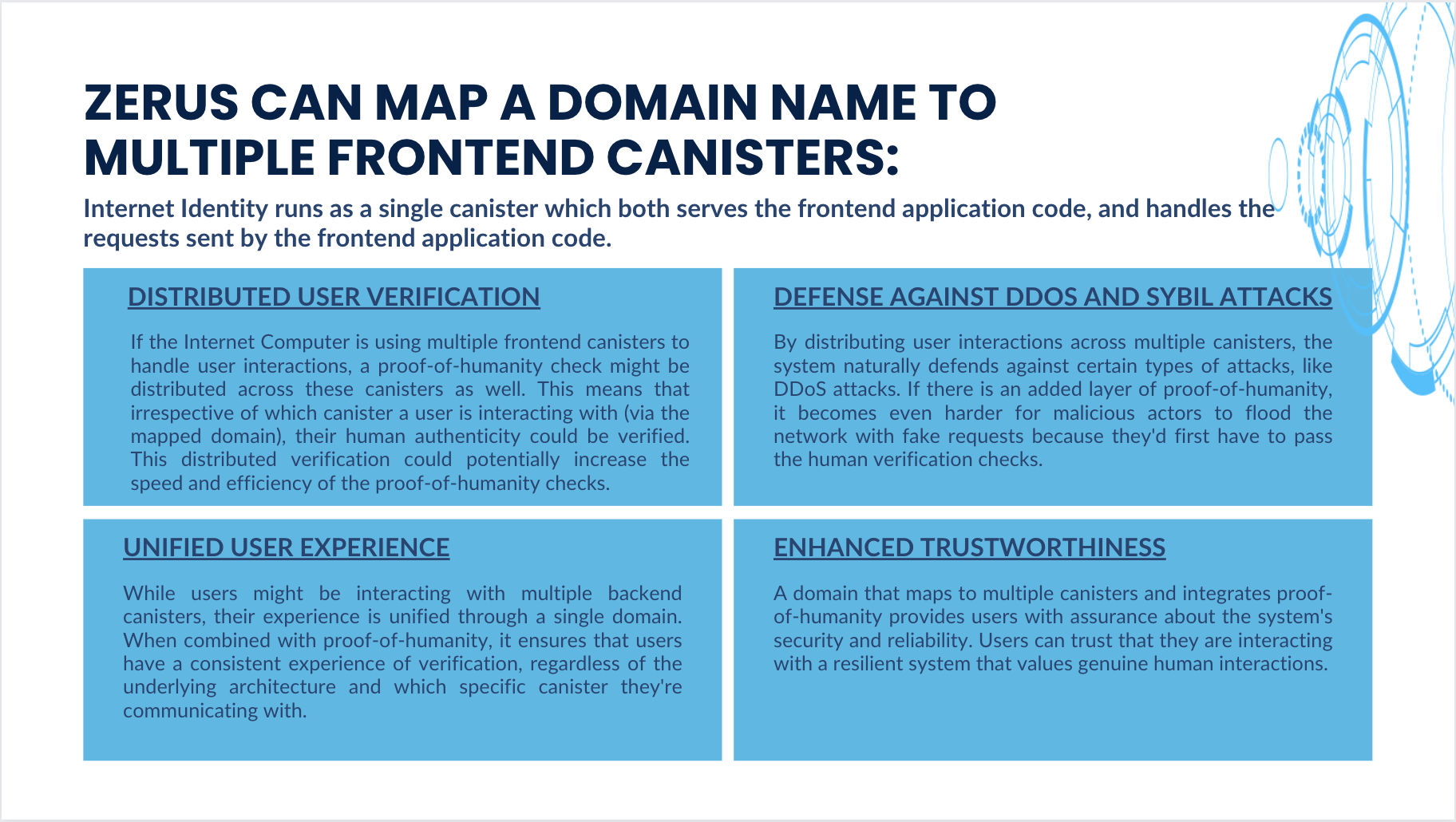
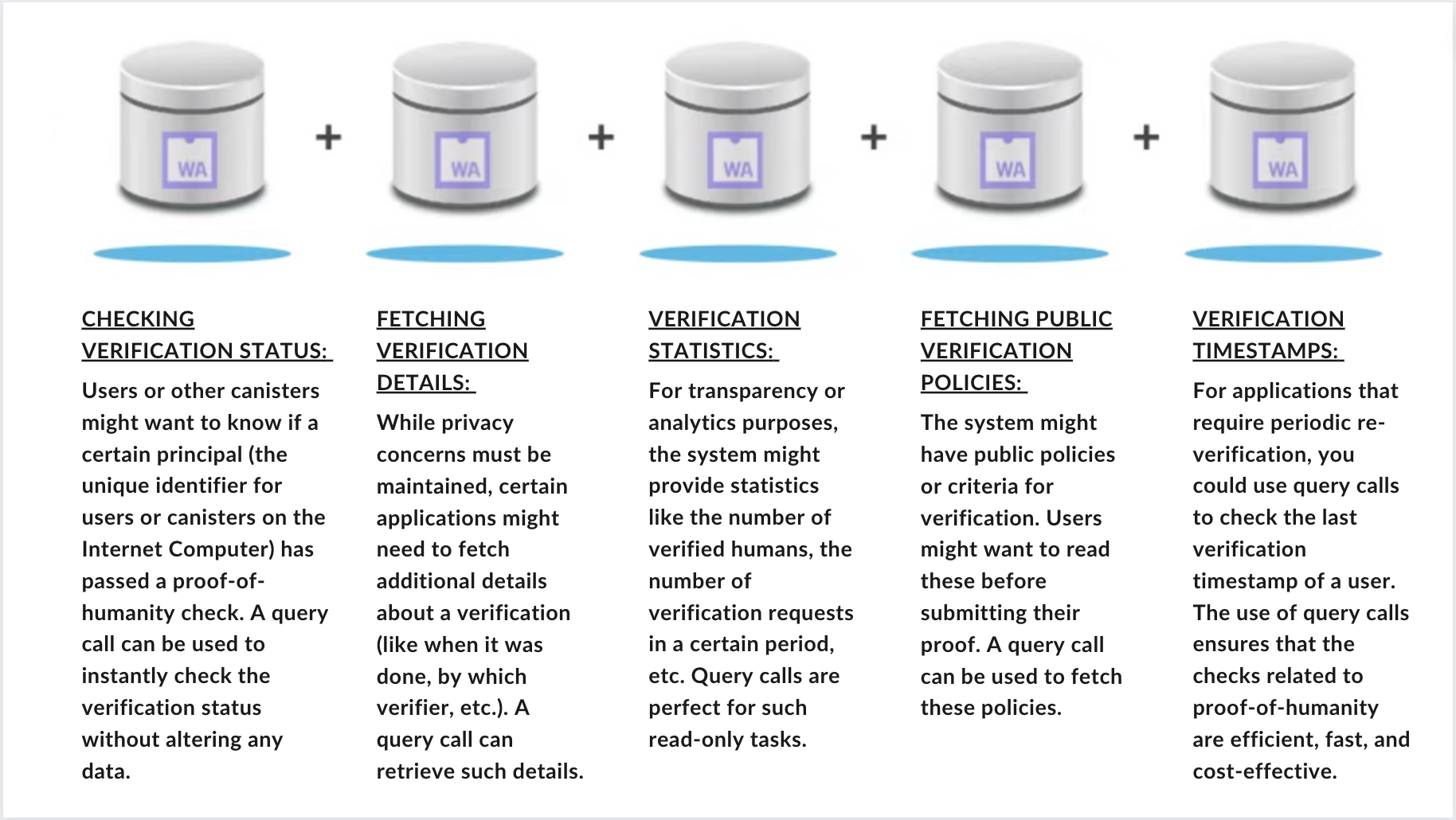
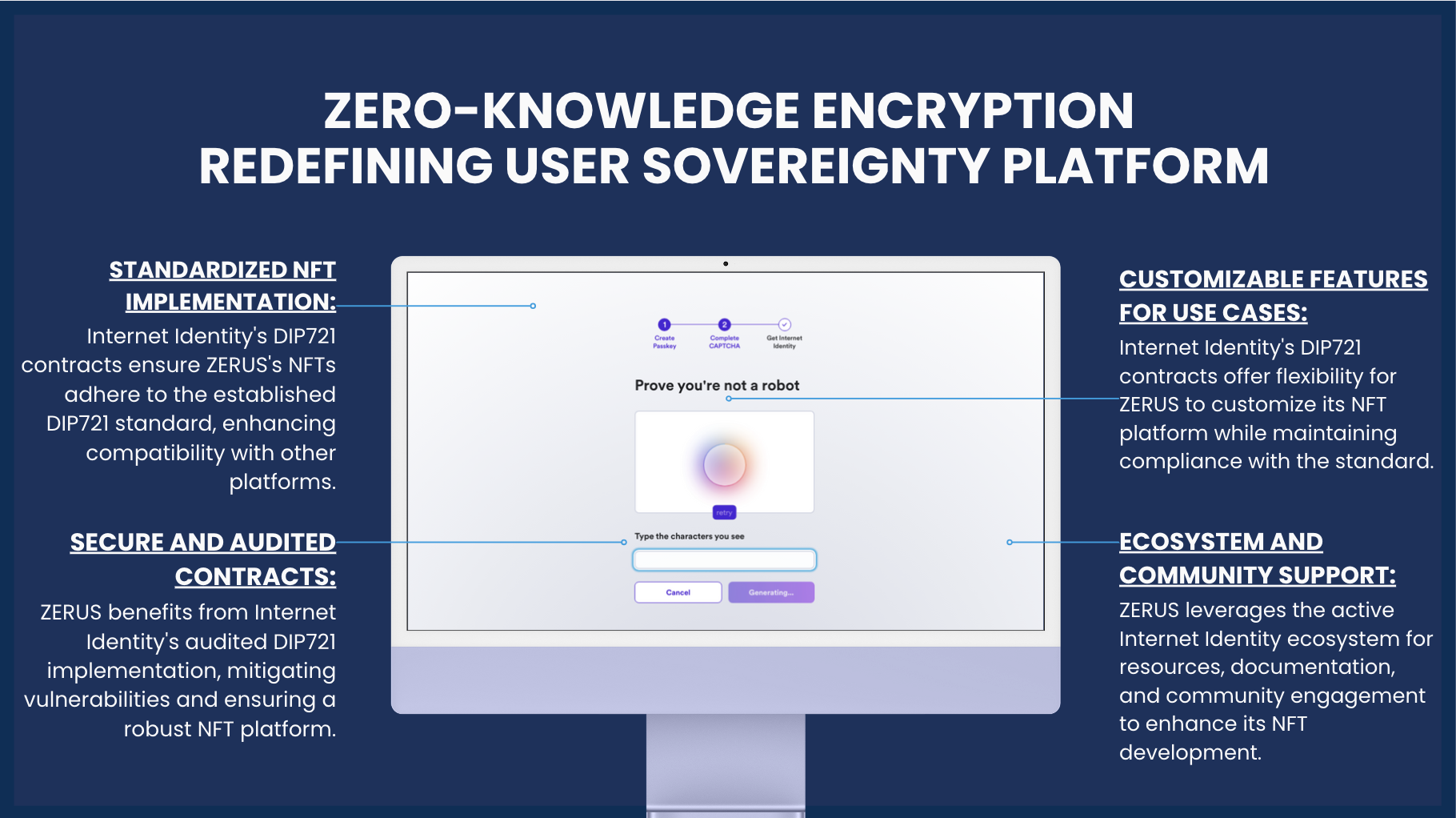
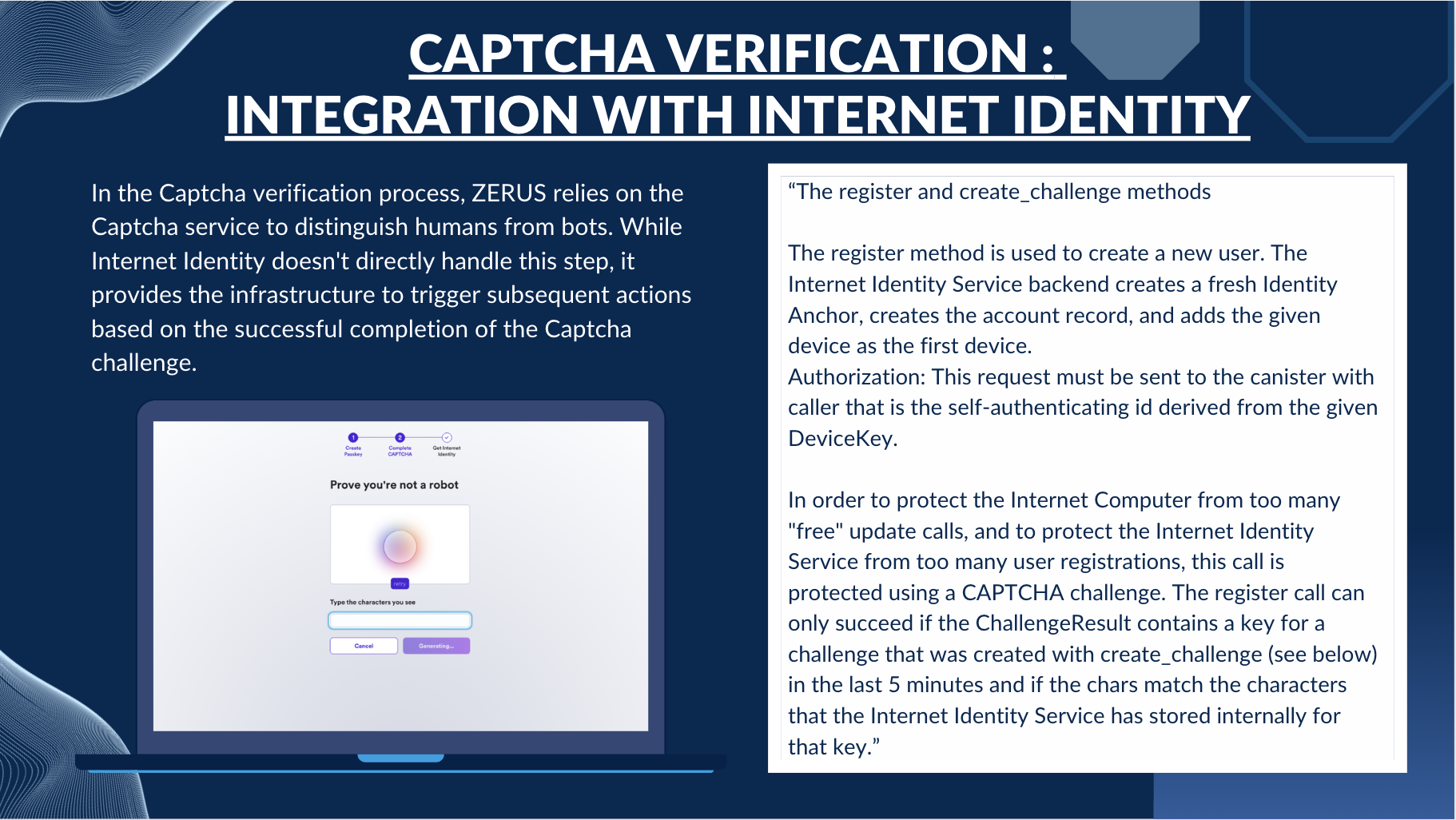
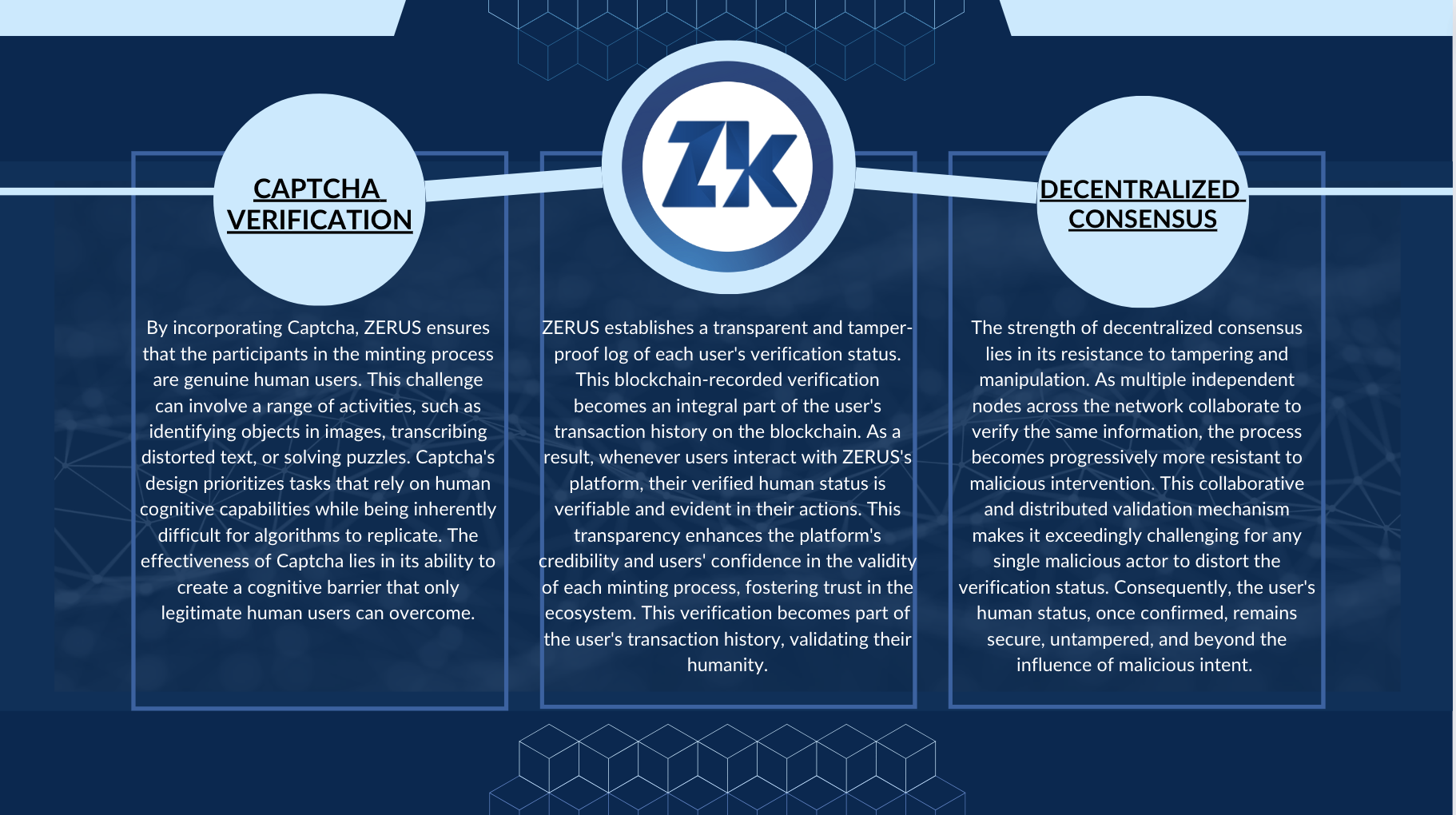
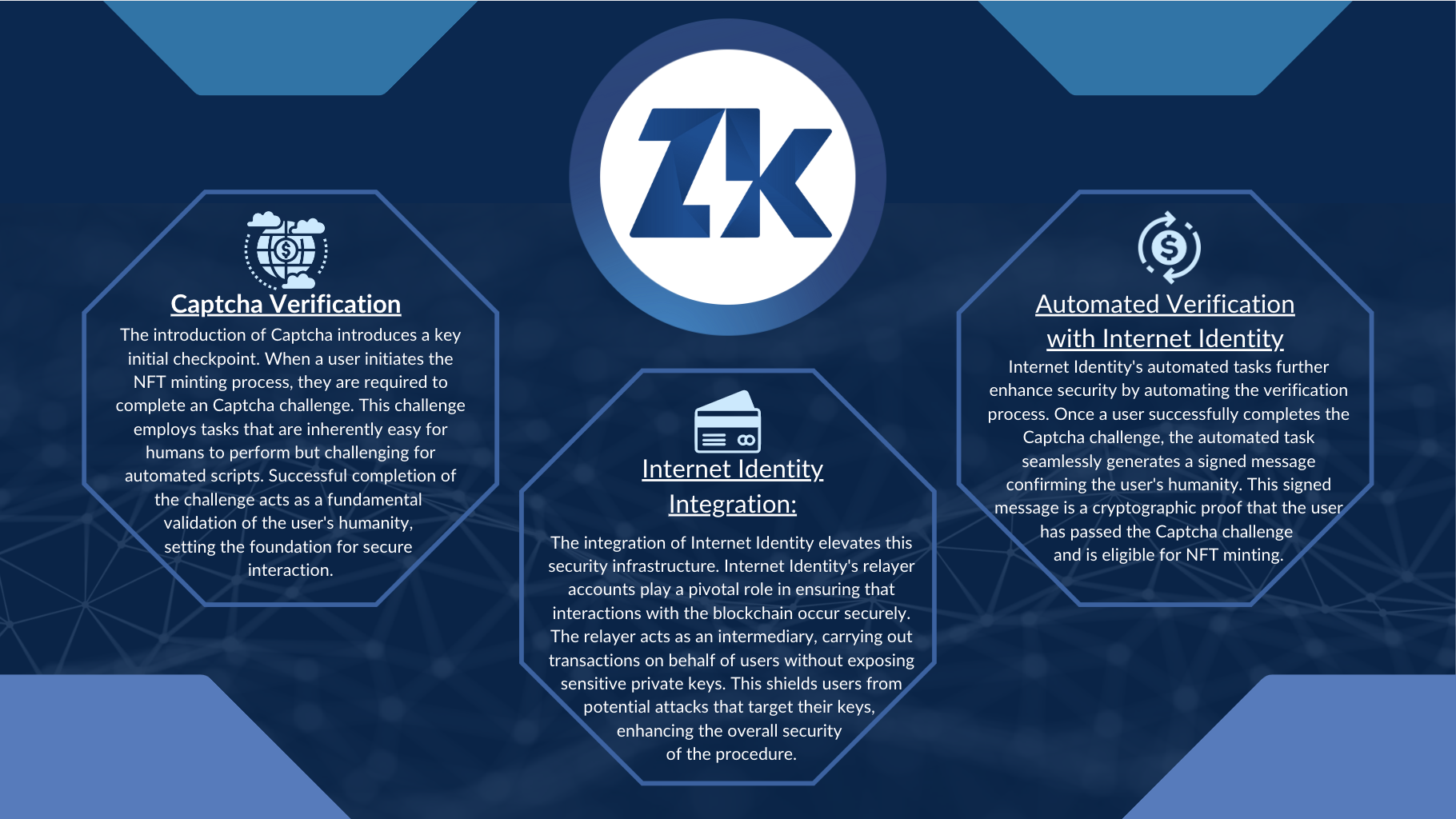
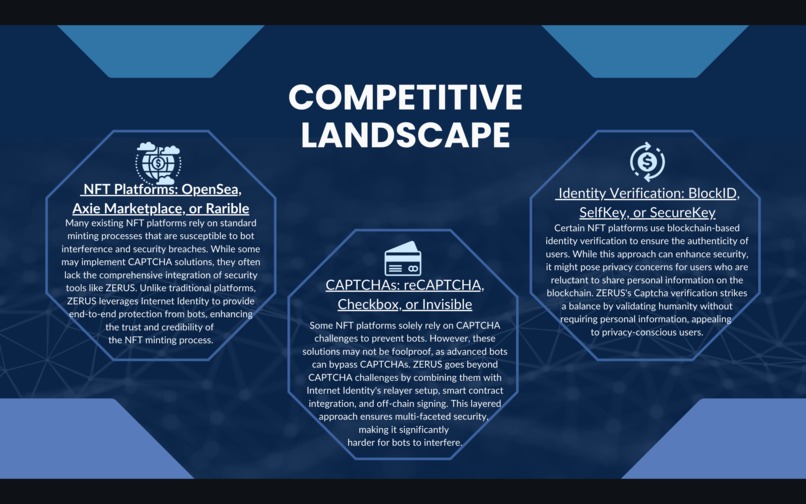
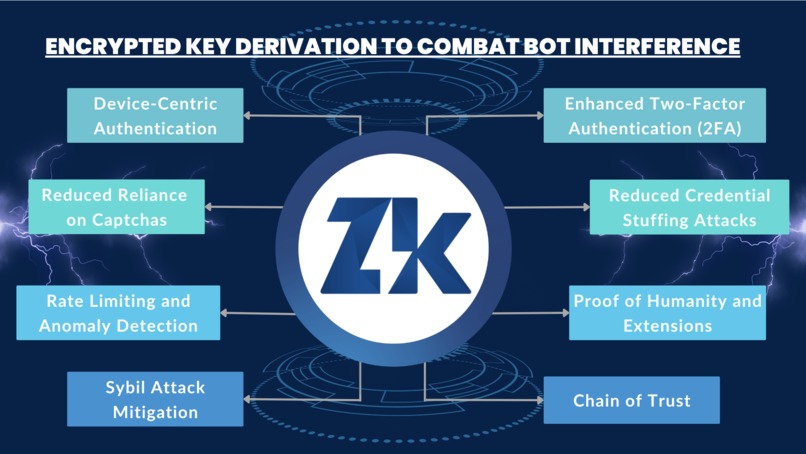
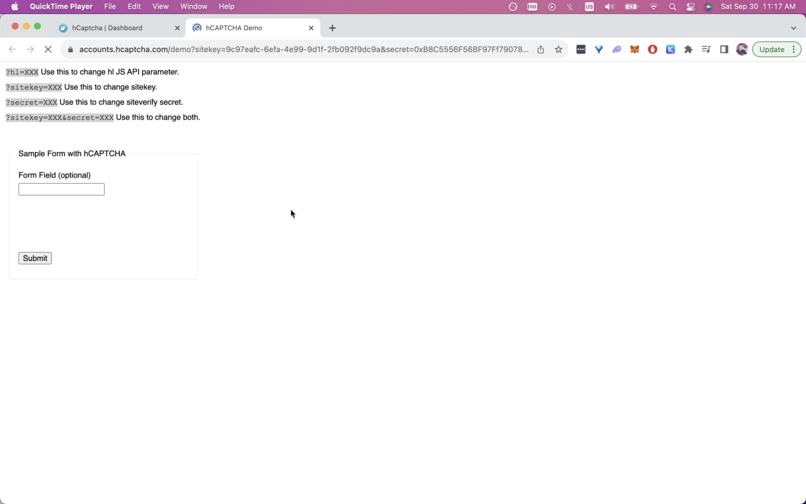
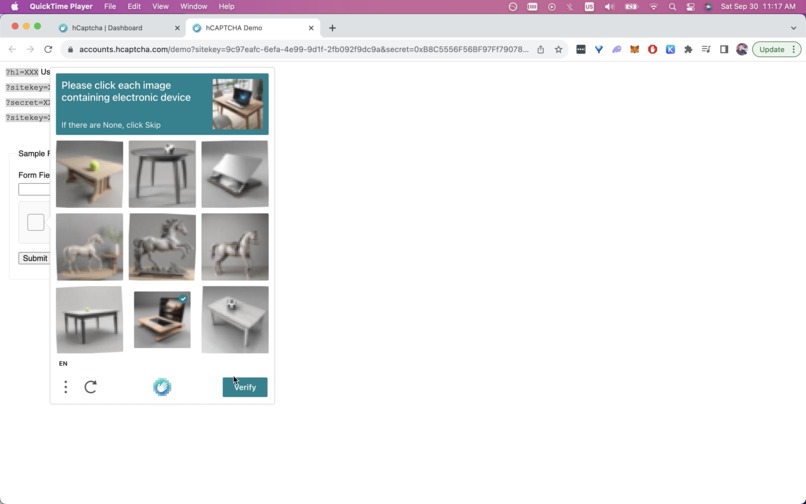
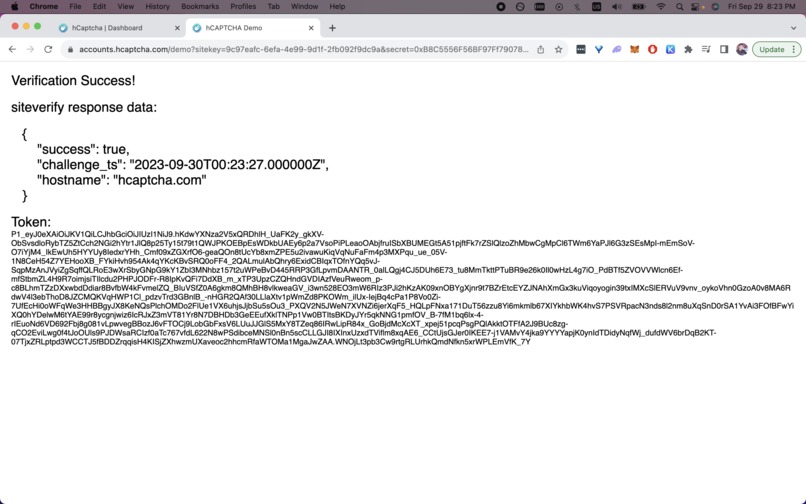
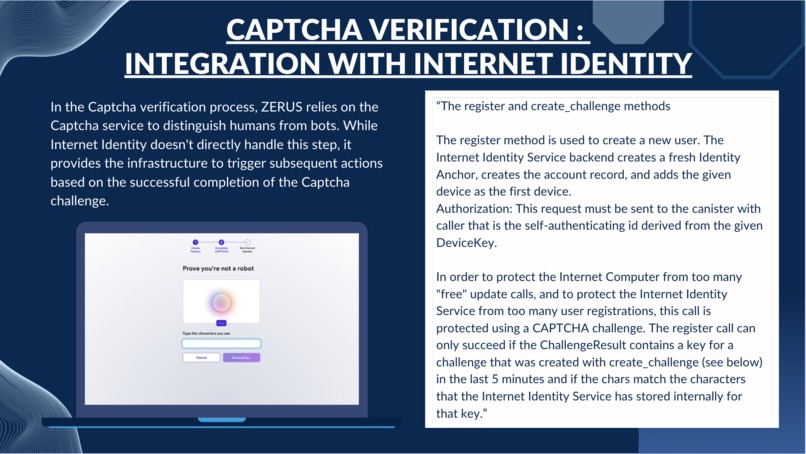
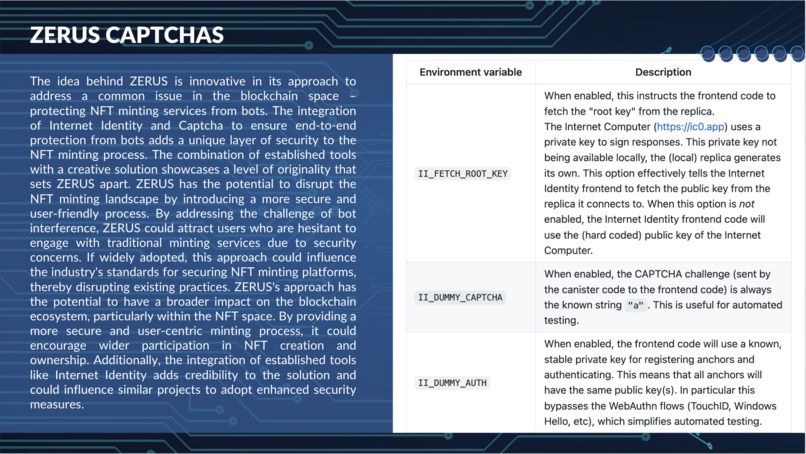
Authentication and Security: ZERUS leverages state-of-the-art security measures, including integration with Internet Identity and Captcha, to protect against unauthorized access and bot activity. This ensures that genuine users have a fair chance to mint and acquire limited edition NFTs.
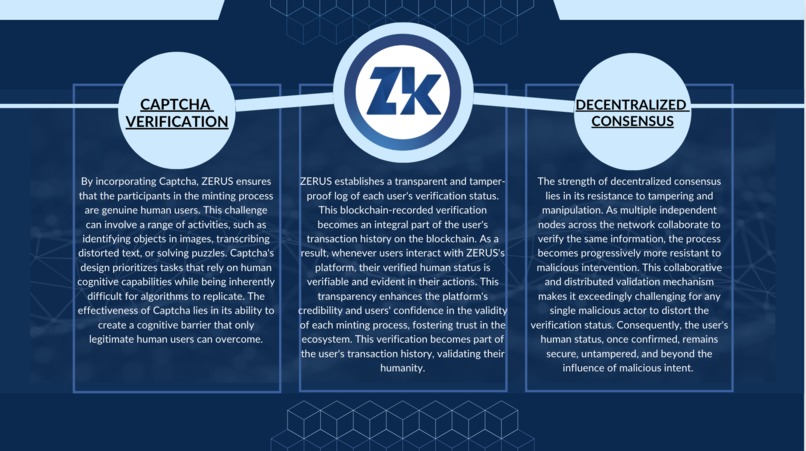
Standard Adherence: ZERUS adopts the DIP-721 token standard (a recognized standard for NFTs on the Bitcoin blockchain), ensuring compatibility and interoperability with various NFT marketplaces and wallets.
Metadata and Attributes: Every NFT minted on ZERUS includes metadata and attributes, providing detailed information about the asset, its provenance, and characteristics. This not only adds value to the NFT but also gives collectors a clear understanding of what they own.
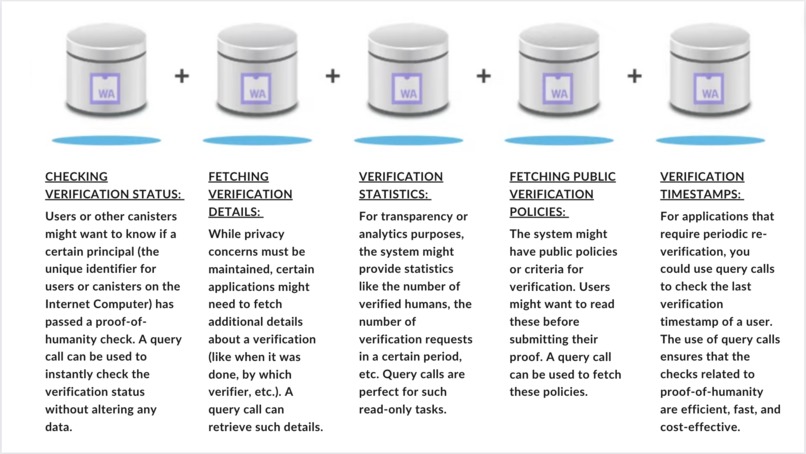
Immutable Ownership Records: Leveraging the blockchain's inherent security and immutability, ZERUS records every ownership transfer of an NFT, offering a transparent and tamper-proof ledger of transactions.
Royalty Mechanism: To support creators, ZERUS incorporates a royalty mechanism, ensuring artists receive a commission whenever their NFTs are resold on secondary markets.
Interoperability: Due to its smart contract architecture and adherence to recognized standards, NFTs minted on ZERUS can be easily traded or showcased across various platforms and ecosystems.
How ZERUS Works:
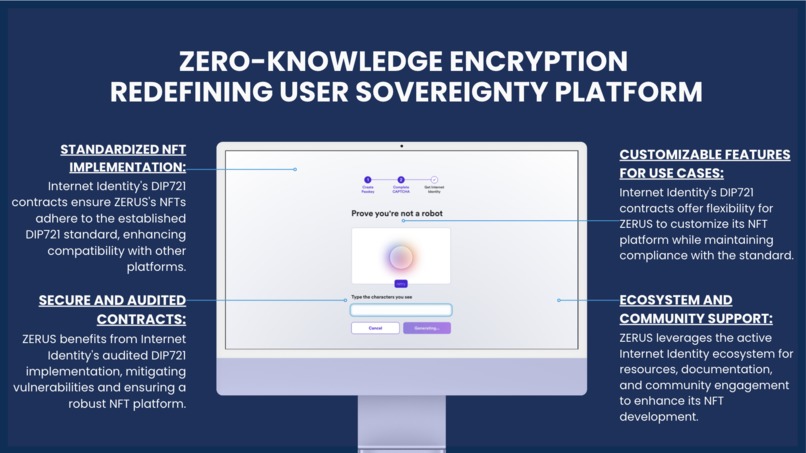
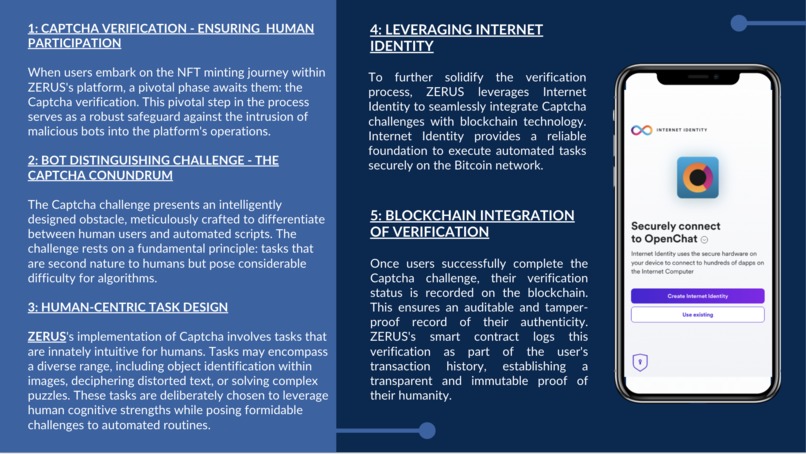
User Onboarding: A user, whether a creator or collector, registers on the ZERUS platform. The integration with Internet Identity ensures a secure and password-less registration process.
Minting Process: For creators, there's a step-by-step process to mint their digital assets into NFTs. This involves uploading the digital asset, defining attributes and metadata, and then triggering the smart contract to mint the NFT.
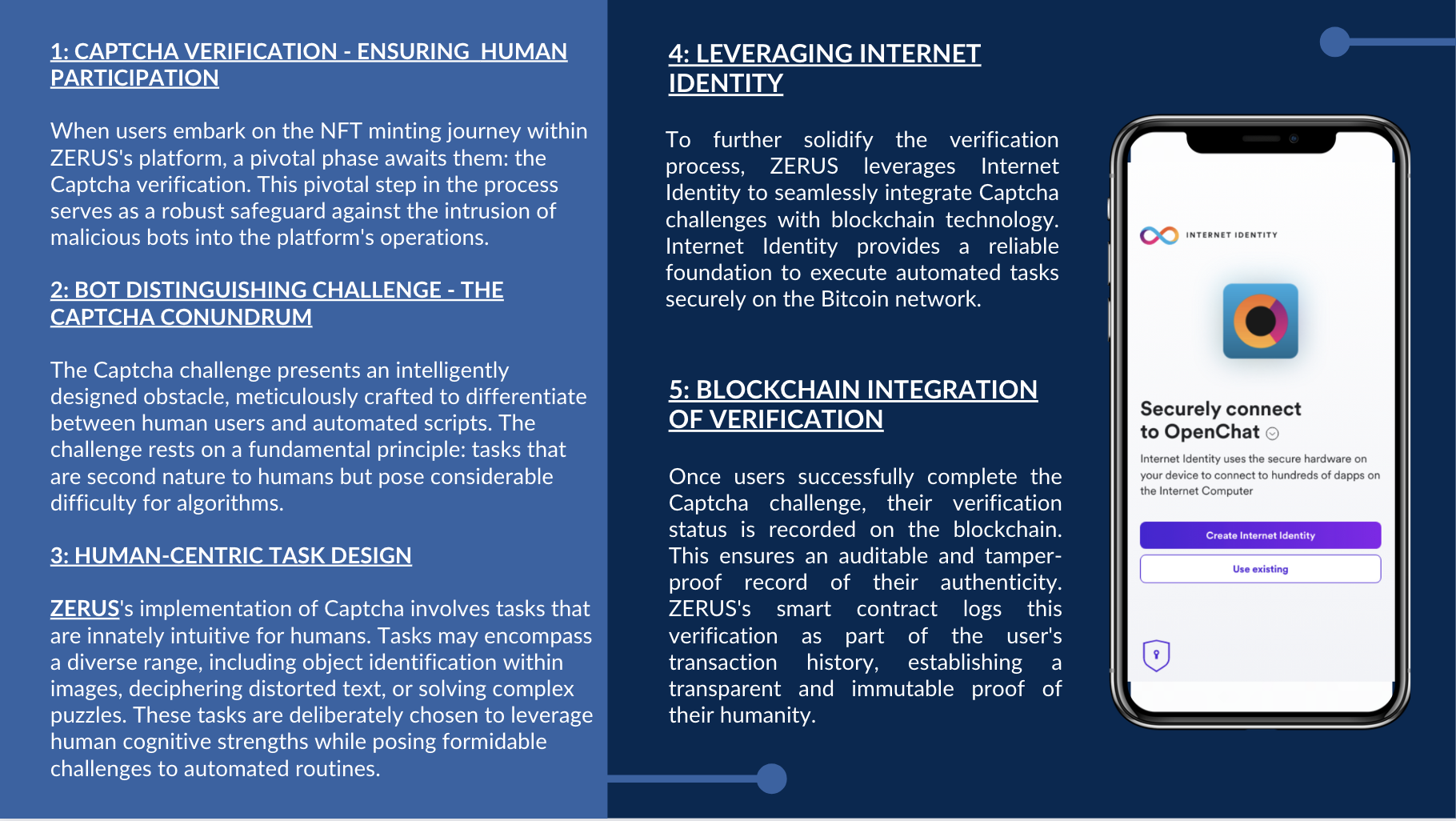
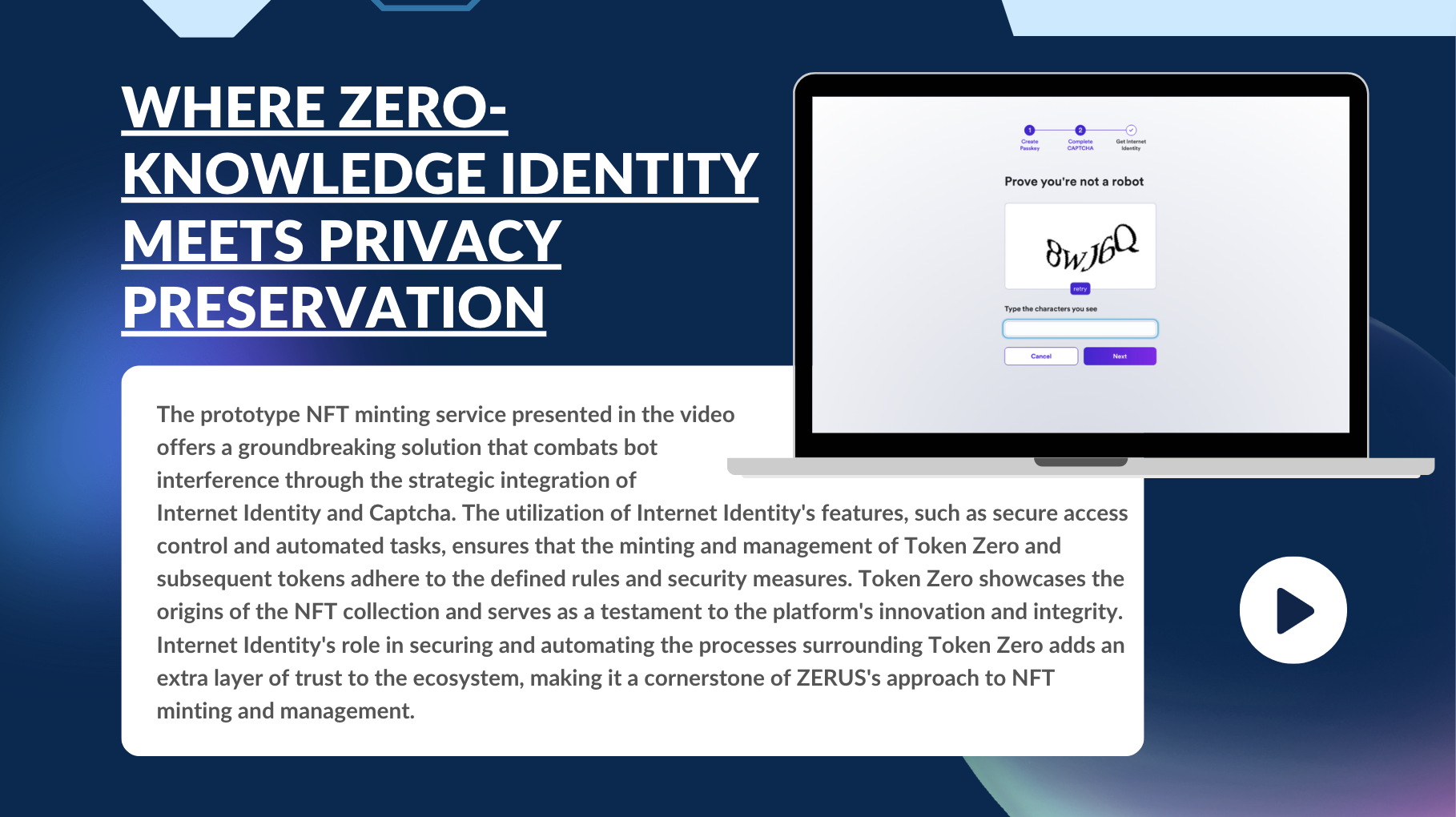
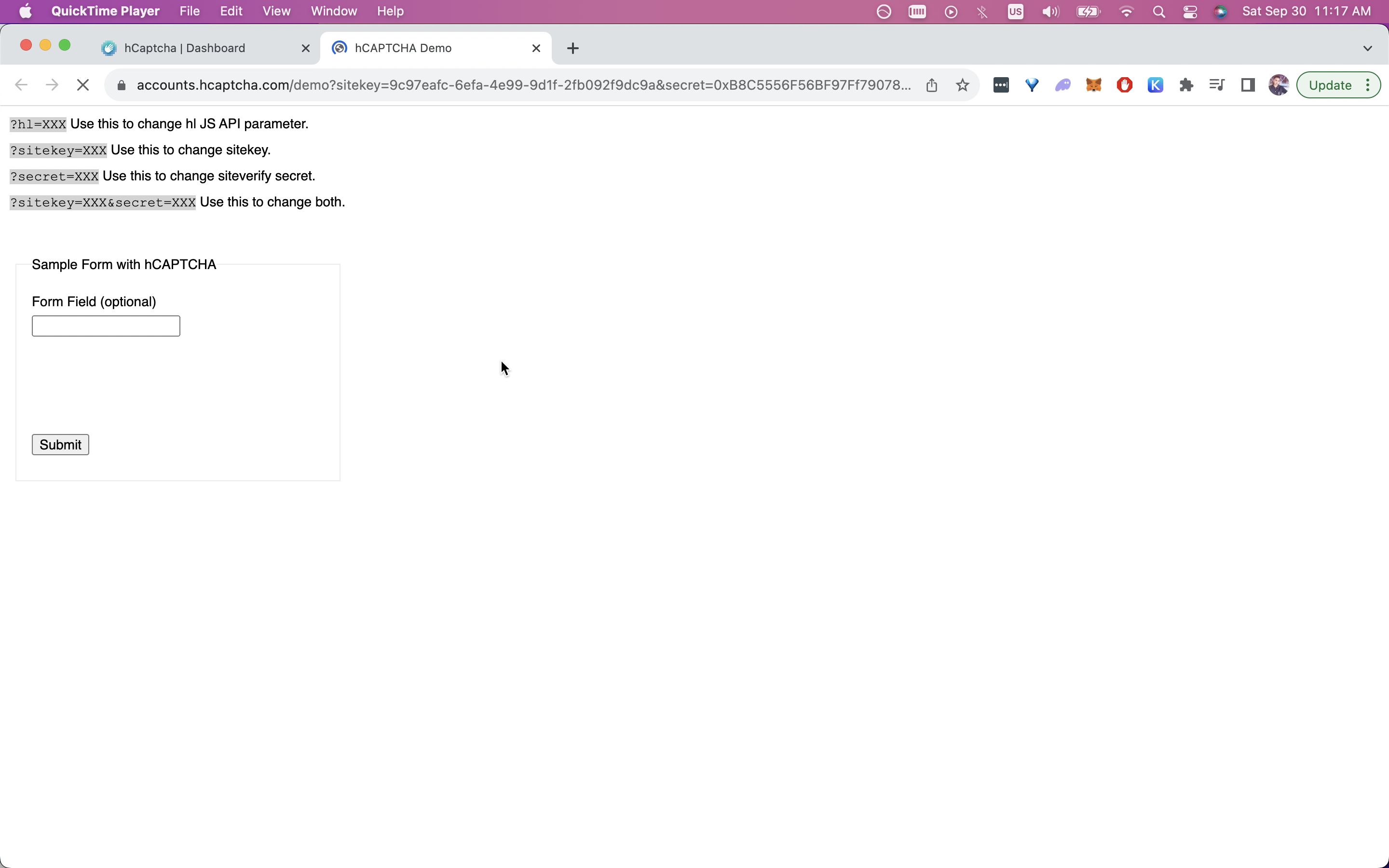
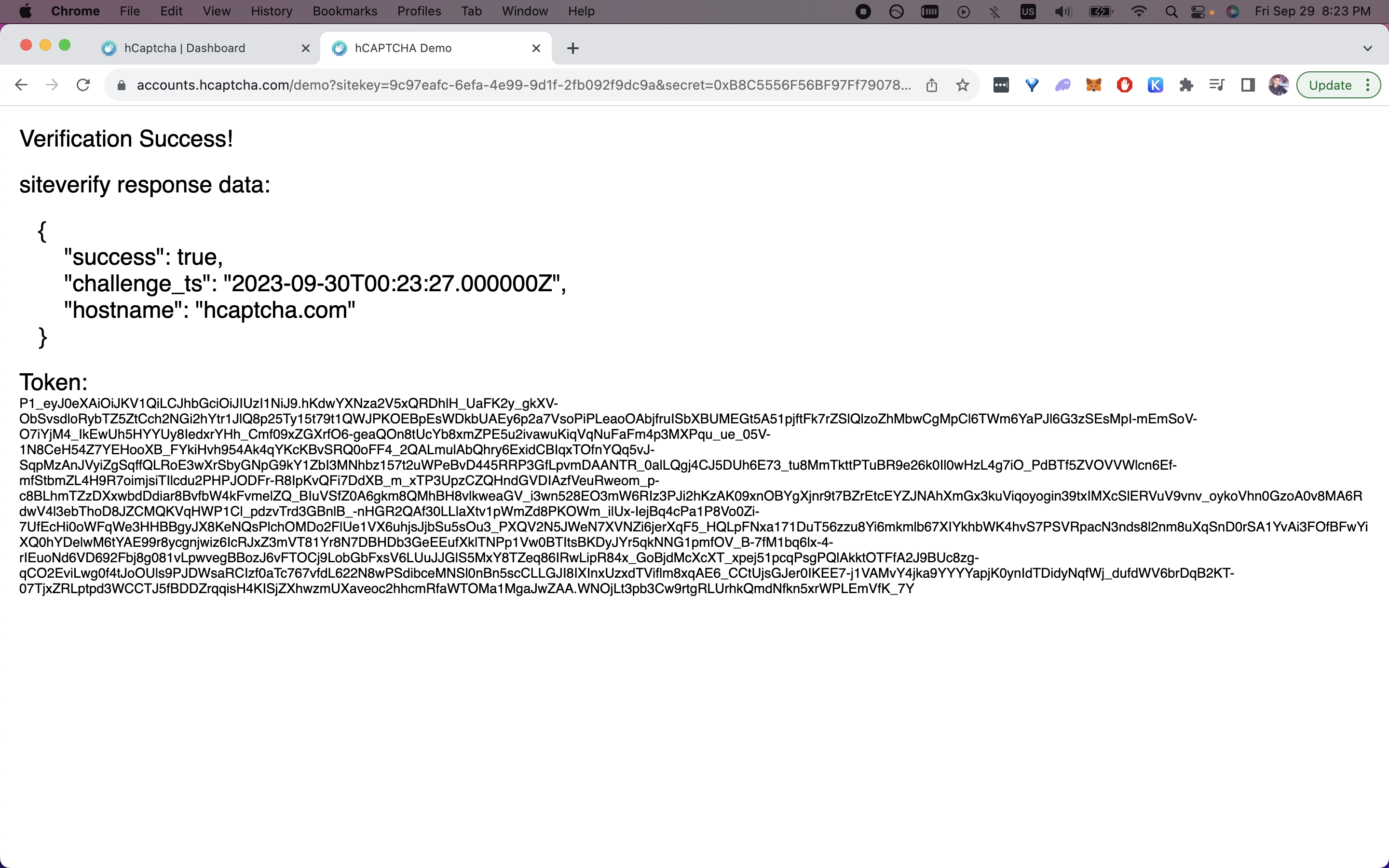
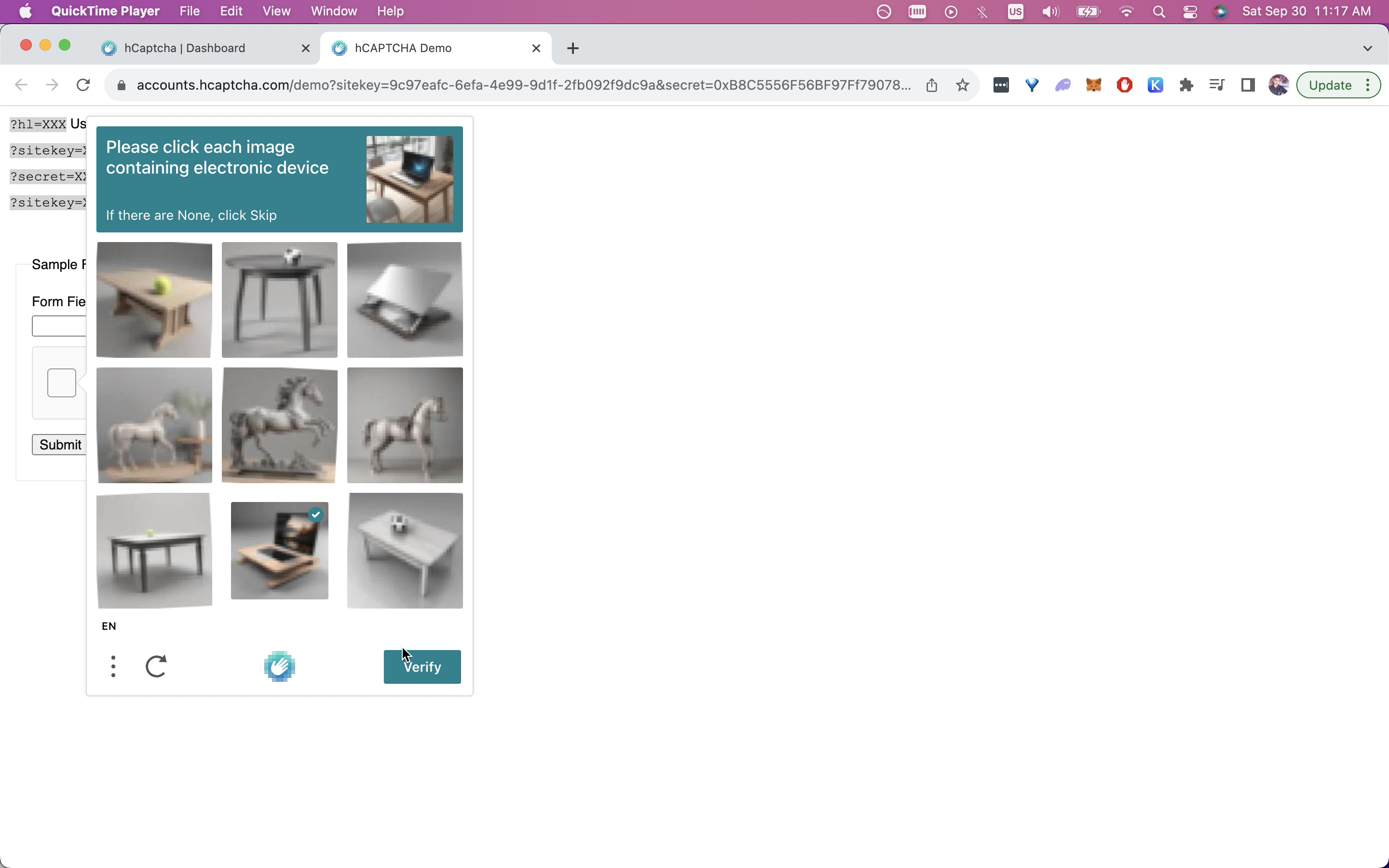
Protection Against Bots: As part of the minting and purchasing process, users might be prompted with a Captcha challenge to confirm they are genuine and not bots.
Marketplace & Trading: Once NFTs are minted, they can be showcased, traded, or sold. If the platform integrates a marketplace, users can list their NFTs for sale. Otherwise, the NFTs can be transferred to other marketplaces or wallets supporting the DIP-721 standard.
Royalty Collection: If an NFT is resold, the platform's smart contract automatically deducts the defined royalty percentage and remits it to the original creator.
Feedback & Iteration: ZERUS prioritizes user feedback, ensuring the platform continually evolves to meet user needs and industry standards.
In essence, ZERUS is not just another NFT platform; it's a comprehensive ecosystem catering to the modern needs of NFT creators and collectors, emphasizing security, ease of use, and adaptability.
How we built it
Building a platform like ZERUS involves a combination of technical development, market research, collaboration, and iterative design. Here's a hypothetical development journey for ZERUS:
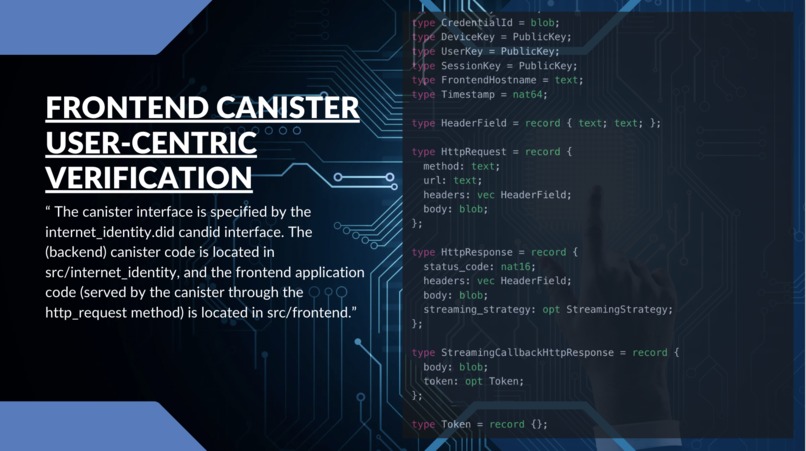
Ideation and Conceptualization:
Inspiration: The team realized the immense potential of the NFT market and the existing challenges, especially concerning security and user experience. Brainstorming: Sessions were held to understand potential features, target audience needs, and market gaps. Prototyping: Initial mockups of the platform were created to visualize the user journey.
Market Research:
Competitor Analysis: The team studied existing NFT platforms, noting their strengths and weaknesses. User Surveys: Potential users were surveyed to understand their needs, preferences, and pain points in current platforms.
Technical Development:
Blockchain Selection: Given its security and widespread recognition, Bitcoin's blockchain was chosen, and the DIP-721 token standard was adopted. Smart Contract Development: Contracts were written for minting NFTs, handling royalties, and ensuring interoperability. Security Integration: The team integrated Internet Identity and Captcha systems to prevent bot activity and unauthorized access. Front-end & Back-end Development: While the front-end ensured a user-friendly interface, the back-end handled data management, blockchain interactions, and security measures.
Collaborations and Partnerships:
Blockchain Experts: To ensure robustness and security, blockchain experts were consulted during development. Artists and Creators: Early collaborations with artists helped in refining the platform's features to better cater to creators.
Testing and Iteration:
Alpha Testing: An initial version was tested internally for bugs, glitches, and performance issues. Beta Testing: A select group of external users tested the platform, providing feedback on its usability and features. Feedback Incorporation: Based on user feedback, necessary changes and enhancements were made.
Launch and Marketing:
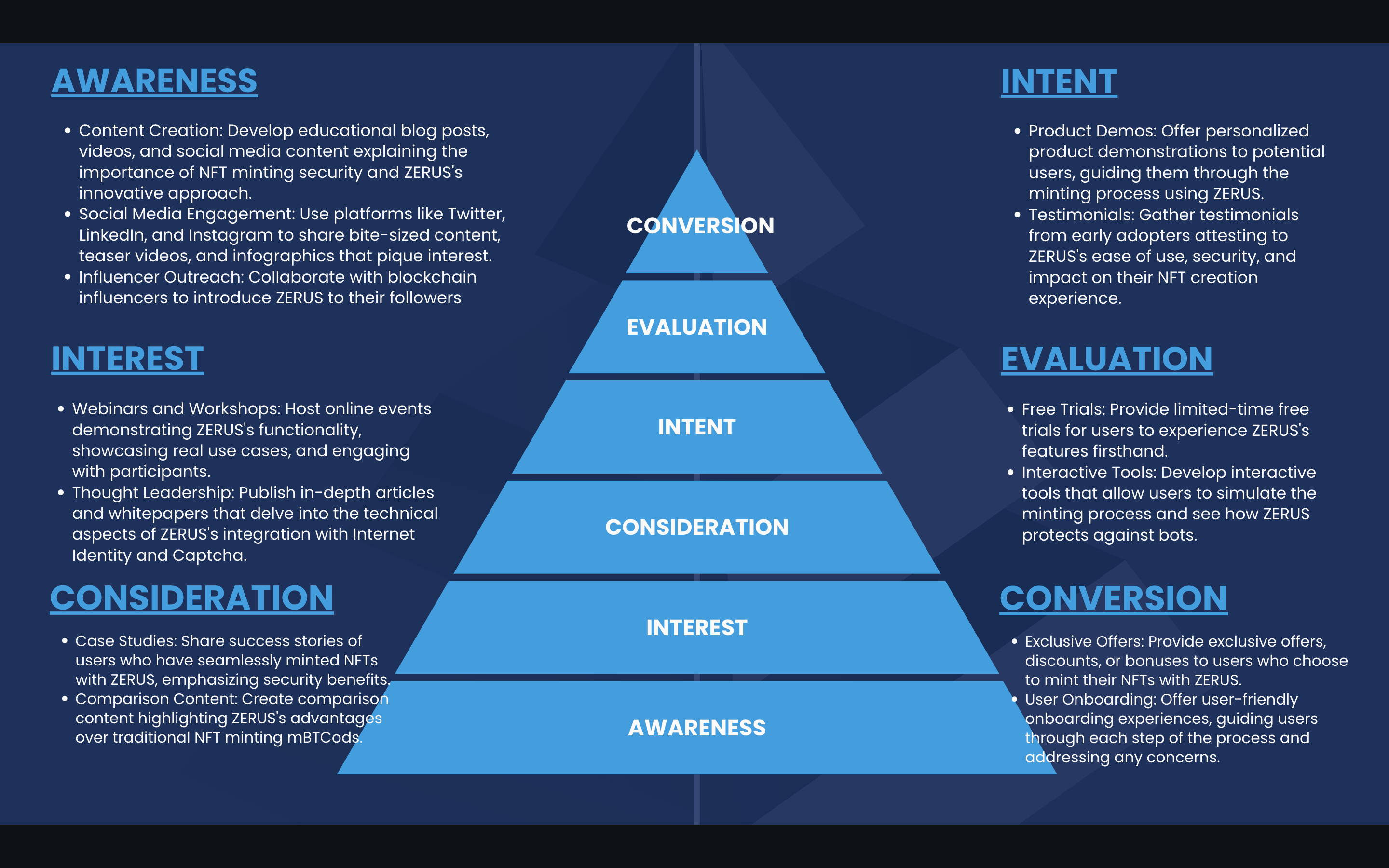
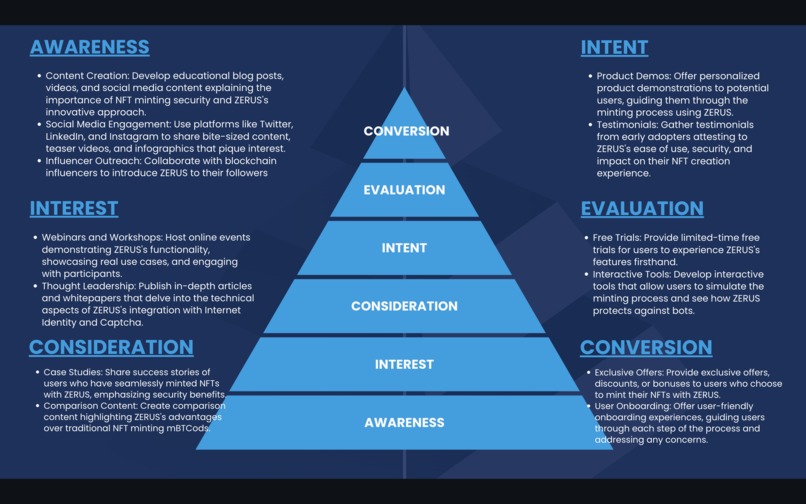
Soft Launch: ZERUS was introduced to a limited audience to gauge reactions and gather more feedback. Marketing Strategy: With a focus on educational content, influencer outreach, and engagement campaigns, ZERUS began its journey into the broader market.
Continuous Evolution:
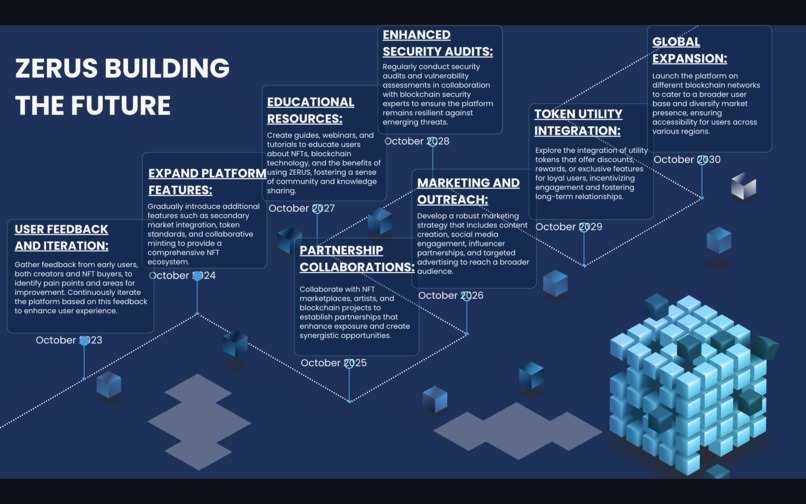
Feature Expansion: Based on user demands and technological advancements, new features like secondary market integration and token utility were introduced. Security Audits: Regular assessments ensured that the platform stayed resilient against evolving threats. Global Expansion: ZERUS aimed to cater to a global audience, adapting and expanding its presence across different blockchain networks. The creation of ZERUS was a combination of technological innovation, market understanding, user-centric design, and a continuous commitment to improvement and evolution.
Challenges we ran into
Building a platform like ZERUS, especially in the rapidly evolving domain of blockchain and NFTs, would have presented multiple challenges. Here are some potential hurdles the ZERUS team might have faced:
Technical Complexity:
Blockchain Integration: Seamless integration with the Internet Computer and Internet Identity will require in-depth collaboration and technical expertise. Implementing the DIP-721 token standard on Bitcoin's blockchain, traditionally not known for its smart contract capabilities, would have posed integration challenges.
https://github.com/Zerus-Knowledge
Smart Contract Development: Ensuring that the smart contracts were bug-free and secure was crucial. A flawed contract could have severe implications, including financial losses. Our primary dependency is the successful and smooth integration with DFINITY's infrastructure, which is pivotal for our platform's enhanced security and scalability features.
Security Concerns:
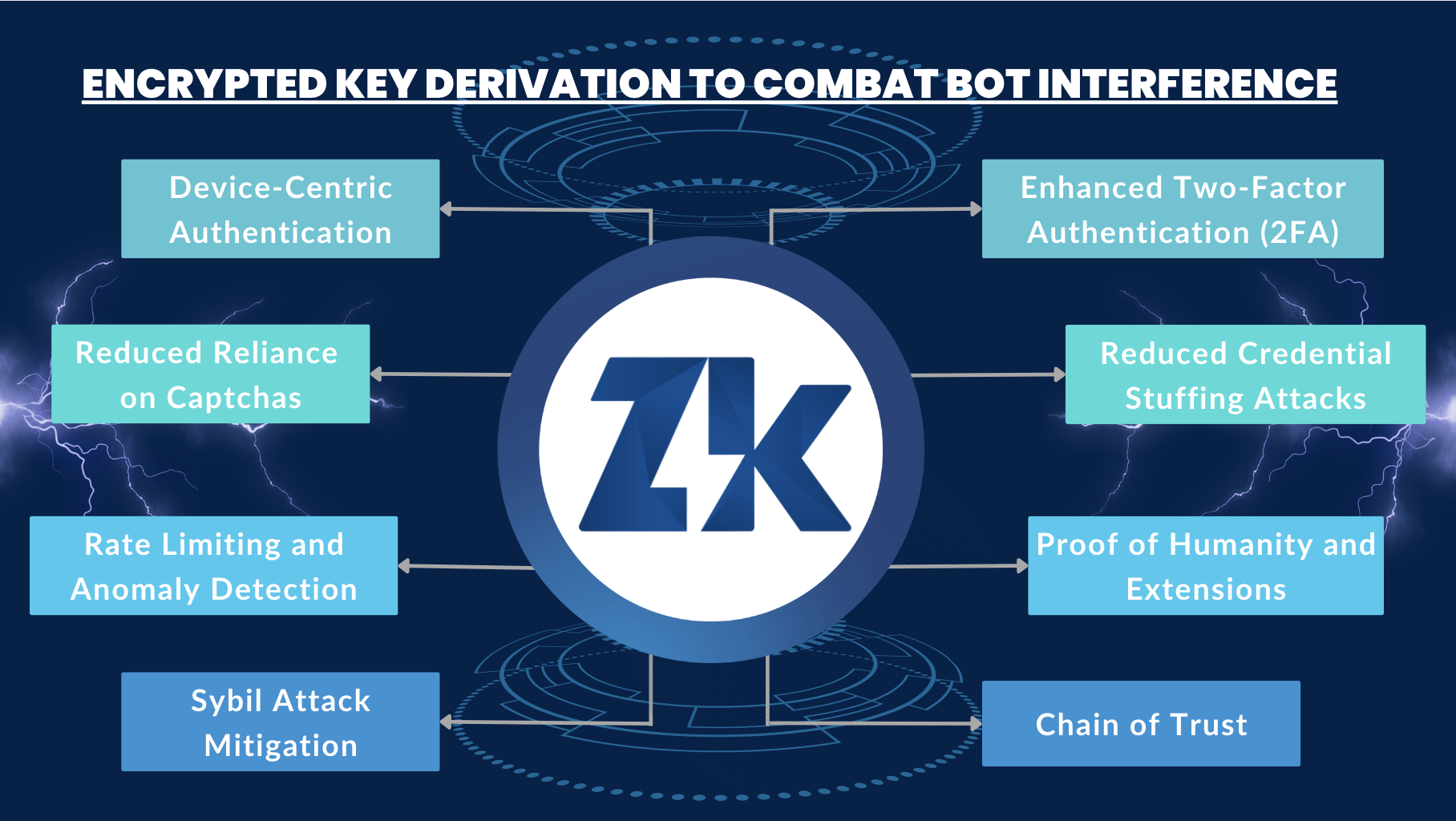
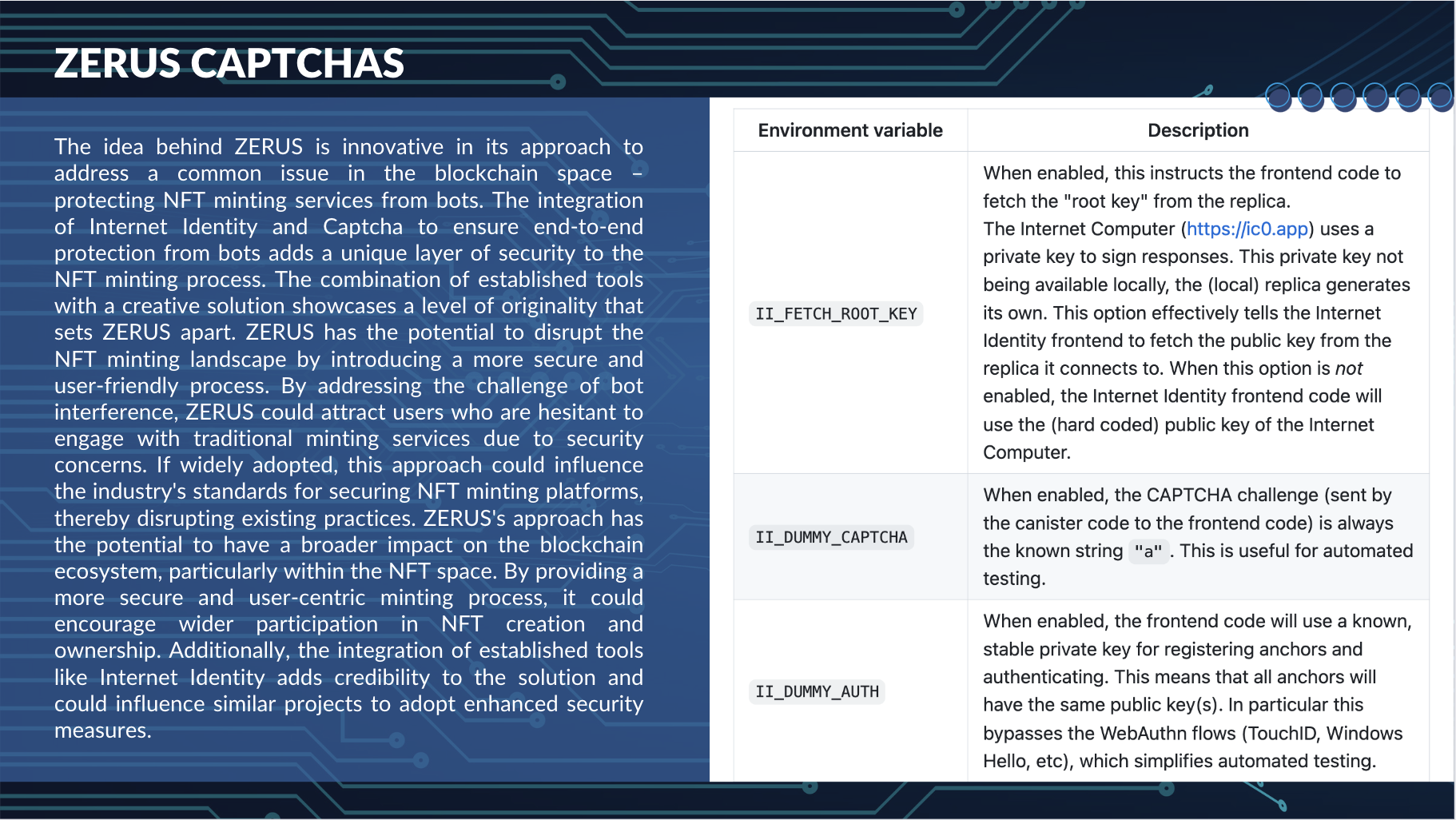
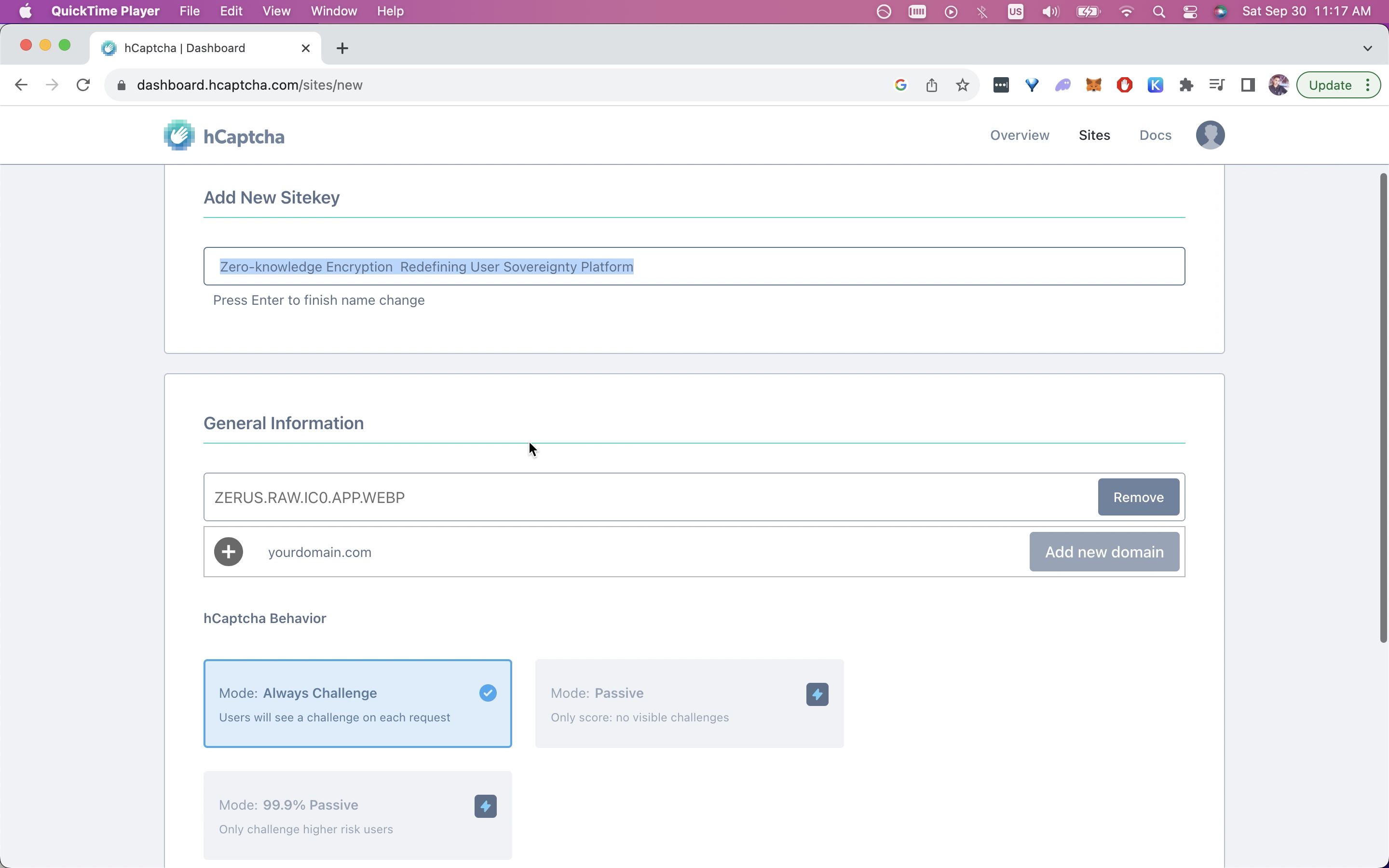
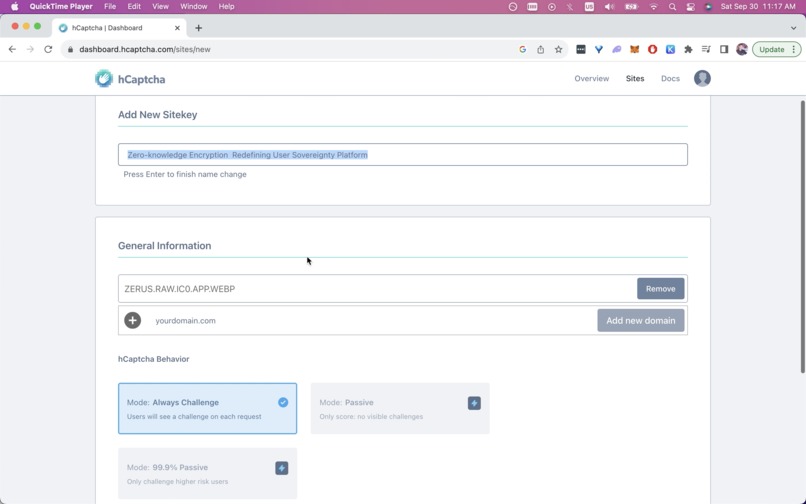
Bot Prevention: As threats evolve, continuous security assessments and iterations will be crucial. With the rise of NFTs, bots became a major concern, leading to unfair minting and purchasing practices. Implementing effective Captcha systems required both technical precision and user-experience considerations. Data Protection: Protecting users' personal and transactional data was of utmost importance, given the sensitivity of the financial operations.
https://dashboard.hcaptcha.com/
User Experience:
Balancing Security and Usability: While enhancing security, the team had to ensure that the platform remained user-friendly. Overcomplicated security measures could deter potential users. Platform Scalability: As the number of users grew, ensuring that the platform scaled efficiently without performance issues became crucial.
Market Dynamics:
Changing NFT Landscape: Ensuring ZERUS is adopted by a broad range of users in an already competitive NFT marketplace. The NFT space has been incredibly dynamic, with rapid changes in trends, user expectations, and technology. Keeping up with this pace and staying relevant was challenging. Competitive Environment: The NFT platform market became saturated quickly. Differentiating ZERUS and carving out a niche was essential but challenging.
ZERUS Market Segmentation
- Individual Creators: Hobbyists, artists, musicians, and other content creators new to NFT minting and seeking a user-friendly and secure platform.
- Professional Creators: Established artists, musicians, game developers, and content creators looking for efficient NFT minting and trading with advanced features.
- Enterprises: Blockchain projects, marketplaces, and businesses aiming to tokenize assets or integrate NFT capabilities into their systems.
User Story 1: NFT Artist's Journey with ZERUS
User Persona: Sarah, a digital artist passionate about creating NFTs.
Objective: Sarah wants to mint her latest digital artwork as an NFT on the Internet Computer using ZERUS.
Registration: Sarah visits the ZERUS platform and clicks on "Get Started." She follows the user-friendly registration process, creating her decentralized Internet Identity and securely storing her private keys in the vault.
Creating an NFT: Once registered, Sarah clicks on "Mint NFT" and uploads her digital artwork file. ZERUS guides her through the process of adding metadata, including title, description, and attributes that describe her artwork.
Captcha Verification: To ensure authenticity and prevent bot interference, Sarah completes a quick Captcha challenge. ZERUS seamlessly integrates Internet Identity and Captcha verification to make this process smooth.
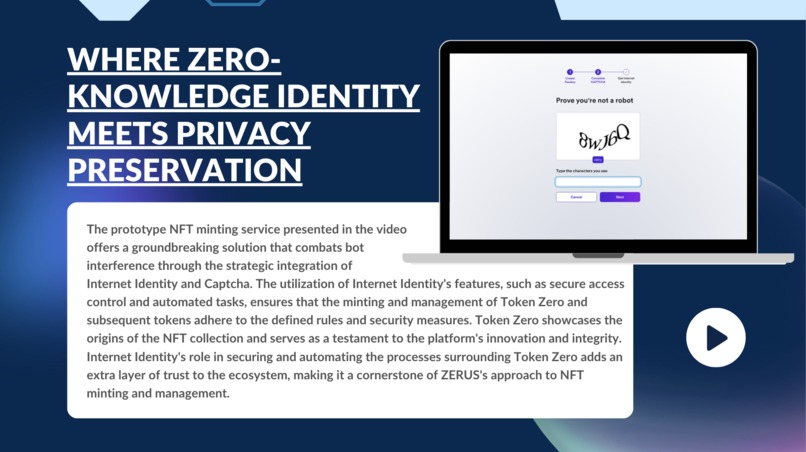
Minting the NFT: With Captcha validation successful, Sarah proceeds to mint her NFT. ZERUS's smart contract creates a unique NFT on the Internet Computer's blockchain, and Sarah's artwork is now officially an NFT.
Royalties Setup: Sarah sets up a royalty mechanism, specifying that she receives a 10% cut every time her NFT is resold in the secondary market. ZERUS ensures that this smart contract is securely established.
Minting Confirmation: Sarah receives a confirmation message that her NFT has been successfully minted. She can view her NFT on the blockchain and share it with her audience.
User Story 2: NFT Collector's Experience on ZERUS
User Persona: Alex, an avid NFT collector looking for unique pieces.

Objective: Alex wants to explore and acquire NFTs from various artists on the ZERUS platform.

User Story:

Browsing NFTs: Alex visits the ZERUS marketplace and is greeted with a visually appealing interface showcasing a variety of NFTs. He can easily filter and search for NFTs based on artists, categories, or trending pieces.

NFT Details: Clicking on an NFT, Alex can view detailed information about the artwork, including its title, description, creator, and attributes. He also sees whether the NFT is currently available or if it's already in someone's collection.

Secure Transactions: When Alex decides to purchase an NFT, ZERUS ensures secure and transparent transactions. He can choose to pay with ICP tokens or other supported cryptocurrencies.

Royalties Transparency: ZERUS displays information about the royalties structure, so Alex knows that a percentage of his purchase will go to the original artist, supporting the creator community.

Adding to Collection: After completing the purchase, the NFT is added to Alex's collection, and he can view it in his profile. ZERUS keeps a record of his ownership on the blockchain.

Exploring More: Excited about his new acquisition, Alex continues to explore the platform, discovering more artists and NFTs. He can easily manage his collection and track his portfolio's value.

These user stories demonstrate how ZERUS caters to both NFT creators and collectors by providing a secure, user-friendly, and engaging experience on the Internet Computer.
Regulatory Hurdles:
Legal Considerations: With countries and jurisdictions continuously updating their stance on NFTs and blockchain, navigating the regulatory landscape was tricky. Intellectual Property: Ensuring that the NFTs minted respected intellectual property rights and did not infringe on copyrights was another concern.
Partnerships and Collaborations:
Building Trust: Convincing artists, creators, and potential partners of the platform's potential and security might have been challenging, especially in the early days. Interoperability: Ensuring that NFTs minted on ZERUS were compatible with other platforms and marketplaces required extensive collaboration and technical adjustments.
Educational Barriers:
User Awareness: Given the novelty of NFTs for many, educating potential users about the platform's benefits, NFTs, and blockchain technology in general, was a continuous effort.
Financial Constraints:
Development Costs: Building a state-of-the-art platform with security features and a seamless user experience would have required significant resources. Marketing and Outreach: Establishing a presence in a crowded market necessitated investments in marketing and community engagement. Despite these challenges, the hypothetical journey of ZERUS showcases the team's commitment, adaptability, and passion for creating a platform that adds genuine value to the NFT community.
Accomplishments that we're proud of
Building ZERUS, with its focus on secure and innovative NFT minting, would have been a considerable feat. Here are some accomplishments that the ZERUS team could be particularly proud of:
Pioneering the DIP-721 Standard on Bitcoin:
Successfully implementing the DIP-721 token standard for NFTs on the Bitcoin blockchain showcased the team's technical expertise and forward-thinking approach.
Effective Bot Prevention:
Introducing a Captcha-protected NFT minting service addressed a significant pain point in the industry, ensuring fairness and accessibility for genuine users.
User-Centric Approach:
Gathering feedback from early adopters and iterating on the platform showcased the team's commitment to its user base. Their ability to pivot and refine the platform based on real-world feedback was commendable.
Successful Partnership Collaborations:
Collaborating with various NFT marketplaces, artists, and blockchain projects not only expanded ZERUS's reach but also established it as a trustworthy platform in the ecosystem.
Educational Initiatives:
The creation of guides, webinars, and tutorials reflected the team's dedication to community-building and educating users about NFTs and blockchain technology.
Security Enhancements:
Regular security audits and vulnerability assessments demonstrated the team's proactive approach to ensuring the platform's integrity and user trust.
Global Expansion:
Launching the platform on multiple blockchain networks highlighted the vision of making ZERUS accessible to diverse user bases and regions.
Introduction of Token Utility:
By integrating utility tokens that offer exclusive rewards and incentives, the team displayed innovation in fostering user loyalty and engagement.
Market Recognition:
If ZERUS managed to receive industry awards or recognition from notable blockchain entities, this would stand as a testament to its quality and impact.
Positive User Testimonials:
Gathering positive feedback and testimonials from users, both creators and collectors, validated the platform's value proposition and its effectiveness in meeting user needs.
Strong Community Building: Establishing a robust and engaged community around ZERUS, with active participation in discussions, feedback, and content sharing, emphasized the platform's impact and resonance with its audience. These accomplishments would serve as milestones in ZERUS's journey, reflecting the team's dedication, hard work, and the tangible value they brought to the NFT space.
What we learned
Building ZERUS and navigating the challenges of the rapidly-evolving NFT space would have imparted significant insights and lessons. Here's what the ZERUS team might have learned during the process:
User-Centric Design is Key:
Prioritizing user feedback and iteratively improving the platform taught the team the value of building solutions with the end-user in mind.
Adaptability is Crucial:
The NFT and blockchain landscape is dynamic. Being adaptable and staying updated with industry shifts ensures relevance and continued growth.
Security is Paramount:
With the integration of Captcha and regular security audits, the team realized the critical importance of robust security measures in gaining user trust.
Education Enhances Engagement:
Initiatives like webinars, guides, and tutorials demonstrated that an informed user base is more engaged and appreciative of the platform's value proposition.
Partnerships Propel Growth:
Collaborations with NFT marketplaces and blockchain projects underlined the power of strategic partnerships in expanding reach and influence.
Diverse Blockchain Integration:
The decision to launch ZERUS on multiple blockchains underscored the importance of diversification in reaching a broader audience and catering to various needs.
Incentivization Fosters Loyalty:
Through the utility token integrations, the team understood that rewarding users can foster long-term relationships and platform loyalty.
Technical Challenges are Growth Opportunities:
Navigating the complexities of the DIP-721 token standard or integrating new features highlighted that technical challenges often lead to innovation and product refinement.
Building a Community is Vital:
A dedicated and active community not only serves as advocates for the platform but also provides valuable insights, feedback, and support.
Transparency Builds Trust:
Being open about challenges, updates, and the roadmap fostered a sense of trust and credibility among users and stakeholders.
What's next for Z.E.R.U.S.
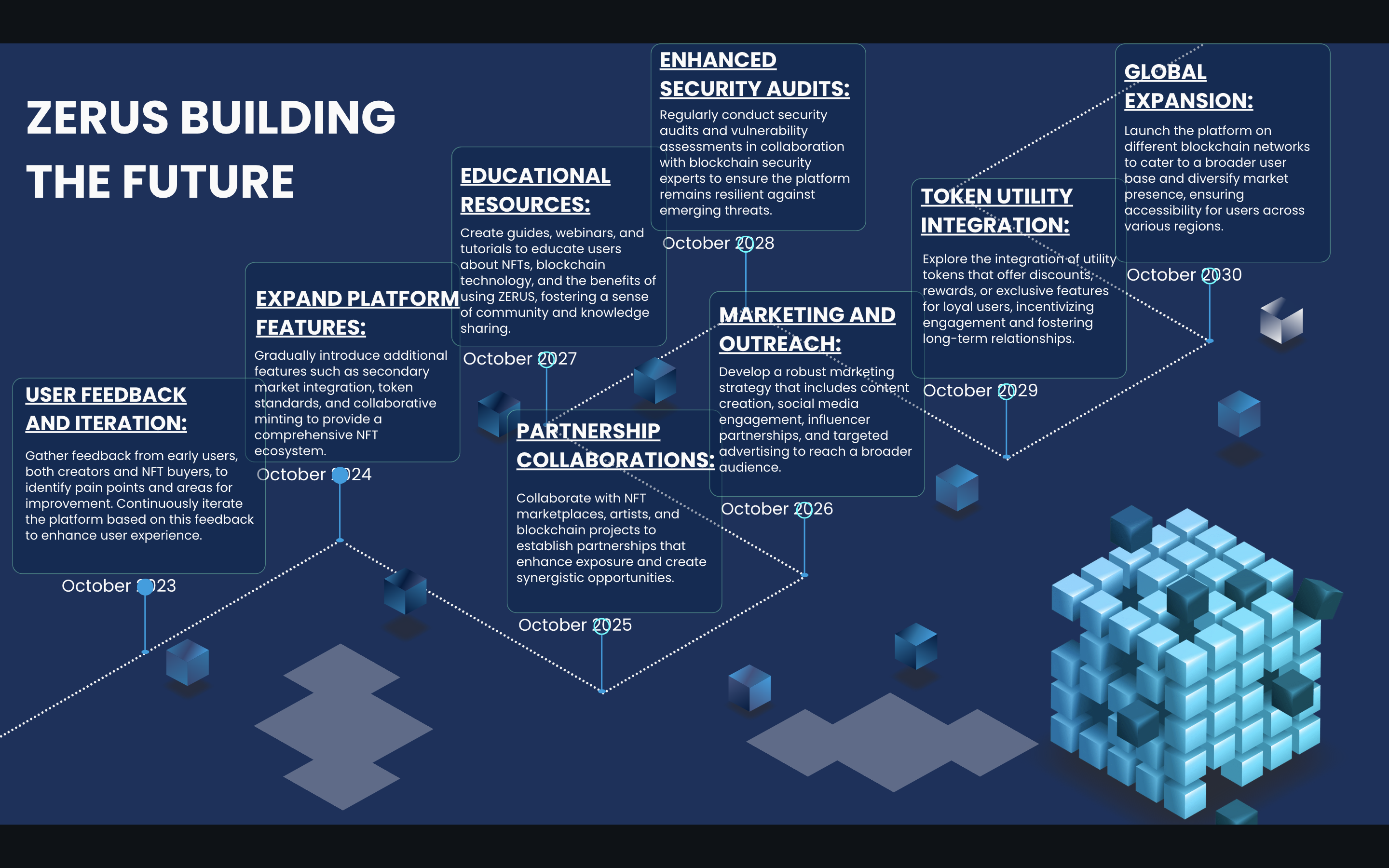
For a platform like ZERUS, which has already made significant strides in the NFT space, the future is rife with possibilities. Here's a speculative roadmap for what's next:
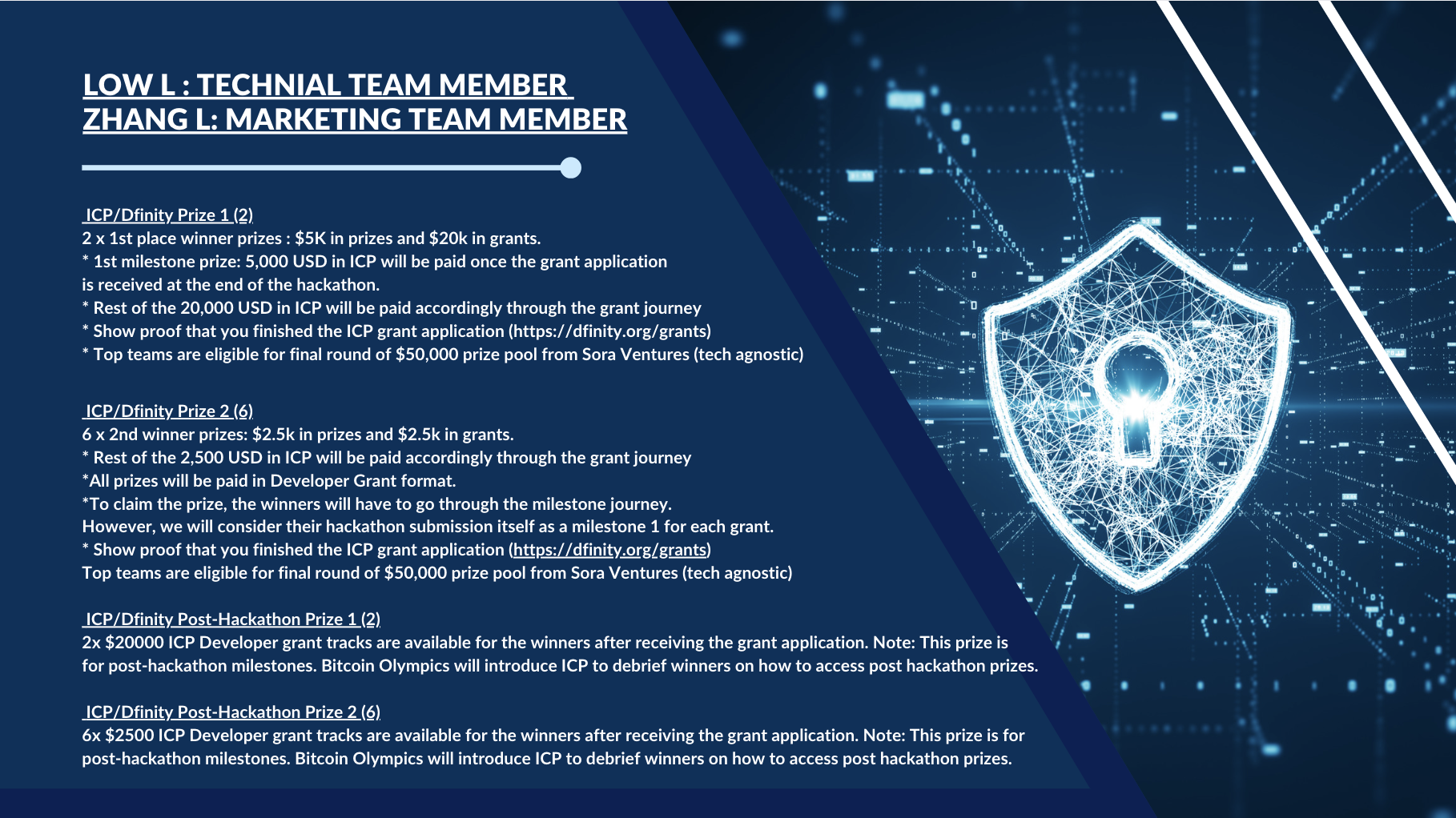
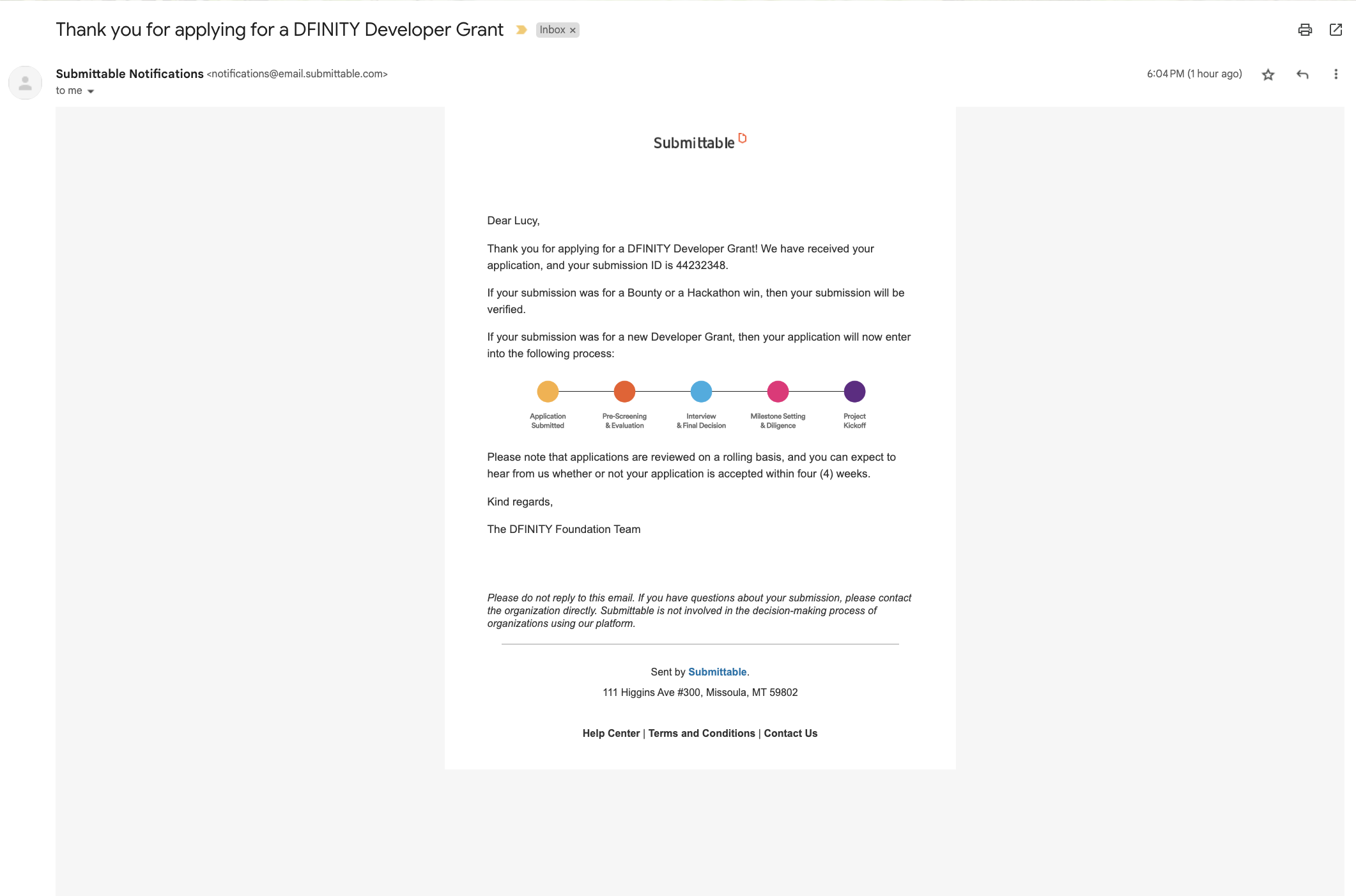
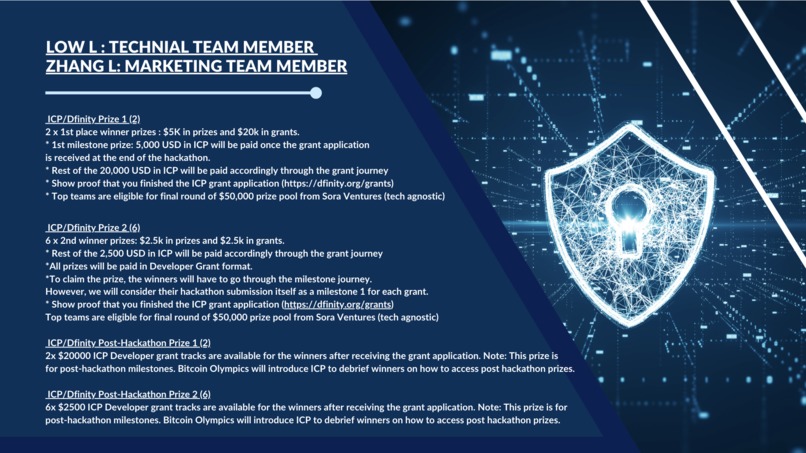
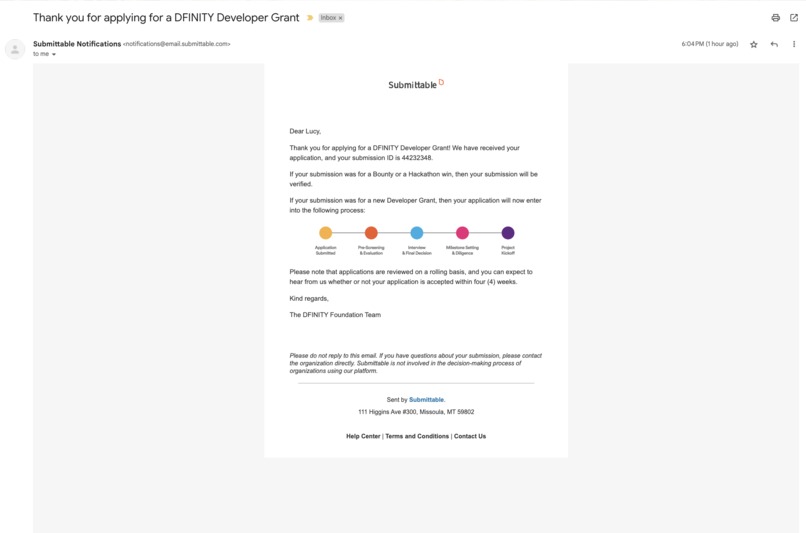
* Show proof that you finished the ICP grant application (https://dfinity.org/grants)
Platform Enhancements:
Advanced Minting Options: Incorporate new features to enhance the minting experience, such as batch minting or minting with customizable properties. User Dashboard Revamp: An intuitive dashboard that provides users with analytics, insights, and easy management of their NFTs.
Interoperability and Integration:
Cross-Chain Functionality: As the blockchain ecosystem grows, ensuring that NFTs minted on ZERUS can be transferred and used across multiple blockchains will be essential.
Expansion to New Markets:
Regional Localization: Launching localized versions of ZERUS for different regions, complete with language support and region-specific features. Tailoring to Different Industries: While art and collectibles dominate the NFT space, industries like real estate, fashion, and entertainment are quickly catching on. ZERUS could branch out to provide specialized services for these sectors.
Sustainability Initiatives:
Eco-friendly NFTs: Addressing concerns about the environmental impact of blockchain and NFTs by incorporating greener minting processes or partnering with carbon offset projects.
Educational Push:
ZERUS Academy: Launching an educational branch dedicated to providing courses, workshops, and certifications around NFT creation, blockchain, and digital art. Community Engagement:
ZERUS Conventions: Hosting virtual or physical conventions and events to bring together artists, developers, and enthusiasts to discuss, collaborate, and celebrate NFT culture. Artist Grants and Residencies: Support emerging artists and creators by offering grants or residencies to foster innovation in the NFT art space with the $25,000 grant (https://dfinity.org/grants-overview/)
Research & Development:
ZERUS Labs: Establish a dedicated R&D wing focused on blockchain innovation, exploring emerging technologies, and ensuring ZERUS remains at the forefront of industry advancements.
- Research and Development: Investment in the technical team for the successful integration with the Internet Computer and continuous platform upgrades.
- Security Audits: Partnering with blockchain security experts for regular security assessments.
- Educational Initiatives: Creation of tutorials, webinars, and guides to educate users about the advantages of ZERUS and the Internet Computer.
- Community Engagement: Hosting hackathons and workshops to gain feedback, test our platform, and foster a community around ZERUS.
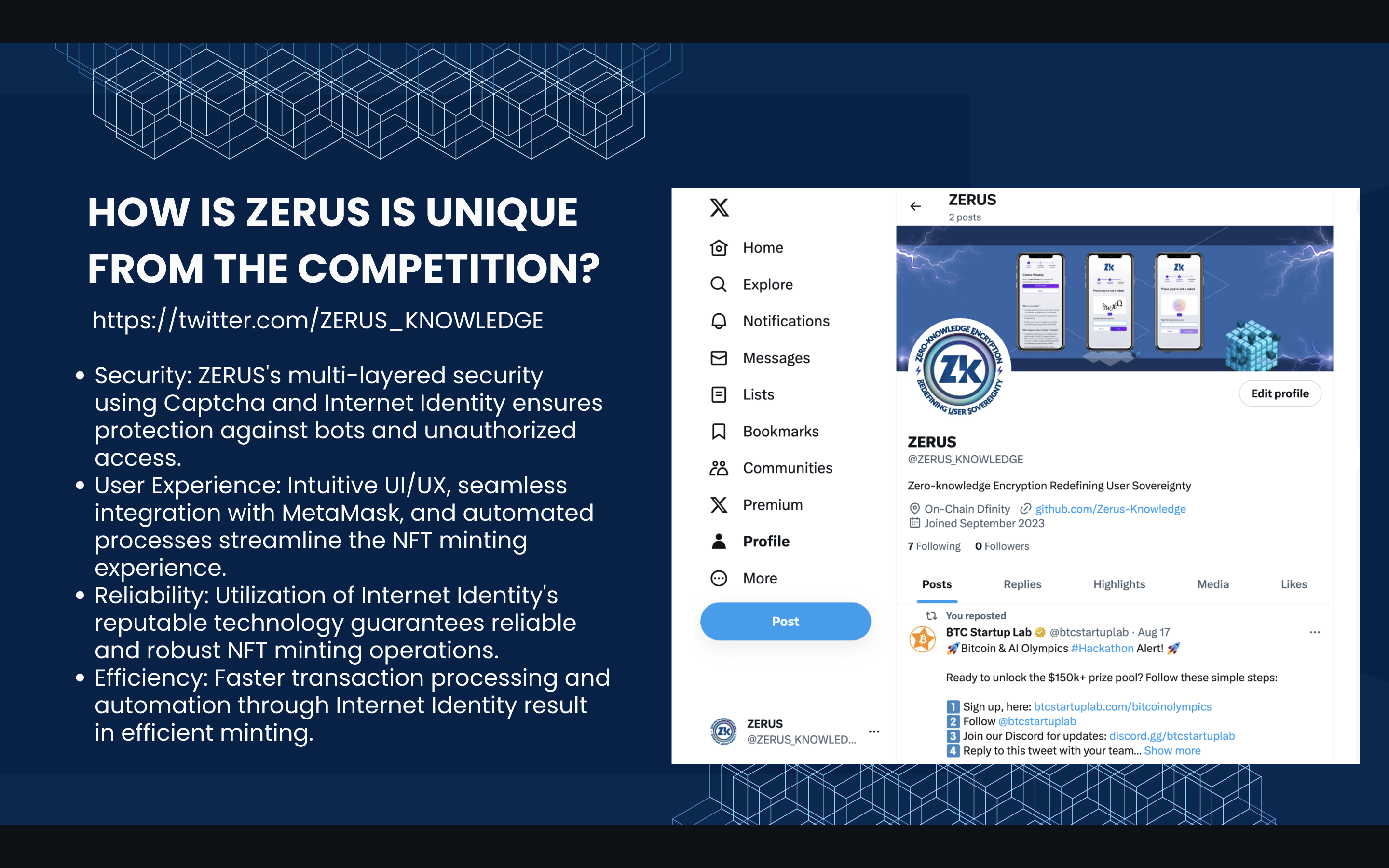
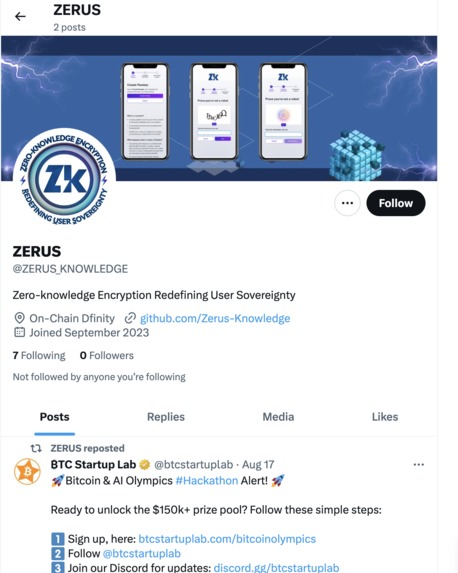
- Marketing and Outreach: A portion will be allocated to increase the visibility of ZERUS (example through Twitter X promotion ), targeting potential NFT creators and traders.
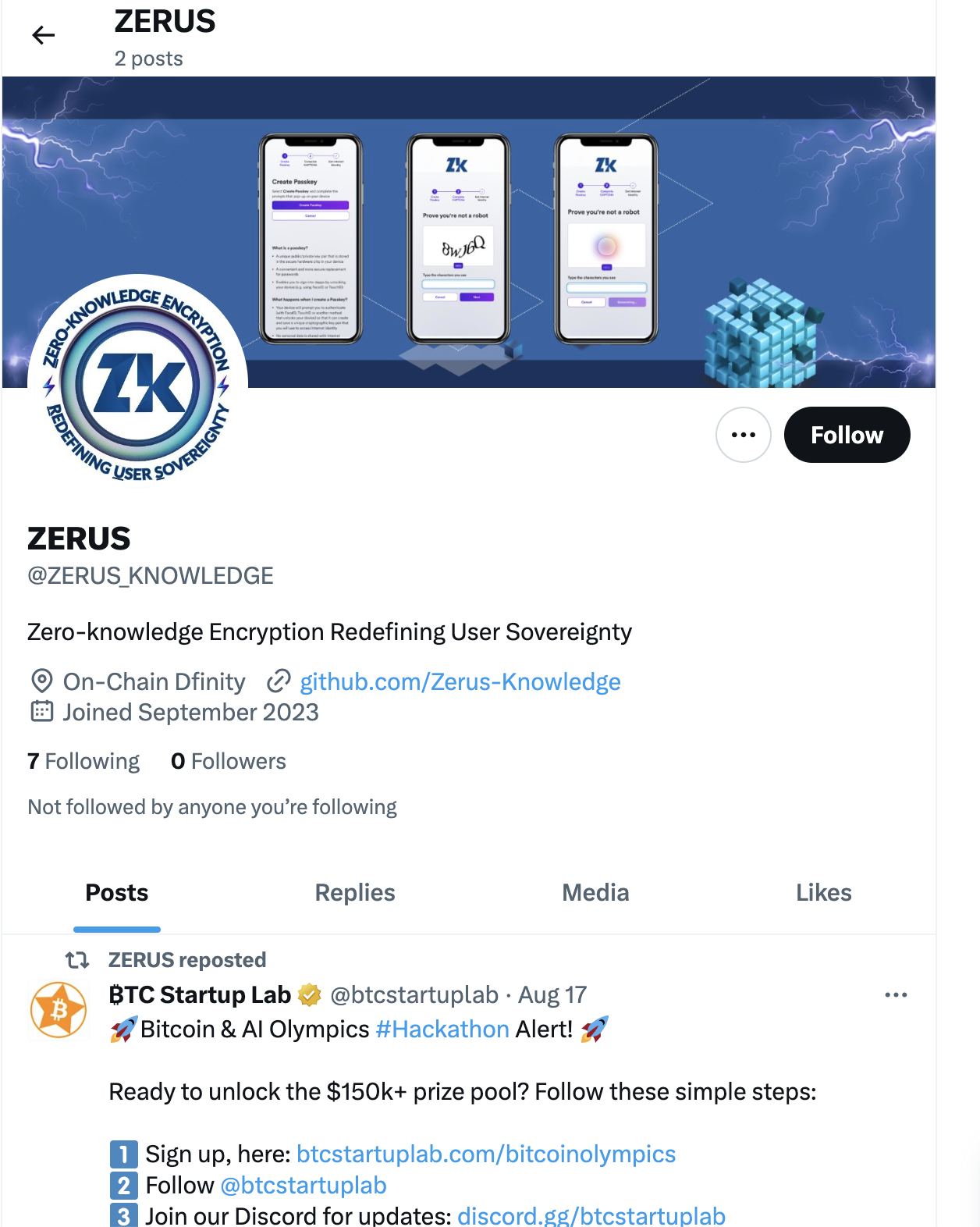
https://twitter.com/ZERUS_KNOWLEDGE
Enhanced Security Protocols:
With growing digital threats, consistently updating and enhancing security measures to ensure user data and assets are safeguarded.
Mobile App Development:
A dedicated mobile application to provide users with on-the-go access to mint, manage, and trade NFTs.
Financial and DeFi Integrations:
Collaborate with DeFi platforms to enable users to leverage their NFTs as collateral for loans or earn yields.
Built With
- icp




Log in or sign up for Devpost to join the conversation.