-
-
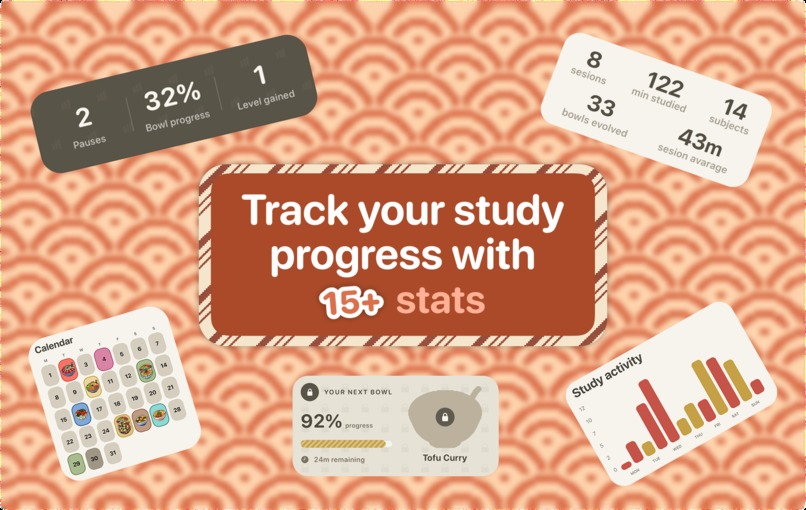
See where your study time takes you
-
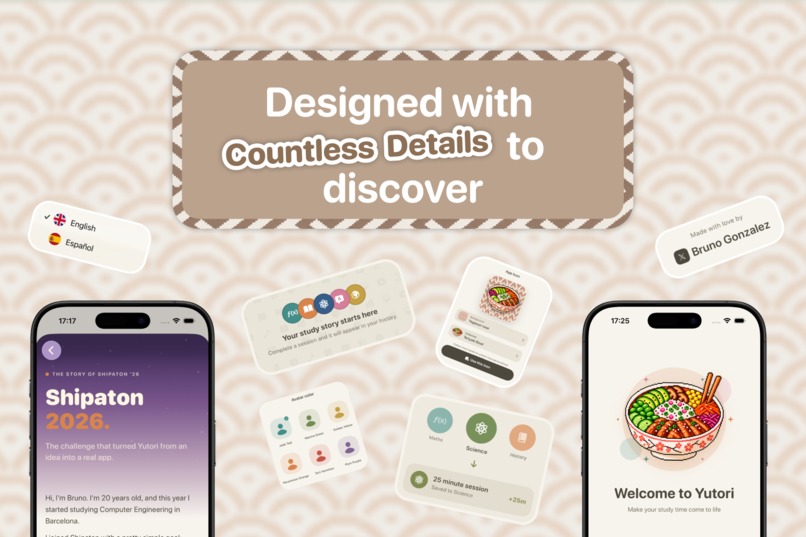
Thoughtfully designed, down to the smallest detail
-
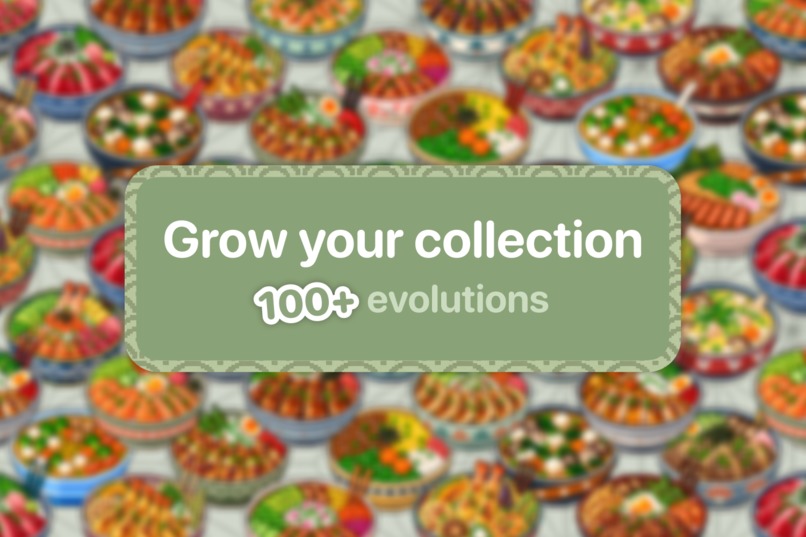
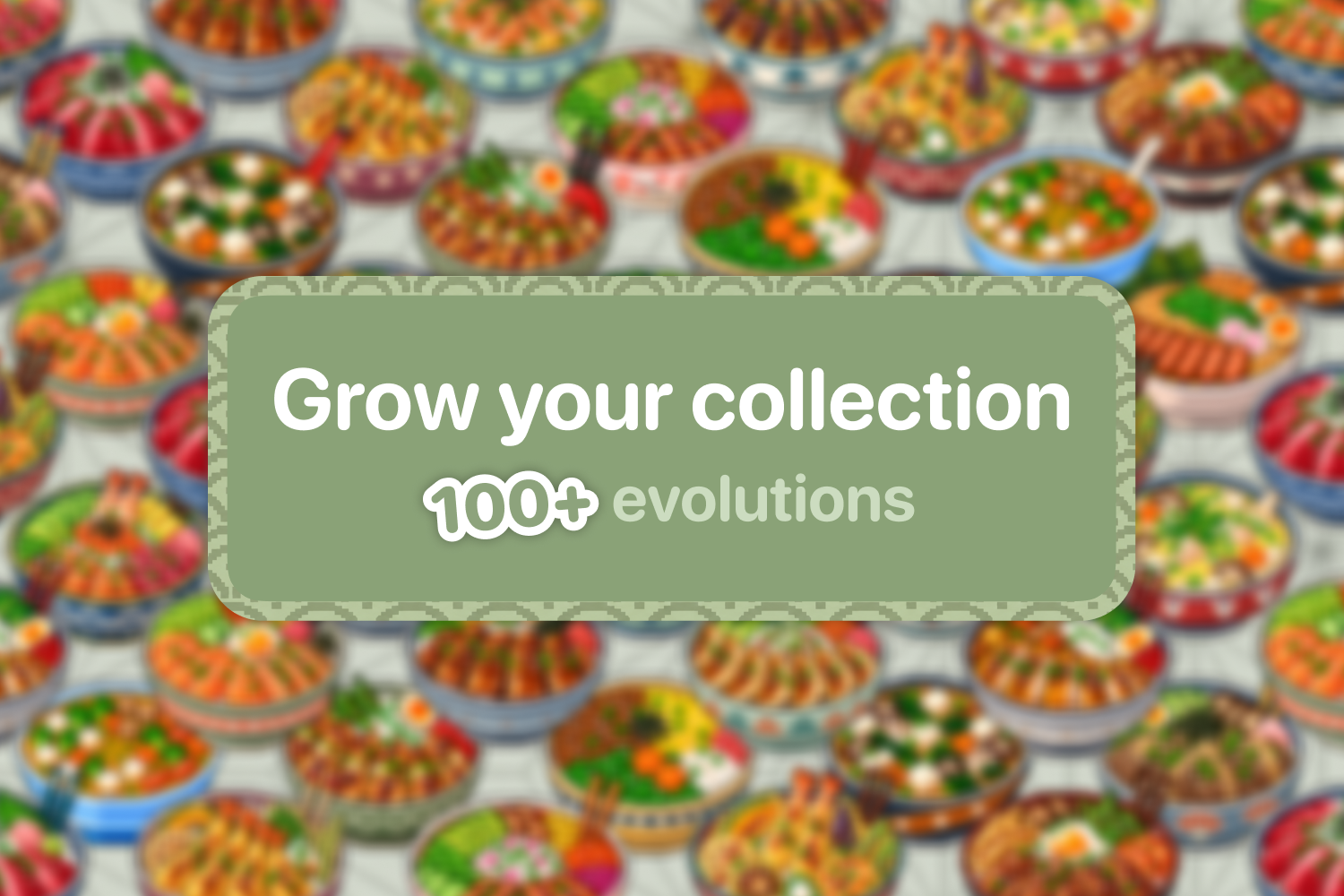
One collection. 100+ ways to evolve
-
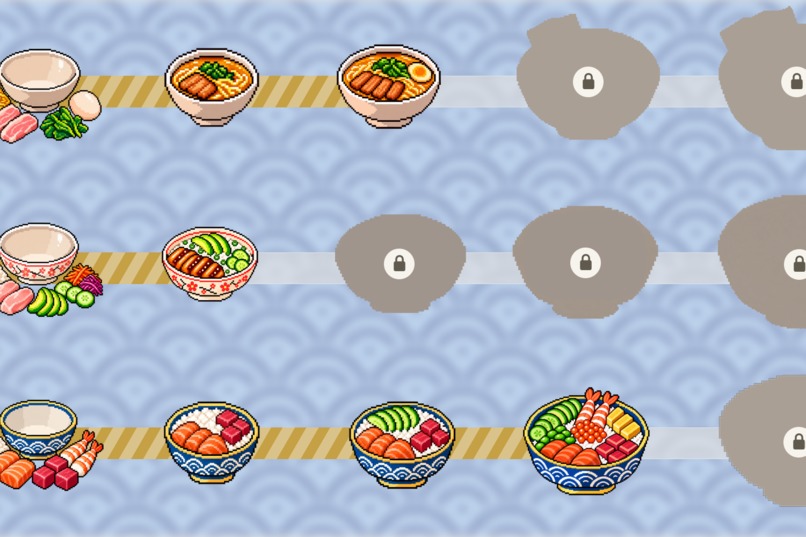
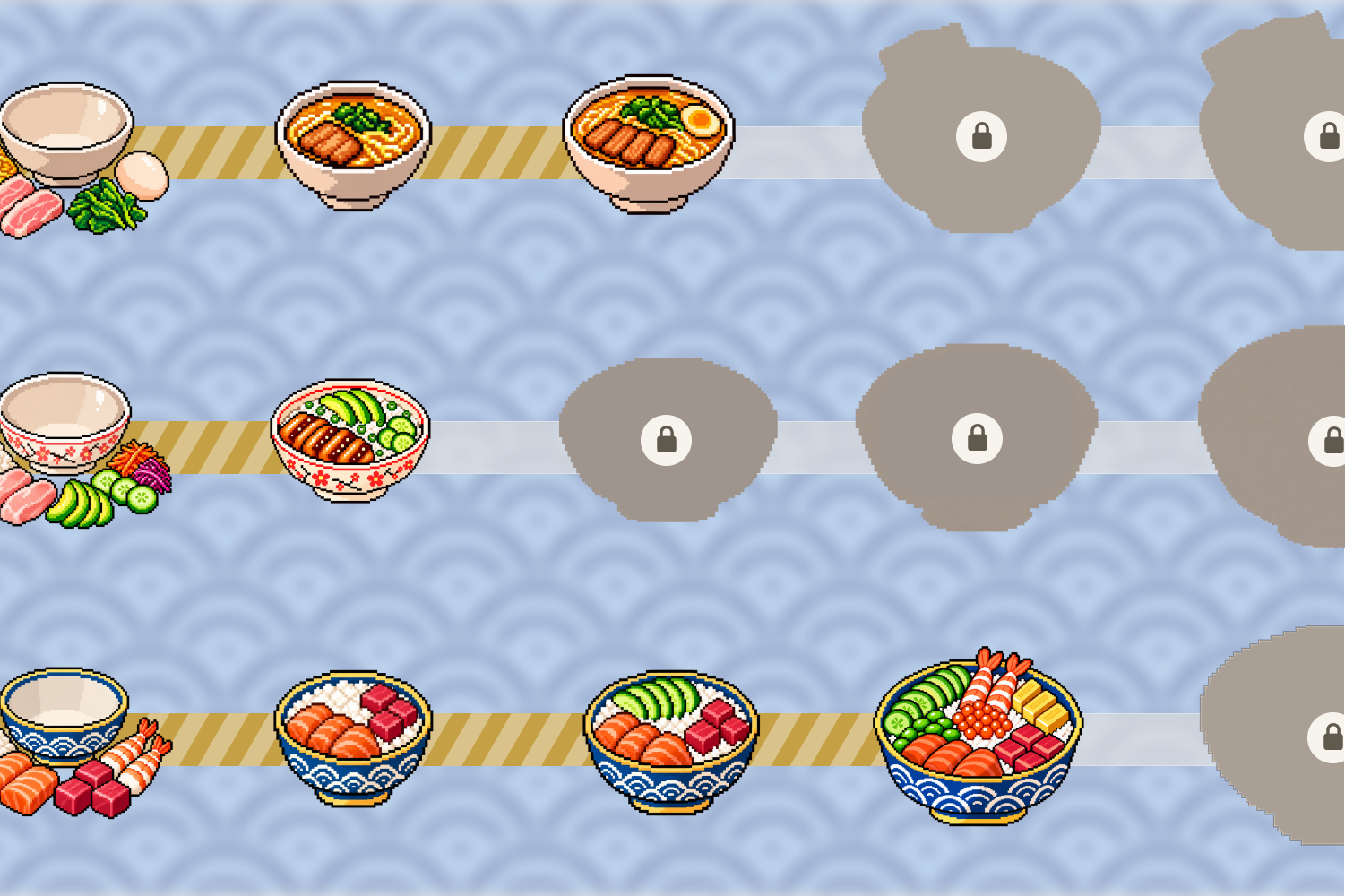
Little by little, evolution by evolution
-
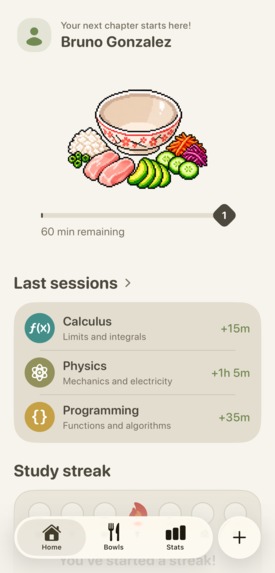
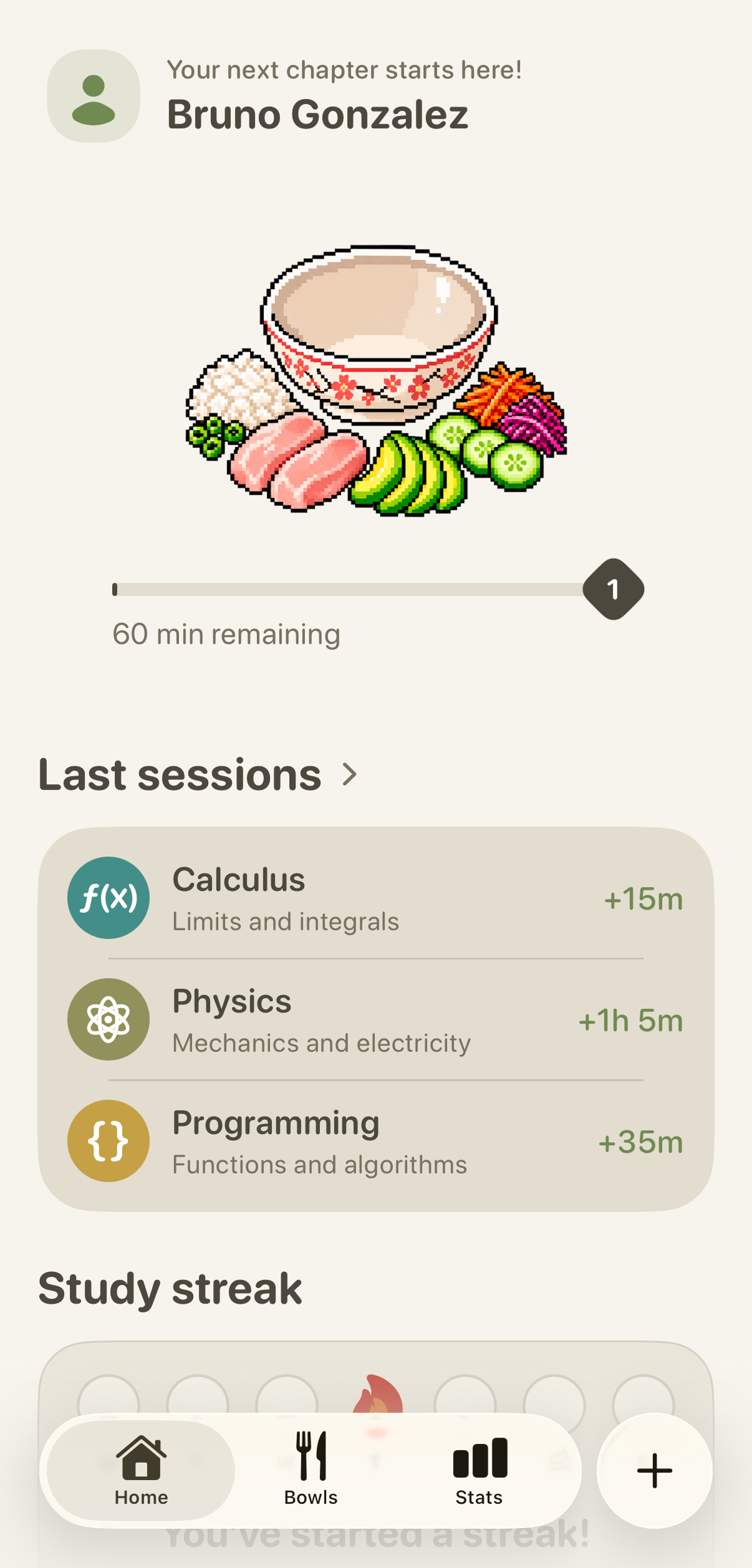
Home Page captured on iPhone
-
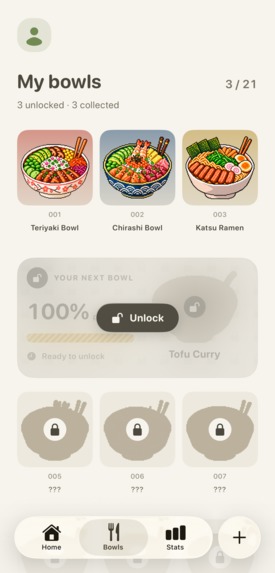
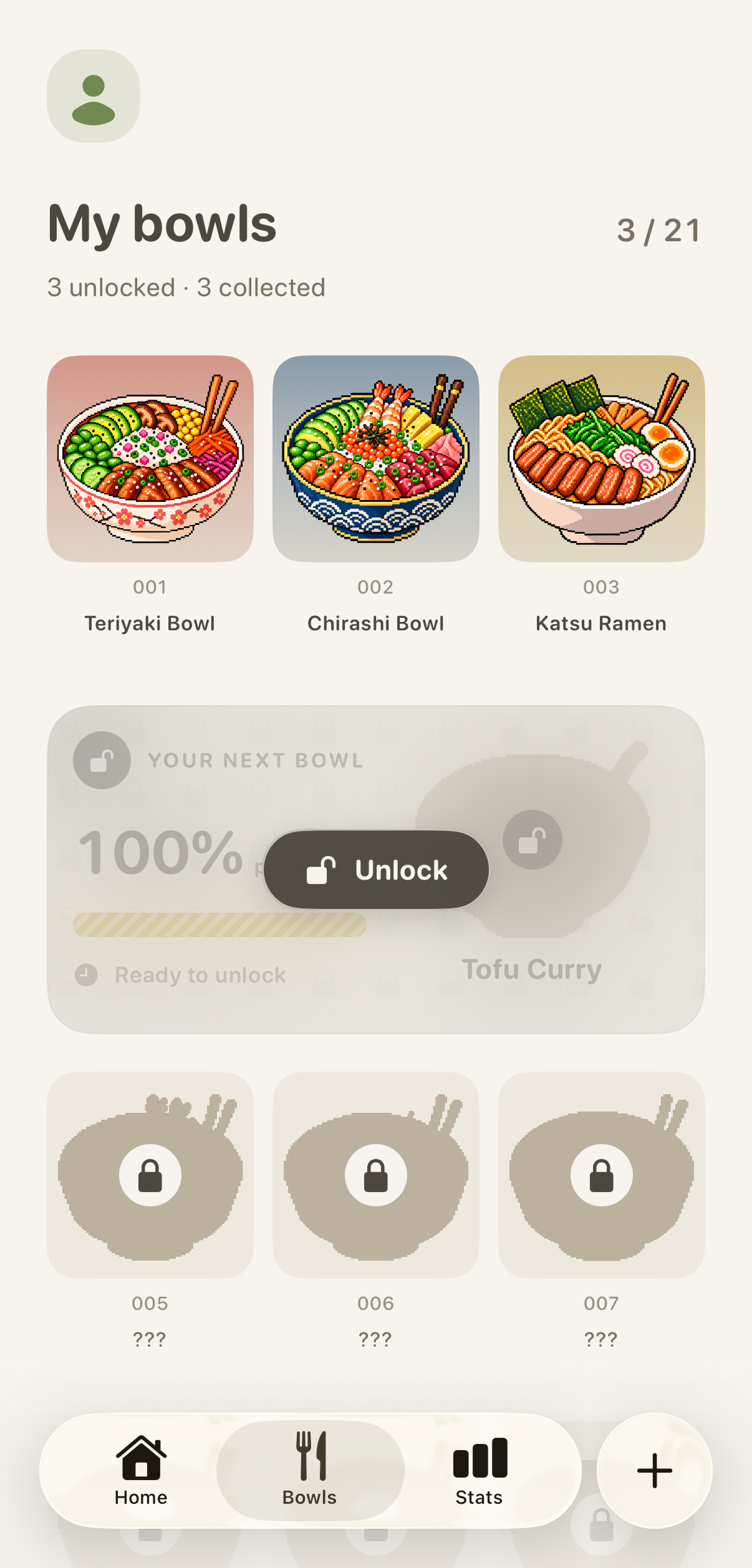
Collection Page captured on iPhone
-
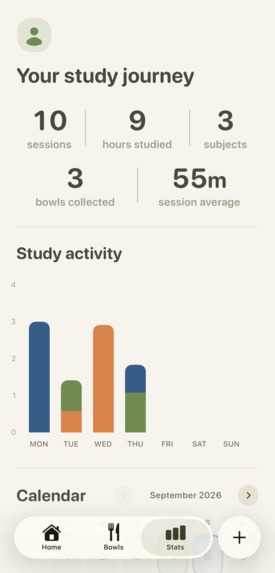
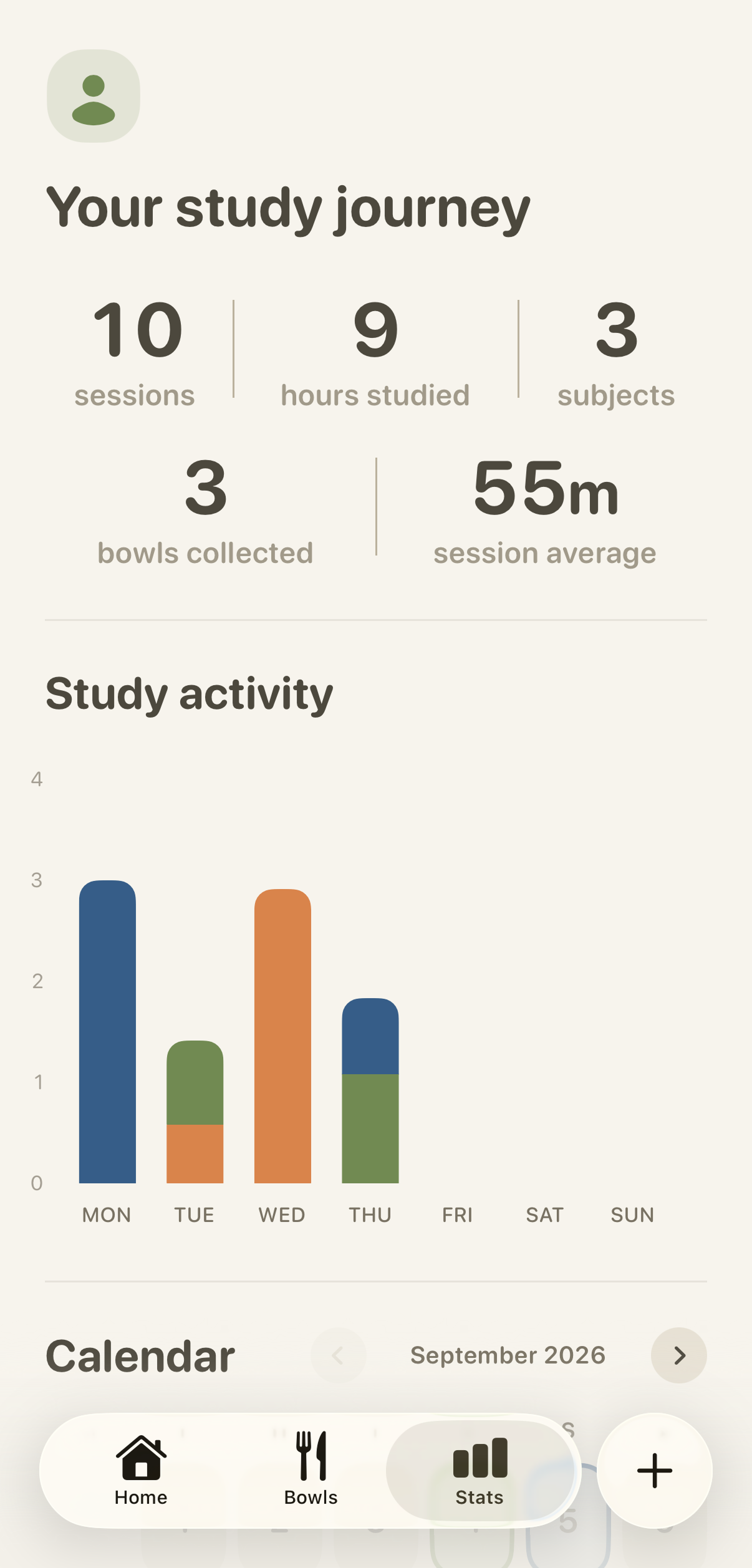
Stats Page captured on iPhone
-

Yutori Default Logo
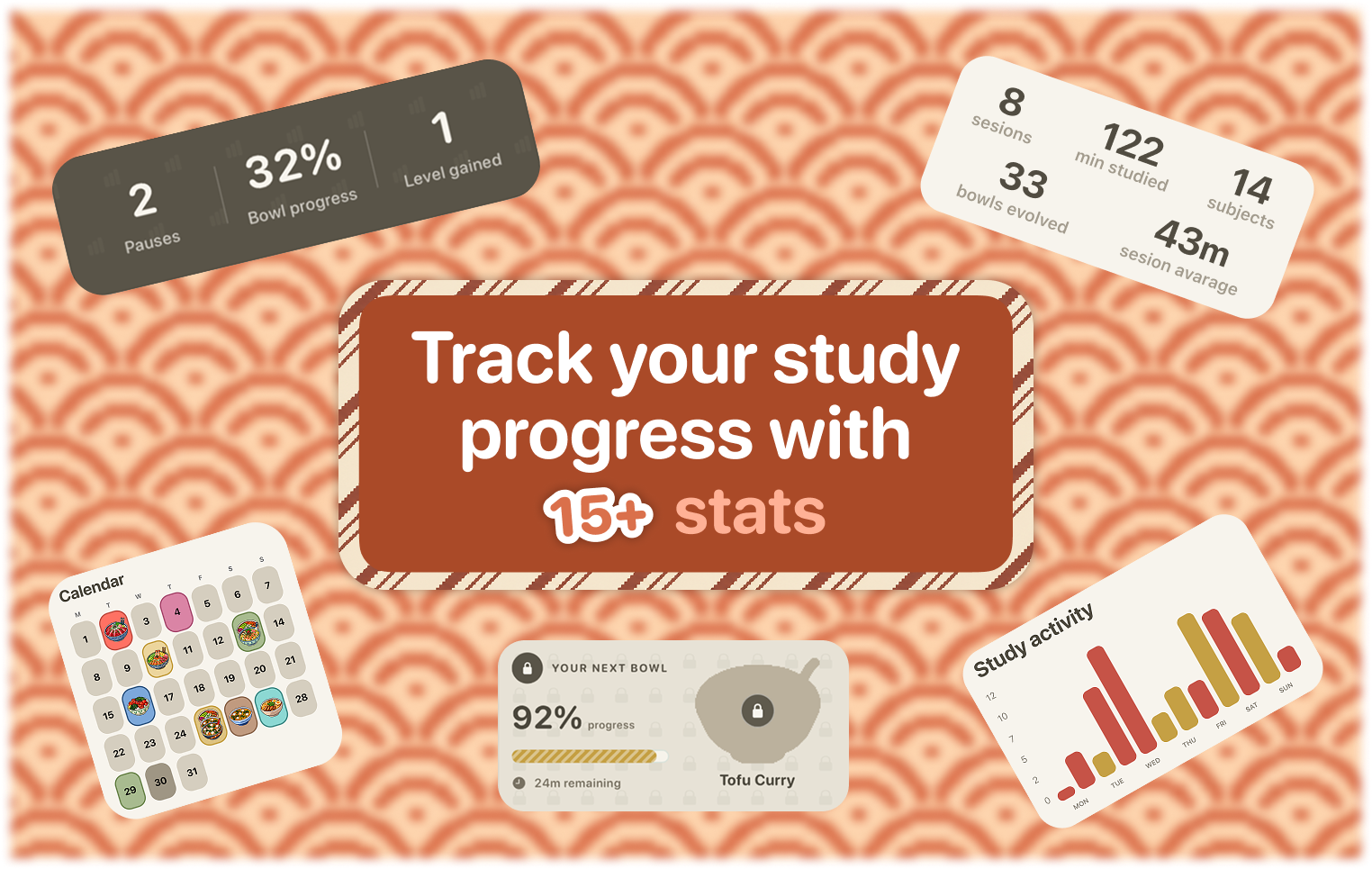

Inspiration
I’m a student, and one of the things I’ve always struggled with is studying consistently. I’ve had periods where I managed to study every day for a while, but sooner or later something would happen and I’d lose the routine. I know a lot of other students who have had the same experience.
While thinking about this, I started researching why it’s so common for students to struggle with studying consistently. I found something really interesting: according to several articles I read, one of the main reasons is that studying itself rarely feels rewarding. In many cases, it can actually feel more like a punishment, where you have to put in a lot of effort now for a reward that only comes much later, with an exam result or a grade.
That was the idea I wanted to explore with Yutori: what if the effort itself could feel a little more rewarding?
Since I’m a student myself, making something for other students felt like the most natural place to start. I wanted to create a study tracker where you could keep all your study time and statistics in one place, but also have a visual representation of that effort. Something that would slowly build up as you kept studying, instead of resetting after every session.
A big part of the inspiration behind that idea came from Japan.
I’ve been interested in Japan since I was a kid. Both of my older brothers have always been really into Japanese culture, so I was exposed to it from a very young age. As I got older, that interest became my own. I started researching things by myself, learning about the culture, the food, the design, and just generally trying to understand what I found so interesting about it.
One of the things that fascinates me is the value placed on effort and patience. There’s something that fascinates me about the idea of improving little by little, rather than expecting everything to happen immediately. That felt very connected to what I wanted the app to be about.
I started exploring different ways of representing progress visually, and eventually came across Japanese food bowls. I’m fascinated by Japanese food, and I liked the idea of having something simple that could change and evolve as you put more time into studying.
That became the visual foundation of Yutori.
The name came from the same place. Yutori (ゆとり) is a Japanese word that can refer to having extra space, time, or mental room. I chose it because I liked what the word represented. Studying can often feel rushed and stressful, and I wanted the app to have the opposite feeling, something that makes the process feel a little calmer while still encouraging you to keep moving forward.
At its core, Yutori is a tool designed to make studying feel more fun, visual, and rewarding. An app with a clear purpose: to make the study experience more enjoyable and give students that extra push to stay motivated and keep going.
What it does
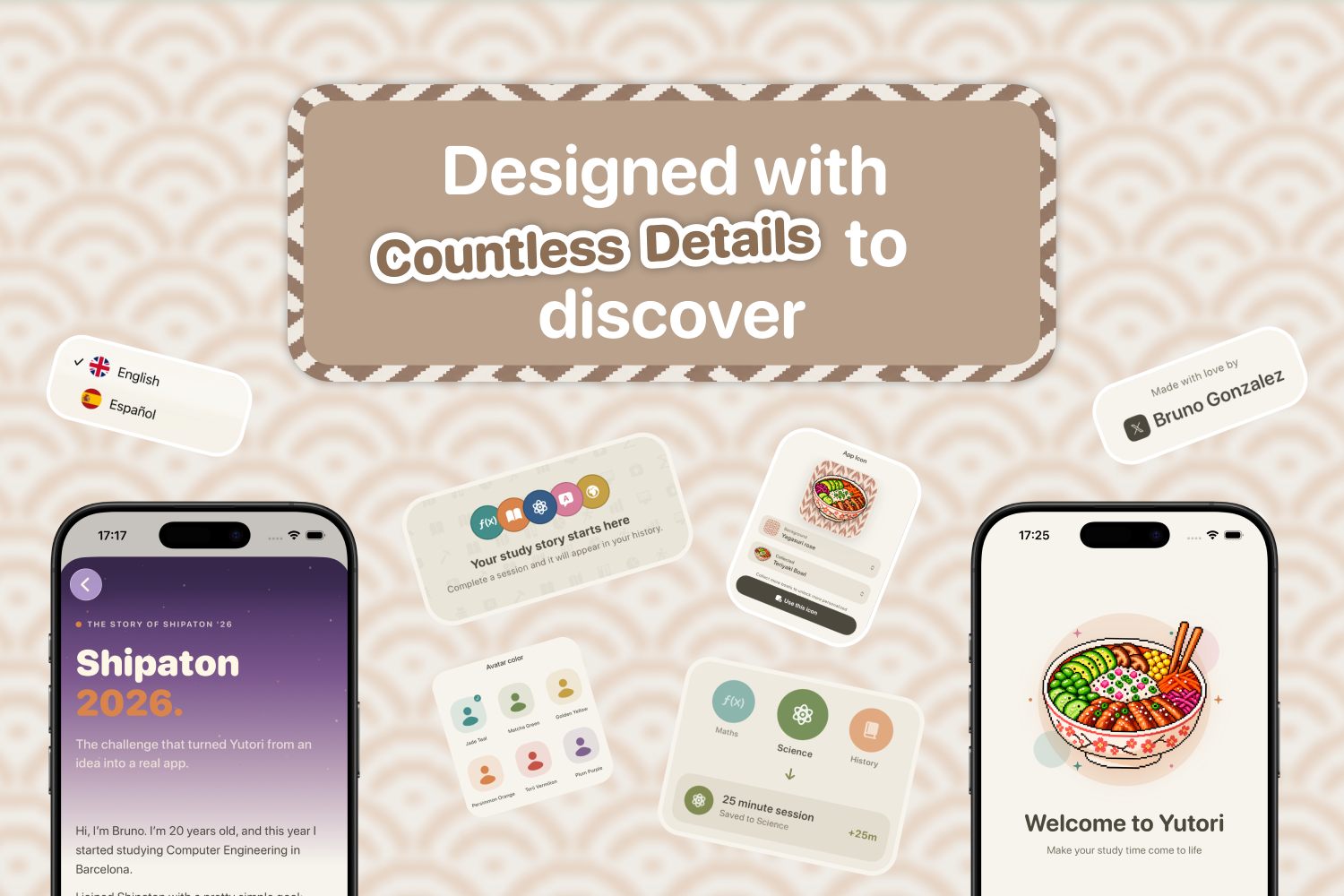
Yutori combines study tracking with a collection of Japanese bowls. You choose a course and a bowl, then start studying. Every hour adds another stage to your bowl until it reaches level 5 and you can collect it. Progress carries over between sessions, and your total study time unlocks new bowls to work towards.
You can organise courses by name, colour and icon, pause and resume sessions, and follow your timer through Live Activities and Dynamic Island. Your session history, weekly charts, calendar and streaks let you look back at the work you’ve done.
I also wanted users to be able to correct their recorded study time. These edits only affect statistics, though: bowl evolution and unlocks still use the time actually recorded by the timer, so you can’t skip the progression by adding hours manually.
The smaller interactions were a big part of building Yutori. There are evolution animations, sound effects, ingredient descriptions and full English and Spanish support. Even deleting your account has its own interaction: you tap one of your collected bowls to gradually crack and break it, with a sound on each hit and a final sound when it breaks.
The free version includes one course and the core study and collection experience. Yutori Pro unlocks unlimited courses and personalised app icons, combining collected bowls with Japanese-patterned backgrounds. Both plans include the same features: $9.99 per month, or $34.99 per year. The yearly plan is billed once a year and works out to around $2.92 per month, making it the more affordable option for someone who wants to keep using Yutori throughout their studies.
How I built it
I built Yutori completely from scratch, by myself, using Swift and Xcode. I used GitHub to manage the project, and I occasionally used Codex when I was stuck on a technical problem or needed help working out a particular piece of logic.
I had never built an app like this before, so a lot of the process was figuring things out as I went.
The artwork was another big part of the project. I used AI to help generate the initial bowl artwork, but I was very careful with the results. I spent a lot of time selecting, iterating and refining them so the whole collection felt consistent and each bowl had its own identity.
In total, that meant creating 126 different bowl evolutions.
The actual development took around a month and a half of working on it seriously.
Challenges I ran into
The hardest part was probably getting the Live Activity and Dynamic Island experience working properly. I had never worked with them before, and there were definitely a few points where I got completely stuck.
Getting the timer, state and UI to behave correctly outside the main app took a lot more work than I expected.
Another challenge was learning how quickly a project grows once you start caring about the details.
A feature that sounds like “just add an app icon” can suddenly involve different states, unlocked content, backgrounds, settings and a lot of little edge cases.
That happened more times than I can count.
Accomplishment I’m proud of
The main thing I’m proud of is that I actually finished it.
This is my first app, and I had been wanting to build one for a long time. There were plenty of moments where it would have been easy to leave things unfinished, but I kept going and ended up with something that I’m genuinely happy with.
I’m also really proud of the amount of care that went into the bowls. Creating them was a very meticulous process, with a lot of hours spent supervising, reviewing, comparing and thinking about how each one could be improved.
I didn’t want the collection to feel like the same bowl repeated 21 times. I wanted every bowl to have its own identity while still feeling like part of the same world.
More than anything, I’m proud of the final result because I know how much work went into getting every part of it to where it is.
What I learned
The biggest thing I learned is how different it is to actually build an app compared to just having an idea for one.
Things that look simple from the outside often become much more complicated once you have to make every part of them work together.
I learned a lot about iOS development, UI design, planning and managing my time. I also learned how to deal with getting stuck instead of abandoning an idea when something doesn’t work.
I even learned things outside of development, like how to promote a project and post about my work online, something I had never really done before.
Most importantly, I learned that sometimes the hardest part is simply starting.
What's next for Yutori
I had wanted to build my own app for a long time, but I never really found the right moment to start. Shipaton was the excuse I needed to finally take that step.
Finishing Yutori feels like a pretty big milestone for me, especially because it’s my first app and something I had wanted to do for so long.
I’m genuinely really happy with how it turned out, and I don’t really want to stop here.
After Shipaton, I’m seriously considering paying for the Apple Developer Program and publishing Yutori on the App Store.
I’d love to get my first real users, see what they actually think of it, and keep improving the app based on real feedback.
For me, that would be the next step: taking the first app I’ve ever built and actually putting it in the hands of other students.


Log in or sign up for Devpost to join the conversation.