-
-
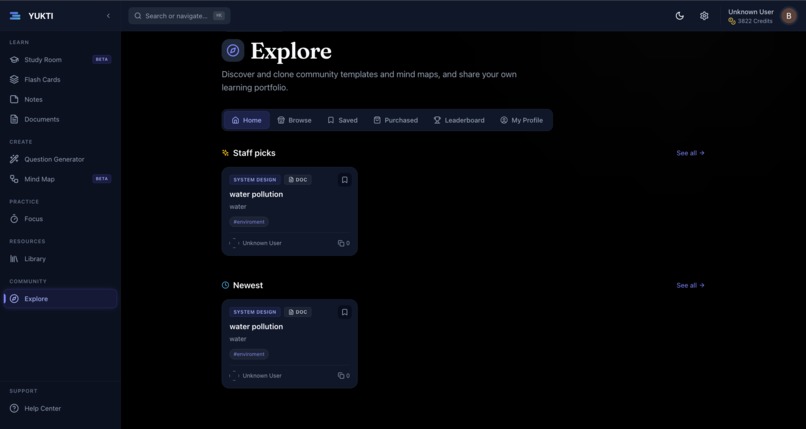
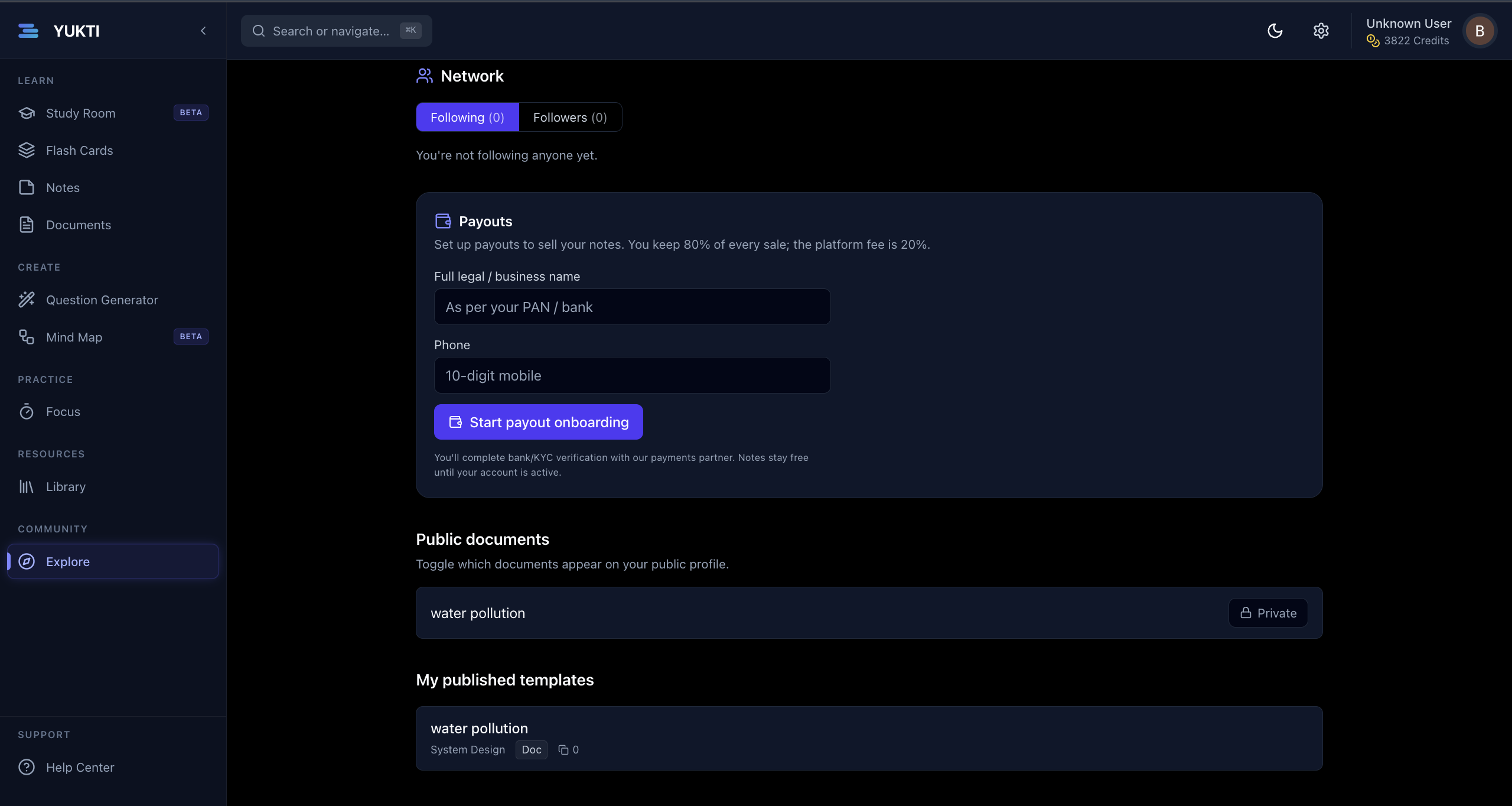
community market
-
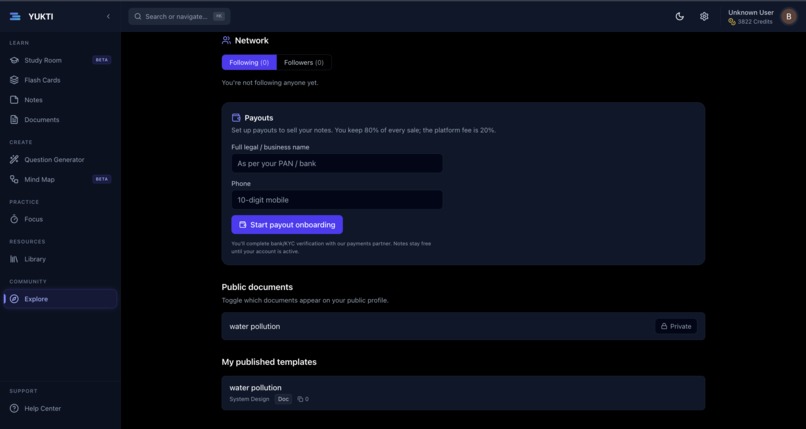
community
-
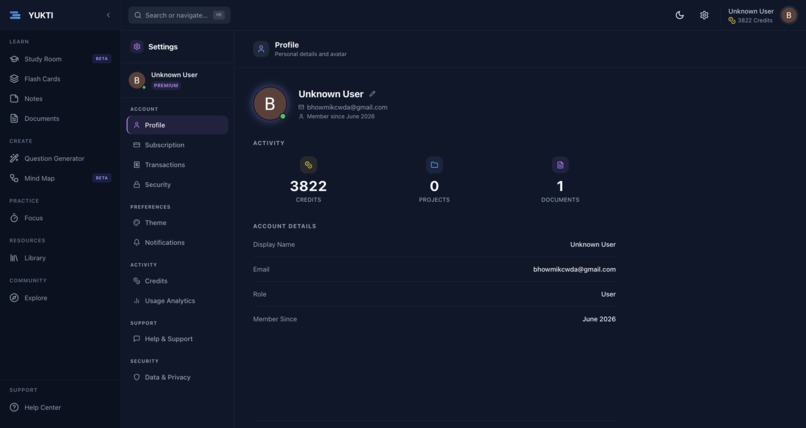
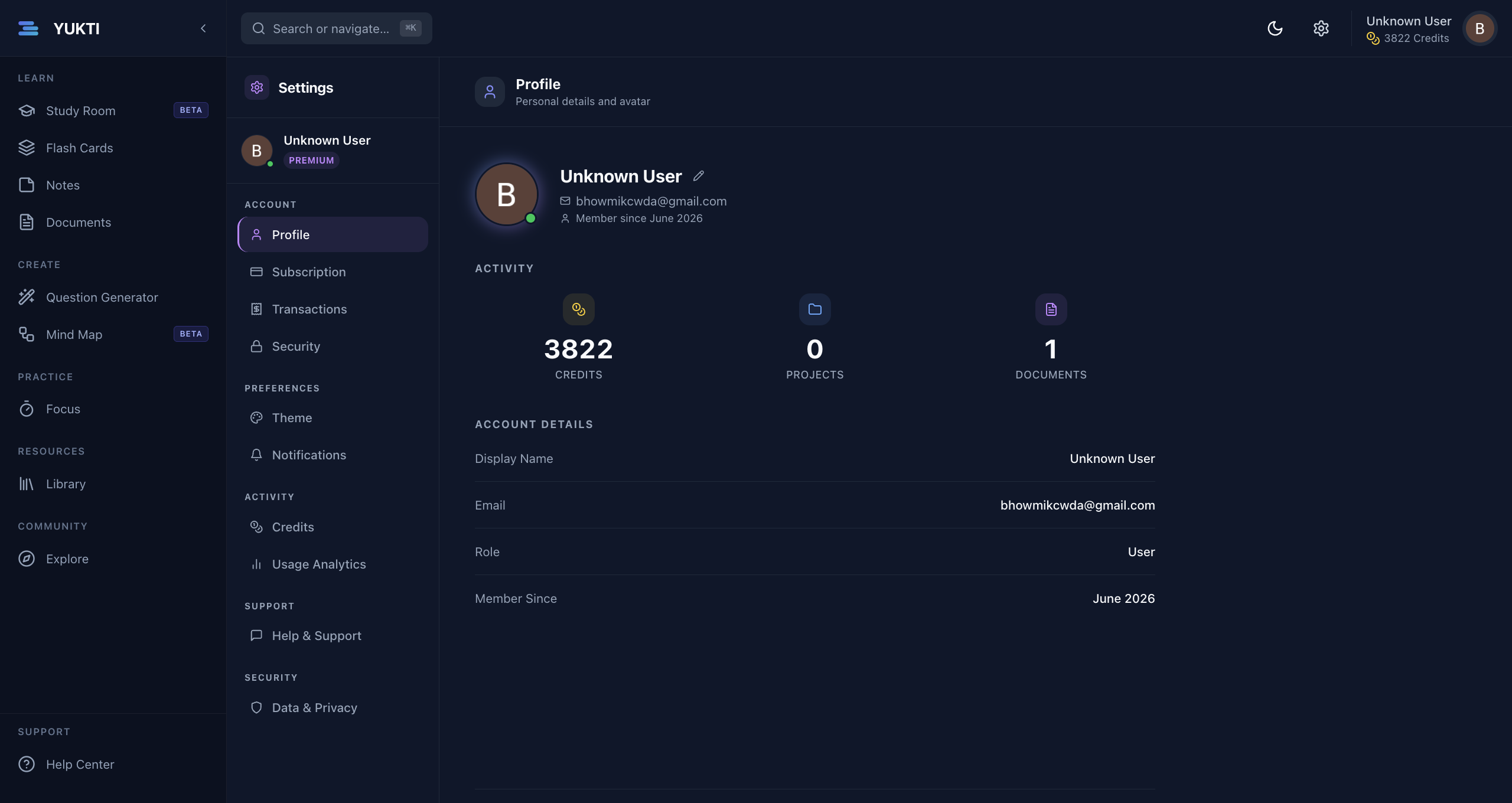
settings
-
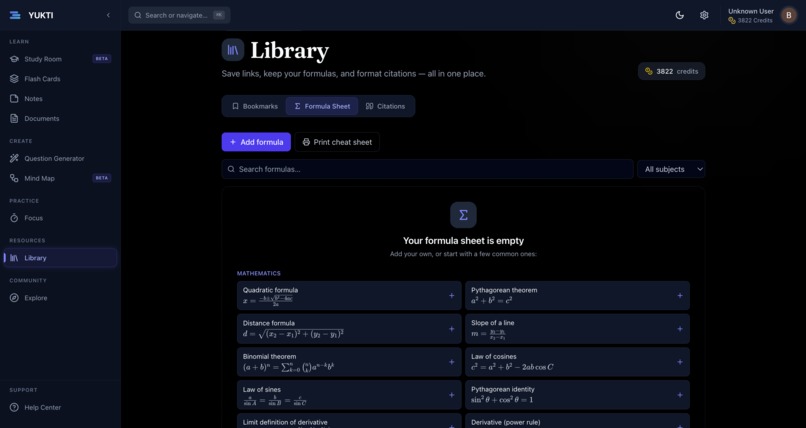
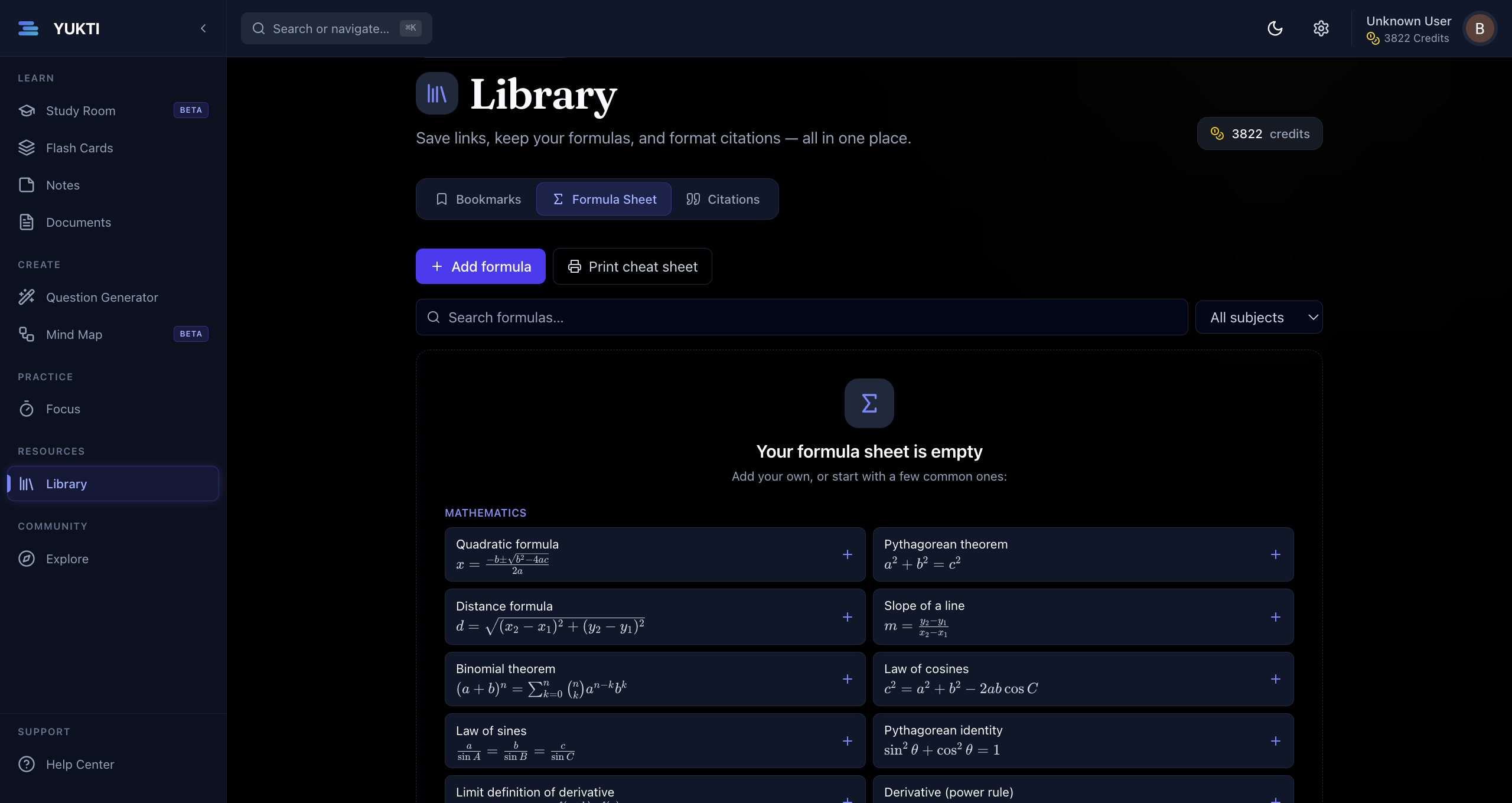
library
-
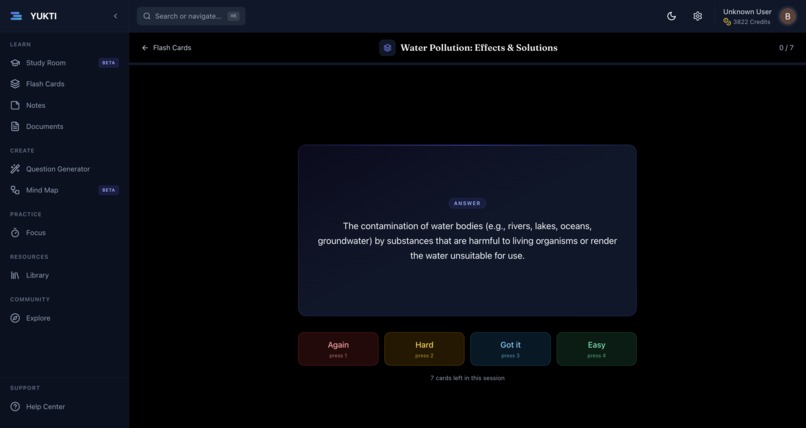
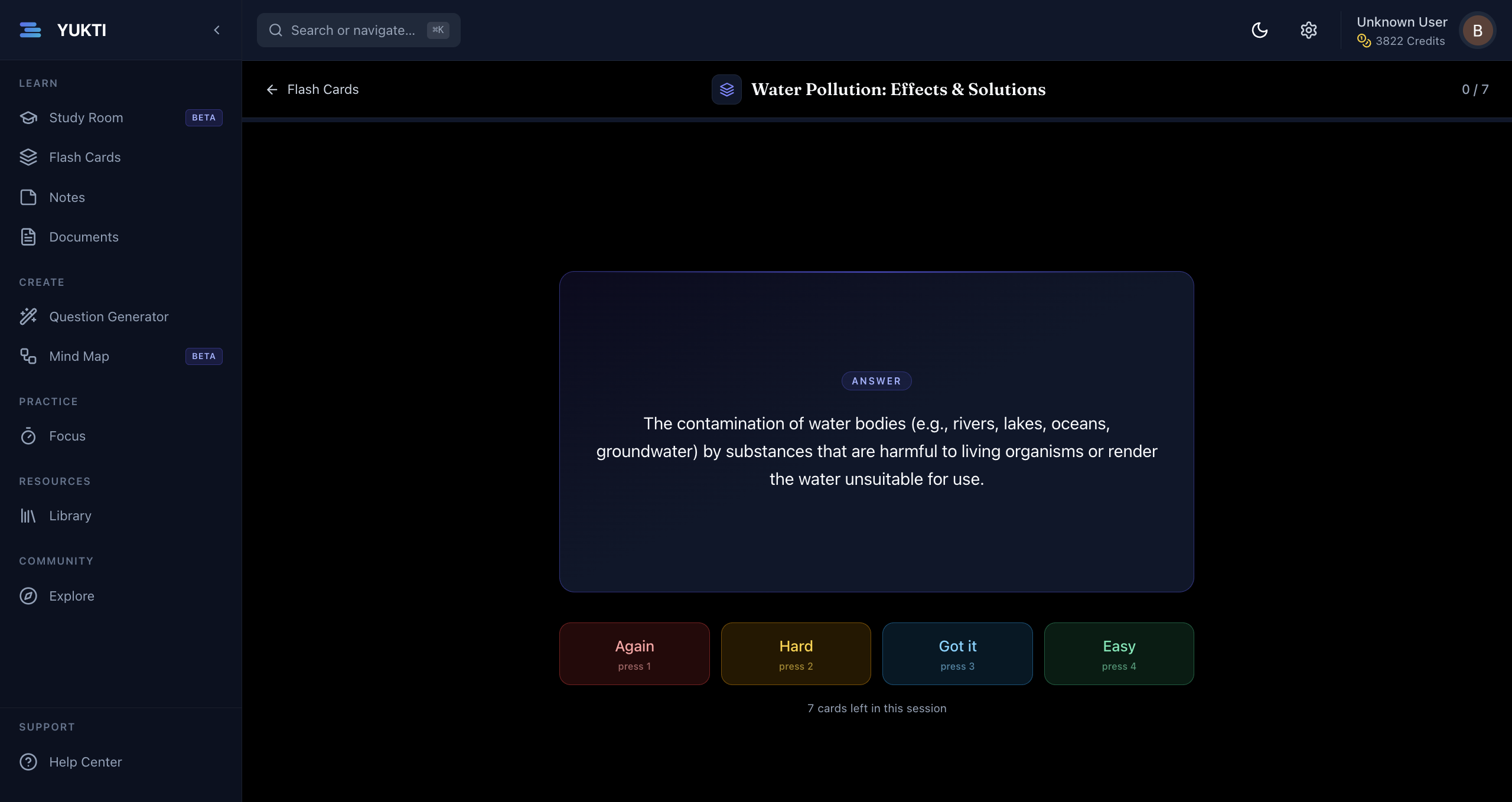
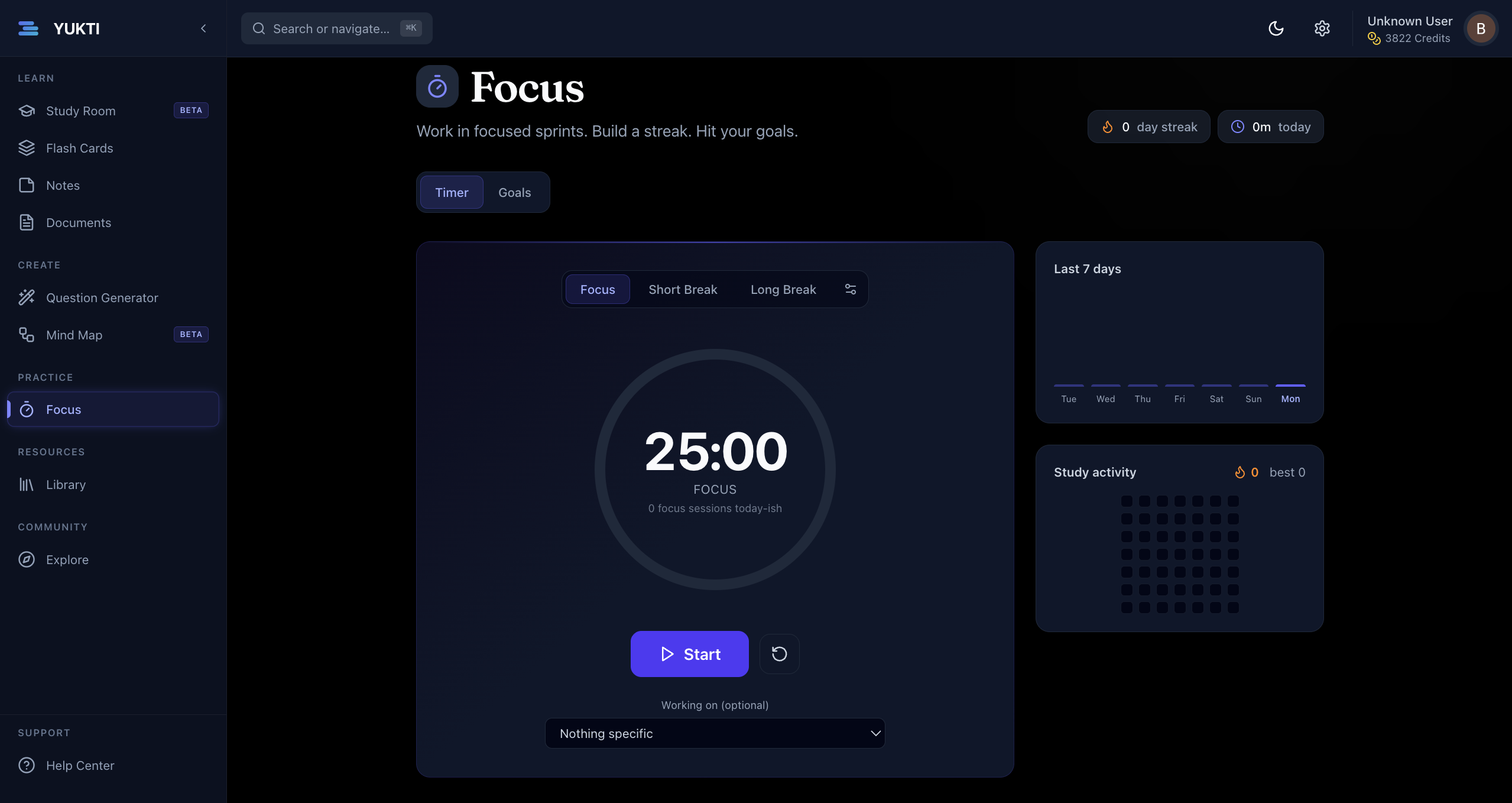
Flash cards
-
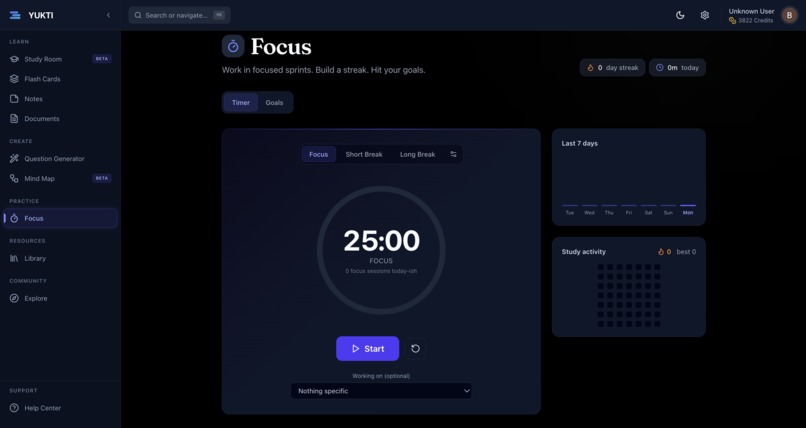
focus
-
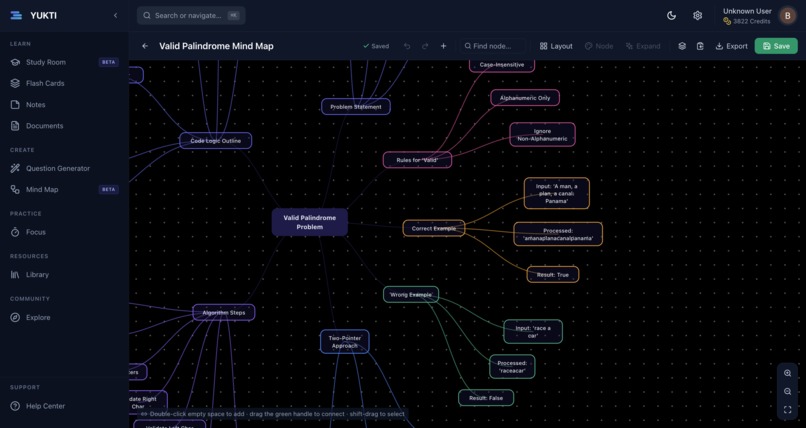
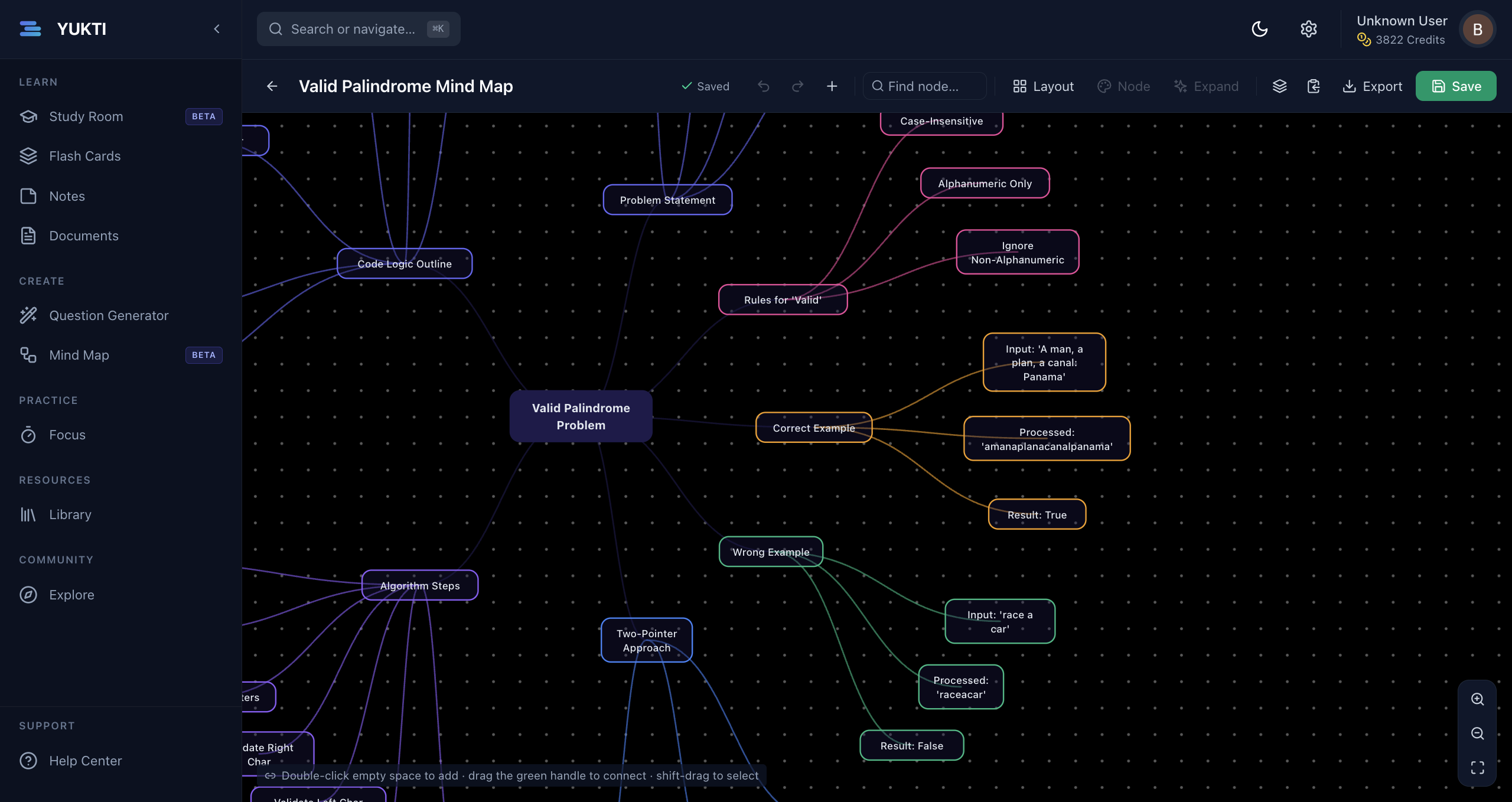
Mind map
-
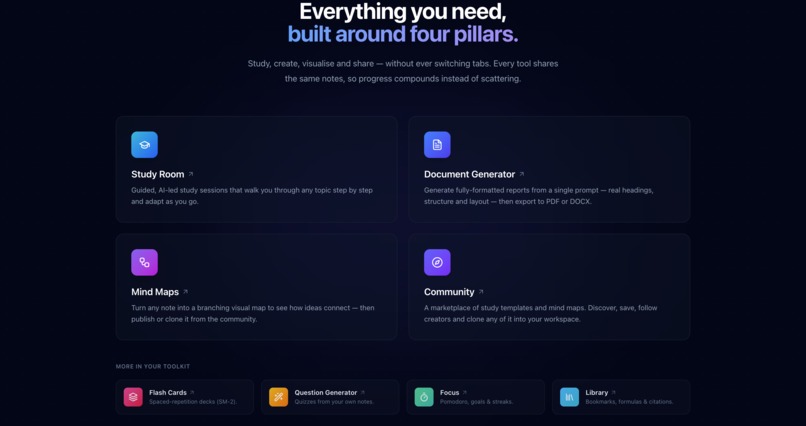
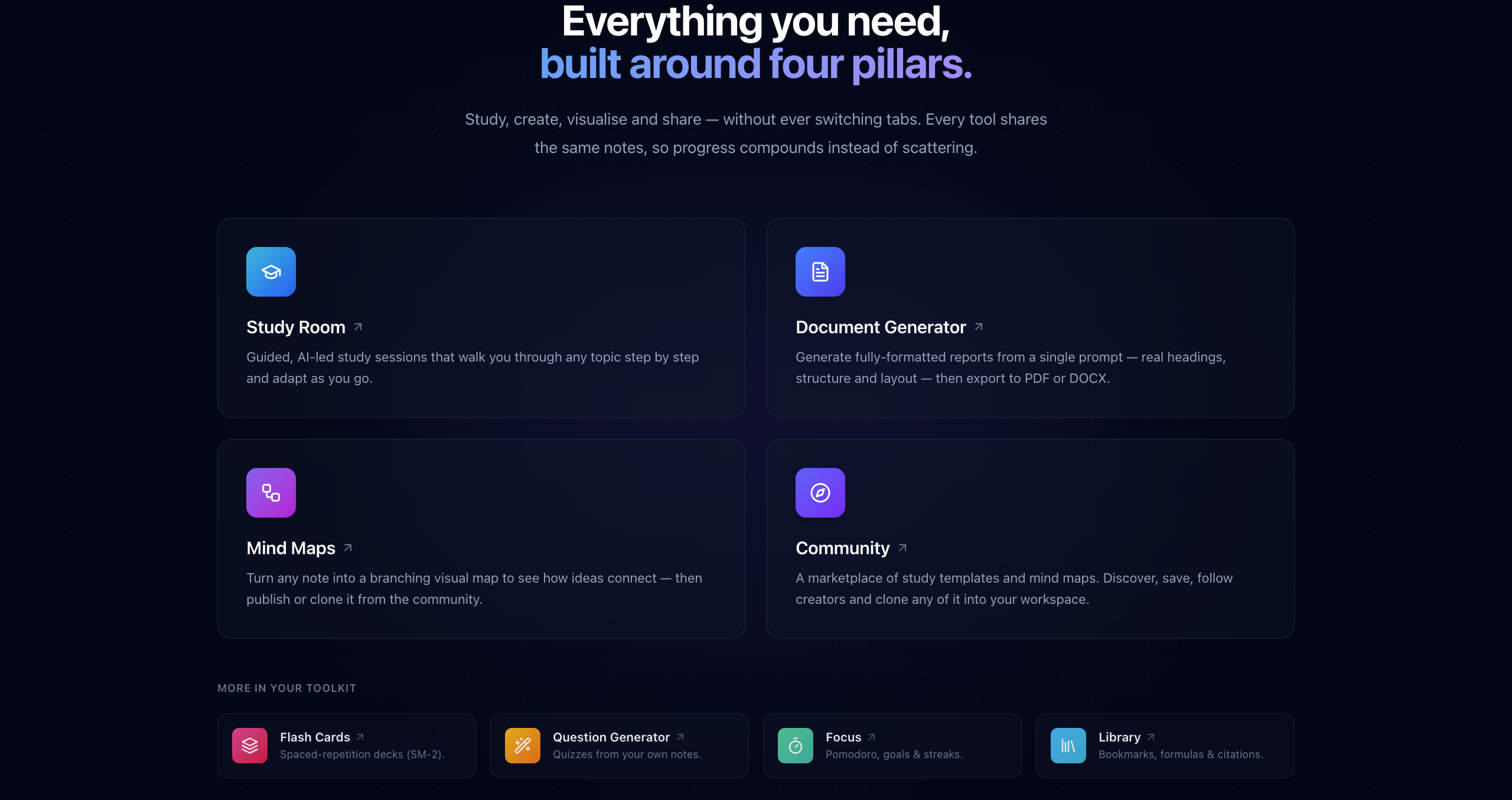
Application features
-

Payment options
-
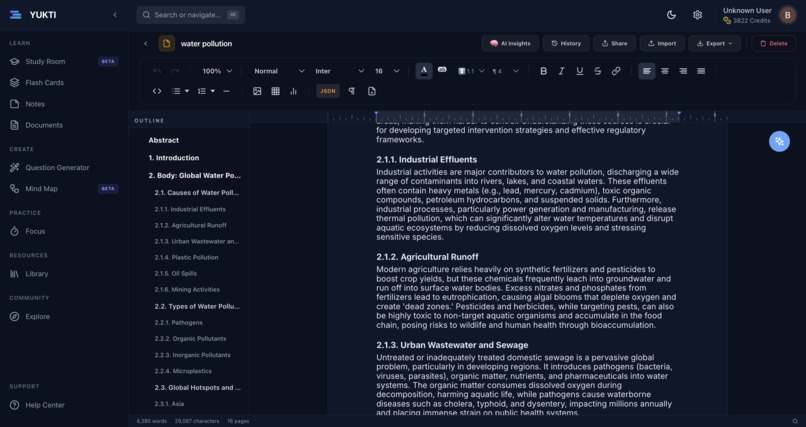
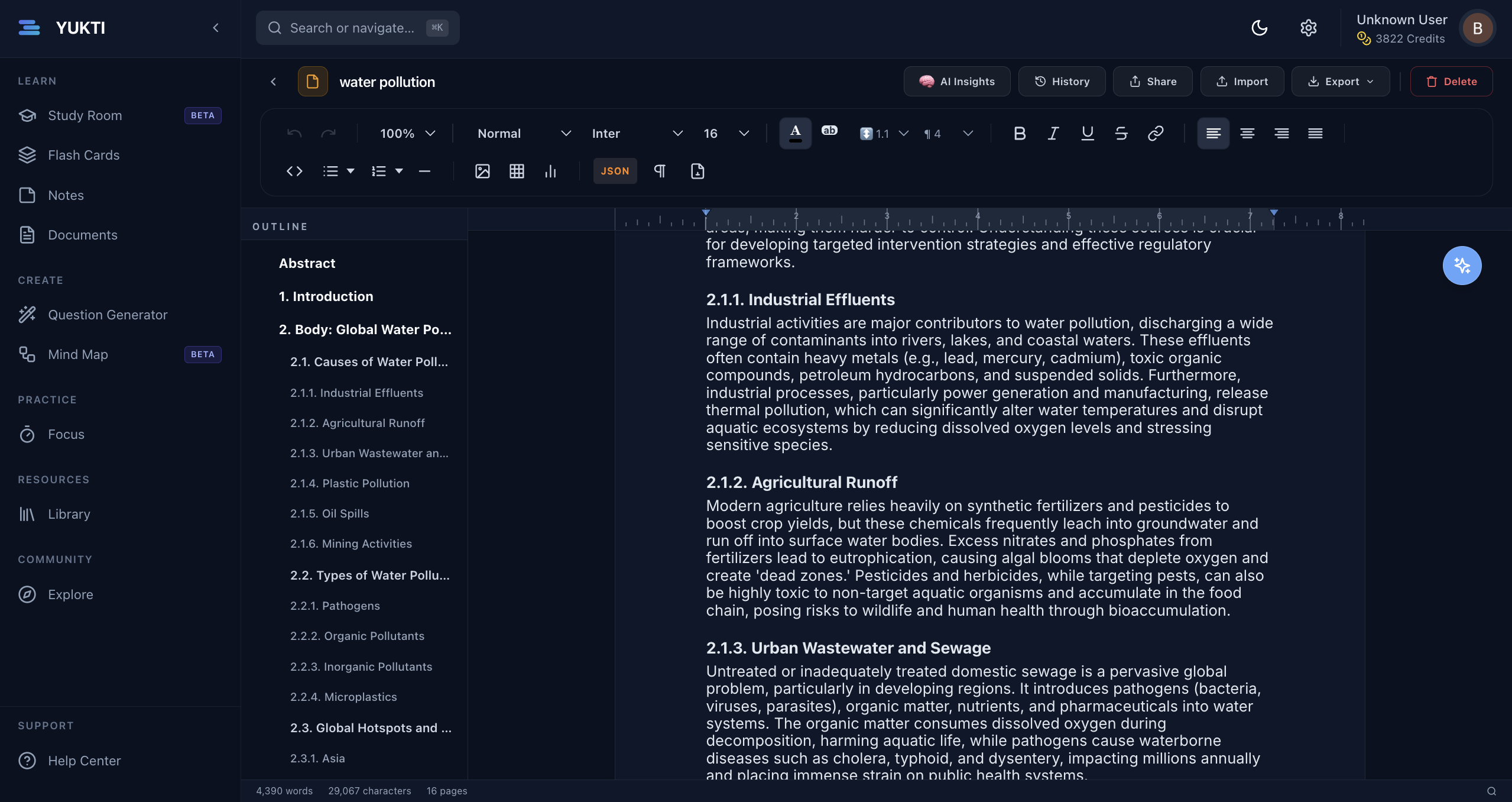
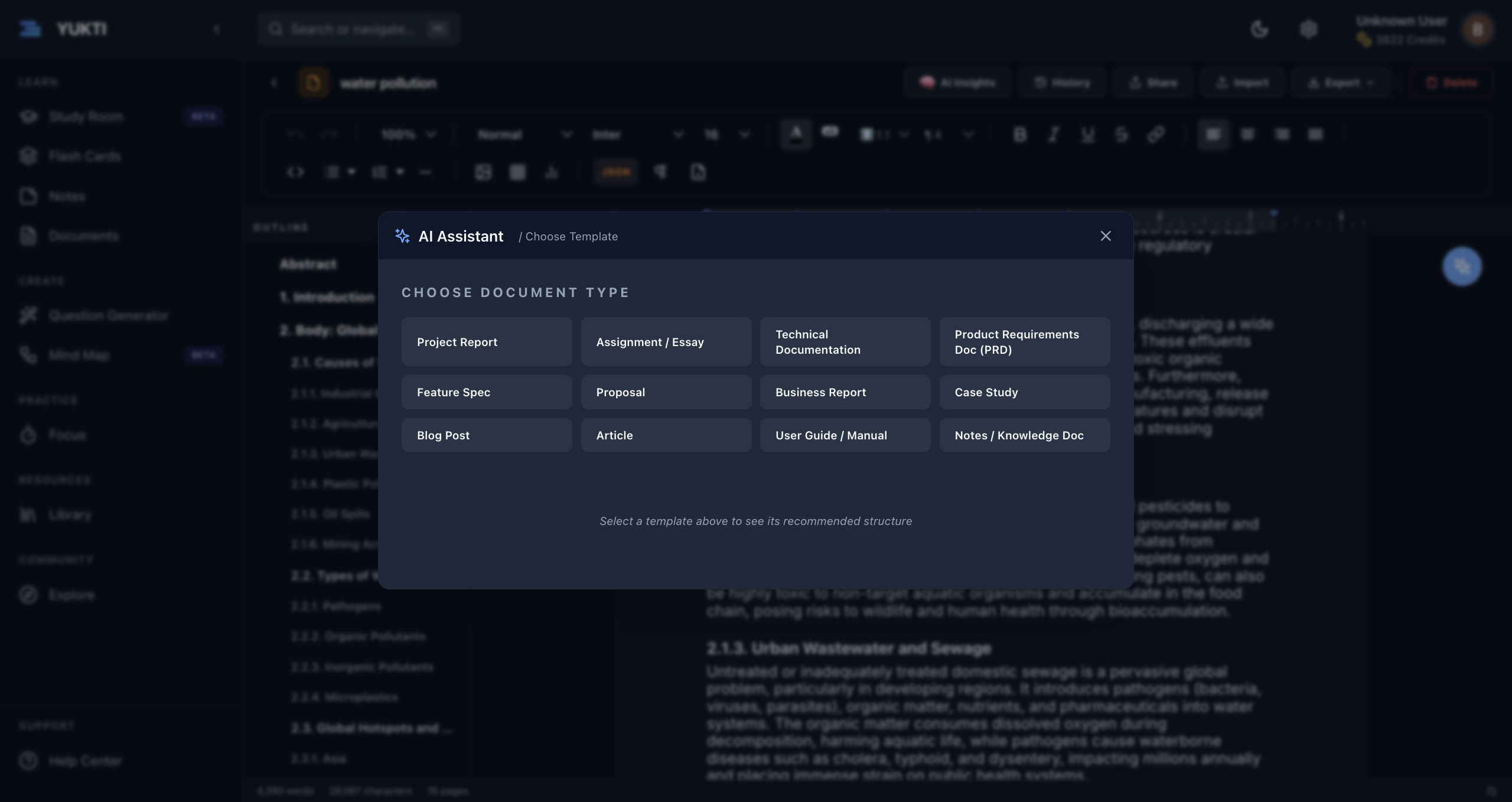
Document generation with AI
-
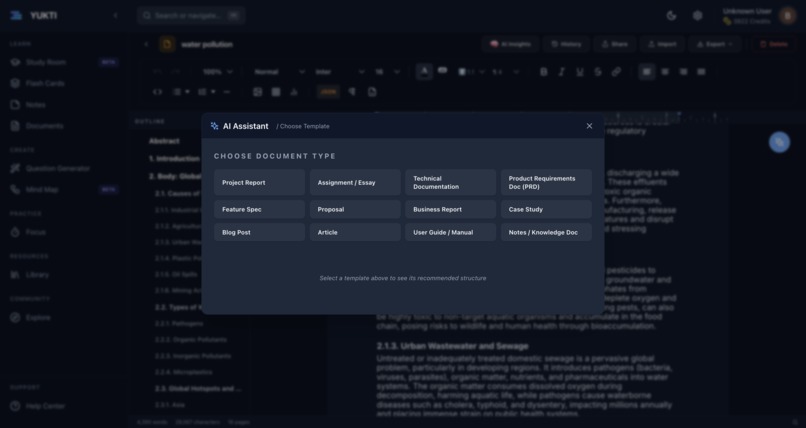
different templates available
-

Storyboard, animated video generation
-
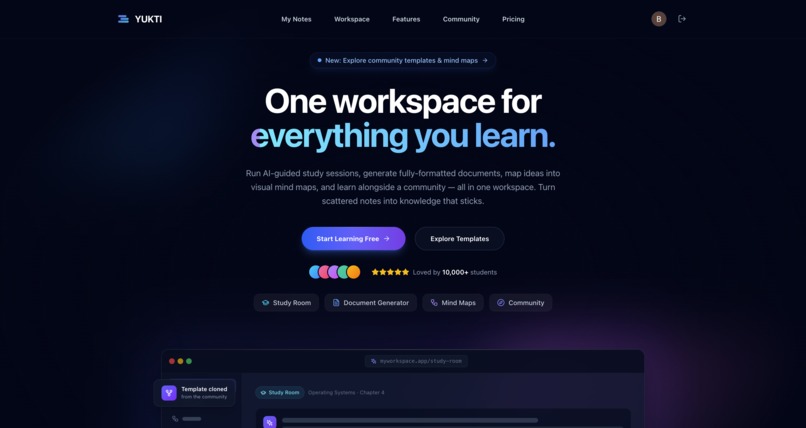
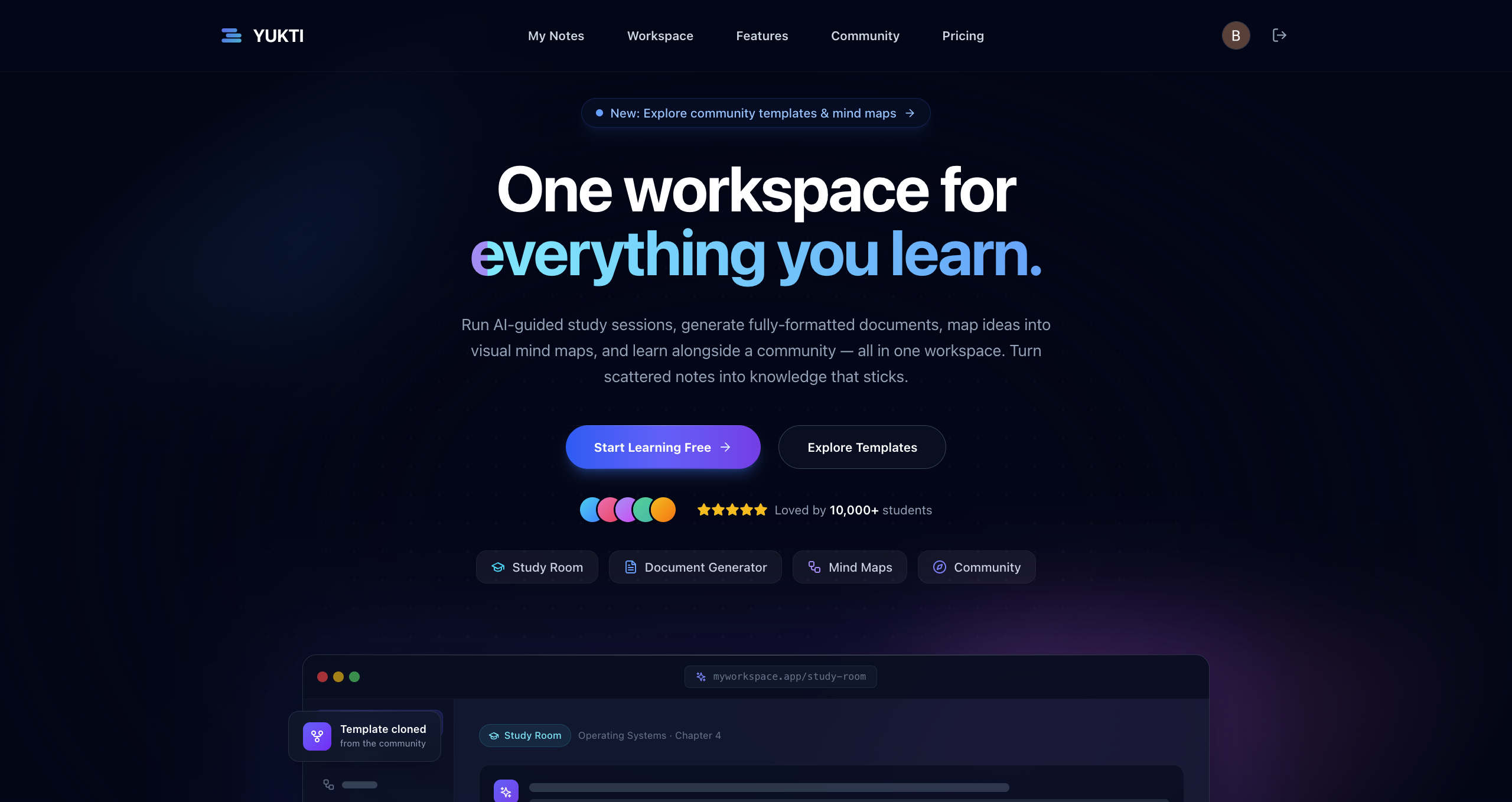
Home page


Inspiration
Honestly, Yukti started from my own frustration.
Like most students today, I learn from everywhere — I save tons of notes, download PDFs, and ask ChatGPT and Gemini to explain things. But all of it ends up scattered. Nothing lives in one place. And even when I created a document, the editors gave me plain, messy text that I had to format by hand.
The worst part was retention. I'd understand an AI explanation perfectly in the moment — and forget it a week later. That's not just me; it's how memory works.
So I built Yukti — an AI-powered learning platform that pulls scattered knowledge into one place and turns it into something you actually remember.
What it does
Yukti takes you from a single topic (or your own messy notes) all the way to real understanding. Here's how:
AI Document Generation
Type a topic and Yukti generates a complete, properly structured document — headings, sections, tables, and explanations — in seconds. No more raw walls of text that you have to format yourself.
Rich Notes Editor
A powerful editor (built on Tiptap) with tables, math equations via KaTeX, code blocks, task lists, and images — so all your knowledge finally lives in one organized workspace instead of being scattered across apps.
Smart Quiz Generator
From any note or document, Yukti auto-generates MCQ and subjective questions. This is the active recall part — instead of re-reading, you test yourself, which is what actually makes information stick.
Flashcards
Turn any topic into flashcards for spaced repetition. Review them over time so concepts move from short-term to long-term memory.
Mind Maps
Instantly visualize a topic as a branching mind map — perfect for seeing the big picture and how concepts connect, before diving into the details.
Narrated Study Room
Yukti explains concepts out loud with AI voice narration (even in Hinglish), walking through ideas step by step with examples — so you can revise hands-free, like having a tutor read the board to you.
Browser Extension
A companion Chrome extension captures any ChatGPT or Gemini answer in one click and drops it straight into your Yukti notes — so the knowledge you generate elsewhere doesn't get lost.
Export & Share
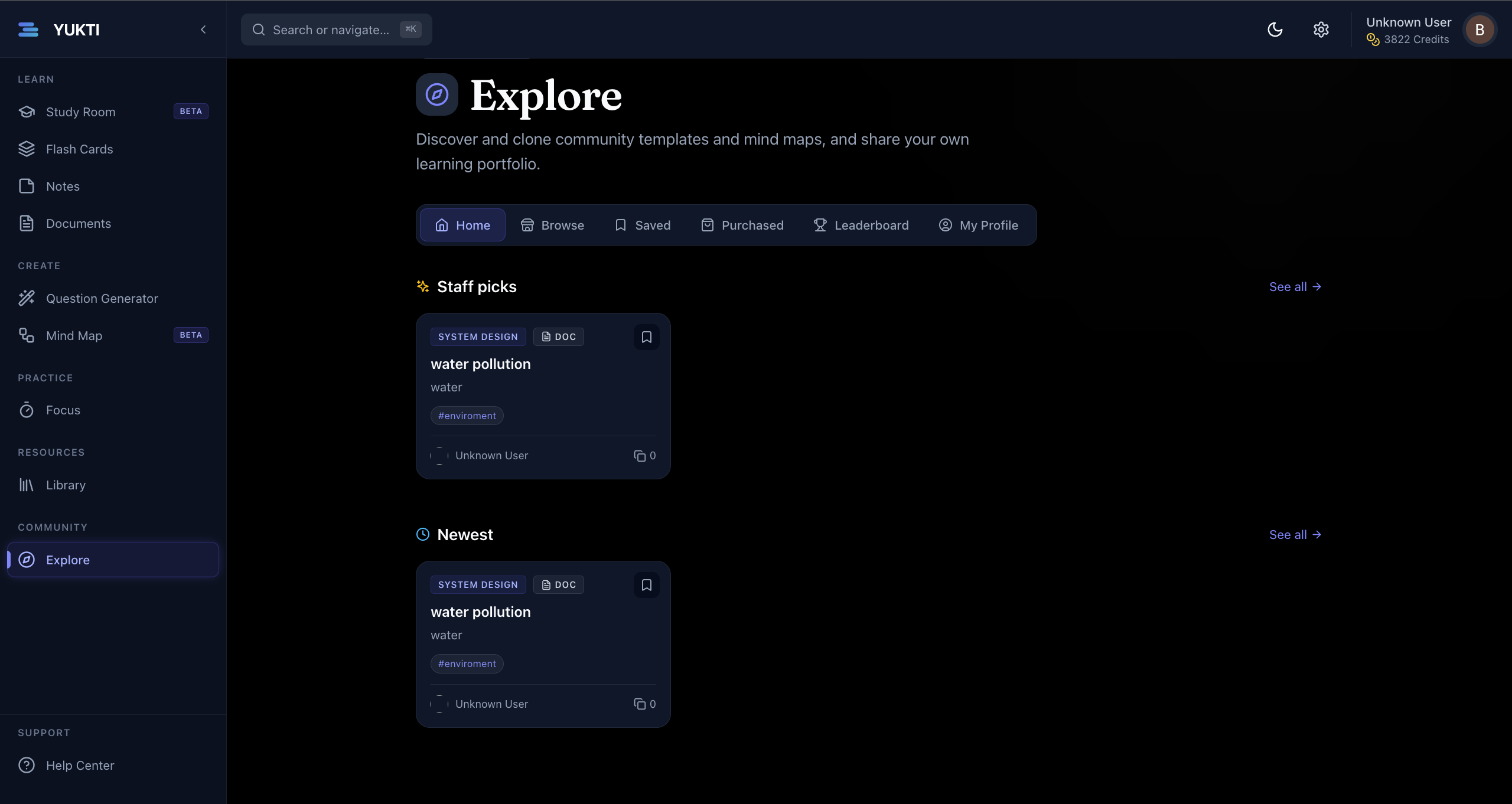
Export your documents to PDF, DOCX, or image, and share or discover community templates in the explore section.
How I built it
- Frontend & app: Next.js 15 (App Router), React, Tiptap editor, Tailwind, deployed
on Vercel in the Mumbai region (
bom1). - Database: Amazon RDS for PostgreSQL in
ap-south-1(Mumbai), accessed through Prisma ORM over SSL. It's the single source of truth for 35 data models — users, notes, versions, quizzes, flashcards, credits, transactions, and a templates marketplace. - AI: Google Gemini for generation, ElevenLabs for voice narration.
- Supporting infra: Upstash Redis (rate limiting + async jobs), Vercel Blob (file storage), NextAuth (Google OAuth), Razorpay (payments).
What I learned
- Database location is a feature, not a detail. Co-locating my Vercel functions and RDS in the same region mattered more than any code optimization.
- Prisma + serverless needs careful connection pooling — cold starts and connection limits will bite you if you ignore them.
- AI output is only useful if it's structured. A huge amount of work went into prompt design so generated documents come out clean and well-formatted, every time.
Challenges I faced
The biggest one was latency. Early on, every page felt slow. Each database round-trip to a remote region was costing ~120 ms, and a single page often makes several queries.
So 5 queries alone added over half a second of pure waiting. I fixed it by moving my app
to Vercel's Mumbai region so it sits right next to Amazon RDS in ap-south-1,
collapsing that per-query cost dramatically.
Other challenges: getting the browser extension's cross-origin session to authenticate against the deployed app, and making AI-generated documents reliably well-formatted instead of raw text.
Building Yukti taught me that a great learning tool isn't about more AI — it's about turning scattered information into something structured, and structured information into something you actually remember.
Built With
- amazon-web-services
- appwrite
- aurora
- blob
- elevenlabs
- framer
- gemini
- javascript
- jspdf
- katex
- motion
- next.js
- nextauth.js
- oauth
- postgresql
- razorpay
- rds
- recharts
- redis
- redux
- resend
- tiptap
- typescript
- vercel

Log in or sign up for Devpost to join the conversation.