Inspiration
The idea behind YTComment-IQ stemmed from a need to efficiently analyze and understand the vast amount of user-generated content on YouTube. With millions of comments being posted daily, we aimed to create a tool that would provide meaningful insights and help creators quickly gauge public sentiment, popular topics, and trends within any video’s comment section.
What it does
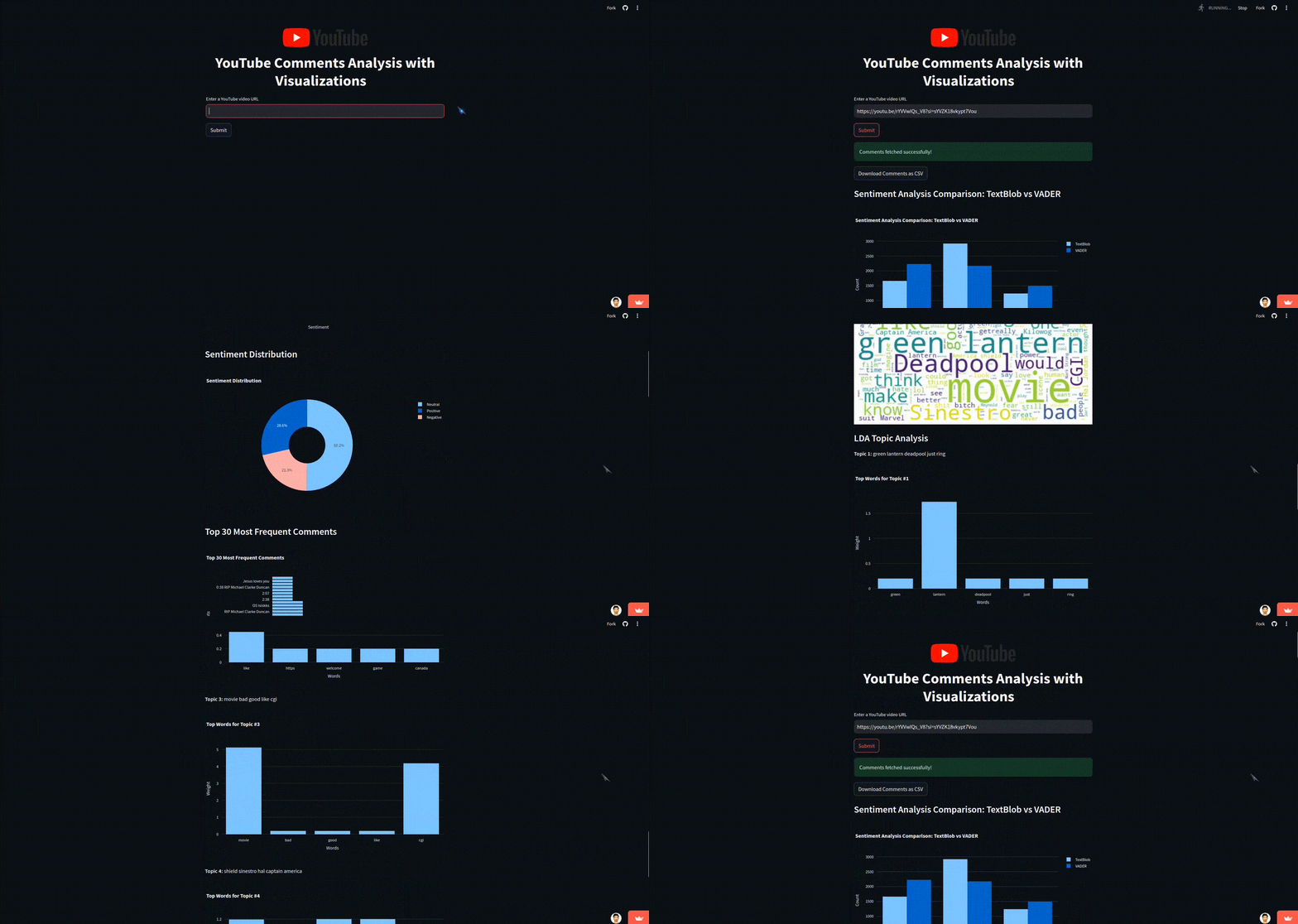
YTComment-IQ is a web-based application that analyzes and visualizes YouTube comments from any video. Utilizing natural language processing, the app offers features such as sentiment analysis, comment volume tracking, word cloud generation, and topic modeling. Users can gain a deeper understanding of sentiment trends, view word frequency data, and export reports for further exploration.
How we built it
We built YTComment-IQ using Streamlit for the web interface and the YouTube Data API for fetching comments. For sentiment analysis, we integrated TextBlob and VADER to provide two perspectives on sentiment categorization. Plotly and Matplotlib were used for interactive and static visualizations, respectively. We incorporated LDA topic modeling using sklearn to identify dominant themes in comments and used WordCloud for creating visual representations of frequently used terms.
Challenges we ran into
One challenge was handling the large volume of comments efficiently while maintaining quick processing times. Integrating two sentiment analysis models (TextBlob and VADER) also required careful calibration to ensure they provided complementary insights. Ensuring the user interface was intuitive and interactive took additional time to design.
Accomplishments that we're proud of
We’re proud of the seamless integration of multiple NLP and visualization tools in one app, allowing users to perform various analyses effortlessly. Creating a downloadable CSV report feature adds practical value, making it easier for users to extract and apply insights.
What we learned
Building YTComment-IQ helped us deepen our understanding of natural language processing techniques, especially sentiment analysis and topic modeling. We also learned how to optimize a Streamlit application for handling larger datasets and gained experience in designing user-friendly data visualizations.
What's next for YTComment-IQ
Future updates will focus on enhancing customization for users, such as allowing for custom stopwords in the word cloud and sentiment tuning options. We also plan to explore real-time sentiment tracking and to extend the app to other social media platforms.
Built With
- flask
- matlplotlib
- natural-language-processing
- pyplot
- python
- streamlit
- textblob
- vadar

Log in or sign up for Devpost to join the conversation.