-
-
Thumbnail-image
-
-
-
-
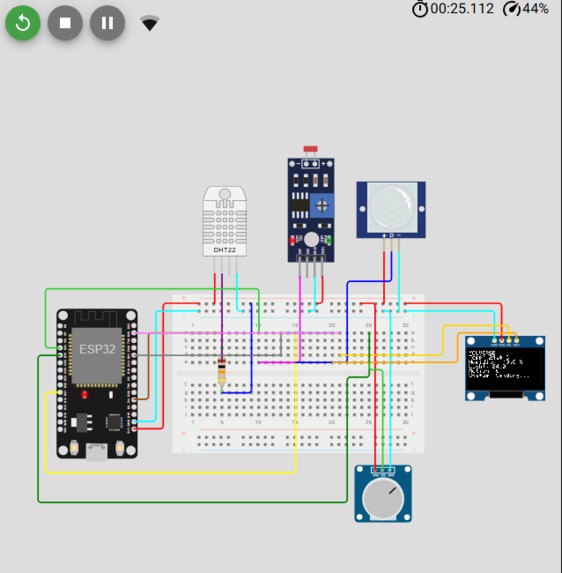
wokwi-circuit
-
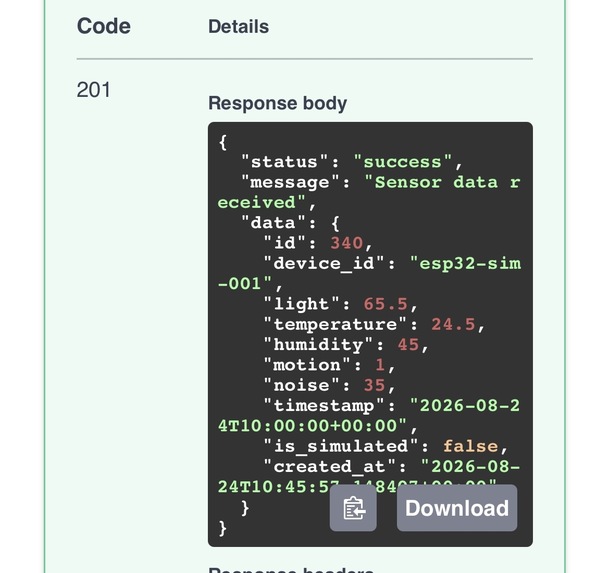
api-response
-
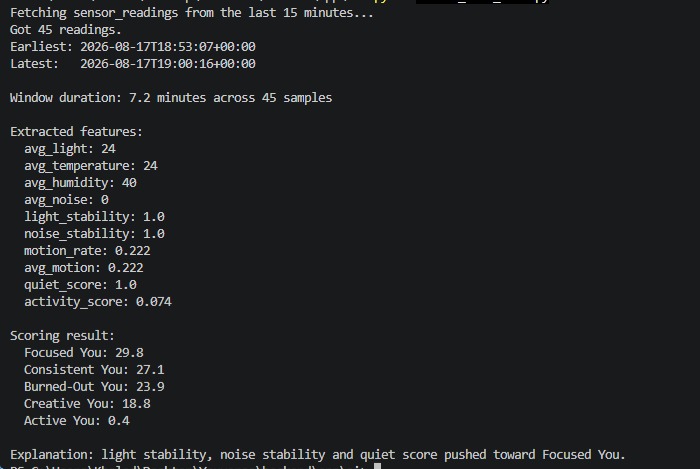
ai-scoring
-
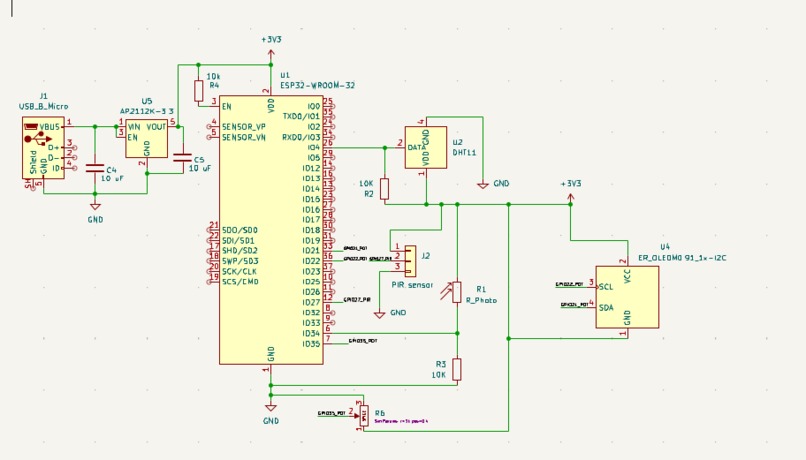
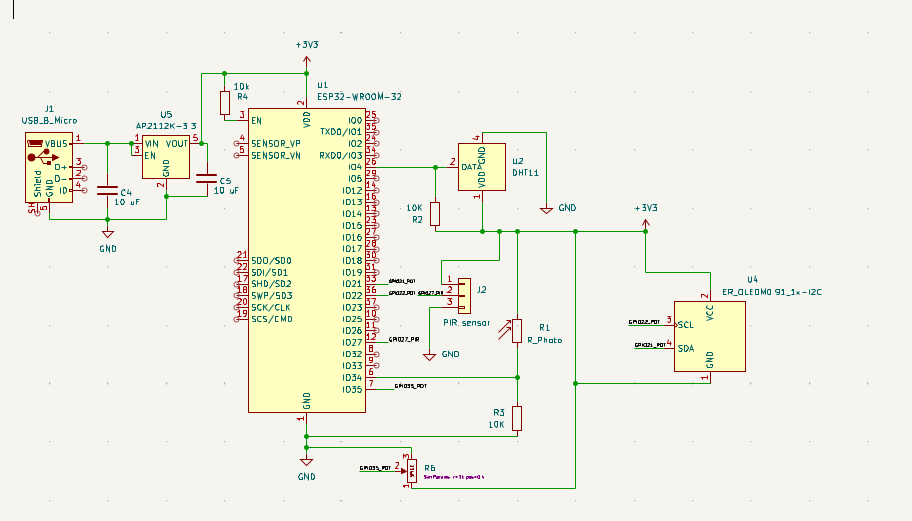
Schematic
-
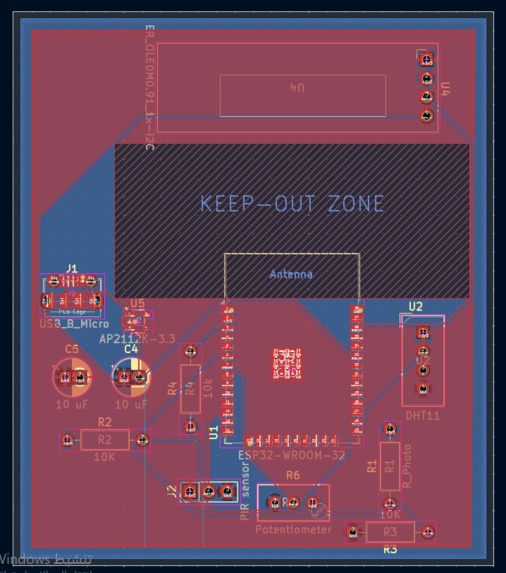
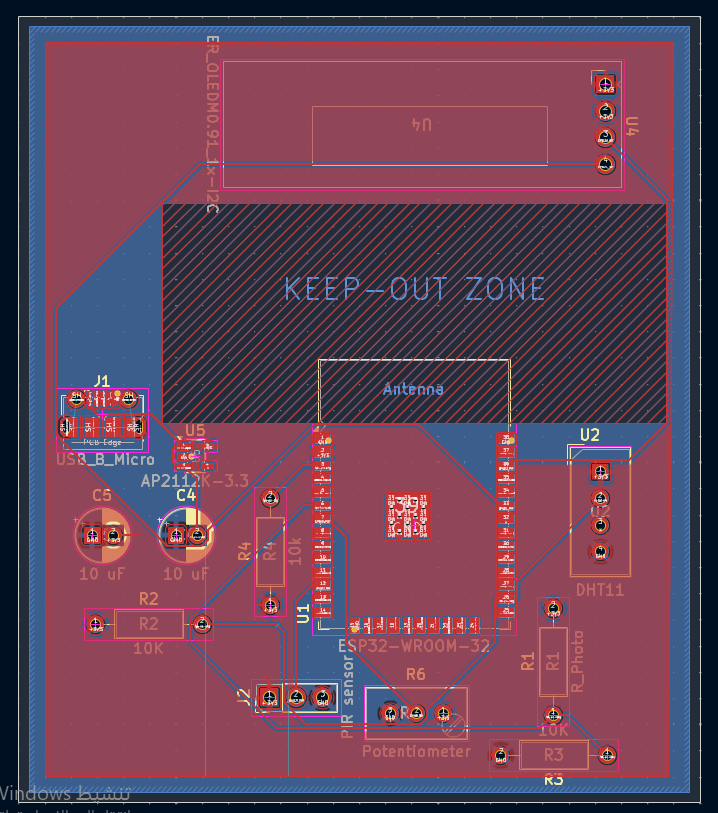
pcb-layout
💡 Inspiration
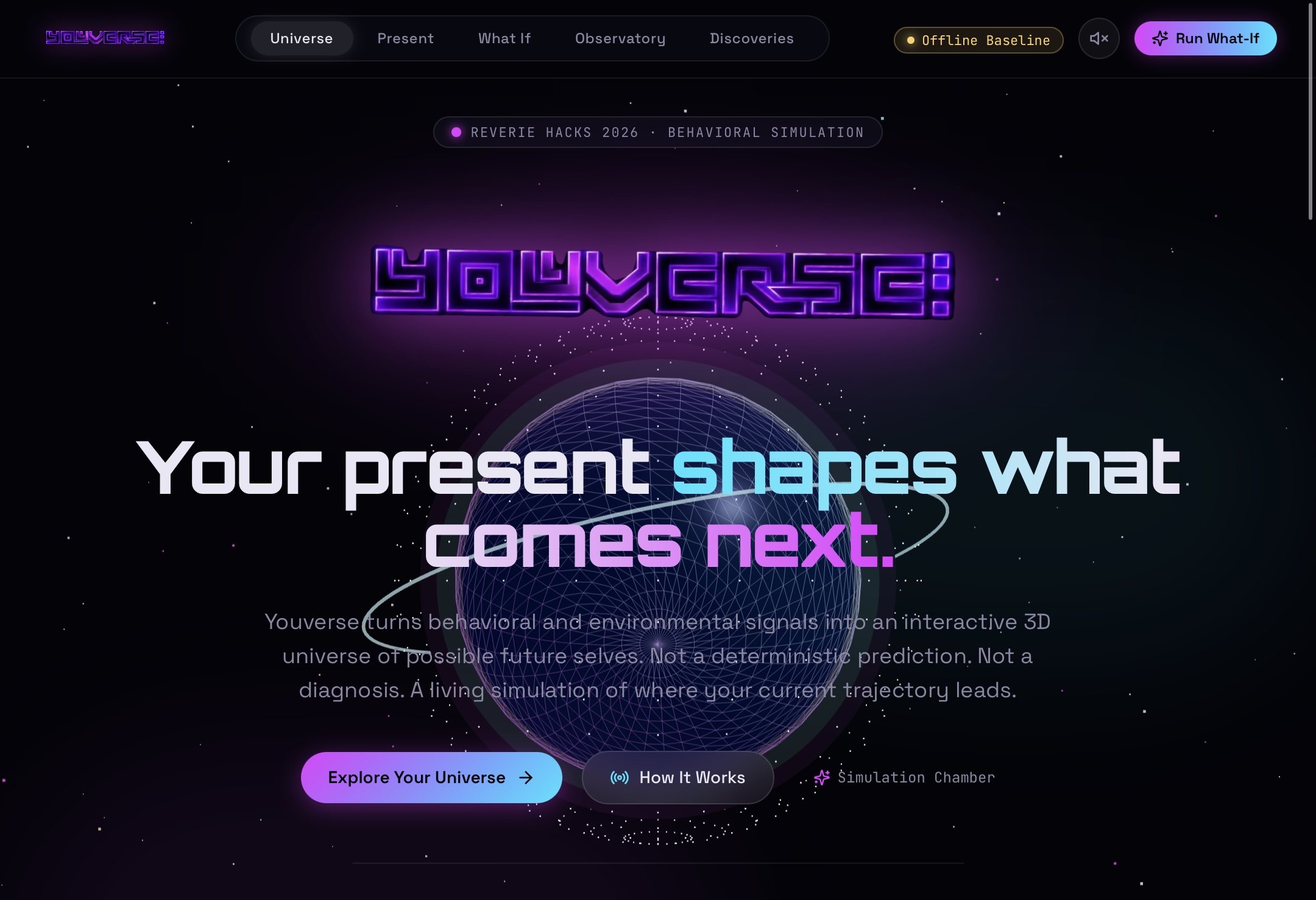
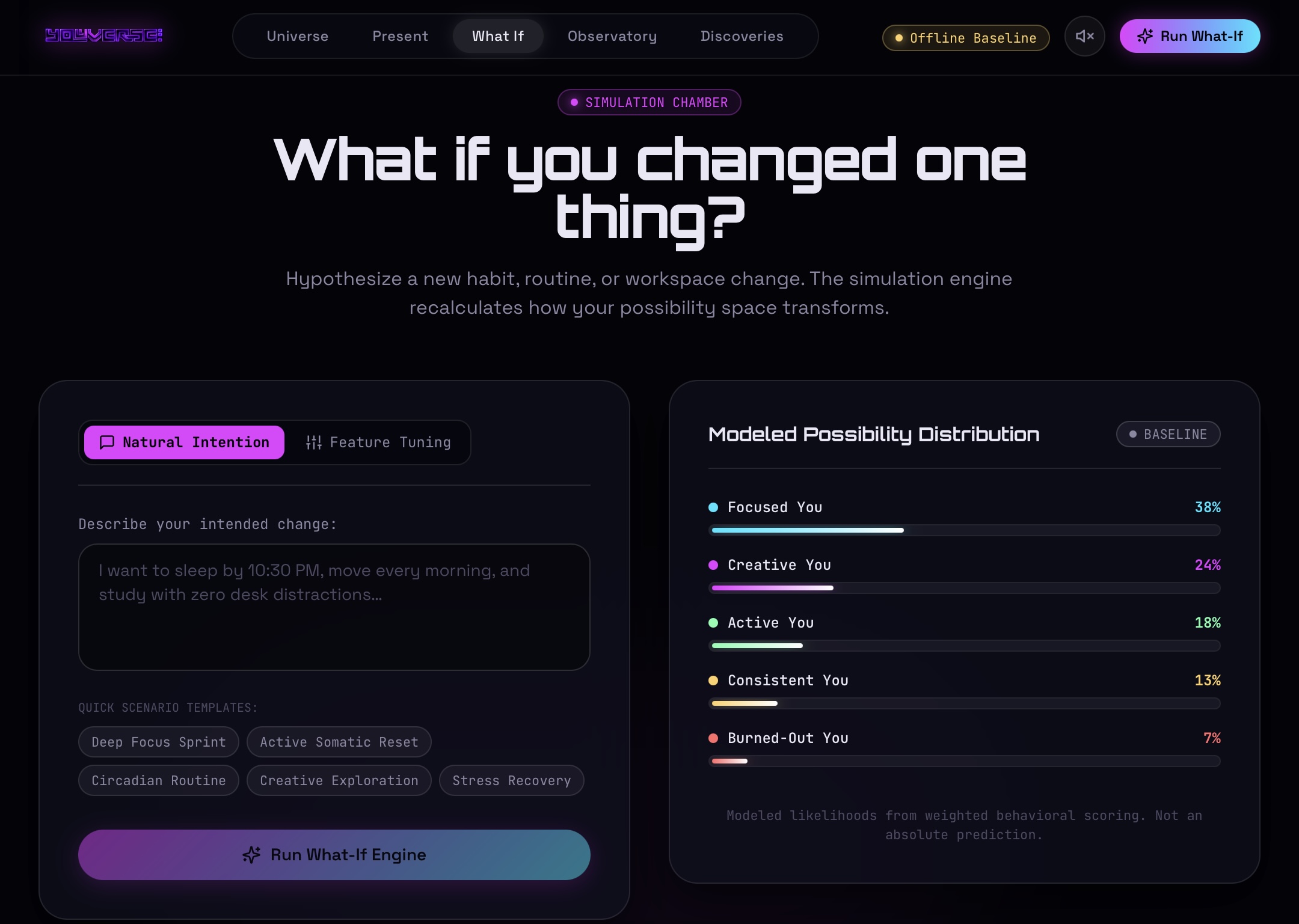
What if your future wasn't one path... but a universe of possibilities?
We spend so much time tracking what we do today, hours studied, steps taken, habits completed.
But we rarely get to see where those patterns could take us.
That became the idea behind Youverse.
Instead of asking an algorithm to tell you what your future will be, we wanted to create a space where you can explore who you could become.
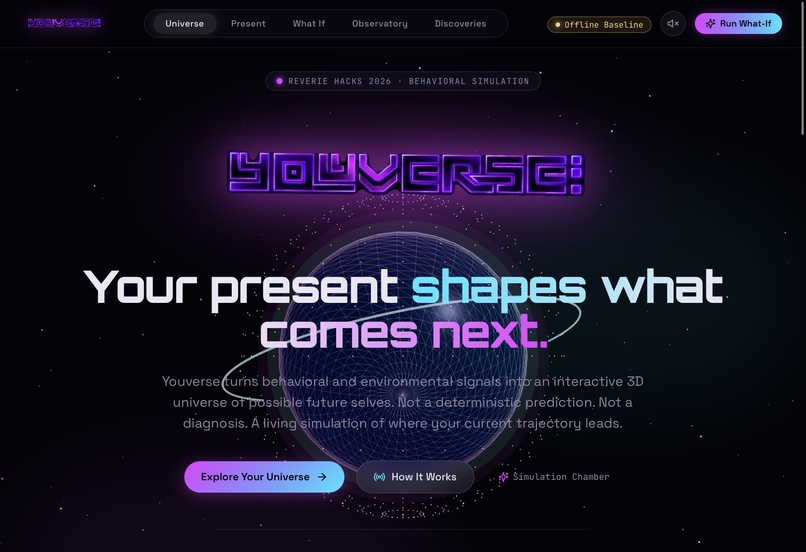
Your present becomes the center of a small universe.
Around it orbit different possibilities:
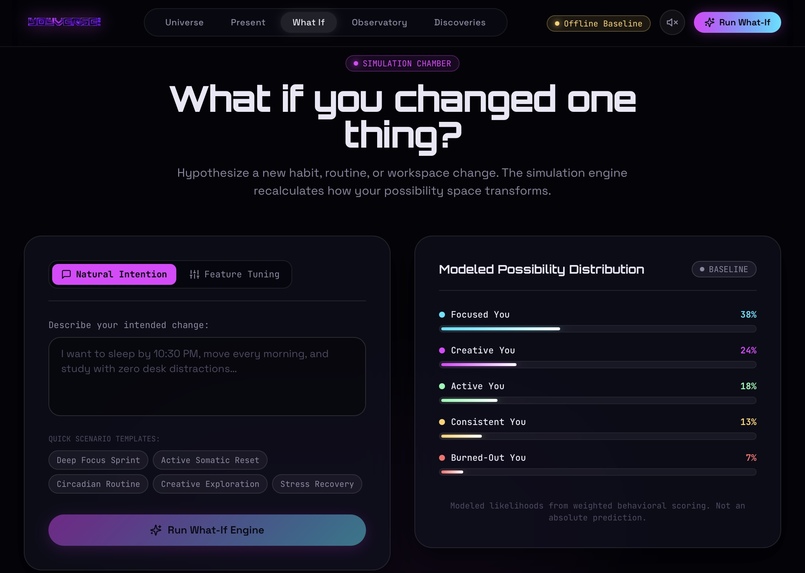
Focused You · Creative You · Consistent You · Active You · Burned-Out You
And then you get to ask the question that changes everything:
What if?
What it does
Youverse transforms observable environmental patterns into an interactive universe of possible Future Selves.
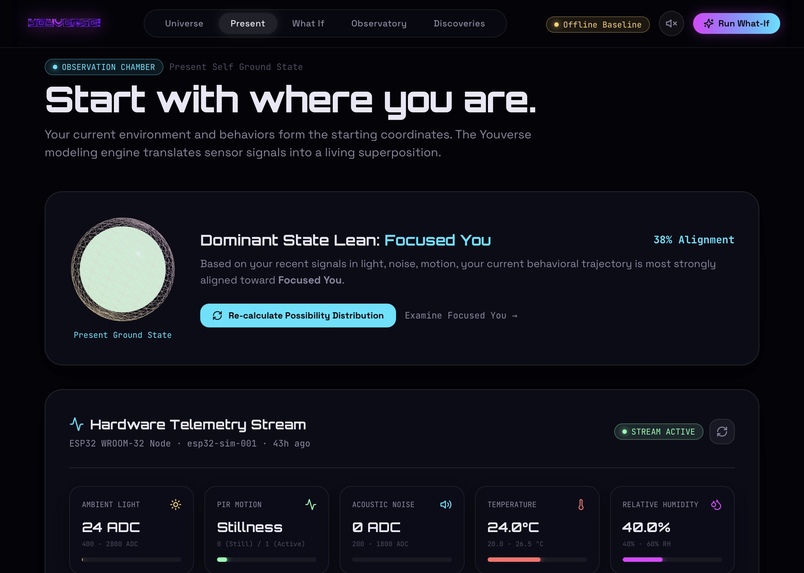
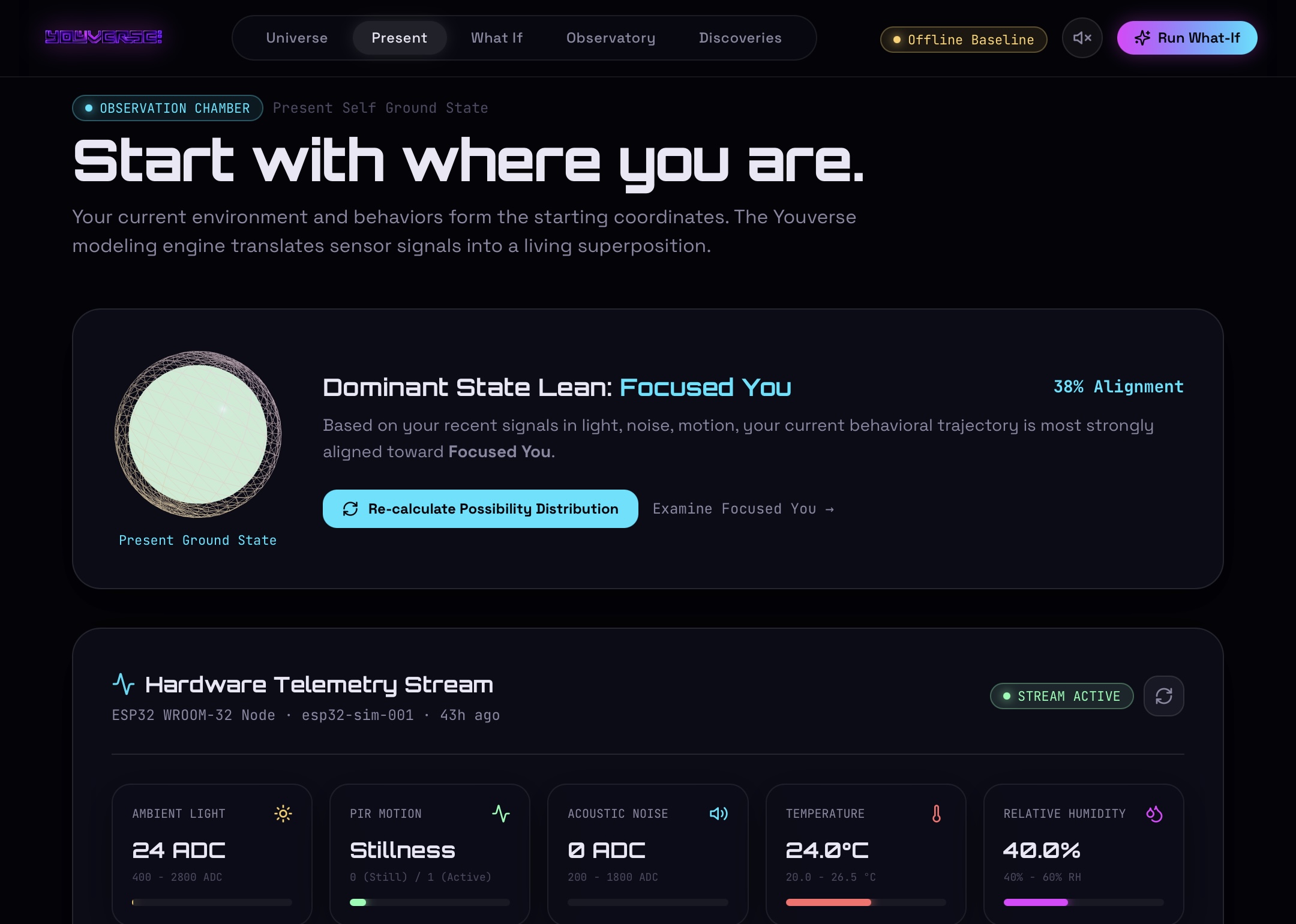
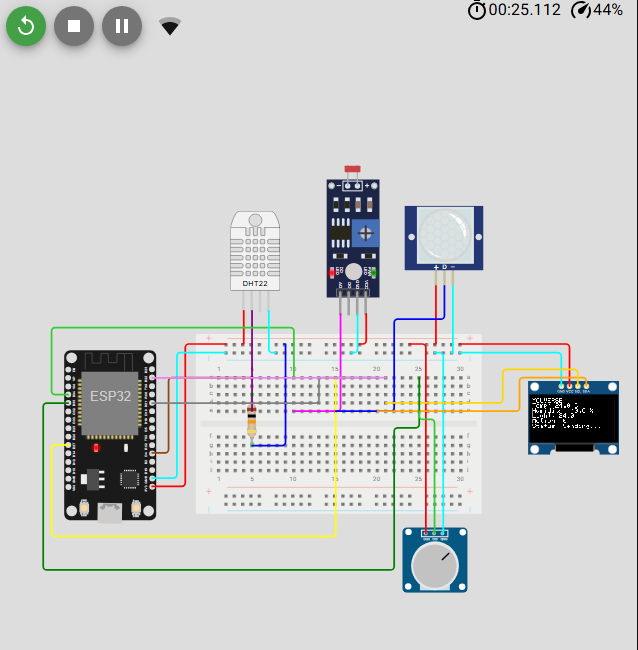
We designed and simulated an ESP32-based sensing system using Wokwi, with sensors for light, temperature/humidity, motion, and noise.
The signals move through our pipeline:
Sensors → Behavioral Features → Model → Future Selves → What If?
The system uses these signals as proxies, not direct measurements of things like focus or mental health.
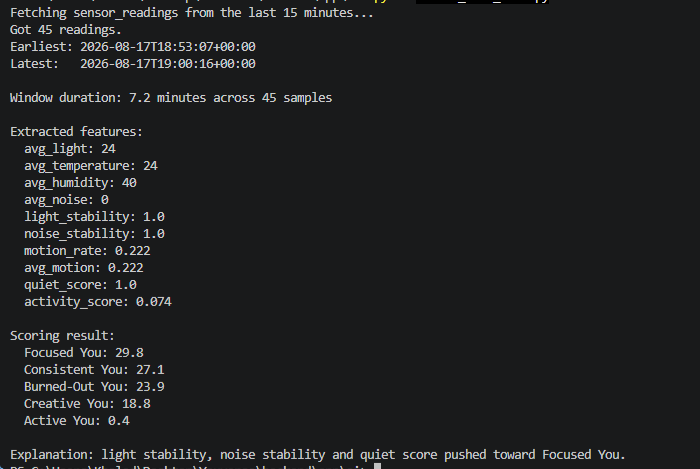
Our behavioral model generates a distribution across multiple possible states.
Then the user can experiment.
What if you studied earlier? What if you moved more? What if you became more consistent?
Change the behavior.
Watch the universe change.
Youverse isn't predicting your actual future. The quantum/superposition idea is a metaphor for exploring possibilities; the underlying system is behavioral modeling and simulation.
How we built it
We wanted the experience to feel like one system, not a collection of disconnected technologies.
So we built the pipeline end-to-end:
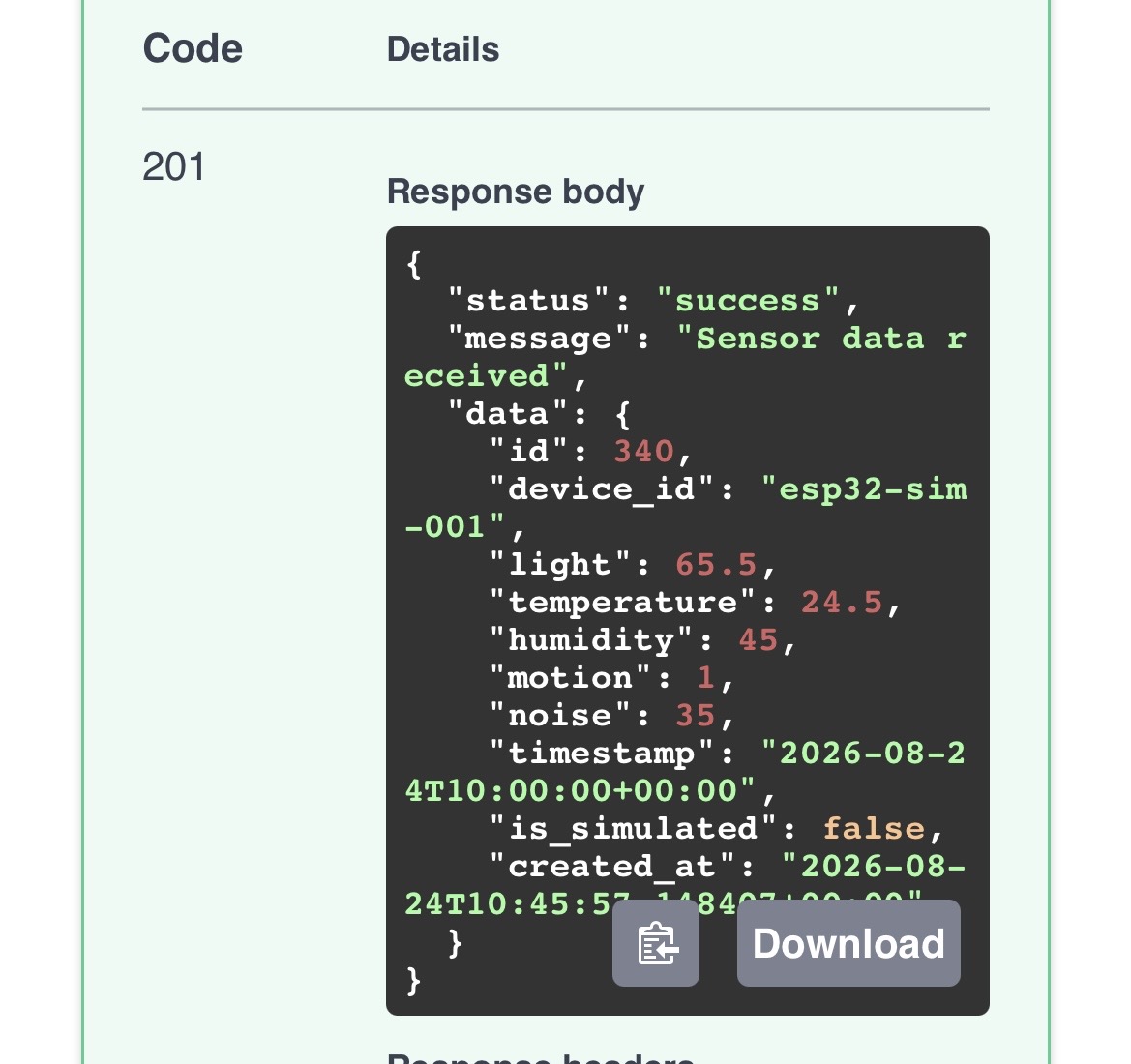
Wokwi ESP32 Simulation → Sensor Data → WiFi / HTTPS → FastAPI → Supabase / PostgreSQL → Behavioral Feature Extraction → Weighted Future-State Scoring → What-If Engine → React + TypeScript → Three.js / React Three Fiber
Hardware
We designed the sensing device around an ESP32-WROOM-32, including:
- Light sensor (LDR)
- Temperature / humidity sensor
- PIR motion sensor
- Potentiometer
- SSD1306 OLED
We designed the schematic and PCB in KiCad, including the hardware design checks, and used Wokwi to simulate the ESP32, sensors, and firmware.
AI / Behavioral Model
Sensor readings are transformed into behavioral features (light/noise stability, motion rate, quiet and activity scores) and scored by a weighted model into a probability-like distribution across five future selves. The model was calibrated on a live sensor session from the device, not just synthetic data, and includes a What-If engine that recalculates the distribution when a habit changes.
Software
The backend handles sensor ingestion and data processing, while the behavioral layer transforms signals into features and future-state scores.
The frontend turns those outputs into an interactive 3D universe where the possible futures can actually be explored.
Challenges we ran into
The hardest part wasn't connecting a sensor.
It was figuring out what a sensor is allowed to mean.
Light isn't focus. Motion isn't productivity. Noise isn't burnout.
We had to turn observable signals into meaningful behavioral features without pretending they directly measure a person's internal state.
We also had to solve a second problem:
How do you make a model feel magical without making it misleading?
That meant clearly separating:
what we observe → what we model → what we imagine.
Accomplishments we're proud of
We didn't just build a futuristic-looking interface.
We built a complete concept-to-experience pipeline:
hardware design + simulation → data pipeline → behavioral modeling → What-If simulation → interactive 3D visualization
We're especially proud of designing the hardware architecture and PCB while also connecting its simulated sensor data to the same backend and modeling system used by the final experience.
But our favorite accomplishment is the What-If moment.
A user changes one behavior...
and the universe reorganizes.
That's the moment where an abstract idea becomes something you can actually interact with.
What we learned
We learned that building an intelligent system isn't only about making a model smarter.
It's about knowing what the data can actually tell you.
We learned how to connect hardware concepts, simulation, backend infrastructure, behavioral modeling, and immersive UX into one coherent experience.
And most importantly, we learned that you don't always need to predict the future to make people think about it.
Sometimes, it's more powerful to simply show them:
"Here are some of the ways this could go."
What's next for Youverse
Today, Youverse is a functional end-to-end prototype, with the hardware layer simulated through Wokwi.
The next step is bringing the designed device into the physical world and moving from simulated/controlled inputs toward continuous real-world data:
Physical Device → Live Data → Longitudinal Patterns → More Personalized Future Selves
With enough longitudinal data, we could make the possible futures more adaptive to each individual while keeping the distinction between measured data, modeled outcomes, and possibilities completely transparent.
Because Youverse was never meant to tell you:
"This is your future."
It's meant to make you wonder:
"What could I become... if I changed something today?"
Built With
- arduino
- c++
- esp32
- fastapi
- kicad
- postgresql
- python
- react
- supabase
- tailwindcss
- typescript
- wokwi

Log in or sign up for Devpost to join the conversation.