-
-
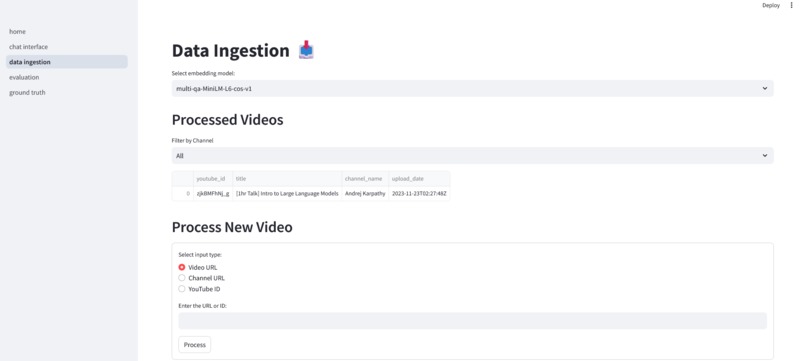
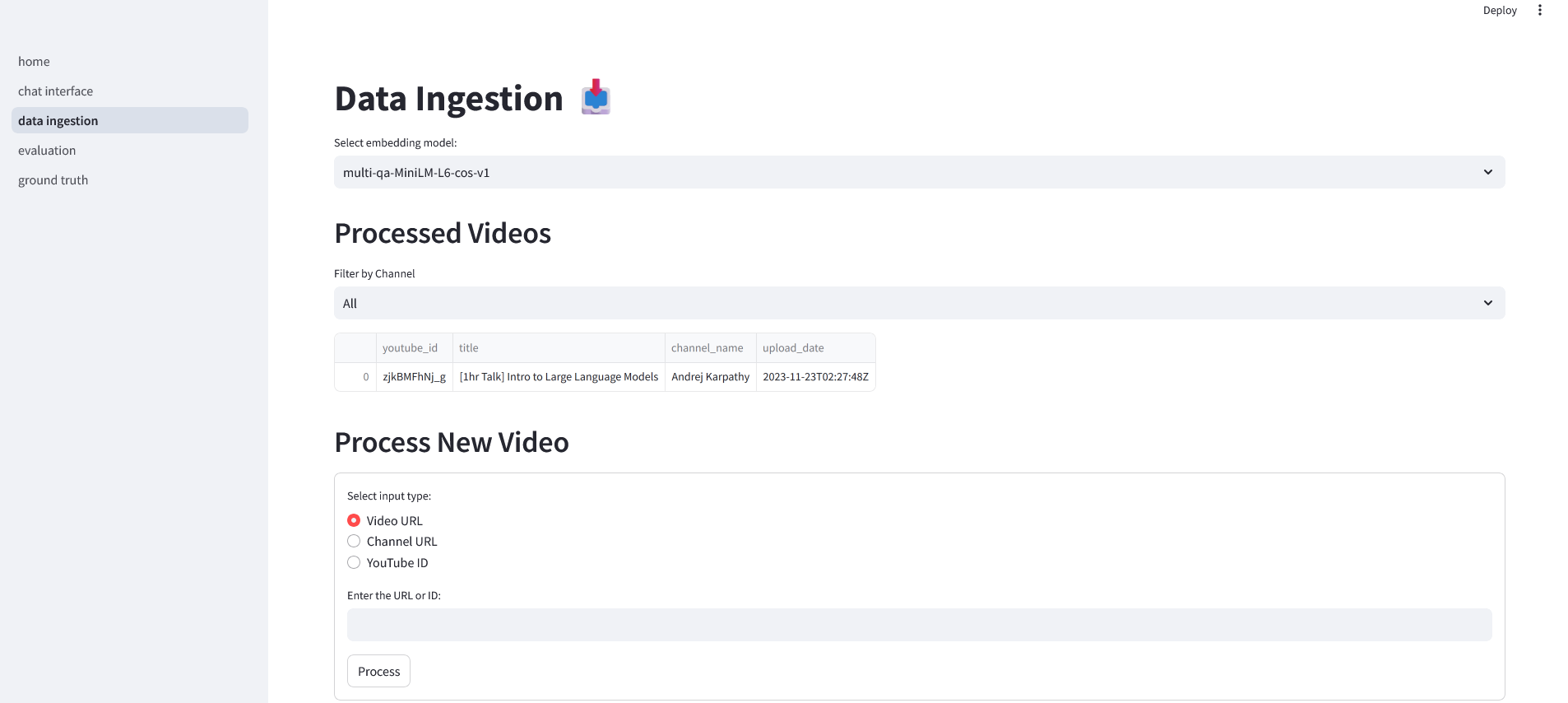
The Data Ingestion Page to ingest youtube videos
-
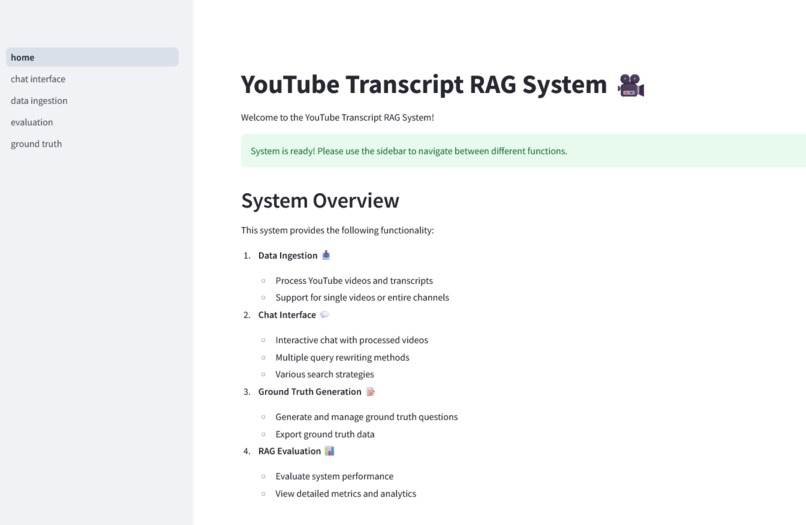
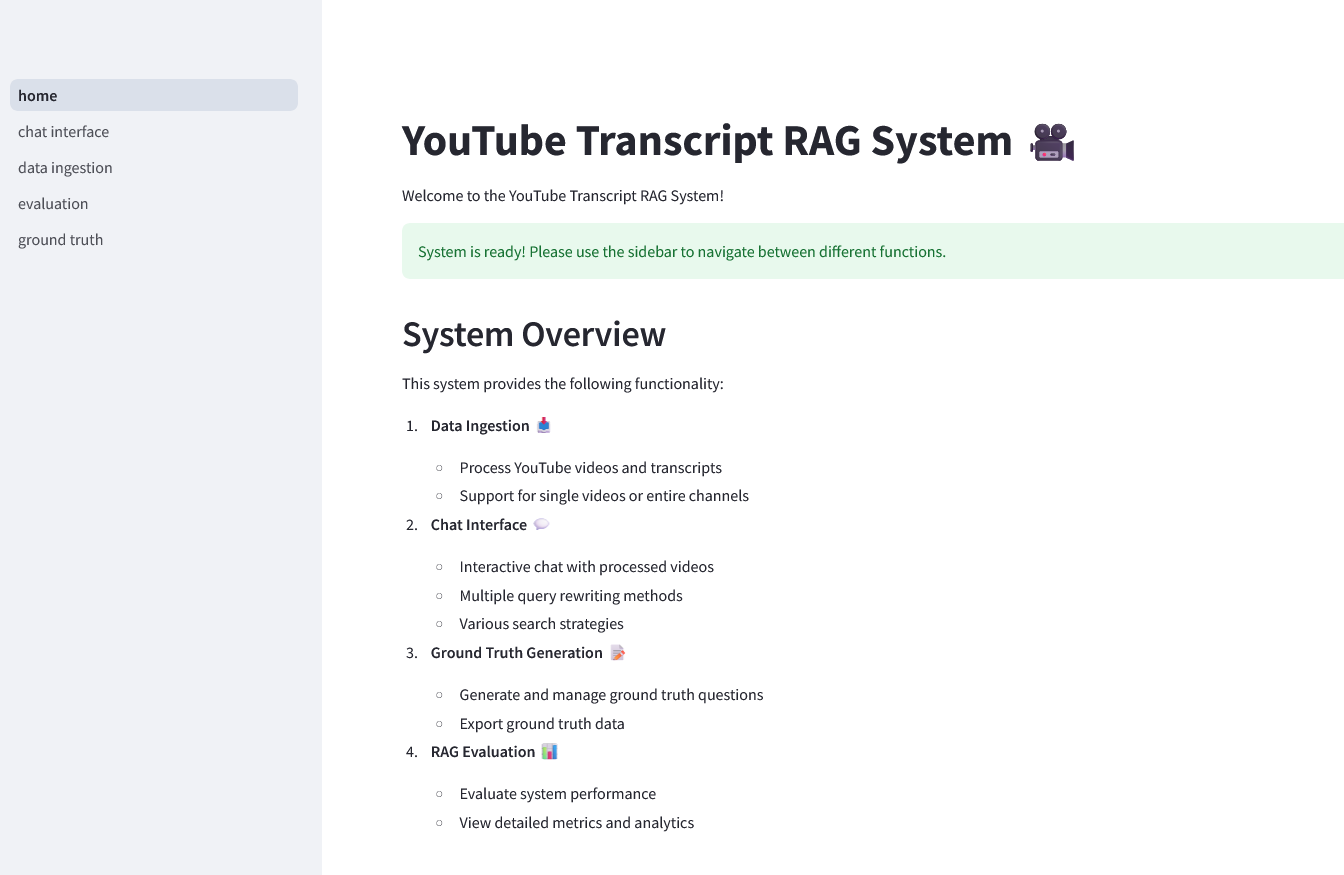
The landing page
-
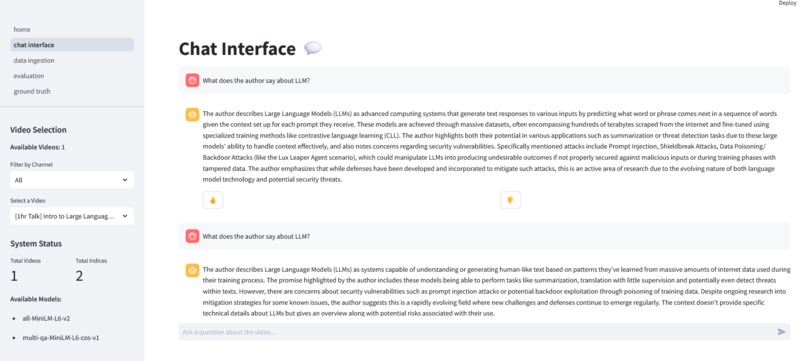
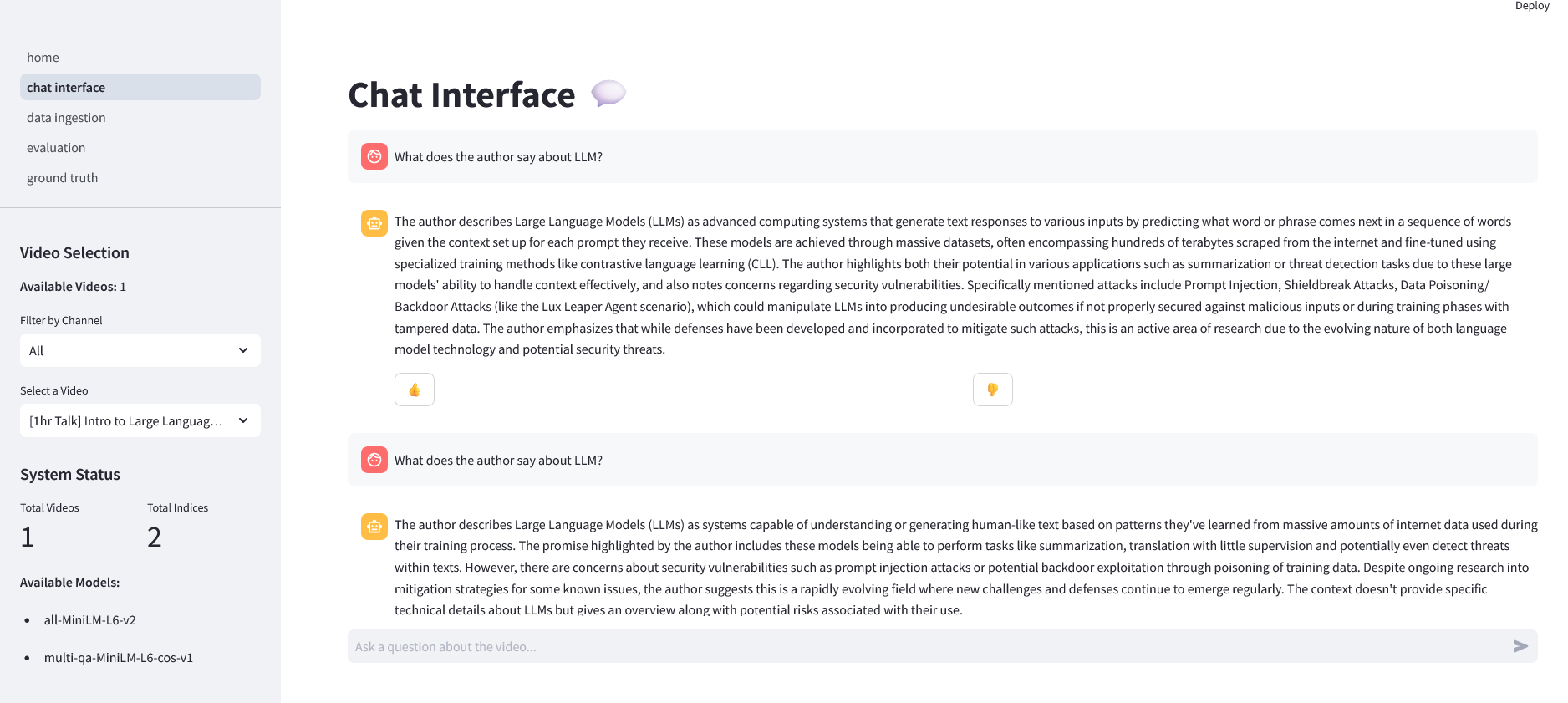
Chat interface with user feedback
-
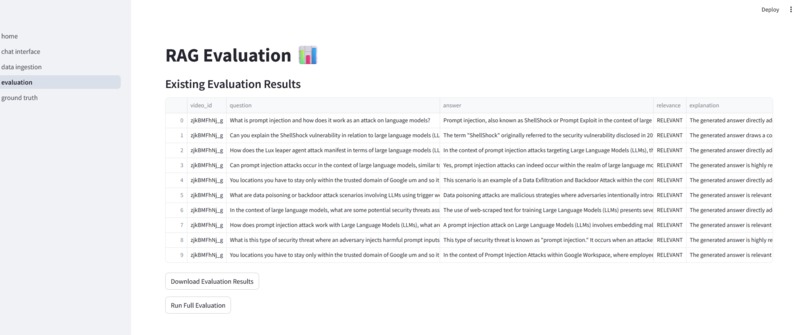
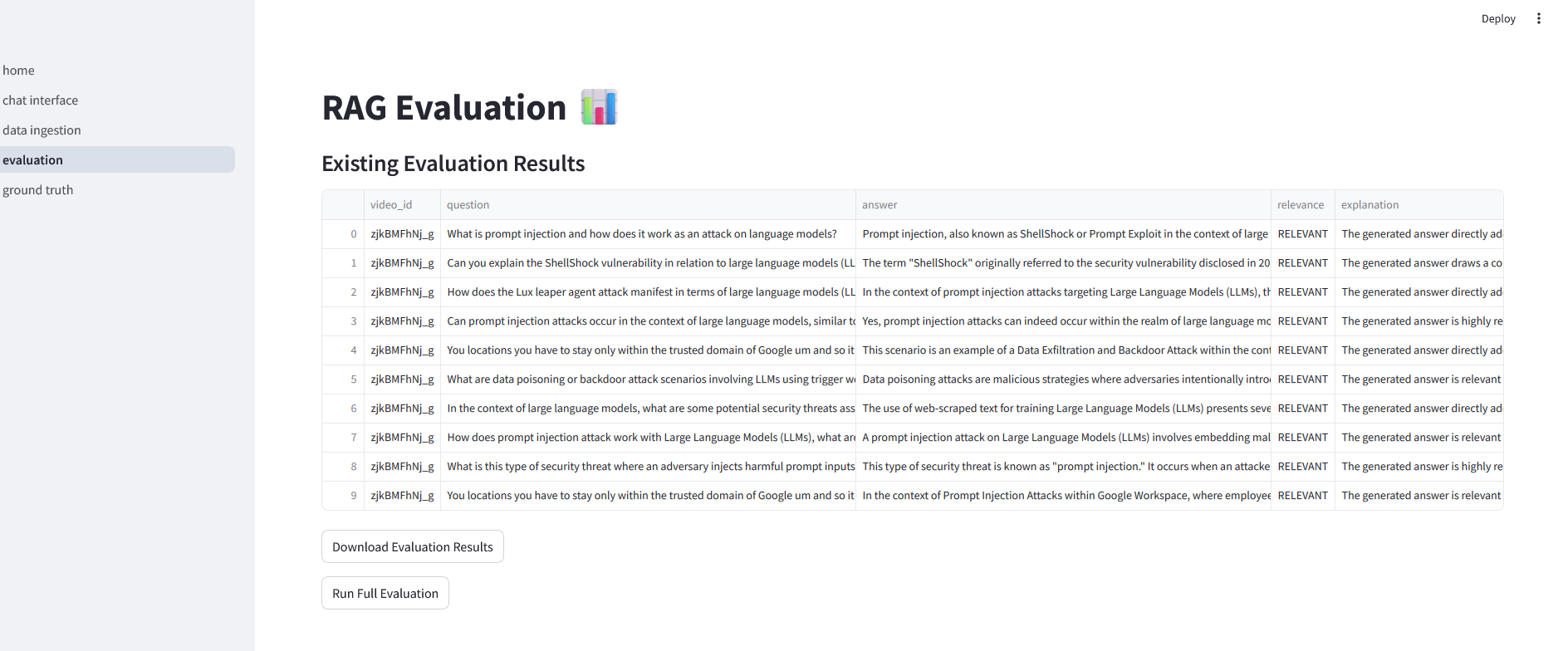
RAG Evaluation using LLM as a Judge
-
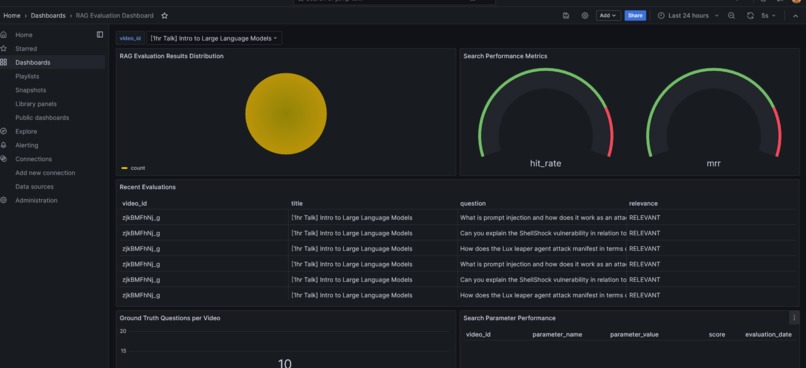
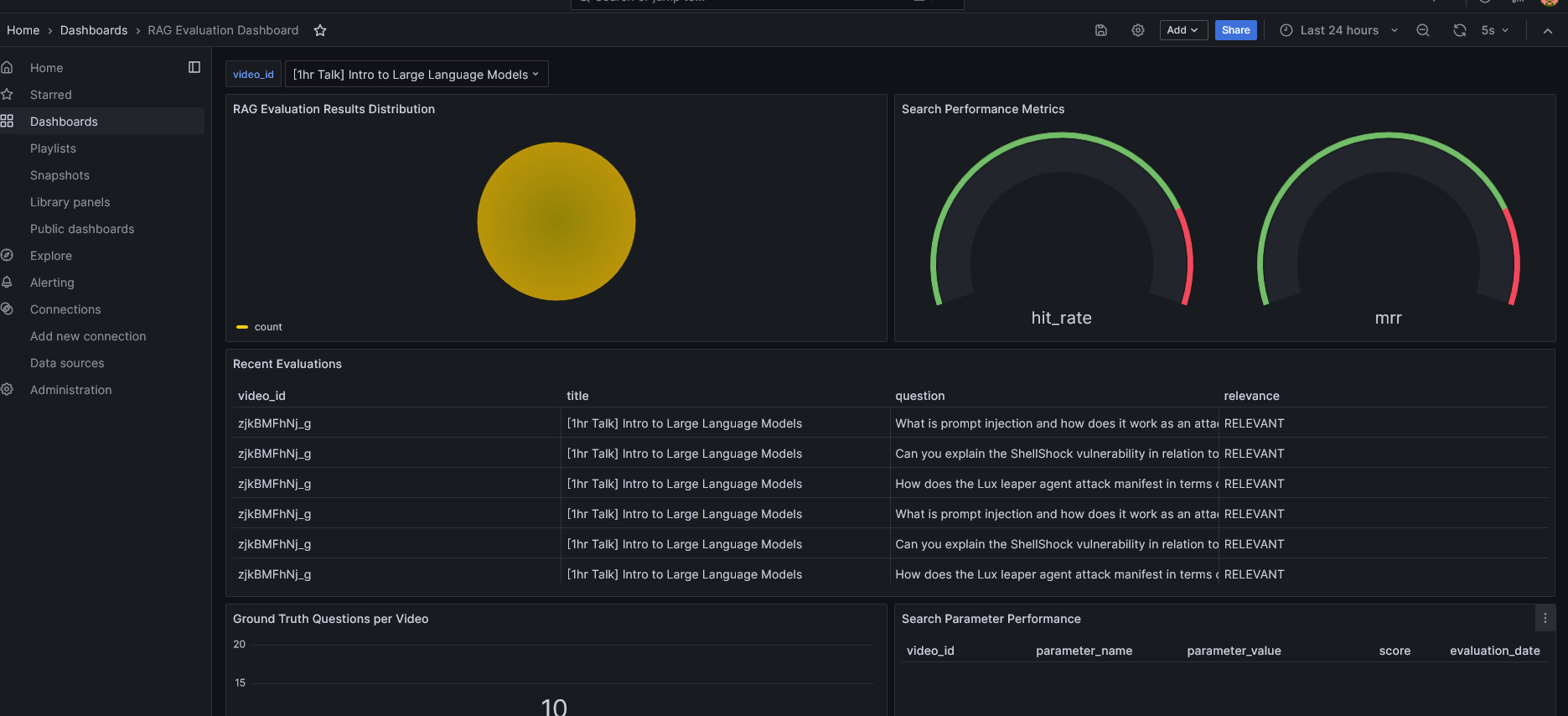
Grafana Demos
-
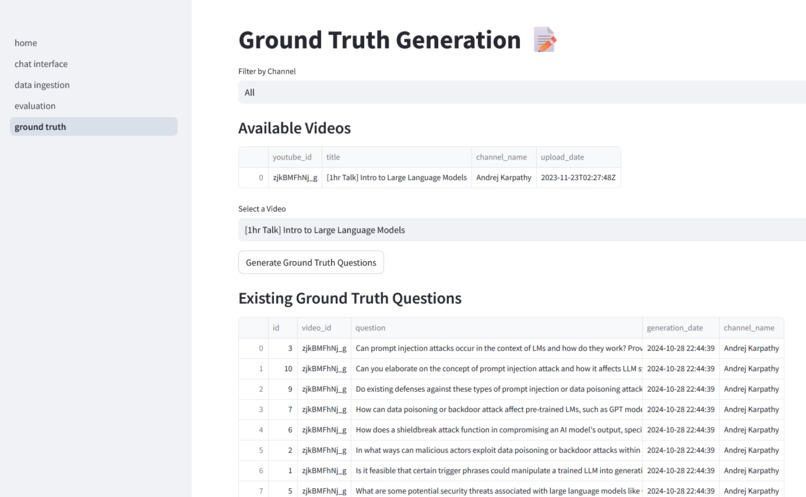
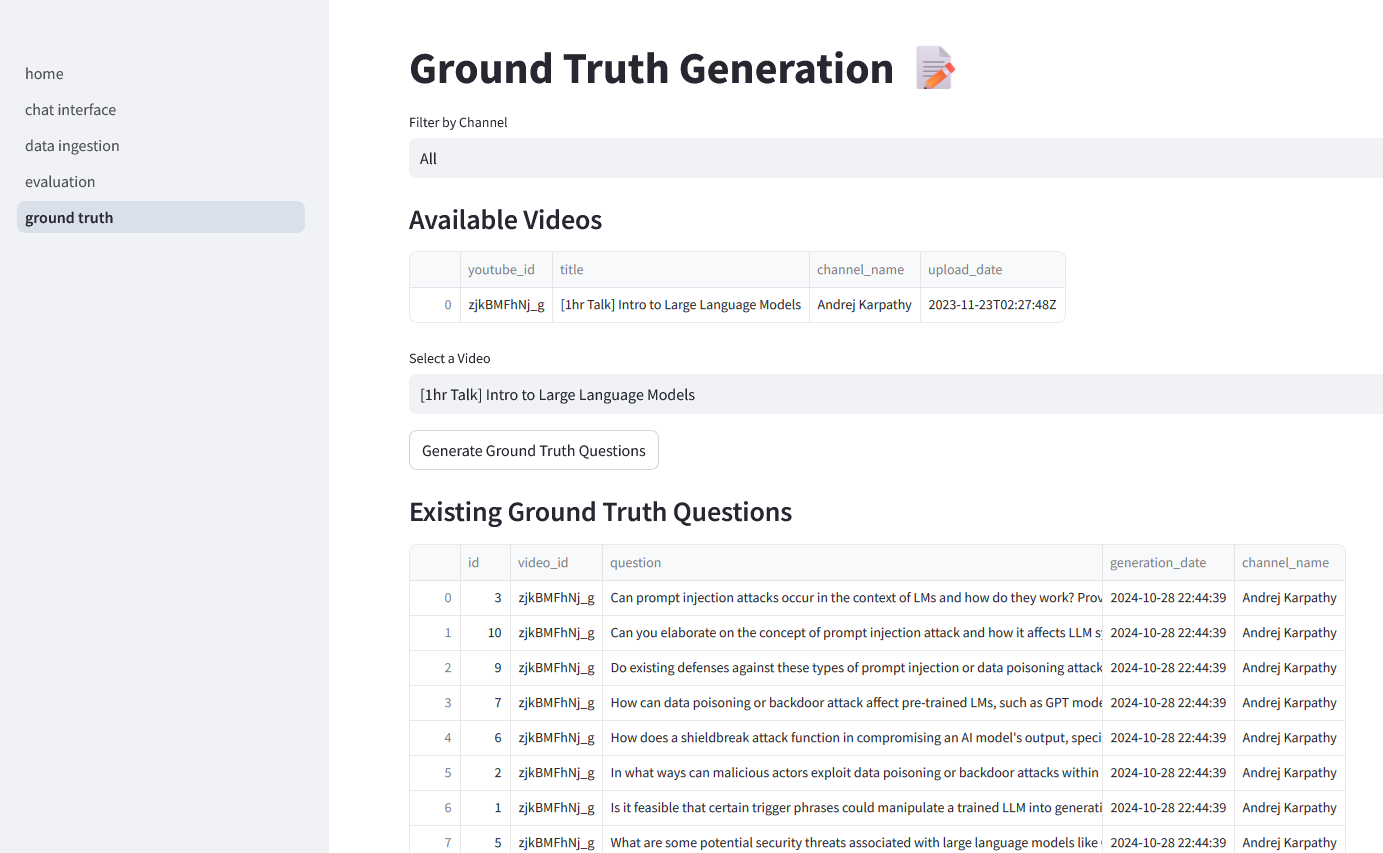
Generate Ground Truth
-
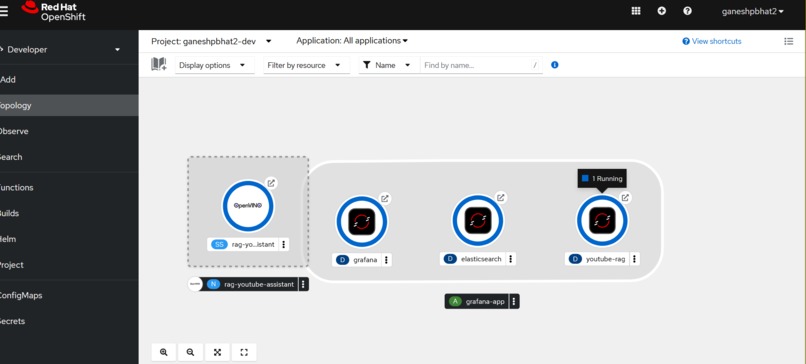
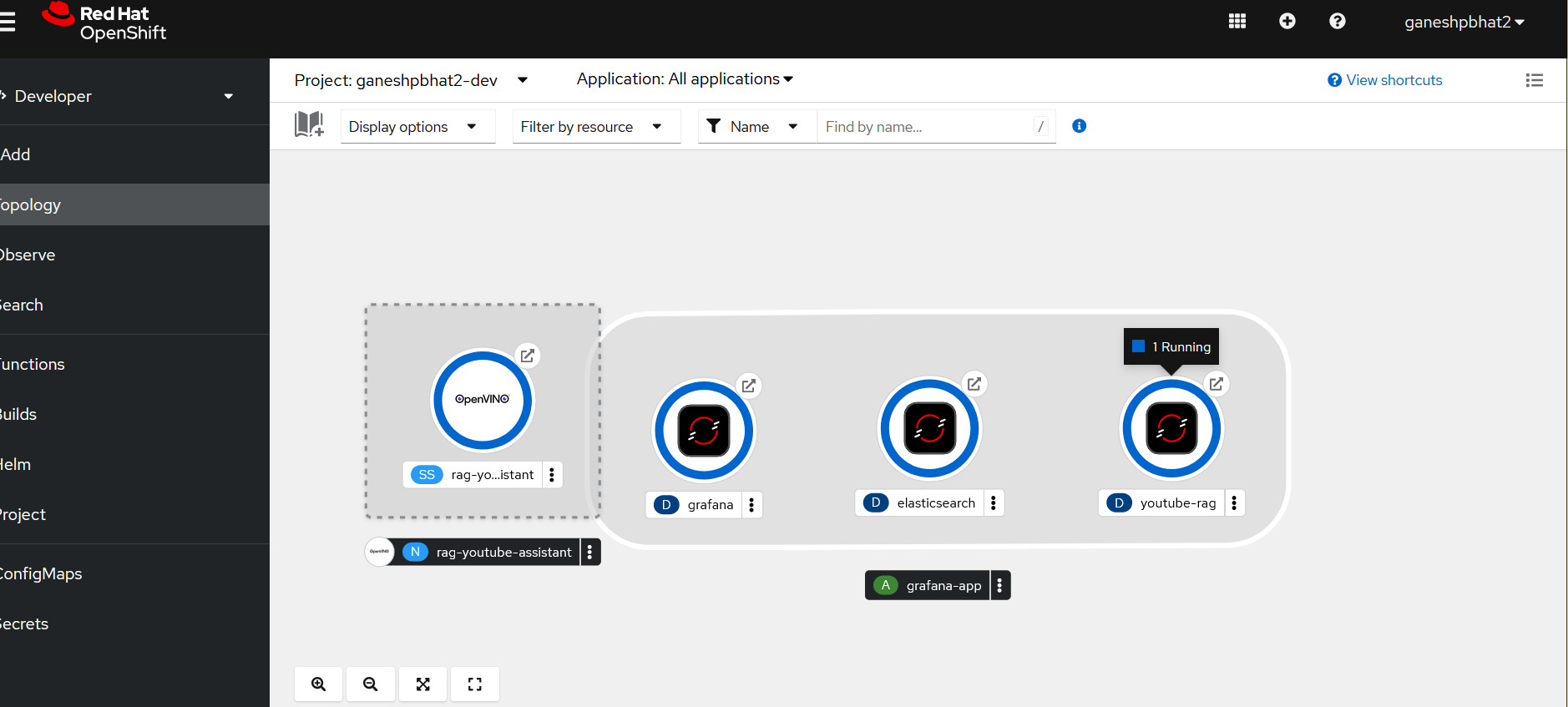
Openshift with Intel
Inspiration
In the era of abundant video content on YouTube, users often struggle to efficiently extract specific information or insights from lengthy videos without watching them in their entirety. This challenge is particularly acute when dealing with educational content, tutorials, or informative videos where key points may be scattered throughout the video's duration.
What it does
The YouTube Assistant project addresses this problem by providing a Retrieval-Augmented Generation (RAG) application that allows users to interact with and query video transcripts directly. This solution enables users to quickly access relevant information from YouTube videos without the need to watch them completely, saving time and improving the efficiency of information retrieval from video content.
How we built it
Video Transcript Extraction: We developed a robust system to extract transcripts from YouTube videos using the YouTube Data API. This involved fetching video metadata and utilizing automatic speech recognition (ASR) tools to generate accurate text representations of the spoken content.
Data Processing: Once we had the transcripts, we pre-processed the text to clean it up, remove filler words, and segment it into meaningful sections. This step was crucial for enhancing the quality of the information users could query.
Information Retrieval Framework: We implemented a Retrieval-Augmented Generation (RAG) model, which combines retrieval-based methods with generative capabilities. The retrieval component uses embeddings to find relevant sections of the transcript based on user queries, while the generative aspect crafts coherent and contextually relevant responses.
User Interface Design: We created an intuitive user interface that allows users to input their queries and view responses seamlessly. The design emphasizes simplicity and ease of navigation, ensuring users can quickly find the information they need without unnecessary distractions.
Integration and Testing: We integrated the various components—transcript extraction, information retrieval, and the user interface—into a cohesive application. Rigorous testing was conducted to ensure accuracy in query responses and responsiveness of the system.
User Feedback Loop: After initial deployment, we gathered feedback from users to identify areas for improvement. This iterative process helped refine the system’s performance and user experience.
Challenges we ran into
Transcript Accuracy: Ensuring high accuracy in transcript generation was a significant challenge. The automatic speech recognition (ASR) tools sometimes struggled with accents, background noise, or technical jargon, leading to incomplete or incorrect transcripts. Integration of Multiple Technologies: Combining various technologies (ASR, natural language processing, and UI design) into a seamless application required meticulous coordination and troubleshooting to ensure compatibility and performance.
Accomplishments that we're proud of
Iterative Improvements: We established a feedback loop that allows us to continuously refine the system. Incorporating user suggestions has led to notable enhancements in accuracy and usability, demonstrating our commitment to meeting user needs.
What we learned
Importance of Accurate Transcripts: We discovered that the quality of transcripts is crucial for the effectiveness of the entire system. Small errors in transcription can lead to misunderstandings and user frustration, highlighting the need for continuous improvement in ASR technologies. Iterative Development is Essential: The value of an iterative development approach became clear. Regular user feedback allowed us to make adjustments quickly, ensuring the application evolved in alignment with user needs and preferences. Technical Integration Challenges: Integrating multiple technologies—from ASR to natural language processing—requires careful planning and testing. We learned the importance of ensuring compatibility and addressing performance issues early in the development process.
What's next for Youtube RAG Assistant
Enhanced Transcript Accuracy: We plan to integrate more advanced ASR technologies and continuously refine our algorithms to improve transcript accuracy, particularly for diverse accents and specialized vocabulary.
Multilingual Support: Expanding support for more languages will make the assistant accessible to a wider audience. We aim to implement multilingual capabilities to accommodate non-English speaking users.
User Personalization: We intend to incorporate personalization features that allow users to save preferences, bookmark important sections, and receive tailored content recommendations based on their interests.
Summarization Features: Developing automatic summarization tools will enable users to get concise overviews of video content, helping them quickly grasp key points without sifting through entire transcripts.
Interactive Query Clarification: We plan to enhance the user experience by adding features that can clarify user queries or suggest more specific search terms, improving the accuracy of retrieved information.
Built With
- elasticsearch
- genai
- grafana
- ollama
- openvino
- openvino-genai
- python
- sqlite
- youtube

Log in or sign up for Devpost to join the conversation.