-
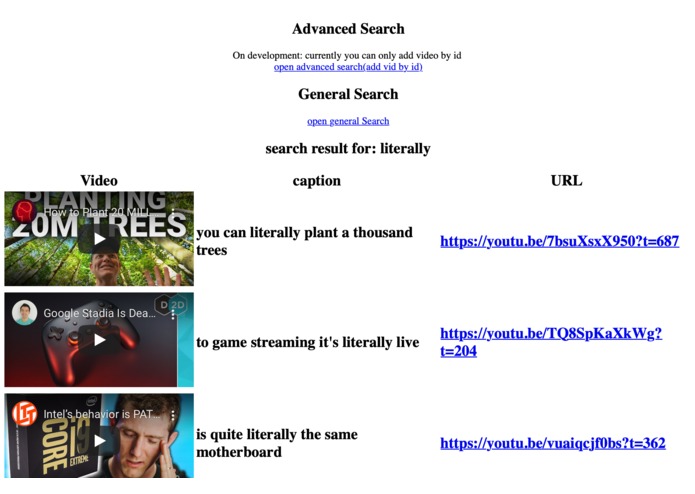
searching videos by "literally"
-
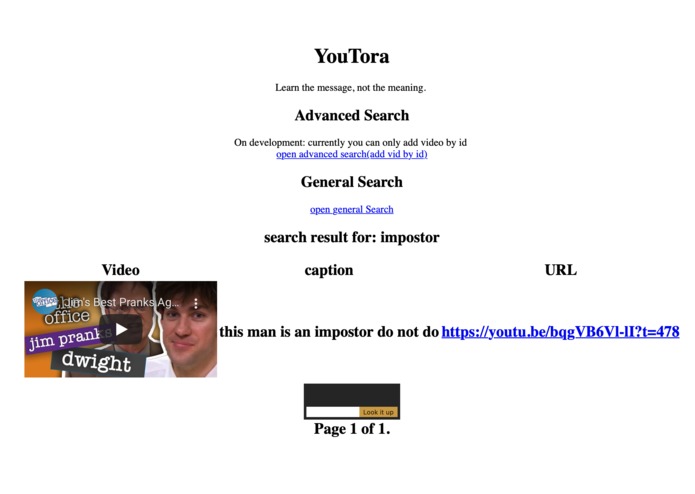
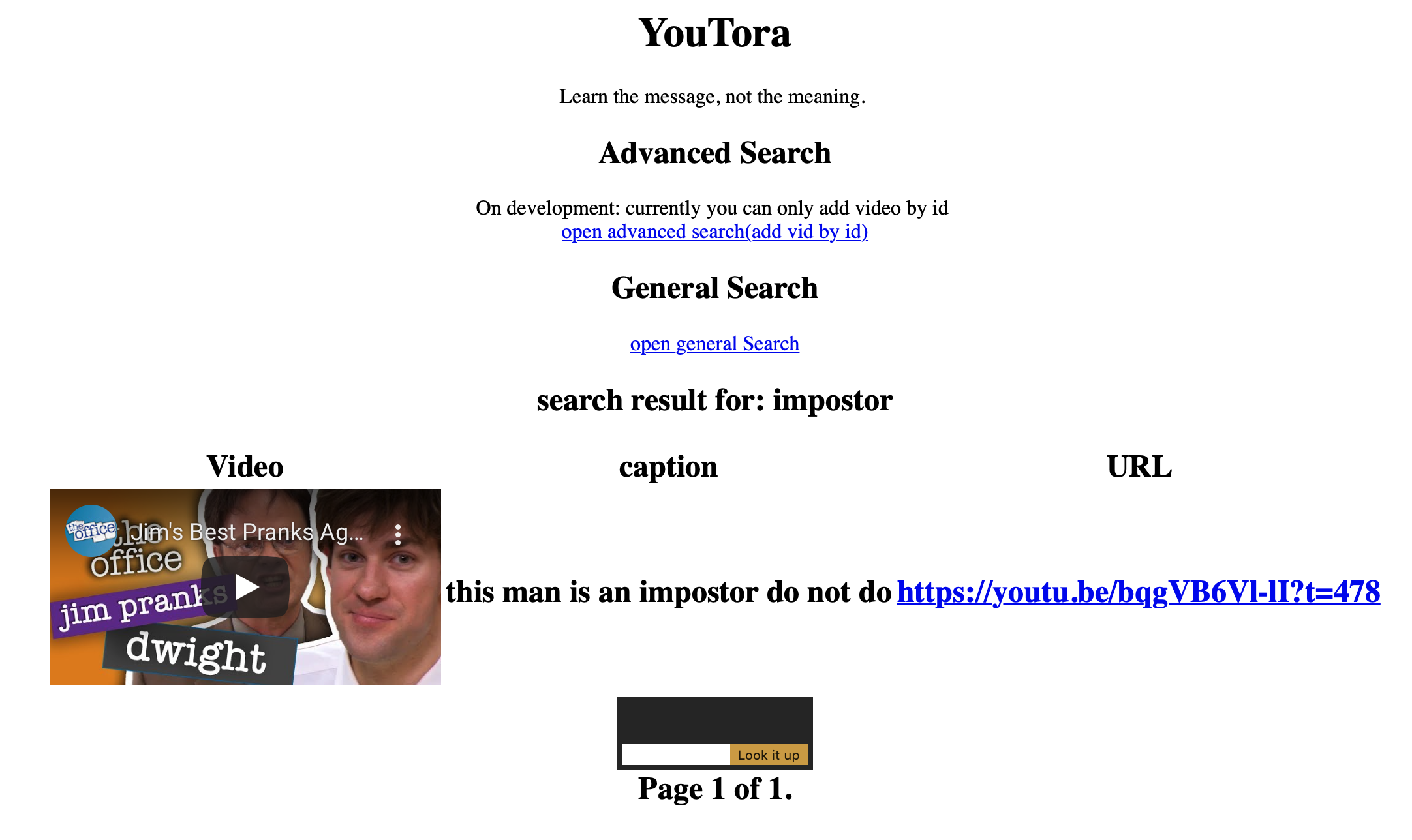
searching videos by "impostor"
-
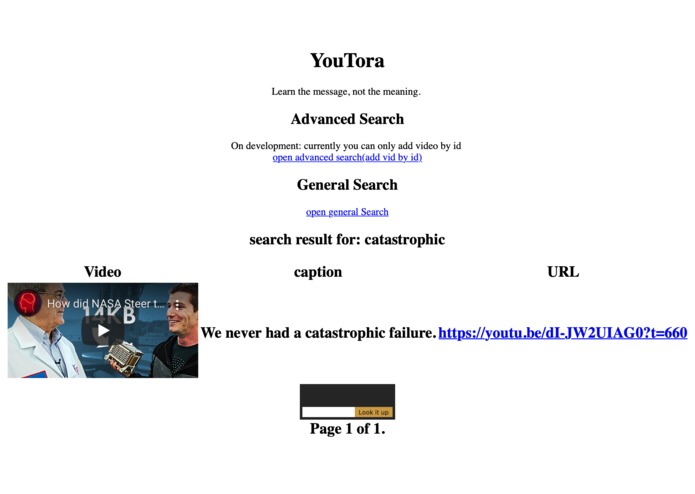
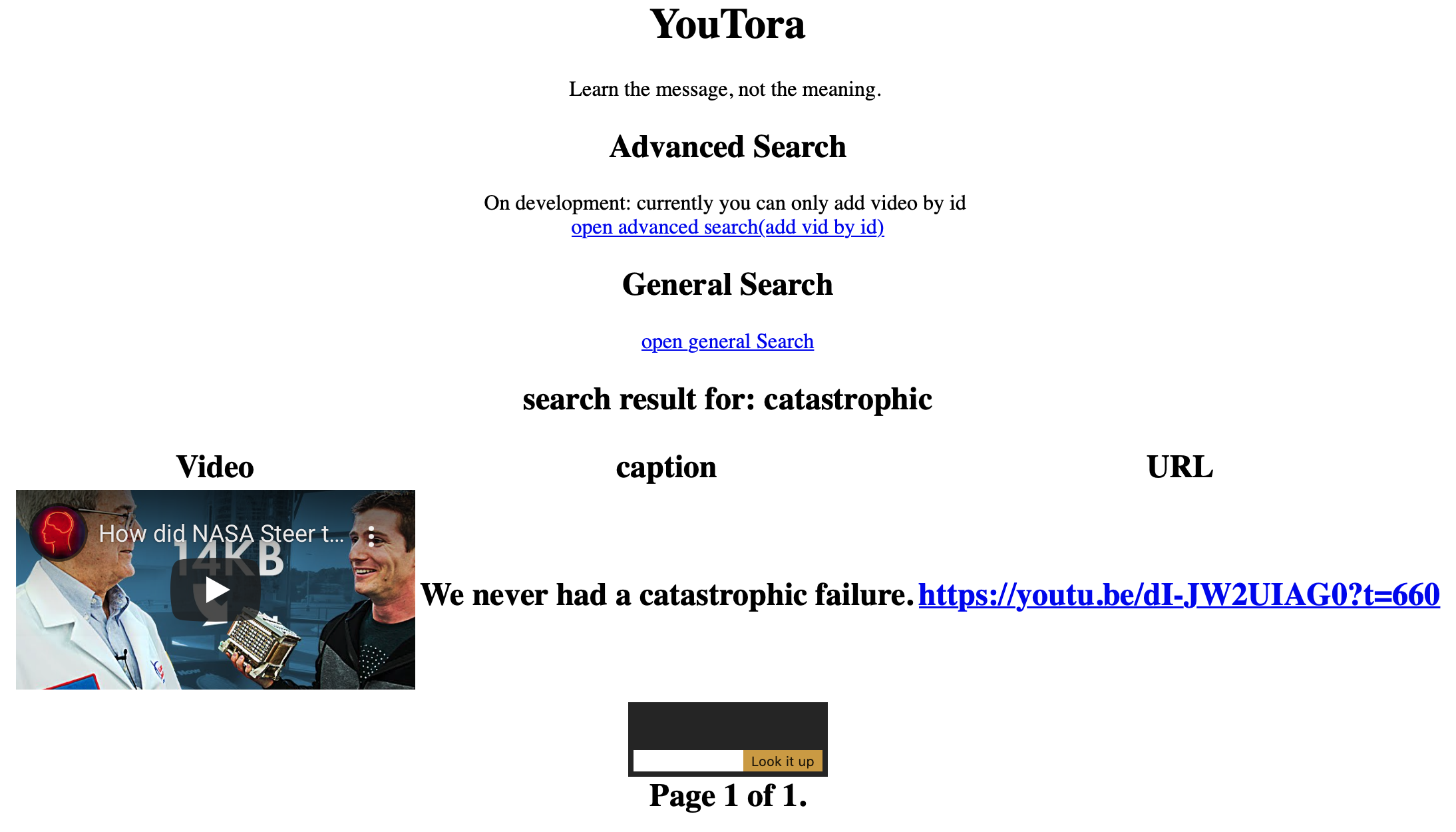
searching videos by"catastrophic"
Inspiration
We learn a language better when the messages(audio-visual contexts) are given, than when merely the meaning is given.
What it does
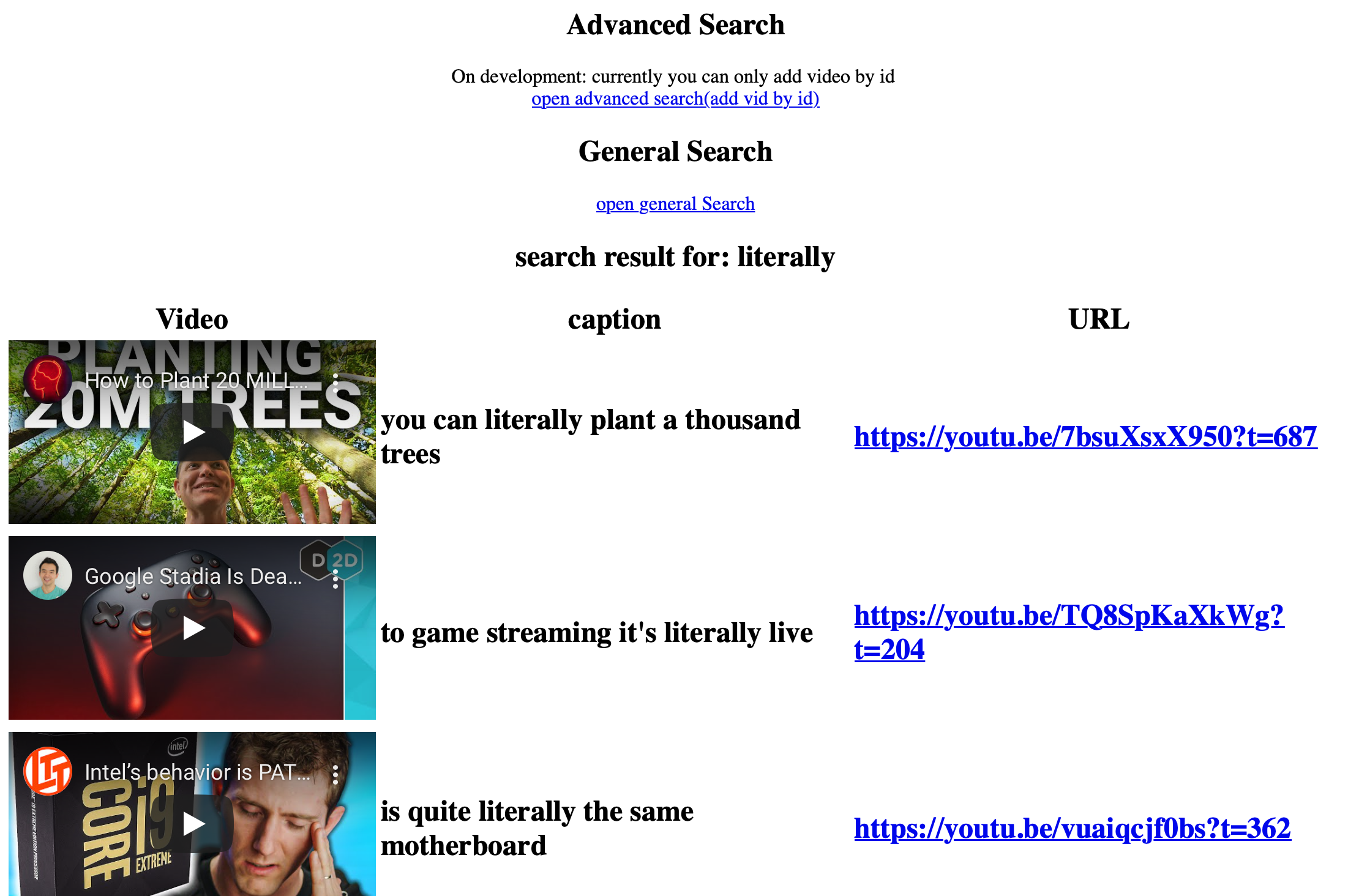
Given a word input, the website searches YouTube videos by captions (including auto-generated ones).
How I built it
Since YouTube api does not allow people to search videos by captions, I had to find a work-around. The way I did it is I downloaded captions of videos using API, and migrated them into a local database.
Challenges I ran into
- Django pagination, duplicates in database, search algorithm; tricky too build, and hard to debug. took most of my time during the hackathon.
Accomplishments that I'm proud of
- Finally I've made something useful!
What I learned
- I can widen my insight by asking questions to others; I asked questions about my project to the people around me during the hackathon, and they told me:
- It can also be very helpful for visually impaired people
- Could be great for collecting marketing data
- Location-based statistics could give you some interesting insights
- Try out other languages! learning Chinese and Korean is in high demand in the UK.
What's next for YouTora (Unsupervised Baby)
- Textual analysis: word cloud before and after the word, sentiment analysis
- deploying on the web with microsoft Azure
- web crawler which crawls around Youtube videos to collect video captions on the web.
Log in or sign up for Devpost to join the conversation.