-
-
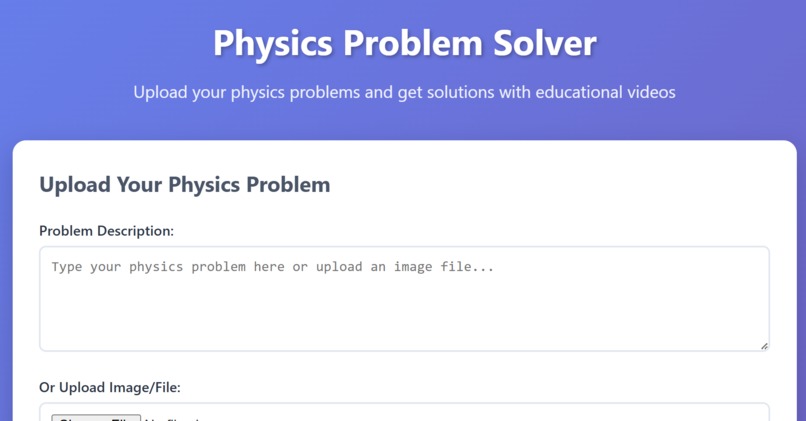
Home page
-
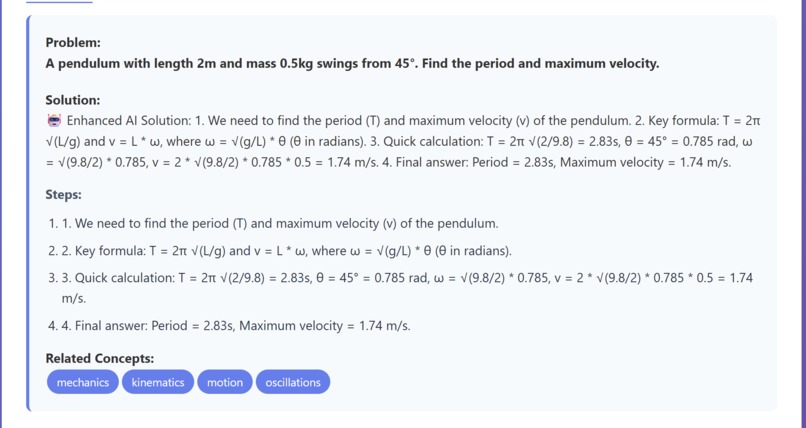
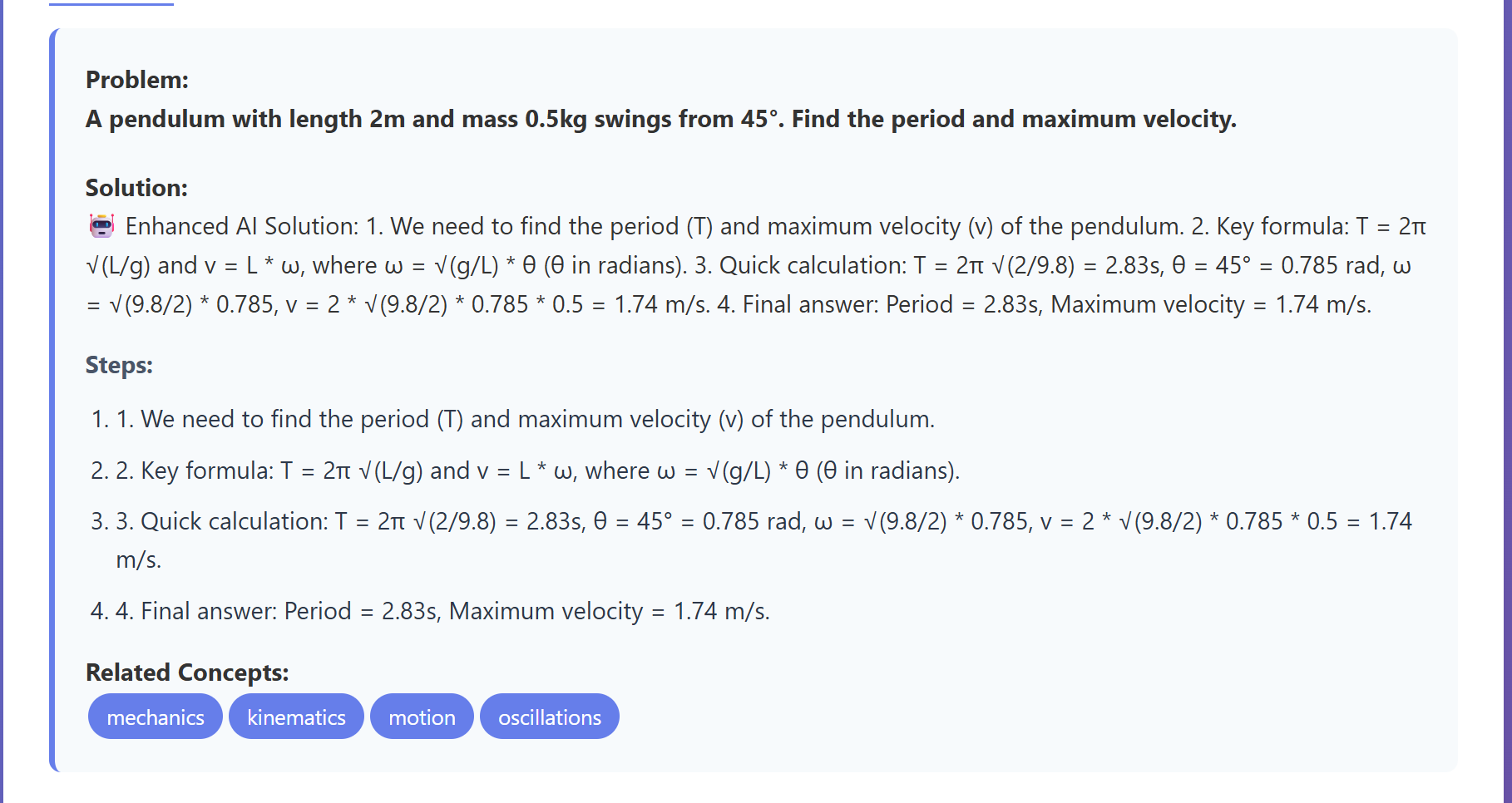
Example solution
-
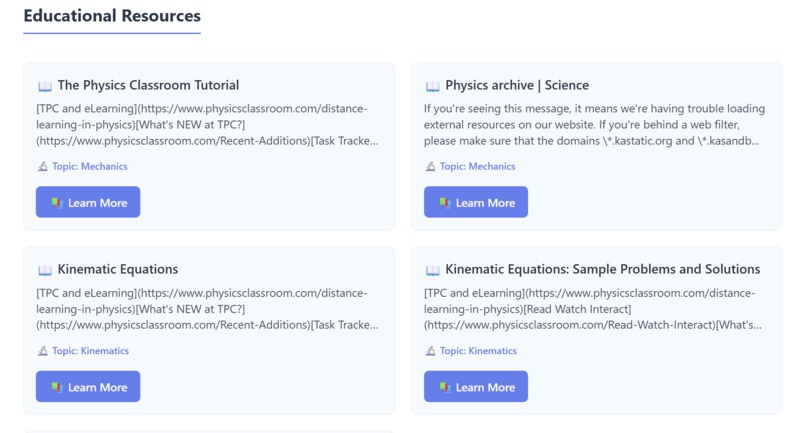
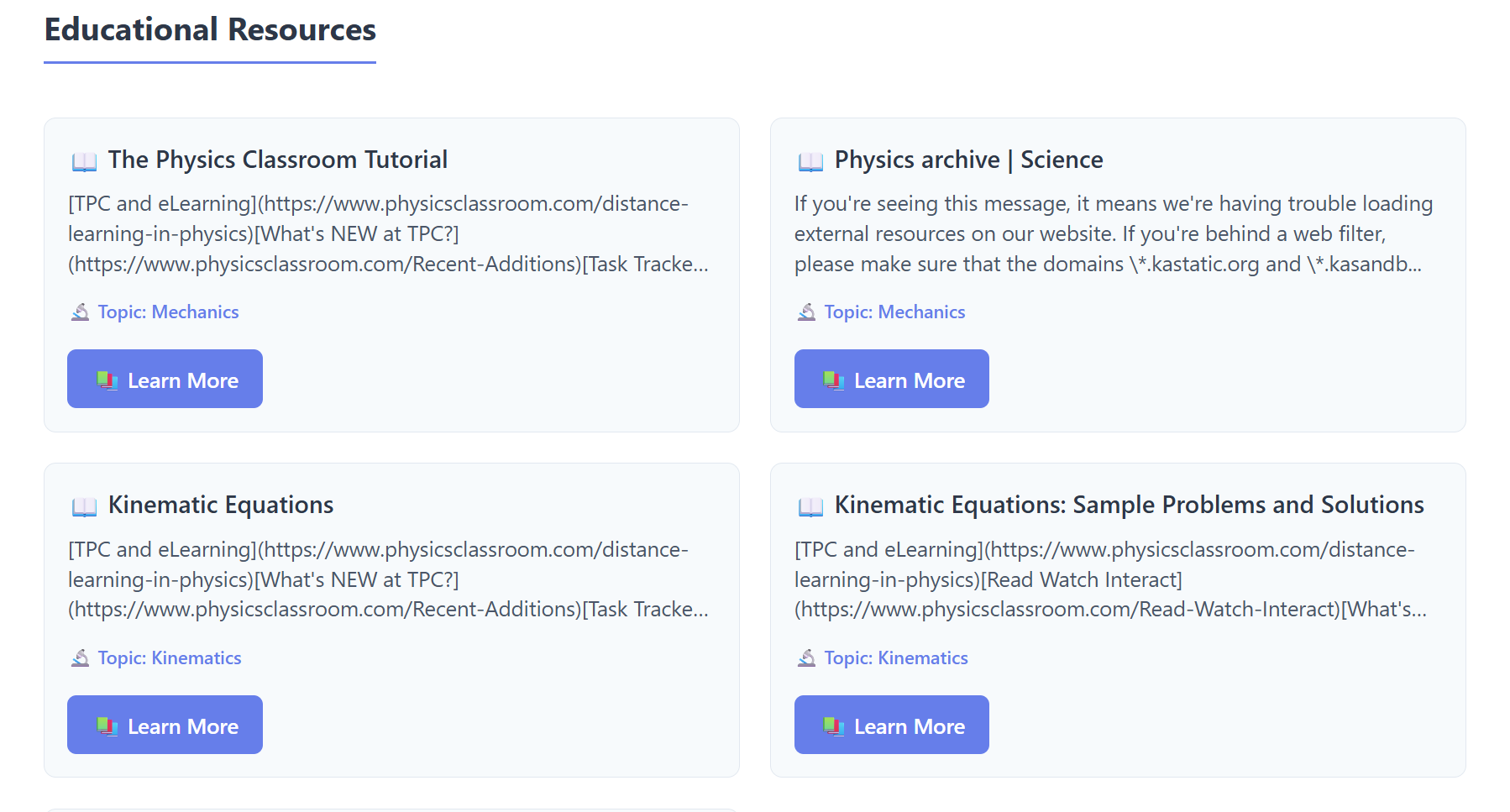
Example educational resources page
Inspiration
Many students struggle with physics problems because they can’t always see the step-by-step reasoning behind the solution. I wanted to create a tool that not only gives the answer but also explains the process clearly and provides additional resources so students can actually learn the concepts, not just copy answers.
What it does
The AI Physics Problem Solver lets students:
-Input or upload any physics problem and get a step-by-step solution.
-Receive additional resources, such as links to videos, tutorials, and practice problems, for deeper understanding.
-Learn physics conceptually, making tough topics easier to grasp.
How we built it
I built the AI Physics Problem Solver using Cerebras and Exa APIs, which I got access to through my participation in PennApps. The website takes a student’s physics problem as input and sends it to the AI backend, which generates step-by-step explanations.
For the additional resources, the system uses the Exa API to search specific educational domains, like Khan Academy, to provide curated tutorials and practice problems relevant to the concept being studied.
The frontend is simple and user-friendly, allowing students to paste problems, view solutions, and access recommended tutorials or practice problems. The AI integration ensures accurate, concept-driven explanations while keeping the interface clean and easy to use.
Challenges we ran into
-At first, the Cerebras model I tried to use wasn’t compatible with the API key I had, which caused errors and blocked testing. I had to switch to a supported model to get the system working.
-Integrating the Exa API to pull additional resources from specific domains like Khan Academy required fine-tuning queries so that results were relevant to each problem.
-Handling different types of physics problems—from kinematics to energy—meant designing the AI prompts carefully to ensure step-by-step explanations were clear and consistent.
Accomplishments that we're proud of
-Successfully built an AI-powered physics solver that provides step-by-step explanations for a wide range of problems.
-Integrated the Exa API to deliver additional learning resources from curated educational sites like Khan Academy, helping students deepen their understanding.
-Overcame challenges with API compatibility and prompt design to create a reliable, user-friendly tool for students.
What we learned
-Building an AI-powered educational tool requires careful integration of multiple APIs and understanding their limitations.
-Prompt design is crucial: even small changes in wording can dramatically affect the AI’s explanations.
-Curating additional resources improves learning outcomes, showing that AI can complement, not replace, traditional educational materials.
-Creating a user-friendly interface is just as important as the AI backend—students need an intuitive way to interact with complex tools.
What's next for PhysicsAI
-Diagrams for problems: Automatically generate simple visual representations, like free-body diagrams or motion sketches, to help students better understand the scenarios.
-Similar practice questions: Generate new, concept-related problems for students to practice, reinforcing learning and building confidence.
Built With
- cerebras
- css
- exa
- html
- javascript
- python

Log in or sign up for Devpost to join the conversation.