-
-
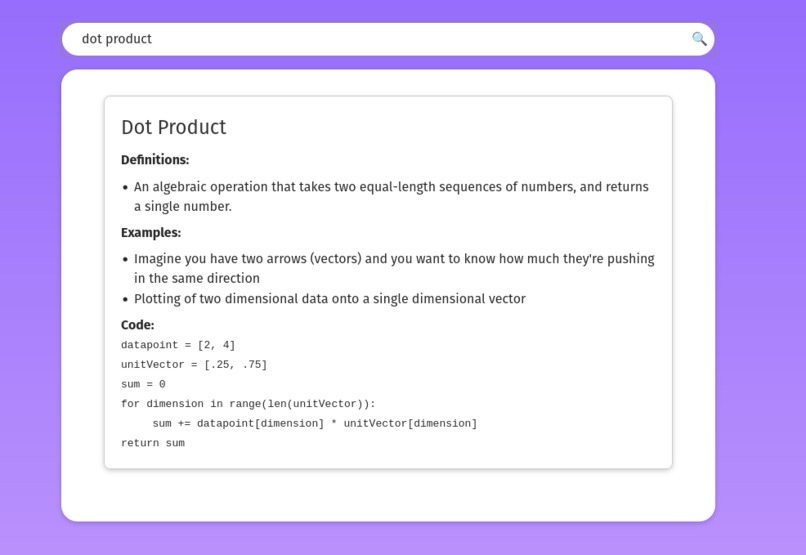
Reviewed terms with multifaceted learning options
-
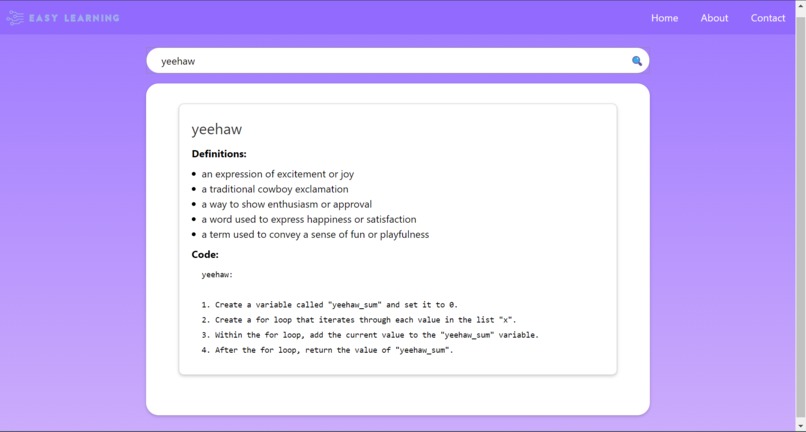
AI generation for arbitrary terms
-
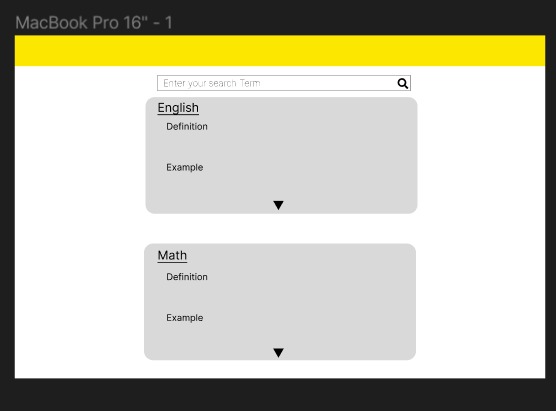
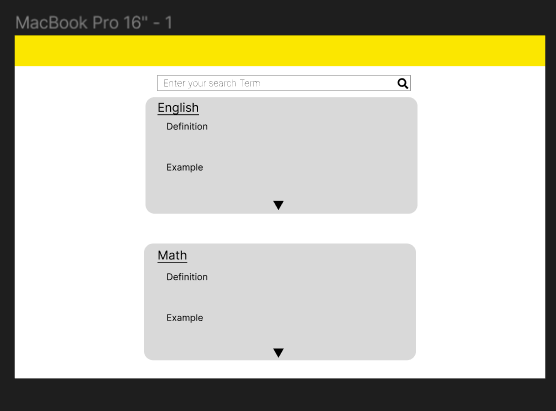
Wireframe Image
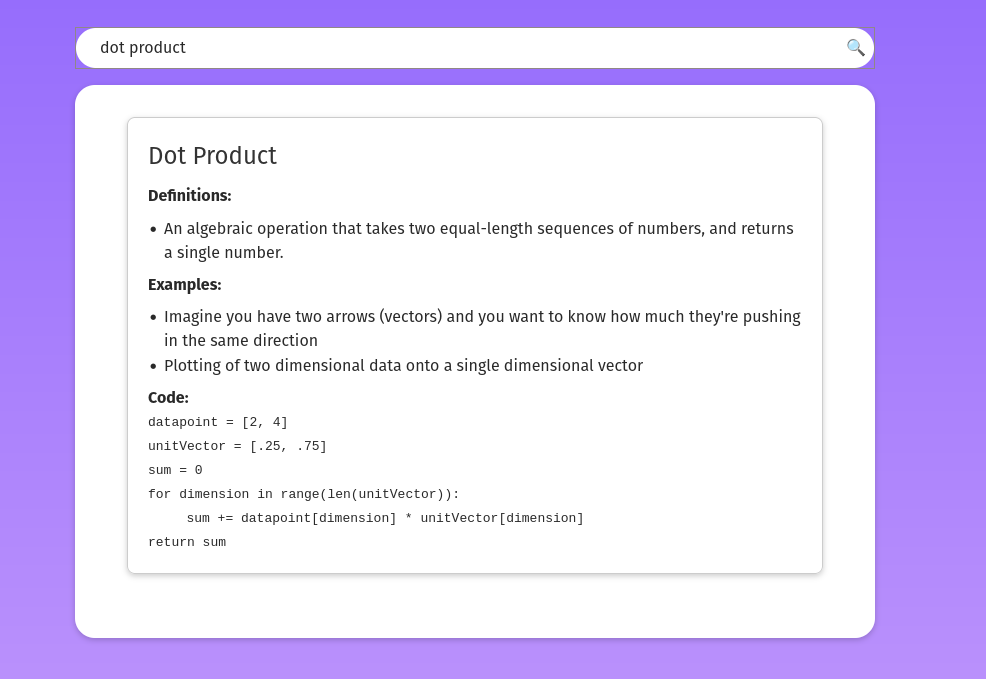
Inspiration
We took inspiration from Merriam-Webster and Wolfram dictionaries.
What it does
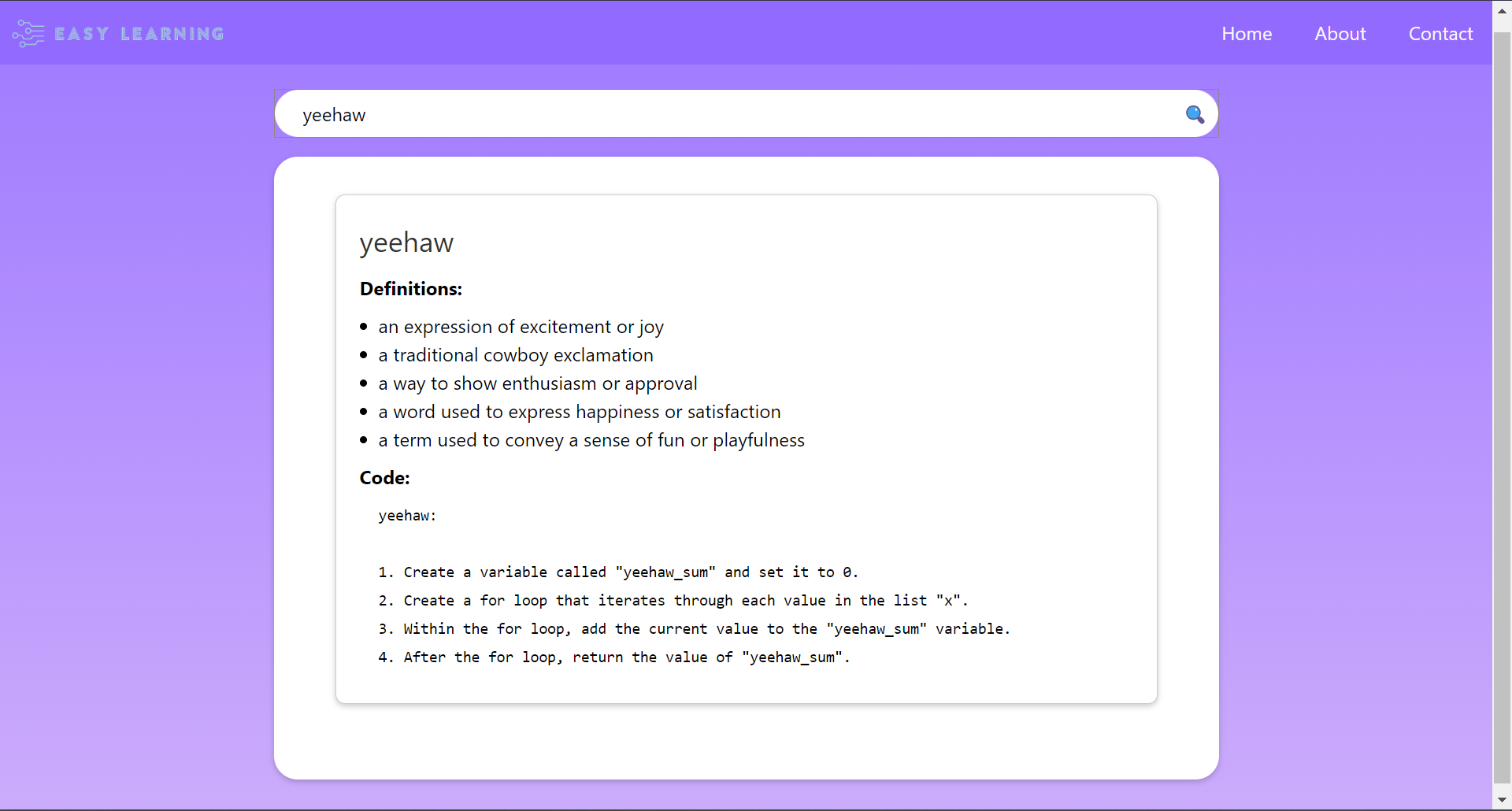
Our goal was to create a multi-sensor dictionary to assist those with learning disabilities by making complex topics simple through resources like math->code translation, dynamic visual video production using Manim (a Python math animation engine), and examples for searches. We also have text to speech feature, with plans to add the Dolby atmos technologies, maybe through an API, to show hard-of-sight users, the sounds regarding a definition.
How we built it
We used Next.JS and React for the frontend, Flask for the backend, Figma for wire framing, and Manim for content creation.
Challenges we ran into
Finding and learning an animation engine was difficult, it was our first time using Manim, and being able to create scripts using it for dynamic translation of math formulas to code was our most difficult task. After being able to generate the videos, embedding them was also an issue. We had issues with Python versions as well and had to downgrade Python 3.12 to 3.9 on one person's computer for our backend server, the one calling gpt ai requests, to work on Mo's computer since he had the front end with him. It took over 3 hours, we were trying to use code, and version/package manager solutions but they were out of sync and caused more problems so 2.5 hours in we decided it was better to just physically remove all 3.,12 Python variants and re-download from the start.
Some of our other challenges were very design related, we wanted to beautify the pages going for a modern glass morphism style look, but that had problems. So to make our home page particle animation screen it took 1000 lines of CSS, where we had to create each particle through HTML and apply an SCSS animation to make it move across the bar, with another follow-up challenge showed up when the webpage scroll bar would constantly move up and down, too many fast actions on the page not suited for our primary demographic, who we choose to help after all.
Accomplishments that we're proud of
We believe our site looks beautiful, the combinations of visuals and modern design with front end make for an incredible user experience. Our additions of text-to-speech and code translations are a highlight that we feel showcases the use case for any type of learner and is an effective tool in making educational content into a format that works for any student.
What we learned
We learned how to use GPT api calls to generate definitions, code, math formula for concepts not in our database.
What's next for Easy Learning
Celebrations! Our first improvement we want to make after this hackathon is implementing our backend's endpoint for generating abstract math to code animations so that they can be seen by the client for non-reviewed terms. We also want to add more accessibility features like a function which translates words to other languages/sign languages. We also want to be able to not only generate code in one language but allow our user to choose which languages they want the code to be generated in.


Log in or sign up for Devpost to join the conversation.