-
-
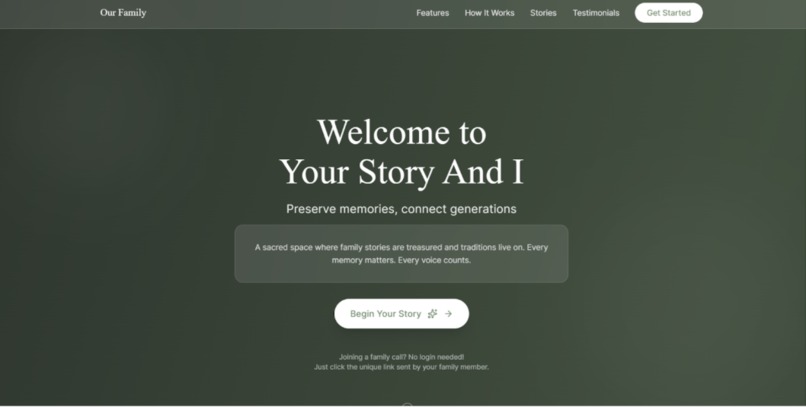
Preserve memories, connect generations!

Inspiration
We were inspired by the idea that everyone has stories worth preserving, but most family memories live in scattered recordings, forgotten voice notes, or conversations that fade with time. We wanted to build something that could capture those moments and transform them into meaningful, lasting narratives. The goal was to combine generative AI with storytelling to create a system that doesn’t just store conversations but understands and preserves them.
What it does
YourStory AI converts recorded conversations into structured digital storybooks. After a call ends, the system automatically processes the audio to generate a transcript, summary, descriptive title, and thematic tags. It then presents this information in a clean, readable format. This turns raw conversations into organized, emotionally engaging keepsakes.
How we built it
We built the project using a pipeline architecture:
- Audio recordings are captured and sent to our backend.
- The Google Gemini API analyzes the conversation and generates structured text outputs.
- The processed content is formatted and stored.
- ElevenLabs is used to synthesize natural-sounding narration for the generated stories.
- A frontend interface displays the storybook with searchable tags and summaries. This modular design allowed us to integrate multiple AI tools efficiently while keeping each component independent and scalable.
Challenges we ran into
One of our biggest challenges was ensuring consistent formatting from generative outputs, especially when structuring transcripts and summaries automatically. We also had to optimize latency so that AI processing felt near-instant after a recording finished. Integrating multiple APIs under hackathon time constraints required careful debugging, rate-limit handling, and fallback logic to keep the system stable.
Accomplishments that we're proud of
We’re especially proud that we built a fully functional end-to-end pipeline in such a short time — from recording audio to generating a polished, narrated story. The system showcases a meaningful real-world application that blends technology with human emotion. A major milestone for us was successfully implementing ElevenLabs, which was a completely new tool for our team. Despite learning it from scratch during the hackathon, we integrated its voice synthesis to produce natural, expressive narration for each story, which instantly elevated the user experience from a simple transcript viewer to an immersive storytelling platform. Achieving this level of polish, integration, and usability within a hackathon timeframe was a huge accomplishment for us.
What we learned
Beyond seeing how powerful generative AI can be for solving meaningful problems, we learned how to actually ship something as a team under time pressure. Some of us used GitHub collaboratively for the first time: figuring out how to push, pull, resolve conflicts, and coordinate code without overwriting each other’s work. We also learned how to securely generate, manage, and integrate API keys while connecting multiple services like Gemini and ElevenLabs into one working pipeline. On the design side, we explored Figma to prototype layouts and think intentionally about user experience rather than just functionality. We constantly refined prompts, restructured outputs, and improved formatting so the final product felt polished. More than anything, we learned how many small decisions go into turning an idea into something usable, and how collaboration, adaptability, and fast learning matter just as much as technical skill in a hackathon setting.
What's next for Your Story AI (And I)
This project started as a hackathon idea, but we genuinely see it growing beyond a weekend build. Our next step is to expand the voice experience using ElevenLabs by experimenting with different narration tones and personalities so users can choose how their memories are told, whether that’s calm, nostalgic, or energetic. We’re planning to add multilingual support so families can preserve stories in the languages they actually speak at home, not just English. Another priority is building user accounts and long-term storage so recordings don’t just generate once and disappear, but instead live in a private archive people can return to and add onto over time. We’d also love to introduce collaborative family collections, where multiple relatives can contribute stories and build a shared digital memory vault together. Long term, we see YourStory AI (and I) as a tool that could genuinely help people preserve voices and moments they might otherwise lose. Building it made us realize how powerful technology can be when it’s used not just to automate tasks, but to protect memories that matter.

Log in or sign up for Devpost to join the conversation.