Inspiration
As someone who’s witnessed loved ones struggle to understand their trauma responses without clinical support, I wanted to create a safe, accessible tool—one that meets people where they are, without overwhelming jargon. The goal was to turn complex trauma science into relatable, actionable guidance for everyday people.
What it does
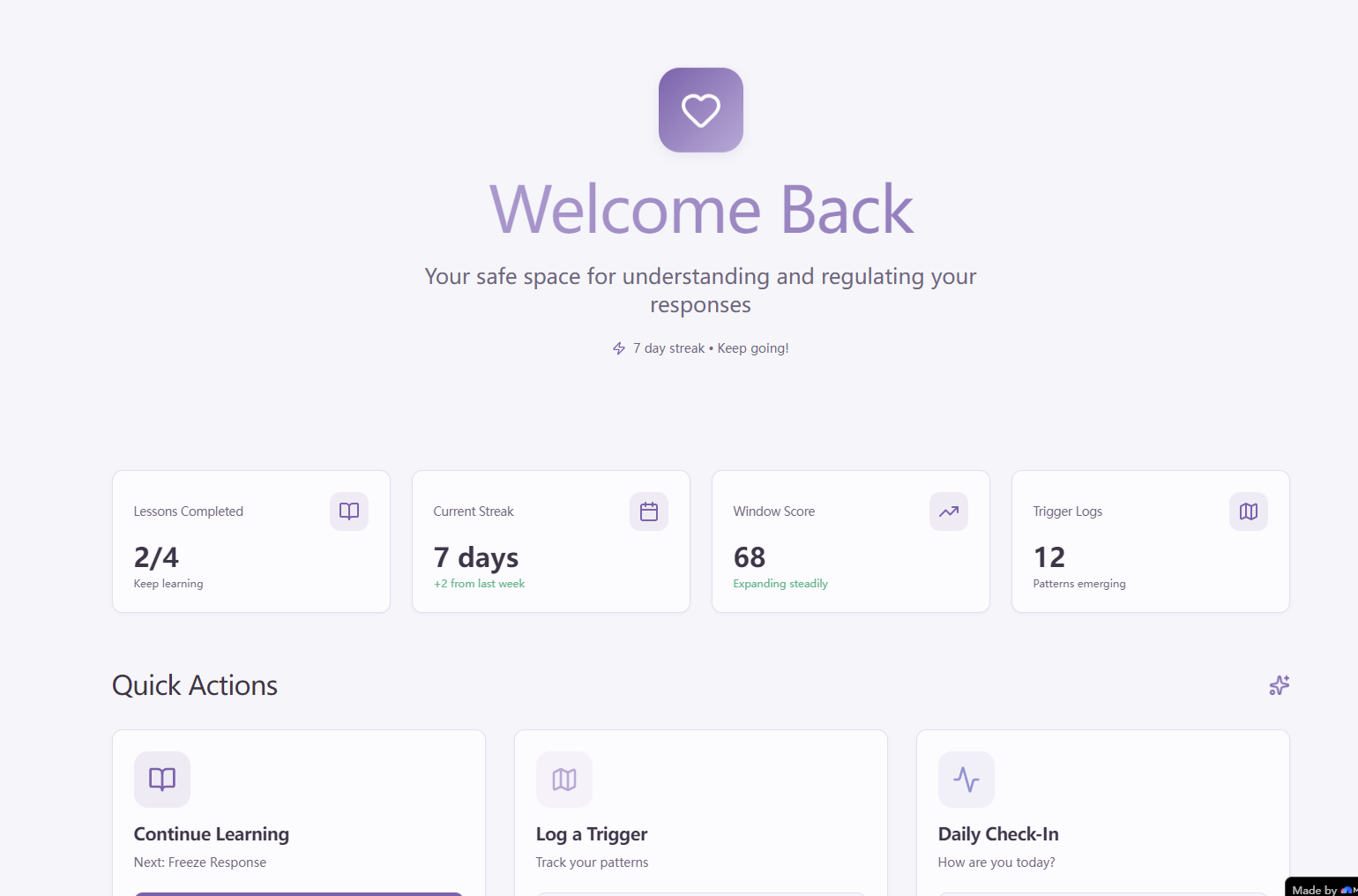
TraumaMap helps users learn about fight/flight/freeze/fawn responses, log trigger patterns (Premium), track emotional regulation over time, and access evidence-based grounding tools—all through a trauma-informed, non-clinical lens. Free users get core education; Premium unlocks AI insights and progress tracking.
How we built it
We started with user research to center trauma-informed design (soft colors, gentle interactions). Frontend built with React/TypeScript for smooth navigation; backend with Node.js/Express to handle secure data storage. TensorFlow powers AI pattern analysis, and Stripe manages subscriptions. PostgreSQL stores user data with privacy controls (anonymous mode, data deletion).
Challenges we ran into
Balancing AI analysis with non-judgmental language was tough—we had to avoid clinical labeling while still delivering meaningful insights. Also, ensuring data security for sensitive trauma logs required rigorous privacy engineering, and designing for extreme emotional states (e.g., panic) demanded ultra-simple, one-tap tool access.
Accomplishments that we're proud of
Creating a platform that’s both educational and compassionate—users report feeling seen, not pathologized. The AI trigger map delivers insights without diagnosis, and the emergency grounding tools have been validated for rapid nervous system regulation. We also built a seamless free/Premium tier structure that’s accessible, not predatory.
What we learned
Trauma-informed design isn’t just aesthetics—it’s about centering user safety at every step (e.g., saving drafts offline, no mandatory fields for log entries). We also learned that clarity over complexity wins: ditching clinical terms made the platform usable for those new to trauma awareness.
What's next for this project
We’re expanding the grounding toolkit to include audio exercises for accessibility, refining AI insights to highlight protective factors (not just triggers), and adding optional weekly check-ins to reinforce progress. Long-term, we aim to add mild accessibility features (e.g., screen reader support) while keeping the core experience calm and uncluttered.
Built With
- amazon-web-services
- figma
- stripe
- tensorflow

Log in or sign up for Devpost to join the conversation.