-
-
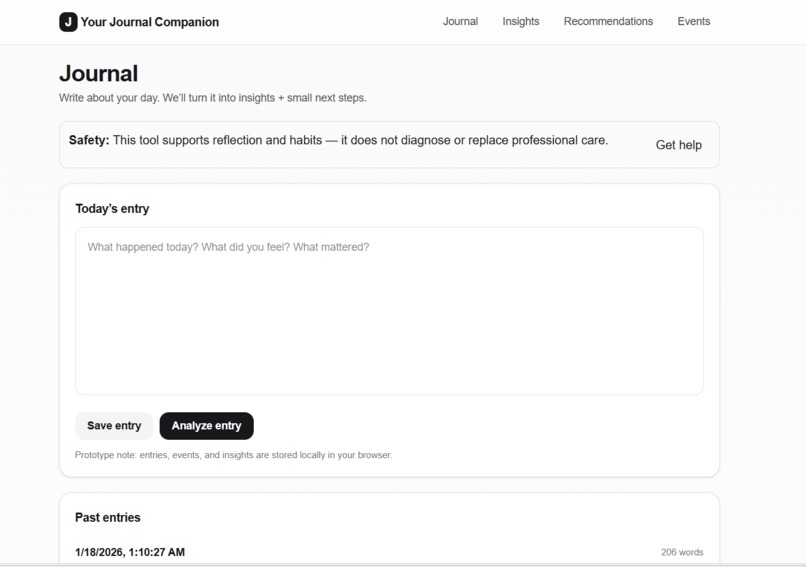
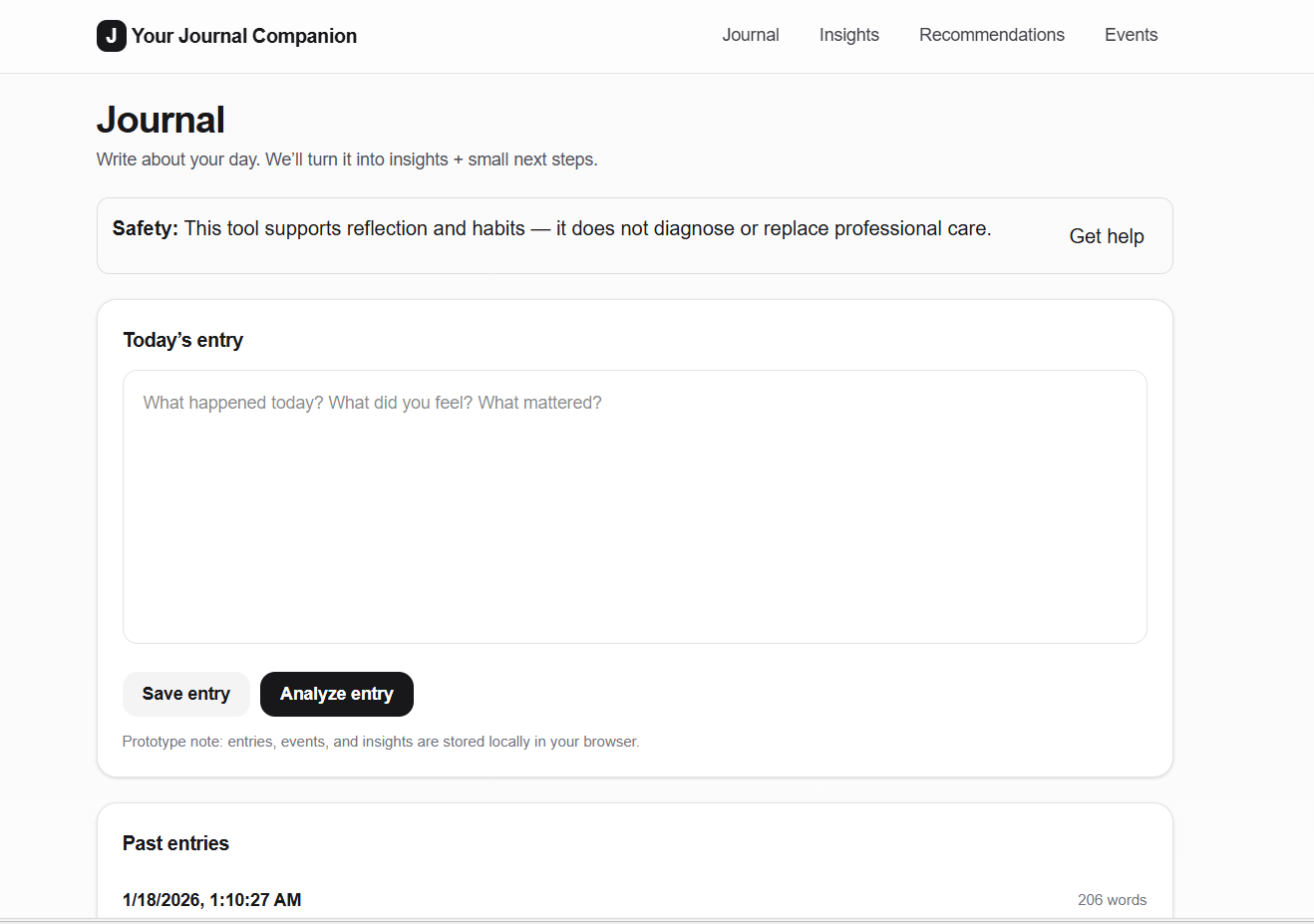
home page
-
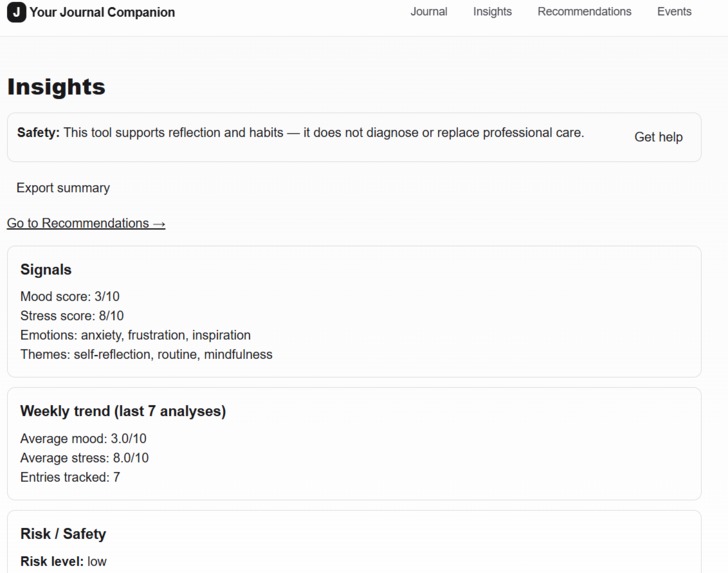
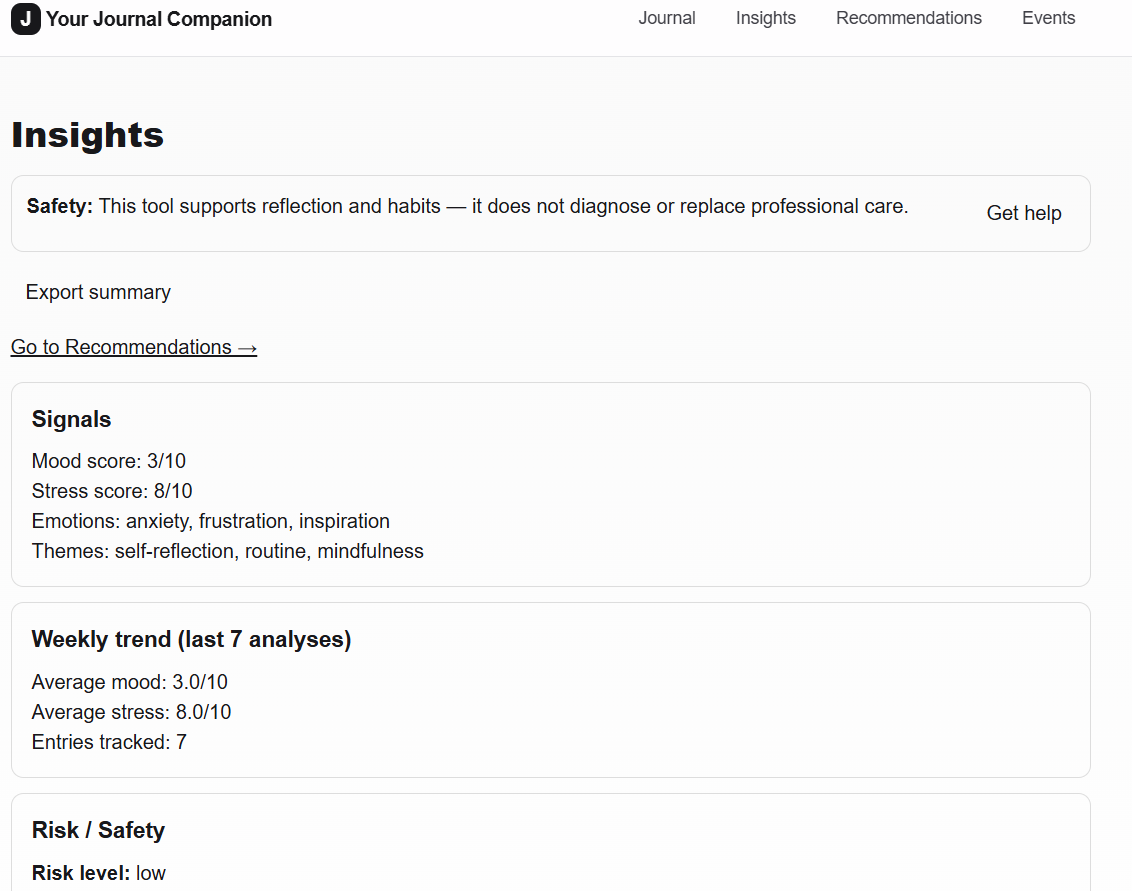
insights
-
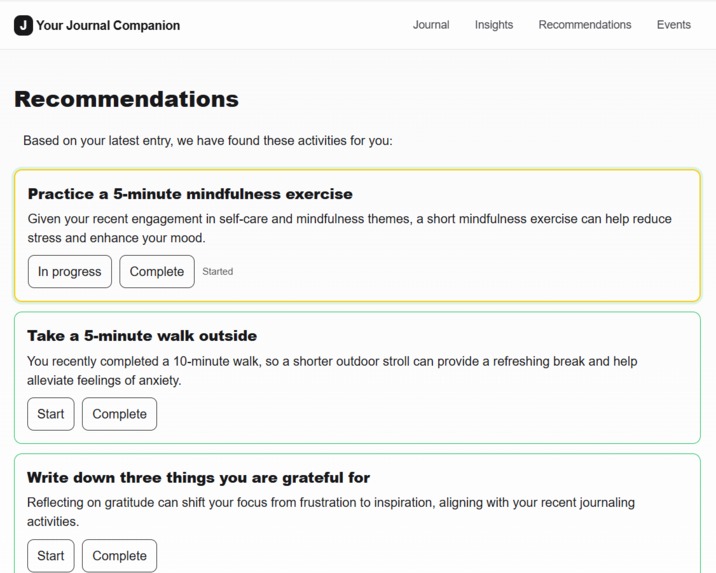
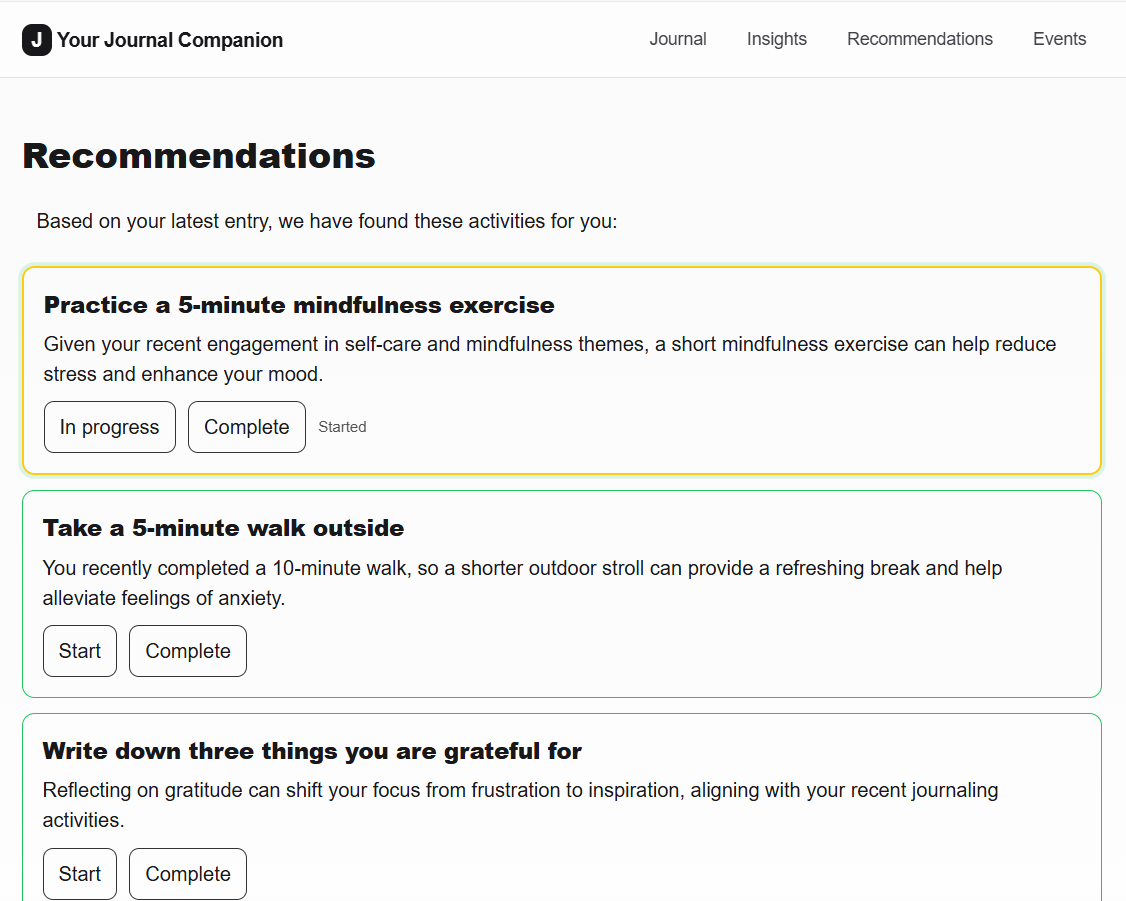
recommendations
-
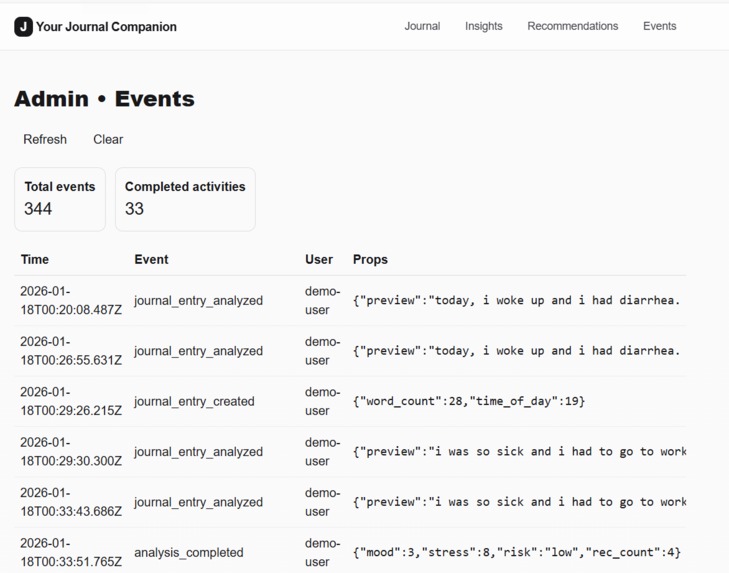
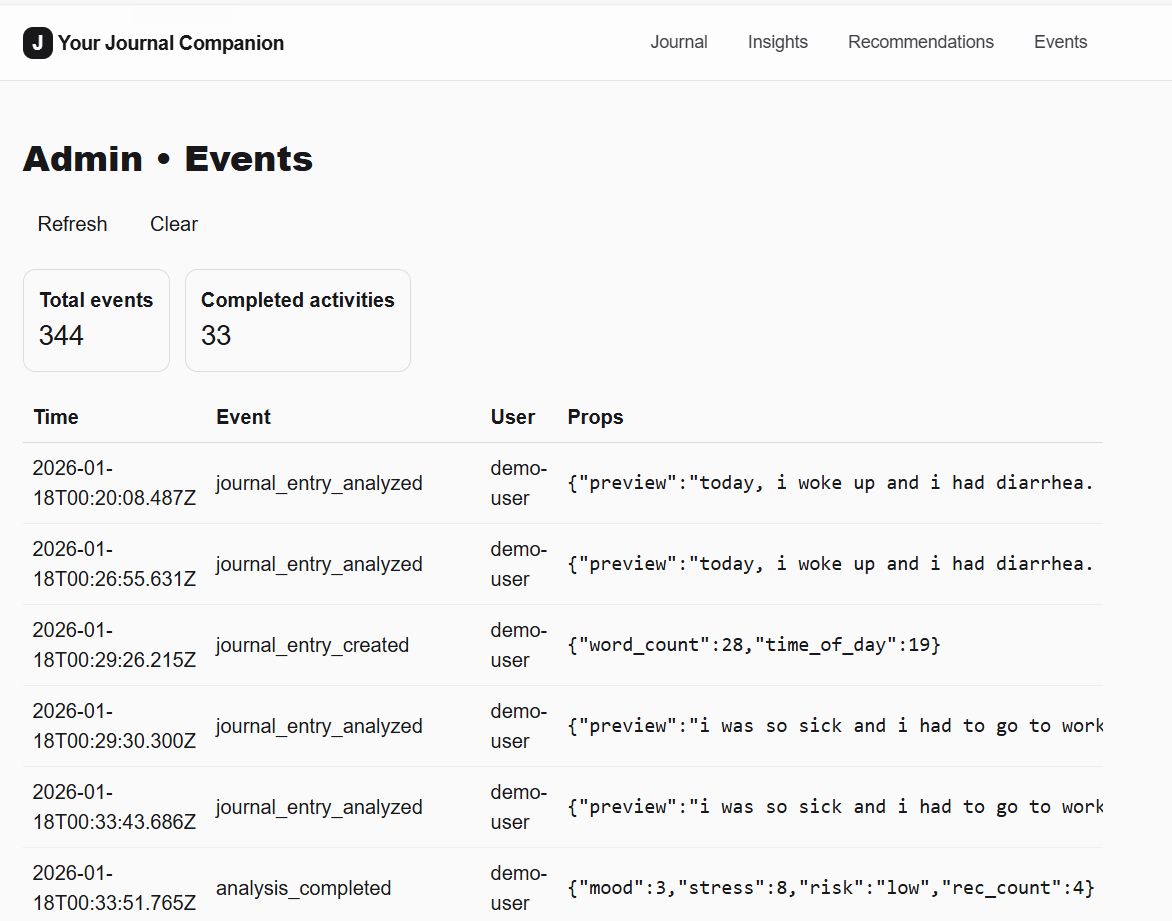
event log
Inspiration
What inspired me to build this project was my own experience with mental health. I’ve had days when my mental health was poor, and I’ve also seen people I care about go through similar struggles. I wanted to create an application that could offer real support for people like us.
What it does
The app analyzes your journal entries to provide meaningful insights and suggests a personalized to-do list to support your mental well-being. You can also download your data to share with a counsellor or mental health professional.
How I built it
I built a web-based mental-health journaling app using Next.js where users write about their day and receive AI-generated insights and activities. The system follows a multi-agent architecture: an Extractor Agent analyzes the entry and recent behavior events to produce structured mood and theme signals, a Risk Agent assesses safety in a non-diagnostic way, and a Coach Agent generates personalized activities and tomorrow’s prompt. Every interaction is tracked as product-analytics events (journal created, analysis completed, recommendation started/completed), which are stored locally and fed back into the next analysis so the AI adapts based on what the user actually does. Completed activities are removed and replaced in real time to create a self-improving experience, while trends, exportable summaries, and a built-in safety banner make the tool practical and responsible for real-world mental-health support.
Challenges I ran into
Getting the recommendation feature to behave like a real product was more difficult than expected, as I needed activities to be started, completed, permanently removed, and instantly replaced while keeping analytics events and UI state in sync across refreshes. This required building a custom persistence system and carefully coordinating local storage with the Amplitude-style event loop. I also had to address legal and ethical concerns around using AI for mental health, making sure the model avoided diagnostic language, included crisis resources, and was framed as supportive rather than authoritative. Privacy was another major challenge, so we designed the prototype to keep journal data local to the user’s device and minimize any sensitive information leaving the browser.
Accomplishments that I am proud of
I am super proud of doing this project by myself while I was sick. I also am proud of the recommendations feature which I added.
What I learned
I further learned how to incorporate ai into my projects.
What's next for Your Journal Companion
I plan to publish this app on the Google Play Store and continue evolving it into a real, privacy-first mental wellness companion. A key upcoming feature is a “You’re Not Alone” insight that helps users see how common certain thoughts and feelings are—without exposing any individual data. This would be implemented using on-device aggregation and anonymized, opt-in statistics so patterns can be shared at a group level while journal content never leaves the user’s control. The goal is to reduce stigma and isolation by showing that many others experience similar struggles, while maintaining the highest standards of confidentiality and trust.
Built With
- amplitude
- api
- css
- langgraph
- localstorage
- next.js
- node.js
- tailwind
- typescript

Log in or sign up for Devpost to join the conversation.