Inspiration
The genesis of this commercial lies in a deliberate attempt to deconstruct and re-contextualize the aesthetics of the modern human condition, evolving the humble paint advertisement from a declaration of color to an exploration of existential endurance.
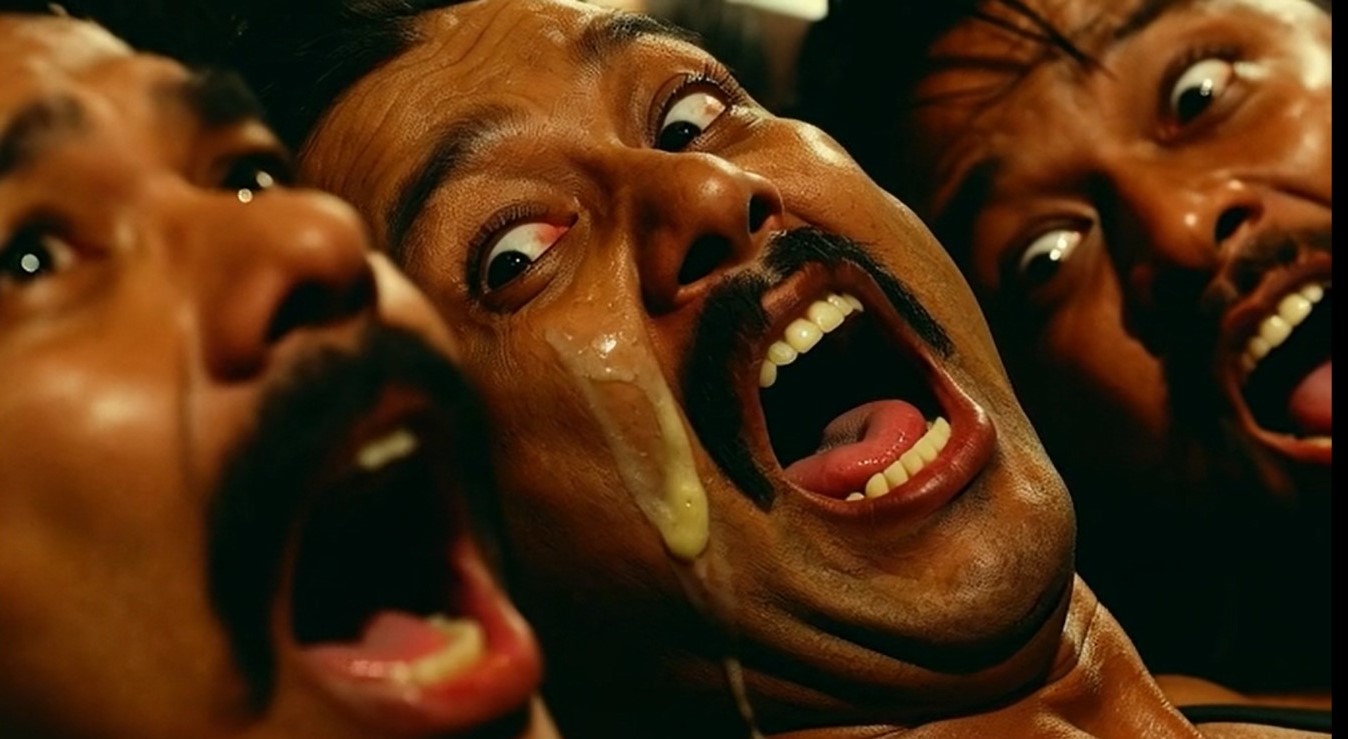
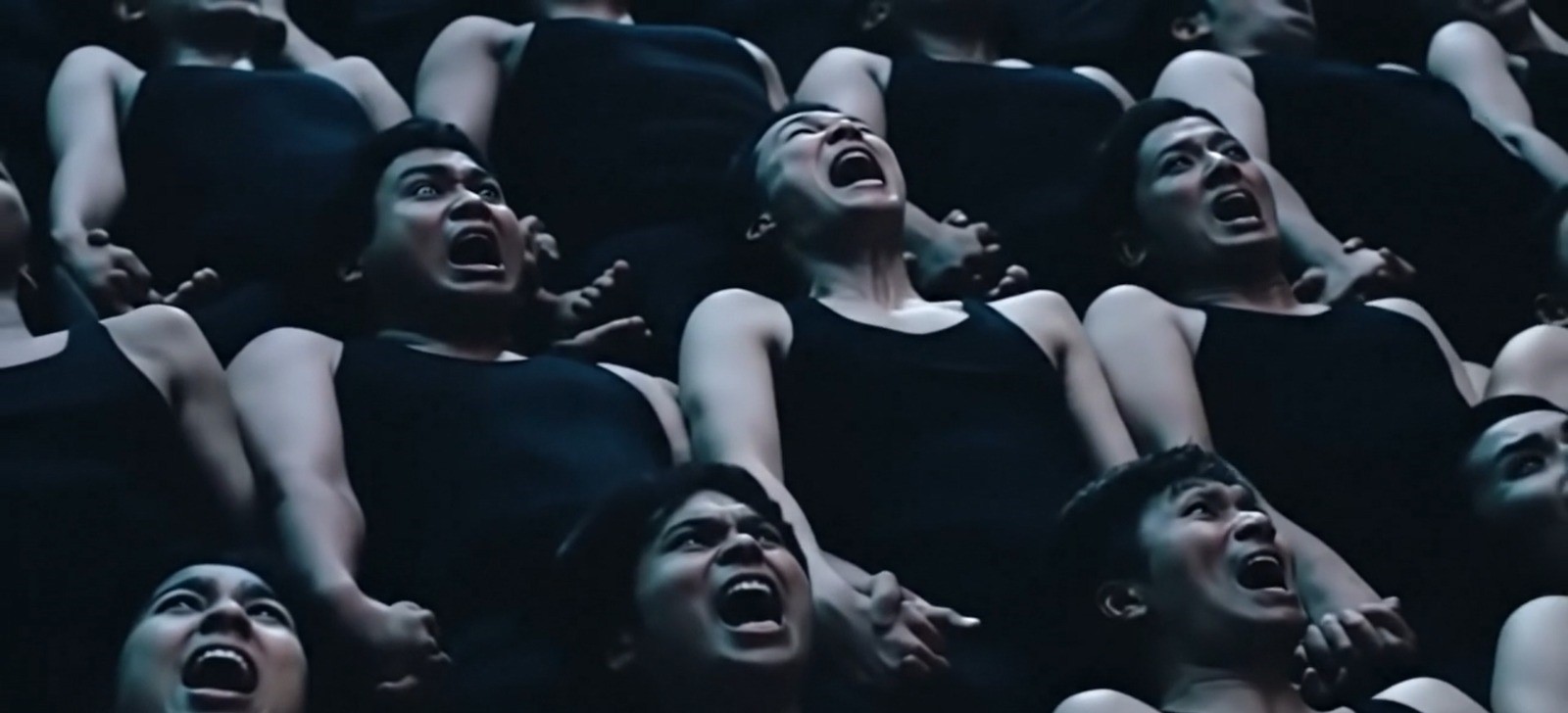
Philosophically, we were inspired by the Heideggerian concept of Dasein (Being-there), specifically its inevitable "thrownness" (Geworfenheit) into a world of arbitrary, overwhelming elements. We asked: Why just say paint protects against rain when you can demonstrate it against a simulated Nietzschean breakdown? The Psychological Core: The screaming chorus reflects mass psychological anxiety, transposed onto a claustrophobic setting. The progression through the elements is a dialectical journey of sensory pain.
Birds: The initial assault is a primal violation, symbolizing the unexpected, messy degradation of the self by unforeseen, disgusting chance.
Fire: Represents immediate, purifying danger, the acute crisis. Snow: The ultimate state of inertia and existential numbness.
The Humorous Punchline: The core joke is the sheer scale of the overreaction. The subtitle "[Paint Screaming]" (instead of a human emotion) suggests the agony witnessed is not even human suffering, but the struggle of the raw material itself being tested. The final line, "Our blue isn't sad, it's classily depressed," performs a comedic cognitive dissonance, implying that Chroma Paint doesn't eliminate sadness; it just ensures your architectural despair is aesthetically superior. We calculated the optimal suffering coefficient for the price-to-paint ratio:
What it does
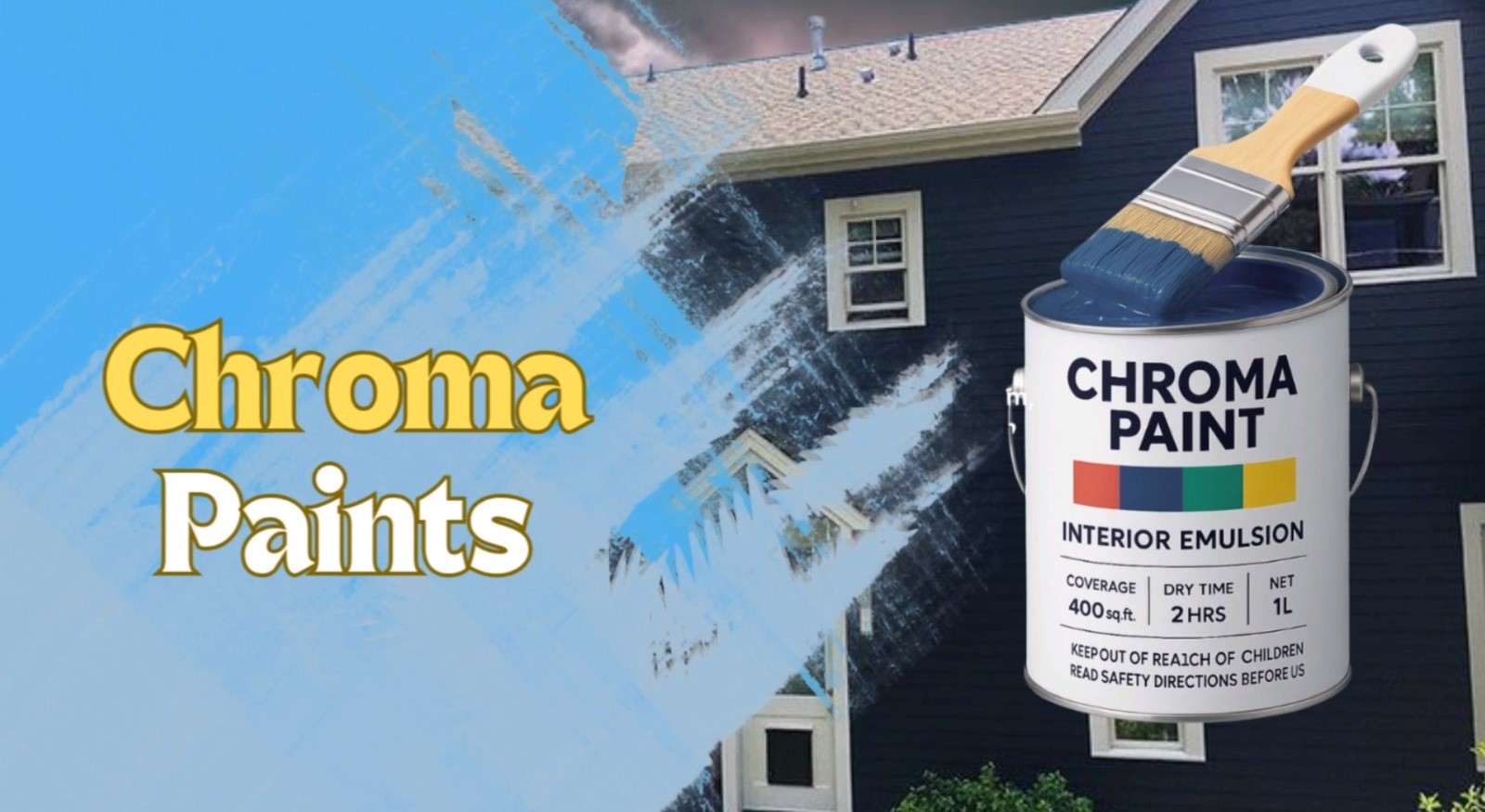
The ad functions as a visual demonstration of resilience, presenting Chroma paint not merely as a cosmetic layer but as a material technology engineered for extreme environments. Through AI-generated simulations of heat, snow, fire, storms, and natural disasters, the film explores how color and protection coexist under conditions that test the limits of structural endurance.
The narrative reframes paint as a defensive system — one that interacts with its environment through principles of thermodynamics, surface chemistry, and material durability. Each scene represents a different environmental stressor, allowing the viewer to witness how Chroma’s engineered formulation maintains stability, adhesion, and vibrancy even when natural forces attempt to degrade it.
To structure this concept intellectually, the transitions between environmental conditions were governed by a stress-response model: $$ R(t) = (γ) ⋅ (F(t)) / Cs $$ Where: R(t) = resilience expression at time t F(t) = environmental force intensity (heat, impact, cold, wind pressure) Cs = surface-coating stability coefficient γ = amplification factor translating stress into visual contrast This model allowed us to align the pacing of each environmental simulation with the theoretical limits that a high-performance coating is expected to withstand. Through this approach, the ad becomes more than a sequence of dramatic visuals — it becomes an intellectual statement on engineered protection. Each disaster scenario acts as a proof-of-concept, reinforcing the idea that Chroma is not just color for beauty, but color that endures, protects, and persists under the harshest natural conditions.
How we built it
This ad was created 100% using advanced AI tools, following a professional, multi-layered production pipeline that blends visual generation, color science, sound engineering, and algorithm-assisted editing. Every stage used specialized tools to achieve cinematic precision.
Concept & Storyboarding Midjourney v6 and Ideogram for AI concept art and initial visual exploration Runway ML Gen-2 Storyboard Mode for sequential scene planning ChatGPT Vision for converting storyboards into detailed cinematic shot instructions
Video Generation & Scene Construction Runway ML Gen-2 and Pika Labs for generating the primary video sequences Stability Video Diffusion for smooth motion generation Luma Dream Machine for high-realism textures, lighting, and transitions Kaiber AI for stylized motion sequences and color-infused scenes
AI Camera Work & Zoom Effects To mimic professional cinematography, we used AI-based camera simulation tools: Runway ML Camera Control for dolly-in and dolly-out movements Pika Camera Motion Engine for smooth zoom-in and zoom-out EbSynth Motion Mapping to maintain consistent camera angles Deforum Stable Diffusion with custom Python scripts for frame-by-frame camera paths using: camera_zoom = 1 + (frame / total_frames) * 0.03 Optical Flow algorithms for realistic scene transitions Depth Estimation Models (MiDaS) for AI-generated depth-of-field adjustments.
Image & Frame Enhancement To achieve polished, cinematic frames: GFPGAN & Real-ESRGAN for upscaling and texture refinement Topaz Video AI for stabilization, deblurring, and 4K enhancement Adobe Firefly for color-correction assistance DaVinci Resolve Neural Engine for professional-grade color grading using AI
Sound Design, Voice & Syncing Audio was built entirely using AI sound-engineering tools: ElevenLabs Voice AI for voice lines (if any) Adobe Podcast Enhance for noise-free sound processing AIVA & Soundraw AI for background music creation Boomy AI for rhythm-based ambience Descript Overdub + AI Sync for aligning audio with lip and motion Audacity with Beat Finder Algorithm for frame-accurate sound syncing AI Foley Tools (Kits.AI, AudioCraft) for environmental sound effects We also used a timing equation to align beats with camera zooms: $$ Sync Factor=Beat Interval / Zoom Speed $$
Editing & Post-Production CapCut AI for auto-cut detection and scene flow DaVinci Resolve Fusion (AI mode) for color vibrance enhancement Adobe Premiere Pro Sensei AI for timeline optimization Runway Clean Audio & Motion Brush for refining final shots Python Scripting for batch frame processing and motion consistency
AI Prompt Engineering & Iterative Refinement To maintain consistency, we used: ChatGPT Prompt Refinement Loops Automatic1111 ControlNet for keeping colors stable across scenes LoRA models trained for color intensity and texture consistency
Challenges we ran into
Getting consistent color tones across multiple AI-generated scenes required several iterations. Maintaining visual continuity (lighting, camera angles, object consistency) was difficult because AI tools often produce variations. Achieving realistic motion transitions without artifacts took extensive prompt tuning. Balancing creativity with brand accuracy demanded frequent re-prompting and fine-tuning. Despite these, every challenge pushed the project toward a more polished and high-quality final output.
Accomplishments that we're proud of
Producing a visually appealing, emotionally engaging ad entirely through AI, without traditional filming. Achieving smooth, cinematic color transitions that showcase the essence of Chroma shades. Creating a unique AI-driven storytelling style that feels modern, innovative, and professional. Demonstrating how AI tools can match — and sometimes exceed — traditional creative workflows.
What we learned
The importance of iterative prompt engineering to maintain scene consistency. How AI can simulate professional cinematography techniques such as dynamic lighting, depth-of-field, and camera panning. Advanced AI color-grading techniques and how different models interpret saturation, vibrance, and texture. That combining multiple AI models produces far better output than relying on a single system. We also learned that creativity grows exponentially when AI is used not just as a tool but as a collaborator.
What's next for Untitled
Developing a full multi-scene campaign showcasing the emotional power of color. Experimenting with AI-driven 3D environments, virtual actors, and real-time color physics. Refining the workflow for even more cinematic realism using hybrid models. Exploring interactive ad concepts where users can “choose a shade” and watch the environment transform in real time.

Log in or sign up for Devpost to join the conversation.